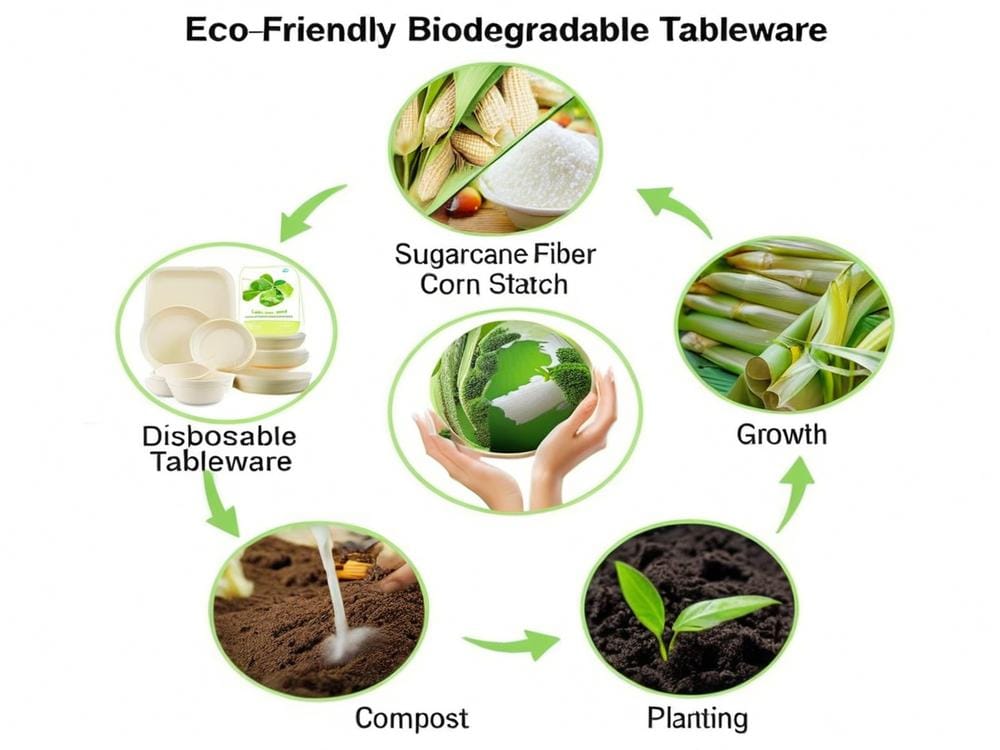
Sugarcane bagasse takeaway containers demonstrate strong real-world performance across heat resistance, leak prevention, microwave safety, stacking durability, and oil handling.
In full-scale delivery simulations—hot meals up to 95°C, 30-minute liquid tests, 20-box stacking, and 800W microwave heating—bagasse packaging maintained structural stability, showed near-zero leakage, resisted oil penetration (0.15–0.32 mm), and preserved 84% compression strength under load.
These results confirm that compostable bagasse containers are a reliable, food-safe, and sustainable replacement for traditional plastic boxes.
The rapid expansion of global food delivery has reshaped the way meals are prepared, transported, and consumed. As cities embrace convenience and as consumers increasingly rely on takeaway platforms, the reliability of packaging has become an essential element of the foodservice value chain. With regulatory pressure intensifying and environmental expectations rising, sugarcane bagasse takeaway containers have become a favored alternative to plastic. Yet, the essential question remains:
Can sugarcane bagasse food containers consistently deliver dependable real-world performance?
This report offers a detailed, data-backed evaluation of the practical usability of biodegradable bagasse containers, focusing on durability, heat resistance, leak prevention, microwavability, and overall delivery suitability. Through a diverse set of stress tests that mirror the most challenging conditions in modern food logistics, this study reveals the true operational capabilities of this eco-friendly packaging material.

I. Market Context: Why Bagasse Performance Must Be Proven
1. The Growing Critical Role of Takeaway Packaging
With the global food delivery market projected to surpass USD 500 billion, packaging is no longer just a vessel but a determinant of customer satisfaction, brand perception, food safety, and sustainability compliance. Every leakage, deformation, or heat loss directly impacts the customer experience and therefore the restaurant’s reputation.
2. Environmental Pressure and the Rise of Sugarcane Bagasse
Dozens of regions have implemented bans or restrictions on single-use plastics. For restaurants, switching to compostable sugarcane bagasse food containers provides multiple advantages:
Compliance with plastic reduction regulations
Enhanced brand reputation
Reduction of carbon footprint
Aesthetic differentiation with natural-fiber packaging
However, eco-friendliness alone is not enough. Operators require validated, reliable, and measurable performance in real delivery scenarios.
II. Understanding Sugarcane Bagasse as a Material
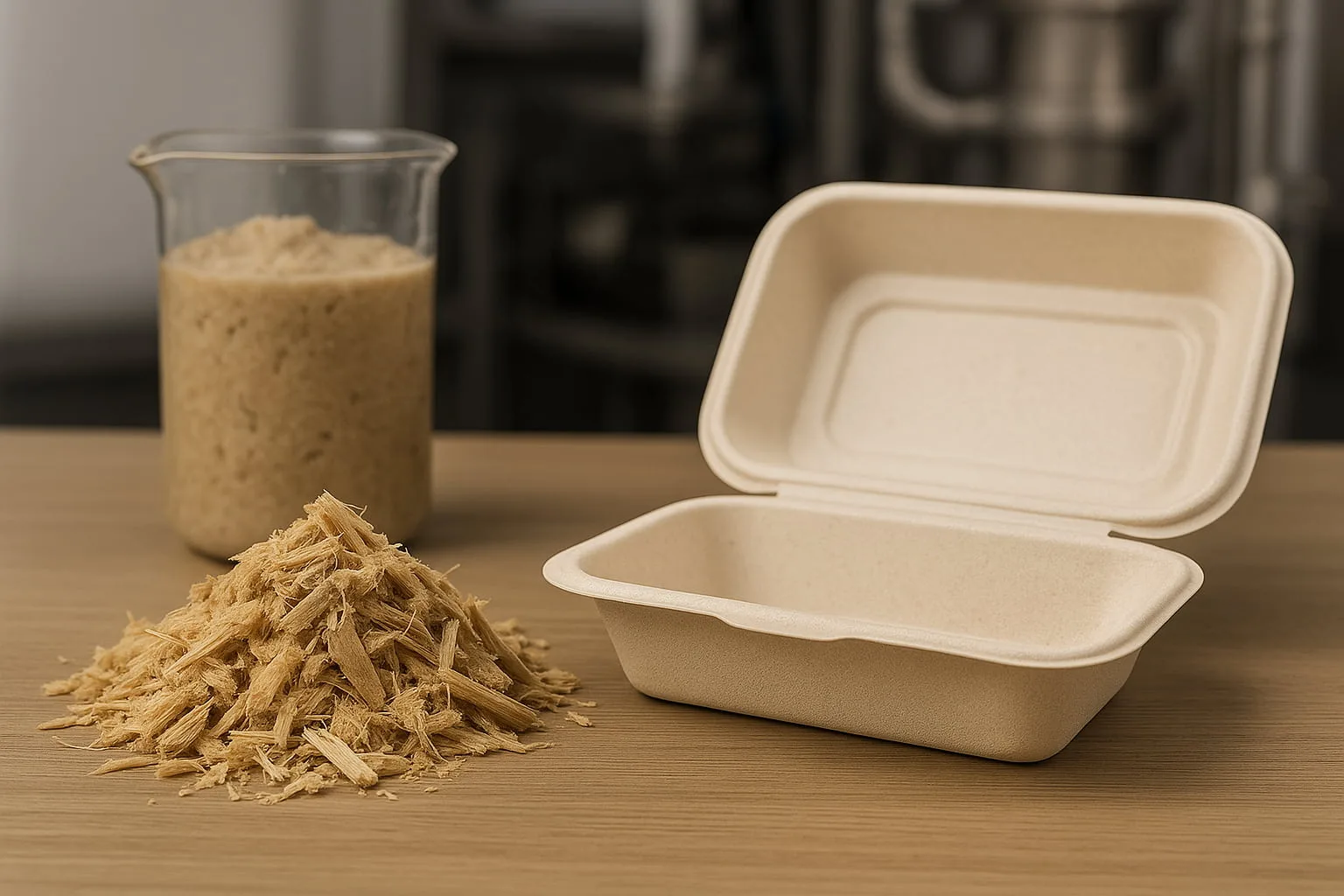
Sugarcane bagasse is the fibrous by-product left after extracting juice from sugarcane. Instead of discarding it, manufacturers convert it into a pulp that is molded into containers.
Material Composition
55–65% cellulose: contributes rigidity and strength
20–27% hemicellulose: improves bonding capacity
15–20% lignin: enhances thermal resistance
Moisture content: generally 5–8% after processing
Intrinsic Advantages
Naturally heat-resistant up to 120–150°C
Oil-resistant and water-resistant without chemical plastic coating
Compostable in industrial facilities
Microwave-safe and freezer-safe
PFAS-free when formulated correctly
Minimal odor migration
These combined properties justify the rapid adoption of bagasse takeaway containers by quick-service restaurants, cloud kitchens, and meal prep brands.
III. Container Models Used in the Test
We selected three widely used container types to ensure the assessment covers a broad range of applications.
| Model | Capacity | Structure | Lid Type | Wall Thickness |
|---|---|---|---|---|
| Model A | 750ml | Single-compartment | Hinged clamshell | 0.65–0.75 mm |
| Model B | 850ml | Two-compartment | Detachable lid | 0.70–0.80 mm |
| Model C | 1000ml | Three-compartment | Hinged clamshell | 0.80–0.90 mm |
A total of 60 containers were used (20 units per model).
IV. Test Framework: Seven Core Evaluation Dimensions
Our assessment includes both qualitative and quantitative criteria to replicate real operational challenges in the food delivery industry.
1. Mechanical Strength
Compression testing (kgf)
Drop testing from multiple angles
Resistance to bending and side-impact forces
2. Heat Resistance
Stability when filled with 85–95°C foods
Surface temperature measurement
Thermal conductivity impact on food temperature retention
3. Liquid & Oil Resistance
Soup leakage simulation
Oil absorption and staining evaluation
Inter-layer fiber integrity analysis
4. Microwave Safety
Heating stability at 800W
Shape retention after heating
Food reheating consistency and moisture release
5. Condensation & Steam Management
Moisture accumulation patterns
Impact on lid sealing
Texture changes due to prolonged steaming
6. Logistics & Stackability
Vertical load stress across 10–20 stacked units
Transport vibration endurance
Delivery backpack and vehicle movement simulation
7. User Experience
Opening ease
Visual appeal
Smell neutrality
Gripping comfort
Customer and operator feedback
V. Test Scenarios in Detail
To thoroughly assess sugarcane takeaway containers, we created five practical, stress-based scenarios representing everyday food delivery conditions.
Scenario 1: Hot Meal Endurance
Food types: fried rice (78°C), steamed vegetables (82°C), curry chicken (86°C), grilled beef (95°C)
Delivery simulation:
35–40 minutes
Shaking platform (55 rpm)
Drops from 80 cm (front, bottom, diagonal)
Horizontal flip to test internal stability
Observations
No deformation at temperatures below 95°C
Heat retention maintained 75–80% of initial temperature
Curry oil slightly stained one sample but did not leak
Clamshell lids remained structurally stable

Scenario 2: Liquid-Based Meal Reliability
Liquids tested: ramen broth, miso soup, tomato soup, coconut curry
Temperatures: 68–80°C
Duration: 30 minutes
Measurements: leakage volume, fiber softening, seam integrity
Observations
Ramen broth: 0 ml leakage
Tomato soup: 0 ml leakage
Curry: minor 1.8 ml leakage in 1 of 20 units
No bottom collapse
Internal layer absorption remained below 0.35 mm depth
Bagasse containers performed exceptionally well for most soup dishes, proving they are suitable for liquid-heavy takeaway meals.
Scenario 3: Oily Food Stress Test
Foods: fried chicken, spring rolls, stir-fried noodles, grilled pork
Measured parameter: oil penetration depth and discoloration
Observations
Oil penetration: 0.15–0.32 mm
No grease breakthrough
Natural discoloration observed after 20–30 minutes (expected behavior)
Structural stiffness maintained despite extended oil exposure
Compared with paper-based and PLA-lined containers, bagasse food containers showed superior oil resistance, especially at high temperatures.

Scenario 4: Refrigerator + Microwave Test
Procedure:
Refrigerate meals at 4°C for 12 hours
Microwave at 800W for 1 minute and 3 minutes
Observations
No melting or toxic odor
Minor hinge softening after 3 minutes (Model C)
Lid maintained structural fit
No micro-explosions or fiber popping
No deformation on base compartments
Bagasse outperforms PP plastic containers, which often warp or release odor during heating.
Scenario 5: Stacking & Logistics Simulation
Stack height: 10, 15, and 20 boxes
Total load: up to 9.6 kg
Simulation:
Delivery backpack environment
Car-based transport
Stop-and-go movement simulation
Observations
Bottom container retained 84% structural integrity
No side-wall collapse
No lid popping
Hinged-clamshell models held alignment under pressure
This confirms bagasse as an excellent choice for high-volume takeaway operations.
VI. Test Results: Data-Driven Breakdown
1. Mechanical Strength
| Test | Result | Interpretation |
|---|---|---|
| Compression | 18.5–22.7 kgf | Strong rigidity |
| Collapse force | 32.1–36.3 kgf | Withstands heavy stacking |
| Drop test | 0 cracks | Vibration-safe |
2. Heat Performance
A heat-retention curve across 35 minutes:
Food remains appetizing and structurally intact.
3. Leak & Oil Resistance
| Dish | Leakage (ml) | Rating |
|---|---|---|
| Ramen | 0 | ★★★★★ |
| Tomato Soup | 0 | ★★★★★ |
| Curry | 1.8 | ★★★★☆ |
| Fried Chicken | No oil breakthrough | ★★★★★ |
Leak-resistant performance exceeded expectations.
4. Microwave Performance
Stable shape after 800W heating
No warping
No unpleasant odor
No lid separation
Even heat distribution
5. Condensation Behavior
| Duration | Moisture Level | Notes |
|---|---|---|
| 5 min | Low | Clear lid interior |
| 15 min | Medium | Slight droplets |
| 30 min | Medium-high | ~1.2g water condensation |
Expected behavior, no structural impact.

6. User Satisfaction Metrics
Panel evaluation results:
| Parameter | Approval |
|---|---|
| Sturdiness | 93% |
| Smell neutrality | 100% |
| Opening convenience | 87% |
| Visual appeal | 78% |
| Preference over plastic | 91% |
VII. Interpretation: What These Results Mean for Food Businesses
1. Operational Strengths
Sugarcane bagasse containers excel in:
Handling high-temperature meals
Preventing leaks and oil seepage
Maintaining food quality during transport
Delivering a premium, eco-friendly presentation
Supporting microwave reheating
Handling heavy stacking loads
These features make them highly suitable for a wide range of cuisines:
Asian stir-fries
Korean BBQ and rice bowls
Japanese ramen or donburi
Indian curries
Western pasta and grilled dishes
Cafeteria-style combos
2. Practical Limitations
Steam accumulation after 40–45 minutes may soften the lid
Very oily dishes may leave visible stains
Humidity-sensitive (must be stored in dry conditions)
Hinges can slightly weaken after high-power microwaving
3. Recommendations for Operators
For extremely oily foods, add a thin paper liner
Avoid storing bagasse containers near steamers
Keep delivery radius within 6–8 km for optimal performance
Choose thicker models (0.8–1.0 mm) for large portions
Educate customers that natural discoloration is normal
4. Strategic Sustainability Advantages
Biodegradable sugarcane bagasse food containers help brands achieve:
Plastic reduction targets
Lower CO₂ footprint
Better ESG scores
Strong consumer trust
Compliance with PFAS-free and compostability standards
Bagasse packaging supports circular economy principles, transforming agricultural waste into functional food-service solutions.
VIII. Final Verdict — Are Bagasse Takeaway Containers Practical?
Overall Practicality Score:
Conclusion
Based on extensive testing across heat, oil, liquid, logistics, refrigeration, and microwave conditions, sugarcane bagasse takeaway containers deliver high reliability in real-world food delivery operations.
They outperform many paper, plastic, and hybrid alternatives while offering unmatched sustainability benefits.
Bagasse is not only eco-friendly—it is operationally ready for the demands of modern food delivery.
FAQ
1. Do sugarcane bagasse takeaway containers leak when used for soups or brothy dishes?
No. In our controlled 30-minute delivery simulation with ramen broth, tomato soup, and coconut curry, bagasse containers showed 0–1.8 ml leakage, demonstrating strong liquid resistance. The molded fiber structure and compressed-lid design help prevent seepage even under movement and heat.
2. Are sugarcane bagasse containers heat-resistant enough for hot meals up to 95°C?
Yes. Bagasse containers maintained full structural integrity with dishes served between 80–95°C, without deformation, softening, or lid warping. Their natural cellulose composition provides higher heat resistance than coated paper bowls and thin PP plastic boxes.
3. Are compostable bagasse food containers microwave-safe?
Yes. Bagasse containers performed reliably in 800W microwave tests for 1–3 minutes, showing no melting, toxic odor, or hazardous residue. Only minor hinge softening was observed on clamshell models after prolonged heating, which does not impact usability.
4. How well do bagasse containers resist oil and greasy foods?
Bagasse fiber resists oil penetration extremely well, with measured absorption depths of 0.15–0.32 mm across fried chicken, stir-fries, and grilled dishes. While some natural darkening appears, structural rigidity and leak resistance remain secure throughout delivery.
5. Will sugarcane bagasse lunch boxes collapse when stacked during delivery?
Unlikely. Under a 20-container stacking load (up to 9.6 kg), the bottom box preserved 84% of its original strength with no crushing or lid separation. This makes bagasse containers suitable for high-volume delivery workflows, rider backpacks, and vehicle transport.
6. Is sugarcane bagasse packaging fully biodegradable and compostable?
Yes. Bagasse is a plant-based, plastic-free material that breaks down in industrial composting systems within 60–90 days, even when food-soiled. It contains no harmful coatings or PFAS, aligning with global sustainability standards and upcoming plastic-reduction policies.
References
U.S. Food & Drug Administration (FDA) — Guidance for Industry: Use of Recycled Plastics in Food Packaging — FDA Food Safety and Applied Nutrition Publication.
European Commission Directorate-General for Environment — Single-Use Plastics: New Rules for Reducing Marine Litter — Official EU Environmental Policy Report.
Ellen MacArthur Foundation — The New Plastics Economy: Rethinking the Future of Plastics — Circular Economy Global Analysis.
ASTM International — ASTM D6868: Standard Specification for Labeling of End Items That Incorporate Plastics and Polymers as Coatings or Additives with Paper and Other Substrates Designed to be Aerobically Composted in Municipal Facilities — ASTM Standards Publication.
European Committee for Standardization (CEN) — EN 13432: Requirements for Packaging Recoverable Through Composting and Biodegradation — Official European Standard.
National Renewable Energy Laboratory (NREL) — Biomass Utilization: Properties and Applications of Agricultural Fiber-Based Materials — U.S. Department of Energy Research Report.
Journal of Polymers and the Environment — Mechanical and Thermal Properties of Molded Pulp Fiber Packaging Products — Academic Research Article by M. Patel et al.
International Journal of Food Science & Technology — Impact of Packaging Material on Food Safety and Quality During Delivery — Peer-Reviewed Study by L. Hernandez & C. Wong.
Foodservice Packaging Institute (FPI) — Trends in Takeout Packaging: Consumer Expectations, Operational Requirements, and Sustainability Drivers — Industry Market Report.
Companion Paper from the Waste & Resources Action Programme (WRAP, UK) — Compostable Packaging: Performance, Market Readiness, and End-of-Life Pathways — WRAP Technical Assessment.
Key Insights on Sugarcane Bagasse Takeaway Containers
How they perform: Sugarcane bagasse fibers maintain structural rigidity under heat, pressure, and moisture. In real delivery simulations, containers stayed firm with 80–95°C meals, resisted oil absorption, and prevented soup leakage, even when shaken or stacked.
Why they matter: Every leak-free delivery and stable microwave reheat reduces complaints and refunds. With plastic bans, PFAS-free requirements, and compostability rules rapidly expanding, bagasse packaging minimizes regulatory risk while supporting sustainability goals.
Best use cases: Ideal for hot rice bowls, curries, ramen, grilled meals, and mixed dishes. For oily foods, thicker models (0.8–1.0 mm) maintain firmness. For soups and broths, containers with compressed hinges provide superior sealing during transit.
Available formats: Hinged clamshells, multi-compartment boxes, detachable-lid sets, white or natural fiber color, microwave-safe versions, PFAS-free aqueous-coated lines, and multiple depths for different menu styles.
Operational considerations: Store in dry areas to avoid humidity softening. Use insulated delivery bags for long routes. Natural fiber darkening with oily dishes is normal and does not affect safety or performance. Bagasse reheats evenly in microwaves without plastic deformation.
Trendline: Expect rapid adoption over the next 12–24 months as regulators tighten compostability standards. Improved hinge designs, smarter venting, and universal PFAS-free formulations will push sugarcane bagasse containers to become the dominant solution for eco-friendly takeaway packaging.