









Quick Summary: Importing Biodegradable Plastic Cups and Cutlery into Mexico & Central America
Biodegradable plastic cups and biodegradable plastic cutlery usually refer to PLA cold cups, PLA cup lids, CPLA forks, CPLA spoons, CPLA knives, individually wrapped compostable cutlery sets, and selected cornstarch tableware. These products are different from paper cups, kraft bowls, or sugarcane bagasse containers because they are normally reviewed as plastic-based compostable foodservice products during import and local compliance checks.
For importers in Mexico and Central America, the safest workflow is to define the product first, confirm the likely HS code with a local customs broker, submit samples and certificates for local review, confirm any local registration or conformity requirement, place the order, arrange production, prepare export documents, and complete customs clearance before commercial distribution.
At Bioleader®, we have supported importers and foodservice distributors in Mexico and Latin American markets with biodegradable and compostable food packaging projects, including PLA cups, compostable lids, CPLA cutlery, cornstarch cutlery, and related disposable tableware. This guide is based on our export experience, buyer communication, supplier-side document preparation, and publicly available local policy requirements. It is designed as a practical sourcing reference, not as legal advice. Importers should always confirm final requirements with their local customs broker, regulatory consultant, or competent authority before shipment.
Key Takeaways for Importers
- PLA cups are mainly designed for cold drinks such as iced coffee, juice, smoothies, bubble tea, yogurt, desserts, and chilled takeaway beverages.
- CPLA cutlery is usually a better option for forks, spoons, knives, and wrapped cutlery kits because crystallized PLA provides better rigidity and heat resistance than regular transparent PLA.
- PLA cups, PLA lids, CPLA cutlery, and cornstarch tableware should not be treated as paper products or molded fiber packaging during customs and compliance review.
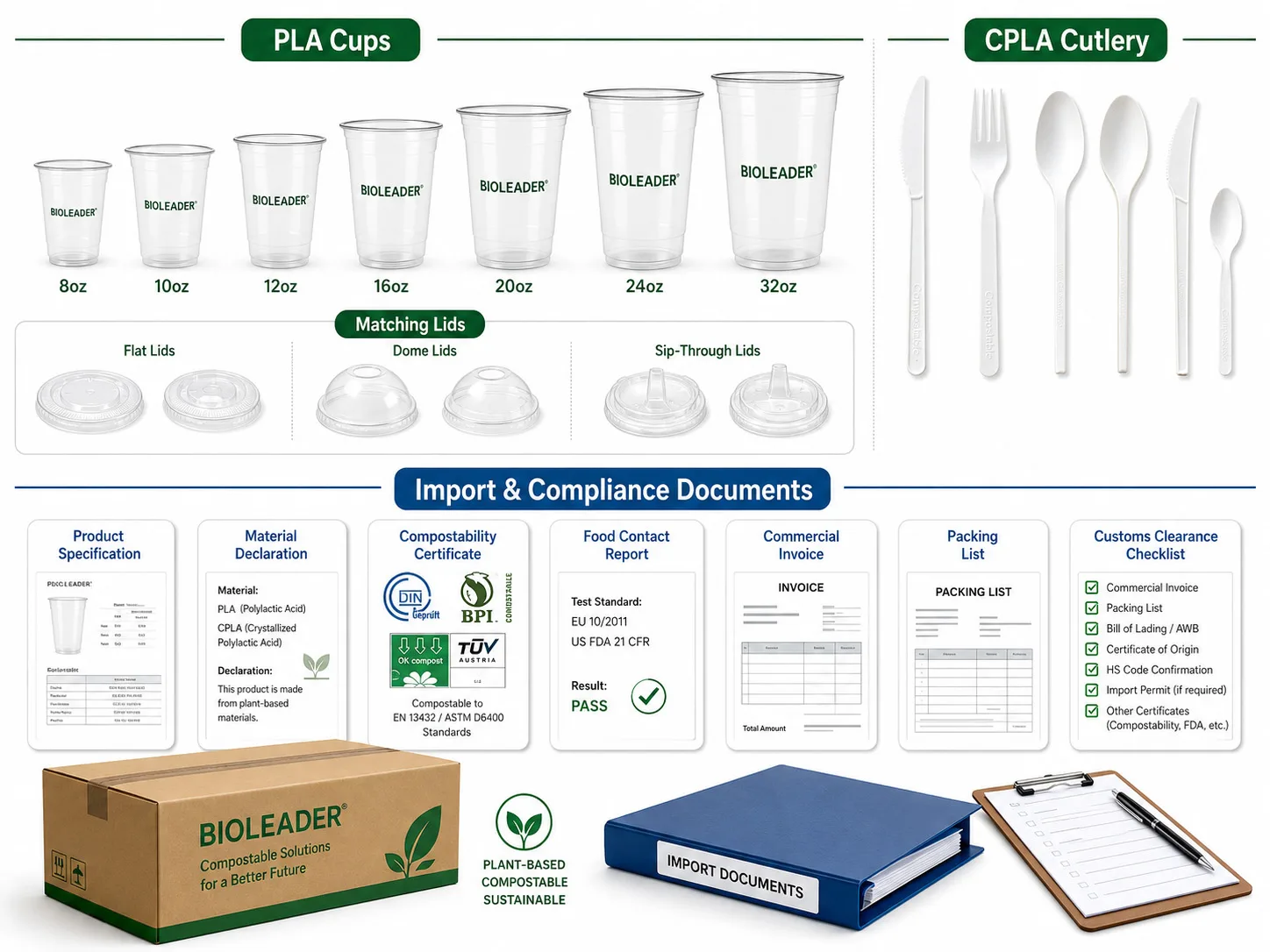
- Early-stage local review normally uses product samples, material declarations, product specifications, compostability certificates, and food contact reports rather than full container loading documents.
- Commercial invoice, packing list, carton dimensions, gross weight, net weight, CBM, loading plan, and bill of lading can only be prepared after the buyer confirms the order quantity, packing method, and shipment plan.
Recommended Related Reading
- For general Mexico import preparation, read How to Import Biodegradable & Compostable Disposable Tableware from China to Mexico.
- For customs risk control, review Common Customs Mistakes When Importing Compostable Tableware into Mexico.
- For the wider policy background, see Mexico’s Plastic and Packaging Regulations: A Strategic Analysis for Businesses and Policymakers.
What Are Biodegradable Plastic Cups and Biodegradable Plastic Cutlery?
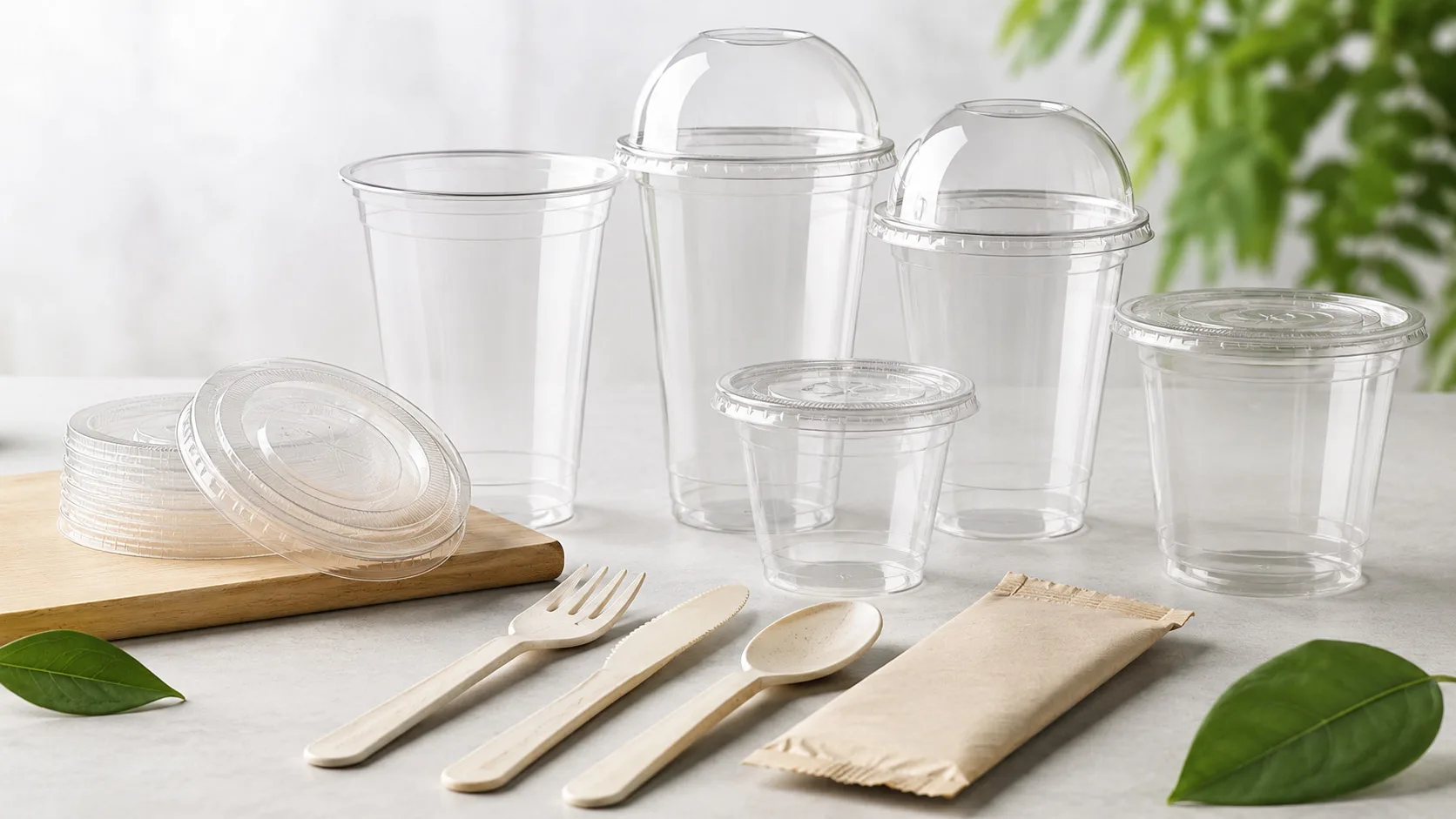
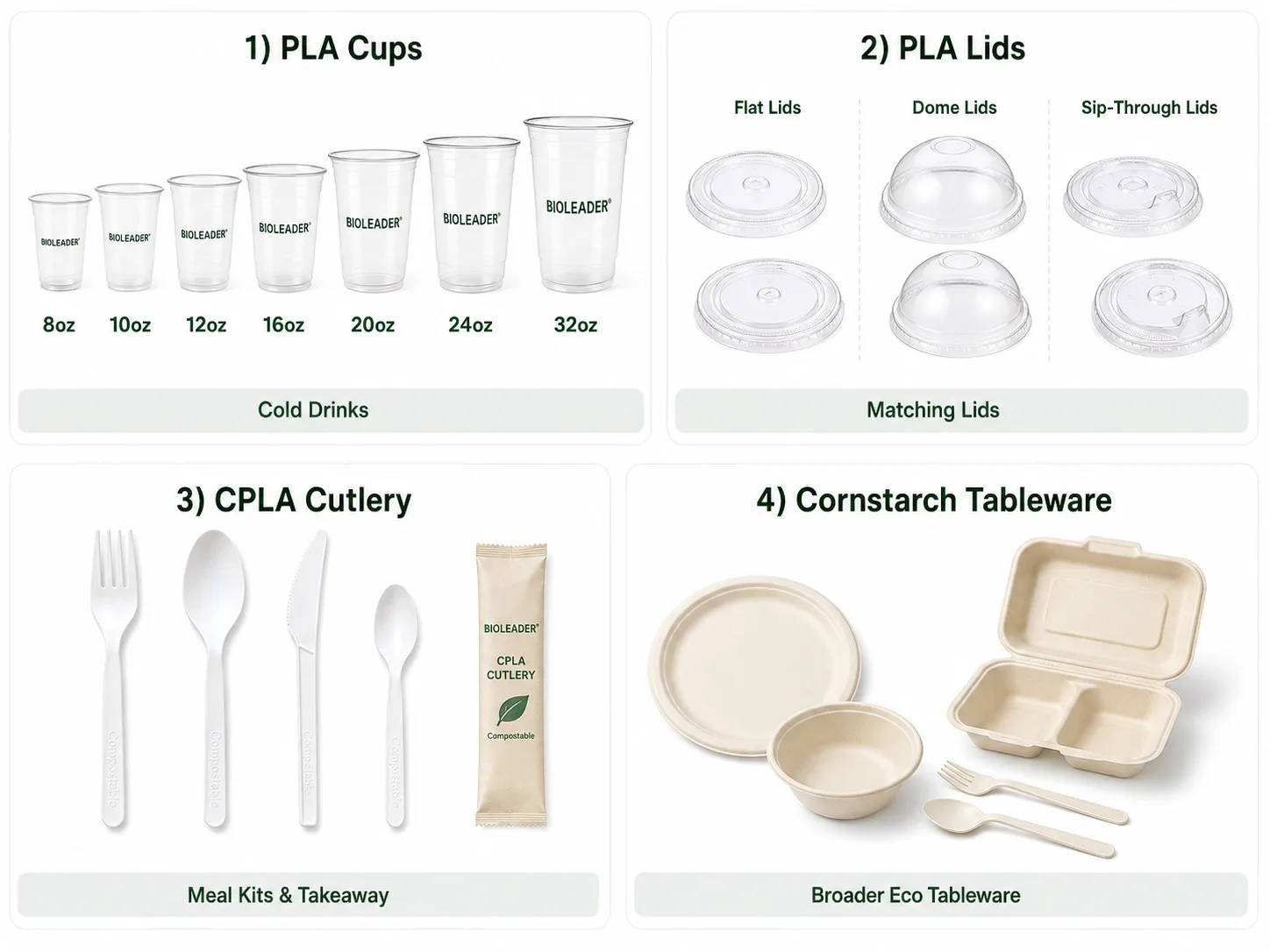
Biodegradable plastic cups and biodegradable plastic cutlery are disposable foodservice products made from plant-based or compostable plastic alternatives rather than conventional petroleum-based plastic. In practical import and sourcing discussions, this product group usually includes PLA cold cups, PLA flat lids, PLA dome lids, PLA sip-through lids, CPLA cutlery, individually wrapped compostable cutlery sets, and certain cornstarch tableware products.
The word “plastic” is still important. Although PLA, CPLA, and cornstarch-based materials are marketed as biodegradable or compostable alternatives, they are often reviewed by customs authorities and local regulators as plastic-based foodservice articles because their physical form, application, and end use are closer to plastic cups, plastic lids, and plastic utensils than to paper packaging or molded fiber packaging.
This distinction matters for Mexico and Central America. A buyer importing PLA cups or CPLA cutlery should not use the same compliance logic as a buyer importing paper soup bowls, kraft paper food boxes, or sugarcane bagasse plates. The importer should confirm the product material, HS code, compostability claim, food contact status, local registration requirement, and Spanish labeling before mass shipment.
Biodegradable Plastic Cups: PLA Cold Cups and Compostable Plastic Cups
 | 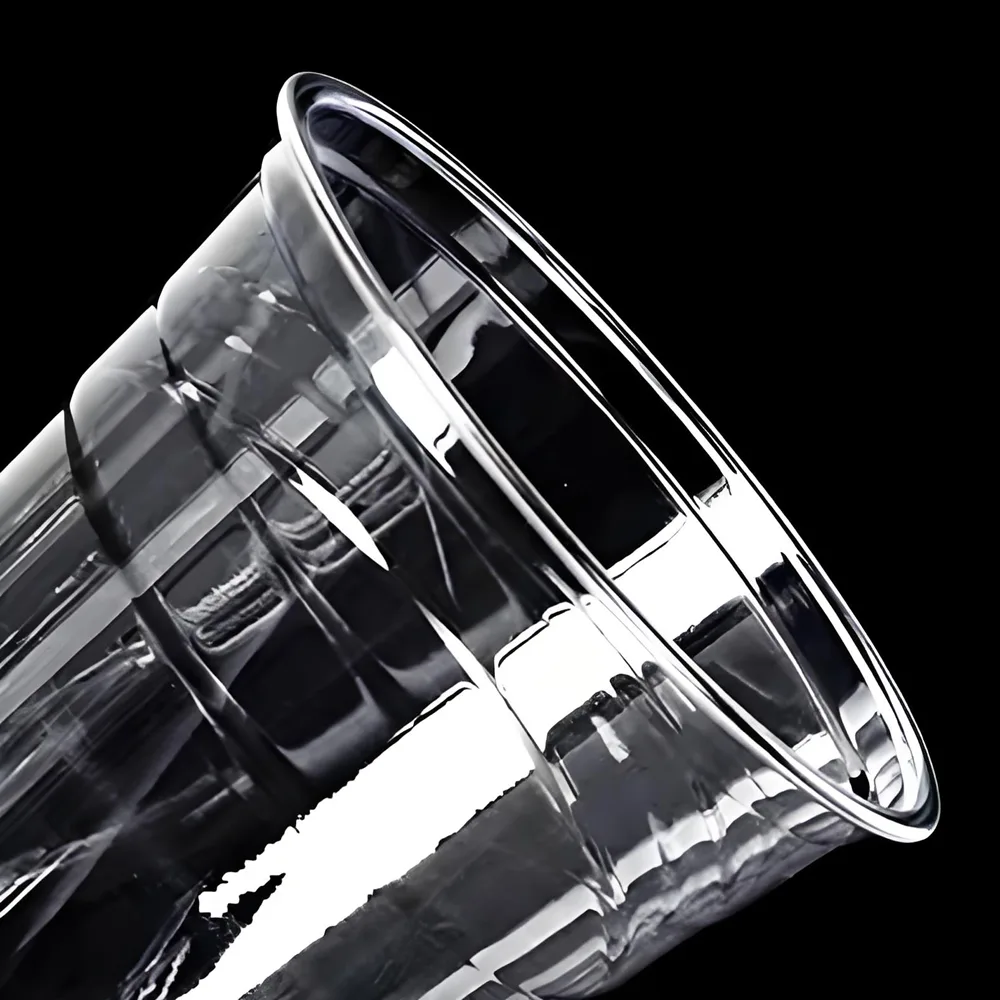 |
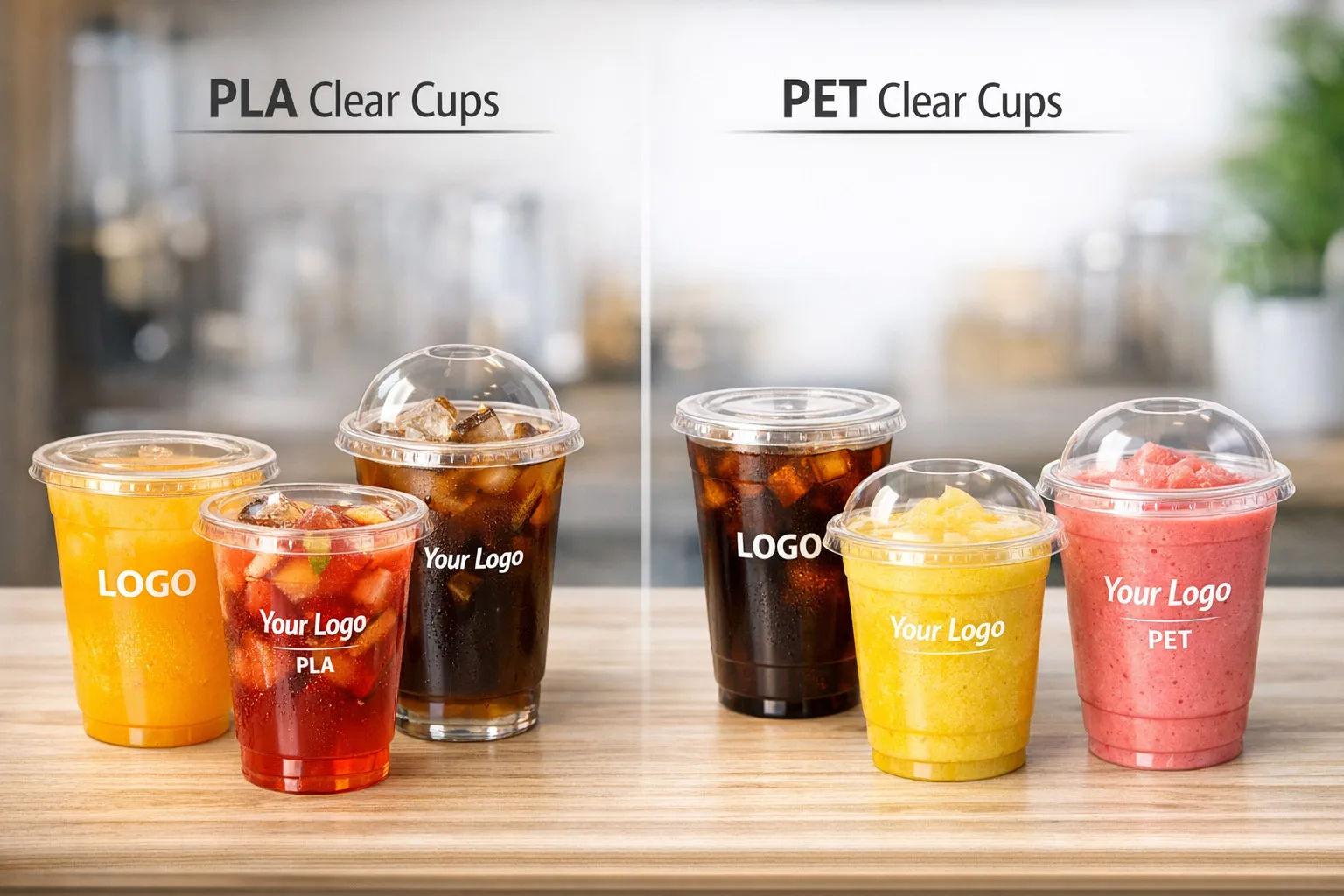
Biodegradable plastic cups usually refer to PLA cold cups or compostable plastic cups designed to replace conventional PET or PP disposable cups in cold beverage service. PLA stands for polylactic acid, a plant-based bioplastic commonly derived from renewable resources such as corn starch or sugarcane. For foodservice buyers, PLA cups are attractive because they provide the transparent appearance of plastic while supporting compostable packaging goals when collected and processed under suitable industrial composting conditions.
PLA cups are mainly used for cold drinks and chilled food applications, including iced coffee, cold brew, juice, smoothies, bubble tea, yogurt, desserts, fruit cups, cold salads, and event beverages. Bioleader® supplies compostable PLA clear cups for cafés, juice bars, beverage chains, catering companies, distributors, and private-label packaging buyers.
Buyer note: PLA cups should not be selected for hot drinks. When exposed to high temperatures, regular PLA may soften or deform. Buyers who need hot coffee cups, soup cups, or microwave-related applications should evaluate paper cups, paper bowls, CPLA lids, PP-coated solutions, or other heat-resistant packaging structures instead of using PLA cold cups outside their intended application.
Biodegradable Plastic Cup Lids: PLA Flat Lids, Dome Lids and Sip-Through Lids
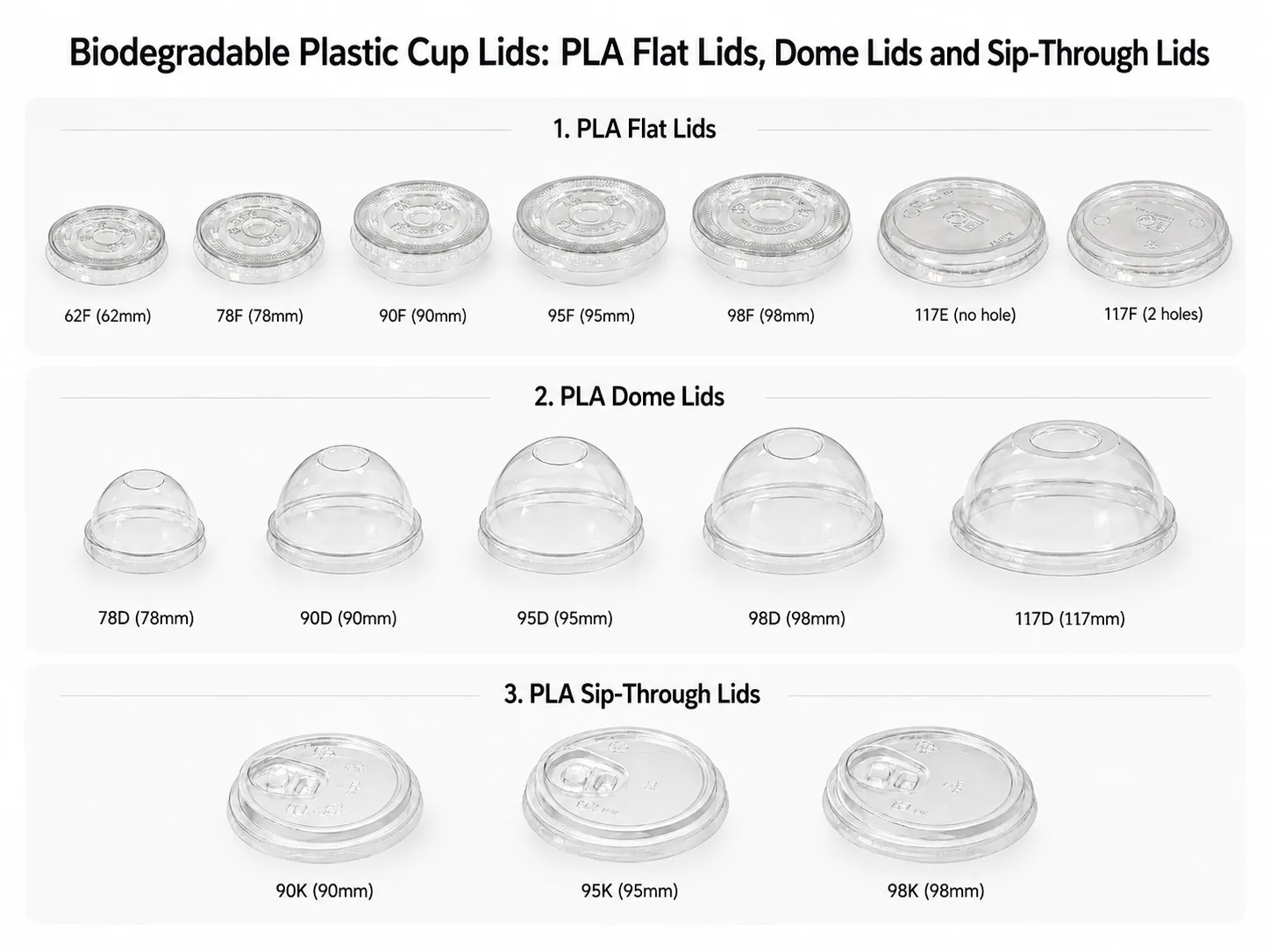
Biodegradable plastic cup lids are an important part of the import project because the lid must match the cup rim diameter, beverage type, takeaway format, and local compliance documentation. Common PLA lid types include flat lids for standard cold drinks, dome lids for whipped cream or smoothie toppings, and sip-through lids for cold beverage takeaway service.
For B2B importers, lid matching should be confirmed before quotation and before sample approval. A 90mm cup should match a 90mm lid, a 95mm cup should match a compatible 95mm lid, and a 98mm cup should match a 98mm lid. Even a small mismatch can create leakage, customer complaints, carton returns, and brand risk in the local market.
Importers should also remember that PLA cups and PLA lids may not always be treated in exactly the same way during customs classification. The final HS code and product description should be confirmed by the local customs broker, especially when the shipment includes mixed SKUs such as cups, flat lids, dome lids, sip lids, straws, or cutlery sets.
Biodegradable Plastic Cutlery: CPLA Forks, Spoons and Knives
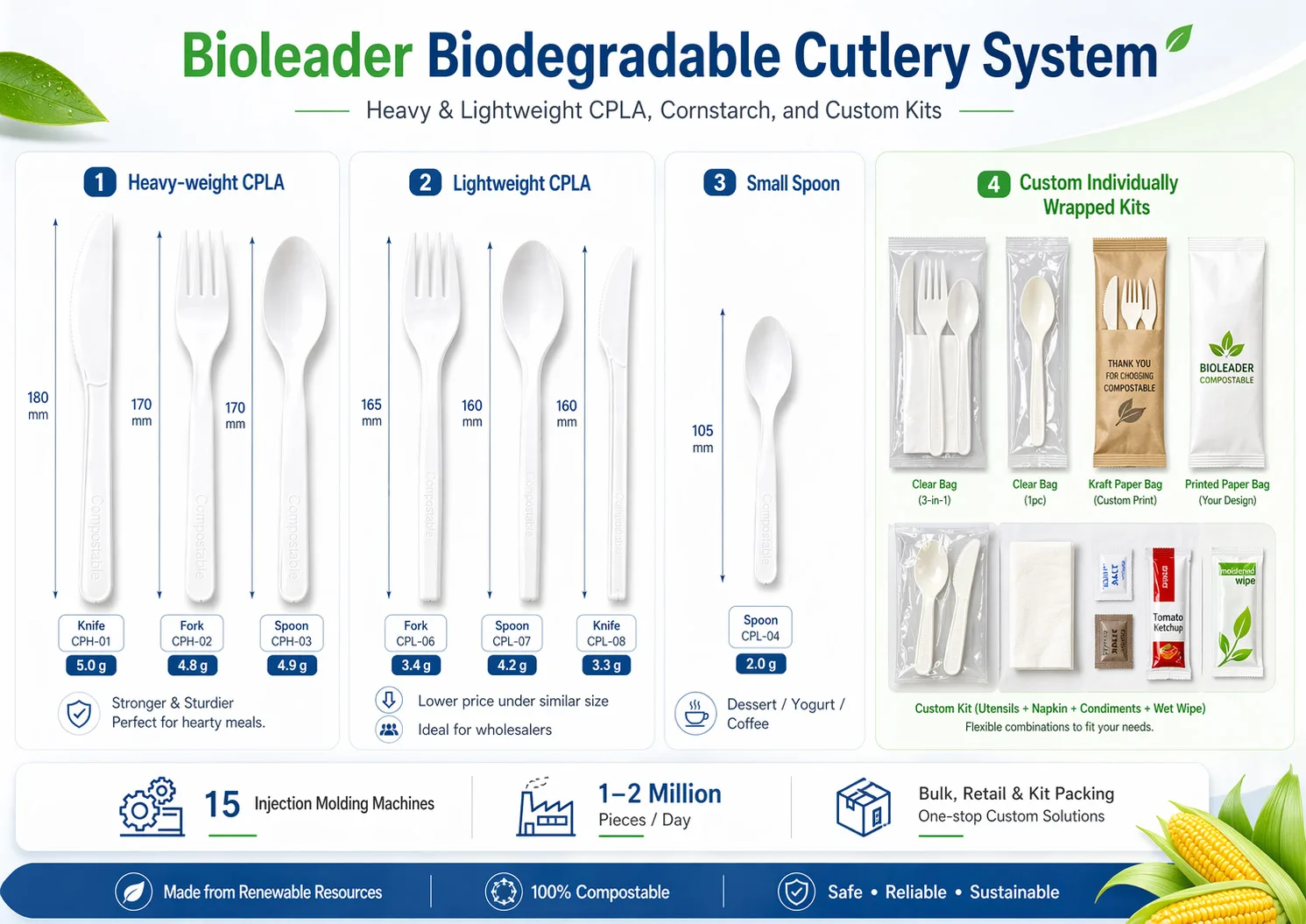
Biodegradable plastic cutlery usually refers to compostable forks, spoons, knives, sporks, and cutlery kits made from CPLA, cornstarch, or other compostable plastic alternatives. CPLA means crystallized polylactic acid. Compared with regular transparent PLA, CPLA is more suitable for disposable cutlery because it offers better rigidity, opacity, and heat resistance for foodservice use.
CPLA cutlery is commonly used for takeaway meals, catering, meal kits, airline meals, hotel breakfast programs, restaurant chains, food delivery platforms, schools, supermarkets, and institutional dining. For importers selling to hygiene-sensitive markets, individually wrapped cutlery sets can also improve product presentation, food safety perception, and retail readiness.
Bioleader® manufactures biodegradable and compostable cutlery, including CPLA forks, CPLA spoons, CPLA knives, cornstarch cutlery, lightweight cutlery, heavy-duty cutlery, and individually wrapped compostable cutlery sets. For Mexico and Central American importers, these products should be reviewed together with PLA cups and compostable lids as part of a plastic-based compostable foodservice packaging category.
Cornstarch Tableware as Another Biodegradable Plastic Alternative
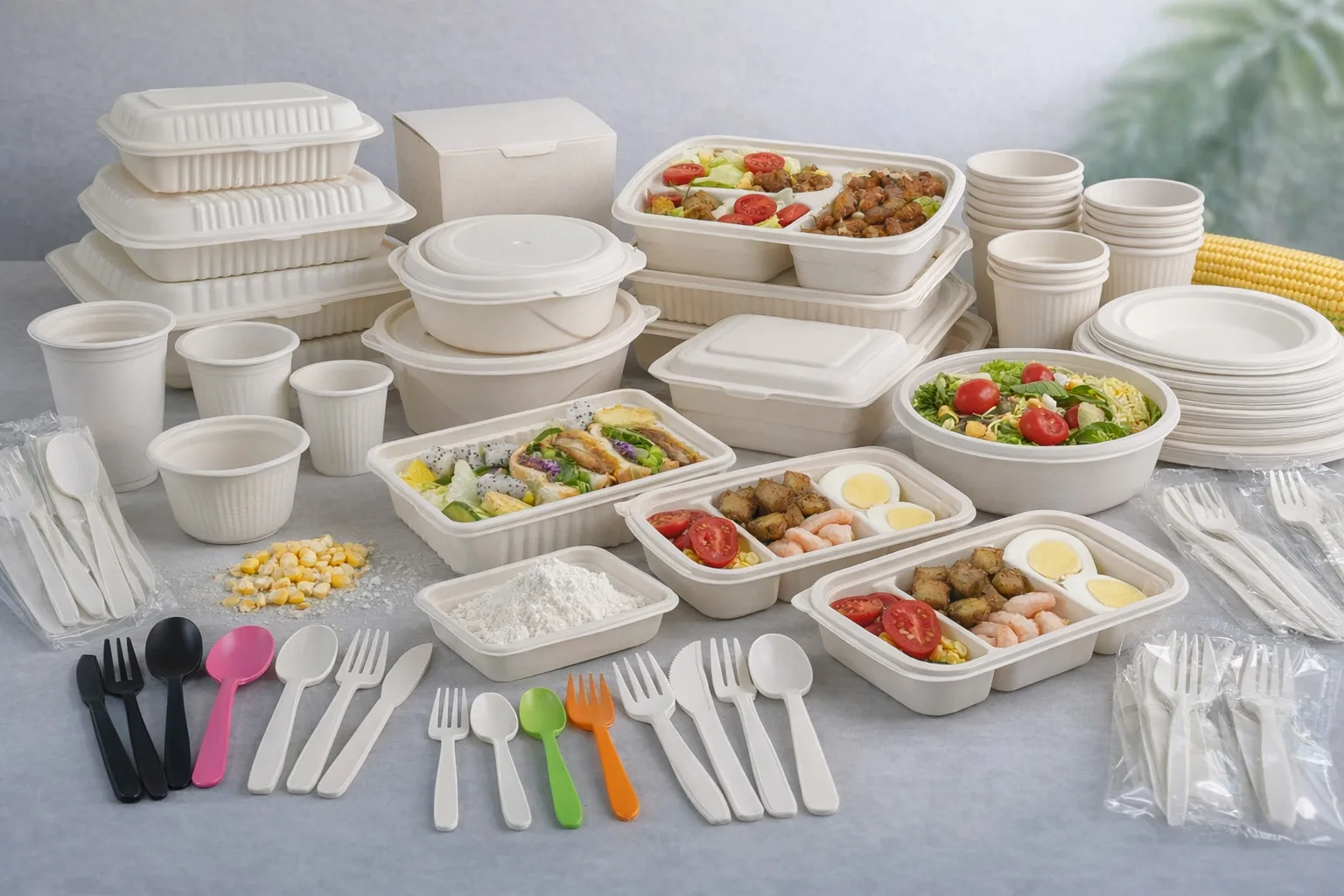
Cornstarch tableware is another product group often considered by buyers searching for biodegradable plastic tableware. It can include disposable plates, bowls, containers, trays, clamshell boxes, cups, forks, spoons, and knives made from starch-based or bioplastic blends. In many B2B sourcing discussions, cornstarch tableware is grouped together with PLA and CPLA products because it is positioned as a replacement for conventional single-use plastic foodservice packaging.
For import purposes, cornstarch tableware should still be checked carefully. The importer should confirm the material declaration, compostability certificate, food contact report, product use, heat resistance, HS code, and local environmental claim requirement before shipment. This is especially important when the product will be marketed as biodegradable, compostable, eco-friendly, or suitable for plastic-reduction policies.
In this article, cornstarch tableware is included as a related biodegradable plastic alternative, but the main focus remains on PLA cups, PLA cup lids, and CPLA cutlery because these products are frequently searched by importers as “biodegradable plastic cups,” “compostable plastic cups,” “PLA cups,” “biodegradable plastic forks and spoons,” and “CPLA cutlery.”
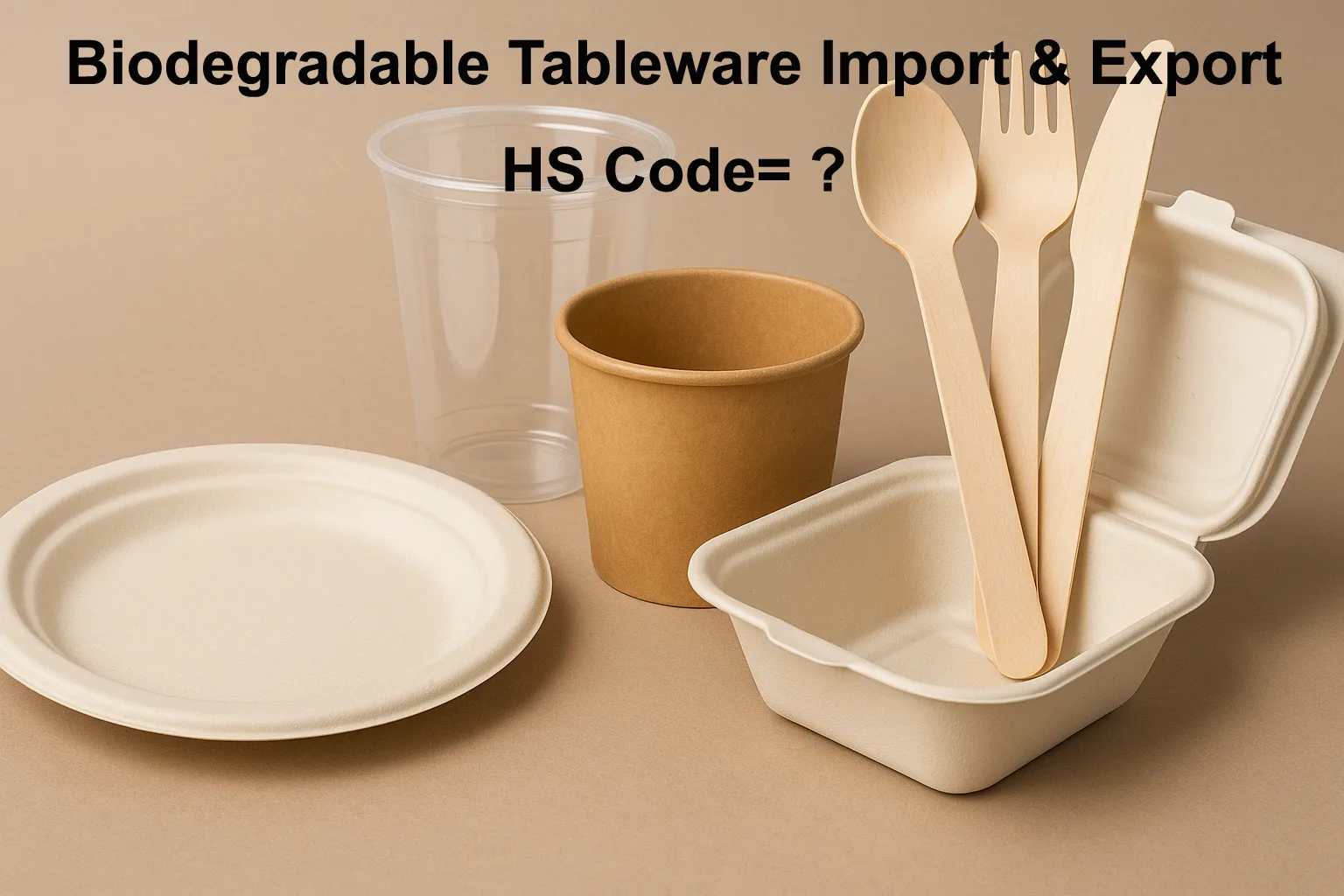
HS Codes for Biodegradable Plastic Cups, PLA Lids and CPLA Cutlery
Before importing biodegradable plastic cups, PLA cup lids or CPLA cutlery into Mexico or Central America, buyers should first understand one important issue: the internationally recognized HS code is normally based on the first 6 digits, while each country may add extra national digits for customs declaration. Therefore, importers should use the international HS code as a reference first, then ask the local customs broker to confirm the final Mexican tariff fraction or destination-country customs code.
For most plastic-based disposable foodservice products, the key reference heading is HS 3924, which covers tableware, kitchenware and other household articles of plastics. Within this heading, HS 3924.10 covers tableware and kitchenware of plastics. In practical import discussions, PLA cups, CPLA forks, CPLA spoons, CPLA knives and many cornstarch-based disposable tableware items are commonly reviewed under this plastic tableware logic because their form and use are similar to plastic foodservice articles.
For export documents, many suppliers and importers may use 3924.10.00 as a practical reference for PLA cups, CPLA cutlery and cornstarch tableware when the products are treated as plastic tableware or kitchenware. For Mexico, a common national reference may be 3924.10.01 for plastic tableware and kitchenware, but the final tariff fraction and any national suffix must be confirmed by the Mexican importer or licensed customs broker.
PLA cup lids require separate attention. If PLA lids are imported and declared as separate plastic lids or closure items, the common reference may be HS 3923.50, which covers stoppers, lids, caps and other closures of plastics. In many practical export files, 3923.50.00 is used as a reference for plastic lids, while Mexico may use a national reference such as 3923.50.01 for plastic lids, caps and closures. If cups and lids are shipped together as a set, or if the destination customs authority treats the lid as part of the serving article, the final declaration route may differ.
Practical customs rule: For Bioleader® export quotations, buyers may use HS 3924.10 / 3924.10.00 as the main reference for PLA cups, CPLA cutlery and cornstarch tableware, while HS 3923.50 / 3923.50.00 may be used as a reference for PLA lids when lids are declared separately. These are reference codes for sourcing and document preparation. The final customs code must always be confirmed by the importer’s local customs broker before shipment.
Why PLA and CPLA Products Are Usually Treated as Plastic Tableware
PLA, CPLA and cornstarch-based products are plant-based or compostable material alternatives, but they still have the physical appearance and foodservice function of plastic articles. PLA cups are transparent drinking cups. PLA lids are formed plastic-style cup lids. CPLA forks, spoons and knives are disposable utensils used in the same application as traditional plastic cutlery.
For customs classification, PLA cups and CPLA cutlery are usually reviewed as plastic-based tableware because their physical form, foodservice use and material behavior are closer to plastic articles than to paper or molded fiber packaging. This does not mean the products are conventional petroleum plastic. It means the importer should prepare documents and customs descriptions with the correct material logic.
From a risk-control perspective, buyers should avoid using vague descriptions such as “eco cups,” “green cutlery,” or “biodegradable items” on customs documents. A clearer description is better, such as “PLA compostable cold drink cups,” “PLA compostable cup lids,” “CPLA compostable forks,” or “CPLA compostable cutlery sets.” This helps the customs broker match the product with the correct classification and supporting documents.
Common HS Code References for PLA Cups, Lids and CPLA Cutlery
The following table gives practical reference codes for buyers. These codes are not a substitute for local customs confirmation, but they help importers, distributors and sourcing teams understand how PLA and CPLA foodservice products are commonly discussed in international trade documentation.
| Product Group | Common International HS Reference | Practical Export Reference | Common Mexico Reference | Buyer Action |
|---|---|---|---|---|
| PLA cold cups | HS 3924.10 | 3924.10.00 | 3924.10.01 may be used as a reference for plastic tableware and kitchenware. | Confirm final tariff fraction, duty rate, product description and compostability documents with the Mexican customs broker. |
| CPLA forks, spoons and knives | HS 3924.10 | 3924.10.00 | 3924.10.01 may be used as a reference for plastic tableware and kitchenware. | Confirm whether forks, spoons, knives and wrapped cutlery sets should be listed separately on the invoice, packing list and customs declaration. |
| Cornstarch tableware | HS 3924.10 may be used when the product is reviewed as plastic-based tableware. | 3924.10.00 or similar national suffixes may be used depending on the market. | 3924.10.01 may be used as a reference if treated as plastic tableware. | Provide material declaration, food contact report, product photos and composition details for customs broker confirmation. |
| PLA flat lids, dome lids and sip-through lids | HS 3923.50 may be used when lids are declared separately as plastic lids or closures. | 3923.50.00 | 3923.50.01 may be used as a reference for plastic lids, caps and closures. | Confirm whether lids should be declared under the cup/tableware route or under the plastic lids and closures route. |
Related HS Code Resources from Bioleader®
For buyers who need a broader reference beyond PLA cups, PLA lids and CPLA cutlery, Bioleader® has prepared a dedicated guide on HS codes for Bioleader® compostable food packaging, covering common export categories such as bagasse tableware, paper packaging, PLA cups, CPLA cutlery and cornstarch tableware.
Exporters and importers can also review the definitive HS codes for biodegradable tableware 2025–2026 exporter’s guide to understand how biodegradable tableware products are commonly classified for international trade and customs preparation.
Why HS Code Confirmation Should Happen Before Shipment
HS code confirmation should happen before shipment because a wrong classification may affect import tax, customs inspection, product description, local permit review and post-clearance compliance. This is especially important for mixed shipments that include PLA cups, PLA lids, CPLA cutlery, cornstarch tableware and other biodegradable plastic products in one container.
In Bioleader® export communication, we often see buyers request a quotation first and then ask for customs documents later. This is workable, but the importer should not wait until the cargo is already at port to discuss HS code and local approval. A better workflow is to send the product specification and sample documents to the customs broker before finalizing the order.
For buyers who need a broader Mexico import workflow beyond PLA and CPLA products, Bioleader® has prepared a detailed guide on how to import biodegradable and compostable disposable tableware from China to Mexico. That guide can be used together with this article when the shipment includes paper cups, bagasse containers, paper bowls or other non-plastic-based compostable packaging.
Important note for importers: HS 3924.10, 3924.10.00, 3923.50 and 3923.50.00 are practical reference codes, not a final legal ruling. The importer should confirm the exact Mexico tariff fraction, NICO code, duty rate, non-tariff requirements and customs declaration wording with a licensed customs broker before shipment.
Mexico Policy Background: Why Compostable Plastic Products Need Local Review
Mexico is not a single-rule market for biodegradable disposable food packaging. Importers need to separate two compliance layers: federal import clearance and local sales or distribution compliance. Federal import clearance focuses on customs declaration, importer qualification, HS code, invoice, packing list and import documents. Local sales compliance focuses on whether the product can be legally commercialized, distributed or delivered in a specific state or city.
This distinction is especially important for Mexico City, commonly known as CDMX. Mexico City has stricter environmental rules for single-use plastic products and compostable alternatives. If a buyer imports PLA cups, PLA lids or CPLA cutlery into Mexico and plans to sell or distribute them in CDMX, the importer should confirm whether the products fall under the local requirements for compostable single-use plastic products.
For biodegradable plastic cups and cutlery, the key question is not simply “Can this product be imported?” The better question is: Can this product be imported, correctly declared, supported by certificates, labeled properly and legally sold in the intended local market? This is why samples, material declarations, compostability certificates, food contact reports and local registration checks should be arranged before mass shipment.
Federal Import Clearance Is Handled by the Mexican Importer
At the federal level, the Mexican importer and its customs broker normally handle import registration, customs declaration, tariff classification, tax calculation and document submission. The overseas supplier can provide supplier-side documents, but the supplier does not replace the local importer or customs broker in official Mexican import procedures.
For PLA cups, PLA lids and CPLA cutlery, the importer should ask the customs broker to confirm the product description, HS code, duty rate, customs value, invoice requirements, Spanish product description and any non-tariff documentation. If the importer plans to sell the product to beverage chains, restaurant distributors, supermarkets or foodservice operators, the compliance file should also be kept for future buyer review.
Bioleader® can support this stage by providing clear product specifications, material declarations, product photos, carton information, packing details and available certificates. After the order is confirmed, Bioleader® can also prepare the commercial invoice, packing list, carton dimensions, gross weight, net weight, CBM and loading information needed for export and import clearance.
Local Sales Compliance May Be More Important Than Import Clearance
For compostable plastic products, import clearance alone does not always mean the product can be freely marketed everywhere. A product may clear customs, but still face local sales risk if the environmental claim, label, registration status or compostability statement does not meet the local rule in the city or state where it will be sold.
In Mexico City, this issue is particularly relevant because local rules target single-use plastic products and define specific requirements for compostable alternatives. Importers should not assume that an overseas compostability certificate automatically replaces local registration or local environmental compliance. The certificate is usually one part of the document package, not the whole approval process.
For buyers who want the wider legal and policy context behind Mexico’s plastic restrictions, Bioleader® has published a strategic analysis of Mexico’s plastic and packaging regulations. This article stays focused on the practical import process for PLA cups, PLA lids, CPLA cutlery and biodegradable plastic cutlery.
Mexico City CDMX: SEDEMA Registration for Compostable Plastic Products
Mexico City has a specific local compliance pathway for compostable single-use plastic products. The relevant official terms buyers should know include SEDEMA, DGEIRA, NACDMX-010-AMBT-2019, Registro para comercializar bolsas y productos compostables, and productos plásticos de un solo uso compostables.
For an importer, this means that PLA cups, PLA cup lids, CPLA cutlery and other compostable plastic foodservice items may need local review before they are commercialized or distributed in CDMX. The process is normally handled by the Mexican importer, distributor, local regulatory consultant or customs-related service provider. It is not normally completed directly by the overseas factory.
Bioleader®’s role as the manufacturer and export supplier is to provide the technical and supplier-side documents needed for local review. These may include product samples, product specifications, PLA or CPLA material declarations, compostability certificates, food contact reports, product images, packing information and supplier company information. The local importer then uses these documents to confirm the correct procedure with SEDEMA, DGEIRA or its regulatory consultant.
What the Importer Should Prepare for CDMX Review
For CDMX-related projects, the importer should prepare a complete product file before placing a mass order. This file does not need to include final container loading data at the early stage, but it should be strong enough for product review and local compliance discussion.
| Document or Item | Why It Matters | Who Normally Provides It |
|---|---|---|
| Physical product sample | The local party may need to review product structure, material, thickness, lid fit and commercial appearance. | Supplier provides samples; importer submits locally if required. |
| Product specification sheet | This confirms product name, size, capacity, weight, material, application and packing method. | Supplier provides the specification sheet. |
| Material declaration | This explains whether the product is PLA, CPLA, cornstarch blend or another compostable material. | Supplier provides material information. |
| Compostability certificate | This supports the compostable claim and helps the importer discuss local requirements with the authority or consultant. | Supplier provides available certificates or test documents. |
| Food contact report | This supports foodservice use and gives downstream buyers more confidence. | Supplier provides available food contact reports. |
| Spanish product description | This helps the importer, broker and local reviewer understand product use and environmental claim correctly. | Importer and supplier can prepare it together. |
| Labeling draft | This helps confirm whether compostable claims, disposal instructions and local symbols are acceptable. | Importer confirms local rules; supplier supports artwork if needed. |
Why This Should Be Done Before Mass Shipment
The best time to handle CDMX compliance confirmation is before mass shipment. If the importer waits until the goods arrive at port, there may be no time to correct labels, adjust documents, prepare local registration records or answer buyer compliance questions. This can create customs delays, port storage charges, delivery disruption and local sales risk.
For practical export projects, Bioleader® recommends this sequence: request samples and supplier documents first, submit the documents to the local broker or authority for review, confirm the product and compliance route, then finalize the order quantity, packing, private label requirements and shipment schedule.
This workflow protects both sides. The importer reduces local compliance risk, while the supplier can prepare production and export documents according to the confirmed product specification. It also helps distributors build a more credible sales file when selling PLA cups, compostable lids and CPLA cutlery to restaurants, beverage chains, supermarkets or foodservice operators.
Buyer recommendation: For CDMX sales, do not treat SEDEMA-related review as a last-minute customs issue. It should be handled as part of product approval, labeling control and local distribution planning before mass shipment.
Step-by-Step Import Process for PLA Cups, PLA Lids and CPLA Cutlery
Importing PLA cups, PLA lids and CPLA cutlery into Mexico or Central America should be managed as a structured compliance and sourcing project. The process is not complicated when the importer prepares documents early, but it can become risky if the buyer treats biodegradable plastic products like ordinary disposable items and waits until the cargo is already at port.
Based on Bioleader®’s export communication with Latin American buyers, the most practical workflow is to define the product clearly, confirm the likely HS code locally, request samples and certificates, submit the file to the local broker or authority, confirm local labeling and environmental claims, place the order, prepare shipment documents, and complete local approval before shipment or before cargo arrival.
Step 1: Confirm the Product Type and Application
The importer should first confirm exactly what product is being purchased. PLA cold cups, PLA flat lids, PLA dome lids, PLA sip-through lids, CPLA forks, CPLA spoons, CPLA knives, individually wrapped cutlery sets and cornstarch tableware may all belong to the broader category of biodegradable plastic foodservice products, but they are not the same product for customs, application or documentation purposes.
The intended application should also be confirmed before quotation. PLA cups are mainly used for cold beverages such as iced coffee, juice, smoothies, bubble tea and desserts. CPLA cutlery is used for takeaway meals, catering, hotel breakfast, food delivery, airline meals and restaurant programs. Cornstarch tableware may be used for plates, bowls, trays, containers and utensils depending on product structure and heat resistance.
Step 2: Confirm HS Code with the Local Customs Broker
After the product type is clear, the importer should confirm the likely HS code with a local customs broker. The supplier can provide a reference product description, material statement and suggested classification logic, but the final HS code must be confirmed by the importer or customs broker in the destination market.
This step is especially important when the order includes mixed biodegradable plastic products. PLA cups, PLA lids, CPLA forks, CPLA spoons, CPLA knives and cornstarch containers may not always be treated under one code. Cup lids may require separate confirmation, and individually wrapped cutlery sets may require a more precise product description.
For buyers who need a broader Mexico import workflow beyond PLA and CPLA products, Bioleader® has prepared a detailed guide on how to import biodegradable and compostable disposable tableware from China to Mexico. That guide is useful when the shipment also includes paper cups, bagasse containers, kraft bowls or other non-plastic compostable food packaging.
Step 3: Request Samples and Technical Documents from the Supplier
The importer should request product samples and technical documents before placing a bulk order. This is the stage where the buyer can verify material, appearance, lid fit, cutlery strength, packaging method and certificate availability. For Mexico City, Panama and some Central American markets, this document package may also support local registration, conformity review or customs broker pre-check.
The recommended early-stage document package includes physical samples, product specification sheets, PLA or CPLA material declarations, compostability certificates, food contact reports, product photos, packing information, Spanish product descriptions and supplier company information. For custom logo projects, the buyer should also prepare artwork and confirm whether the label claim matches the available certificates.
Step 4: Submit Documents to the Local Authority, Broker or Consultant
Once the samples and technical file are ready, the importer should submit the documents to the appropriate local channel. In Mexico City, this may involve SEDEMA, DGEIRA, a customs broker or a regulatory consultant. In Panama, the importer should check MICI and DGNTI requirements. In Belize, the importer may need to check whether the product is treated as restricted or commercially biodegradable plastic. In Costa Rica, Guatemala and El Salvador, a customs broker and local compliance advisor should confirm the route before shipment.
This submission is usually handled by the importer, distributor or local representative because local registration, customs declaration and commercial distribution are controlled by the buyer’s market. The overseas factory can support the process with technical documents, but it normally cannot replace the importer in local official procedures.
Step 5: Confirm Labeling and Compostable Claims
Labeling is a major risk point for biodegradable plastic cups and cutlery. If the product, inner bag, carton or marketing material says “biodegradable,” “compostable,” “eco-friendly,” “plant-based,” “plastic-free” or “home compostable,” the claim should be supported by the correct certificate, material declaration and local approval route.
Buyers should be careful with broad environmental claims. A PLA cup may be industrially compostable under certain conditions, but that does not mean it will biodegrade in the ocean, landfill or natural environment. CPLA cutlery may support compostable foodservice programs, but it should not be described as home compostable unless the product has the correct certification and the claim is accepted locally.
Step 6: Confirm Order, Production and Shipment Documents
After product selection, HS code review and local compliance confirmation are completed, the buyer can confirm the order. At this stage, the supplier can prepare commercial details such as final quotation, MOQ, carton packing, lead time, custom printing cost, mixed container plan and payment terms.
After order confirmation, Bioleader® can prepare the formal shipment document package, including proforma invoice, commercial invoice, packing list, HS code reference, carton dimensions, gross weight, net weight, CBM, loading plan, bill of lading information and certificate of origin if required. These documents support export from China and import clearance in the destination market.
Step 7: Complete Local Approval Before Shipment or Before Arrival
The safest timing for local approval is before shipment. If that is not possible, the importer should complete local confirmation before cargo arrival. Waiting until the goods reach the port is risky because there may be no time to correct labels, add documents, answer authority questions or adjust customs descriptions.
The practical import sequence should be: product confirmation, sample review, certificate review, local broker or authority confirmation, order confirmation, production, shipment documents, customs clearance and local sales. This sequence reduces delays, protects the importer’s reputation and improves the credibility of biodegradable plastic foodservice packaging in the local market.
Panama and Central America: What Importers Should Check Before Shipment
Mexico is not the only market where biodegradable plastic cups and cutlery require careful review. Central American countries may have different rules for single-use plastics, compostable alternatives, environmental claims, import permits and conformity documents. Importers should not assume that approval in one country automatically means approval in another country.
For Bioleader® buyers, the best regional approach is to use one supplier-side technical file and then adapt the local review process country by country. The supplier can prepare product specifications, material declarations, samples and certificates, while the importer confirms the national or local import route with the customs broker and competent authority.
Panama: DGNTI Certificate of Conformity for Single-Use Plastic Alternatives
Panama is an important market to check before shipment because it has a more formal conformity route for replacement products related to single-use plastics. Importers should verify whether PLA cups, PLA lids, CPLA cutlery or cornstarch tableware require a certificate of conformity through MICI and DGNTI before commercial import.
For Panama projects, the importer should prepare samples, product specifications, material declarations, compostability certificates, food contact documents, supplier declarations and product descriptions. If DGNTI or another local authority requires a conformity application, the importer should complete the process before arranging mass shipment.
Costa Rica, Belize, Guatemala and El Salvador: Local Broker Review Is Essential
Costa Rica, Belize, Guatemala and El Salvador should each be reviewed with a local customs broker or regulatory consultant. These markets may have different controls on single-use plastic products, biodegradable alternatives, environmental claims, restricted products and product labeling.
Belize deserves special attention because restricted plastic products and commercially biodegradable plastic alternatives may require careful review before import. The importer should check whether the product falls into a prohibited category, a restricted category or an approved biodegradable alternative category.
For Costa Rica, Guatemala and El Salvador, importers should confirm tariff classification, customs documents, local plastic-reduction rules, food contact expectations, labeling language and whether any environmental claim requires evidence. For distributors selling to restaurant chains or government-related buyers, documentation discipline becomes even more important.
Country-by-Country Compliance Comparison Table
| Country or Market | Main Authority or Checkpoint | Product Scope | Before Order | Before Shipment | Main Risk | Buyer Action |
|---|---|---|---|---|---|---|
| Mexico / CDMX | SEDEMA, DGEIRA, customs broker and local regulatory consultant. | PLA cups, PLA lids, CPLA cutlery and compostable single-use plastic products. | Review samples, specifications, material declarations and compostability documents. | Confirm local registration, labeling and commercial distribution requirements. | The product may clear customs but face local sales or distribution compliance risk. | Submit supplier documents to the local broker or authority before mass shipment. |
| Panama | MICI, DGNTI, customs authority and importer’s broker. | Replacement products for single-use plastics, including compostable foodservice items. | Confirm whether a certificate of conformity is required. | Complete conformity review before commercial shipment if required. | Shipping before conformity confirmation may create clearance delay. | Check DGNTI requirements and prepare technical documents early. |
| Costa Rica | Customs broker, environmental rules and relevant local authorities. | Biodegradable plastic cups, cutlery and other single-use plastic alternatives. | Confirm product claim, HS code and foodservice use. | Prepare invoice, packing list, certificates and label information. | Environmental claims may not match local rules or buyer expectations. | Use clear Spanish product descriptions and certificate-backed claims. |
| Belize | Department of the Environment, customs authority and local importer. | Restricted plastic products and commercially biodegradable plastic alternatives. | Check whether the product is restricted, prohibited or eligible for biodegradable review. | Confirm permit or registration requirements before import. | A product may be refused if treated as a prohibited plastic item. | Submit documents for local review before ordering commercial quantity. |
| Guatemala | Customs broker and relevant national or municipal rules. | PLA cups, biodegradable plastic cutlery and compostable alternatives. | Confirm tariff classification and local plastic policy. | Prepare customs documents and evidence for environmental claims. | Municipal or local enforcement may differ from national-level assumptions. | Ask the local broker to review the product file before shipment. |
| El Salvador | Customs broker and relevant authority if product-specific review is required. | Biodegradable plastic cups, lids, utensils and disposable foodservice products. | Confirm import classification and documentation needs. | Prepare shipment documents, product descriptions and certificates. | Incomplete documents may delay customs clearance or buyer approval. | Use a clear product list and confirm requirements before container loading. |
Required Document Checklist for Biodegradable Plastic Cups and Cutlery
A strong document package is the foundation of a successful import project. For biodegradable plastic cups, PLA lids and CPLA cutlery, the importer should separate early-stage review documents from shipment documents. This avoids confusion and helps both buyer and supplier work more efficiently.
Early-stage documents are used for product evaluation, local authority consultation, customs broker review and buyer approval. Shipment documents are prepared after order confirmation and are used for export, import clearance and logistics execution.
| Document | Needed Before Order? | Needed After Order? | Who Provides It? | Purpose |
|---|---|---|---|---|
| Product sample | Yes | No | Supplier provides; importer submits locally if required. | Supports physical review, lid fit, cutlery strength and local approval discussion. |
| Product specification sheet | Yes | Yes | Supplier | Confirms size, capacity, weight, material, use and packing method. |
| Material declaration | Yes | Yes | Supplier | Explains whether the product is PLA, CPLA, cornstarch blend or another compostable material. |
| Compostability certificate | Yes | Yes | Supplier provides available documents. | Supports compostable claims and local compliance review. |
| Food contact report | Yes | Yes | Supplier provides available reports. | Supports safe foodservice use and buyer due diligence. |
| Product photos | Yes | Optional | Supplier | Helps customs broker and regulatory consultant identify product form and use. |
| Spanish product description | Yes | Yes | Importer and supplier can prepare together. | Helps local authorities, customs brokers and buyers understand the product correctly. |
| Commercial invoice and packing list | No | Yes | Supplier | Supports export and import customs declaration after order confirmation. |
| Bill of lading | No | Yes | Carrier or freight forwarder | Supports cargo ownership, shipping record and import clearance. |
Common Mistakes When Importing Biodegradable Plastic Cups and Cutlery
Most import problems are not caused by the product itself. They are usually caused by unclear product description, wrong material understanding, weak documentation, unsupported environmental claims, poor timing or lack of local broker confirmation.
Importers preparing their first shipment can also review Bioleader®’s guide to common customs mistakes when importing compostable tableware into Mexico to avoid HS code, invoice and document problems before shipment.
Mistake 1: Treating PLA Cups as Hot Drink Cups
PLA cups are designed mainly for cold beverages. Using them for hot coffee, hot tea or hot soup can create deformation, leakage, safety concerns and customer complaints. Importers should clearly position PLA cups as cold drink cups and choose other materials for hot applications.
Mistake 2: Not Matching the Cup and Lid Rim Diameter
PLA cup lids must match the correct cup rim diameter. A 90mm cup should use a compatible 90mm lid, while 95mm and 98mm cups need their own matching lids. A small mismatch may cause leakage and returns, especially in beverage delivery or takeaway service.
Mistake 3: Asking for Full Container Documents Before Order Confirmation
Before order confirmation, the supplier cannot provide final carton quantity, total gross weight, CBM, loading plan, commercial invoice, packing list or bill of lading. At the early stage, the importer should use samples, specifications and certificates for local review.
Mistake 4: Assuming Compostability Certificates Automatically Guarantee Local Sales Approval
Certificates such as EN13432, ASTM D6400, BPI or TÜV-related documents can support compostable claims, but they do not automatically replace local registration, conformity certificates, labeling requirements or importer obligations. Local rules must still be confirmed.
Mistake 5: Using One HS Code for All Products Without Broker Confirmation
PLA cups, PLA lids, CPLA cutlery and cornstarch containers may not always use the same classification. Even when products belong to the same order, the customs broker should confirm whether they should be described and declared separately.
Mistake 6: Printing Unsupported Environmental Claims
Packaging claims such as “biodegradable,” “compostable,” “home compostable,” “plastic-free” or “eco-friendly” should be supported by material evidence and accepted by the local market. Unsupported claims can create regulatory and buyer trust risks.
Mistake 7: Waiting Until Cargo Arrival to Start Local Approval
Local approval should be handled before shipment or before cargo arrival. Waiting until port arrival may lead to storage charges, customs delay, missed delivery windows and possible rejection by downstream buyers.
Mexico Plastic Regulations: Where This Article Fits into the Bigger Policy Picture
This article focuses on PLA cups, PLA lids, CPLA cutlery and other plastic-based compostable foodservice products. It does not replace a complete legal analysis of Mexican plastic policy, state-level rules or broader packaging regulation. Instead, it explains how importers should manage one important product group within the larger regulatory environment.
For buyers who need the wider regulatory background, Bioleader® has published a strategic analysis of Mexico’s plastic and packaging regulations and their impact on foodservice packaging businesses. That article can help procurement teams, distributors and policy-focused buyers understand the broader business context behind Mexico’s plastic reduction movement.
For practical purchasing, the key message is simple. PLA and CPLA products are not ordinary disposable products. They are plastic-based compostable alternatives, so importers should manage them with stronger attention to product claims, local approval, certificate consistency and customs documents.
Product Selection Guide: Which Biodegradable Plastic Product Should Importers Choose?
Product selection should be driven by application, temperature, food contact, local market positioning and compliance documents. A distributor importing for coffee shops may need PLA cold cups and dome lids. A food delivery platform may need CPLA cutlery sets. A supermarket or meal-prep brand may need cornstarch containers, wrapped utensils or a mixed compostable packaging program.
| Product | Material | Best Use | Heat Resistance | Compliance Focus | Buyer Recommendation |
|---|---|---|---|---|---|
| PLA cold cups | PLA | Iced coffee, juice, smoothies, bubble tea and cold beverages. | Suitable for cold applications only. | Compostability certificate, food contact report and cold-drink positioning. | Choose when buyers need transparent compostable plastic cups for beverage service. |
| PLA flat lids | PLA | Standard cold drinks and takeaway cups. | Cold use only. | Material declaration and cup rim matching. | Confirm 90mm, 95mm or 98mm rim compatibility before order. |
| PLA dome lids | PLA | Smoothies, desserts, whipped cream drinks and toppings. | Cold use only. | Lid fit, packaging claim and food contact documentation. | Use for beverage and dessert programs that need additional top space. |
| CPLA forks, spoons and knives | CPLA | Takeaway meals, catering, hotel breakfast, airline meals and food delivery. | Better heat resistance than regular PLA. | Compostability documents, food contact report and strength testing. | Use when buyers need rigid compostable disposable cutlery for foodservice programs. |
| Individually wrapped CPLA cutlery sets | CPLA plus paper or compostable wrapping options | Food delivery, airlines, hotels, events, schools and institutional dining. | Depends on cutlery and wrapping material. | Packaging material, hygiene presentation and custom label claims. | Best for branded, hygiene-sensitive and distribution-ready foodservice programs. |
| Cornstarch tableware | Starch-based bioplastic blend | Plates, bowls, containers, trays and utensils. | Depends on formulation and product structure. | Material declaration, food contact report and compostability evidence. | Use when buyers want a broader biodegradable plastic alternative product line. |
How Bioleader® Supports Importers of PLA Cups and CPLA Cutlery
Bioleader® supports importers, distributors, foodservice brands and packaging wholesalers sourcing biodegradable plastic cups and cutlery from China. Our product range includes PLA cold cups, PLA flat lids, PLA dome lids, CPLA forks, CPLA spoons, CPLA knives, biodegradable and compostable cutlery, individually wrapped compostable cutlery sets and cornstarch tableware.
For Mexico and Central American buyers, Bioleader® can provide samples, product specifications, material declarations, available compostability documents, food contact reports, product photos, carton information and supplier company information for local review. These documents can help importers discuss the product with customs brokers, regulatory consultants, local authorities and downstream buyers before mass shipment.
After the order is confirmed, Bioleader® can prepare commercial invoice, packing list, carton dimensions, gross weight, net weight, CBM, loading information and other export documents required for shipment. For larger importers, we can also support bulk wholesale planning, custom logo printing, OEM packaging, private-label presentation and mixed container loading across PLA cups, lids, cutlery and other compostable foodservice products.
Our recommendation for importers is straightforward: build the import project around product compliance first and price negotiation second. A low unit price does not protect the buyer if the HS code is unclear, local registration is missing, claims are unsupported or the product is used in the wrong application. A well-prepared compliance file makes sourcing more professional and improves the buyer’s ability to sell to foodservice chains, beverage brands, distributors and retailers.
FAQ: Importing Biodegradable Plastic Cups and Cutlery
What are biodegradable plastic cups?
Biodegradable plastic cups usually refer to PLA cold cups or compostable plastic cups designed to replace conventional PET or PP disposable cups in cold beverage service. They are mainly used for iced coffee, juice, smoothies, bubble tea, desserts and chilled takeaway drinks.
Are PLA cups considered plastic products for customs?
In many import discussions, PLA cups are reviewed as plastic-based foodservice articles because their form and use are similar to disposable plastic cups. Even though PLA is plant-based and compostable under suitable conditions, the final customs classification must be confirmed by the local importer or customs broker.
What HS code is used for PLA cups and CPLA cutlery?
HS heading 3924 and the 3924.10 plastic tableware and kitchenware logic are commonly used as a reference for plastic foodservice articles. However, the final HS code for PLA cups, PLA lids, CPLA cutlery or cornstarch tableware must be confirmed locally because classification may vary by country and product structure.
Can biodegradable plastic cups be imported into Mexico?
Biodegradable plastic cups can be imported into Mexico when the importer prepares correct customs documents, confirms HS code, verifies certificates and checks local sales requirements. If the product will be sold in Mexico City, the importer should also review SEDEMA and DGEIRA requirements for compostable single-use plastic products.
Does Mexico City require SEDEMA registration for PLA cups?
Mexico City has a local pathway for compostable single-use plastic products. Importers planning to commercialize PLA cups, PLA lids or CPLA cutlery in CDMX should confirm whether SEDEMA or DGEIRA registration, authorization, labeling or supporting documentation is required before selling or distributing the products.
Can CPLA cutlery use the same import documents as PLA cups?
CPLA cutlery may use some similar supplier documents, such as material declaration, compostability certificate and food contact report. However, cups, lids, forks, spoons and knives should still be listed clearly because their HS code, product description, use and packaging may differ.
What documents should the supplier provide before order confirmation?
Before order confirmation, the supplier should provide samples, product specifications, material declarations, available compostability certificates, food contact reports, product photos, packing information and supplier company information. Full shipment documents can only be prepared after quantity and packing are confirmed.
Are PLA cups suitable for hot drinks?
PLA cups are mainly suitable for cold drinks. They are not recommended for hot coffee, hot tea or hot soup because regular PLA may soften or deform under high temperature. Buyers needing hot drink packaging should consider paper cups, CPLA lids or other heat-resistant solutions.
Does Panama require a certificate of conformity for compostable plastic alternatives?
Panama may require conformity review for replacement products related to single-use plastics. Importers should confirm with MICI, DGNTI and the local customs broker before shipment to determine whether PLA cups, CPLA cutlery or other biodegradable plastic alternatives require a certificate of conformity.
When should the importer complete local approval?
The safest timing is before shipment. If that is not possible, the importer should complete local confirmation before cargo arrival. Waiting until goods arrive at the port may lead to customs delay, storage charges, labeling problems or local sales compliance risk.
Conclusion: Treat PLA Cups and CPLA Cutlery as a Plastic-Based Compliance Category
PLA cups, PLA lids and CPLA cutlery are not ordinary disposable products. They are plastic-based compostable foodservice products, which means importers must manage material claims, HS codes, certificates, local registration, labeling and customs documents before shipment.
For Mexico, the importer should separate federal customs clearance from local sales compliance, especially when products will be sold or distributed in Mexico City. For Panama, the importer should check DGNTI conformity requirements before shipment. For Costa Rica, Belize, Guatemala and El Salvador, the importer should work with a local broker to confirm product classification, restricted product rules, certificates and environmental claims.
Based on Bioleader®’s export experience with biodegradable food packaging buyers in Mexico and nearby markets, the safest import strategy is clear: confirm the product category, review HS code locally, submit samples and certificates, confirm the local compliance route, place the order, prepare shipment documents, and complete customs clearance before commercial distribution.
Bioleader® can support Mexico and Central America importers with PLA cup selection, PLA lid matching, CPLA cutlery sourcing, cornstarch tableware options, sample preparation, material declarations, product specifications, available compostability documents, food contact reports, custom printing and bulk export planning. For importers building a long-term compostable packaging program, the right supplier should provide both products and the documentation discipline needed for a lower-risk import project.
Plan Your PLA Cup and CPLA Cutlery Import Project with Bioleader®
If you are sourcing biodegradable plastic cups, compostable plastic lids, CPLA forks, CPLA spoons, CPLA knives or cornstarch tableware for Mexico or Central America, Bioleader® can help you review product options, prepare samples, organize supplier-side documents and plan bulk export shipments from China.
For distributors, beverage chains, foodservice importers and packaging wholesalers, a professional import project should start with product matching and compliance document review before moving into pricing, production and container loading. This approach protects your customs process, your local sales channel and your brand reputation.
References and Official Policy Sources
The following official and policy sources were used to support this import guide. Regulations and administrative procedures may change, so importers should always verify the latest requirements with local authorities, customs brokers or regulatory consultants before shipment.
- SEDEMA CDMX: Registro para comercializar bolsas y productos compostables. This official page explains the registration pathway for compostable bags and products and provides contact information for compostable single-use plastic products.
- SEDEMA CDMX: Norma Ambiental NACDMX-010-AMBT-2019. This environmental standard sets technical specifications for compostable single-use plastic bags and products in Mexico City.
- SEDEMA CDMX: Authorized companies list for compostable single-use plastic products under NACDMX-010-AMBT-2019. This list shows authorized commercialization and distribution records for compostable single-use plastic products in Mexico City.
- SEDEMA CDMX: Basura Cero program. This page provides policy background on plastic reduction, compostable product registration and authorized suppliers in Mexico City.
- Panama MICI / DGNTI: Sector forms and certificate of conformity request for replacement of single-use plastics under Ley 187. This source is relevant for importers checking conformity certificate requirements for single-use plastic alternatives in Panama.
- Panama MICI: Ley No. 187 on progressive reduction and replacement of single-use plastics. This law provides policy background for Panama’s single-use plastic replacement framework.
- Panama MiAmbiente: Regulation of Law 187 on single-use plastics. This page summarizes Panama’s implementation background for reduction and replacement of single-use plastics.
- Belize Department of the Environment: Phasing-out of single-use plastics. This page provides official background on Belize’s single-use plastics phase-out policy.
- Belize Department of the Environment: Environmental Protection Pollution from Plastics Regulations 2020. This document includes permit-related language and supports importer due diligence for restricted plastic products and biodegradable alternatives.
- Bioleader®: How to Import Biodegradable & Compostable Disposable Tableware from China to Mexico. This related guide provides a broader Mexico import workflow beyond PLA and CPLA products.
- Bioleader®: Common Customs Mistakes When Importing Compostable Tableware into Mexico. This related article supports customs risk control and documentation preparation.
- Bioleader®: Mexico’s Plastic and Packaging Regulations. This related article provides broader policy context for Mexico’s plastic and packaging regulation environment.
- Bioleader®: HS Codes for Bioleader® Compostable Food Packaging. This related guide provides practical HS code references for Bioleader® product categories, including PLA cups, compostable lids, cornstarch tableware, paper packaging and bagasse tableware.
- Bioleader®: The Definitive HS Codes for Biodegradable Tableware 2025–2026 Exporter’s Guide. This related guide explains material-based HS code logic for biodegradable tableware, including PLA/CPLA plastics, molded fiber, paper packaging and woodware.