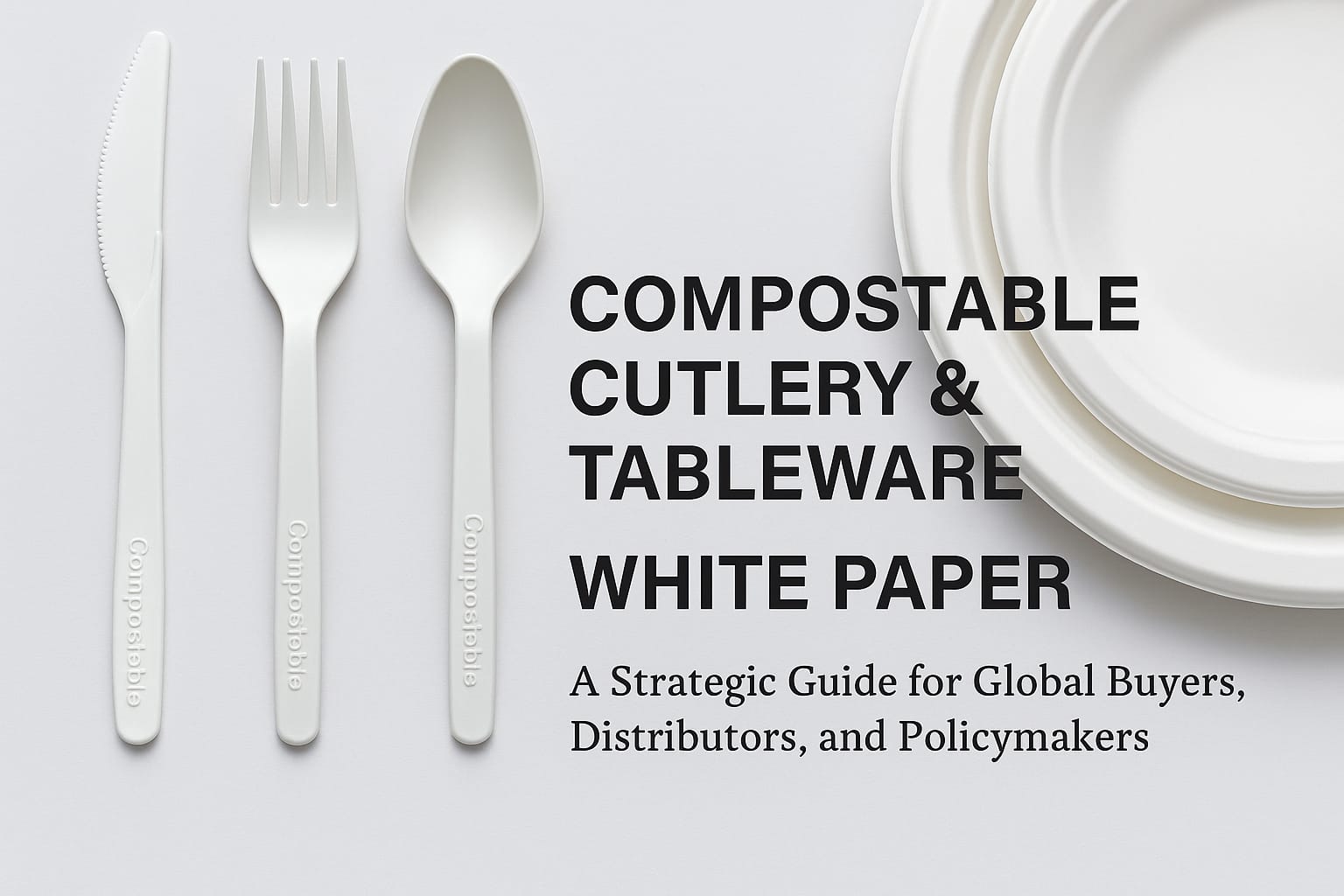
In a tightening regulatory environment, the wrong cutlery material does not just create service failure. It can also create claim exposure, delayed approvals, customer complaints, and inventory mismatch across export markets. A fork that bends in hot noodles or a spoon that softens in soup is no longer a minor packaging issue. In B2B foodservice, it is a procurement problem.
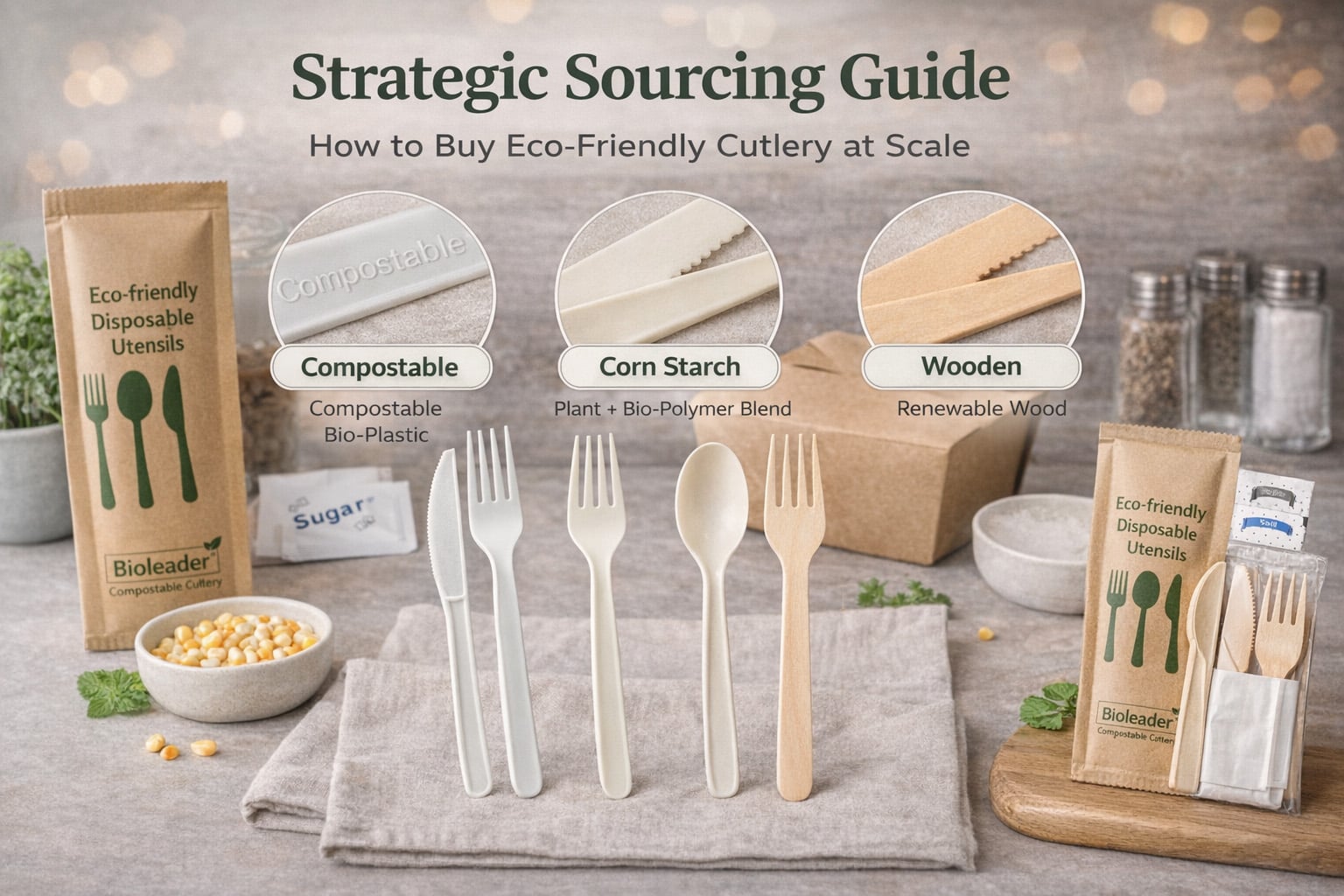
That is why buyers should stop asking which material sounds greener and start asking which one is fit for the intended food, temperature, brand promise, and market-entry route. In practice, the core sourcing decision usually comes down to four material families: CPLA, corn starch, wood, and bamboo. Each solves a different business problem. None should be approved by a slogan alone.
For most buyers, the strongest strategy is not one universal material. It is a channel-based selection model: use the highest-value material where service or compliance risk is high, and use the most efficient material where scale, repeatability, and cost control matter more.
CPLA cutlery is usually the safer choice for hot-food service, premium takeaway, and projects that require clearer industrial-compostability positioning and more disciplined documentation. BPI states that its certification process is built on ASTM compostability standards, which is one reason CPLA is often easier to position in compliance-driven programs.
Cornstarch cutlery is often the stronger option for buyers focused on scale, budget control, and routine meal-service practicality. But “bio-based” and “compostable” are not interchangeable claims, so formulation transparency still matters.
Wood and bamboo utensils provide immediate plastic-free optics, but they should be treated as a branding and presentation route first—not as an automatic performance upgrade.
Food-contact compliance and compostability must be checked separately. FDA explains that food-contact substances are regulated according to intended use and contact conditions, while compostability standards address controlled end-of-life behavior.
For many international buyers, the most effective sourcing structure is a two-track model: CPLA where heat stability, complaint control, and compliance confidence matter most; corn starch cutlery where large-volume distribution and total cost efficiency are the priority. This is also where Bioleader® creates stronger value—by matching the material to the business model rather than forcing one material across every scenario.
Procurement Navigation
- Why cutlery choice is now a procurement risk, not just a packaging detail
- How to separate eco-friendly, biodegradable, compostable, and plastic-free claims
- Which material family solves which buyer problem
- Why CPLA is often the safest route for hot-food service
- What red flags buyers should watch before approving a supplier

1. Why Cutlery Selection Has Become a Procurement-Level Decision
1.1 From accessory item to commercial risk point
Disposable cutlery used to be treated as a low-value add-on. That assumption is no longer safe. In modern foodservice, the utensil is part of the full eating-contact system, which means it must be assessed for meal type, service temperature, structural reliability, claim accuracy, and document readiness. If any one of those fails, the buyer is exposed.
This is also why broad environmental language is no longer enough. The FTC states that broad, unqualified environmental benefit claims such as “green” or “eco-friendly” are difficult, if not impossible, to substantiate. In B2B procurement, that means product language must move from marketing convenience to technically supportable wording.
Data point
In most takeaway programs, cutlery accounts for only a low single-digit share of total packaging spend, but it shapes 100% of the direct eating-contact experience. That makes it a small-cost item with disproportionate complaint and brand impact.
Insider insight
Experienced buyers do not lose projects because they picked the wrong sustainability slogan. They lose projects because the utensil did not perform in the actual meal, or because the claim could not survive customer review.
1.2 Why cutlery failure creates outsized downstream cost
A bowl or clamshell carries the food, but the utensil is what the customer actually grips, tests, and judges. If a fork bends, a spoon softens, or a knife cannot cut through protein or dense vegetables, the customer does not blame “material selection.” They blame the meal brand, the caterer, or the retailer.
This is why cutlery creates disproportionate downstream risk. A low unit price can look attractive in a quotation sheet, but the real cost appears later through complaints, replacement orders, sample rejection, delayed approval, and brand downgrade. The wrong material does not stay cheap for long.
Data point
On a 100,000-piece order, even a 1% real-use failure rate means about 1,000 negative eating experiences. For high-volume foodservice, that is already a material commercial problem.
Procurement rule
Treat utensils as a risk-control component, not a commodity afterthought. In many programs, the “cheap fork” is the most expensive part of the meal set once complaints begin.
1.3 Why buyers now evaluate utensils by performance, not appearance
The first generation of eco-friendly utensil buying was often driven by appearance: natural texture, kraft-style presentation, or the broad promise of being biodegradable. Today, professional buyers look deeper. They want to know whether the utensil can hold its shape, whether the sustainability claim is verifiable, whether the food-contact path is clear, and whether the supply base is stable enough for repeat orders.
This shift has pushed buyers away from appearance-based purchasing and toward performance-based sourcing. A material that looks greener but fails in hot-food service, lacks claim discipline, or cannot scale consistently is rarely the right long-term procurement choice.
Data point
A practical screening model is to score each cutlery option across five filters: heat resistance, food-contact compliance, disposal-path credibility, unit-cost efficiency, and supplier verification.
30-second buyer check
If the utensil performs well in only one or two of those five filters, it is not yet procurement-ready for scale.
2. First Clarify the Language: Eco-Friendly, Biodegradable, Compostable, and Plastic-Free
2.1 Why these claims are not interchangeable
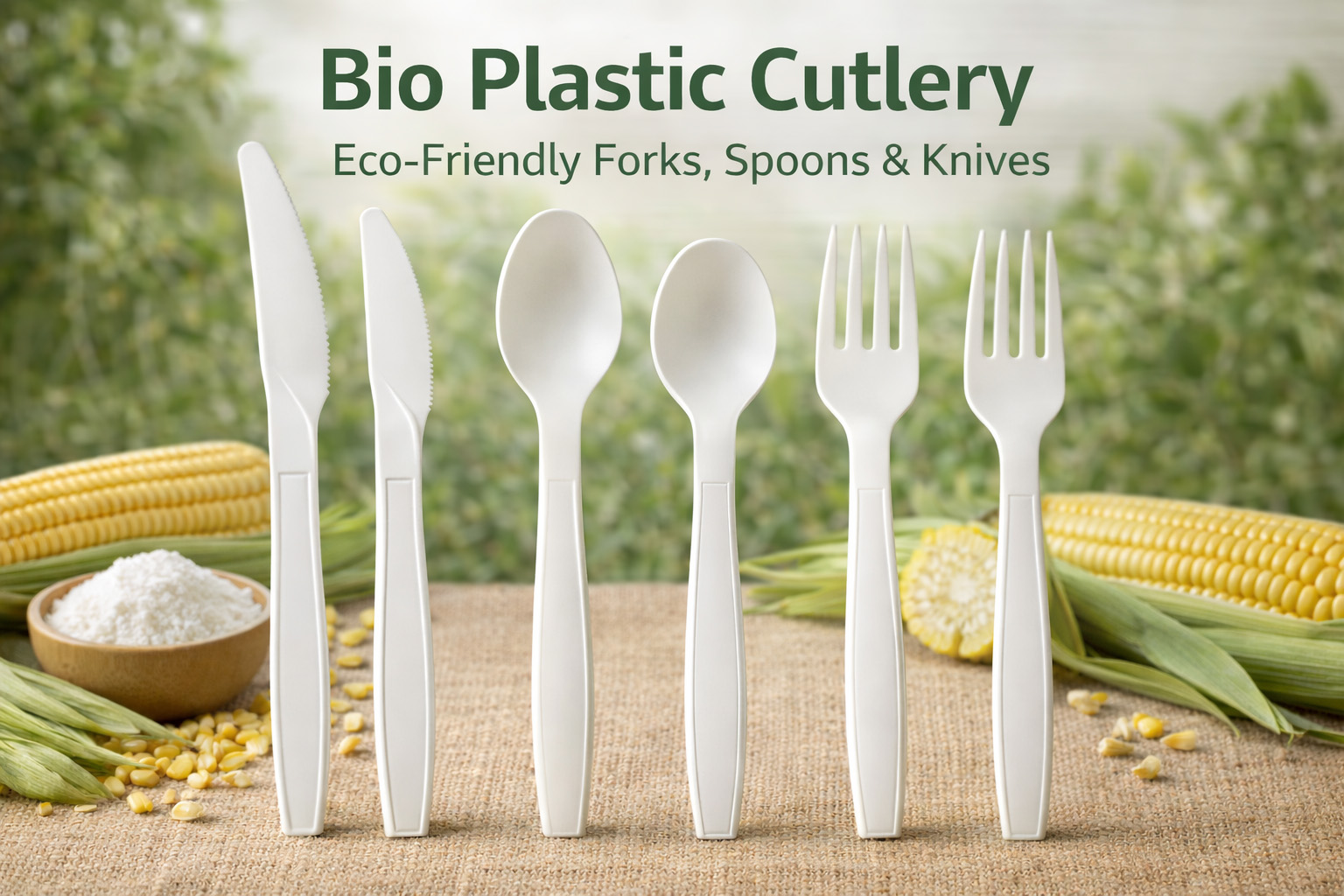
Buyers should not treat “eco-friendly,” “biodegradable,” “compostable,” and “plastic-free” as interchangeable sourcing language. In commercial practice, they answer different procurement questions. “Biobased” refers to feedstock origin. “Biodegradable” refers to degradation by microorganisms under certain conditions. “Compostable” is a narrower end-of-life claim tied to defined composting conditions. “Plastic-free” usually refers to composition or perception, but says little by itself about performance.
This distinction is also reinforced in European policy guidance. The European Commission notes that biobased, biodegradable, and compostable plastics are frequently confused and must be assessed separately. For procurement teams, this means every claim should answer one specific question and be supported by one specific document path.
Practical rule
If one claim tries to explain feedstock origin, degradation pathway, disposal route, and foodservice suitability at the same time, it is too vague for procurement use.
2.2 Compostability depends on disposal conditions, not on marketing language
“Compostable” does not mean a utensil will break down anywhere, in any environment, or at any speed. In real sourcing terms, compostability is a system claim, not just a material claim. European Bioplastics explains that compostability requires biodegradation under specific conditions such as defined temperature and timeframe. This is why industrially compostable and home-compostable products must never be treated as the same commercial promise.
This becomes especially important in export programs. A material may perform well in a controlled composting environment and still create weak environmental value if the destination market lacks the collection and treatment infrastructure needed to support the claim.
Screening question
Before approving any compostability claim, ask: Under which exact end-of-life condition is this utensil expected to break down? If the answer is unclear, the claim is not yet procurement-ready.
2.3 What buyers must verify before accepting any sustainability claim
Before approving any wording on a quotation sheet, carton label, product page, or tender file, procurement teams should verify three things: what the claim means, what evidence supports it, and whether the claim remains true under the real application.
This is also where Bioleader® should be positioned carefully: not by making broad “green” statements, but by separating CPLA performance and compliance logic from corn starch cost and scale logic, with claim language aligned to the buyer’s actual use case, market, and documentation needs.
Procurement checklist
- Is the supplier claiming biobased content, biodegradability, compostability, or plastic-free composition?
- Is there a certificate, lab test, declaration, or intended-use note that supports that exact wording?
- Does the claim still hold under the actual service condition: hot, oily, dense, delayed, or export-facing?
Data point
In practical supplier review, a claim becomes meaningfully stronger when it can be tied to one claim type, one support document, and one intended-use statement. If any of those three is missing, the approval path weakens quickly.
3. The Four Material Families Buyers Compare Most Often
|
|
|
|

| Material | Core Strength | Best-Fit Channel | Main Trade-Off |
|---|---|---|---|
| CPLA | Heat stability, rigidity, compliance-friendly positioning | Hot-food takeaway, institutional dining, premium meal service | Higher cost |
| Cornstarch | Cost efficiency, scale, daily-use practicality | Bulk meal service, canteens, mainstream takeaway | Claim clarity and high-heat fit must be verified |
| Wooden | Plastic-free appearance, natural story | Events, cafés, light meal or dessert service | Finish, comfort, and consistency vary |
| Bamboo | Premium natural-material positioning | Hotels, retail kits, premium eco programs | Higher cost, narrower mass-market fit |
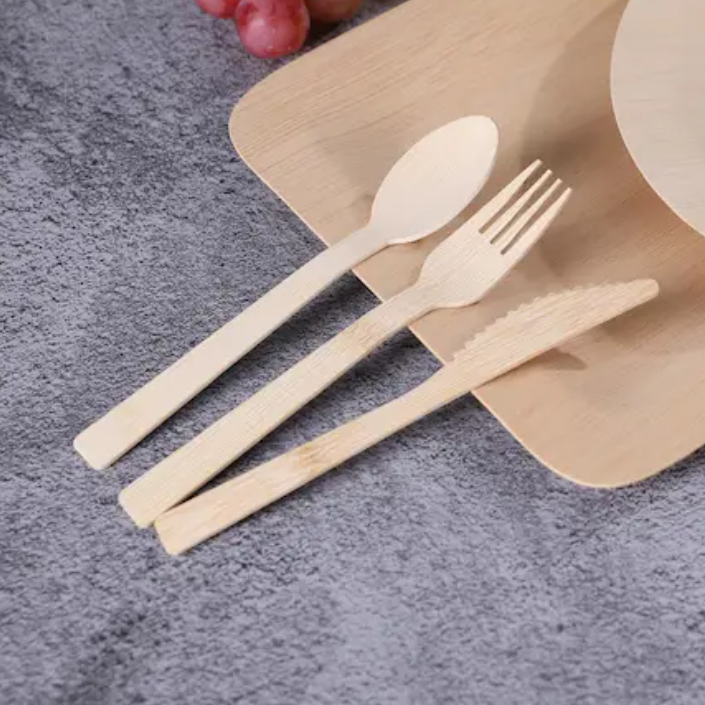
The best way to simplify material comparison is not to rank all four under one generic sustainability label. It is to map each one to the business problem it solves. CPLA cutlery solves the hot-food and higher-spec problem. Corn starch solves the scale-and-cost problem. Wooden cutlery solves the immediate plastic-free presentation problem. Bamboo solves the premium natural-positioning problem.
Data point
In Bioleader®’s channel-mapping logic, the four materials usually align to four buyer priorities: CPLA for heat, corn starch for scale, wood for plastic-free optics, and bamboo for premium eco image.
Planning for the 2026 Sustainability Transition?
Get a custom material compliance roadmap and bulk pricing tailored to your region (UAE, EU, or AU). Our 15 years of R&D expertise is at your service.
Pro Tip: Ask about our latest Compostable Cutlery samples for an eco-friendly dinnerware solution.
4. CPLA Cutlery: The Stronger Choice for Hot Food, Compliance, and Premium Foodservice
Buyers should not read PLA and CPLA as the same sourcing category. Standard PLA is widely associated with clarity and cold-use serviceware, while CPLA is chosen because crystallization improves heat stability, stiffness, and shape retention. CPLA is not just a greener-looking plastic. It is a performance-oriented specification for hotter and more demanding foodservice conditions.
This distinction matters because many procurement errors begin with oversimplified labels such as “PLA cutlery.” NatureWorks’ high-heat PLA technology highlights cutlery and foodservice applications where dimensional stability and high-heat performance are critical. For buyers, that means the resin platform and process control matter—not just the material name printed on the quotation.
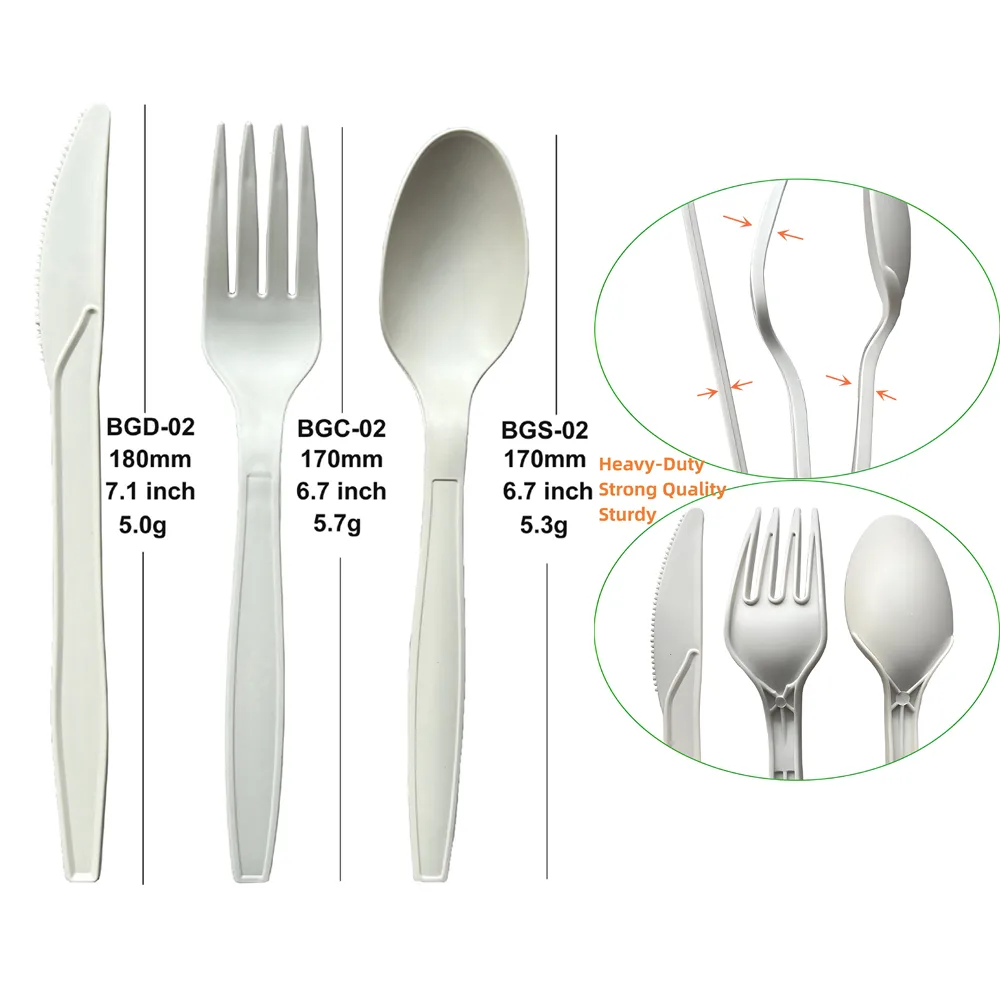
CPLA cutlery creates value when the utensil must hold up under real service stress. Forks need to resist bending in dense noodles or rice, spoons must keep shape in hot soup, and knives need usable edge stability for protein, vegetables, or oily prepared meals. This is why CPLA is frequently preferred in premium takeaway, institutional dining, airline-style meal service, and branded delivery.

Insider insight: not all CPLA perform the same
Many buyers test CPLA by checking whether it survives a hot-food sample once. That is not enough. A more important factory-side issue is crystallization consistency. If a factory shortens cooling time to push cycle speed, the utensil may still pass a simple sample test and yet become more vulnerable to deformation later—especially in warm storage or hot-container transport conditions.
This is why professional buyers should not ask only, “Is it CPLA?” They should also ask, “Is the process stable enough to produce repeatable CPLA performance?” In real procurement, a well-controlled CPLA fork and a poorly controlled CPLA fork may share the same label but deliver different outcomes.
Data point
In Bioleader® application summaries, CPLA is most often used for approximately 85–100°C hot-food service, especially where the utensil may remain in the pack or on the tray for 15–30 minutes before actual use. That range does not make it universal, but it does make it one of the safest mainstream compostable options for warm and hot meal formats.
Buyer red flags
Be cautious if a supplier offers unusually low CPLA pricing but cannot explain intended-use temperature, process stability, or the exact claim-support path. In hot-food programs, under-controlled CPLA can become a more expensive mistake than a correctly priced specification.
5. Corn Starch Cutlery: The Value-Driven Option for Scale, Toughness, and Everyday Distribution
Cornstarch cutlery is often discussed as a bio-based alternative, but serious buyers should not treat the material name as a full technical explanation. In commercial sourcing, “corn starch cutlery” usually refers to a formulation family, not a single uniform composition. That is why composition transparency matters: a product may contain renewable carbon and still differ significantly in heat behavior, stiffness, claim scope, and end-of-life positioning.
This is exactly why buyers should separate bio-based content from broader performance claims. ASTM explains that D6866 is used to report the percentage of biobased or biogenic carbon content, but it does not determine product performance, functionality, or total environmental impact. In other words, a higher biobased content number may support the sustainability story, but it does not automatically prove that a fork will survive hot noodles or that a spoon is commercially compostable in the destination market.
The real commercial strength of corn starch cutlery is that it often delivers the best balance between budget discipline, daily-use strength, and large-volume repeatability. For canteens, school meals, standard takeaway counters, and distributor-led mixed orders, buyers are usually not looking for the highest-spec material. They are looking for a utensil that is strong enough, familiar to use, and practical enough to reorder across multiple customer groups.

5.1 Insider insight: the real question is not “How much starch?” but “What is the full formulation doing?”
One of the most common sourcing mistakes is to focus too narrowly on the starch percentage. Buyers hear “50% starch” or “70% starch” and assume that the higher number must be better. In reality, performance depends on the full material system: base polymer, additives, process control, wall thickness, and intended-use temperature. A poorly controlled high-starch product can perform worse than a better-formulated mid-range one.
This is why experienced factories do not sell corn starch cutlery by percentage slogan alone. They sell it by fit-for-use range. For Bioleader®, that means positioning corn starch as a strong value route where the buyer needs a robust daily-use utensil, but not necessarily the higher heat-security or premium rigidity of a well-made CPLA program.
Data point
In Bioleader® internal quotation logic, corn starch cutlery usually becomes the first shortlisted option when the buyer’s priority mix is cost control + high volume + acceptable daily-use strength. It is most often routed into programs where the food is ambient to warm, not aggressively hot, and where hold time is relatively short.
5.2 Why large-volume buyers often choose corn starch first
Large-volume buyers often start with corn starch cutlery because it fits the logic of wholesale distribution: stable ordering, easier budget planning, acceptable performance for mainstream use, and better flexibility when many SKUs must travel together in one program. In many real procurement environments, the first approved material is not the most advanced. It is the material that clears the minimum technical threshold while keeping the total project commercially manageable.
That logic also aligns with biobased purchasing frameworks. USDA’s BioPreferred Program maintains designated product categories that qualify for federal biobased purchasing preference, reinforcing the idea that renewable-content products can fit formal procurement logic when claims are clear and the use case is realistic.
Data point
In mixed-container planning, Bioleader® typically finds that corn starch cutlery scales most efficiently when the buyer needs multiple SKUs, repeatable cost control, and routine order cycles rather than one flagship premium specification.
5.3 Storage and shelf-life discipline matter more than many buyers expect
Another under-discussed issue is warehouse discipline. Buyers often think only PLA-based products require storage attention, but corn starch cutlery also performs best when kept in stable, dry conditions and rotated on a sensible cycle. In humid storage or long dwell-time inventory, product feel and consistency can drift enough to affect end-user confidence.
This does not make corn starch cutlery unreliable. It means the buyer should manage it like a real material program, not as “something eco that can sit anywhere forever.” In value-driven procurement, stock discipline is one of the easiest ways to protect performance without paying for a higher-spec material than the application actually needs.
Action advice
Before approving corn starch cutlery, buyers should ask for the composition description, intended-use temperature, storage guidance, and claim-support document. That four-point check prevents most confusion between “bio-based,” “compostable,” and “good enough for our actual menu.”
6. Wooden and Bamboo Utensils: Plastic-Free Optics with Real Operational Trade-Offs
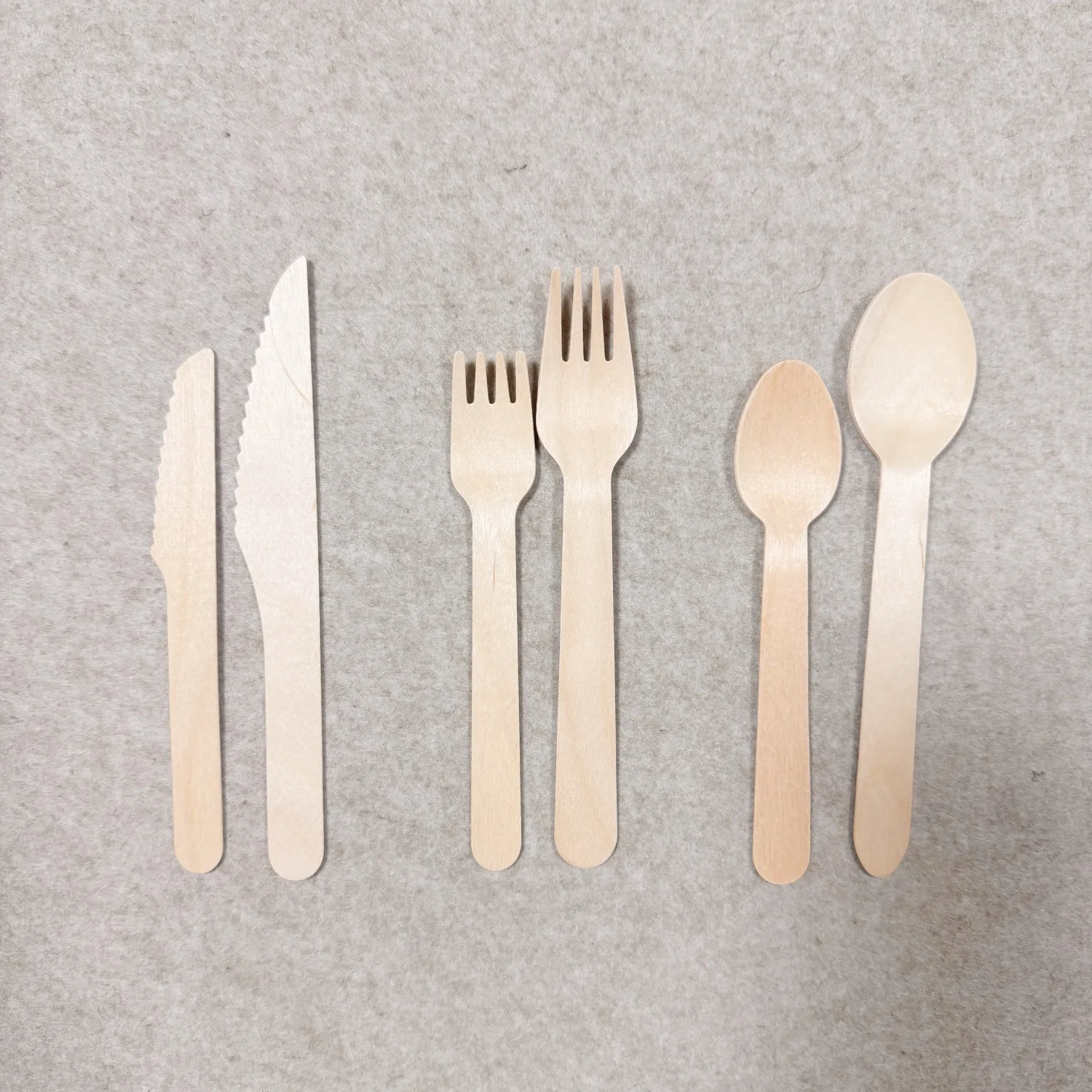
Buyers choose wood and bamboo first for one reason: instant plastic-free signaling. These materials communicate “natural,” “simple,” and “low-plastic” before the customer even starts eating. That visual advantage is especially valuable in cafés, event catering, hotel breakfast service, travel packs, and brand programs where the packaging appearance supports the sustainability message as much as the product itself.
However, natural appearance does not automatically mean stronger performance. The real eating experience depends on surface smoothness, edge finish, mouth feel, thickness consistency, and cutting comfort. A fork can look eco-friendly and still feel rough, too rigid, too thick, or uncomfortable in actual use. That is why wood and bamboo must be evaluated as manufactured products, not just as natural materials.
Responsible sourcing also matters. Preferred by Nature explains that PEFC Chain of Custody certification provides independently verified assurance that forest-based material comes from sustainably managed sources. That does not automatically make a wooden spoon better in use, but it does make the sourcing story more credible when a buyer is building a plastic-free or forestry-linked sustainability message.
6.1 Where wood and bamboo really fit
In commercial terms, wood and bamboo are strongest when the channel is image-led, premium-led, or retail-facing. They are less compelling when the priority is hot-food reliability, SKU simplification across multiple customers, or large-scale cost control. This is where Bioleader® does not need to overclaim: for buyers who need repeatable operational performance at scale, CPLA and cornstarch usually provide a broader commercial fit than wood or bamboo alone.
Bamboo, in particular, is often approved too quickly because it feels like the “best natural option.” In reality, it should be approved only when the buyer knows why the premium is worth paying. A hotel breakfast tray, a boutique retail meal kit, or a branded eco event may justify it. A price-sensitive QSR program usually will not.
Data point
In Bioleader® commercial comparisons, wood and bamboo are most often shortlisted when the buyer values visual sustainability, plastic-free presentation, and premium brand optics more than maximum heat performance or the lowest landed cost.
6.2 Buyer caution: “natural” does not mean “simple”
Buyers should also avoid assuming that natural materials automatically simplify compliance. Finishes, additives, coatings, wraps, inks, and accessory components still matter. And because user experience is more sensitive to wood and bamboo, minor finish inconsistency can create bigger perception problems than buyers expect.
This is why a natural-material program should still be sampled like an engineered product line: smoothness, edge feel, splinter control, taste neutrality, and pack consistency all matter. If the program is customer-facing, these details are often more decisive than the raw material story itself.
Action advice
Approve wood or bamboo when the branding return is real. Do not approve them by default for hot-food, dense meals, or multi-channel standardization unless the real-use test supports the decision.
7. Performance Comparison Under Real Foodservice Conditions
7.1 Heat exposure: Which material survives hot meals best

Heat is the fastest way to expose the difference between cutlery materials. A utensil that looks acceptable at room temperature can soften, twist, or lose user confidence once it sits in a hot meal pack. That is why procurement teams should compare cutlery by real serving temperature and real hold time, not by dry sample appearance alone.
This logic is consistent with restaurant best practice. The National Restaurant Association advises operators to test sustainable packaging for durability and performance under real use before full rollout. The same rule applies to utensils: the correct material is the one that still works after actual heat exposure, not before it.
Data point
In Bioleader® internal comparison logic, buyers can simplify heat screening into three bands: ambient use below 40°C, warm service around 40–70°C, and hot-food service around 70–100°C. Corn starch cutlery is often commercially sufficient in the warm band, while CPLA becomes the safer default in the hot band.
7.2 Rigidity, flex resistance, and load-bearing
Rigidity matters because the utensil must transfer force from hand to food without collapsing. Forks must lift dense noodles or rice, spoons must hold liquid without uncomfortable handle flex, and knives must resist bending when pressure is applied. These are not luxury criteria; they are the baseline of an acceptable eating experience.
The technical logic behind CPLA’s advantage is well established. A technical paper on the injection molding of PLA cutlery explains that crystallized PLA maintains structure at higher temperatures because crystalline domains hold the morphology together. For buyers, the takeaway is simple: rigidity is a structural requirement, not a cosmetic one.
Data point
In Bioleader®’s working comparison model for dense meal formats, the typical stiffness ranking is CPLA first, corn starch second, and wood or bamboo varying by thickness and finish quality.
7.3 Oily food, cutting performance, and edge durability
Some cutlery passes a simple handling test but fails when the meal becomes oily, fibrous, or mechanically resistant. Oily noodles, protein bowls, and prepared meals with sauce put stress on the fork tines, spoon bowl, and knife edge at the same time. In these cases, material feel alone is not enough; buyers must assess food-specific stress.
This is also supported in broader food-contact material review literature. A peer-reviewed review in PMC notes that fat exposure can create stress-related performance issues in some disposable food-contact materials. For buyers, the practical lesson is that food chemistry can change performance more than category names suggest.
Data point
Bioleader® uses a simple three-meal stress screen when reviewing utensil fit: hot soup, oily noodles, and rice with protein. As a working rule, CPLA usually clears all three more consistently, while corn starch often remains efficient in two out of three when the program is price-sensitive.
7.4 User experience: texture, feel, and perceived quality
End users rarely evaluate cutlery by certification language. They evaluate it by feel: whether it seems sturdy, whether it feels clean and comfortable in the hand and mouth, and whether it matches the quality level of the meal. That is why material choice has a direct effect on perceived quality, even when all options appear acceptable in a spreadsheet.
Consumer-facing research supports the commercial relevance of that perception. McKinsey’s 2025 global consumer research reports that every geography in its survey still includes a segment willing to pay more for sustainable packaging. That does not mean every buyer should overpay for utensils, but it does mean a weak utensil can undermine the sustainability value the packaging program is trying to create.
Data point
In Bioleader®’s internal buyer-support scoring, user experience usually depends on four variables: surface feel, grip confidence, mouth comfort, and visual match with the meal brand. CPLA often scores highest for uniform feel, corn starch for value-to-comfort balance, and wood or bamboo for visual sustainability impact.
8. Compliance and Documentation: What Buyers Must Verify Behind Each Material
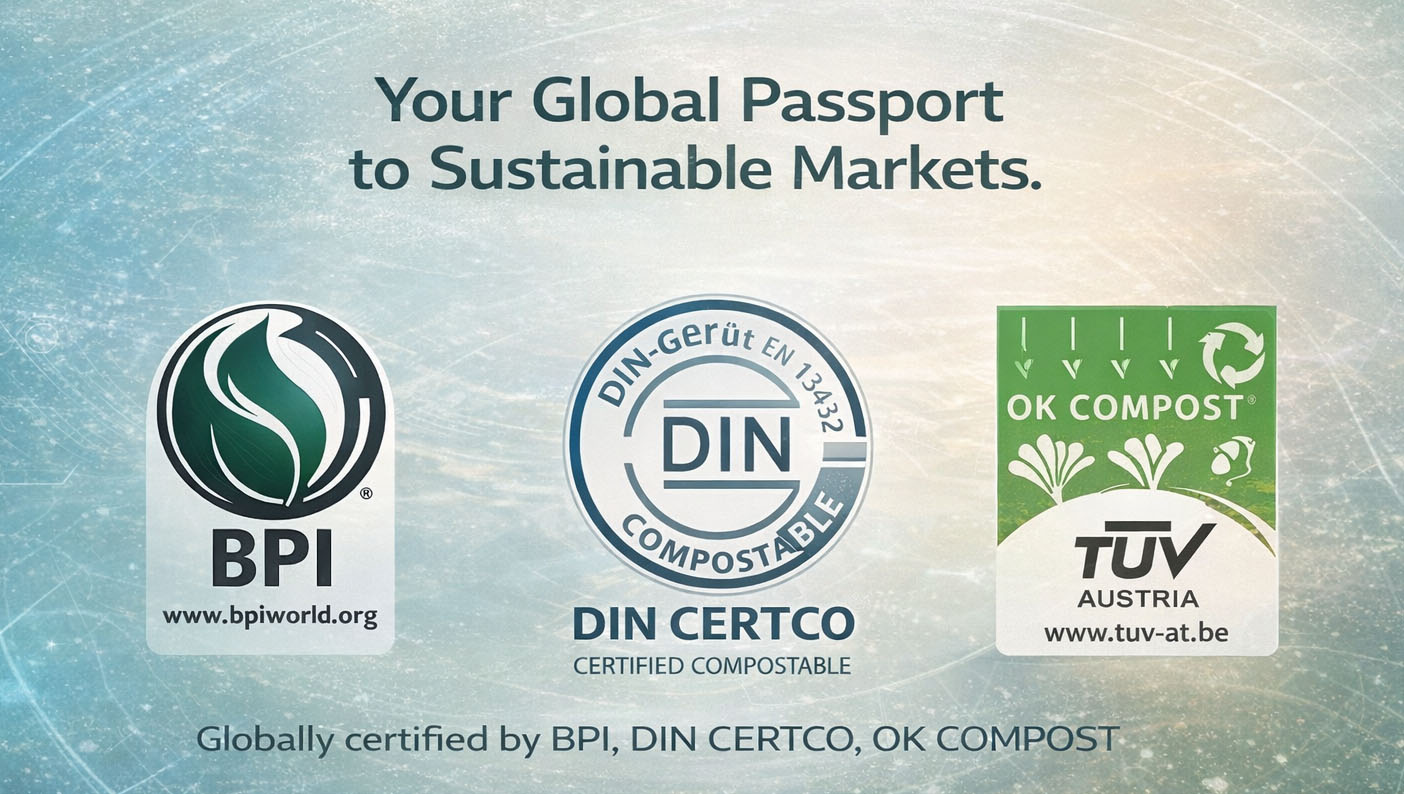
Serious buyers do not request compostability or material documents for visual reassurance alone. They request them because standards help convert a general sustainability claim into a market-usable approval tool. In practice, a recognized certification mark helps buyers compare suppliers, defend claims in tenders, and reduce the risk of vague green language entering a formal specification.
However, compostability and food-contact compliance are not the same approval path. FDA’s inventory of effective Food Contact Substance notifications shows that food-contact substances are evaluated with use limitations, specifications, and intended-use conditions. That means a compostability document should never be treated as a substitute for food-contact review.
Disposal fit also matters. A certified industrially compostable utensil is not automatically the right environmental answer for every market. The claim creates real value only when the destination channel has a credible way to collect, separate, and process that material after use.
8.1 Regional compliance route: where buyers should be more careful
Buyers entering multiple markets should not assume one sustainability message travels equally well everywhere. In the EU, policy communication has increasingly focused on clarifying the difference between biobased, biodegradable, and compostable plastics, which means claim precision matters more than ever. The European Commission’s policy framework explicitly addresses the sourcing, labelling, and use of biobased, biodegradable, and compostable plastics.
In the UAE, the commercial message should be even more disciplined. The UAE Ministry of Climate Change and Environment has published official guidance outlining regulations for single-use plastic products under the national framework. For buyers targeting the Gulf region, that means the safer route is not broad environmental language but a clear material-and-claim match backed by solid documentation.
In Australia, buyers should also pay attention to whether packaging choices align with the national packaging transition. APCO’s Sustainable Packaging Guidelines are designed to support more sustainable packaging design and manufacturing decisions. For procurement teams, the practical meaning is simple: the strongest material is not just technically correct—it also fits the packaging system language used in the destination market.
Data point
Bioleader® uses a practical verification threshold: a sourcing-ready compostable cutlery should be backed by material description, claim evidence, intended-use note, and sample consistency. If one of those is missing, the approval file weakens quickly—especially in export-facing programs.
8.2 Procurement manager question set
Before approving any supplier, ask these questions:
- What exactly is the material, beyond the sales name?
- What temperature and food types was this utensil designed for?
- Which document supports the specific claim being used in sales materials?
- Does the certificate apply to the actual product family or only to the resin or a related item?
- If this is an export order, is the wording strong enough for the destination market’s review process?
Operational takeaway
The strongest suppliers are not the ones with the broadest green language. They are the ones who can explain the product clearly, document it cleanly, and show how the claim matches the actual application and target market.
9. Application Matching: Which Material Fits Which Business Model?
The right material depends on the business model. Quick-service restaurants and takeaway chains usually need a balance of heat performance, speed, and repeatability. Meal kits and delivery platforms need utensils that survive delay and temperature change. Schools, hospitals, and institutional dining prioritize standardization and approval discipline. Retail packs, eco events, and plastic-free campaigns often prioritize visual sustainability and customer-facing brand fit.
Export distributors and multi-market wholesalers face a different challenge: they are not buying for one menu, but for multiple customers, multiple regions, and multiple compliance expectations. In that model, the winning material is often the one that is easiest to document, easiest to explain, and easiest to standardize across markets without creating claim risk.
Data point
In Bioleader® export planning, the most efficient distributor programs usually simplify the range into one value-grade route and one performance-grade route: corn starch for broad commercial coverage, and CPLA for hotter, more compliance-sensitive, or more premium markets.
Operational takeaway
Buyers should not ask only, “Which material is greener?” They should ask, “Which material can I sell, document, and defend in my target channel?”
10. Cost Analysis: Why the Cheapest Utensil Can Become the Most Expensive Choice
The first pricing mistake in cutlery sourcing is to compare only the unit price. For professional buyers, that number is only the visible edge of cost. A utensil also creates downstream cost through service failure, complaint handling, replacement stock, delayed approvals, inconsistent customer experience, and claim-related exposure. In procurement terms, the better benchmark is not the cheapest item, but the lowest-risk item at the right total cost.
This is standard procurement logic rather than a packaging-specific theory. CIPS defines whole-life costing as an estimate used to determine the end-to-end cost of procuring and using a product or service. That framework is highly relevant to disposable cutlery because the wrong utensil may look inexpensive at purchase and expensive in operation.
This is exactly where the difference between CPLA and corn starch cutlery becomes commercially visible. A lower-cost utensil may look attractive on the quotation sheet, but if it produces more failures in hot-food service, it quickly becomes the more expensive option in program terms. By contrast, a slightly higher-cost utensil may protect the meal experience, reduce complaint rates, and simplify approval with demanding buyers.
10.1 Hidden costs buyers often underestimate
Hidden cost is where poor cutlery decisions become visible. If a fork bends in a hot meal, if a spoon softens during delivery, or if a claim cannot be defended during customer review, the financial effect moves beyond the utensil itself. The buyer may face resampling, relabeling, replacement ordering, launch delay, or quiet erosion of customer trust.
That logic is also consistent with broader foodservice efficiency thinking. WRAP’s hospitality and foodservice work shows that repeated operational inefficiencies create significant cost over time. A weak utensil is not the same as food waste, but the commercial lesson is the same: small, repeated failures scale into meaningful loss.
Data point
Bioleader® typically treats a 1–2% real-use issue rate as commercially meaningful in high-volume programs. On a 100,000-piece order, that can translate into 1,000–2,000 negative eating events, which is usually more expensive than a modest unit-price upgrade.
10.2 When paying more reduces total risk
Paying more is justified when the better material removes a larger commercial risk. This is why CPLA often makes sense in hot-food channels, while corn starch remains efficient in value-driven distribution. The right question is not whether one material costs more, but whether the higher-cost material prevents a larger downstream loss.
That thinking aligns with broader materials-management logic. EPA’s sustainable materials management hierarchy places source reduction and prevention above lower-value end-of-life responses. In buyer language, avoiding failure and unnecessary replacement is usually a stronger sustainability and cost outcome than fixing the wrong decision later.
Data point
In Bioleader®’s decision model, CPLA usually becomes easier to justify when the program scores high on heat exposure, complaint sensitivity, brand visibility, or compliance pressure. If two or more of those variables are high, a modest unit premium is often commercially rational.
10.3 How buyers can balance cost control with performance fit
The most effective cost strategy is rarely to pick one material for everything. In practice, many buyers perform better with a two-track structure: a value-grade route for broad-volume coverage and a performance-grade route for hotter, more demanding, or more visible applications. This avoids over-specification without forcing every channel into the lowest visible price.
That is one reason a dual-material model works so well in real sourcing. It allows the buyer to keep corn starch cutlery as the broad cost-control base while using CPLA as the heat-risk and premium-service upgrade path. The result is better channel fit, clearer pricing logic, and lower total program stress.
Procurement manager checklist
- What is the quoted unit price?
- What is the likely service-failure cost if the utensil is underspecified?
- Does the lower-cost item create extra claim or approval risk?
- Is the price difference smaller than the likely complaint cost?
- Would a two-track model reduce both cost pressure and operational risk?
11. Supplier Evaluation: How to Verify the Factory Behind the Material
Buyers should not approve a cutlery supplier only because the material category sounds familiar. A reliable factory must be able to explain what the product is made from, what claim is being made, what document supports that claim, and how consistently the item can be reproduced across orders. If the supplier cannot separate material description, intended use, and claim support into clear answers, the sourcing risk is already too high.
This expectation is fully aligned with formal quality-management thinking. ISO explains that ISO 9001 is designed to help organizations consistently provide products and services that meet customer and regulatory requirements. For cutlery sourcing, that means the factory should not only manufacture the item—it should also control documentation, process consistency, and technical communication.
The same applies to the packaging sector discipline. BRCGS describes its Packaging Materials standard as a global benchmark for product integrity and consumer protection across the supply chain. Buyers do not need every supplier to hold every possible certificate, but they do need evidence that the factory understands controlled manufacturing, audit readiness, and compliance expectations.
11.1 What a real factory should be able to show
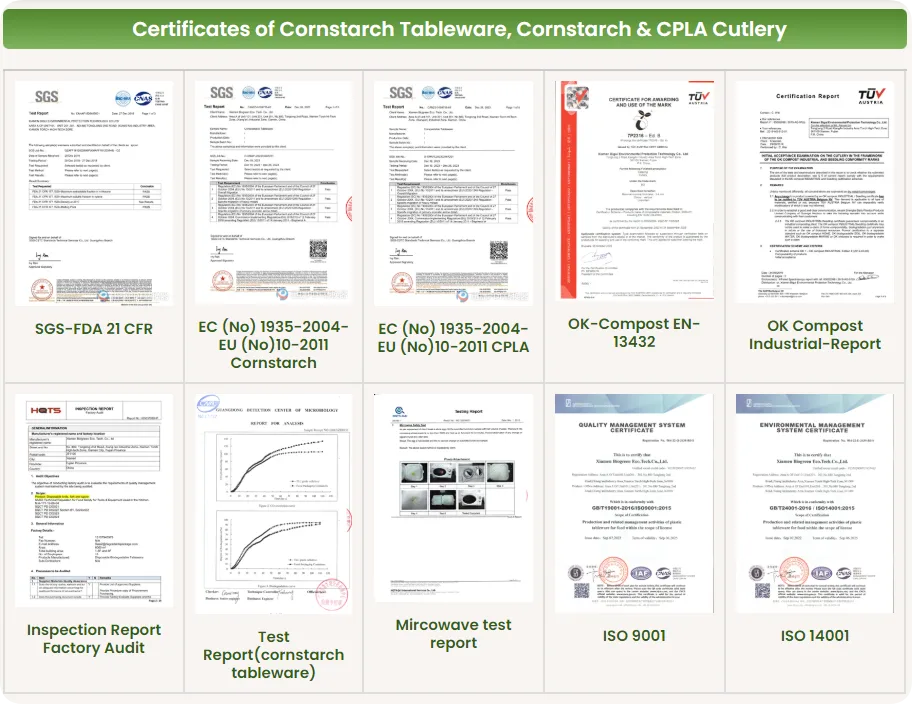
A serious cutlery factory should be able to show more than a brochure and a price list. Buyers should expect visible evidence of product specification, sample consistency, packing details, claim-support documents, and stable production capability. This is not about making the supplier process difficult. It is about preventing avoidable errors before they become commercial problems.
This is where Bioleader® should be positioned strategically. The brand is most credible not when it uses the broadest sustainability language, but when it shows that it can support buyers with clear material logic, repeatable product quality, export-facing documents, and application-matched recommendations. In B2B procurement, that combination is more valuable than generic eco positioning.
Data point
In Bioleader®’s supplier-screening model, a cutlery program becomes easier to approve when the factory can show at least five operational proofs: product spec sheet, relevant claim-support evidence, consistent samples, packing specification, and visible production capability.
11.2 Red flags buyers should not ignore
The biggest warning signs are usually simple: unclear composition, unclear claim scope, unusually low price without technical explanation, or certificates that do not clearly match the product family being sold. These issues often appear before the order is placed, which means the buyer still has time to stop the risk early.
Broader responsible-sourcing practice reinforces the same discipline. OECD explains that due diligence helps companies assess and address real and potential negative impacts in operations, supply chains, and business relationships. For cutlery buyers, the practical meaning is straightforward: supplier approval is part of risk control, not just part of price negotiation.
30-second red-flag screen
- Can the supplier explain the exact material beyond the sales name?
- Can the supplier state the intended-use temperature clearly?
- Does the claim-support document match the actual product family?
- Is the price unusually low without a credible process explanation?
- Are the samples consistent across fork, spoon, and knife—not just one hero item?
12. Strategic Takeaway: How to Choose the Right Eco-Friendly Cutlery for Your Program
The right cutlery choice is not about following the loudest sustainability label. It is about matching material reality with business reality. Buyers should choose CPLA when the program needs stronger hot-food performance, clearer compliance logic, and a more premium service outcome. They should choose corn starch cutlery when the priority is cost-efficient scale, everyday usability, and broader distribution coverage. Wood and bamboo are most compelling when the program needs visible plastic-free presentation and stronger natural-material storytelling.
The strongest sourcing model is often not one material for everything. In practice, many buyers perform better with a two-track structure: one material for broad-volume coverage and one material for higher-risk or higher-visibility applications. This reduces over-specification, simplifies quotation strategy, and improves channel fit without forcing one category to solve every problem.
It also creates better supply resilience. If one material route tightens, a dual-material model reduces dependence on a single specification and makes forecasting easier across mixed customer groups.
Key data point
Bioleader®’s internal planning logic usually works best when buyers align corn starch with mainstream volume and CPLA with hot-food or premium visibility. This split improves both cost control and claim clarity across mixed customer types.
Final procurement rule
Do not buy cutlery by category name alone. Buy it by meal type, service temperature, customer expectation, claim support, and supplier capability. That is the most defensible way to source eco-friendly utensils at scale.
13. FAQ
Is CPLA better than corn starch cutlery for hot food?
Usually yes. For hot meals, soups, and longer hold times, CPLA is generally the safer choice because it offers stronger heat stability and more predictable rigidity. Corn starch often works better when the channel is less heat-demanding and more price-sensitive.
Is corn starch cutlery always compostable?
No. “Corn starch” often describes a formulation family, not an automatic compostability guarantee. Buyers should verify composition, intended-use range, and claim-support documents before approval.
Are wooden utensils automatically the most eco-friendly option?
Not automatically. Wood performs strongly in plastic-free presentation and natural-brand communication, but buyers still need to evaluate finish quality, user comfort, sourcing credibility, additives, and application fit.
Which cutlery material is best for takeaway chains?
There is no single universal answer. For hot-food takeaway and premium meal sets, CPLA is often the stronger choice. For standard high-volume takeaway with tighter price targets, corn starch cutlery often delivers better commercial efficiency.
What documents should importers ask for?
At minimum, importers should ask for material description, claim-support document, intended-use note, storage guidance, and stable sample consistency. If the product is sold as compostable or biobased, the supplier should be able to explain exactly what that claim covers.
When is bamboo worth the higher cost?
Bamboo is usually worth the premium when the program is brand-led, premium, retail-facing, or event-driven. It is less compelling when the goal is lowest-cost mass distribution across multiple channels.
How should buyers compare price versus performance?
Buyers should compare unit price, service risk, complaint exposure, claim risk, and supplier control. A utensil that is slightly more expensive but much less likely to fail can easily be the lower-cost option in total program value.
Can one supplier support both value-grade and compliance-grade programs?
Yes, and that is often the most efficient model. A supplier such as Bioleader® can create stronger commercial value when it supports both corn starch for scalable value programs and CPLA for hot-food or documentation-sensitive programs within one sourcing framework.
14. Conclusion
In the global shift away from conventional single-use plastics, the buyers who win will not be the ones who chase the loudest sustainability claims. They will be the ones who make better material decisions earlier—before complaints rise, before documentation breaks, and before inventory is locked into the wrong specification.
The smartest cutlery strategy is therefore not ideological. It is operational. Choose CPLA when the program demands hot-food security, stronger rigidity, and cleaner compliance language. Choose corn starch cutlery when the priority is scalable value, daily-use toughness, and broad-volume distribution. Choose wood or bamboo only when plastic-free presentation creates measurable brand return and the real-use test still supports the decision.
For serious importers, distributors, and foodservice groups, the next step is not to ask for “the greenest option.” It is to ask for the right two-track sourcing plan, the right test method for the actual menu, and the right document package for the target market. That is where good procurement becomes strategic procurement.
Bioleader® is strongest when it is used exactly in that role: not simply as a product supplier, but as a sourcing partner that helps buyers convert sustainability goals into usable specifications, safer approvals, stronger channel fit, and more defensible long-term purchasing decisions.
Copyright Notice:
© 2026 Bioleader®. If you wish to reproduce or reference this content, you must provide the original link and credit the source. Any unauthorized copying will be considered an infringement.