Quick Summary: Truly compostable food packaging cannot be verified from a green logo, material name, or supplier statement alone. Buyers should confirm the exact finished product, certificate owner, covered model, material formulation, thickness, coating, printing, lid or accessory, certification status, composting environment, and local facility acceptance. Industrial compostability, home compostability, biodegradability, food-contact safety, PFAS-free status, and recyclability are separate claims that require separate evidence.
Scope of this guide: This page focuses specifically on verifying compostability claims for individual food packaging products. For company-wide environmental claim governance, see how to build a credible sustainable packaging brand. For EU consumer-facing environmental claim requirements, review the guide to EU greenwashing rules for food packaging.
Introduction: Why Compostable Packaging Verification Matters More Than Ever
Compostable packaging is often selected to reduce dependence on conventional single-use plastics, manage food-contaminated packaging, support organic-waste programs, or meet customer sustainability requirements. However, the word “compostable” is not a complete product specification.
Before approving a compostable product, buyers should determine:
- Which composting environment the claim refers to.
- Which standard or certification scheme supports the claim.
- Whether the certificate covers the finished product or only the raw material.
- Whether the tested thickness and formulation match the supplied item.
- Whether inks, coatings, adhesives, labels, lids, and accessories are included.
- Whether the certificate remains valid and appears in the issuing body’s registry.
- Whether composting collection and processing are available in the target market.
- Whether local composting operators accept that product type.
These checks protect buyers from unsupported claims, failed customer audits, incorrect labeling, unnecessary certification disputes, and packaging that cannot enter the intended waste stream.
Core verification rule: A compostability claim is reliable only when the supporting evidence matches the exact product, construction, certification scope, intended composting environment, and destination market.
Compostable vs. Biodegradable: Clearing Up the Definitions
What Is Compostable Packaging?
Compostable packaging is designed to undergo biological treatment under defined composting conditions and meet the requirements of an applicable standard or certification scheme. Depending on the standard, evaluation may include biodegradation, disintegration, ecotoxicity, heavy-metal limits, material characterization, and the effect of the product on the finished compost.
Compostability should not be described using one universal decomposition time. Actual test periods and pass criteria depend on the standard, certification scheme, material, thickness, and composting environment.
What Is Biodegradable Packaging?
Biodegradable means that microorganisms can break down a material under certain environmental conditions. However, the word alone does not define:
- The disposal environment.
- The required temperature.
- The time needed for breakdown.
- The degree of biodegradation.
- Whether visible fragments remain.
- Whether the product passes ecotoxicity or heavy-metal criteria.
- Whether the material is suitable for industrial or home composting.
For that reason, a broad “biodegradable” statement should not be treated as equivalent to a product-specific compostability certification.
Related Terms Buyers Should Keep Separate
| Term | What It Describes | What It Does Not Automatically Mean |
|---|---|---|
| Industrially Compostable | Evaluated for controlled commercial or industrial composting conditions under the applicable standard or scheme. | Home compostable, marine biodegradable, or accepted by every composting facility. |
| Home Compostable | Evaluated for lower-temperature home composting conditions under a specific certification scheme or standard. | That the product will disappear quickly in any backyard, soil, landfill, or natural environment. |
| Biodegradable | Capable of biological breakdown under certain conditions. | Certified compostable, plastic-free, non-toxic, or biodegradable in every environment. |
| Biobased | Made partly or fully from renewable biological feedstock. | Compostable, biodegradable, recyclable, or free from fossil-derived components. |
| Plastic-Free | A composition claim that should be defined for the complete product and its components. | Compostable or biodegradable. |
| Recyclable | Designed for a recycling pathway under relevant market and infrastructure conditions. | That collection, sorting, and recycling are available in every location. |
Buyers needing a more detailed disposal-environment comparison can review industrial composting vs. home composting.
The Main Standards and Certification Schemes for Compostable Packaging
Standards and certification marks help buyers evaluate compostability, but they are not interchangeable. Each standard or scheme has its own geographical relevance, composting environment, product scope, testing requirements, and labeling rules.
| Standard or Scheme | Primary Scope | Buyer Verification Point | Do Not Assume |
|---|---|---|---|
| ASTM D6400 | Specifications for labeling plastics designed to be aerobically composted in municipal or industrial facilities. | Confirm that the product or formulation is included in the certification scope. | Home compostability or universal facility acceptance. |
| ASTM D6868 | Compostability specifications for items incorporating plastics or polymers as coatings or additives with paper and other substrates. | Check whether the complete coated or combined product is covered. | That certification of the coating alone covers every finished paper product. |
| BPI Certification | Commercial compostability certification for eligible products under the BPI certification scheme. | Search the BPI registry and confirm the certified company, product, model, and status. | That every municipal or industrial composting facility will accept the item. |
| EN 13432 | European requirements for packaging recoverable through composting and biodegradation. | Confirm certificate scope, product identity, thickness, certification body, and permitted mark. | Home compostability, food-contact compliance, or acceptance in all European collection systems. |
| Seedling Certification Mark | A recognized mark used for certified industrially compostable products within its licensing system. | Verify the license or certificate number and the covered products. | That every product made from the same material may use the mark. |
| OK compost INDUSTRIAL | TÜV AUSTRIA certification for industrial composting conditions. | Verify the certificate owner, product family, thickness, and current status. | Home compostability. |
| OK compost HOME | TÜV AUSTRIA certification for home composting conditions. | Confirm that the finished product is specifically covered by the HOME certification. | That an INDUSTRIAL certificate can be marketed as HOME compostable. |
| AS 4736 | Australian commercial compostability standard. | Verify certification through the relevant Australian certification and licensing system. | Home compostability. |
| AS 5810 | Australian home compostability standard. | Check that the product is licensed for home compostability under the applicable scheme. | Acceptance in every commercial composting program. |
| ISO 17088 | International specifications for compostable plastics. | Determine whether the supplier has product-specific evidence or certification linked to the standard. | That simply mentioning ISO 17088 proves the finished product is certified. |
For a focused comparison of the two major export references, see Bioleader®’s EN 13432 vs. ASTM D6400 guide.
BPI Certification: What Buyers Should Verify
BPI operates a commercial compostability certification program in North America. Certification is based on the applicable product category and relevant ASTM compostability standards, including ASTM D6400 and ASTM D6868.
A BPI mark is useful evidence, but buyers should verify more than the logo.
- Search the official BPI database or catalog.
- Confirm the certificate owner or licensed company.
- Match the listed product name or product family.
- Check whether the supplied item is covered by the listed model or formulation.
- Confirm certification status and any applicable limitations.
- Check whether printing, labels, coatings, and accessories are included.
- Ask whether the product will be sold under the certificate holder’s brand or a private label.
- Confirm mark-use permission before printing the BPI logo on packaging.
Acceptance note: BPI certification supports a commercial compostability claim within the certification scope. It does not guarantee that every local composting facility, hauler, restaurant organics program, or municipality will accept the item.

EN 13432 and European Industrial Compostability
EN 13432 is a widely used European standard for packaging recoverable through composting and biodegradation. It addresses several aspects of compostability rather than relying on biodegradation alone.
Depending on the certification program and product, assessment may include:
- Material characterization.
- Biodegradation under defined aerobic composting conditions.
- Disintegration during biological treatment.
- Heavy-metal and other restricted-element limits.
- Effects on compost quality and plant growth.
- Identification of the product, formulation, thickness, color, and additives.
Buyers should not assume that an EN 13432 certificate held by a raw-material supplier automatically covers every finished cup, plate, bowl, bag, coating, print design, or food container made from that material.
Questions to Ask About an EN 13432 Certificate
- Who is the certificate holder?
- Which certification body issued it?
- What is the certificate or license number?
- Which product names, codes, formulations, or thicknesses are covered?
- Does it apply to the finished product or only the material?
- Are inks, labels, adhesives, coatings, and additives included?
- Is the certificate currently valid?
- Is the supplier authorized to reproduce the certification mark?

OK compost INDUSTRIAL vs. OK compost HOME
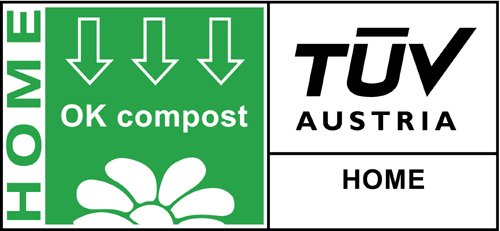
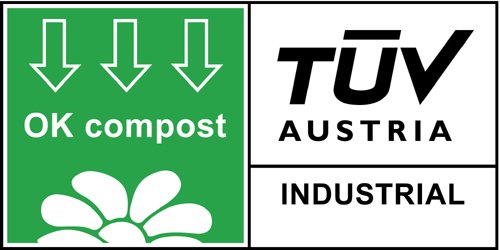
OK compost INDUSTRIAL and OK compost HOME are different TÜV AUSTRIA certification schemes. The marks should not be treated as alternative designs for the same claim.
| Certification | Intended Environment | Buyer Interpretation |
|---|---|---|
| OK compost INDUSTRIAL | Controlled industrial or commercial composting conditions. | The product is certified for the industrial scheme within the listed certificate scope. |
| OK compost HOME | Home composting conditions with lower and less controlled temperatures. | The product is specifically certified for the HOME scheme within the listed scope. |
An industrially compostable product should not be marketed as home compostable unless separate product-specific evidence supports that claim. Likewise, neither certification automatically proves biodegradation in soil, freshwater, marine environments, landfills, or open natural conditions.
 |  |
How to Verify a Compostability Certificate Step by Step
1. Identify the Exact Finished Product
Begin with the product being purchased, not with a general material description. Record:
- Item code.
- Product name.
- Material formulation.
- Dimensions and capacity.
- Weight or wall thickness.
- Color.
- Coating or lining.
- Ink and printing coverage.
- Lid or accessory material.
- Factory and production location where relevant.
A certificate cannot be matched reliably if the buyer does not know the exact construction of the supplied item.
2. Obtain the Complete Certificate
Request the full certificate or license document rather than accepting a cropped logo, screenshot, marketing brochure, or laboratory cover page.
The document should show enough information to identify:
- The certificate holder.
- The issuing body.
- The certificate or license number.
- The applicable standard or certification scheme.
- The product or product-family scope.
- Any thickness, formulation, color, or printing limitations.
- The issue, expiry, review, or validity information where provided.
3. Verify the Certificate in the Official Registry
Use the issuing certification body’s database rather than relying only on a PDF supplied by the seller.
Check whether:
- The certificate number exists.
- The certificate holder matches the document.
- The listed product matches the item being quoted.
- The certificate is active, suspended, withdrawn, or expired.
- The mark shown on the packaging is permitted under that scheme.
4. Check the Product Scope Carefully
Certificate scope is often where procurement errors occur. A certificate may apply only to:
- One raw material or resin grade.
- One thickness range.
- One color or additive package.
- One unprinted version.
- One product family.
- One manufacturing site.
- A base product without its lid, label, or sleeve.
The buyer should request written confirmation showing how the ordered SKU maps to the certified scope.
5. Review Every Component of the Packaging System
Food packaging is often a multi-component system. Verification should separately cover:
- Main cup, bowl, plate, tray, box, or clamshell.
- Lid.
- Coating or barrier layer.
- Adhesive.
- Ink and print coverage.
- Label or sticker.
- Sleeve, window film, or liner.
- Absorbent pad or insert.
A compostable container combined with a PET lid should not be described as a fully compostable set. The product description and disposal instructions should distinguish the two components.
6. Confirm Private-Label and Logo Rights
Importers and private-label brands should not assume that they can automatically reproduce a certification mark because the original manufacturer holds a certificate.
Confirm:
- Whether private-label authorization is required.
- Whether the buyer’s brand must be added to the certification program.
- Whether the mark may appear on the product, retail pack, master carton, or website.
- Which license number must accompany the mark.
- Whether artwork approval is required before printing.
7. Confirm Local Composting Acceptance
Certification and local acceptance are separate checks. Contact the target market’s:
- Composting facility.
- Organic-waste collector.
- Municipality.
- Restaurant waste contractor.
- Event waste-management provider.
Ask whether the specific product category is accepted. Some facilities reject all foodservice packaging even when products are certified, while others accept only products carrying selected certification marks.
What Supporting Documents Can and Cannot Prove
A compostability certificate is important, but responsible procurement usually requires several supporting documents. Each document answers a different question.
| Document | What It Can Support | What It Does Not Automatically Prove |
|---|---|---|
| Compostability Certificate | Conformance within the stated standard, certification scheme, product scope, and limitations. | Food-contact safety, PFAS-free status, microwave use, or acceptance by every facility. |
| Laboratory Compostability Report | Results for the tested sample under the listed method and conditions. | Certification status or coverage of every commercial SKU. |
| Raw-Material Certificate | Properties or certification of a specific resin, fiber, coating, or formulation. | Finished-product certification after forming, printing, coating, or component assembly. |
| Supplier Declaration | Composition, intentionally added substances, manufacturing statements, and product mapping. | Independent third-party verification unless supported by test data. |
| Food-Contact Report | Compliance with the listed food-contact test scope and use conditions. | Compostability, biodegradation, recyclability, or PFAS-free status. |
| PFAS or Fluorine Test Report | Results under the specified sample, method, detection limit, and laboratory conditions. | Compostability, food-contact compliance, or absence of every possible chemical concern. |
| Technical Data Sheet | Material, dimensions, temperature guidance, use conditions, and product specifications. | Independent certification unless the certificate is separately provided. |
| Factory Audit or Quality Certificate | Quality-management, hygiene, social, or process controls within the audit scope. | Compostability of every finished item made at the factory. |
Buyer principle: Do not request “all certificates” without defining the product and market. Request the documents that support the exact claim, item, application, and destination.
Spotting Greenwashing: Product-Level Warning Signs
Greenwashing in compostable packaging often appears through scope expansion rather than an entirely fabricated certificate. Buyers should watch for the following warning signs.
| Warning Sign | Why It Matters |
|---|---|
| Only a logo is provided | A logo without a certificate number, registry entry, product scope, or license information cannot be reliably checked. |
| The certificate belongs to another company | The supplier may be a distributor, converter, or unrelated seller without authorization to use the mark. |
| The certificate covers resin only | The finished product may include pigments, coatings, inks, additives, or components outside the tested formulation. |
| The item code is missing | The buyer cannot confirm whether the commercial SKU matches the certified product family. |
| No thickness range is shown | Compostability performance can be affected by product thickness and construction. |
| Industrial is presented as home compostable | The two composting environments and certification schemes are different. |
| “Biodegradable anywhere” wording | Compostability certification does not prove breakdown in soil, oceans, freshwater, roadside litter, or landfill. |
| All products use the same certification claim | Bagasse, paper, PLA, CPLA, cornstarch materials, lids, and coatings may have different certificate coverage. |
| Food-contact and compostability claims are mixed together | These are separate compliance questions and require different evidence. |
| Supplier refuses registry verification | A credible supplier should be able to explain certificate ownership and product mapping. |
How Buyers Should Review Laboratory Test Reports
Laboratory reports can support compostability verification, but buyers should read them carefully. The newest report is not automatically the most relevant, and there is no universal rule that every report must be less than 12 months old.
Instead, review:
- The laboratory name and accreditation scope where relevant.
- The tested sample description.
- The test standard and method.
- The sample thickness, weight, formulation, and color.
- The date of testing.
- The test result and pass criteria.
- Any deviations, exclusions, or limitations.
- Whether the sample matches the current commercial product.
- Whether material, coating, printing, or suppliers have changed since testing.
A laboratory report does not automatically authorize use of a certification mark. Certification requires completion of the applicable certification process and continuing compliance with the scheme’s rules.
Supplier Audit Checklist for Compostable Food Packaging
A strong supplier review goes beyond requesting a certificate by email. Buyers should evaluate whether the supplier can maintain the certified construction during commercial production.
Product and Material
- Confirm the exact product code, material, dimensions, weight, and thickness.
- Identify all coatings, additives, pigments, inks, adhesives, and components.
- Confirm whether the supplied formulation matches the certified formulation.
- Request notification before any material or supplier change.
Certificate and Registry
- Obtain the complete certificate or license.
- Verify the certification body and registry entry.
- Confirm the certificate holder and manufacturing relationship.
- Check the covered model, product family, and thickness range.
- Confirm current validity and mark-use authorization.
Finished-Product Scope
- Confirm whether printing is included.
- Check whether the lid is included or separately certified.
- Verify coatings, labels, sleeves, adhesives, and windows.
- Clarify whether the certificate applies to the finished product or raw material only.
Quality and Production Control
- Review incoming-material controls.
- Confirm formulation and batch records.
- Check weight and thickness tolerances.
- Review change-control procedures.
- Confirm traceability between production batches and material suppliers.
Commercial and Market Readiness
- Confirm MOQ, lead time, packing, and container-loading information.
- Check private-label and logo-use procedures.
- Review destination-market food-contact requirements.
- Confirm local composting collection and facility acceptance.
- Agree on approved product and disposal wording before printing.
Can Buyers Conduct Their Own Composting Trial?
A small internal trial may help buyers observe whether a sample softens, fragments, or changes under certain conditions. However, an office, garden, warehouse, or improvised composting test cannot establish compliance with EN 13432, ASTM D6400, ASTM D6868, BPI, OK compost, AS 4736, AS 5810, or another recognized certification scheme.
Internal trials usually lack controlled:
- Temperature.
- Moisture.
- Aeration.
- Microbial activity.
- Sample preparation.
- Reference materials.
- Disintegration measurement.
- Biodegradation measurement.
- Ecotoxicity evaluation.
- Laboratory quality controls.
Buyers may still conduct application testing for practical reasons, but the purpose should be clearly defined.
| Internal Test | Useful For | Not Suitable For |
|---|---|---|
| Hot-Food Test | Observing deformation, softening, leakage, and user handling. | Proving compostability. |
| Oil and Water Test | Checking resistance during the intended food-contact period. | Proving PFAS-free status or certification. |
| Microwave Test | Evaluating short reheating performance under defined conditions. | Proving oven safety or compostability. |
| Freezer Test | Checking brittleness, cracking, and thawing performance. | Proving biodegradation. |
| Informal Compost Observation | Educational observation of visible product change. | Replacing standardized laboratory testing or certification. |
Material-Specific Verification for Food Packaging Buyers
Compostability verification should reflect the actual packaging material and construction. The same checklist cannot be applied mechanically to every product category.
Sugarcane Bagasse and Molded Fiber
Sugarcane bagasse is a renewable plant fiber commonly used for plates, bowls, trays, clamshells, and food containers. Buyers should verify:
- Whether the finished molded fiber item is covered by compostability evidence.
- Whether PFAS are intentionally added for grease resistance.
- Whether white and natural-color versions use the same formulation.
- Whether surface treatment, printing, labels, and lids are included.
- Whether hot-food, oil, water, microwave, and freezer claims are supported separately.
Bioleader® offers selected sugarcane bagasse tableware and compostable plate solutions for foodservice buyers. Product-specific document availability should be confirmed by item code.
PLA Cups
PLA is a biobased polymer commonly used for clear cold-drink cups. Buyers should verify:
- The exact PLA resin or formulation.
- Finished-cup certificate coverage.
- Maximum thickness and product dimensions.
- Printing ink and coverage.
- Whether the lid uses PLA, PET, or another material.
- The intended industrial composting pathway.
- Cold-use temperature guidance.
PLA cups are generally intended for cold beverages such as iced coffee, juice, smoothies, bubble tea, and desserts. They should not be promoted for high-temperature hot drinks without product-specific evidence. See Bioleader® compostable PLA clear cups for cold-drink applications.
CPLA Cutlery
CPLA is heat-modified PLA used for rigid cutlery and selected foodservice products. Buyers should not assume that documentation for a clear PLA cup applies to CPLA forks, knives, or spoons.
Check the CPLA formulation, product thickness, pigment, finished-item certification, wrapped-set components, and packaging materials separately.
Cornstarch-Based Tableware
The term “cornstarch tableware” may refer to different formulations rather than a product made entirely from starch. Buyers should request:
- Full material description.
- Polymer and additive information.
- Finished-product compostability scope.
- Temperature and microwave guidance.
- Food-contact documents.
- Certification coverage for the exact item.
Bioleader® supplies cornstarch-based tableware for selected foodservice applications, with documents reviewed according to product and market requirements.
Paper Cups, Bowls, and Food Boxes
Paper packaging should not automatically be described as compostable. Buyers should identify:
- Paperboard type.
- PE, PLA, water-based, or other barrier coating.
- Coating weight and structure.
- Printing ink.
- Adhesive.
- Window film.
- Lid material.
- Finished-product certification status.
A compostable base paper or coating does not automatically prove that the complete printed and converted package is certified.
Bioleader® Product-Specific Verification Approach
Bioleader® supplies foodservice packaging across sugarcane bagasse, paper, PLA, CPLA, and cornstarch-based product lines. These categories do not all share the same material composition, performance limits, certification status, or disposal pathway.
For that reason, compostability and compliance documents should be reviewed according to:
- Exact item code.
- Material and formulation.
- Finished-product construction.
- Lid and accessory choice.
- Printing and coating requirements.
- Food application.
- Destination market.
- Customer claim and labeling requirements.
Depending on the selected product, Bioleader® can help buyers review available:
- Material specifications.
- Product technical data.
- Food-contact reports or declarations.
- Compostability certificates or supporting documents for selected products.
- PFAS-related declarations or reports where applicable.
- Product-use and performance guidance.
- Private-label, printing, packing, MOQ, and shipment information.
Document scope varies by product. Buyers should not assume that one certificate shown on a company page covers the complete catalog.
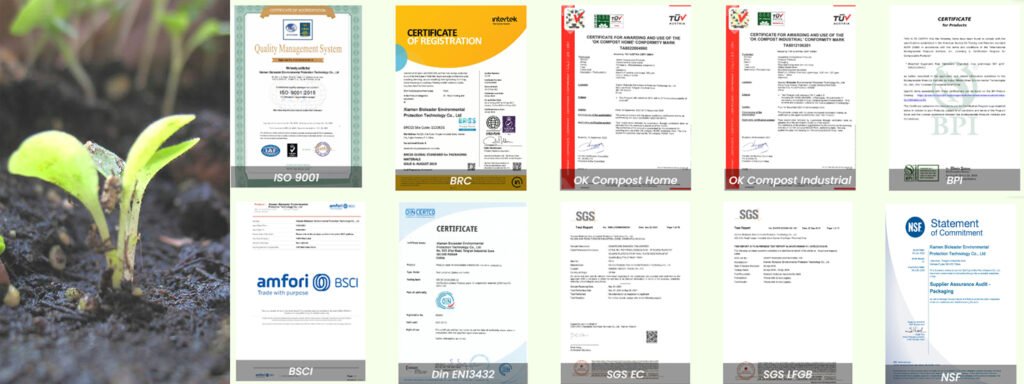
Procurement note: Before placing an order, send the supplier the product code, material requirement, intended food use, lid type, printing requirement, destination country, and environmental claim you intend to make. This allows the supplier to check whether the available documents match the actual project.
Compostable Packaging Procurement Decision Matrix
| Procurement Question | Acceptable Evidence | Risk if Missing |
|---|---|---|
| Is the product industrially compostable? | Applicable finished-product certificate or clearly mapped product-family certification. | Unsupported industrial compostability claim. |
| Is the product home compostable? | Product-specific home compostability certificate under the relevant scheme. | Industrial certification may be incorrectly marketed as home compostable. |
| Does the certificate cover this SKU? | Registry listing, certificate annex, product code mapping, or written confirmation from the certificate holder. | The supplied item may fall outside the certified scope. |
| Are printing and coatings included? | Certificate scope, approved formulation, or supporting test documentation. | The printed finished product may differ from the tested sample. |
| Is the complete set compostable? | Separate verification for container, lid, label, sleeve, and accessories. | One non-compostable component may invalidate the complete-set claim. |
| Can the certification mark be printed? | License terms, private-label approval, artwork authorization, and correct certificate number. | Unauthorized or incorrect use of a certification mark. |
| Will local facilities accept it? | Written or published acceptance guidance from the local collector or composting facility. | Certified packaging may still be sent to landfill or rejected as contamination. |
| Is it food-contact compliant? | Relevant food-contact declaration or test report for the destination market. | Compostability certification alone does not establish food-contact compliance. |
| Is it PFAS-free? | Defined supplier declaration and appropriate finished-product test evidence where required. | Compostability does not automatically establish PFAS-free status. |
Buyer Action Plan Before Approving a Compostable Product
- Define the application: hot food, cold drink, oily meal, soup, salad, cutlery, takeaway, retail, or event use.
- Identify the complete product system: main container, lid, coating, ink, label, sleeve, and accessories.
- Select the intended disposal pathway: industrial composting, home composting, recycling, or another locally available route.
- Request the complete certificate: not only a logo or marketing sheet.
- Verify the certificate online: confirm status, holder, product scope, and certificate number.
- Map the ordered SKU: check formulation, color, thickness, printing, and components.
- Review supporting documents: food-contact, PFAS-related, technical, and performance documents as needed.
- Confirm local acceptance: ask the relevant collector or composting facility.
- Approve wording and artwork: ensure claims do not exceed the evidence.
- Control future changes: require supplier notification before material, formulation, coating, or factory changes.
This product-level process complements broader supplier and regulatory planning. Buyers can also review how global plastic restrictions are changing food packaging procurement.
FAQ: Compostable Packaging Verification
Is all biodegradable packaging also compostable?
No. Biodegradable is a broad description of biological breakdown. Compostable packaging must meet defined requirements under a relevant standard or certification scheme. A biodegradable claim alone does not establish industrial or home compostability.
How can I check whether a compostability certificate is real?
Obtain the complete certificate and search the official database of the issuing certification body. Match the certificate holder, certificate number, product name, model, formulation, thickness, and current status to the item being purchased.
Does a raw-material certificate cover the finished product?
Not automatically. The finished product may include pigments, additives, coatings, inks, adhesives, labels, or other components that were not covered by the raw-material certificate. Buyers should request finished-product evidence or clear product-family mapping.
Does BPI certification mean every composting facility will accept the product?
No. BPI certification supports commercial compostability within its certification scope, but facility acceptance depends on local collection systems, composting operators, contamination policies, and municipal programs.
Does EN 13432 mean a product is home compostable?
No. EN 13432 is associated with packaging recoverable through industrial composting and biodegradation requirements. Home compostability requires separate product-specific evidence under an appropriate home composting standard or certification scheme.
Can an industrially compostable product be placed in a home compost bin?
It should not be marketed or disposed of as home compostable unless it has separate evidence supporting home composting conditions. Industrial composting generally uses more controlled temperature, moisture, and aeration.
Does compostable packaging contain no PFAS?
Not necessarily. Compostability and PFAS-free status are separate claims. Buyers of molded fiber and grease-resistant packaging should request product-specific PFAS-related declarations or testing where applicable.
Can a compostable container use a PET lid?
Yes, but the complete set should not be described as fully compostable. The container and PET lid have different material properties and disposal pathways and should be identified separately.
Are all Bioleader® products covered by the same compostability certificate?
No. Bioleader® supplies different product materials and constructions. Certification and document availability vary by product line, formulation, item code, component, and destination market. Buyers should request product-specific confirmation.
Can an internal composting trial replace third-party certification?
No. An internal trial may provide general observations but cannot replace standardized testing, certification-body review, registry listing, and continuing compliance requirements.
Conclusion: Verify the Product, Not Just the Claim
Truly compostable food packaging is verified through product identity, certification scope, finished-product construction, supporting documents, and local end-of-life conditions. A material name, green symbol, or supplier statement is not enough.
Professional buyers should confirm:
- The exact product and every component.
- The intended industrial or home composting environment.
- The applicable certification scheme.
- The certificate holder and registry status.
- The covered model, formulation, color, and thickness.
- The inclusion of printing, coatings, adhesives, and lids.
- Food-contact and PFAS-related documentation where applicable.
- Private-label and certification-mark authorization.
- Acceptance by local waste collectors and composting facilities.
This approach reduces greenwashing risk without treating certification as a marketing decoration. It also helps importers, distributors, restaurant groups, and private-label brands select packaging that matches the intended application, market, and waste system.
For Bioleader® buyers, the recommended starting point is to identify the exact product code, food application, destination country, required claim, and disposal pathway. The appropriate technical and compliance documents can then be reviewed against the actual product rather than applied broadly across unrelated materials or product families.
Official References
- Biodegradable Products Institute — Commercial Compostability Certification
- ASTM International — ASTM D6400
- ASTM International — ASTM D6868
- TÜV AUSTRIA — OK compost INDUSTRIAL
- TÜV AUSTRIA — OK compost HOME
- DIN CERTCO — Industrially Compostable Products
- Australasian Bioplastics Association — Compostability Certification
- ISO — ISO 17088 Specifications for Compostable Plastics
- Sustainable Packaging — Packaging Policy News