The article reveals why airlines are replacing single-use plastic cutlery with compostable alternatives—such as bagasse and cornstarch-PLA—to meet emission targets, regulatory bans, and passenger expectations while reducing weight-related fuel use.
For decades, airline passengers opening their in-flight meal trays were greeted with the familiar sight of plastic forks, knives, and spoons. These utensils were inexpensive, lightweight, and convenient—but they were also single-use plastic, destined for landfill or incineration.
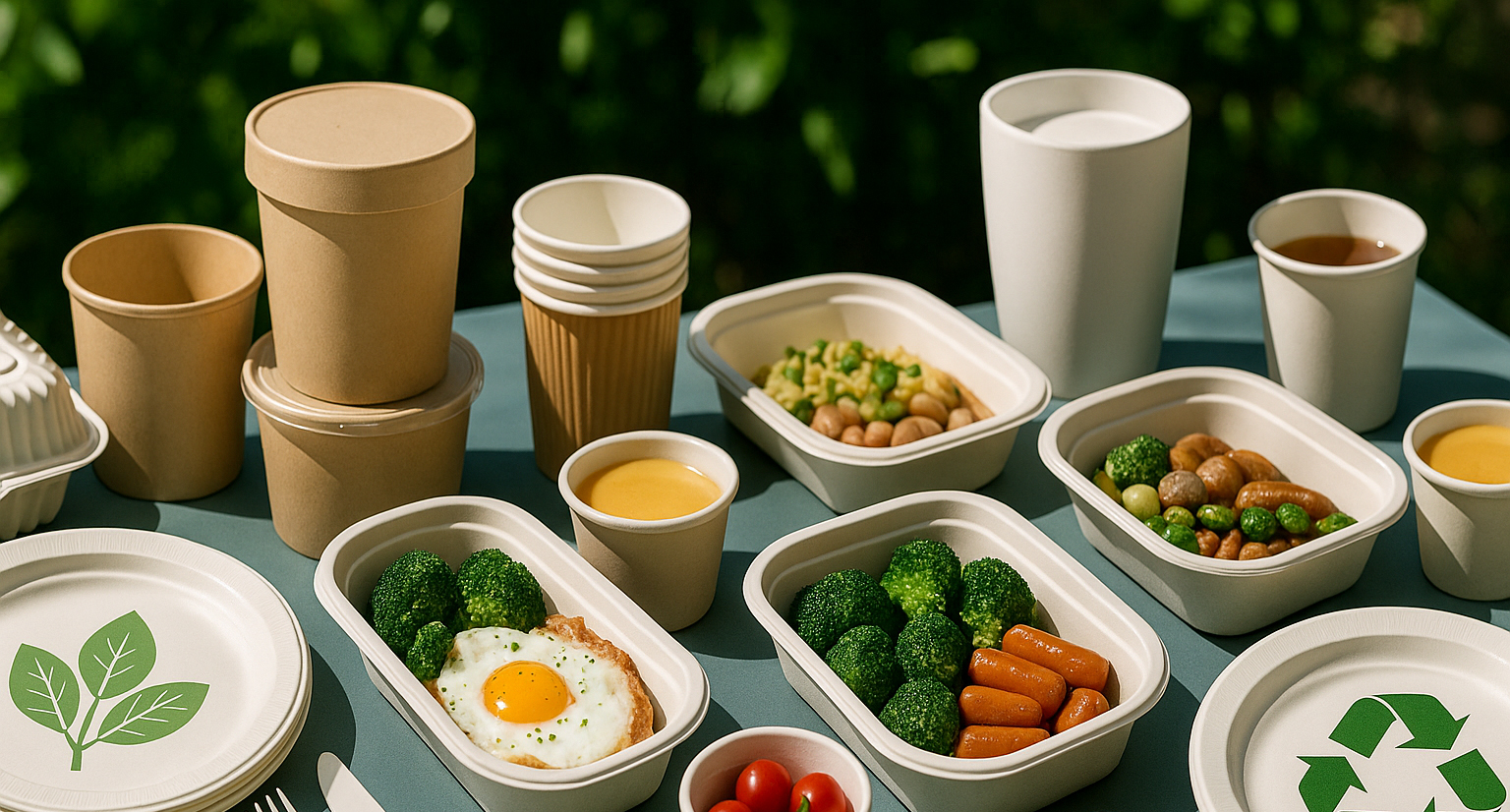
Today, this image is rapidly changing. Airlines around the globe are replacing petroleum-based plastics with compostable alternatives like bagasse clamshell boxes, cornstarch plates, paper cups, and CPLA cutlery. The shift isn’t just a public relations move—it’s driven by a perfect storm of environmental regulations, carbon reduction targets, passenger expectations, and material innovation.
With growing public awareness of plastic waste and climate change, compostable cutlery has emerged as the new standard for airline catering—combining compliance, sustainability, and customer satisfaction at 35,000 feet.
The Aviation Industry’s Carbon Reduction Commitments
The aviation industry accounts for roughly 2–3% of global CO₂ emissions. While most attention goes to fuel efficiency and aircraft design, there’s a growing recognition that every onboard item contributes to the total carbon footprint.
Global Targets
IATA (International Air Transport Association): Net-zero carbon emissions by 2050
ICAO (International Civil Aviation Organization): Carbon-neutral growth from 2020 onwards
Many airlines have set their own aggressive timelines for cutting emissions ahead of industry averages
The Weight Factor
Airline sustainability isn’t just about materials—it’s also about weight reduction. Every kilogram carried burns more fuel. Studies show that removing just 1kg of weight per aircraft can save up to 25,000 liters of fuel per year for a large fleet, cutting CO₂ emissions by nearly 63 tonnes annually. Compostable materials, particularly lightweight designs in bagasse and CPLA, play a direct role in achieving these savings.
Regulatory & Policy Drivers
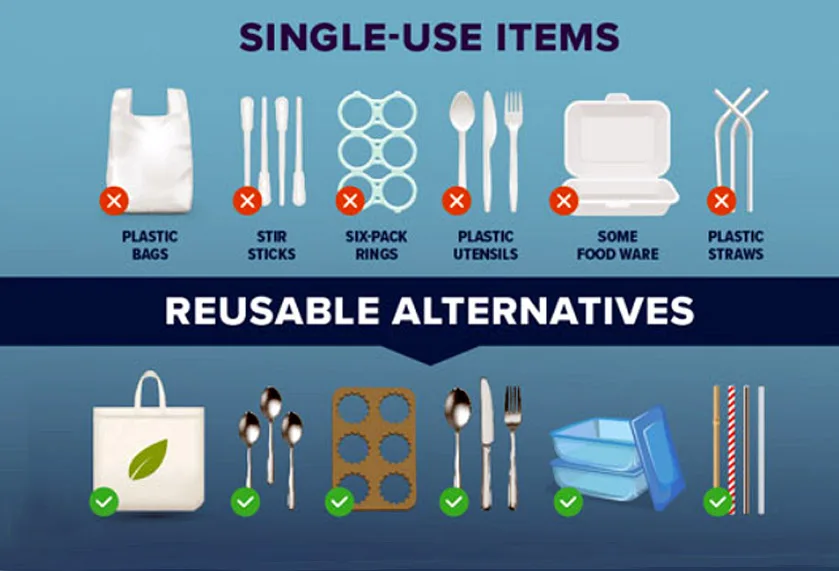
Airlines are facing an increasingly complex regulatory environment. Single-use plastic bans, compostability mandates, and waste management rules are reshaping in-flight catering.
European Union: The Single-Use Plastics Directive (SUPD) prohibits plastic cutlery, stirrers, and plates, forcing airlines flying into the EU to comply.
Canada: The Single-Use Plastics Prohibition Regulations (SOR/2022-138), in full effect from January 2025, bans plastic foodservice ware, including items used in in-flight catering.
Australia & New Zealand: State-level bans on single-use plastic cutlery and containers now include airlines operating domestically.
Southeast Asia: Countries like Singapore, Malaysia, and the Philippines are introducing Extended Producer Responsibility (EPR) rules, requiring companies—including airlines—to take responsibility for end-of-life disposal of catering items.
For airlines with international routes, EN13432 (EU) and ASTM D6400 (US) certifications have become essential, ensuring compostable products are legally accepted across multiple jurisdictions.
Why Compostable Cutlery & Tableware Fit the Airline Meal Service
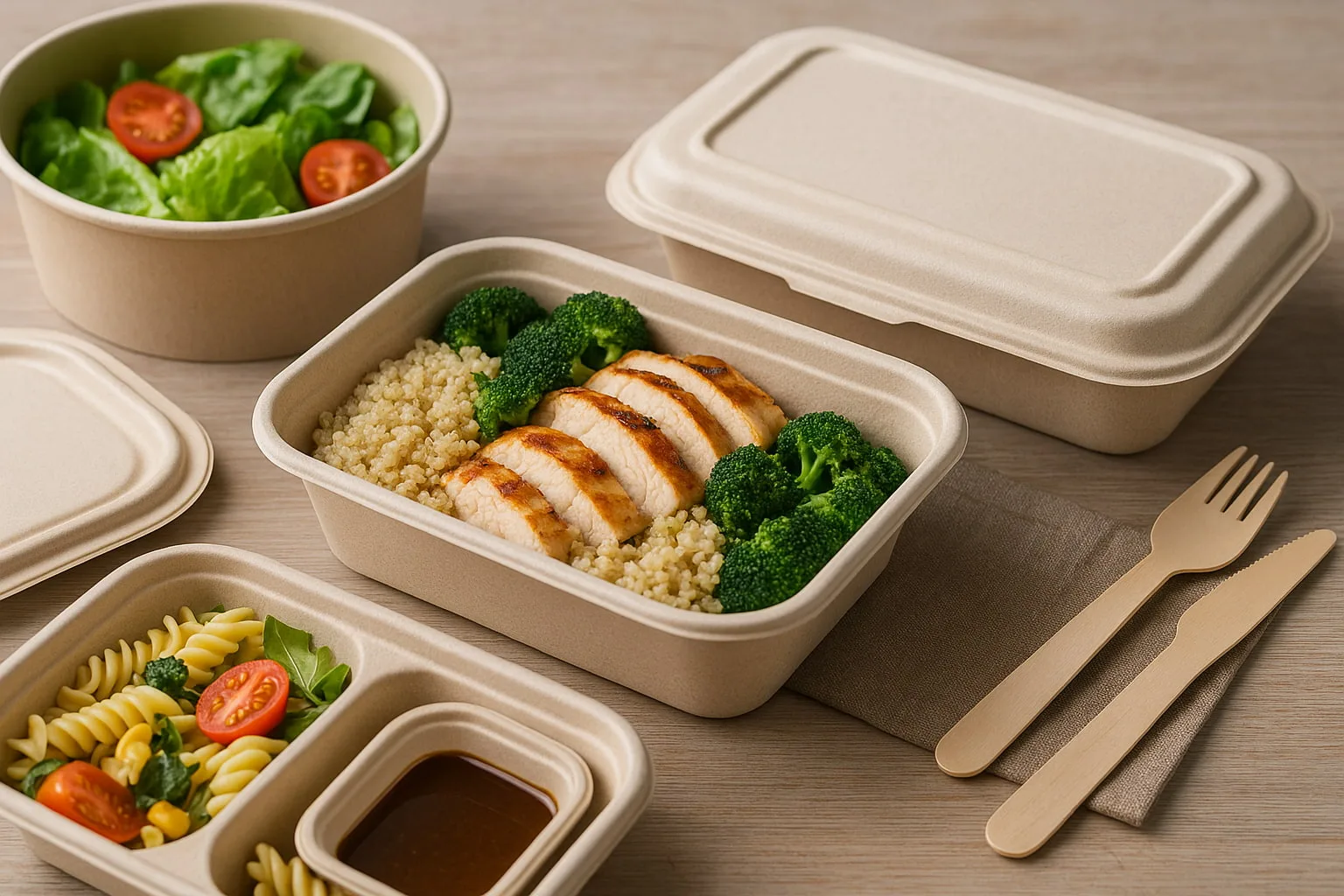
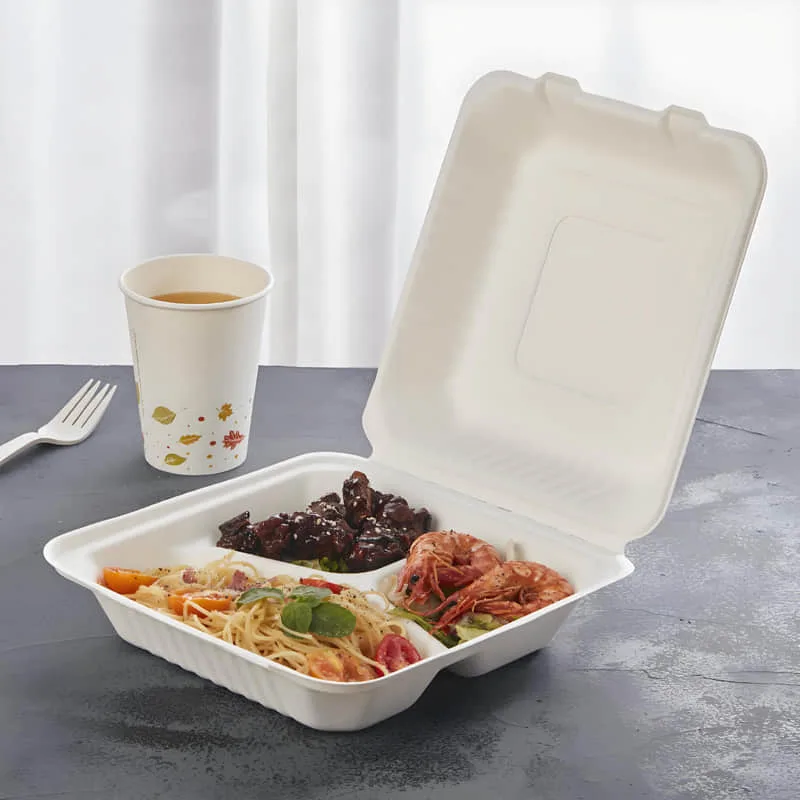
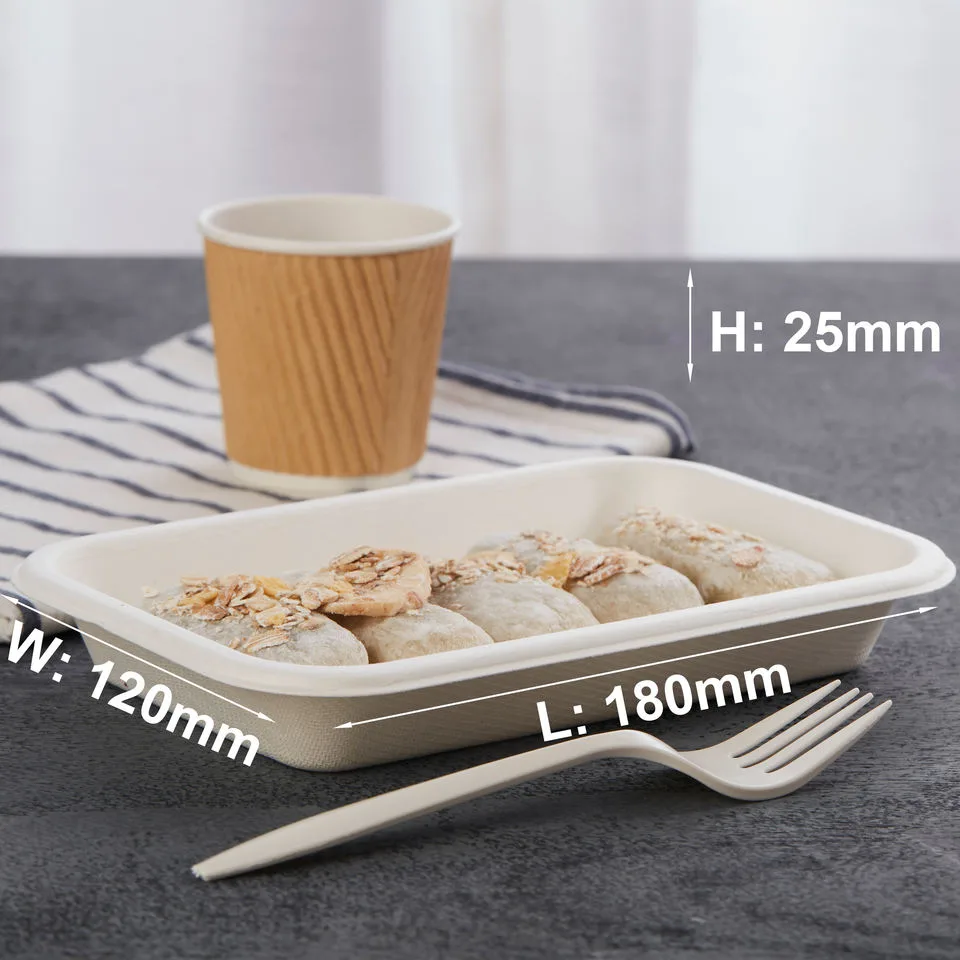
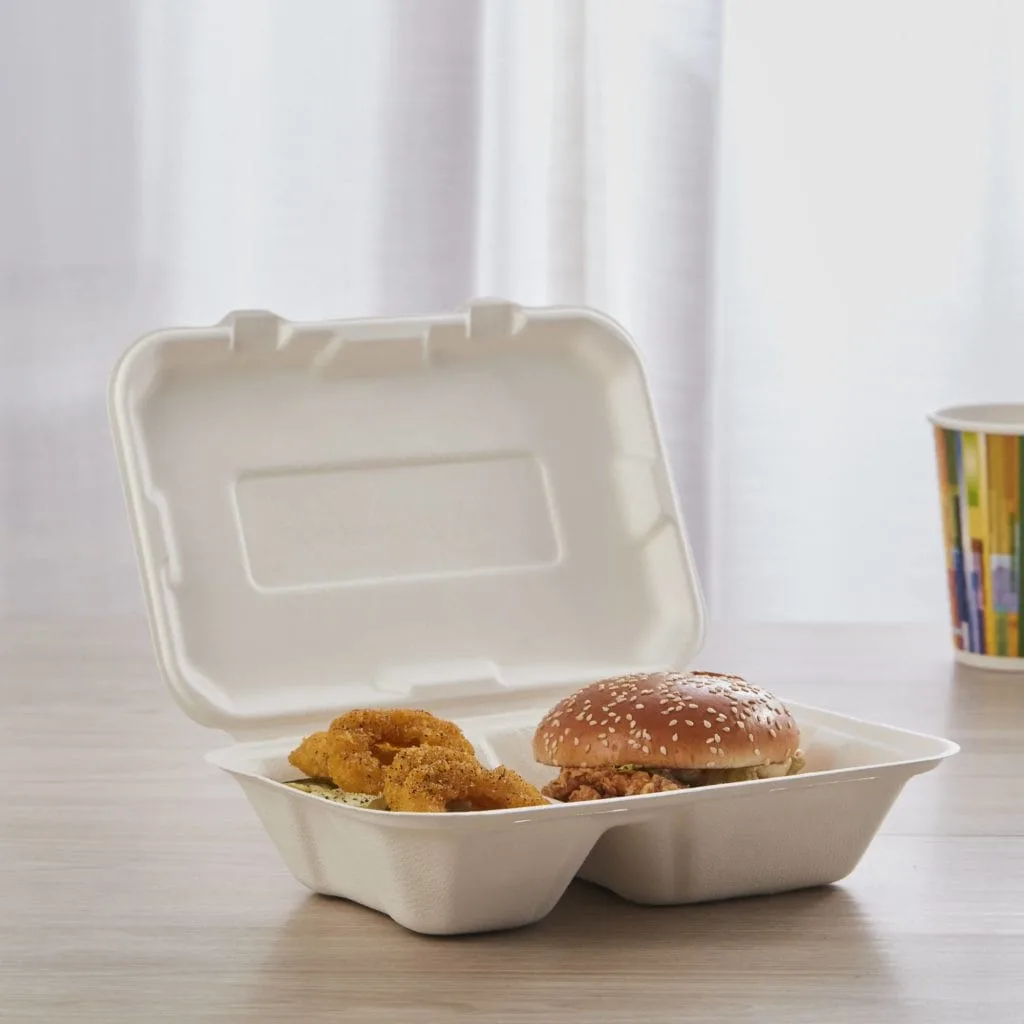
Bagasse Tableware
Examples: Clamshell boxes, bagasse trays with lids, bagass plates
Advantages: Withstands temperatures up to 220°C, oil- and water-resistant, microwave- and oven-safe
Use Cases: Perfect for hot main courses, cold salads, or multi-compartment meal trays
Eco Impact: Produced from sugarcane residue, which would otherwise be waste. Decomposes within 60–90 days in industrial composting
|
|
Cornstarch Tableware
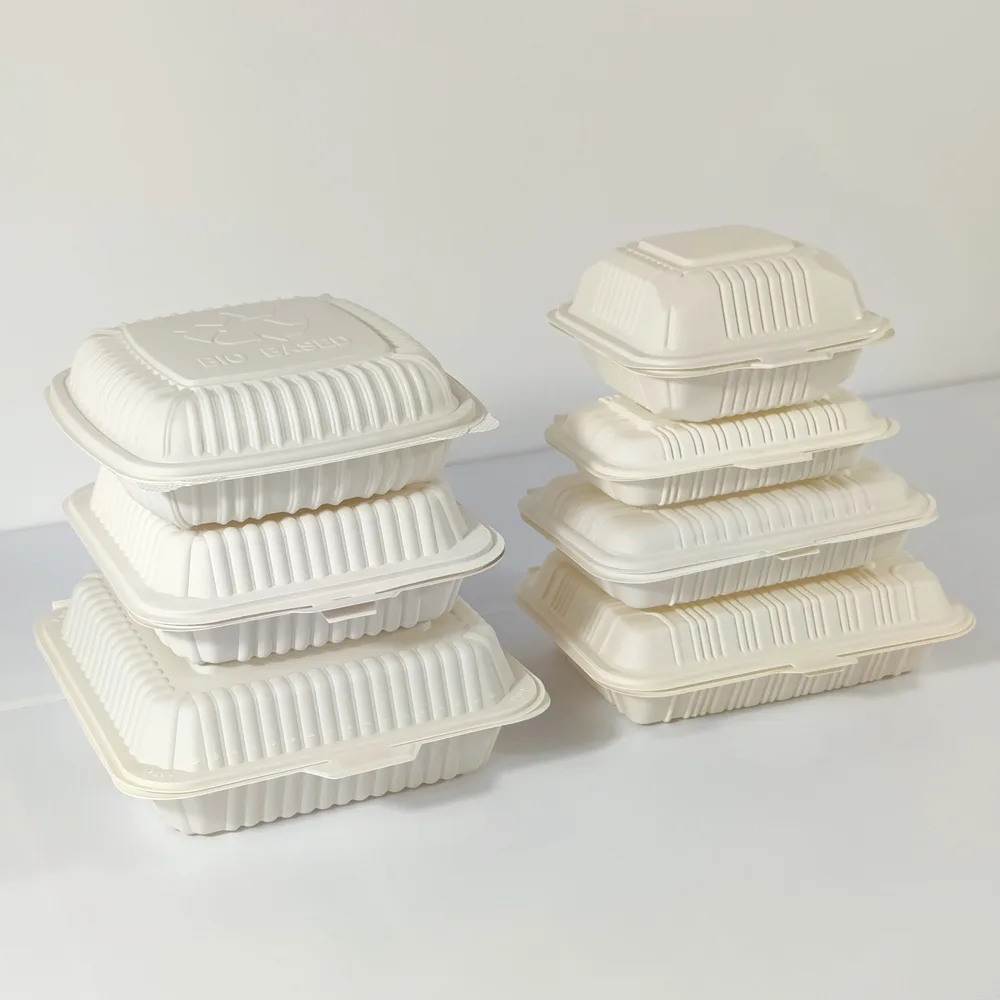
Examples: Clamshell boxes, cornstarch plates
Advantages: Rigid and durable, can hold hot and oily meals without warping
Use Cases: Hot breakfast trays, pasta dishes, or snack boxes
Eco Impact: Made from renewable plant starch, breaks down naturally, leaving no toxic residue
|
|

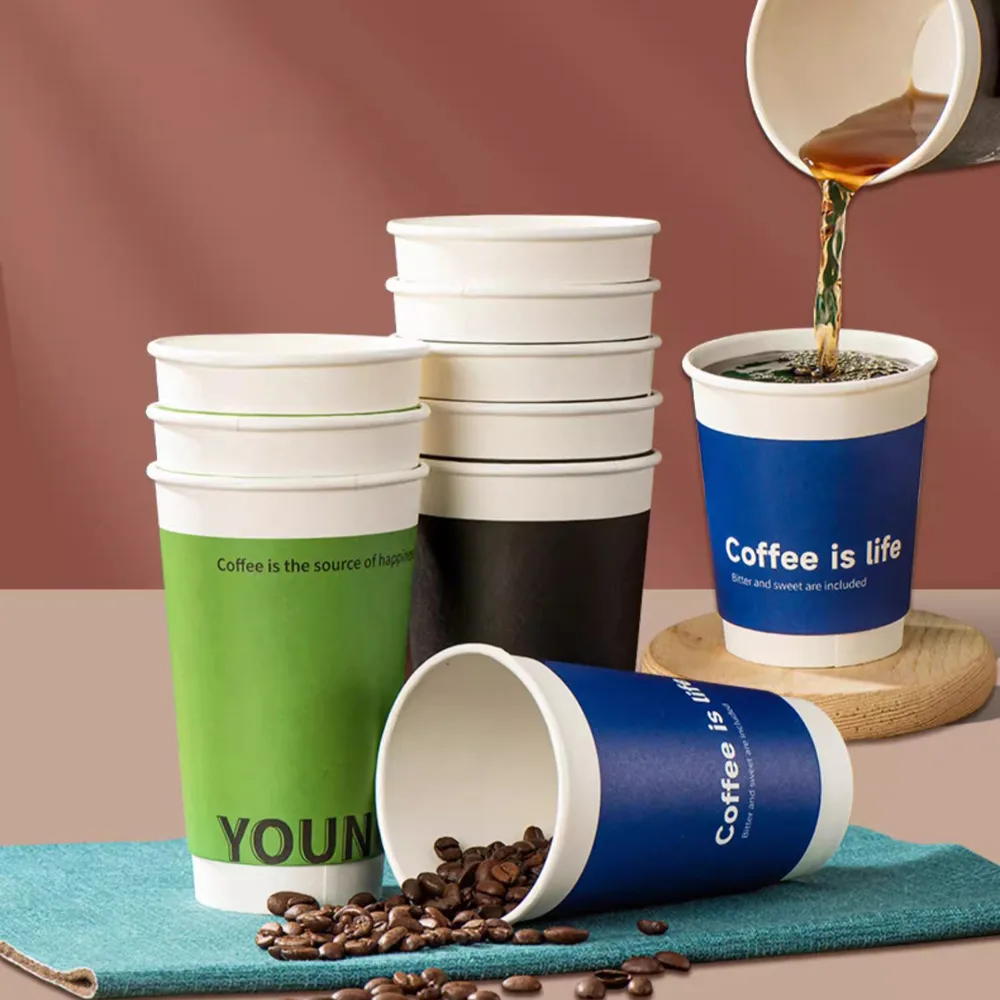
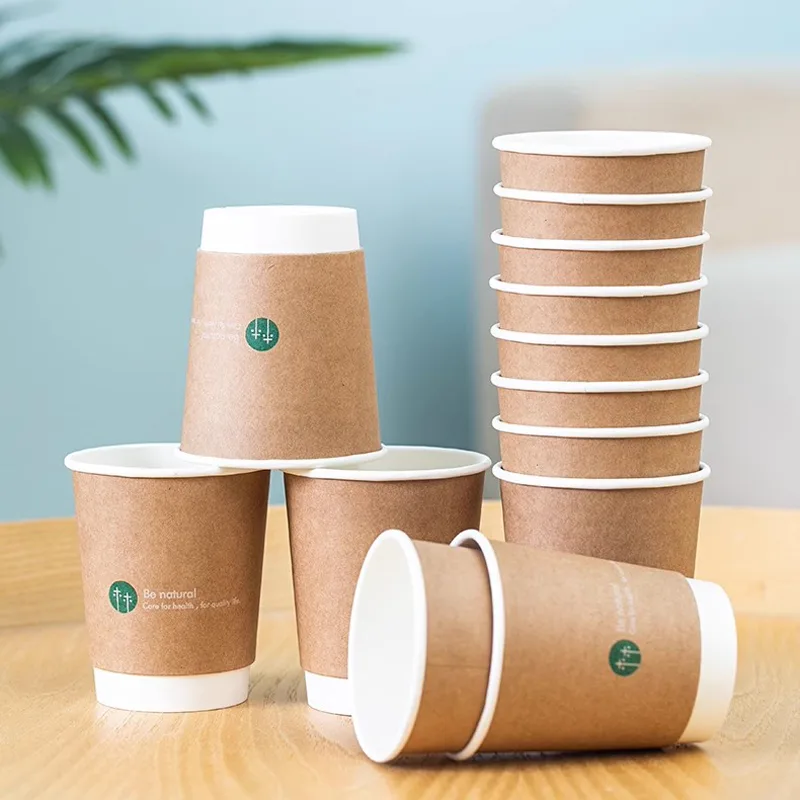
Paper Cups
Advantages: Ultra-lightweight, easily brand-customizable, suitable for both hot and cold beverages
Use Cases: Coffee, tea, soft drinks, juice service
Eco Impact: Lined with compostable PLA, fully compliant with compostability certifications
|
|
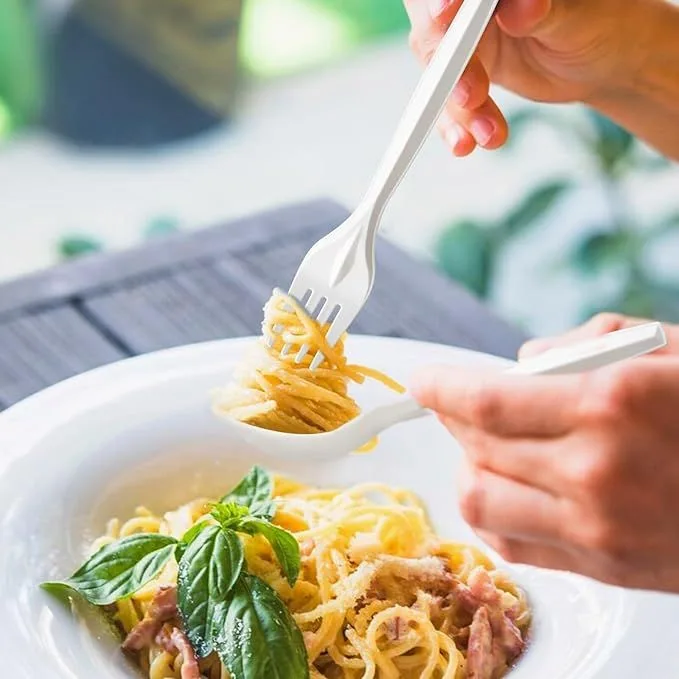
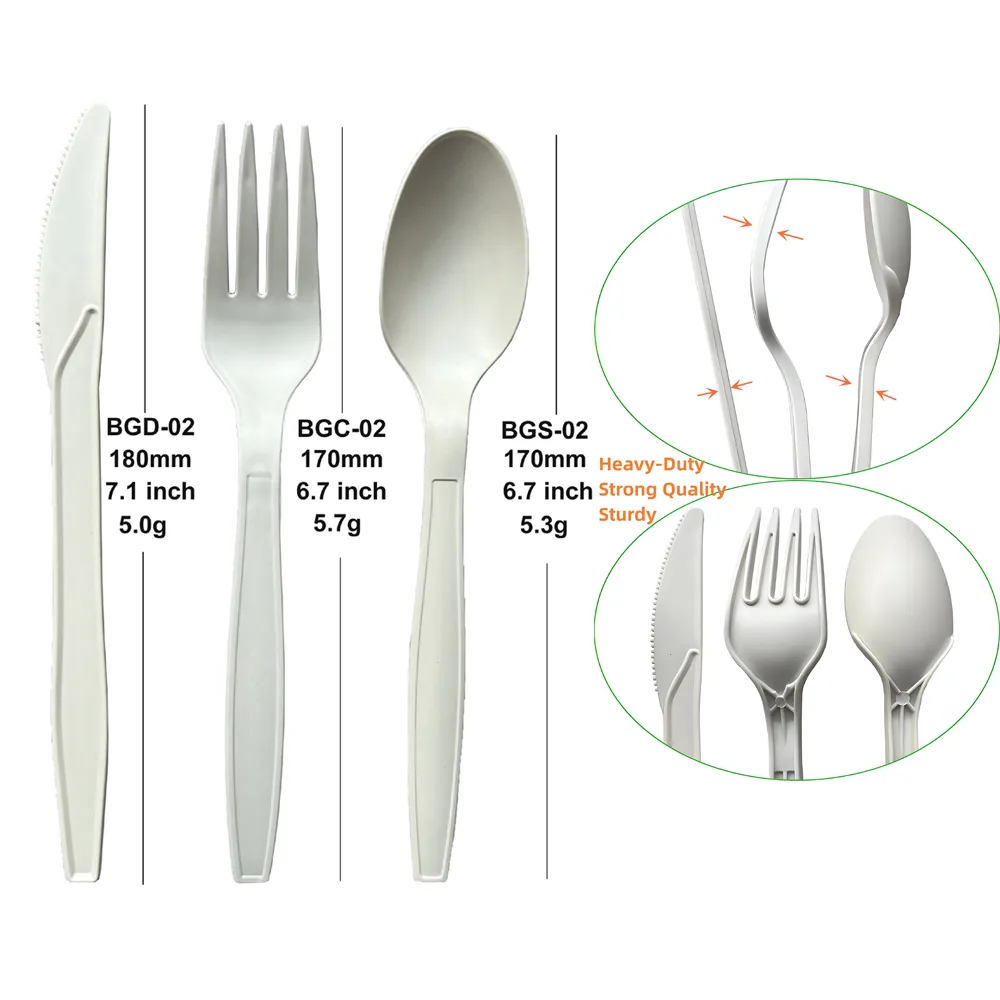
CPLA Cutlery
Advantages: Looks and feels like traditional plastic but made from plant-based PLA, crystallized for heat resistance up to 90°C
Use Cases: Full meal service, dessert forks, stirrers
Eco Impact: Reduces reliance on fossil fuel-based plastics and breaks down under industrial composting
|
|
Passenger Experience & Brand Value
Modern travelers, especially younger passengers, value eco-conscious choices and expect airlines to reflect these values. Compostable tableware doesn’t just reduce environmental impact—it enhances the premium feel of in-flight dining:
Visual Appeal: Natural hues of bagasse and paper complement airline branding
Tactile Comfort: CPLA cutlery offers a sturdy, pleasant hand-feel compared to brittle plastic
Brand Differentiation: Airlines using branded paper cups or embossed bagasse trays reinforce their sustainability image every time a meal is served
Waste Management & Circularity
One of the biggest advantages of compostable materials is that they can be collected together for composting, simplifying onboard waste sorting. In destinations with industrial composting facilities, such as Singapore Changi Airport or certain EU hubs, these materials can be processed into nutrient-rich compost instead of landfill waste.
For long-haul flights where waste is often incinerated, compostable materials still reduce toxic emissions compared to plastics during combustion.
Case Studies — Airlines Leading the Switch
Case 1: Scandinavian Airlines (SAS)
In 2024, SAS became one of the first European carriers to fully replace economy-class plastic cutlery with CPLA knives, forks, and spoons, accompanied by bagasse clamshell boxes for main meals and paper cups for beverages. This change eliminated over 70 tonnes of single-use plastic annually—equivalent to the weight of a fully loaded Boeing 737. Beyond the environmental benefit, SAS reported a 15% reduction in catering-related CO₂ emissions thanks to lighter tableware. Passenger surveys showed a 92% satisfaction rate, with many noting the natural texture of the cutlery and the improved stability of the food containers compared to flimsy plastic trays.
Case 2: Singapore Airlines (SIA)
Partnering with regional catering suppliers, SIA introduced cornstarch clamshell boxes for hot meals, bagasse plates for salads and bread rolls, and compostable paper cups lined with PLA for beverage service on short- and medium-haul routes. The airline reported replacing 1.2 million plastic containers in just six months. Cabin crew feedback was equally positive: compostable containers stacked more efficiently in galley trolleys, saving space, while their rigid structure reduced the risk of meal spillage during turbulence. SIA also noted that these materials maintained food temperature longer than traditional PET trays.
Case 3: Middle Eastern Premium Economy Pilot Program
A leading Gulf-based carrier launched a six-month trial replacing conventional meal service packaging with bagasse trays with lids, CPLA cutlery, and branded paper cups in its premium economy class. The result was a 15% reduction in catering waste weight, translating into approximately 8,000 liters of fuel saved annually on the trial routes. Passenger perception surveys indicated that over 85% associated the new tableware with the airline’s sustainability leadership, and many said it improved their overall impression of the airline brand.
Case 4: North American Low-Cost Carrier Initiative
A major North American budget airline adopted bagasse clamshell boxes and CPLA cutlery for all domestic flights under three hours. While the primary motivation was compliance with upcoming state-level plastic bans, the airline also leveraged the change in its marketing, emphasizing eco-friendly operations. This move resonated strongly with younger travelers—internal data showed a 12% increase in positive brand sentiment among passengers aged 18–34.
Industry Takeaway
These case studies highlight that the adoption of compostable cutlery and tableware is not just about compliance—it’s also a competitive advantage. Airlines are discovering that passengers notice and value sustainable choices, and that lightweight, compostable solutions can yield tangible cost savings in fuel while improving brand reputation.
Supply Chain & Manufacturer Collaboration — Performance & Product Options
Transitioning from single-use plastics to compostable airline tableware requires more than just choosing a new material—it demands coordinated efforts across the supply chain. Airlines must work closely with catering companies, packaging designers, and certified manufacturers to ensure that products meet aviation-grade standards, pass safety tests, and comply with diverse environmental regulations in all destination markets.
Leading suppliers are now developing integrated solutions that balance weight reduction, durability, compostability, and passenger comfort. Partnerships often include custom branding, tailored sizing for galley trolleys, and packaging that satisfies both food safety and environmental criteria.
Bioleader® is one such manufacturer, based in China, specializing in certified compostable food packaging for global aviation and foodservice markets. Its portfolio includes bagasse clamshell boxes, trays, and plates, cornstarch clamshells and plates, compostable paper cups, and CPLA cutlery—all compliant with EN13432 and ASTM D6400 standards. Known for lightweight, aviation-optimized designs, Bioleader® also offers custom logo embossing and printing, helping airlines reduce plastic waste without compromising quality or passenger satisfaction.
Material Performance Comparison for Airline Catering
| Material & Product Example | Average Weight Saving vs. Plastic | Heat Resistance | Oil/Water Resistance | Industrial Composting Time | Key Airline Use Cases |
|---|---|---|---|---|---|
| Bagasse Tableware (Clamshell Boxes, Trays, Plates) | 15–20% lighter | Up to 220°C | Excellent | 60–90 days | Hot main courses, salads, bread rolls |
| Cornstarch Tableware (Clamshell Boxes, Plates) | 10–15% lighter | Up to 120°C | Excellent | 60–90 days | Hot breakfast trays, pasta, dessert plates |
| Paper Cups (PLA-lined) | 20–25% lighter | Up to 100°C | Good (with PLA lining) | 45–60 days | Hot/Cold beverage service |
| CPLA Cutlery (Knives, Forks, Spoons) | 10–15% lighter | Up to 90°C | Good | 80–100 days | Full meal service, dessert cutlery, stirrers |
Recommended Product Set for Airlines — Bioleader® Aviation Solutions
To help airlines accelerate the transition, Bioleader® offers ready-to-deploy product sets tailored for in-flight service needs:
Main Meal Set
Paper cup (PLA-lined, 8oz or 12oz)
Breakfast & Snack Set
Cornstarch clamshell box (650–800ml)
Paper cup (hot drinks)
Premium Economy & Business Set
Bagasse tray with lid (multi-compartment)
CPLA cutlery (custom embossed logo)
Eco Beverage Service
Compostable paper cups (hot/cold options)
PLA Straws or paper straws.
Advantages of Bioleader® Product Sets
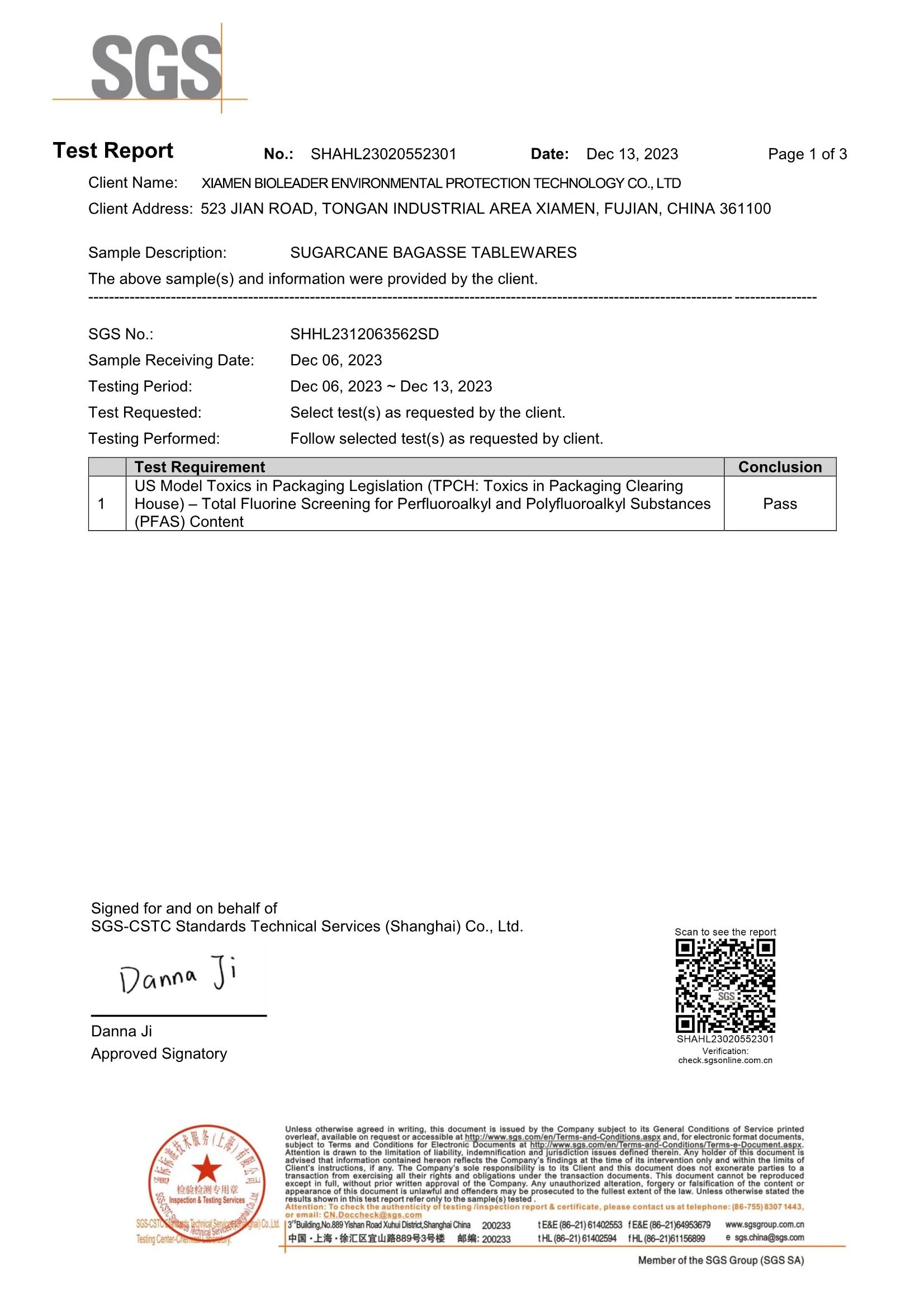
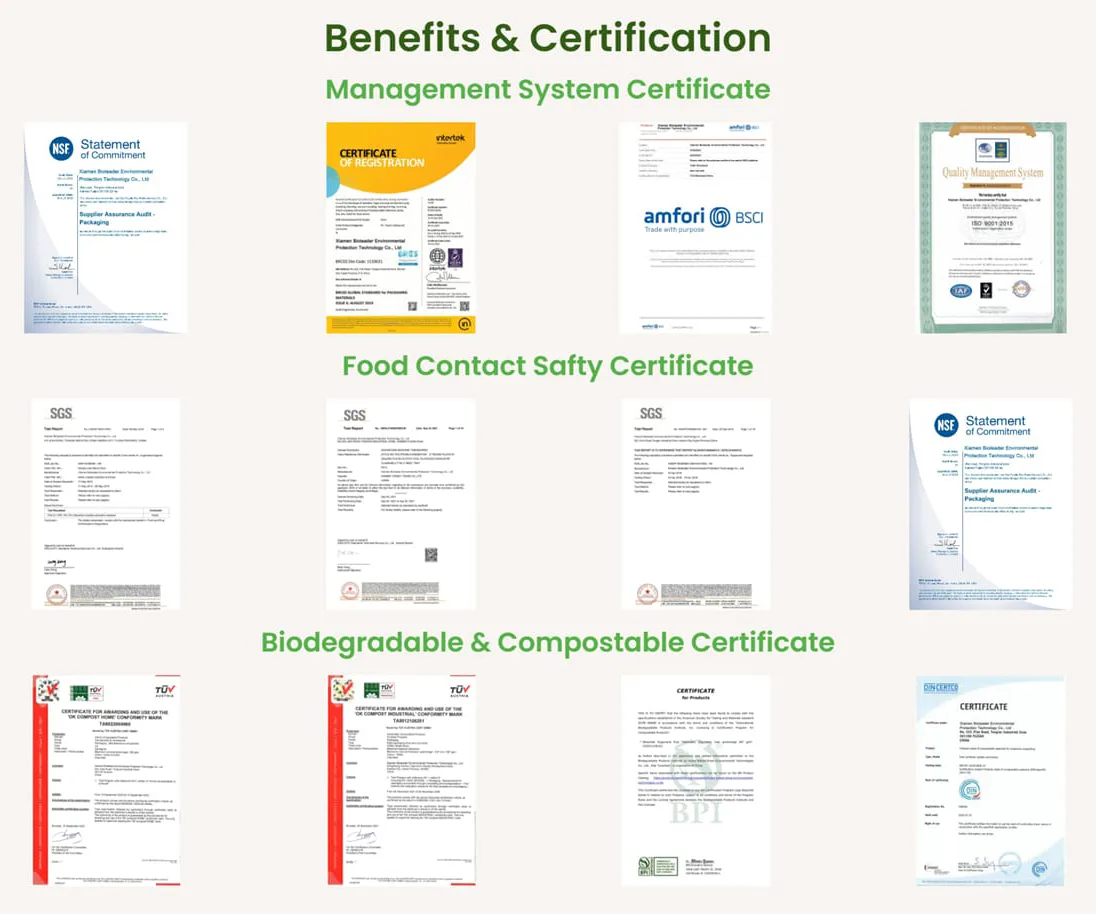
Certified under EN13432, ASTM D6400, and BPI for global compliance
Lightweight designs to reduce catering weight and fuel consumption
Custom branding available for enhanced passenger perception
Scalable supply to meet the demands of large international fleets
Challenges & Future Outlook
Current Challenges
Cost Differential: Compostable items often cost more than plastic, though bulk ordering reduces the gap
Infrastructure Gaps: Many airports still lack large-scale composting facilities
Training Needs: Cabin crew must adapt to new waste sorting protocols
Future Trends
Edible Cutlery: Trials are underway for biscuit-based and rice-based edible utensils
Ultra-Light Biocomposites: Combining bagasse fibers with biodegradable resins for even lighter trays
Closed-Loop Systems: Onboard collection and composting partnerships between airlines and airport facilities
Conclusion
The transition to compostable cutlery in airline meals is more than a trend—it’s becoming an operational standard. By adopting bagasse clamshell boxes, cornstarch trays, paper cups, and CPLA cutlery, airlines can meet environmental regulations, reduce fuel use, enhance brand image, and improve the passenger experience.
In the race toward net-zero emissions, every detail matters. And in 2025 and beyond, the humble fork, knife, and cup will play their part in flying the skies more sustainably.
FAQ
1. Why are airlines switching to compostable cutlery in 2025?
Airlines are replacing plastic cutlery with compostable options like bagasse, cornstarch, paper, and CPLA to meet environmental regulations, reduce waste, and enhance passenger experience.
2. What types of compostable tableware are suitable for airline meals?
Popular choices include bagasse clamshell boxes, cornstarch plates, paper cups, and CPLA cutlery, all certified for compostability and designed for in-flight catering.
3. How does compostable cutlery help airlines reduce carbon emissions?
Compostable cutlery is lightweight, reducing aircraft weight and fuel consumption, which directly cuts CO₂ emissions. It also minimizes landfill waste and microplastic pollution.
4. Are compostable airline tableware products safe for hot meals?
Yes. Bagasse can withstand up to 220°C, cornstarch up to 120°C, and CPLA cutlery up to 90°C, making them ideal for both hot and cold in-flight meals.
5. Where can airlines source certified compostable tableware?
Suppliers like Bioleader® offer certified bagasse, cornstarch, paper, and CPLA tableware that meet EN13432 and ASTM D6400 standards for global airline compliance.
Reference
International Air Transport Association (IATA). Net Zero by 2050 – Aviation’s Commitment to Climate Action. https://www.iata.org/en/programs/environment/net-zero/
European Commission. Single-Use Plastics Directive (SUPD). https://environment.ec.europa.eu/topics/plastics/single-use-plastics_en
Government of Canada. Single-Use Plastics Prohibition Regulations (SOR/2022-138). https://laws-lois.justice.gc.ca/eng/regulations/SOR-2022-138/
International Civil Aviation Organization (ICAO). Environmental Protection – Aircraft Noise and Emissions. https://www.icao.int/environmental-protection/
Wikipedia contributors. Bagasse. In Wikipedia. https://en.wikipedia.org/wiki/Bagasse
Bioleader®. Bagasse Tableware Products – Clamshell Boxes, Trays, Plates. https://www.bioleaderpack.com/product-category/bagasse-tableware/
Bioleader®. CPLA Cutlery – Compostable Plant-Based Utensils. https://www.bioleaderpack.com/product-category/cpla-cutlery/
Compostable Cutlery Takes Flight: Sustainable Tableware Becomes the Airline Standard
In today’s aviation industry, compostable tableware—like bagasse meal trays and CPLA cutlery—are replacing traditional plastics across in-flight meals. Beyond improving brand image, these materials support airlines’ net-zero emission goals and comply with plastic bans in regions like the EU, Canada, and Oceania.
How it helps: Lightweight compostable packaging reduces aircraft fuel burn—saving up to 63 tonnes of CO₂ annually per aircraft. The right materials also maintain hygiene and performance for hot, in-flight meals—without increasing weight or compromising functionality.
Why it matters: Passengers increasingly demand sustainable travel, and environmental regulations are tightening globally. Compostable cutlery offers a real, scalable switch away from plastics—enhancing regulatory compliance, passenger experience, and carbon footprint reduction, all while aligning with industry-wide sustainability mandates.