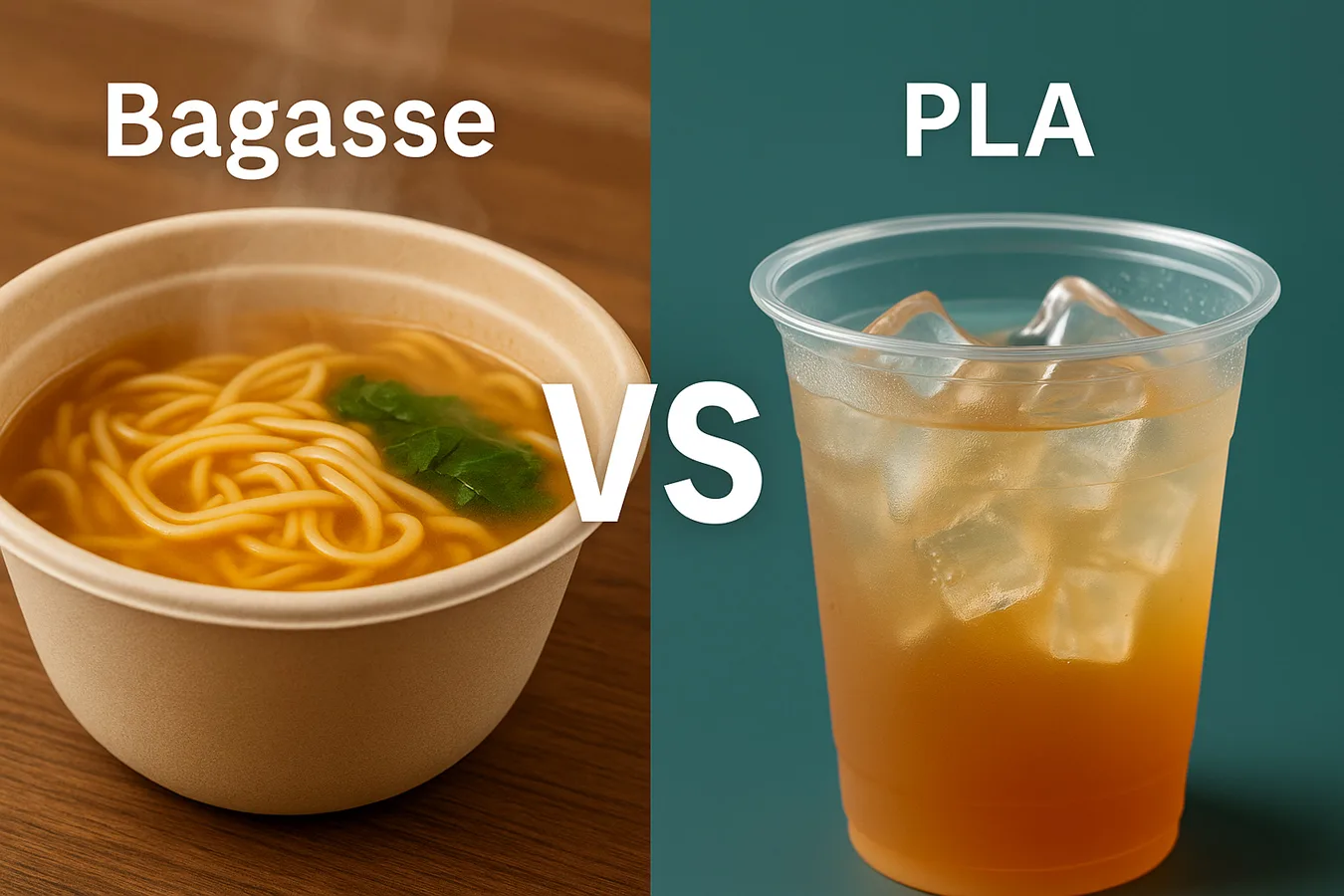
Introduction: Why Size Matters in Paper Cups
If you’ve ever stood in front of a coffee machine or attended a tasting session, chances are you’ve encountered a small cup — likely a 4oz paper cup. But what exactly is a 4oz paper cup used for? While it may seem like a niche item, this compact disposable cup plays an outsized role in various industries, from food service to healthcare.
With the global paper cup market projected to exceed $11 billion by 2026, understanding the use cases and sustainability of different cup sizes, especially smaller ones like 4oz, is increasingly important for businesses and eco-conscious consumers alike. In this ultimate guide, we’ll dive into everything you need to know about 4oz paper cups — their material options, practical applications, compostability, and future trends.
Understanding the 4oz Paper Cup
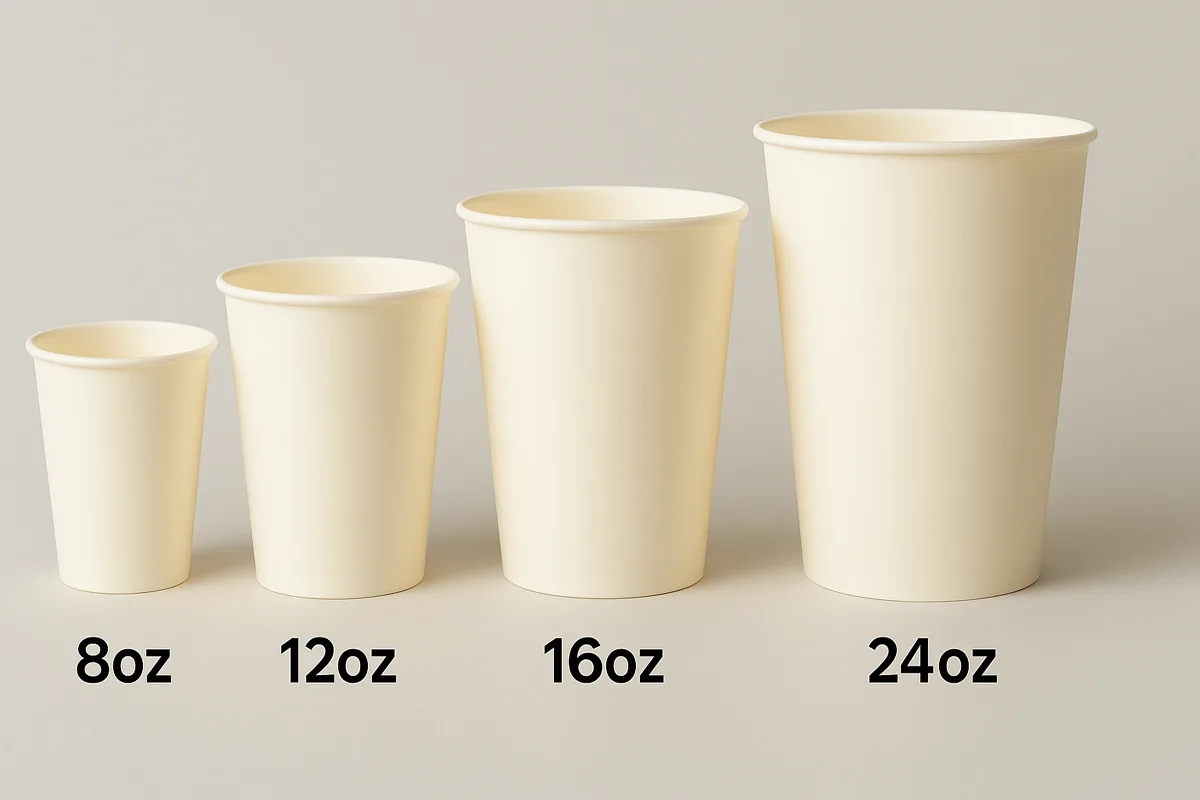
Dimensions and Capacity
A 4oz paper cup typically holds around 118ml of liquid and measures approximately 2.5–2.8 inches in height with a rim diameter of about 2.3 inches. It’s designed for portion control, single servings, or concentrated beverages.
Industry Applications of 4oz Paper Cups
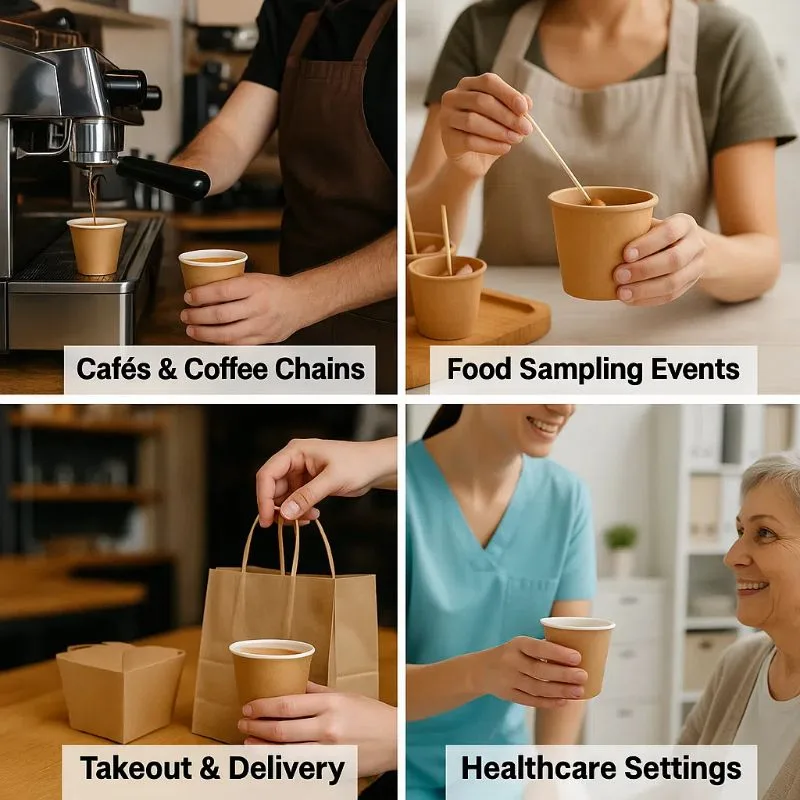
Cafés & Coffee Chains
Baristas often serve espresso shots or cortados in 4oz paper cups. These small vessels preserve the aroma and intensity of high-quality roasts, often coming with a custom-printed design to reflect brand identity.
Food Sampling Events
Food expos and supermarkets use these cups to provide hygienic, single-bite samples. Their disposable nature supports rapid turnover without compromising sanitation.
Takeout & Delivery
For sauces, salad dressings, and tasting portions, kraft 4oz paper cups with lids are ideal. They’re compact, sealable, and pair well with paper food containers and takeaway food boxes.
Healthcare Settings
4oz paper cups are common in hospitals, dental clinics, and wellness centers for water, mouthwash, or administering liquid medication.
Material Comparison – Which 4oz Paper Cup Material Is Right for You?
When selecting the ideal 4oz paper cup, the material isn’t just about cost—it’s about performance, sustainability, and customer perception. Below, we break down the most common materials used in 4oz paper cups to help you make the right choice.
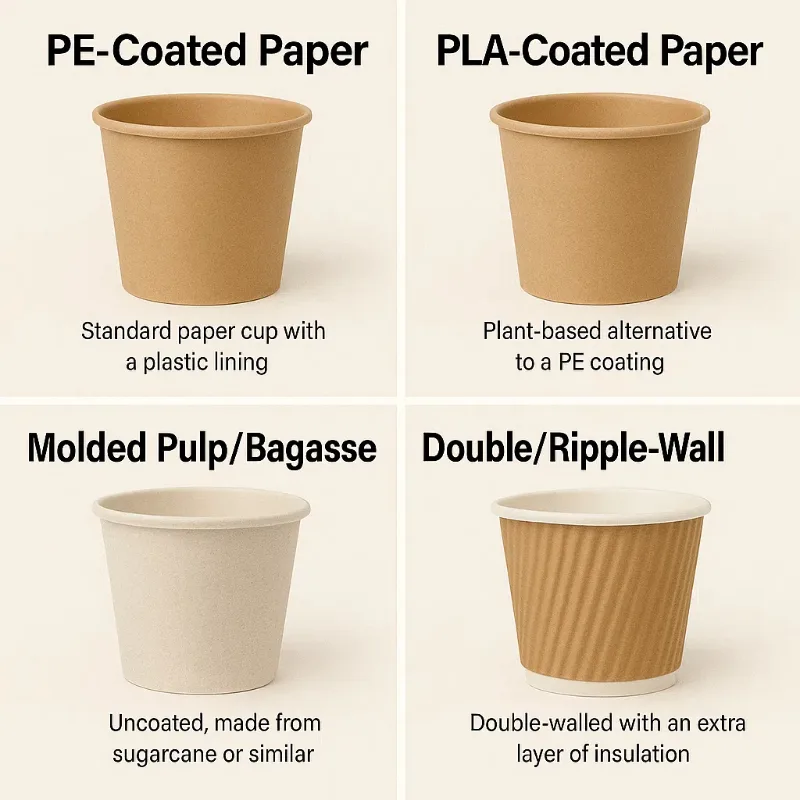
1. PE-Coated Paper Cups (Polyethylene Lining)
Overview: These are traditional paper cups lined with a thin layer of plastic (PE) to resist moisture and leakage.
Pros:
Excellent water and oil resistance
Works well for both hot and cold liquids
Inexpensive and widely available
Cons:
Difficult to recycle due to plastic-paper fusion
Increasingly restricted by plastic regulations
Best For: Budget-focused businesses where composting isn’t a priority
2. PLA-Coated Paper Cups (Polylactic Acid Lining)
Overview: Lined with a bioplastic derived from renewable sources like cornstarch or sugarcane, PLA cups mimic the function of PE without fossil-based plastic.
Pros:
Industrially compostable (meets ASTM D6400, EN13432 standards)
Made from renewable materials
Safe for cold and moderately hot liquids
Cons:
Requires industrial composting facilities—not home compostable
Slightly higher cost than PE cups
Cannot be recycled with standard paper or plastic streams
Best For: Businesses in regions with composting infrastructure; eco-conscious brands
3. Molded Pulp or Bagasse-Based Cups (Unlined)
Overview: These cups are formed entirely from natural fibers like sugarcane bagasse or bamboo pulp, with no lining.
Pros:
No plastic barrier—zero microplastic risk
Excellent for branding as a sustainable product
Cons:
Not suitable for high-temperature liquids
Shorter shelf life in humid environments
May require additional moisture barriers in some use cases
Best For: Zero-waste events, eco-conscious tastings, healthcare settings with sustainability goals
4. Double-Wall or Ripple-Wall Paper Cups (Premium Structure)
Overview: These cups include two layers of paperboard for insulation and grip, sometimes used in 4oz sizes for specialty beverages.
Pros:
Enhanced insulation for hot espresso
Comfortable to hold, no sleeve needed
Great for custom branding with layered textures
Cons:
Bulkier and more expensive
Often lined with PE or PLA, affecting compostability
Best For: Specialty cafés and premium sampling services
Quick Comparison Table
| Material Type | Compostable | Recyclable | Heat Resistance | Ideal Use Case |
|---|---|---|---|---|
| PE-Coated Paper | ❌ No | ⚠️ Difficult | ✅ Good | Mass-market takeaway, condiments |
| PLA-Coated Paper | ✅ Industrial Only | ❌ Not recyclable | ✅ Moderate | Green catering, branded sampling |
| Molded Pulp/Bagasse | ✅ Home Compostable | ✅ Yes | ⚠️ Limited | Eco events, wellness centers |
| Double/Ripple-Wall Paper | ⚠️ Varies by lining | ⚠️ Limited | ✅ Excellent | Espresso service, tastings |
Environmental Impact & Scientific Data
Decomposition Time
PE-coated cups: up to 20 years in landfill
PLA-coated cups: ~90 days in industrial compost
Pulp-based cups: 45–60 days in home compost
Carbon Footprint
Paper pulp emits ~1.6 kg CO₂e/kg
PLA emits ~0.8–1.1 kg CO₂e/kg, depending on feedstock
Certifications to Look For
FDA-approved for food contact
BPI-certified compostable
TÜV Austria home compostable label
FSC-certified paper sourcing
Expert Insights & Market Trends
Industry Perspective
According to packaging analysts, demand for small-volume paper cups is surging in niche markets such as:
Boutique cafés
Gourmet food sampling
Eco-lifestyle retailers
Customization Growth
Short-run digital printing allows even small businesses to brand their 4oz cups — driving demand for kraft paper and unbleached paper options that accept ink well.
The Rise of Compostable Mini Cups
With plastic bans expanding across Europe, North America, and Asia, many suppliers are shifting to fully compostable sugarcane and bamboo 4oz cups to meet regulations and consumer demand.
FAQ
Are 4oz paper cups microwave-safe?
Most are not microwave-safe unless labeled explicitly. Kraft or pulp cups without lining may warp or leak when heated.
Can I recycle a 4oz paper cup?
Only unlined or specially designed recyclable cups are accepted in recycling. PE-lined cups typically are not.
Do 4oz cups come with lids?
Yes, many come with secure-fitting plastic or fiber-based lids, perfect for sauces or takeout espresso.
What’s the difference between 4oz and 6oz paper cups?
A 6oz cup holds about 177ml, making it better for longer drinks like cappuccinos. The 4oz is more concentrated and compact.
Are 4oz paper cups available in compostable options?
Yes — especially PLA-lined or molded pulp cups certified for composting.
Conclusion – Small Cup, Big Purpose
From coffee counters to clinic trays, the 4oz paper cup is a multitasking marvel. It’s the champion of sample sizes, the eco-friendly alternative for condiments, and the go-to choice for businesses looking to reduce waste without sacrificing function.
As sustainability becomes central to packaging decisions, choosing the right 4oz cup — whether it’s PLA-lined or bagasse-based — could make a meaningful difference in your brand’s environmental footprint.
Whether you’re a small café, catering business, or distributor, now’s the time to rethink the little things — because even a 4oz paper cup can make a big impact.
References
European Bioplastics. “Environmental Benefits of PLA Packaging.”
BPI Compostable Certification. “How Certification Works.”
U.S. FDA. “Food Contact Substances.”
Statista. “Global Paper Cup Market Value 2026.”
FSC. “Certified Paper Products.”