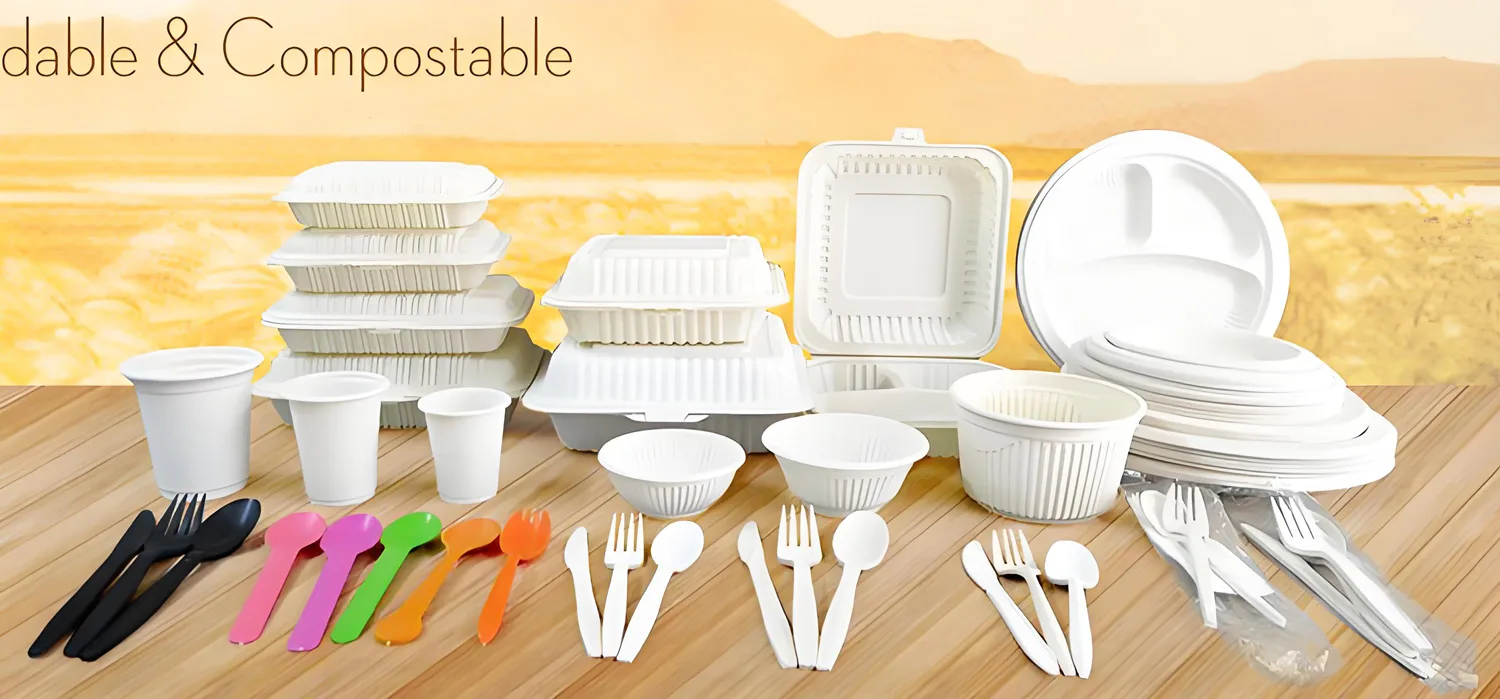
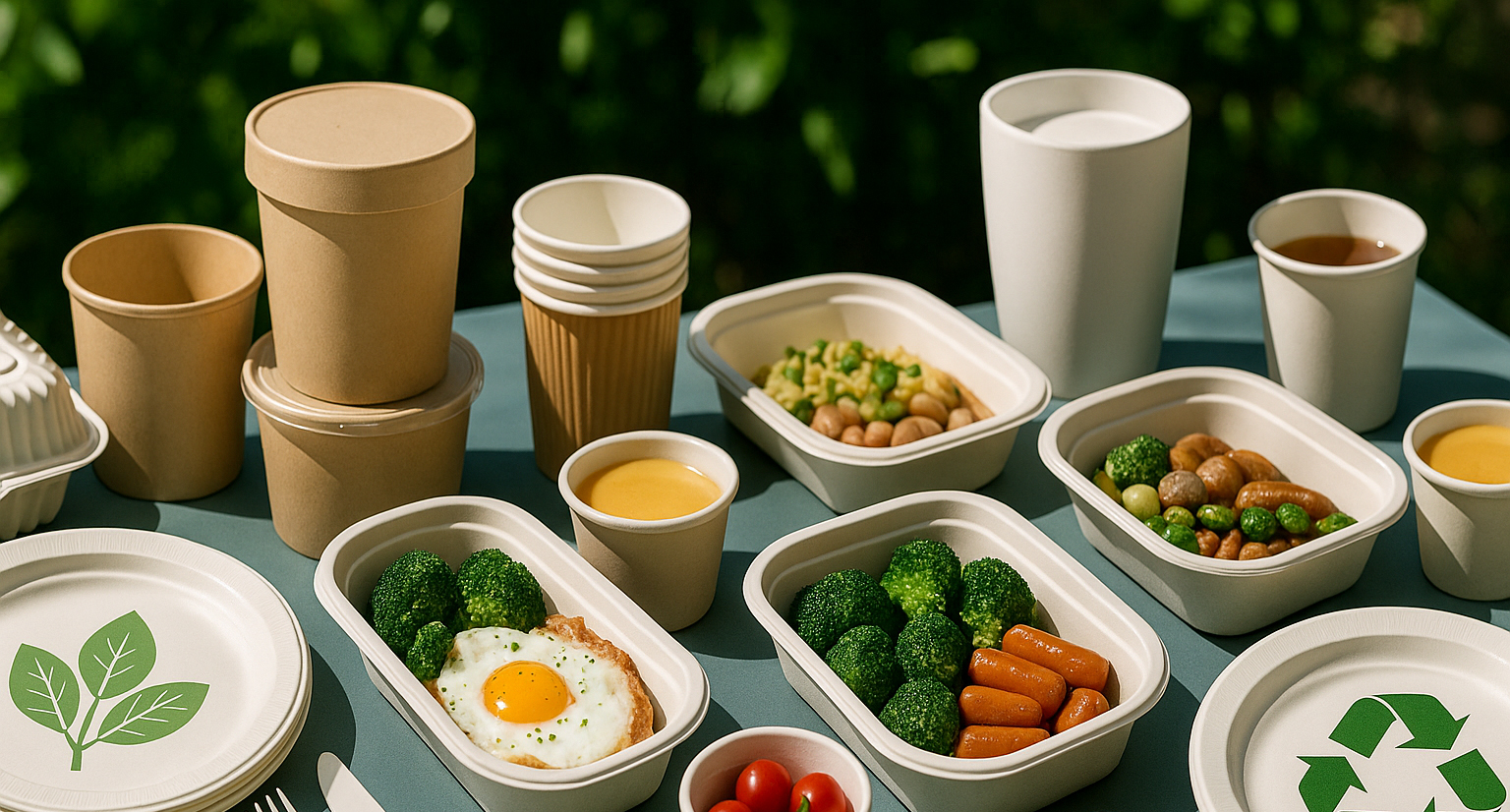
The global wave of single-use plastic bans in 2025 is opening doors for producers of compostable tableware, particularly in Canada (ASTM D6400 + BPI), the EU (EN 13432 + OK Compost + EPR), Australia (AS 4736), Singapore (Mandatory Packaging Reporting), and Japan (plastic reduction mandates). Exporters with certified bagasse, PLA, cornstarch, and kraft products—paired with correct labels, registration, and export documentation—are gaining compliance, competitive branding, and fast market access across major regions.
🌍 Plastic Bans Are Going Global — And So Should Eco Tableware
In 2025, a sweeping wave of plastic regulation has transformed global foodservice packaging standards. Across Europe, North America, Oceania, and parts of Asia, the days of single-use plastic cutlery, containers, and cups are ending—and they are being replaced by compostable, biodegradable, and plant-based alternatives.
For exporters of eco-friendly tableware—including bagasse food containers, cornstarch cutlery, PLA cups, and kraft paper bowls—this marks a pivotal moment. But compliance is key. Each country has its own legal framework, certification requirements, and import controls. This article presents the most export-friendly markets, backed by official legislation, real case studies, and material alignment strategies.

📊 1. Global Plastic Ban Timeline with Legal Frameworks
| Country/Region | Ban Status | Legal Framework | Enforcement Body |
|---|---|---|---|
| 🇪🇺 EU | Full ban since July 3, 2021 | Directive (EU) 2019/904 – SUP Directive | EU Commission, Member States |
| 🇨🇦 Canada | National ban effective Dec 20, 2023 | SOR/2022-138, under CEPA | Environment and Climate Change Canada |
| 🇦🇺 Australia | Targeted nationwide ban by 2025 | National Plastics Plan (2021) + state laws | Federal & State Gov’ts |
| 🇸🇬 Singapore | Mandatory reporting & phased regulation | Resource Sustainability Act (2019) | National Environment Agency (NEA) |
| 🇯🇵 Japan | Enforced reduction since April 2022 | Plastic Resource Circulation Act (2022) | Ministry of the Environment |
| 🇺🇸 USA | State-level bans expanding | Local Plastic Reduction Acts | State authorities (e.g., CA, NY, WA) |
🏆 2. Top Countries for Exporting Biodegradable Tableware
🇨🇦 Canada — Certified Compostables Take the Lead
Canada’s SOR/2022-138 Single-Use Plastics Prohibition Regulations came into effect under the Canadian Environmental Protection Act (CEPA) in December 2023. The law bans the manufacture, import, and sale of six categories of plastic items, including cutlery, stir sticks, food containers, and checkout bags.
✅ Required Certifications:
ASTM D6400 for compostability
BPI (Biodegradable Products Institute) certification
French/English bilingual labeling
📦 Best-Fit Products:
Buyer Insight: Retailers like Sobeys, Loblaws, and takeaway chains actively prefer certified biodegradable containers. Exporters who offer clear product documentation and printed compost instructions are prioritized.
🇪🇺 European Union — The Most Regulated, The Most Rewarding
Since July 2021, the SUP Directive (Directive (EU) 2019/904) has banned plastic cutlery, plates, straws, EPS containers, and oxo-degradable plastics across all member states. In addition to product bans, the EU enforces eco-labeling, recycled content mandates, and Extended Producer Responsibility (EPR).
✅ Required Certifications:
EN13432 compostability certification
OK Compost INDUSTRIAL or HOME label from TÜV Austria
EPR Registration (e.g., LUCID in Germany, ADEME in France)
📦 Best-Fit Products:
EN13432-certified PLA cups with disposal guides
Bagasse food trays and biodegradable dessert bowls
Exporter Tip: Work with compliance consultants to navigate import rules. Missing EPR documents or EN13432 labels can cause customs rejections.
🇦🇺 Australia — Strong State Laws Under National Plan
Australia’s National Plastics Plan 2021 sets a clear roadmap: all packaging must be reusable, recyclable, or compostable by 2025. Many states have already passed individual bans:
South Australia: Plastic Products Ban Act 2020
New South Wales: Plastic Reduction and Circular Economy Act 2021
Queensland: Single-Use Plastics Reduction Act 2021
✅ Required Standards:
Compostability under AS 4736 (Australian Standard)
Clear “Certified Compostable” markings
Preferably certified by ACO or similar bodies
📦 Best-Fit Products:
Bagasse BBQ plates, party trays
Cornstarch biodegradable forks and spoons
Real-World Demand: Australia’s event industry is replacing plastic with compostables across festivals, universities, and stadiums.
🇸🇬 Singapore — Data-Driven Regulation
While Singapore has not fully banned single-use plastics, it leads in regulatory preparation through its Resource Sustainability Act (2019). Key focus: Mandatory Packaging Reporting (MPR) for all large producers, importers, and retailers.
✅ NEA Priorities:
Certified compostable or reusable alternatives
Packaging declarations with material breakdown
Import documentation and test reports
📦 Best-Fit Products:
PLA cold drink cups with anti-fog lids
Opportunity Insight: Government and hotel procurement increasingly require compliance with eco-standards. Compostable takeaway packaging with end-of-life labeling gains favor.
🇯🇵 Japan — Minimalist Aesthetics Meets Bio Compliance
Japan’s Plastic Resource Circulation Act, effective April 2022, mandates businesses to reduce plastic usage, redesign packaging with sustainable materials, and report lifecycle data.
✅ Key Requirements:
Bio-based content labeling
Lightweight design to reduce waste
Avoidance of multi-material plastic laminates
📦 Best-Fit Products:
PLA smoothie cups and dessert containers
Compostable spoons for convenience store items
Cultural Fit: Japanese consumers appreciate aesthetics. Plain, elegant compostable tableware performs better than overly branded plastic substitutes.
🔍 Exporter’s Law & Compliance Summary (Quick Chart)
| Market | Legal Framework | Certifications Needed |
|---|---|---|
| EU | SUP Directive (EU 2019/904) | EN13432, OK Compost, EPR |
| Canada | SOR/2022-138 under CEPA | ASTM D6400, BPI |
| Australia | National Plastics Plan + State Laws | AS 4736, Compostability labels |
| Singapore | Resource Sustainability Act (2019) | NEA compliance, material reports |
| Japan | Plastic Resource Circulation Act (2022) | Bio-based labeling, LCA data |
🧪 Case Studies: Real-World Export Success Stories
📍Case 1: Bioleader® – Canada Expansion via Bagasse Clamshells
In 2024, Bioleader® partnered with a major Quebec-based takeaway chain facing compliance challenges with Canada’s ban. By delivering:
🔹 CPLA cutlery kits
…they secured a recurring 12-month contract with 3 regional distribution centers. All products were certified under BPI, and shipments included compostability guides and packaging recyclability sheets.
Result: Repeat orders every quarter, zero customs issues, 17% packaging cost savings compared to local biodegradable options.
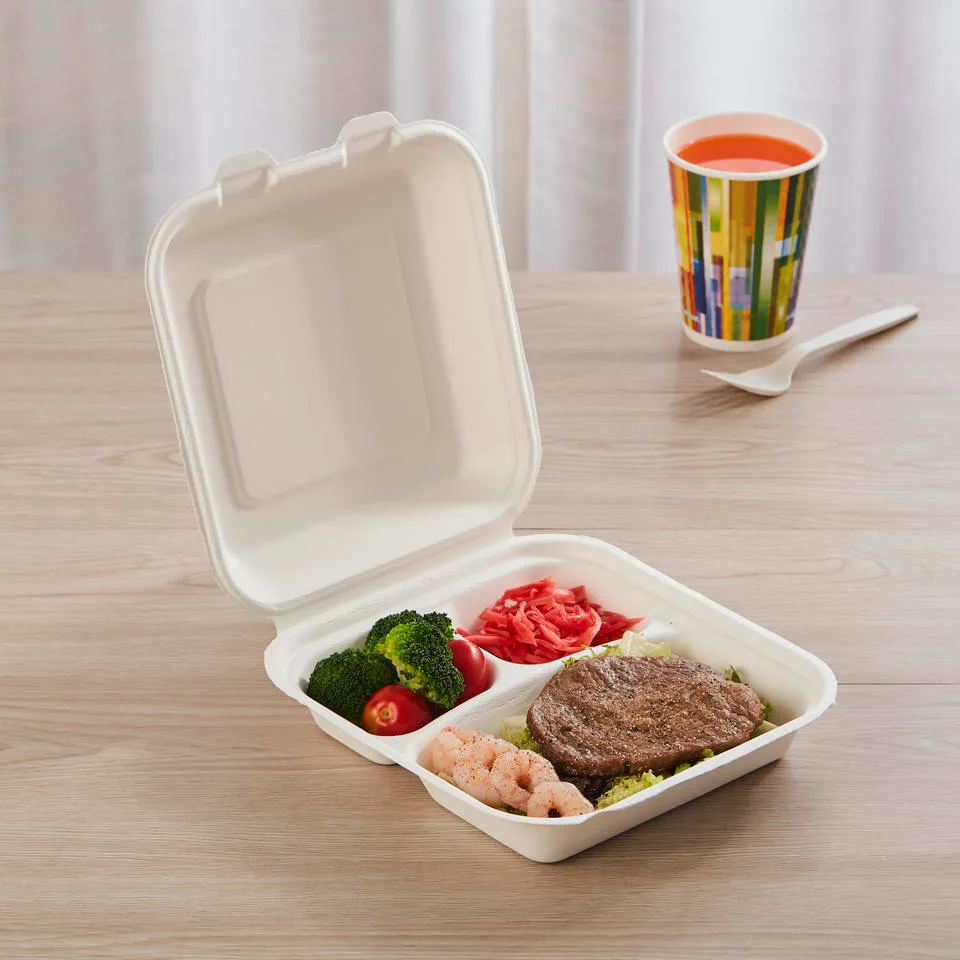
📍Case 2: Australia Event Catering Supplier – Cornstarch Cutlery Success
An event management firm in Melbourne was seeking heat-resistant biodegradable utensils for a 30,000+ person sports festival. Bioleader® supplied:
🔹 Cornstarch spoons and forks (oil-resistant, heat-safe up to 120°C)
Result: Local press coverage of their “zero plastic initiative,” and a city council partnership for all future events.

📍Case 3: Germany Café Chain – Sustainable Coffee Cup Integration
In early 2025, a Berlin-based café chain transitioned to 100% compostable takeaway packaging to meet new EPR and eco-tax obligations. Bioleader® provided:
🔹 Compostable napkin + CPLA spoon bundles
Result: Positive customer response, 12% increase in eco-conscious customer base, and full compliance with Germany’s VerpackG law.
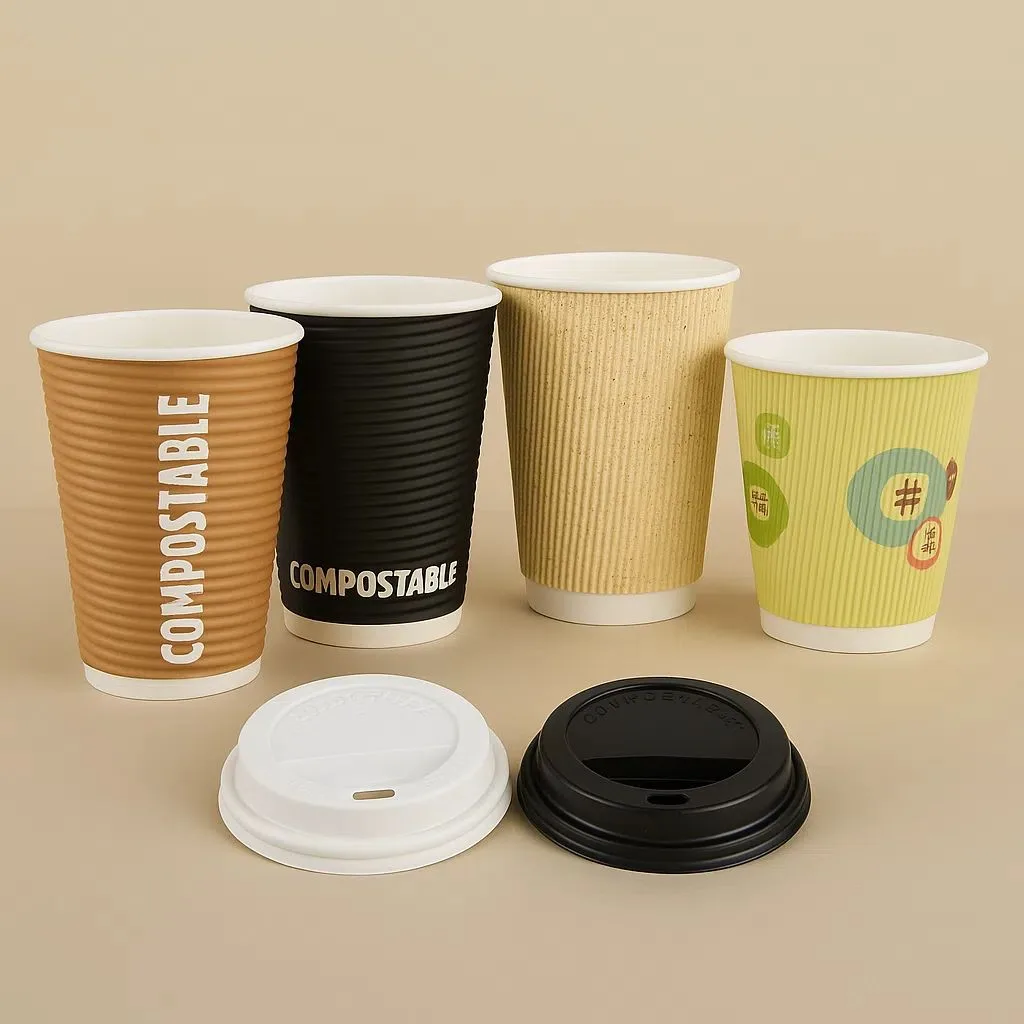
✅ Why Choose Bioleader® as Your Eco Tableware Export Partner?
Amid rapidly evolving global plastic regulations, working with a manufacturer who understands products, policy, and compliance is key to long-term export success. Here’s why international buyers trust Bioleader®:
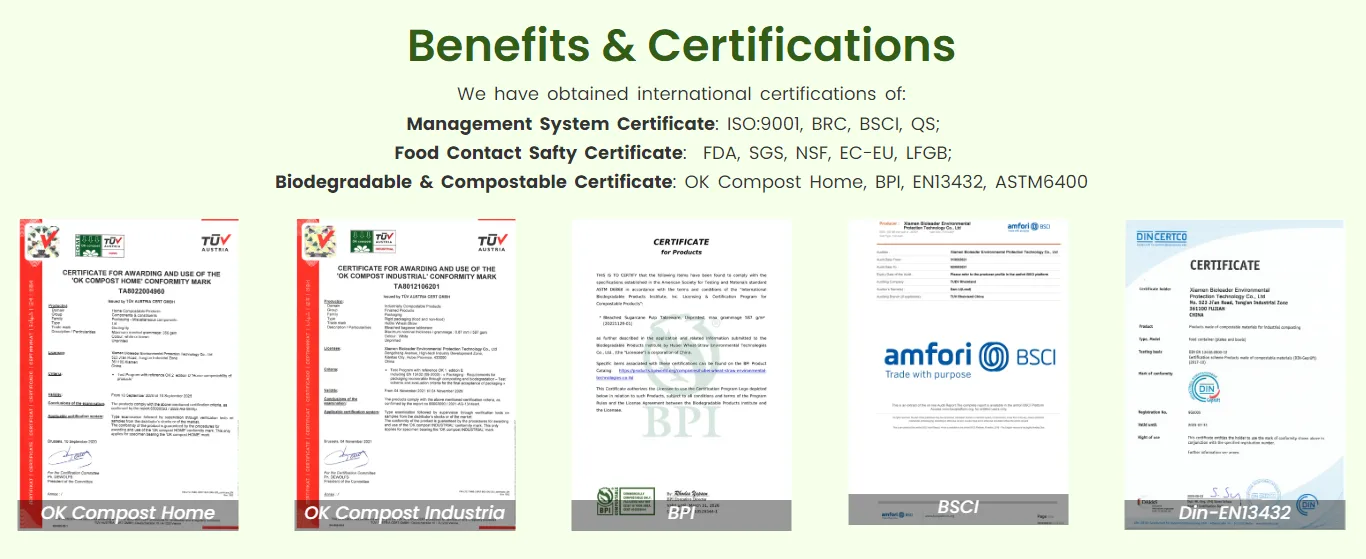
✅ Certified Compliance: All products are available with EN13432, ASTM D6400, BPI, and OK Compost certifications—ensuring smooth customs clearance and legal retail presence in Europe, North America, and Asia.
✅ Wide Material Expertise: From bagasse clamshell containers to cornstarch cutlery sets and PLA smoothie cups, Bioleader® covers a full range of compostable materials to fit diverse market needs.
✅ OEM & Labeling Customization: We offer multilingual labeling (e.g., English–French for Canada, German–English for EU), eco-compliance icons, and barcode-ready printing, tailored to each country’s regulatory requirements.
✅ Global Logistics Support: Our export team understands import restrictions, documents, and port certifications. Whether you’re shipping to Hamburg or Sydney, we deliver ready-to-clear cargo.
✅ Proven Export Track Record: Trusted by foodservice chains, retailers, and event organizers in Germany, Canada, Australia, and Japan—Bioleader® is already helping global businesses go plastic-free.
🌱 With Bioleader®, exporting eco-friendly tableware is not only compliant—it’s seamless, scalable, and strategically positioned for the 2025 plastic-free future.
✅ Conclusion: Match Law With Logistics
Global plastic bans are no longer soft suggestions—they are hard law. Exporting biodegradable tableware in 2025 demands:
🛡️ Understanding legal frameworks by country
📄 Possessing proper certifications (EN13432, ASTM D6400, OK Compost, etc.)
🧾 Labeling and documentation in the local language
🚚 Reliable logistics and customs knowledge
With the right strategy, manufacturers of biodegradable bagasse containers, cornstarch cutlery sets, and compostable PLA cups can turn legal change into business growth.
📌 FAQ
1. What certifications are required to export biodegradable tableware to Europe?
To export biodegradable packaging to the EU, products must be certified under EN13432 for compostability and carry the OK Compost INDUSTRIAL or OK Compost HOME label. EPR registration (e.g., LUCID for Germany) is also required for legal market access.
2. Is bagasse packaging accepted under Canada’s plastic ban law?
Yes. Under Canada’s SOR/2022-138 regulation, bagasse packaging is accepted as a certified compostable alternative. Products must meet ASTM D6400 standards and are often certified by BPI to verify compostability.
3. What are the legal requirements for compostable cutlery in Australia?
Australian states require compostable cutlery to meet AS 4736 (Australian Standard) or AS 5810 for home compostability. Items must be labeled accordingly, and event suppliers or food vendors must show certifications during audits.
4. How can exporters ensure PLA cups are legally compliant in Japan?
Under Japan’s Plastic Resource Circulation Act, PLA cups must have documented bio-based content, low environmental impact, and recyclable or compostable end-of-life data. Minimalist labeling and lifecycle analysis (LCA) reports are beneficial.
5. Which materials are banned under the EU SUP Directive?
The EU Single-Use Plastics Directive (Directive (EU) 2019/904) bans plastic cutlery, plates, straws, stirrers, polystyrene food containers, and oxo-degradable plastics. Compostable or reusable alternatives like bagasse trays, cornstarch utensils, and kraft paper bowls are recommended.
✅ References
European Commission – Directive (EU) 2019/904 on the reduction of the impact of certain plastic products on the environment
https://eur-lex.europa.eu/legal-content/EN/TXT/?uri=CELEX:32019L0904Government of Canada – Environment and Climate Change Canada – Single-use Plastics Prohibition Regulations: SOR/2022-138
https://laws-lois.justice.gc.ca/eng/regulations/SOR-2022-138/Australian Government – Department of Climate Change, Energy, the Environment and Water – National Plastics Plan 2021
https://www.dcceew.gov.au/environment/protection/waste/plasticsNational Environment Agency (Singapore) – Mandatory Packaging Reporting under Resource Sustainability Act
https://www.nea.gov.sg/our-services/waste-management/mandatory-packaging-reportingMinistry of the Environment Japan – Plastic Resource Circulation Law
https://www.env.go.jp/en/laws/recycle/plastic.htmlASTM International – ASTM D6400 – Standard Specification for Labeling of Plastics Designed to be Aerobically Composted
https://www.astm.org/d6400-23.htmlTÜV Austria – OK Compost Certification Guide
https://www.tuv-at.be/green-marks/ok-compost/BPI – Biodegradable Products Institute – Compostable Certification Directory
https://bpiworld.org/Statista Research Department – Global biodegradable packaging market size 2021–2027
https://www.statista.com/statistics/1261129/global-market-size-biodegradable-packaging/Bioleader® Official Site – Biodegradable & Compostable Tableware Manufacturer in China
https://www.bioleaderpack.com/product-category/biodegradable-compostable-cutlery/
Export Strategy: Navigating 2025 Plastic Bans with Eco-Compostable Tableware
Why markets matter: Countries like Canada, EU, Australia, Singapore, and Japan have enacted or imposed comprehensive bans on single-use plastics. Each region mandates certified compostable alternatives and enforces stringent import documentation and producer responsibility rules—creating high opportunity for compliant exporters.
Regional export insights:
- Canada: Requires ASTM D6400 certification and BPI labeling plus bilingual packaging for market acceptance.
- EU: EN 13432 or OK Compost certification plus EPR registration (e.g., LUCID, ADEME) are mandatory for entry.
- Australia: Industry-level bans under state laws enforce AS 4736 compostability and visible “certified compostable” labeling.
- Singapore: In lieu of bans, mass packaging users must submit packaging reports and favor certified compostable alternatives in sourcing.
- Japan: Aesthetic and sustainability expectations drive demand for biodegradable forms with lifecycle data under the Plastic Resource Circulation Act.
Export readiness checklist:
- Obtain certifications matching target markets (e.g., EN 13432, ASTM D6400, AS 4736).
- Apply localized labels and disposal icons (e.g., Triman in France, LUCID in Germany).
- Register in EPR frameworks where required and include documentation in export packages.
- Offer product transparency—composting guides, dual-language packaging, and supply-chain traceability to reassure partners.
Why it matters: With high consumer and regulatory pressure, eco-compliant tableware is becoming the global baseline. Exporters who align now are experiencing preference from buyers, smoother customs processes, and a leadership advantage in sustainable supply chains.