FAQ of Bioleader's Eco-friendly Disposable Tableware
What are environmentally friendly cutlery made from?
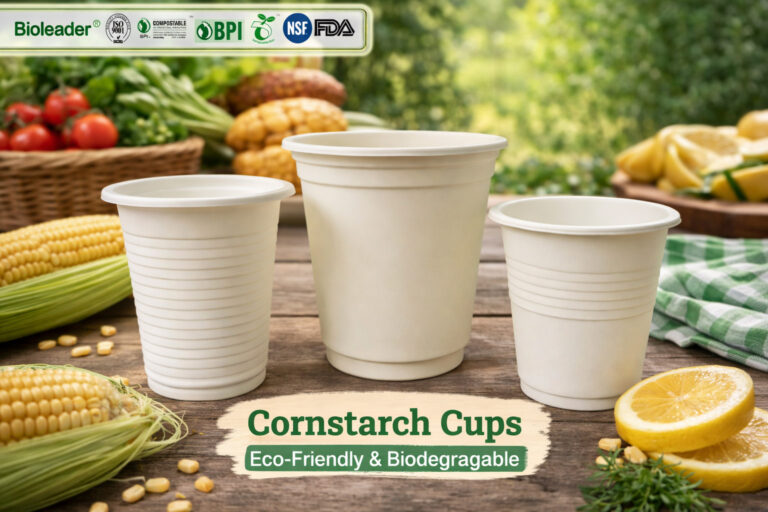
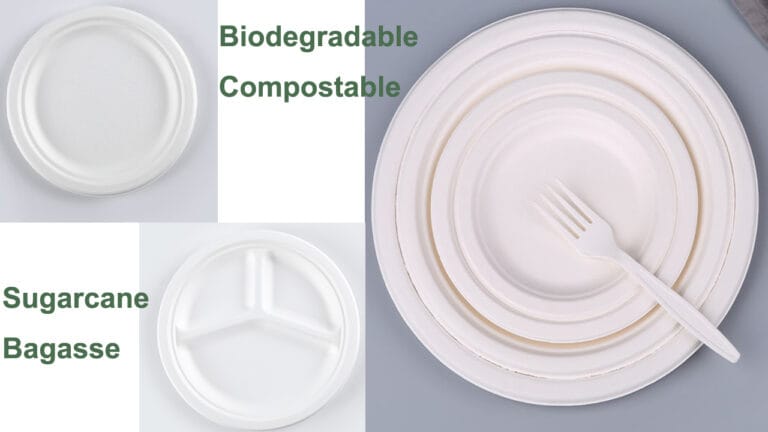
Environmentally friendly cutlery is typically made from renewable plant-based materials such as cornstarch, PLA, or sugarcane, making them biodegradable and compostable.
Why are compostable sporks considered better for the environment?
Compostable sporks reduce reliance on petroleum-based plastics, break down naturally without leaving microplastics, and support a circular economy by turning waste into compost.
How long does it take for a PLA spoon to decompose?
Under industrial composting conditions, PLA spoons typically decompose within 90 to 180 days, depending on the environment and local composting facilities.
Global Standards for Compostability
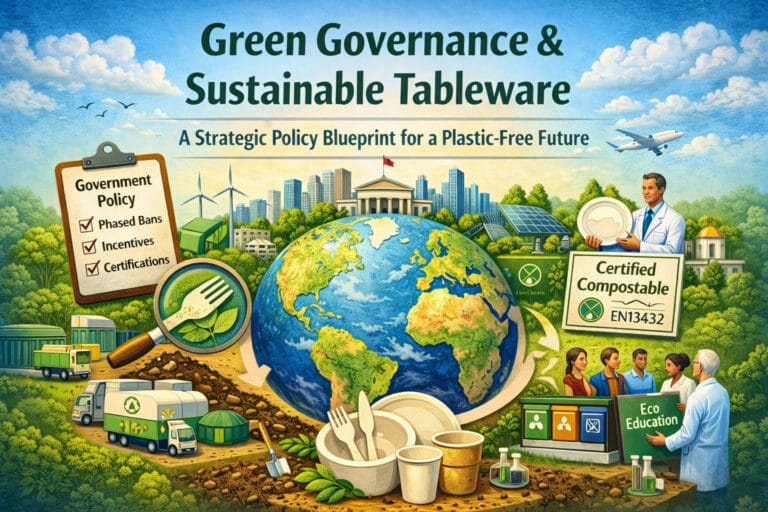
European Union (EN13432): This benchmark requires products marketed as “compostable” to fully disintegrate within 90 days under industrial composting conditions, leaving no harmful residue. Forks and spoons made of bagasse, cornstarch, or CPLA that achieve this certification are widely accepted across EU member states — Sustainable tableware. United States (ASTM D6400): This standard sets rigorous testing protocols for compostable plastics, ensuring that utensils biodegrade at a similar rate as organic waste and produce no toxic byproducts. Many foodservice distributors in the U.S.
2.1 Why Clear Product Classification is Crucial
Effective policymaking begins with clarity. Governments need to define and categorize the specific single-use tableware products that will be regulated — Sustainable tableware. Without clear classifications, regulations can become ambiguous, and enforcement can be challenging. By categorizing products based on material composition, biodegradability, and recyclability, governments can create targeted policies that address each product’s unique environmental impact — Sustainable tableware.