FAQ of Bioleader's Eco-friendly Disposable Tableware
How do biodegradable spoons and forks help the environment?
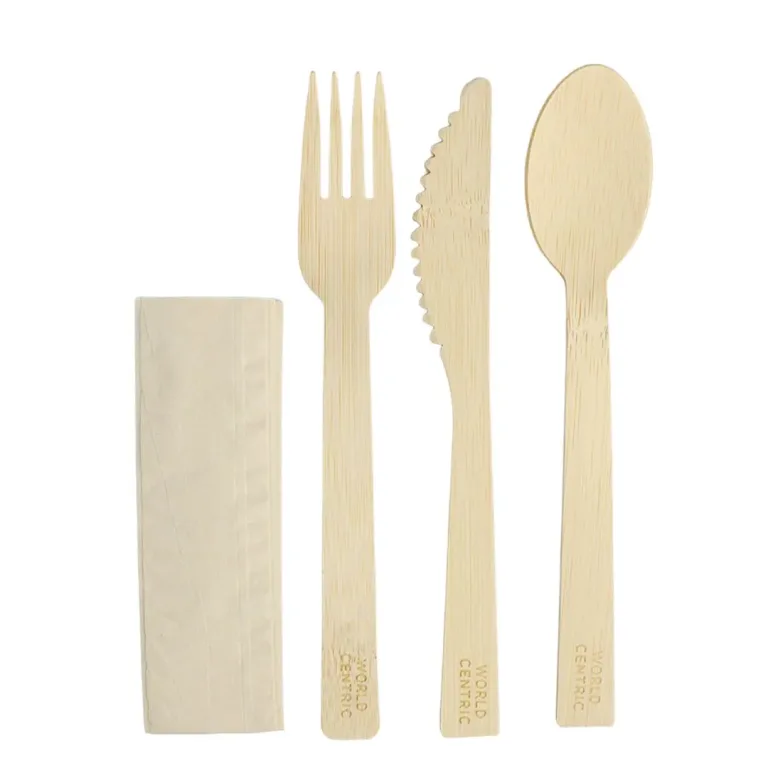
Seen from a larger ecological perspective, biodegradable spoons and forks are assisting in the cutting of plastic waste and fostering sustainable consumption.
What are the benefits of individually wrapped plastic cutlery?
Individually wrapped plastic cutlery ensures high levels of hygiene, protects against contamination, and provides a convenient and sanitary solution for foodservice environments — sustainable innovation.
How long does it take for eco-friendly cutlery to decompose?
Under industrial composting conditions, most eco-friendly cutlery decomposes within 90 to 180 days, depending on the material and local composting standards — sustainable innovation.
Raw Material Sources
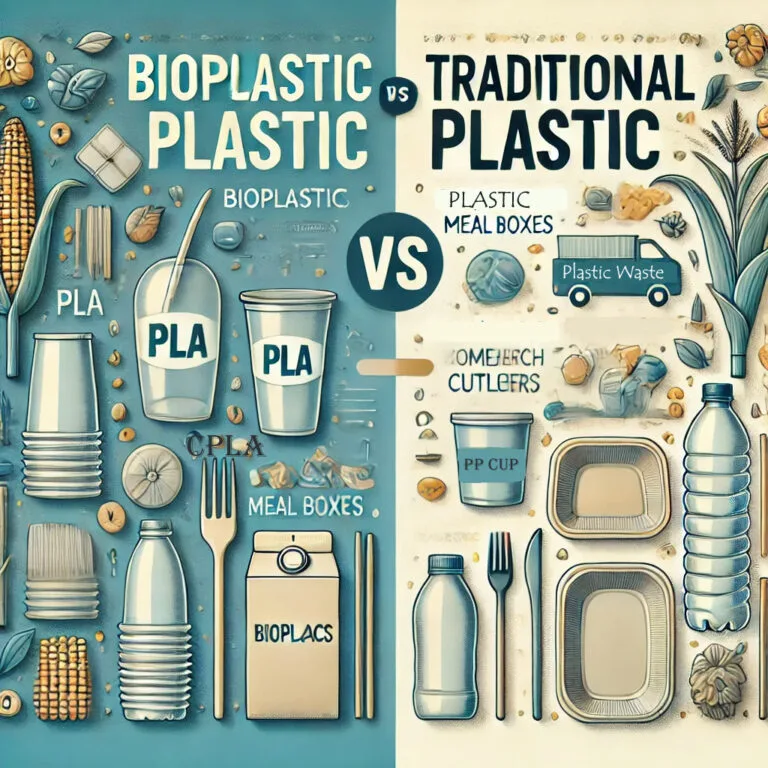
Traditional Plastics: Petrochemical feedstocks derived from crude oil or natural gas. Bioplastics: Renewable biological sources such as corn, sugar beet, sugarcane, or even cellulose from wood pulp. The shift from fossil fuels to renewable resources can theoretically reduce the carbon intensity of plastic production , sustainable innovation. However, some critics argue that using agricultural land for bioplastic feedstocks could compete with food production, potentially driving up food prices or leading to deforestation.
Traditional Plastics
Traditional plastics are polymers primarily derived from petrochemicals. Polyethylene (PE), polypropylene (PP), polyvinyl chloride (PVC), polystyrene (PS), and polyethylene terephthalate (PET) are among the most commonly produced plastics worldwide. These materials owe their popularity to a set of unique properties: High Durability and Strength: Traditional plastics can endure substantial wear and tear, making them ideal for packaging, automotive components, and consumer goods. Versatility: Their chemical structure allows for a wide range of variations, enabling everything from rigid to flexible applications.