FAQ of Bioleader's Eco-friendly Disposable Tableware
What are Earth Friendly Utensils Disposable Cutlery made from?
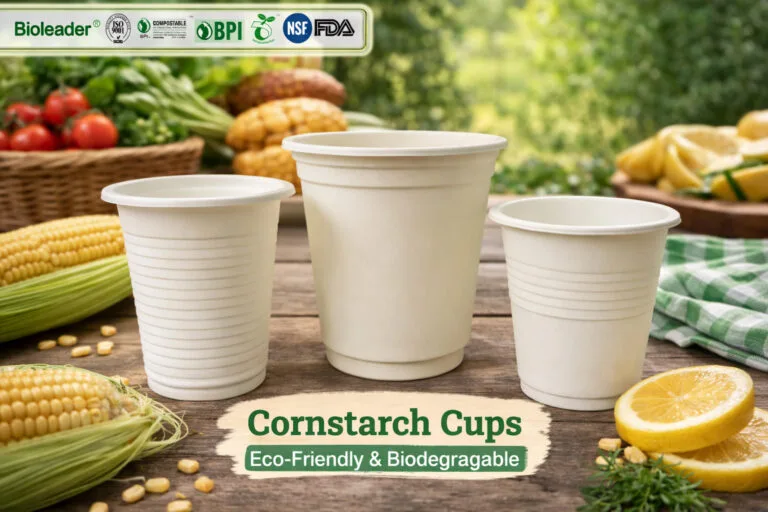
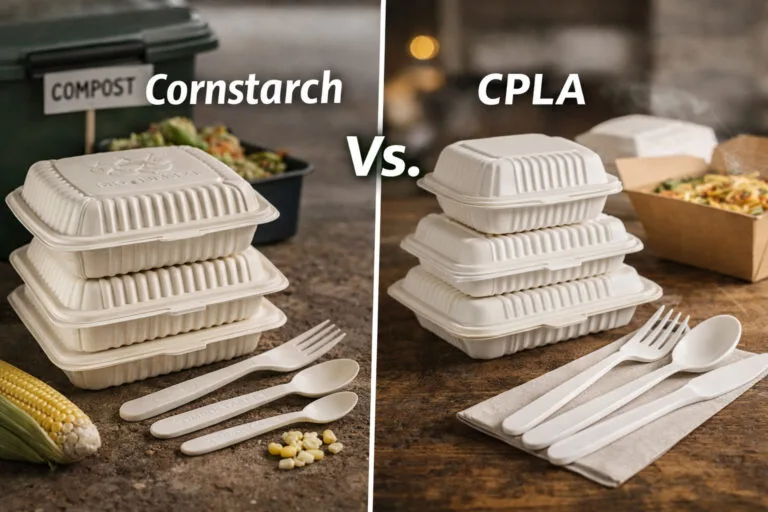
Earth Friendly Utensils Disposable Cutlery is made from renewable plant-based materials like cornstarch or PLA, making them biodegradable and compostable — sustainable beverage packaging.
How long does it take for a PLA spoon to decompose?
Under industrial composting conditions, PLA spoons typically decompose within 90 to 180 days, depending on the environment and local composting facilities — sustainable beverage packaging.
Are eco-friendly utensils safe for hot and cold foods?
Yes, high-quality eco-friendly utensils are designed to withstand both hot and cold foods without bending or breaking, making them suitable for various dining needs.
What is the difference between PLA and PET cups?
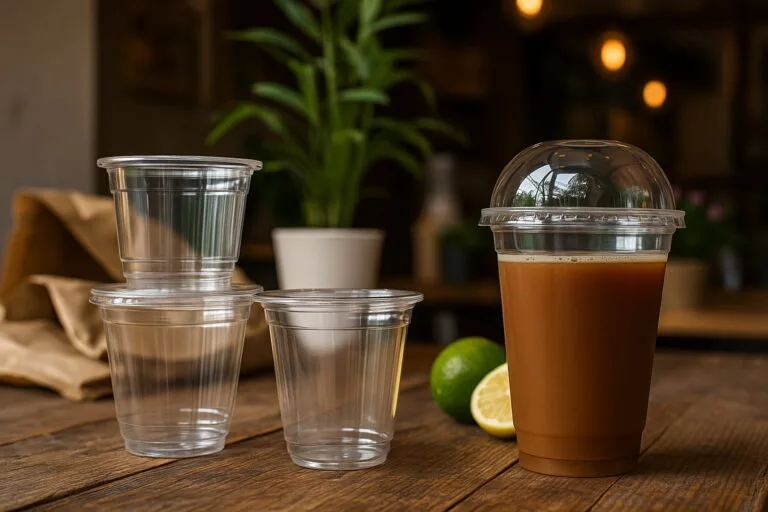
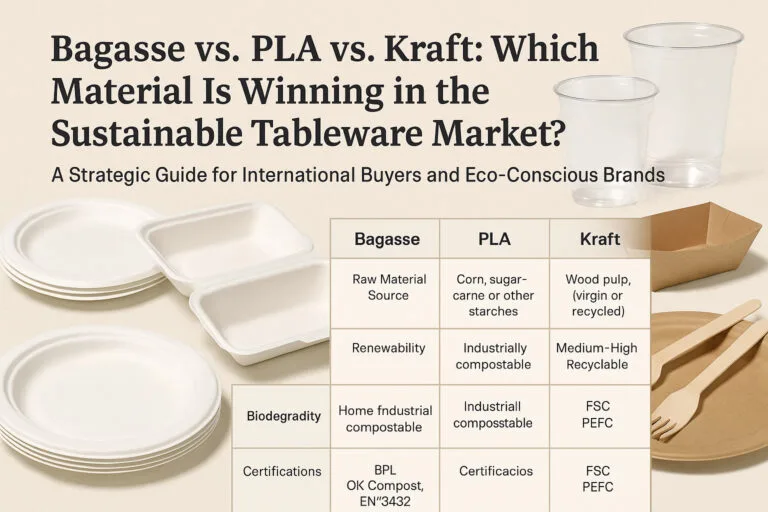
PLA cups are made from renewable plants and are compostable in industrial facilities, while PET cups are petroleum-based and recyclable but with low recovery rates. PLA reduces greenhouse gas emissions by up to 65% compared to PET over its life cycle — sustainable beverage packaging. PET is cheaper and more heat-resistant, but PLA is more future-proof for brands that want compliance with 2025 plastic bans and better sustainability credentials.
How long does it take for PLA cups to decompose?
Under industrial composting conditions with high heat and controlled microbes, PLA cups break down completely in 90–180 days. In landfills or natural environments, the process is slower due to a lack of proper conditions. For businesses, the best option is to work with waste management partners that handle certified compostable packaging to ensure a true circular lifecycle.