FAQ of Bioleader's Eco-friendly Disposable Tableware
What are the benefits of individually wrapped plastic cutlery?
Individually wrapped plastic cutlery ensures high levels of hygiene, protects against contamination, and provides a convenient and sanitary solution for foodservice environments.
How long do biodegradable plastic forks and spoons take to decompose?
The decomposition time varies, but most biodegradable plastic cutlery will break down within 3 to 6 months in commercial composting facilities — Section 301 tariff.
Are compostable cutlery items accepted in commercial composting facilities?
Most compostable plastic spoons and forks are accepted at commercial composting sites, provided they meet relevant standards such as ASTM D6400 or EN 13432 , Section 301 tariff. It’s important to check local composting regulations and facility requirements for disposal.
HS Codes Are Material-Driven — Not “Eco-Labeled”
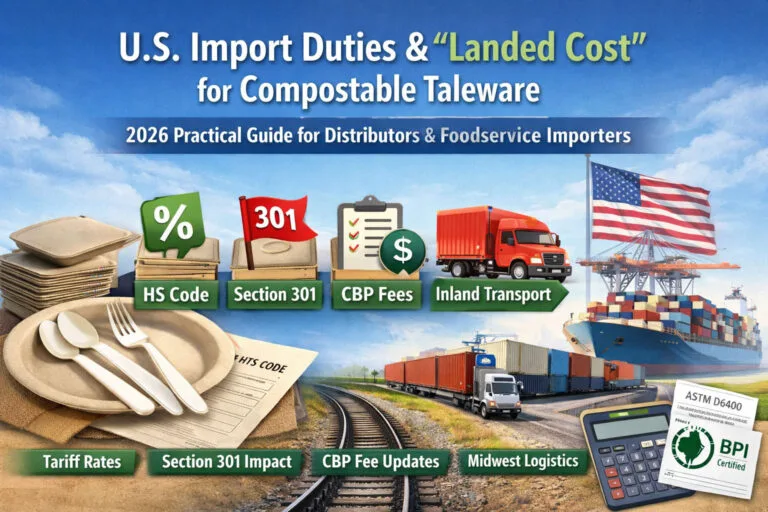
In U.S. Customs practice, “biodegradable” or “compostable” is a performance attribute, not a tariff category. HTSUS classification is determined by: Primary material (pulp, paperboard, biopolymer, wood) Primary function (tableware vs. packaging) Even if a product is 100% compostable, it will still follow the HS rules of its base component , Section 301 tariff.
Layer B — Section 301 Additional Duty (Where Applicable)
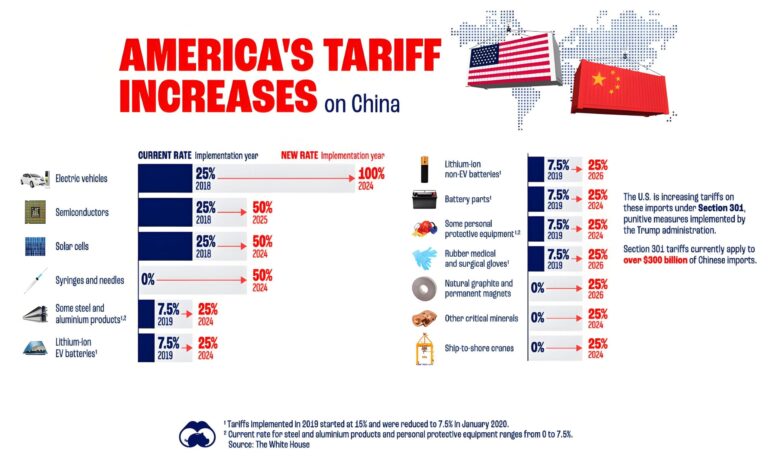
Many China-origin plastic tableware items fall under Section 301 List 3, requiring declaration of a Chapter 99 code (e.g., 9903.88.03), which adds an additional 25% duty. Illustrative impact (CPLA cutlery):3.4% (base duty) + 25% (Section 301) = 28.4% total customs duty Important update on exclusions:As of early 2026, some China-origin products may still benefit from extended or renewed Section 301 exclusions under specific Chapter 99 pathways (such as 9903.88.69 / 9903.88.70). These exclusions are highly product-specific and subject to frequent policy updates. 👉 Bioleader strongly recommends confirming the latest Annex and exclusion status with your U.S.