FAQ of Bioleader's Eco-friendly Disposable Tableware
What are environmentally friendly cutlery made from?
Environmentally friendly cutlery is typically made from renewable plant-based materials such as cornstarch, PLA, or sugarcane, making them biodegradable and compostable.
How long does it take for eco-friendly cutlery to decompose?
Under industrial composting conditions, most eco-friendly cutlery decomposes within 90 to 180 days, depending on the material and local composting standards.
How do biodegradable spoons and forks help the environment?
Seen from a larger ecological perspective, biodegradable spoons and forks are assisting in the cutting of plastic waste and fostering sustainable consumption.
Stage 1: Hydrolysis (Abiotic)
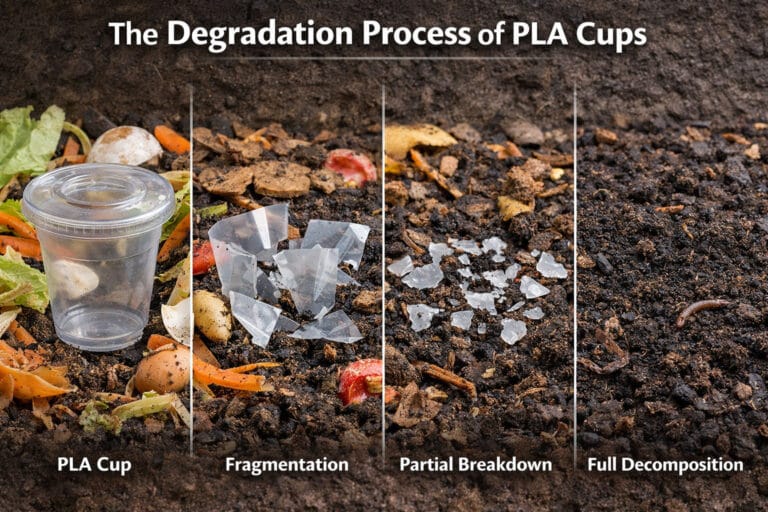
When PLA is exposed to high temperatures and moisture, water molecules penetrate the polymer matrix, breaking the long polymer chains into smaller fragments (oligomers) , PLA cups. This process is significantly faster when the temperature exceeds the Glass Transition Temperature (Tg) of PLA, which is around 55°C. Under these conditions, the material begins to lose its physical structure, making it more susceptible to microbial breakdown — PLA cups.
Moisture Control:
Maintain the compost pile at the ideal moisture level—damp but not soaking wet, like a “wrung-out sponge.” If the compost becomes too dry, the hydrolysis stage will stop, stalling the entire degradation process — PLA cups. Ensure that the pile is kept moist to maintain optimal microbial activity. By closely monitoring these conditions and actively managing the compost pile, you can significantly improve the degradation speed of PLA at home. 4.