FAQ of Bioleader's Eco-friendly Disposable Tableware
Why should businesses switch to environmentally friendly cutlery?
Switching to environmentally friendly cutlery helps reduce plastic waste, meets growing consumer demand for sustainable products, and enhances a business’s environmental reputation , eco friendly cutlery.
What features do biodegradable disposable spoons and forks offer?
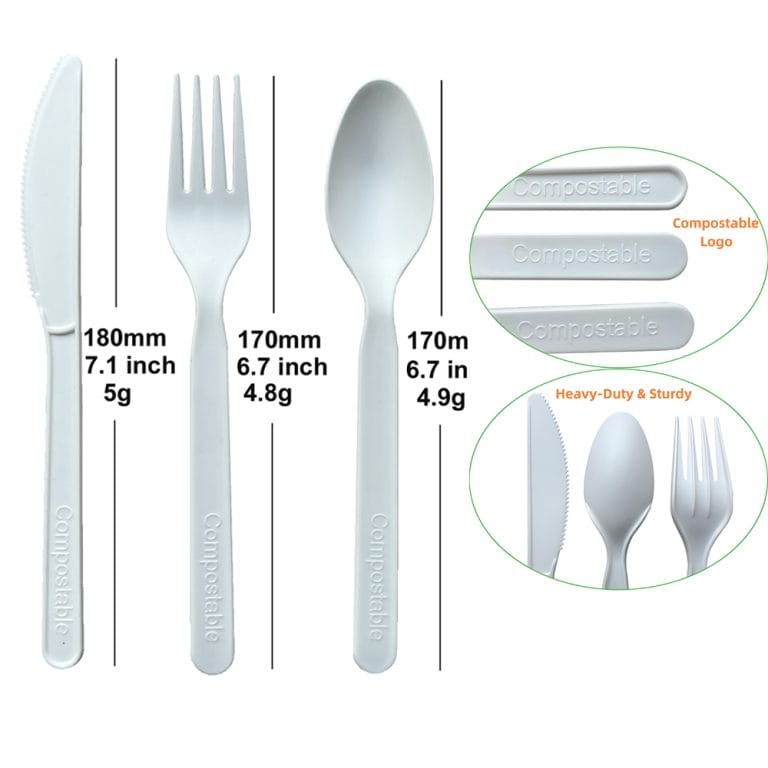
With customizable packaging options and a range of features such as heat resistance, safety, and cost-effectiveness, they cater to various uses—from outdoor events to everyday dining.
How long do biodegradable plastic forks and spoons take to decompose?
The decomposition time varies, but most biodegradable plastic cutlery will break down within 3 to 6 months in commercial composting facilities — eco friendly cutlery.
2.3 Cornstarch Cutlery: The U.S. Value Segment (with Caveats)
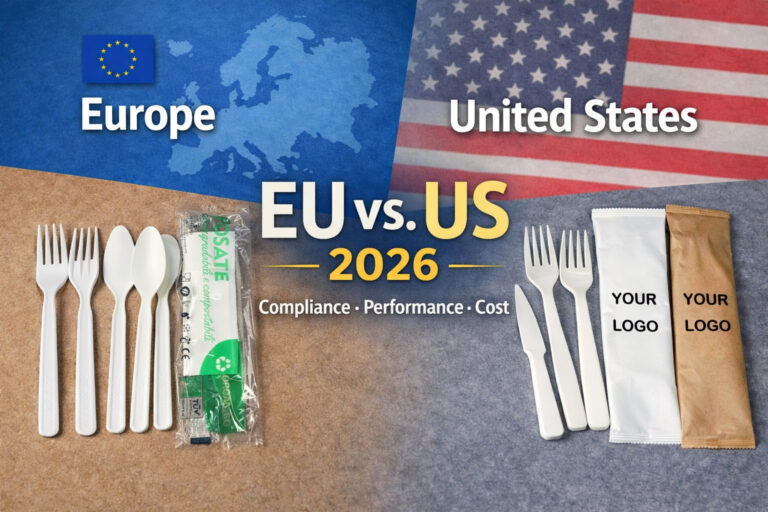
Cornstarch-based cutlery (often composite biopolymer blends) exists in both markets, but it tends to be more common in the U.S. value segment because it can be competitive on price and still be “plant-based” in the marketing story. However, cornstarch cutlery is not a single material , eco friendly cutlery. Buyers should evaluate: heat tolerance brittleness odor compliance claims In Europe, buyers may be cautious if a product feels “plastic-like” and cannot clearly match a recognized compostability pathway in the buyer’s country or waste system.
Material and Certification:
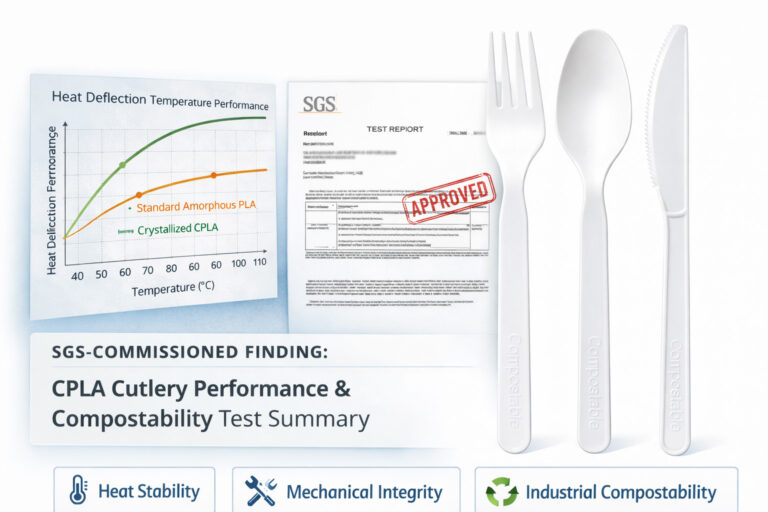
PLA and CPLA cutlery need high temperatures (58°C+) and controlled moisture, only achievable in industrial composting facilities. Bagasse and cornstarch cutlery may break down faster, but industrial composting is still preferred. Certifications like EN 13432 (Europe), ASTM D6400 (USA), and “OK Compost” indicate the product will biodegrade within 90–180 days under specified conditions. OK Compost EN 13432 Test Reportcornstarch tableware