FAQ of Bioleader's Eco-friendly Disposable Tableware
Why should businesses choose PLA spoons over traditional plastic?
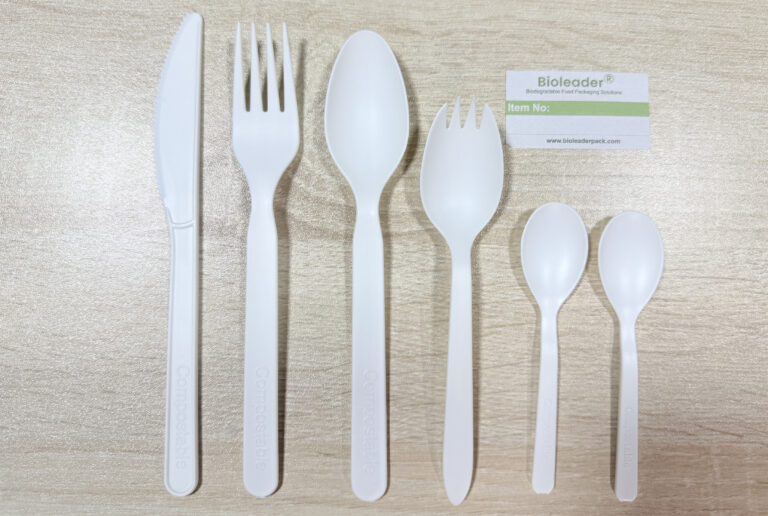
Switching to PLA spoons helps reduce plastic waste, aligns with sustainability trends, meets consumer demand for green products, and supports environmental responsibility initiatives.
Is individually wrapped cutlery suitable for outdoor events and travel?
Absolutely. The individual packaging keeps the cutlery clean and ready to use, making it ideal for outdoor parties, picnics, travel, and catering services.
How long does it take for bio plastic cutlery to decompose?
Under industrial composting conditions, bio plastic cutlery generally decomposes within 90 to 180 days, depending on the material and composting environment.
Why This Matters Commercially
When executed correctly, engineered crystallization upgrades PLA from a general-purpose bio-polymer to a more robust material platform with improved heat resistance and dimensional stability—critical for buyers who must meet hot-use expectations while maintaining food-contact safety requirements. Performance Snapshot: Standard PLA vs. Engineered CPLA (Representative Targets) The following comparison provides a procurement-oriented view of typical material-level targets. Actual performance varies by resin grade, additive system, product geometry, and processing controls , Compostable PLA Cups.
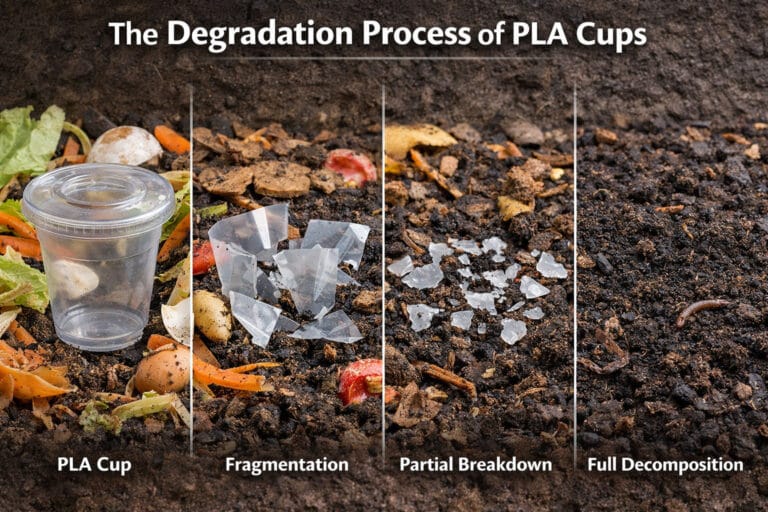
Stage 2: Enzymatic Mineralization (Biotic)
Once the PLA polymer chains are broken into smaller fragments, specialized microorganisms, such as Actinomycetes and various fungi, take over — Compostable PLA Cups. These microbes secrete extracellular enzymes, such as Laccases and Lipases, which cleave the remaining bonds in the polymer, converting PLA into: Lactic Acid, which is used as an energy source by microbes, Carbon Dioxide (CO₂), which is released into the atmosphere, Water (H₂O), which supports the metabolic processes of the microbes, Nutrient-rich Biomass, which contributes to the soil’s fertility. This process is much more efficient in industrial composting facilities, where the high temperatures and optimized microbial activity ensure complete mineralization of PLA into harmless, natural compounds , Compostable PLA Cups. 3.