FAQ of Bioleader's Eco-friendly Disposable Tableware
Can biodegradable forks and spoons be used for hot foods?
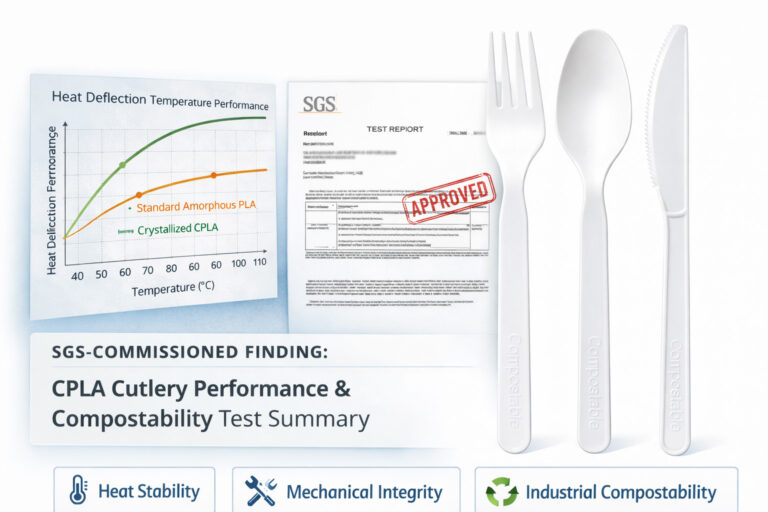
Yes, many biodegradable forks and spoons are designed to withstand hot foods, especially those made from CPLA. Always check the product specifications for maximum temperature limits.
Can bio plastic cutlery be customized for branding?
Absolutely. Many manufacturers offer customizable options for bio plastic cutlery, including packaging, color, and logo printing to support branding and marketing needs.
Are earth friendly disposable utensils safe for hot and cold foods?
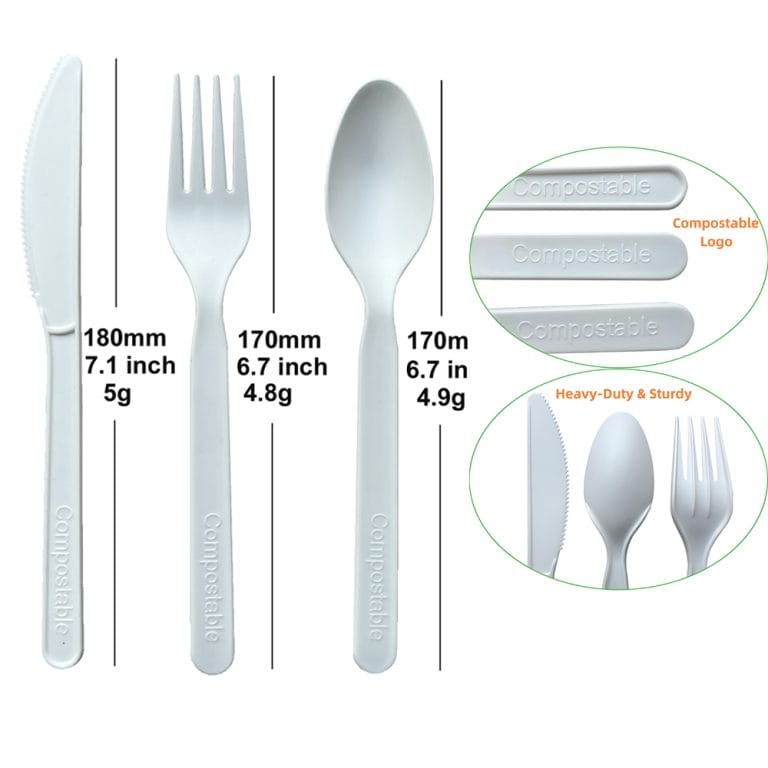
Yes, these utensils are designed to be strong and heat-resistant, suitable for serving both hot and cold foods in restaurants, catering, and events.
PLA vs. CPLA—A Crucial Difference
One of the most common missteps occurs when buyers assume all compostable spoons perform the same under heat. Standard PLA spoons, made from corn-based polylactic acid, begin softening around 55°C (131°F). That means they are adequate for cold foods like desserts, salads, or yogurt, but unsuitable for hot beverages or soups — compostable cutlery. CPLA, on the other hand, is PLA that has undergone crystallization during manufacturing.
2.2. Health & Environmental Impacts
Formaldehyde → classified as Carcinogen Category 1B under (EC) No 1272/2008. Melamine → linked to renal crystal formation in humans — compostable cutlery. Migration potential → increases exponentially above 70 °C , compostable cutlery. Environmental persistence → non-compostable, contaminates recycling streams.