Trends In China PLA Cups: Market Insights, Innovations & FAQs | Bioleader® Sustainable Packaging
Actionable coverage of China PLA cups: eco-friendly, biodegradable, compostable materials, performance data, and compliance under EN13432 & ASTM D6400. Includes BPI/TÜV references and Food-Contact Tested guidance for safe deployment. Buyer-focused: manufacturer insights, bulk/wholesale buying playbooks, OEM/ODM customization tips, full size range selection.
FAQ of Bioleader's Eco-friendly Disposable Tableware
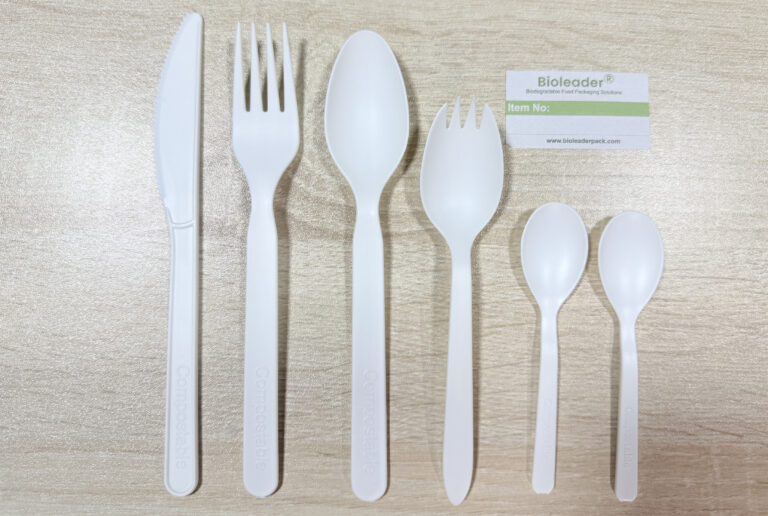
What is a compostable spork made of?
A compostable spork is typically made from cornstarch or other plant-based bioplastics, making it biodegradable and environmentally friendly compared to traditional plastic cutlery.
Can businesses customize BPI compostable cutlery packaging?
Absolutely. BPI compostable cutlery offers customizable packaging options, including logo printing and tailored designs to support branding and marketing needs.
Why should businesses switch to environmentally friendly cutlery?
Switching to environmentally friendly cutlery helps reduce plastic waste, meets growing consumer demand for sustainable products, and enhances a business’s environmental reputation.
What is PLA?
PLA stands for Polylactic Acid, a biodegradable polyester derived from renewable plant resources. Instead of oil, PLA is made by fermenting sugars from corn starch, sugarcane, cassava, or other biomass into lactic acid, which is then polymerized into plastic. The result is a bioplastic resin that can be molded into products like cups, lids, or straws. PLA looks and feels like conventional petroleum-based plastic but is fully compostable under the right conditions.
2. Biodegradability & Compostability:
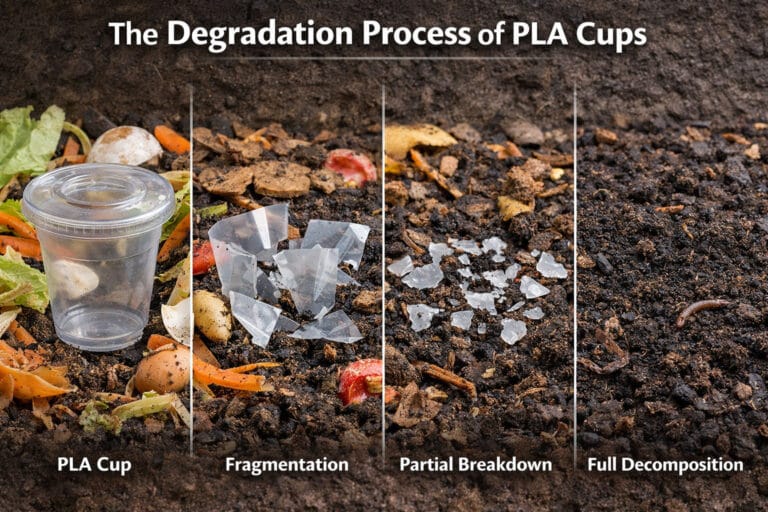
Unlike regular plastic cups that linger for centuries, PLA cups can break down into natural components (water, CO₂, and organic matter) when composted , China PLA cups. Under commercial composting conditions, a PLA cup can fully decompose in as little as 90–120 days, leaving no harmful microplastic residue behind , China PLA cups. This means that if disposed of correctly, PLA cups won’t accumulate in landfills or oceans long-term , China PLA cups. Compostable packaging also enables food and drink remnants to be composted together with the container, reducing contamination in waste streams.