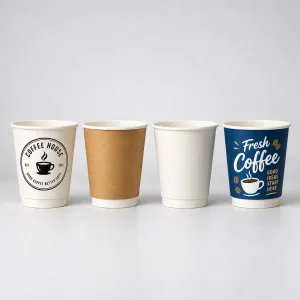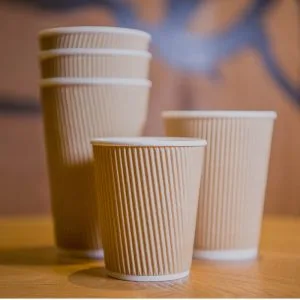
These cups are produced by converting food-contact paperboard with a water-based aqueous barrier, printing where required, die-cutting the cup fan, forming the side seam, sealing the bottom, curling the rim, and carrying out finished-cup inspection. In Bioleader® paper cup projects, wood-pulp paperboard is selected for roughly 90% of customer requirements because it provides stable forming performance, a clean printing surface, and consistent rigidity. Kraft paper, sugarcane-fiber paper, and bamboo-pulp paper can also be evaluated for specific projects. The final material structure should always be selected according to cup size, beverage temperature, holding time, printing, lid compatibility, and required compliance documentation. Buyers comparing the broader range can also review Bioleader®’s water-based coated paper cups and paper cup size range from 2–22oz.
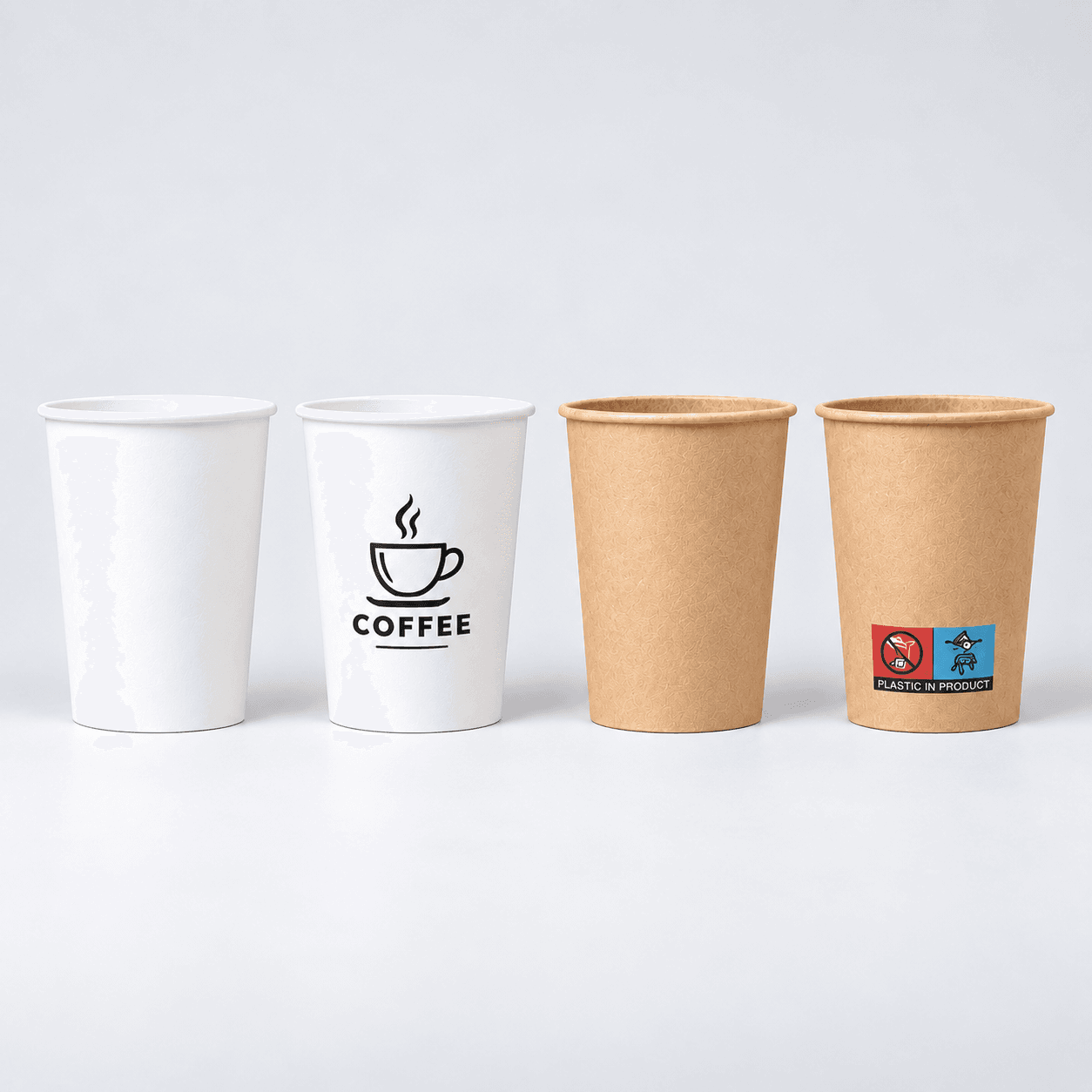
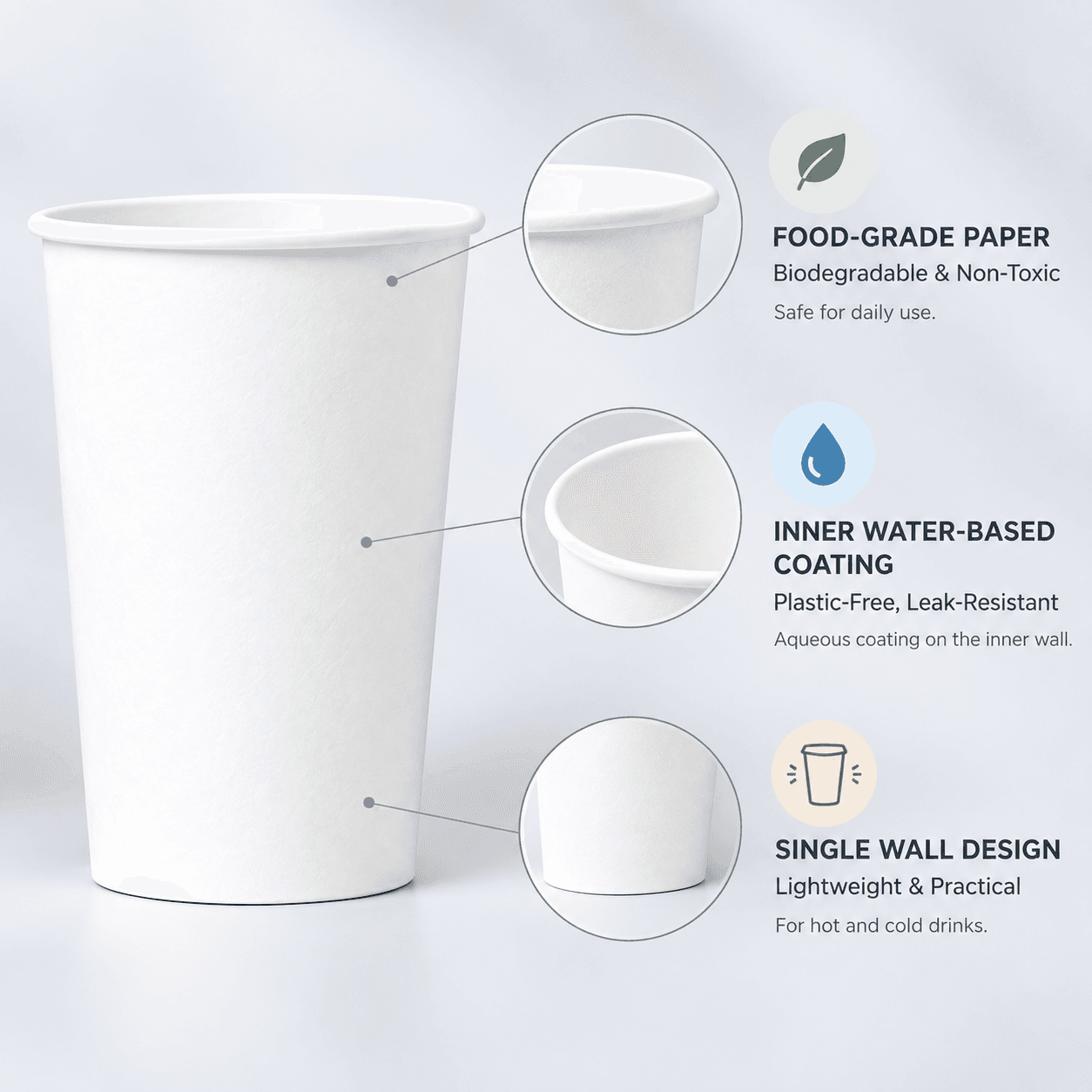
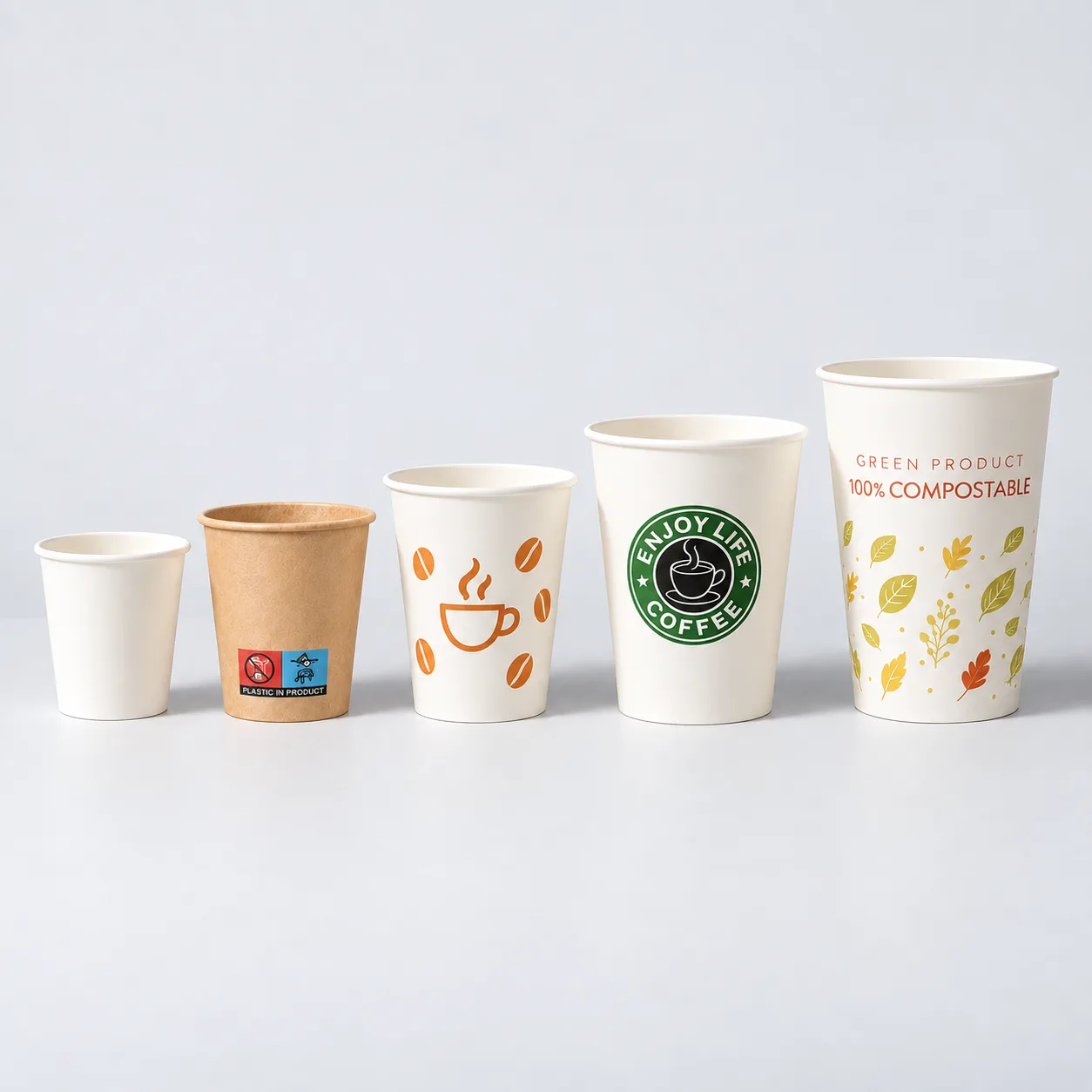
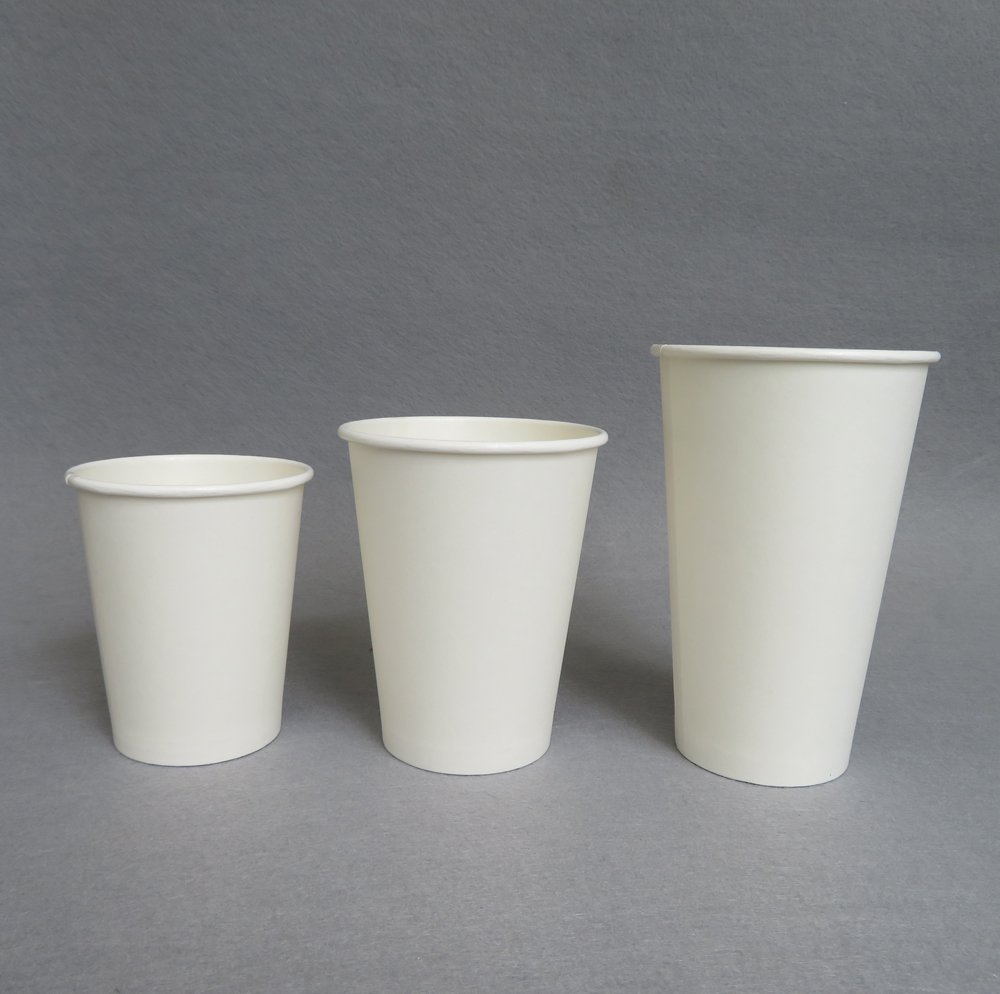
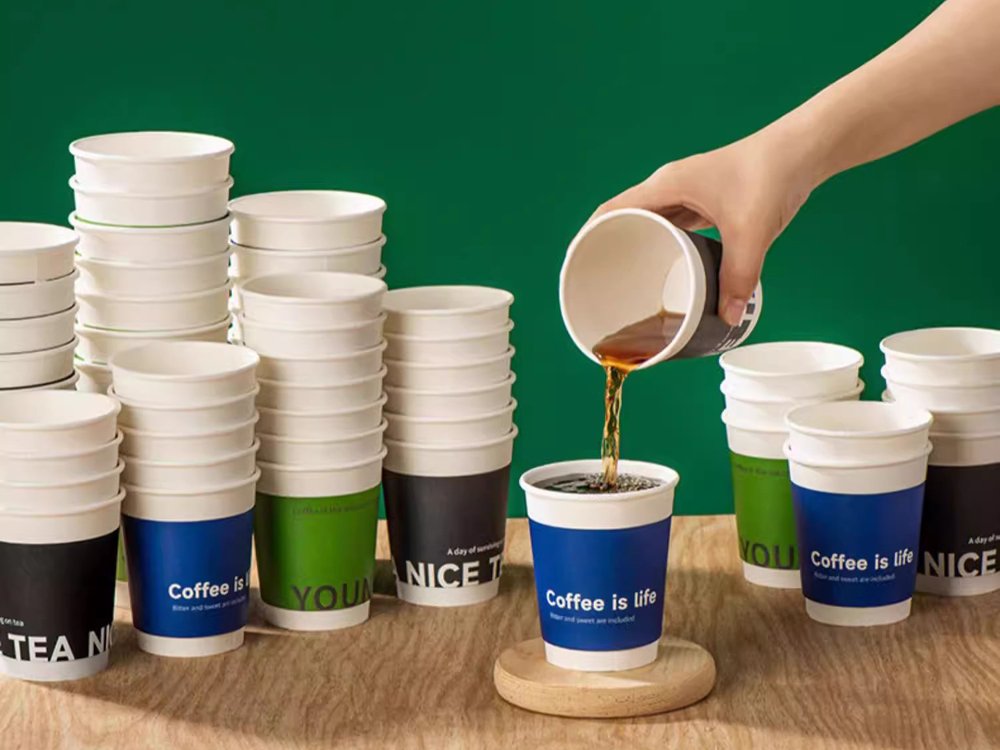
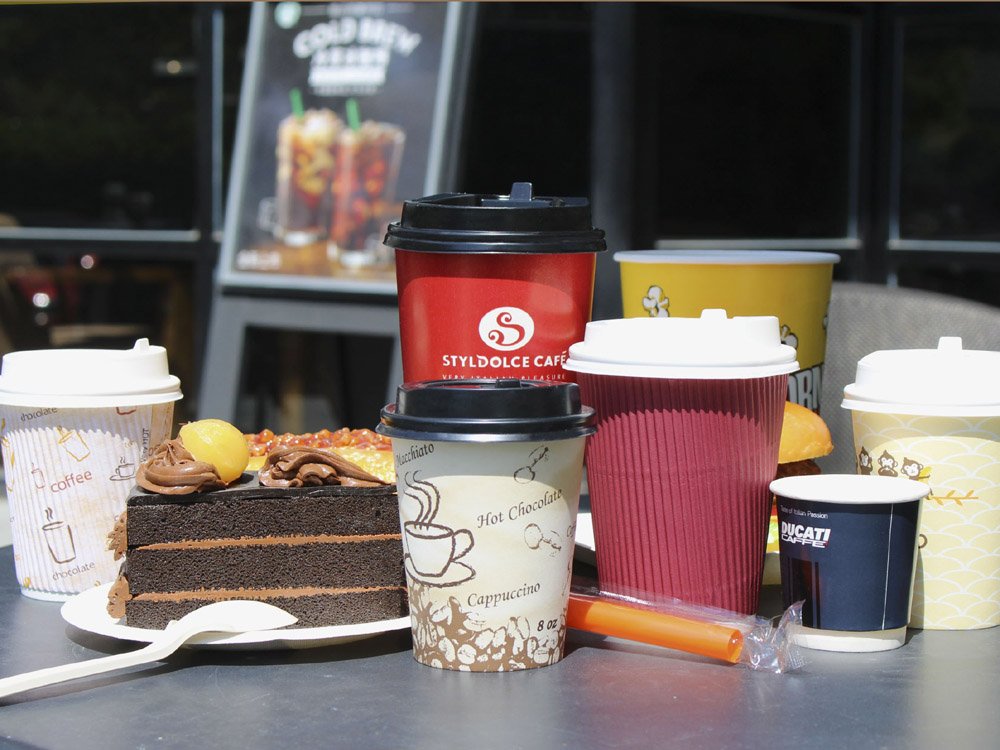
Bioleader® supplies water-based aqueous coating single wall paper cups from small sampling and espresso sizes through standard coffee and takeaway drink formats. The available range includes 2.5/3oz, 4oz, 5oz, 7oz, 8oz, 10oz, 12oz, 14oz, 16oz, and 20oz. Paper GSM increases according to cup size to maintain wall strength, forming stability, and practical handling. Buyers should select the cup according to actual beverage volume, temperature, lid requirement, holding time, and dispensing environment rather than capacity alone.
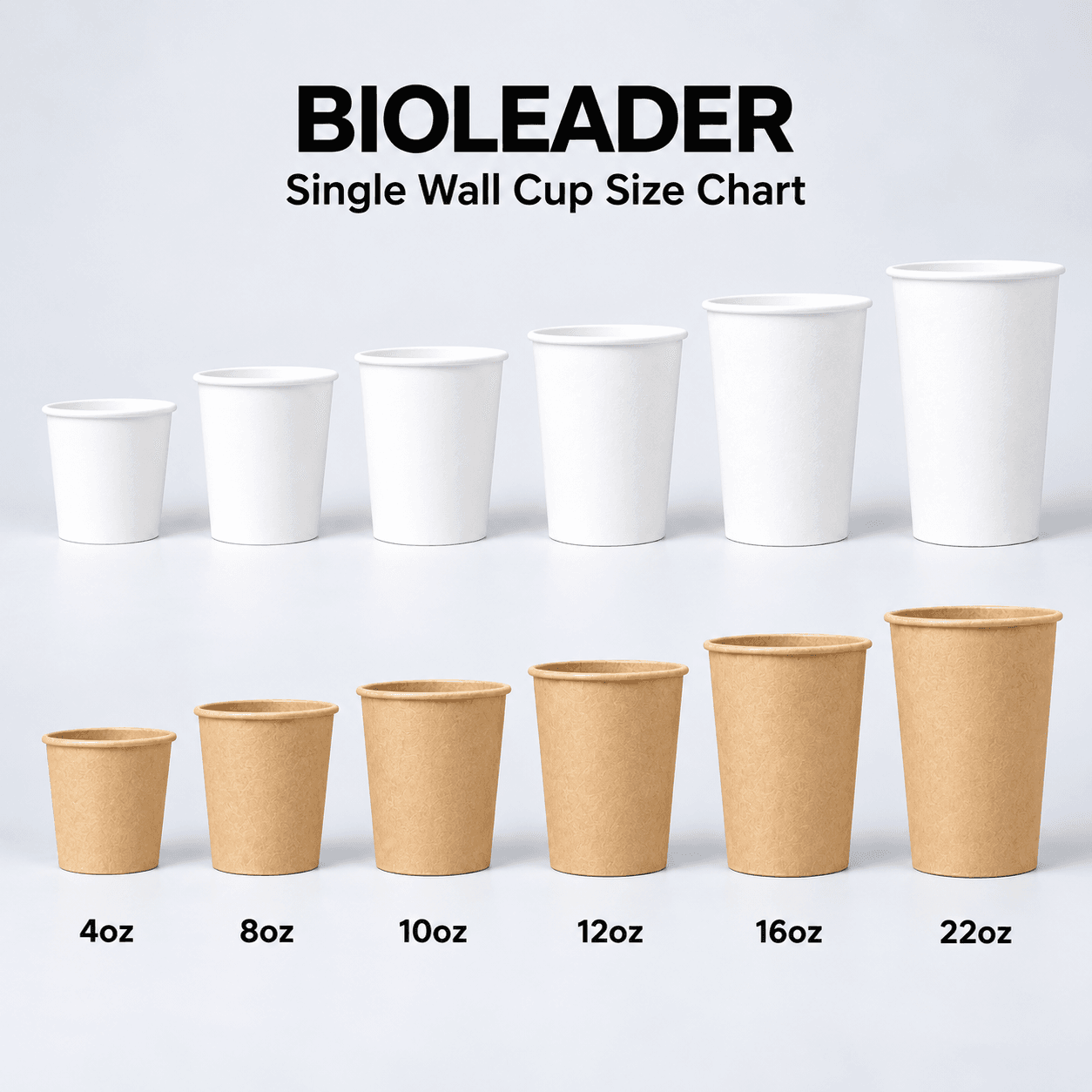
| ITEM | Size | Paper Weight Choice (Thickness) | Product Size (Top*Bottom*High) | PCS/ CTN | Carton Size (cm) | ||
|---|---|---|---|---|---|---|---|
| WB-SW03 | Single Wall – 2.5/3oz | 170GSM + 12g Aqueous Coated | 55*40*54 | 2000 | 45.5 | 29 | 32 |
| WB-SW04 | Single Wall – 4oz | 190GSM + 12g Aqueous Coated | 62*45*61 | 1000 | 32.5 | 26 | 33.5 |
| WB-SW05 | Single Wall – 5oz | 210GSM + 12g Aqueous Coated | 67*47*72 | 2000 | 55 | 28.5 | 36 |
| WB-SW07 | Single Wall – 7oz | 240GSM + 12g Aqueous Coated | 72*50*79 | 1000 | 37.5 | 30 | 34.5 |
| WB-SW08 | Single Wall – 8oz | 280GSM + 12g Aqueous Coated | 80*56*94 | 1000 | 40.5 | 32.5 | 47.5 |
| WB-SW10S | Single Wall – 10oz | 280GSM + 12g Aqueous Coated | 90*60*95 | 1000 | 45.5 | 36.5 | 45.5 |
| WB-SW12 | Single Wall – 12oz | 300GSM + 12g Aqueous Coated | 90*58*108 | 1000 | 45.5 | 36.5 | 49 |
| WB-SW14 | Single Wall – 14oz | 300GSM + 12g Aqueous Coated | 90*61*124 | 1000 | 45.5 | 36.5 | 54 |
| WB-SW16 | Single Wall – 16oz | 300GSM + 12g Aqueous Coated | 90*58*137 | 1000 | 45.5 | 36.5 | 56 |
| WB-SW20 | Single Wall – 20oz | 320GSM + 12g Aqueous Coated | 90*60*159 | 1000 | 45.5 | 36.5 | 64 |
| Application | Recommended Use |
|---|---|
| Coffee Shops & Cafés | Suitable for espresso, coffee, tea, and other takeaway beverage programs requiring branded disposable cups. |
| Restaurant Takeaway | Useful for restaurants offering hot or cold beverages together with takeaway meals. |
| Juice & Beverage Shops | Different capacities allow buyers to build a coordinated cup range for multiple beverage portions. |
| Catering & Events | Lightweight disposable construction supports high-volume beverage service and event distribution. |
| Office & Institutional Supply | Suitable for workplace, school, hotel, meeting-room, and institutional beverage programs. |
| Private Label & Distribution | Multiple sizes and custom printing support distributor ranges and private-label foodservice programs. |
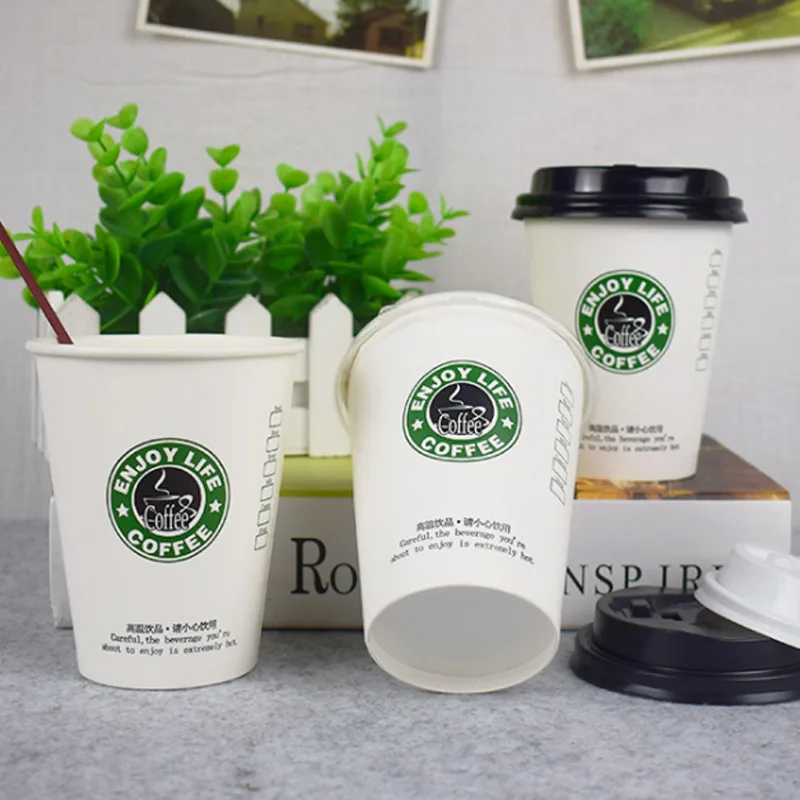 |  |  |
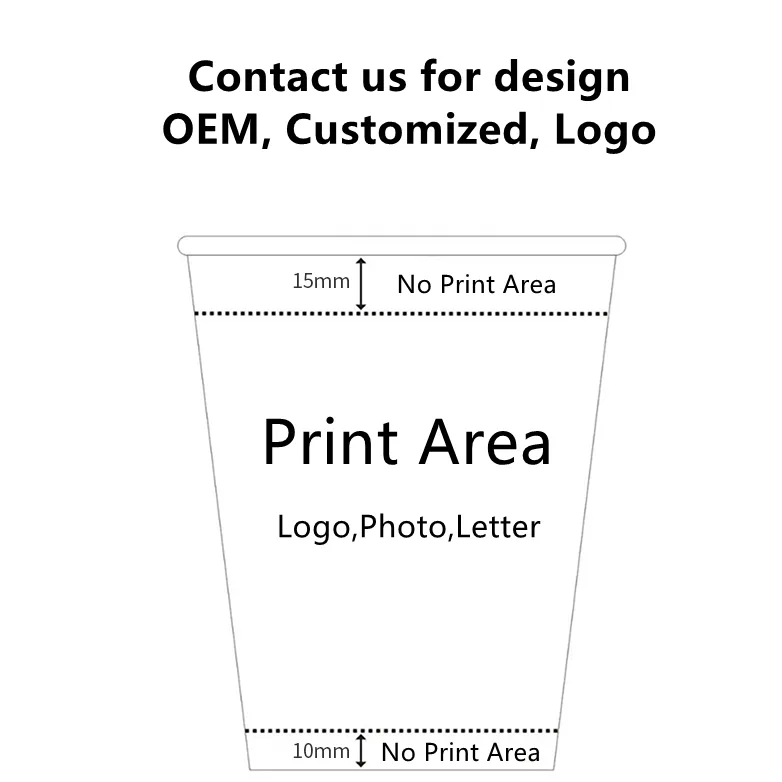
Custom printing turns a standard paper cup into a visible part of the customer’s brand experience. Bioleader® supports logo printing, brand colors, product information, QR codes, promotional graphics, and private-label designs. Artwork should be prepared according to the exact cup die line because the side seam, bottom forming area, and upper rim reduce the usable printing area. Pantone references or CMYK artwork should be confirmed before production, and final color appearance can vary slightly according to paper surface, coating, ink coverage, and printing process.
| Printing Factor | Buyer Recommendation |
|---|---|
| Logo & Artwork | Supply vector AI, PDF, or editable artwork whenever possible. |
| Color Reference | Provide Pantone numbers or approved CMYK references for important brand colors. |
| Printing Area | Keep critical logos and text away from the side seam, rim, and bottom forming zones. |
| Sample Approval | Confirm artwork layout and color expectations before mass production. |
| Repeat Orders | Keep the same approved artwork, paper specification, coating, and color reference to improve consistency. |
The main difference between water-based, PE, and PLA paper cups is the barrier system applied to the paperboard. PE uses a conventional polyethylene layer, PLA uses a bio-based polymer layer, while aqueous coating is applied as a thin water-based barrier formulation. The best choice depends on the destination market, end-of-life system, beverage temperature, cost target, and documentation required by the buyer.
| Comparison | Water-Based Aqueous Coating | PE Coating | PLA Coating |
|---|---|---|---|
| Barrier Structure | Thin aqueous barrier applied to paperboard | Polyethylene film layer | PLA biopolymer film layer |
| Main Buyer Objective | Reduce dependence on conventional plastic film barriers | Established performance and competitive cost | Bio-based barrier and compostability programs where certified |
| Liquid Resistance | Good when the correct coating and forming parameters are used | Well-established moisture barrier | Good when matched to the correct cup construction |
| Heat Performance | Depends on coating formulation and finished-cup validation | Widely used for hot and cold paper cups | Depends on PLA grade, coating structure, and cup construction |
| End-of-Life Positioning | Potentially improved paper-fiber compatibility depending on coating and local recycling system | Recycling depends on local facilities capable of processing coated paper | Industrial compostability may apply when the complete product is properly certified |
| Best Suited For | Brands seeking newer reduced-plastic barrier solutions | Mainstream foodservice and cost-sensitive programs | Bio-based and certified compostable packaging programs |
Water-based coating is increasingly selected by buyers who want to move away from conventional laminated plastic-film structures while retaining the practical moisture barrier required for disposable paper cups. However, terms such as “plastic-free,” “recyclable,” “biodegradable,” or “compostable” should be supported by the documentation for the exact coating formulation and finished product rather than treated as automatic claims. For more technical background, see Bioleader®’s Water-Based Coating Standards and the comparison of Water-Based Coating vs PLA vs PE.
 |
 |
 |  |
Start with the beverage rather than the cup size alone. Confirm whether the application is hot or cold, the expected serving temperature, required holding time, filling volume, matching lid, and whether the cup will be used for takeaway, delivery, cafés, events, or retail distribution. Next, select the correct paperboard weight and cup structure. Smaller cups can use lighter paperboard, while larger formats require greater rigidity to maintain shape during filling and handling.
For branded programs, buyers should also confirm printing coverage, artwork colors, order quantity, packing requirements, and whether different sizes will share one visual identity. The exact aqueous coating specification and any environmental claim should be matched to the target market and supported by the relevant product documentation.
| Buying Factor | Bioleader® Supply Capability |
|---|---|
| Size Range | Multiple single wall cup sizes from small sampling cups through large takeaway beverage formats. |
| Material Options | Wood-pulp paperboard plus selected kraft, sugarcane-fiber, and bamboo-pulp paper options according to project requirements. |
| Barrier Options | Water-based aqueous coating, PE, and PLA systems can be evaluated according to market and application. |
| Custom Branding | OEM logo printing, private-label artwork, brand colors, and multi-size cup programs. |
| Quality Control | Material, forming, side-seam, bottom-seal, rim, printing, leakage, packing, and lid-fit checks according to the product specification. |
| Compliance Support | Relevant food-contact, material, PFAS, or compostability documentation can be reviewed according to the selected item and destination market. |
| Supply Chain | Factory-direct bulk production, multiple packaging categories, export packing, and multi-SKU sourcing support. |
| Lead Time | Production planning is arranged according to cup structure, printing, quantity, artwork approval, and order schedule. |
 |  |
What are they? Water-based aqueous coating paper cups use a thin barrier formulation applied to paperboard to provide liquid resistance without relying on the same conventional film-lamination structure used by standard PE or PLA cups.
Why are buyers evaluating them? Foodservice operators, distributors, and packaging brands are looking for paper-based solutions that can reduce conventional plastic content while maintaining practical cup performance, printing quality, and production scalability.
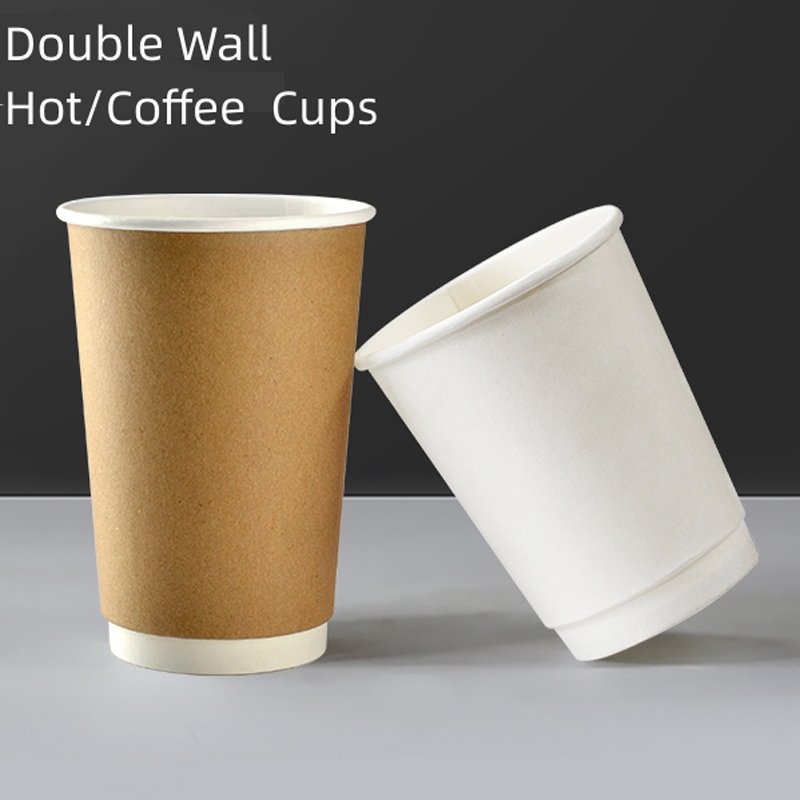
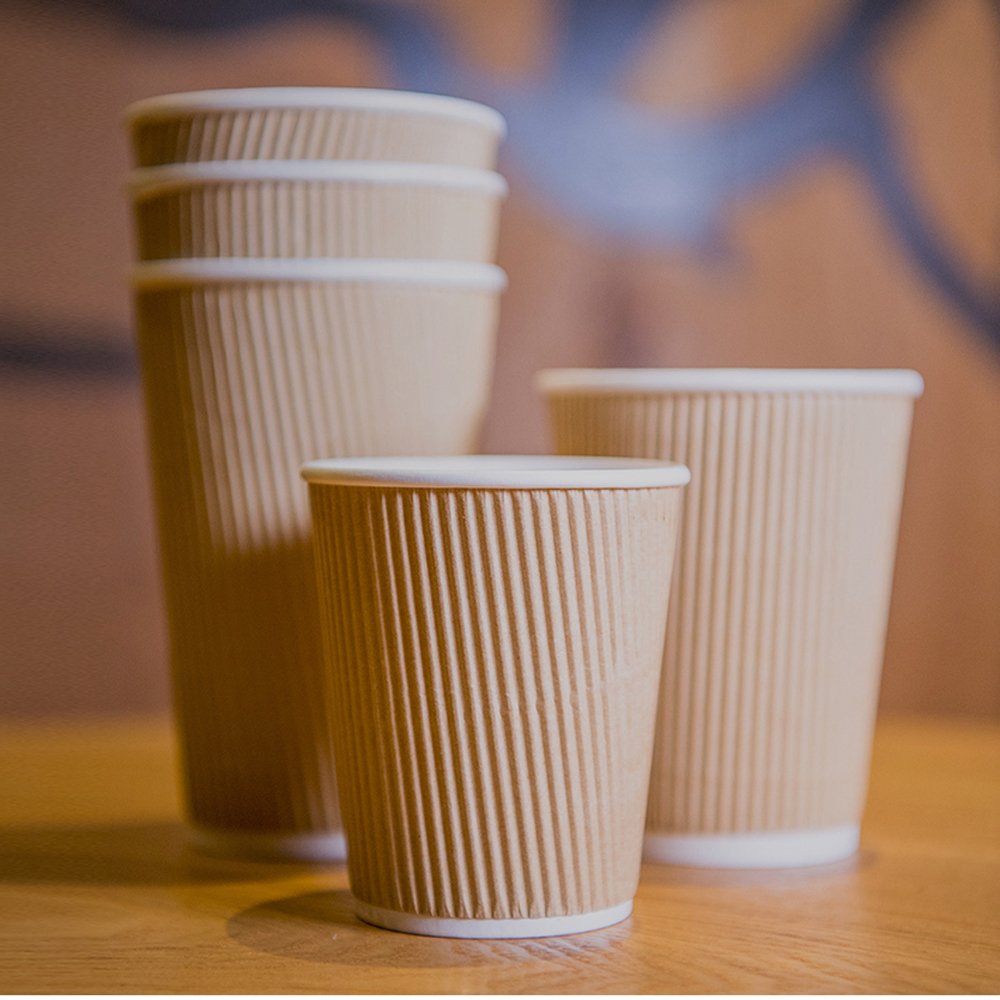
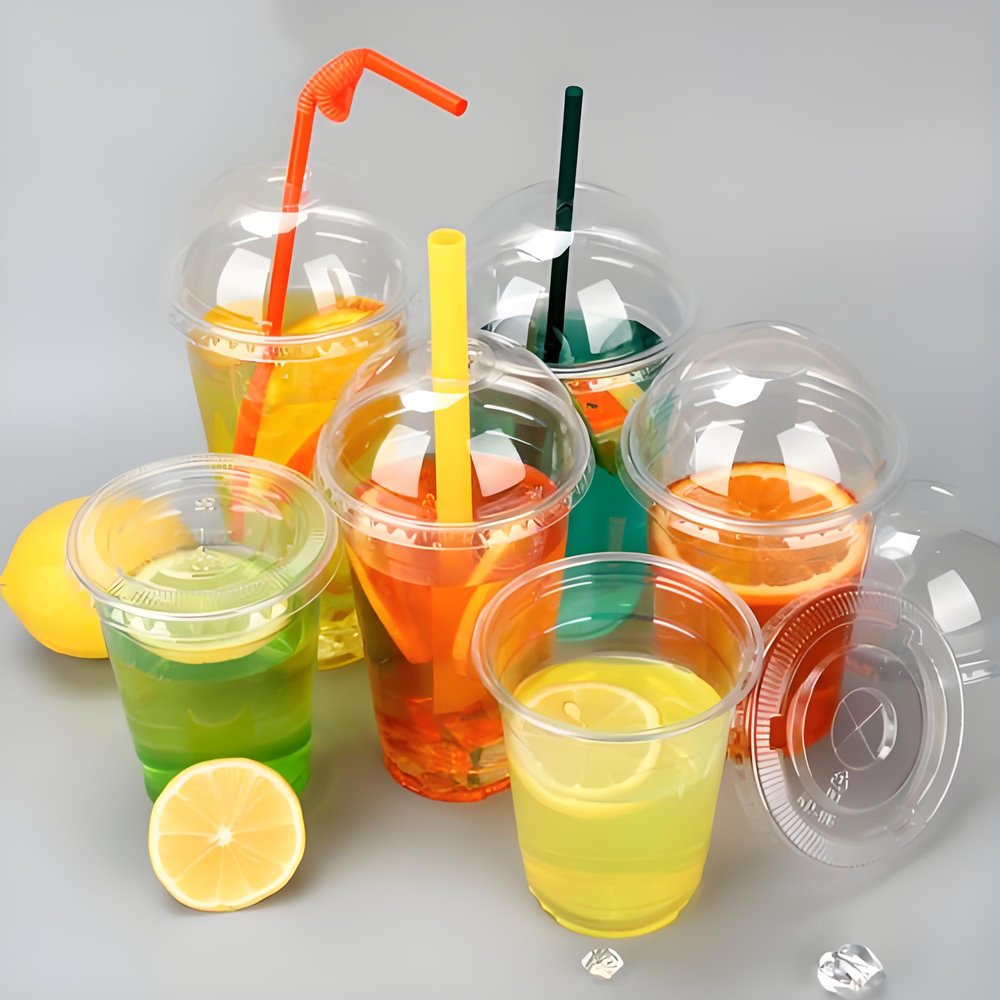
Where do they fit? Single wall cups are primarily intended for everyday beverage service. For applications that require more insulation, buyers can also consider hollow wall or ripple wall paper cups. Clear PLA cups remain a separate solution for cold beverages where transparent presentation is important.
What should procurement teams verify? The cup should be treated as one complete packaging system. Paperboard, coating formulation, forming quality, side seam, bottom seal, rim dimensions, matching lid, printing, packing, food-contact documentation, and intended beverage conditions all influence the final result.
What is the key compliance consideration? Environmental terminology should be linked to evidence for the exact product. “Water-based” describes the barrier technology, but recycling, biodegradability, compostability, plastic-free status, and food-contact compliance should be evaluated according to the finished SKU, coating formulation, test reports, and destination-market requirements.
A water-based aqueous coating paper cup is made from paperboard protected by a thin liquid-resistant barrier applied from a water-based formulation. The coating helps prevent beverage moisture from rapidly entering the paper fibers and provides an alternative to conventional PE or PLA film-laminated paper structures.
Not every aqueous coating should automatically be described as plastic-free. The correct claim depends on the chemical composition of the selected coating, finished-product construction, applicable test method, and destination-market requirements. Buyers should request documentation for the exact material rather than relying only on the term “water-based.”
They can be suitable for hot beverages when the paperboard, coating formulation, side seam, bottom seal, and cup-forming parameters are designed for that application. Heat resistance and holding time should be confirmed for the exact SKU because different aqueous formulations and cup structures can perform differently.
Bioleader® supplies single wall aqueous-coated cups in multiple sizes including approximately 2.5/3oz, 4oz, 5oz, 7oz, 8oz, 10oz, 12oz, 14oz, 16oz, and 20oz. Paper weight and cup dimensions vary according to capacity and structural requirements.
Yes. Bioleader® supports custom logo printing, brand colors, product information, QR codes, promotional graphics, and private-label designs. Buyers should provide the required size, quantity, artwork, color references, and intended application before production so the correct die line and printing specification can be confirmed.