Plastic food containers have long been the default choice for takeaway, delivery, and grab-and-go meals. They are lightweight, inexpensive, and easy to mass-produce. For years, that combination made them highly attractive to restaurants, caterers, food manufacturers, and delivery platforms.
But the market has changed. Businesses today face growing pressure from regulators, consumers, and retail buyers to reduce reliance on single-use plastics and adopt more responsible packaging systems. At the same time, sustainability is no longer just a branding exercise. It has become part of procurement strategy, compliance planning, and long-term operational positioning.
That is why more food businesses are actively searching for sustainable alternatives to plastic food containers. The goal is not simply to replace one material with another. The real objective is to choose packaging that protects food quality, fits real service conditions, aligns with disposal systems, and lowers environmental impact compared with conventional plastic formats.
This guide explores the most practical alternatives to plastic food containers, explains what makes a container truly sustainable, and helps restaurants, meal prep brands, catering operators, and food delivery businesses choose the right solution for real-world use.
Why Plastic Food Containers Are Under Pressure
Plastic food containers solved many short-term operational problems. They offered convenience, stacking efficiency, moisture resistance, and low cost. However, their environmental consequences have become increasingly difficult to ignore.
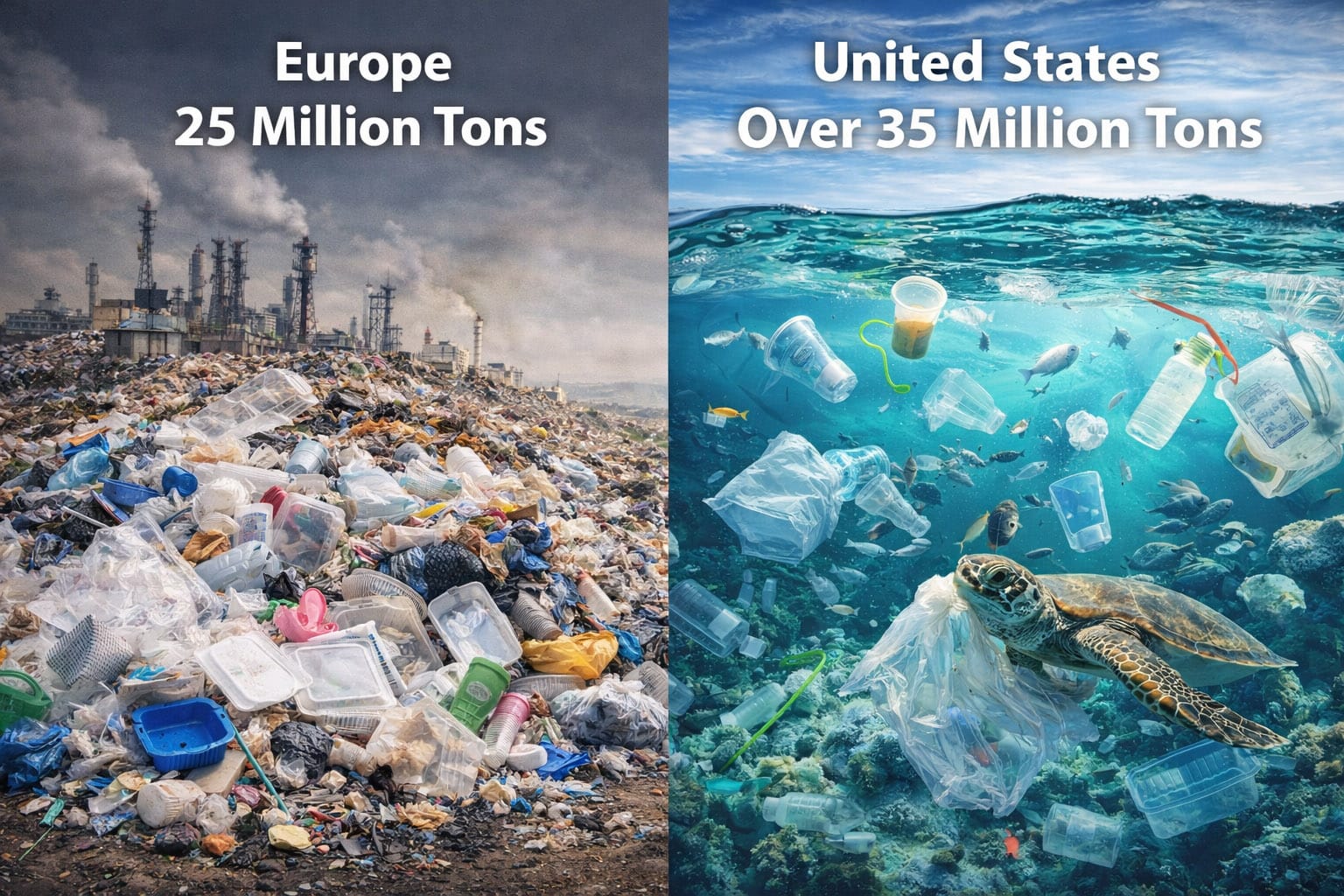
Most conventional plastic takeaway containers are designed for single use. After a short period of service, they often enter waste streams where they are landfilled, incinerated, or leaked into the environment. Over time, many plastic materials fragment into smaller particles rather than fully returning to natural elements. This raises growing concern around long-term waste accumulation and microplastic pollution in soil, waterways, and marine ecosystems.
The challenge is not only environmental. Single-use plastic packaging is also under commercial and regulatory pressure. Governments in many markets are tightening rules around disposable plastic products, foodservice packaging, and extended producer responsibility. At the same time, buyers and consumers increasingly expect businesses to show measurable progress on packaging sustainability.
For food brands, this means packaging decisions now affect more than cost. They influence brand perception, customer loyalty, compliance readiness, and even retail or institutional procurement opportunities.
In other words, plastic containers are no longer judged only by convenience. They are now judged by what happens after use.
What Makes a Food Container Truly Sustainable?
A food container should not be called sustainable simply because it looks natural or contains plant-based material. True sustainability requires a broader evaluation based on material source, product performance, disposal pathway, and end-of-life practicality.
A more credible way to assess sustainable food packaging is to ask the following questions:
1. Is it made from renewable or lower-impact raw materials?
Materials such as sugarcane bagasse, bamboo fiber, kraft paper, and PLA are often positioned as alternatives because they may rely partly on renewable feedstocks rather than fossil-based plastics.
2. Can it be recycled, composted, or otherwise responsibly processed after use?
A sustainable claim is only meaningful if the packaging is compatible with real waste systems. A compostable product, for example, may perform well in industrial composting systems, but that benefit is limited in places where such infrastructure is unavailable.
3. Does it perform well enough to prevent food waste?
Packaging that leaks, collapses, or fails during transport can create more waste overall. Sustainability is not only about the material itself. Functional performance matters. A container must match the food type, temperature, oil content, delivery distance, and handling conditions.
4. Does it avoid harmful residues or excessive material complexity?
Products with unnecessarily complex laminations, mixed materials, or problematic coatings may be harder to process after use. Simpler, well-matched material systems often support better waste-stream compatibility.
5. Is the sustainability claim specific and realistic?
Terms like recyclable, biodegradable, and compostable are often confused. They are not interchangeable.

Let us clarify these terms:
Recyclability
A recyclable container can be collected, reprocessed, and turned into new material or products. However, whether it is actually recycled depends on local collection and processing systems, contamination levels, and material composition.
Compostability
A compostable container is designed to break down into natural components under specific composting conditions without leaving harmful residues. Many compostable foodservice products require industrial composting conditions rather than backyard composting.
Biodegradability
A biodegradable container can break down over time through biological processes. However, the term alone is less precise than compostable because the breakdown speed, conditions, and resulting residues may vary widely.
For businesses, the most practical approach is to evaluate packaging based on real end-of-life performance, not just marketing language.
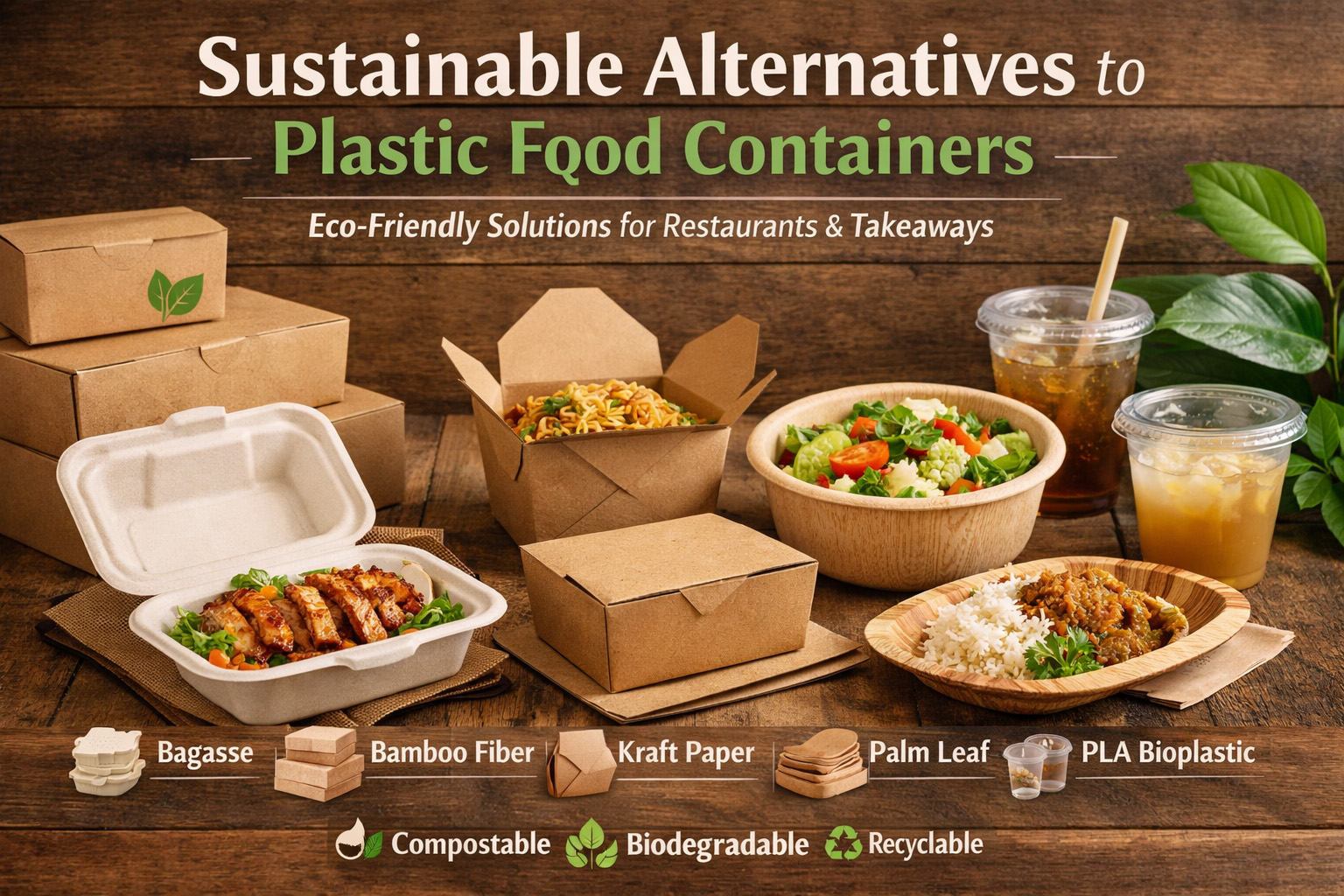
Best Sustainable Alternatives to Plastic Food Containers
There is no single material that works best for every food application. Each alternative has strengths, limitations, and ideal use cases. The right choice depends on menu type, temperature requirements, grease resistance, transport time, branding, and local disposal infrastructure.
1. Bagasse Containers
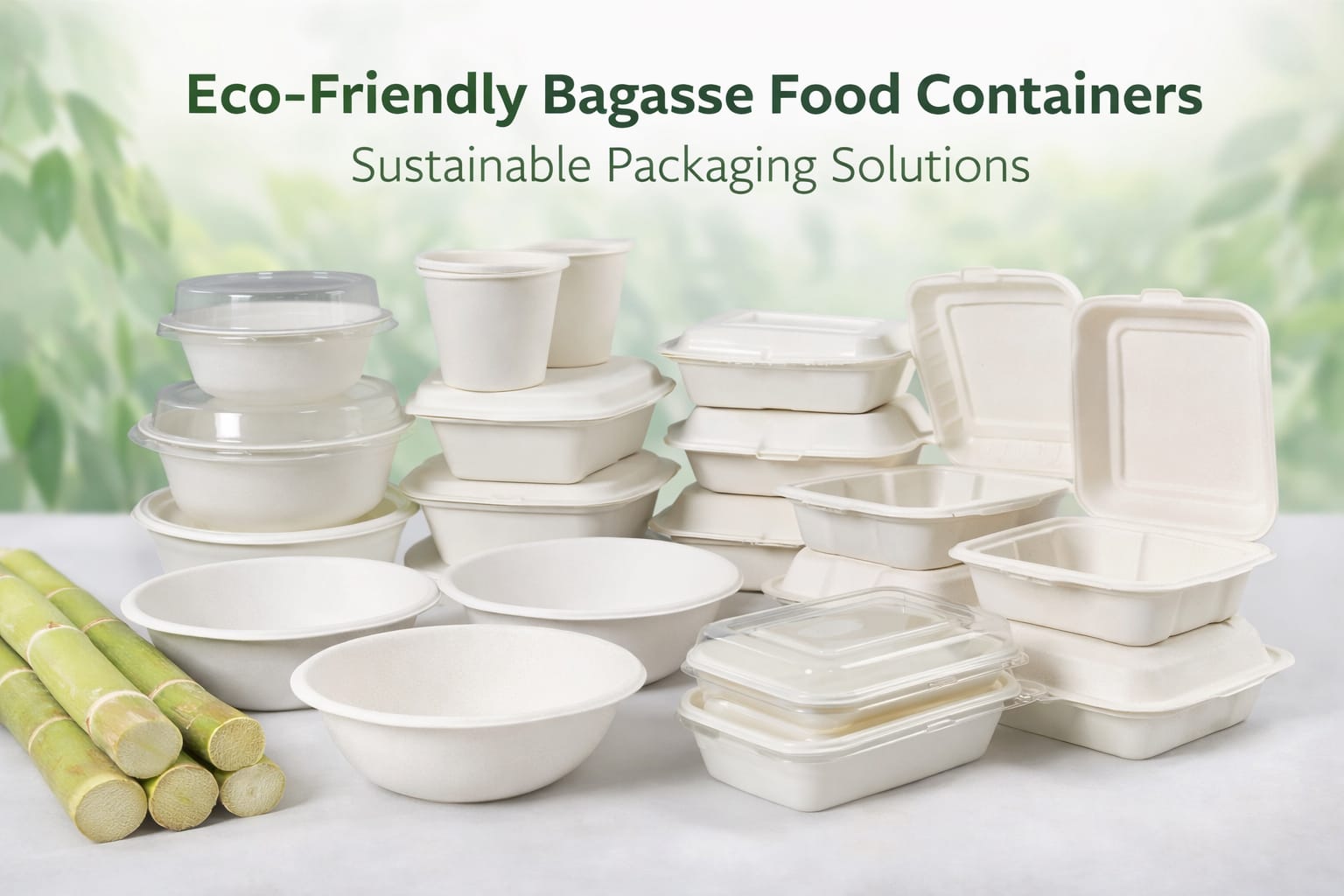
Bagasse is a molded fiber material made from the fibrous residue left after sugarcane is processed for juice extraction. Instead of treating this residue as waste, manufacturers can turn it into sturdy food containers, clamshell boxes, trays, bowls, and plates.
Bagasse has become one of the most practical alternatives to plastic food containers in the takeaway and foodservice sector because it offers a strong balance between sustainability perception and functional performance.
Why do businesses choose bagasse?
Bagasse containers are known for their solid structure, heat resistance, and suitability for hot foods. They work especially well for rice dishes, grilled meals, burgers, lunch boxes, and takeaway combinations. Many operators also prefer bagasse for its natural appearance, which aligns well with eco-focused branding.
Best use cases
- Hot takeaway meals
- Clamshell lunch boxes
- Meal combinations with side dishes
- Greasy or saucy foods
- Catering trays and compartment containers
Key advantages
- Made from plant fiber by-products
- Strong and rigid for many hot-food applications
- Widely accepted as an eco-friendly alternative
- Commonly available in takeaway-friendly formats
Important considerations
Not all bagasse products perform the same way. Thickness, molding quality, lid fit, and moisture resistance vary by manufacturer and product design. Some molded fiber containers perform very well with hot meals, while others may be less suitable for long-term liquid retention. Buyers should test bagasse packaging with their actual menu items before scaling.
2. Bamboo Fiber Containers
Bamboo is widely known for its fast growth rate and relatively efficient renewability profile. In food packaging, bamboo fiber can be processed into trays, meal boxes, bowls, and molded containers that offer a clean and premium feel.
Bamboo fiber containers are often positioned as a sustainable option because the raw material is plant-based and the finished packaging can deliver good strength.
Why do businesses choose bamboo fiber?
Bamboo fiber packaging is often selected by brands that want a more refined appearance than standard molded fiber while still maintaining an eco-conscious positioning. It can handle both hot and cold foods in many applications and is often used for meal trays, lunch boxes, and prepared foods.
Best use cases
- Meal prep trays
- Salad and lunch boxes
- Premium takeaway meals
- Eco-positioned catering formats
Key advantages
- Plant-based material with strong sustainability appeal
- Good structure for many hot and cold foods
- Premium look and feel
- Suitable for brands targeting a cleaner natural presentation
Important considerations
Product performance depends on formulation and manufacturing. Some bamboo fiber products may include binders or blended materials that affect compostability, moisture resistance, or food-contact profile. Businesses should verify technical specifications and certifications rather than assuming all bamboo packaging performs the same way.
3. Kraft Paper Containers
 | 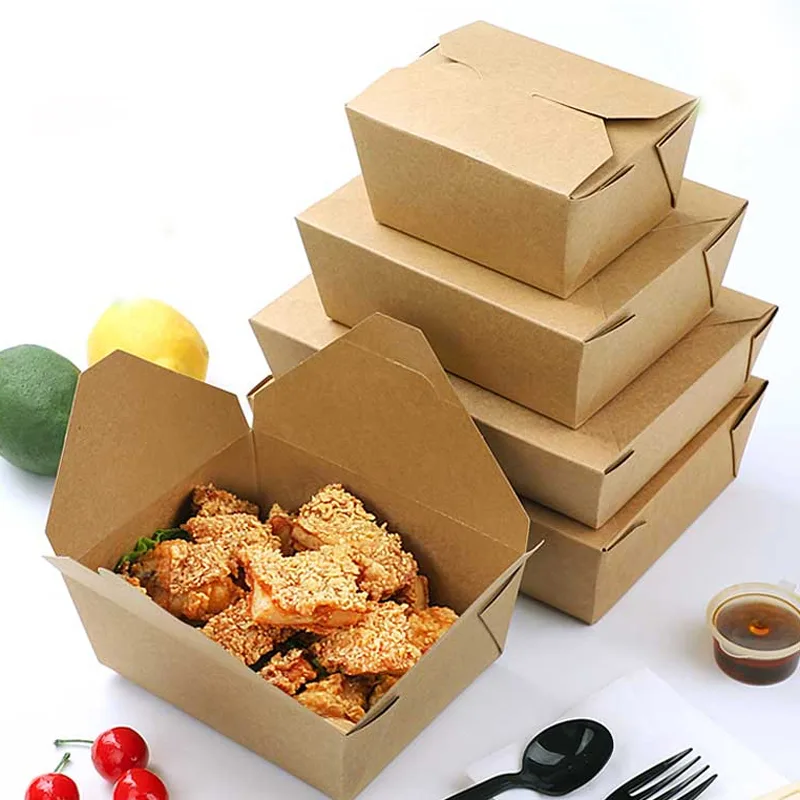 |
Kraft paper containers are among the most commercially familiar sustainable food packaging options on the market. They are widely used for salads, noodles, rice meals, soups, bakery items, and cold deli foods. Their popularity comes from their affordability, broad format range, printability, and strong visual association with natural packaging.
Why do businesses choose Kraft paper?
Kraft paper is versatile and highly brandable. It works well for food delivery and takeaway because it is lightweight, easy to stack, and available in many bowl, tub, and box designs. For companies that want custom printing, logo exposure, and a clean retail look, kraft paper remains one of the most practical packaging choices.
Best use cases
- Salad bowls
- Noodle bowls
- Soup containers
- Bakery takeaway packaging
- Rice and pasta dishes
- Grab-and-go food boxes
Key advantages
- Familiar and scalable packaging format
- Lightweight and efficient for transport and storage
- Strong printability for branding
- Wide market availability
- Suitable for many hot and cold foods depending on barrier system
Important considerations
The sustainability profile of kraft paper containers depends heavily on the barrier coating used. Many food containers need a moisture or grease barrier, which may involve PE, PLA, or water-based coatings. That means not every paper container should be described in the same way. Some may be recyclable in certain systems, some may be compostable under specific conditions, and others may be more limited. Businesses should understand the full material structure before making environmental claims.
4. Palm Leaf Containers
Palm leaf containers are typically made from naturally fallen leaves that are cleaned, heat-pressed, and formed into plates, trays, and bowls. They are often valued for their natural texture, premium appearance, and chemical-free image.
Why do businesses choose palm leaf?
Palm leaf packaging has strong visual appeal. It looks natural, distinctive, and slightly upscale, which makes it popular for premium catering, outdoor events, eco-themed hospitality, and businesses that want packaging to become part of the dining presentation.
Best use cases
- Premium catering
- Outdoor events
- Rustic or natural dining concepts
- Eco-themed food presentation
Key advantages
- Strong natural appearance
- Compostable and plant-based image
- Good rigidity in many serving formats
- Attractive for premium event service
Important considerations
Palm leaf packaging is often more expensive than mainstream takeaway materials such as bagasse or paperboard. It may also offer fewer standardized industrial formats for high-volume delivery operations. For businesses that require strict lid compatibility, liquid-heavy foods, or highly standardized packing lines, palm leaf may be less practical than other materials.
5. Mushroom Packaging
Mushroom-based packaging is made using mycelium, the root-like structure of fungi, which grows around agricultural waste substrates and forms into molds. Once processed and dried, the finished structure can be surprisingly strong and lightweight.
Why do businesses choose mushroom packaging?
Mushroom packaging has strong innovation value. It is often discussed as part of the future of bio-based materials because it can be biodegradable and molded into protective formats without relying on conventional plastics.
Best use cases
- Specialty packaging
- Protective outer packaging
- Niche eco product presentation
- Innovation-focused brand storytelling
Key advantages
- Bio-based and innovative
- Strong sustainability narrative
- Can replace certain protective packaging forms
- Interesting option for future packaging development
Important considerations
Mushroom packaging is promising, but it is not yet the most mainstream choice for everyday direct-contact takeaway meals, especially hot, oily, or liquid-heavy foods. It is better understood today as an emerging material with niche commercial uses rather than a universal replacement for all plastic food containers.
6. PLA Bioplastics

PLA, or polylactic acid, is a plant-based bioplastic typically produced from renewable feedstocks such as corn starch or sugar-derived inputs. It is often used for clear cold cups, lids, deli containers, and certain cold-food packaging formats.
Because it looks similar to conventional transparent plastic, PLA is frequently chosen by brands that want a more sustainable image while maintaining product visibility.
Why do businesses choose PLA?
PLA offers clarity, light weight, and familiar foodservice functionality. It is especially useful when presentation matters, such as in fruit cups, dessert cups, cold beverage packaging, cold deli applications, and transparent takeaway formats.
Best use cases
- Cold cups
- Smoothie and juice containers
- Fruit and dessert packaging
- Cold deli containers
- Transparent cold-food presentation
Key advantages
- Clear appearance similar to conventional plastic
- Plant-based feedstock profile
- Good for cold applications
- Supports strong shelf visibility and product display
Important considerations
PLA is often misunderstood. While it is commonly described as compostable, it typically requires industrial composting conditions rather than ordinary disposal environments. It is also not the best choice for high-temperature applications. For hot meals, microwave use, or high-heat transport conditions, other materials are often more suitable.
Comparison Table: Which Sustainable Food Container Fits Which Use Case?
Below is a simplified comparison to help businesses match material choice to service needs.
| Material | Best For | Heat Resistance | Grease / Moisture Resistance | End-of-Life Profile | Relative Cost | Commercial Notes |
|---|---|---|---|---|---|---|
| Bagasse | hot meals, takeaway boxes, clamshells | High | Good | Commonly compostable depending on spec | Medium | strong molded fiber option |
| Bamboo Fiber | meal trays, premium lunch boxes | Medium-High | Good | often biodegradable / compostable depending on formulation | Medium-High | premium appearance |
| Kraft Paper | salads, noodles, soups, rice meals | Medium | depends on barrier coating | varies by coating and local waste system | Low-Medium | versatile and printable |
| Palm Leaf | premium events, catering | Medium | Good | compostable in many cases | High | natural, rustic presentation |
| Mushroom Packaging | niche specialty packaging | Medium | Moderate | biodegradable / compostable depending on product | High | emerging option |
| PLA | cold drinks, desserts, cold deli foods | Low-Medium | Good | typically industrial composting only | Medium | excellent clarity for cold use |
This table should not replace product testing, but it helps businesses make more informed first-stage decisions.
Benefits of Sustainable Food Containers
The shift away from plastic is not only about environmental image. Sustainable food containers can deliver strategic business value when selected correctly.
1. Stronger brand perception
Consumers increasingly notice packaging. A business that uses fiber-based trays, kraft bowls, or compostable plastic cups often communicates a more modern and responsible brand identity than one still relying on conventional foam or rigid plastic.
2. Better alignment with market expectations
Many foodservice operators, retailers, and institutional buyers now prefer packaging that supports sustainability targets. Businesses that transition earlier may improve buyer confidence and future-proof their product offering.
3. Greater regulatory readiness
As plastic rules tighten across different markets, switching to alternative materials can reduce exposure to future compliance pressure and help operators stay ahead of packaging-related restrictions.
4. Support for waste-reduction goals
Well-selected sustainable packaging can help businesses reduce reliance on fossil-based single-use materials and improve their alignment with circular packaging strategies.
5. Commercial differentiation
In crowded foodservice categories, packaging can influence customer perception. An eco-friendly container may not guarantee loyalty on its own, but it can reinforce quality, care, and brand values when combined with strong product experience.
Sustainable Containers for Restaurants and Food Businesses
For food businesses, packaging needs go far beyond basic food containers. From takeaway meals and delivery orders to large catering events, many brands now look for custom packaging boxes and sustainable container solutions that combine food protection, brand presentation, and reduced environmental impact.
Different food businesses require different packaging systems. The most effective transition away from plastic happens when packaging is matched to the menu structure, service model, transport conditions, and customer expectations.
Quick-service restaurants
Bagasse clamshells, molded fiber trays, and kraft paper takeaway boxes work well for hot, fast-moving meals such as burgers, rice boxes, wraps, and combo sets.
Salad and poke bowl brands
Kraft paper bowls with suitable lids or clear cold-compatible formats can support fresh-food presentation while maintaining convenience.
Asian takeaway and noodle shops
Kraft paper soup bowls, noodle containers, and strong leak-resistant takeaway formats are often better suited than generic plastic tubs because they can combine function, printability, and stronger sustainability positioning.
Meal prep brands
Bamboo fiber or sturdy molded fiber trays may be useful for portioned meals, chilled meal packs, and structured food presentations, especially for brands focused on wellness and clean eating.
Catering businesses
Palm leaf and premium fiber-based trays can add visual appeal while supporting eco-focused event narratives.
Food delivery services
Delivery packaging must do more than look sustainable. It must maintain food quality across transport time. The best solutions are lightweight, rigid enough to resist crushing, and designed to limit leaks, sogginess, and steam-related quality loss.
How to Choose the Right Sustainable Food Container for Your Business
The best packaging material is rarely the one with the strongest marketing claim. It is the one that fits your actual operation.
Here are the main decision factors businesses should evaluate:
1. Food type
Dry bakery items, hot rice meals, soups, cold desserts, and oily takeaway foods all place different demands on packaging. A container that works for salad may fail with curry or noodles.
2. Temperature exposure
Hot-fill foods, reheating, microwave use, and long delivery times all affect material selection. Not every “eco” material performs well at elevated temperatures.
3. Grease and moisture exposure
Saucy, oily, or steam-heavy foods require stronger barrier performance than dry foods. Material fit matters more than general sustainability claims.
4. Delivery distance and handling
Packaging for dine-in takeaway differs from packaging for thirty-minute delivery routes. The longer and rougher the journey, the more important rigidity, closure design, and leak resistance become.
5. Disposal infrastructure
A compostable container only delivers its intended end-of-life advantage if composting systems are actually available. Local waste conditions should influence procurement decisions.
6. Brand positioning
Natural kraft, molded fiber, and transparent PLA all communicate different things visually. Packaging should reinforce your brand identity, not work against it.
7. Compliance and documentation
Food businesses should request technical data, food-contact documentation, and where relevant, certification details relating to compostability or material composition. Sustainable packaging claims should be backed by evidence.
How Businesses Can Transition Away from Plastic Containers
Moving away from plastic does not need to happen overnight. The most effective transitions are phased, practical, and based on actual usage data.
Start with the highest-volume items
Replace the containers you use most often first. This may include clamshell lunch boxes, soup bowls, salad bowls, or cold cups. High-volume items deliver the most visible impact.
Match materials to menu categories
Use bagasse for hot meal boxes, kraft paper for bowls and takeaway containers, and PLA for clear cold applications where visibility matters. Avoid using one material for every application without testing.
Test packaging under real service conditions
Run trials using your actual foods, portion sizes, transport times, and storage conditions. Check for leaks, softening, steam retention, structural failure, and customer handling experience.
Reduce unnecessary packaging components
Transitioning away from plastic is also an opportunity to simplify packaging systems. Optimize container size, eliminate redundant inserts, and reduce single-use extras where possible.
Communicate clearly with customers
Packaging improvements should be visible in your branding, labels, and digital channels. However, claims should be specific and responsible. Instead of vague environmental messaging, explain what material is used and what disposal route is intended.
Challenges of Sustainable Food Packaging
Sustainable packaging offers clear advantages, but businesses should approach the transition with realism.
Higher cost in some categories
Many eco-friendly materials cost more than standard plastic, especially in lower purchasing volumes. Costs may improve at scale, but pricing remains an important operational factor.
Performance differences between suppliers
Not all bagasse, kraft paper, bamboo fiber, or PLA products perform equally. Thickness, coating quality, sealing performance, and lid compatibility can vary significantly.
Composting infrastructure is uneven
A compostable product does not automatically mean easy disposal. In many regions, industrial composting access is limited, which reduces the practical end-of-life benefit.
Material mismatch can create problems
A sustainable container that is poorly matched to the food application may leak, deform, or damage food quality. Functional testing is essential.
Consumer confusion remains common
Many end users do not fully understand the difference between recyclable, compostable, and biodegradable packaging. That means businesses must communicate clearly to avoid misleading claims and disposal mistakes.
The Future of Plastic-Free Food Packaging
The future of food packaging will likely be shaped by a combination of better materials, better systems, and better design decisions.
One emerging direction is edible packaging made from rice, seaweed, or other bio-based materials. These formats are still niche, but they show how zero-waste concepts are entering packaging innovation.
Another important development is the rise of reusable container systems in urban food delivery. In some markets, circular models are being tested where packaging is collected, cleaned, and returned into service rather than discarded after one use.
At the same time, fiber-based packaging is expected to remain a major growth area. Molded fiber, coated paper systems, and improved plant-based materials are becoming more commercially viable as buyers demand better alternatives to fossil-based plastics.
The most likely future is not one single material replacing all others. Instead, the market is moving toward smarter packaging-material fit, where each food application is matched with the most practical lower-impact option.
Final Thoughts
Sustainable alternatives to plastic food containers are no longer niche products. They are becoming standard considerations for restaurants, catering companies, meal prep services, coffee chains, and food delivery brands.
But the best alternative is not always the most visually “green” option. The best solution is the one that balances food protection, operational efficiency, customer expectations, disposal practicality, and environmental performance.
Bagasse, bamboo fiber, kraft paper, palm leaf, PLA, and mushroom-based packaging all have a place in the evolving foodservice landscape. The key is to choose them strategically, test them honestly, and communicate their benefits accurately.
Businesses that approach sustainable packaging with realism rather than trend-following are the ones most likely to gain long-term value. In today’s market, responsible packaging is not just a design choice. It is part of a broader business strategy.
FAQs
- What is the best alternative to plastic food containers?
There is no single best option for every application. Bagasse is often an excellent choice for hot takeaway meals, kraft paper works well for bowls and printed takeaway formats, and PLA is commonly used for clear cold-food and beverage packaging.
- Are compostable food containers safe for food use?
Yes, food-grade compostable containers are generally designed for direct food contact and are widely used in foodservice. Businesses should still request product specifications and food-contact documentation from suppliers.
- What is the difference between biodegradable and compostable containers?
Biodegradable means a material can break down through biological processes, but it does not always define how quickly or under what conditions. Compostable is more specific and usually means the product is designed to break down under defined composting conditions without leaving harmful residues.
- Are kraft paper food containers recyclable?
Some kraft paper food containers may be recyclable, but this depends on their coating, contamination level, and local waste infrastructure. Containers with food residue or complex barrier layers may be harder to recycle in standard paper streams.
- Is PLA better than plastic?
PLA can be a more sustainable option in certain applications because it is typically made from renewable plant-based feedstocks and is often industrially compostable. However, it is not ideal for every use case, especially high-heat applications.
- Which sustainable container is best for hot and oily takeaway food?
Bagasse and certain well-designed fiber-based containers are often strong candidates for hot and oily foods because of their structure and heat resistance. Final selection should always be based on real product testing.
- How should restaurants start replacing plastic packaging?
The most effective approach is to begin with high-volume items, test alternatives with actual menu foods, compare supplier performance, and communicate packaging changes clearly and accurately to customers.
Copyright Notice:
© 2026 Bioleader®. If you wish to reproduce or reference this content, you must provide the original link and credit the source. Any unauthorized copying will be considered an infringement.