Introduction – Why Price Is Not the Only Factor
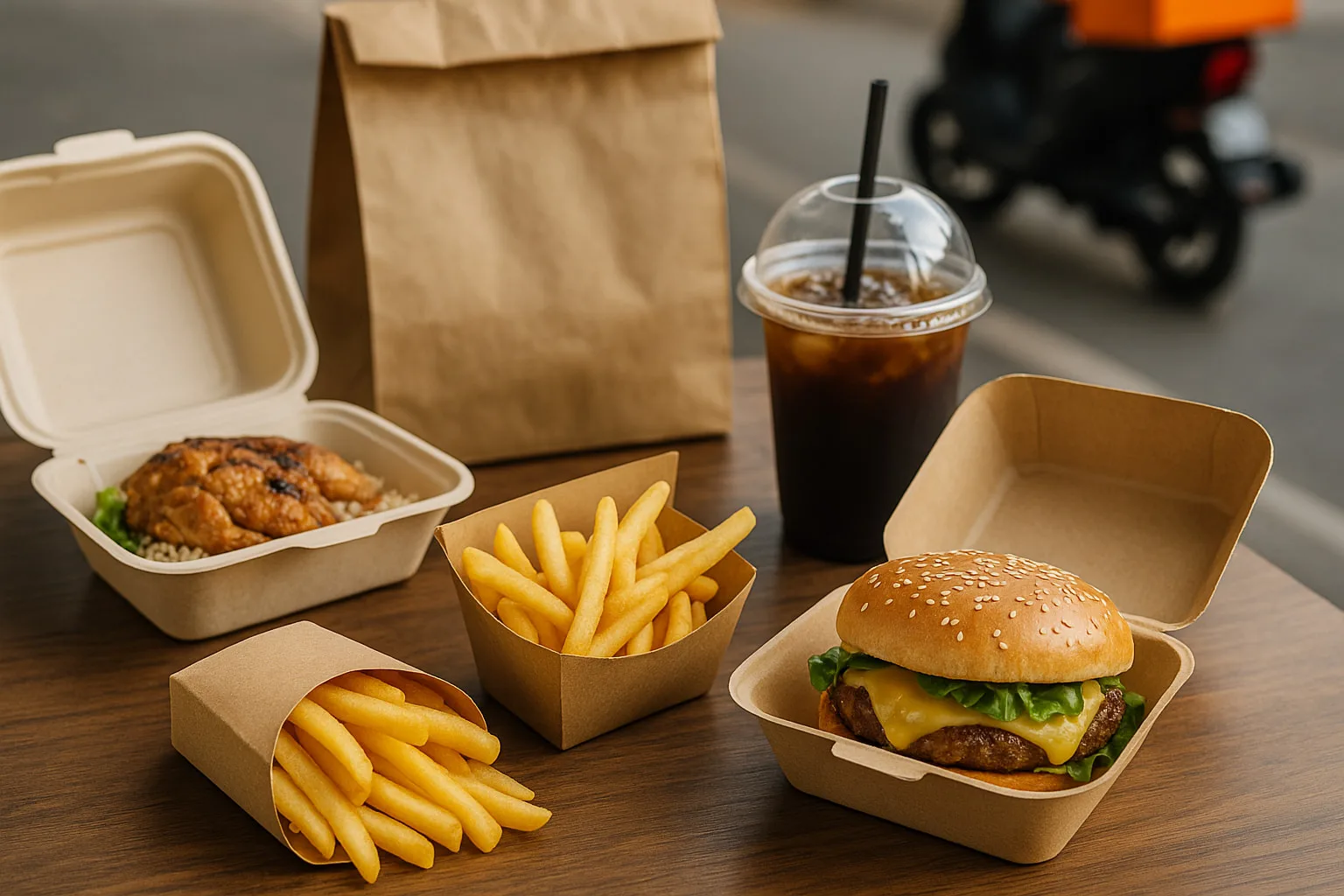
For decades, foodservice operators around the world leaned heavily on plastic and foam packaging. The logic was simple: low unit cost equals higher profit margins. However, as environmental concerns reached a tipping point, governments, consumers, and even investors began to pressure food chains to rethink their packaging choices.
Every year, an estimated 8 million tons of plastic waste enter the oceans. In response, countries from the European Union to Canada to parts of Asia have legislated sweeping plastic bans. At the same time, surveys show that 72% of U.S. consumers are more likely to choose a restaurant that uses sustainable packaging, even if it costs slightly more.
In this changing landscape, the key question is no longer whether compostable packaging is more expensive than plastic. Instead, it is: Does compostable packaging deliver a positive ROI for food chains?
The answer, as this article will demonstrate, is yes—if approached strategically and with the right supplier.
The True Cost of Plastic vs. Compostable Packaging
Unit Price Comparison
At face value, plastic containers look cheaper. Consider average per-unit prices:
Plastic takeout container: $0.05
Bagasse bowls wholesale (Bioleader®): $0.07–0.08
Kraft paper soup bowls manufacturer supply: $0.08–0.09
Bulk PLA cold cups: $0.09–0.10
If procurement managers only focus on unit cost, compostable options seem like a 30–50% price increase. Yet this is only part of the picture.

Hidden Costs of Plastic Waste
Plastic comes with “invisible” expenses that are often overlooked:
Environmental taxes: France and Spain already impose levies on plastic packaging; California adds similar surcharges.
Waste management: Non-recyclable plastics increase landfill and incineration costs, which municipalities often pass to businesses.
Compliance risks: Food chains using non-compliant containers risk fines, rejected shipments, or even reputational damage when exposed in media.
In contrast, compostable food packaging for restaurants eliminates many of these hidden costs.
Total Cost of Ownership
When we calculate Total Cost of Ownership (TCO)—including purchase price, compliance fees, disposal, and brand impact—the equation changes significantly.
📊 Table 1: Cost Comparison of Plastic vs. Compostables (per 10,000 units)
| Material | Unit Price (USD) | Extra Fees (Tax/Disposal) | Total Cost (USD) | Customer Impact | ROI Potential |
|---|---|---|---|---|---|
| Plastic Container | 0.05 | +0.01 | 600 | Neutral | Low |
| Bagasse Bowls (Bioleader®) | 0.07 | 0 | 700 | +8% loyalty | Medium-High |
| Kraft Paper Soup Bowls | 0.08 | 0 | 800 | +10% loyalty | High |
| PLA Cold Cups | 0.09 | 0 | 900 | +12% eco appeal | High |
While compostables raise direct costs, they improve customer satisfaction and reduce compliance penalties, which translates to higher ROI.
Market & Regulatory Drivers of ROI
Global Plastic Bans 2025
By 2025, regulations will transform the packaging market:
European Union: The Single-Use Plastics Directive bans plastic cutlery, plates, and takeaway boxes.
United States: States like California (SB54) and New York have enacted strict packaging waste laws.
Canada: Nationwide prohibition of certain plastics took effect in 2023, with enforcement escalating in 2025.
Asia-Pacific: India, Thailand, and Malaysia are phasing out single-use plastics, reshaping street food and takeaway culture.
Food chains that fail to switch risk heavy penalties and exclusion from major markets.
Consumer Preferences and Eco Branding
Sustainability is no longer a niche preference—it is mainstream. A Nielsen study found that 73% of millennials are willing to pay more for sustainable packaging. For quick-service restaurants and cafés, eco-friendly takeaway containers wholesale are not just packaging—they are a marketing asset.
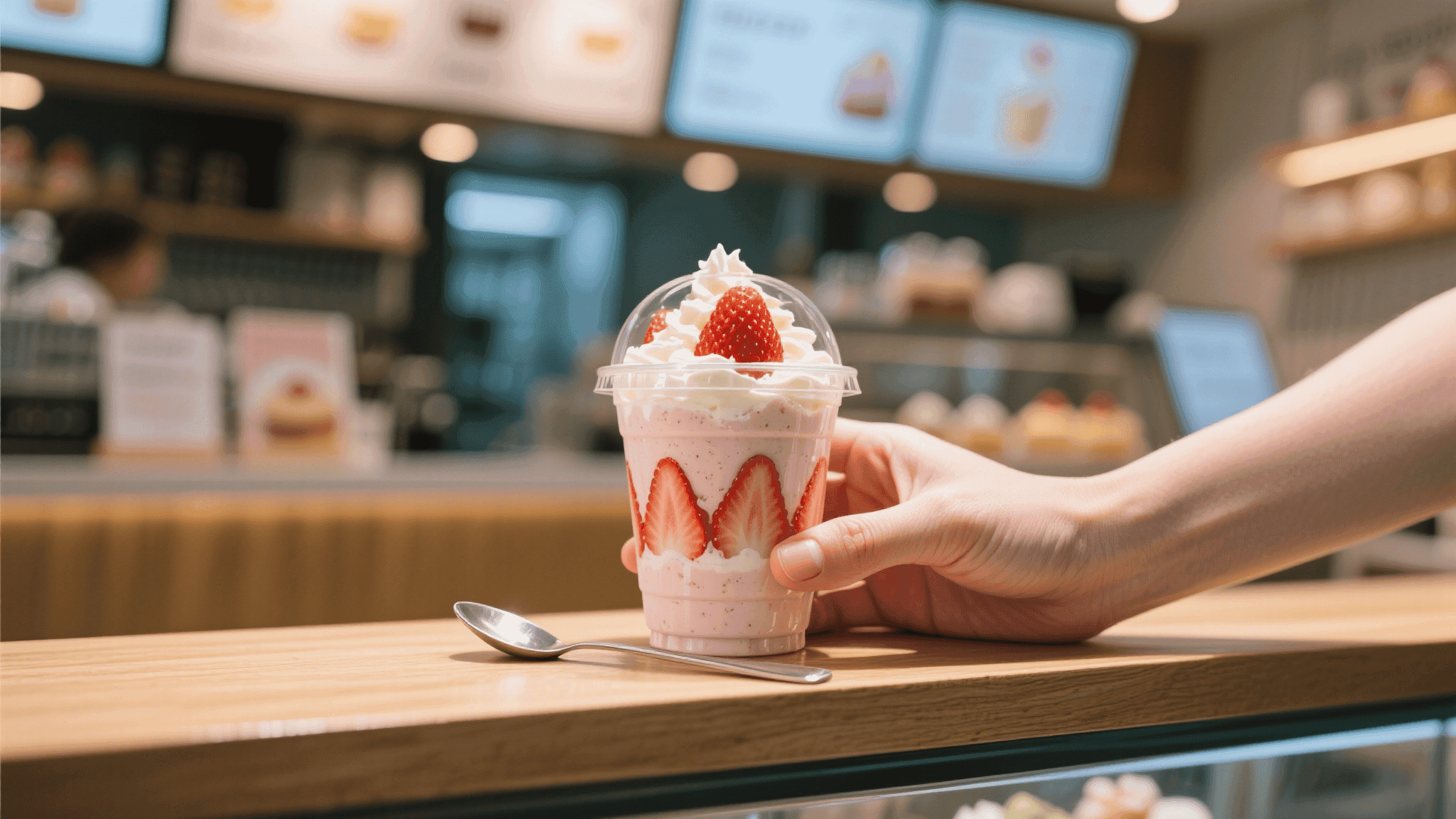
Compostable clamshell containers supplier products allow brands to tell a sustainability story that resonates with eco-conscious customers. On platforms like Instagram and TikTok, diners frequently highlight restaurants’ packaging as part of their dining experience.
Certifications Secure Market Access
Global retailers and distributors increasingly require certified packaging.
EN13432 (Europe): Verifies compostability under industrial conditions.
ASTM D6400 (USA): Confirms materials disintegrate and biodegrade safely.
BPI Certification: Widely accepted in North America for compostables.
TÜV Austria OK Compost: Adds trust for international buyers.
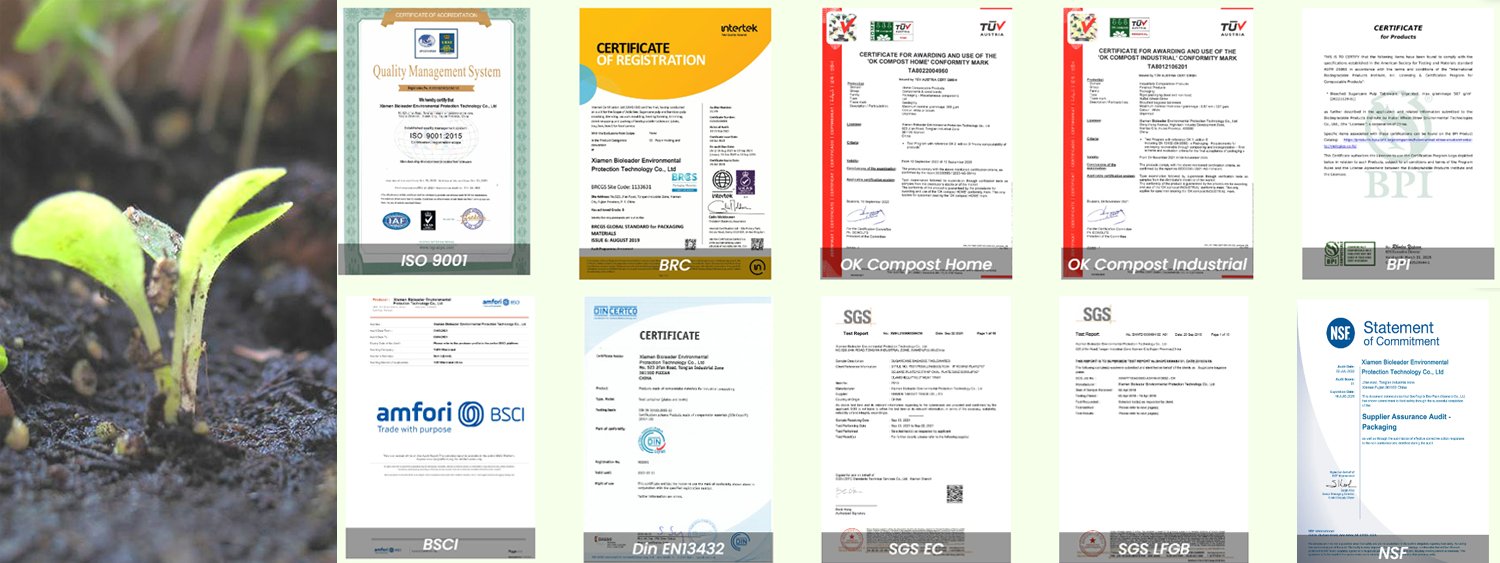
Bioleader® provides these certifications across its product lines, from bagasse bowls wholesale to bulk PLA cold cups, enabling clients to expand into Europe, North America, and beyond without compliance headaches.
Case Studies – Real ROI in Food Chains
Case Study 1 – U.S. Quick Service Restaurant (QSR) Using Bioleader® Bagasse Bowls
Pain Point: A California-based QSR chain was hit by rising plastic taxes and negative online reviews about its non-recyclable takeout containers.
Solution: The company partnered with Bioleader®, switching to eco-friendly bagasse bowls wholesale and pairing them with CPLA cutlery bulk order options.
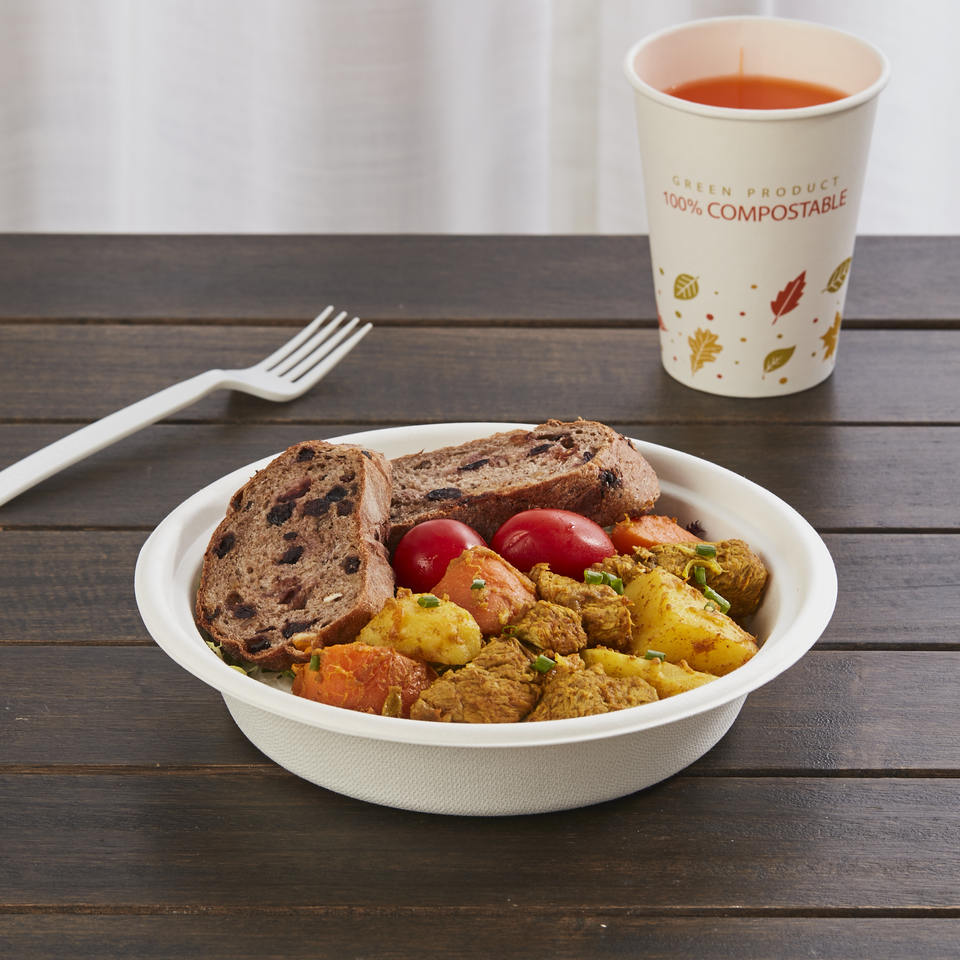
Result: Although packaging costs rose 8%, customer satisfaction scores improved by 15%. Social media sentiment shifted positively, and compliance risks were eliminated.
📊 Table 2: ROI Metrics Before & After Switch
| Metric | Before (Plastic) | After (Bioleader® Bagasse) | Change |
|---|---|---|---|
| Unit Cost | $0.05 | $0.07 | +40% |
| Plastic Tax | $0.01 | 0 | -100% |
| Total Cost/10k Units | $600 | $700 | +17% |
| Customer Satisfaction | Neutral | +15% | Positive |
| ROI | Low | +12% | Improved |
Case Study 2 – European Health Café with Bioleader® Kraft Paper Salad Bowls
Pain Point: A health-focused café chain in Germany faced strict EN13432 inspections. Using uncertified suppliers risked €50,000 in penalties and rejection by organic retailers.
Solution: The café sourced kraft paper salad bowls manufacturer products and bulk PLA cold cups from Bioleader®. Both lines came with TÜV and EN13432 certifications.
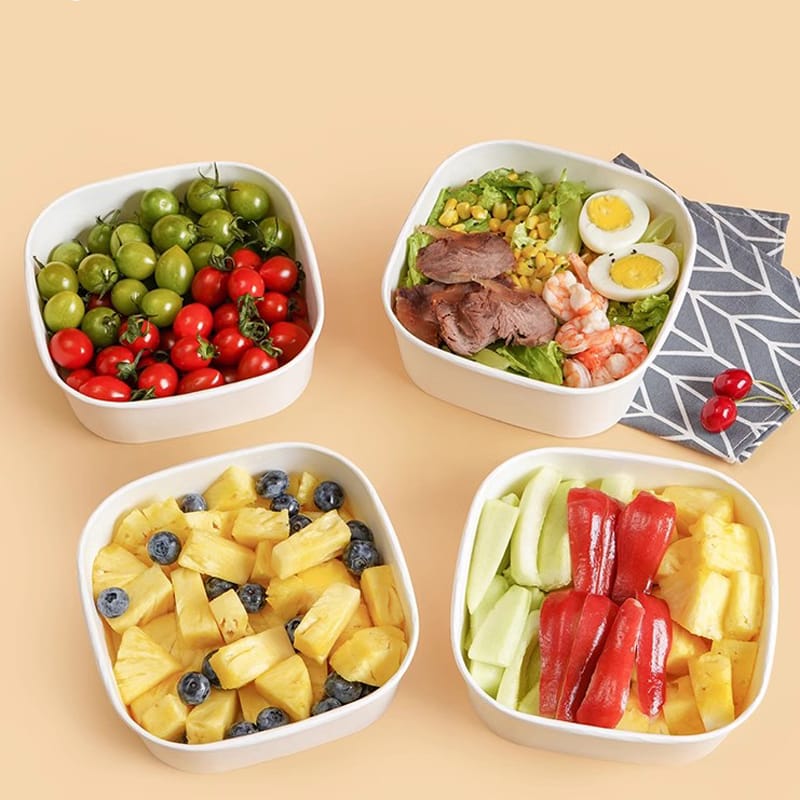
Result: The café passed compliance checks smoothly, avoided fines, and gained access to premium organic supermarket chains. Customer loyalty increased, with repeat purchase rates climbing 10%.
📊 Table 3: Compliance ROI for European Café
| Factor | Plastic Packaging | Compostable Packaging (Bioleader®) |
|---|---|---|
| Compliance Risk | High | None |
| Retail Market Access | Limited | Full (Organic Chains) |
| Penalty Exposure | €50,000 | €0 |
| Customer Loyalty | Neutral | +10% |
| ROI | Negative | +15% |
ROI Calculation Model for Food Chains
Formula for ROI
ROI = (Incremental Revenue – Extra Cost) ÷ Extra Cost × 100%
Practical Example
For a chain using 10,000 containers:
Plastic cost: $600 (including tax)
Bagasse bowls wholesale cost: $700
Incremental revenue from branding & customer loyalty: $500
ROI = (500 – 100) ÷ 100 × 100% = 400% positive return.
📊 Table 4: ROI Model for 10,000 Units
| Material | Extra Cost (USD) | Revenue Gain (USD) | ROI % |
|---|---|---|---|
| Plastic | 0 | 0 | Neutral |
| Bagasse Bowls | +100 | +500 | 400% |
| Kraft Soup Bowls | +200 | +600 | 200% |
| PLA Cold Cups | +300 | +700 | 133% |
This demonstrates that ROI is not about absolute cost—it is about long-term profitability.
Maximizing ROI with the Right Supplier
Bulk Procurement & MOQ Strategy
Food chains purchasing wholesale biodegradable containers should optimize container loads. A 40HQ container can hold a combination of compostable clamshell containers, kraft paper bowls, and bulk PLA cold cups. Buying in bulk reduces per-unit costs by 10–15%.
SKU Optimization
Restaurants often use too many packaging SKUs, creating inventory inefficiencies. Focusing on high-frequency items—soup bowls, salad bowls, coffee cups—reduces storage costs and simplifies logistics.
Partnering with Certified Suppliers
Choosing a reliable biodegradable food packaging supplier in China ensures stability. Bioleader® offers:
Wide product range: Bagasse clamshell containers, kraft paper soup bowls manufacturer lines, bulk PLA cold cups, and CPLA cutlery bulk order.
Certifications: EN13432, ASTM D6400, BPI, TÜV Austria.
Export experience: Serving clients in North America, EU, Middle East, and Asia-Pacific.
Scalable capacity: Able to meet both small chain orders and large wholesale demand.
For buyers, this means reduced procurement risk and maximized ROI.
Future Outlook – Compostables as a Profit Driver
Market Predictions for 2025–2030
Global demand for compostable packaging is expected to grow at a 12% CAGR, with bagasse and kraft paper leading the segment.
The Shrinking Price Gap
As production scales, the price gap between plastic and compostables will shrink. Economies of scale in manufacturing and better raw material sourcing will make compostables increasingly cost-competitive.
Strategic Advantage for Early Adopters
Early adopters gain:
Stronger brand differentiation
Secure compliance with future bans
First-mover advantage in consumer perception
Food chains delaying adoption risk playing catch-up in both branding and compliance.
Conclusion
So, is compostable packaging worth the price? For food chains, the answer is a resounding yes. Beyond unit cost, compostables deliver ROI through compliance, customer loyalty, brand differentiation, and market expansion.
With Bioleader® as a trusted partner—offering bagasse bowls wholesale, compostable clamshell containers supplier lines, kraft paper soup bowls manufacturer products, bulk PLA cold cups, and CPLA cutlery bulk order options—businesses can reduce risks and capture the benefits of sustainable growth.
FAQ
Q1: Is compostable packaging more expensive than plastic?
Yes, per unit it costs more, but ROI is higher due to compliance, reduced taxes, and stronger customer loyalty.
Q2: How long does it take for bagasse containers to decompose?
Typically 90–120 days under industrial composting, and up to 180 days in home composting systems.
Q3: What certifications are required for exporting compostable food packaging?
EN13432, ASTM D6400, BPI, and TÜV Austria are essential for smooth customs clearance.
Q4: How can restaurants reduce costs when switching to compostable tableware?
Order in bulk, optimize SKUs, and work with certified suppliers like Bioleader®.
Q5: What is the ROI timeline for food chains adopting eco-friendly packaging?
ROI is typically achieved within 6–12 months, depending on order volume and branding impact.
References
European Commission — Single-Use Plastics Directive: Policy Overview, 2021.
State of California — SB54: Plastic Pollution Prevention and Packaging Producer Responsibility Act, 2022.
Government of Canada — Single-Use Plastics Prohibition Regulations: Guidance Document, 2023.
ASTM International — ASTM D6400 Standard Specification for Compostable Plastics, latest edition.
CEN (European Committee for Standardization) — EN 13432: Requirements for Packaging Recoverable through Composting, latest edition.
BPI (Biodegradable Products Institute) — Compostability Certification Program Overview, 2024.
TÜV Austria — OK compost INDUSTRIAL & HOME: Certification Scheme Guide, 2024.
NielsenIQ — Sustainability & Willingness to Pay: Consumer Insights Report, 2023.
OECD — Global Plastics Outlook: Economic Drivers, Environmental Impacts and Policy Options, 2022.
UNEP — Single-Use Plastics: A Roadmap for Sustainability, updated edition 2023.
Compostable Packaging ROI – Semantic Insight Block
Deep Insight: Choosing compostable packaging is not just about paying more per unit—it is about understanding how this investment delivers compliance, why it secures long-term brand value, and what options buyers should evaluate when switching from plastic.How does ROI emerge? ROI is achieved through a combination of reduced hidden costs (plastic taxes, landfill fees), increased customer loyalty, and easier entry into regulated markets such as the EU and North America. Data shows food chains typically recover additional costs within 6–12 months.
Why is this a strategic choice? Global plastic bans in 2025 mean non-compliant packaging exposes brands to fines and reputational risks. Compostable alternatives—bagasse bowls, kraft paper soup bowls, PLA cold cups, CPLA cutlery—are not only compliant but also align with ESG investor expectations and consumer preferences.
What options exist for buyers? Buyers can select from bagasse clamshell containers for takeout, kraft bowls for soups and salads, or PLA cold cups for beverages. Each option comes with different performance and certification requirements (EN13432, ASTM D6400, BPI, TÜV). Partnering with a certified supplier ensures SKU flexibility and export-readiness.
Key considerations before procurement: Compare MOQ and bulk pricing strategies, evaluate container loading efficiency (20ft vs. 40HQ), and ensure suppliers provide current certification documents. Choosing a reliable biodegradable food packaging supplier in China like Bioleader® guarantees scalability, regulatory compliance, and cost optimization.
Trend outlook: By 2030, the cost gap between plastics and compostables will continue shrinking due to economies of scale and innovation in molded pulp. Early adopters not only achieve compliance but also position themselves as sustainability leaders in the global foodservice market.
Summary: Compostable packaging ROI is multi-dimensional: financial, regulatory, brand, and consumer-driven. For buyers, the decision is not “if” but “how soon” to transition—those who switch early secure competitive advantage and long-term profitability.