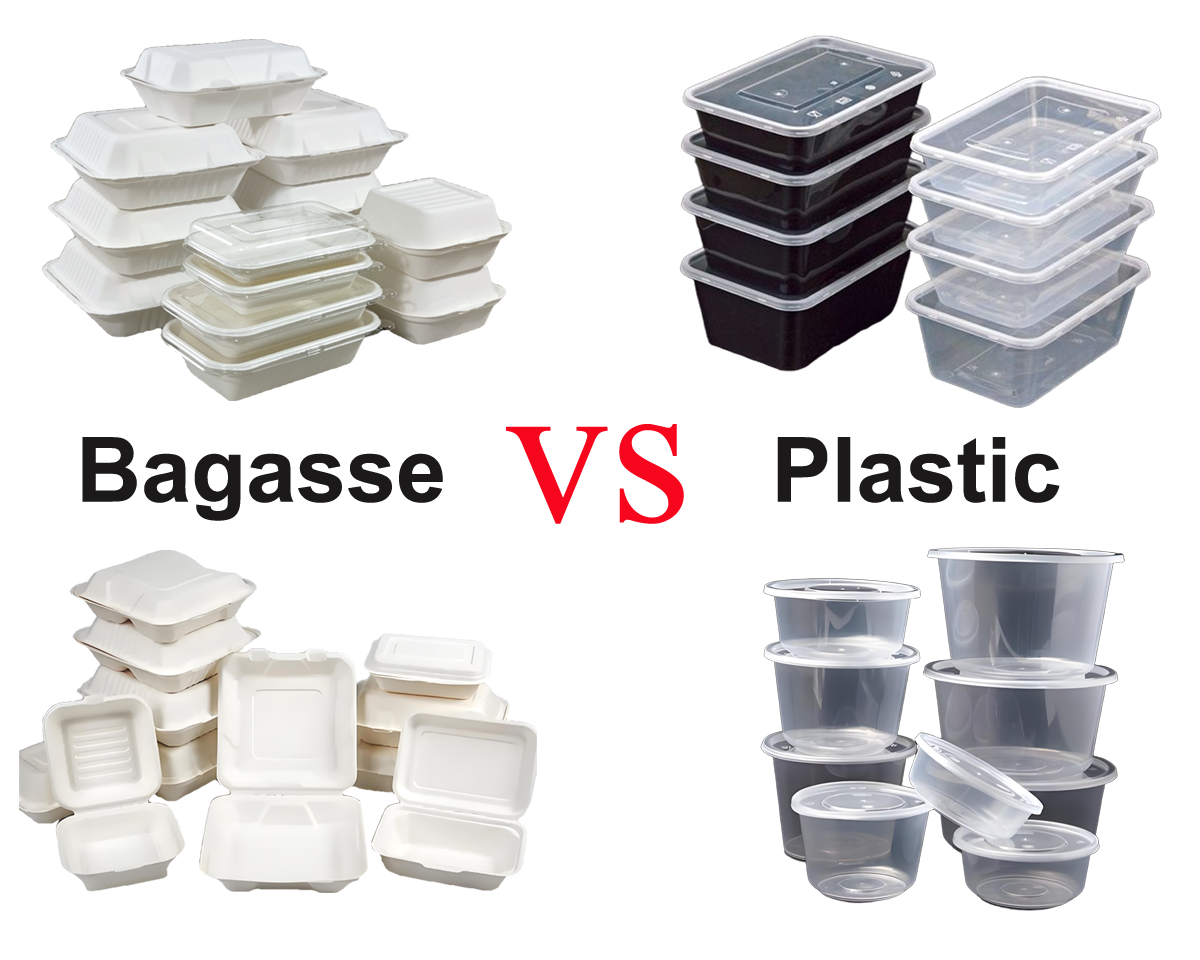
Choosing the right eco-friendly takeaway containers is no longer just a sustainability gesture—it has become a strategic decision for food brands, restaurants, and home users alike. With consumer expectations rising, global regulations tightening, and delivery volumes surging, packaging is now a major driver of brand experience, operational efficiency, and compliance readiness.
In 2025 and beyond, restaurants and takeaway operators are shifting toward packaging that is biodegradable, compostable, PFAS-free, microwave-safe, leak-resistant, and compliant with EN13432, ASTM D6400, and emerging global plastic bans. This article provides a comprehensive framework to help any buyer—B2B or consumer—select the right packaging material for any meal or scenario.

Why Eco-Friendly Takeaway Containers Matter in 2025
Sustainability Becomes a Business Imperative
The global shift to sustainable packaging is no longer optional. Consumers are increasingly selecting restaurants based on environmental values, with studies showing that over 72% prefer to buy from brands using eco-friendly or compostable packaging. This trend directly impacts brand loyalty and repeat purchase behavior, especially among younger demographics who prioritize plastic-free lifestyle choices.
Regulatory Pressure Is Increasing Worldwide
Governments across Europe, Asia, and North America are accelerating restrictions on single-use plastics. Key regulations include:
EU PPWR (2025) banning non-recyclable and non-compostable plastic food containers.
Japan Plastic Resource Circulation Act (2022–2025) pushing restaurants toward compostable and biodegradable materials.
U.S. State bans (California, New York, Washington) limiting foam, PFAS, and petroleum-based plastics.
These rules compel brands to adopt EN13432/ASTM D6400-certified solutions that ensure real compostability rather than simple biodegradation claims.
Operational Benefits for Restaurants
Eco-friendly takeaway containers also drive operational advantages:
Better heat and oil performance
Reduced leakage complaints
More stable delivery quality
Higher display quality for salads and cold meals
Stronger lids and stacking efficiency for large orders
Restaurants adopting premium biodegradable packaging often report a measurable drop in negative reviews and a rise in customer satisfaction.
What Makes a Takeaway Container “Eco-Friendly”?
Compostable vs. Biodegradable vs. Recyclable
Not all sustainability claims are created equal. A truly eco-friendly container must meet clear criteria:
Compostable: Breaks down into CO₂, water, and biomass in composting conditions.
Biodegradable: Breaks down naturally, but often without time limits or residue requirements.
Recyclable: Depends on municipal systems and cannot apply to contaminated food packaging.
For foodservice packaging, compostable materials such as bagasse and bioplastics offer the strongest environmental performance.
Material Safety and Chemical Compliance
Eco-friendly containers must be:
PFAS-free
BPA-free
Heavy-metal-free
Approved for direct food contact
High-quality manufacturers and factories provide compliance reports such as LFGB, FDA, and EU food-contact certificates.
Identifying Real Sustainability vs. Greenwashing
Look for:
Full certifications
Manufacturer transparency
Real composting data
Clear material sources
Production capabilities from verified suppliers
This is why choosing a reputable compostable takeaway manufacturer matters.
Understanding Material Options for Eco-Friendly Takeaway Use
Bagasse: The High-Performance Workhorse
Bagasse is one of the most reliable materials for hot and oily foods. It is:
Heat-resistant up to 120°C
Oil- and leak-resistant
Microwave- and freezer-safe
Naturally compostable without additives
It is ideal for steak meals, noodles, curries, fried foods, rice bowls, and long-distance delivery.
Cornstarch Bioplastic: Sturdy and Versatile
Cornstarch-based materials provide:
Structural rigidity
Medium heat tolerance (up to ~85°C depending on grade)
Multiple compartment options
Excellent for meal prep and home-offices
Many buyers search for starch-based takeaway box manufacturer or biodegradable lunch box factory when sourcing these.
Kraft Paper Containers
Kraft is suitable for:
Salads
Cold meals
Grain bowls
Medium-heat foods
Paired with PLA lids, kraft bowls are a top choice for healthy-food chains.
PLA Cups and Lids
PLA is only suitable for cold beverages:
Best for iced drinks
Compostable
Transparent like PET
Safe for ≤45°C
CPLA Cutlery and Lids
CPLA provides:
Heat resistance
Rigidity
Compostability
Suitable for restaurants wanting a unified sustainable cutlery solution.
Choosing the Right Container by Meal Type
Selecting the correct eco-friendly disposable takeout container depends heavily on the food category, heat level, oil content, and delivery duration. Below is a structured framework used by leading takeaway brands, food chains, and procurement teams.
For Salads & Cold Meals
Cold meals require freshness retention, visual appeal, and condensation control.
Recommended Materials
Kraft paper bowls with lids
Bagasse bowls for premium salad brands
Clear PLA cold cups for fruit bowls, cold snacks, and mixed toppings
Why This Matters
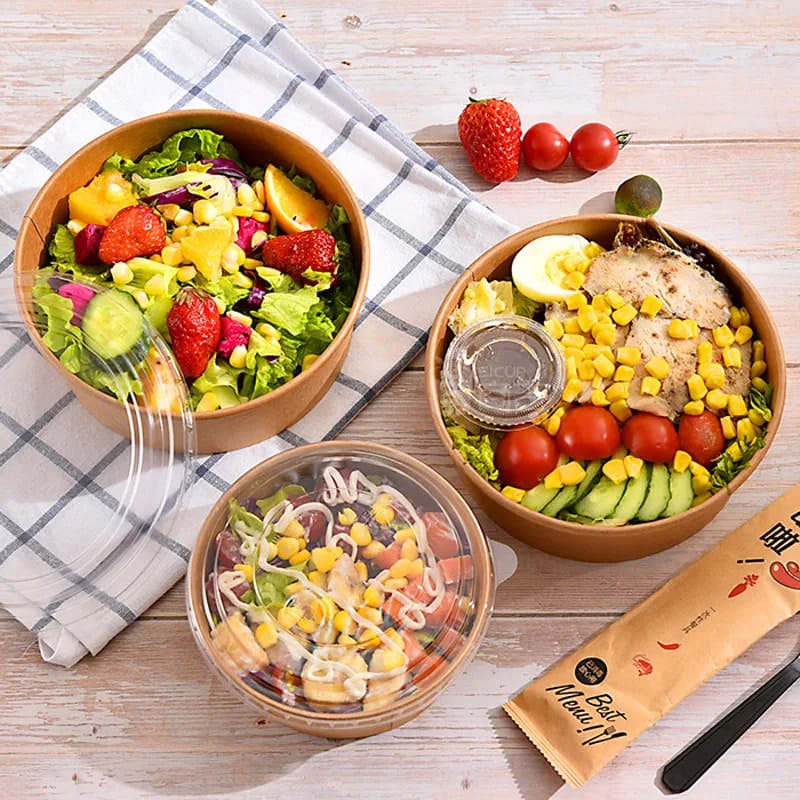
Salads often contain moisture-heavy ingredients such as lettuce, fruits, toppings, and dressings. Kraft bowls with tight-sealing lids offer:
Anti-humidity walls preventing wilting
Clear PLA lids for attractive visual merchandising
Stackability for high-volume lunch operations
Many brands source from kraft paper salad bowl manufacturers to ensure consistent lid-fit performance and bulk supply.
For Soups, Noodles & Broth-Based Dishes
These foods generate high heat, hot steam, and liquid movement, making container failure the most common complaint on delivery platforms.
Recommended Materials
Water-resistant coated kraft bowls (for medium-heat soups)
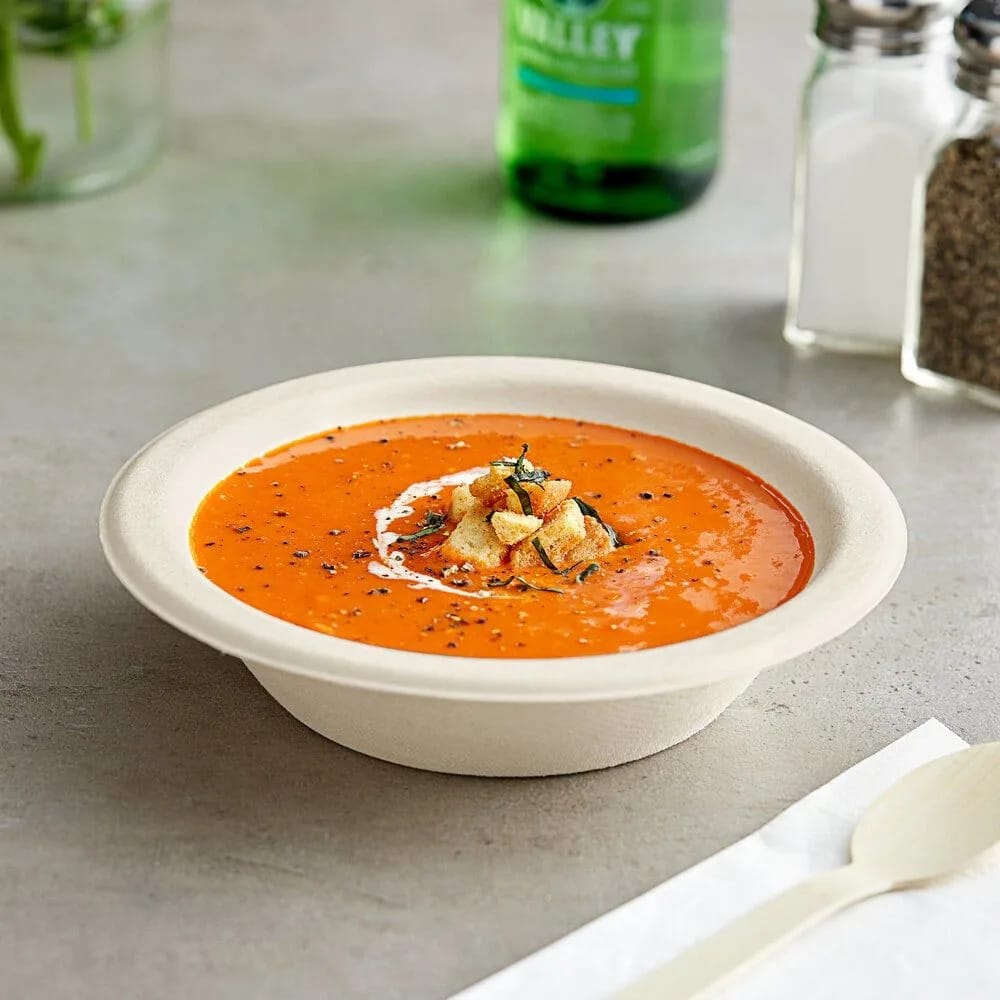
Thick-wall bagasse noodle bowls for hot, oily broth
Critical Performance Requirements
Maximum heat resistance
Anti-leak properties
Structural integrity during 30–45 minutes of delivery transport
Condensation-resistant lids
Data from delivery platforms shows that 42% of negative reviews arise from leakage or lid failure in soup items—reinforcing the importance of certified, performance-tested materials.
For Rice Bowls, Burritos, Hot Entrées
Rice-based meals require strength + heat stability + anti-soak performance.
Recommended Materials
Bagasse bowls (most stable across temperatures)
Cornstarch compartment boxes for multi-item rice sets
Kraft bowls for warm (not oily) rice dishes
Why Bagasse Performs Best
No deformation even above 100°C
High structural rigidity
Strong resistance against saucy, oily, or mixed meals
This makes it the top product used by eco-friendly takeaway container factories worldwide for hot meal packaging.

For Curries, Stir-Fries & Oily Foods
These foods challenge materials due to oil absorption, steam pressure, and delivery vibration.
Recommended Materials
Thick-wall bagasse clamshells
Cornstarch lunch boxes with tight-lock lids
Key Specifications
Deep cavities
Oil-proof fiber structure
Vented lid to reduce steam buildup
Reinforced hinge
For B2B procurement, this category often requires wholesale biodegradable curry container suppliers due to higher volume usage.

For Fried Foods (Fries, Chicken, Snacks)
Fried items require airflow to avoid sogginess.
Recommended Materials
Bagasse vented clamshells
Kraft paper boxes with small ventilation holes
Critical Factors
Moisture escape design
Anti-condensation wall texture
Firm hinge strength for delivery handling

Choosing the Right Container by Eating Scenario

Meals behave differently depending on the environment—home, restaurant, fast-casual chain, delivery, or mixed-menu operations. Below is an application-focused breakdown.
Home Meals & Office Meal Prep
Consumers need convenient, microwave-safe, freezer-stable packaging.
Best Choices
Bagasse bowls for reheating
Cornstarch compartment boxes for weekly prep
Kraft bowls for cold snacks & salads
Why it matters: Meal-prep packaging must handle temperature cycling—refrigeration → reheating → storage.
Restaurants & Dine-In Operations
Restaurants often rely on containers for both dine-in and takeaway to streamline operations.
Best Choices
Bagasse clamshells (unified dine-in + takeout format)
Kraft bowls for premium branding
Cornstarch boxes for combo meals
Operational Benefits
Reduced SKU complexity
Faster packing speed
Brand consistency
Easier staff training
Fast-Casual & Salad Chains
Chains prioritize visual merchandising, stackability, and fridge display clarity.
Best Choices
Kraft salad bowls with PLA lid
PLA cups for layered yogurt or smoothies
Key Requirements
Crystal-clear lids for display
Perfect seal-fit
Condensation-resistant materials
Takeout & Delivery Platforms (Uber Eats, DoorDash, GrabFood)
Delivery introduces multi-dimensional challenges: vibration, temperature loss, oil movement, and long-distance transit.
Best Choices
Bagasse bowls
Leak-proof kraft soup bowls
Cornstarch boxes for multi-item deliveries
Delivery Pain Points Solved
Reduced leakage complaints
Higher customer satisfaction scores
Better shelf stability during transport
Less lid pop-off during shaking
Street-Food & Food Stalls
Street vendors need cost-effective, space-efficient, fast-handling packaging.
Best Choices
Bagasse plates
Kraft food trays
Small bagasse clamshells
Why Material Matters
Vendors operate in tight spaces with limited storage, so lightweight, stackable packaging reduces operational burden.
Key Product Features to Evaluate Before Buying
Procurement teams, restaurant owners, and wholesale buyers typically assess packaging using the following technical criteria.
Heat Resistance
Match the material with food temperature:
Bagasse: 120°C
Cornstarch: 85°C(depending on formulation)
Kraft w/ lining: ~70–80°C
PLA: for cold only
Leak-Proof & Oil-Proof Engineering
Key performance indicators:
Fiber density
Lid-lock design
Anti-soak treatment
Wall thickness
Products designed by experienced eco-friendly disposable takeout packaging manufacturers use optimized molding and pressure techniques to improve strength.
Structural Strength & Stackability
Especially important for:
Large delivery orders
Shared office lunches
Cloud kitchen operations
Containers should maintain integrity under vertical pressure and during vehicle vibration.
Lid Compatibility
Check if the product supports:
Bagasse lids
PP replacement lids
PLA lids
Snap-fit leak-proof designs
Lid mismatch is a top cause of delivery complaints.
Branding Opportunities
For restaurants with strong brand identity:
Custom printing
Embossed logo
Color-laminated kraft
Sustainable inks
This helps eco-friendly brands stand out on shelves and delivery feeds.
Storage Efficiency & Supply Chain Stability
High-volume buyers should evaluate:
Carton dimensions
Container nesting ratio
Pallet loading efficiency
Lead time from factory
Production capacity guarantees
Bulk buyers commonly search for biodegradable takeaway box wholesale suppliers who can provide consistent volume.
Environmental & Compliance Checklist
Meeting environmental standards is critical not just for reputation, but for cross-border compliance and long-term growth.
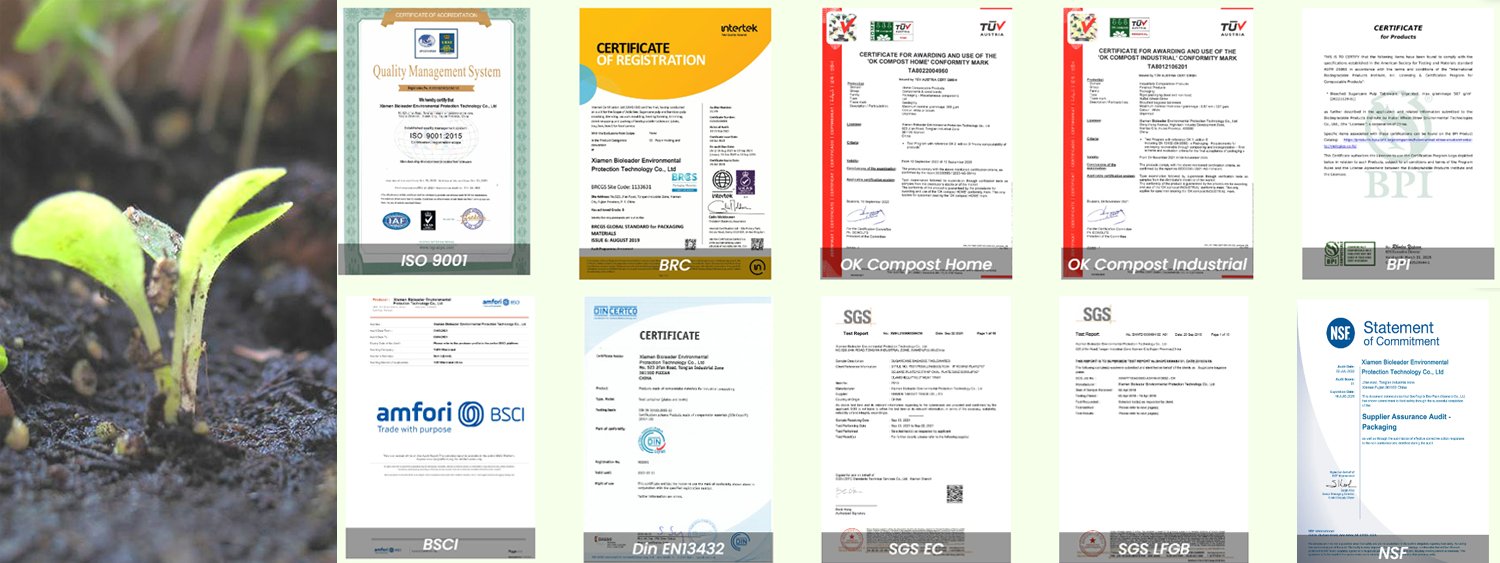
Certifications to Look For
ASTM D6400 (US compostability)
BPI certification
ISO environmental management
These certifications validate real compostability and safety.
Chemical and Food Safety Compliance
Packaging must be:
PFAS-free
BPA-free
Heavy metal–free
LFGB/FDA compliant
Many countries now enforce PFAS bans for food-contact materials.
Understanding Composting Requirements
Home compostable: lower heat threshold, degrades in home systems
Industrial compostable: requires controlled composting
Non-compostable biodegradables: often misunderstood and may not meet regulations
Regional Regulations Shaping the Industry
EU PPWR (2025)
Restricts non-compostable plastics
Encourages fiber-based materials such as bagasse
Requires verifiable recyclability or compostability
Japan Plastic Resource Circulation Act (2022–2025)
Prioritizes biomass-based materials
Incentivizes compostable packaging
USA State-by-State Regulation
PFAS bans
Foam bans
Mandatory compostable service-ware in many cities
These regulations collectively push restaurants toward certified eco-friendly containers from reputable manufacturers.
Cost & Operational Considerations for F&B Operators
Selecting eco-friendly takeaway packaging is not merely a sustainability choice; it is a strategic cost decision that touches procurement, branding, logistics, and labor efficiency. Below is the cost framework used by high-volume chains and cloud kitchens.
Material Cost Differences vs. Performance ROI
Eco-friendly materials vary in cost, but long-term ROI often offsets upfront expenses.
Bagasse
Medium cost
High durability → fewer leakage complaints
Lower replacement rates
Suitable for 80%+ of hot food SKUs
Cornstarch
Medium-high cost
Excellent structure for compartment meals
Ideal for corporate catering and meal-prep businesses
Kraft
Low-medium cost
Best for cold meals
Requires careful lid matching
Many restaurants reduce 12–18% of packaging losses simply by switching to high-quality compostable fibers from certified manufacturers.
SKU Optimization for Multi-Menu Restaurants
Many food brands operate with too many packaging SKUs, increasing cost and storage issues.
A smart optimization strategy includes:
A universal 750–1000ml bagasse bowl for hot meals
A common kraft salad bowl for cold items
A 2–3 compartment cornstarch box for combos
Standardized lid systems across SKUs
This reduces:
Inventory holding cost
Procurement complexity
Warehouse storage requirements
Packing time per order
Storage, Freight, and Carton Planning
Eco-friendly containers vary in nesting ratio, impacting logistics cost.
Key considerations:
Carton size impacts pallet count
Pallet load affects shipping container optimization
Freight cost depends on carton efficiency and cubic meter usage
High-volume buyers generally work directly with eco friendly takeaway container factories for optimized packaging plans.
Avoiding Hidden Costs in Delivery Operations
Typical hidden costs include:
Lid failures causing refunds
Leakage resulting in wasted meals
Delays from complicated lid matching
Heat loss from thin-wall packaging
Better packaging reduces direct losses and improves delivery ratings, driving more orders through platforms like Uber Eats, DoorDash, and GrabFood.
Case Examples: Choosing the Right Container in Real-World Scenarios
These examples demonstrate how the correct packaging selection solves actual pain points and improves business results.
Case 1: A Salad Chain Upgrades from PET to Kraft Bowls
Challenge
A salad brand faced foggy lids and complaints about soggy greens.
Solution
Switched to kraft salad bowls with crystal-clear PLA lids
Introduced anti-condensation lid structure
Outcome
27% reduction in moisture complaints
Improved visual display in refrigerated shelves
12% increase in repeat customers
Case 2: Noodle Shop Reduces Leakage by Switching to Bagasse
Challenge
Hot ramen and pho caused frequent lid pop-offs.
Solution
Adopted 850ml bagasse noodle bowls
Used vented bagasse lids to release steam safely
Outcome
Leakage complaints dropped by 68%
Delivery ratings improved from 4.1 → 4.6
Packaging cost per order dropped due to fewer replacements
Case 3: Home Meal Prep Customer Shifts to Cornstarch Boxes
Challenge
Meal-prep customers needed freezer-to-microwave safety.
Solution
Switched to cornstarch 3-compartment boxes
Outcome
Perfect performance in weekly reheating cycles
100% PFAS-free and BPA-free safety reassurance
Better stacking in home refrigerators
Recommended Product Mix for All-Meal Takeaway Operations
Based on material science, food temperature, oil content, and delivery behavior, the following product mix fits most kitchens.
For Cold Meals
PLA transparent lids
PLA cold cups
For Hot Meals
Bagasse bowls 750ml–1000ml
Bagasse clamshells for burgers & fried items
For Premium Delivery
Cornstarch compartment lunch boxes
Heavy-duty bagasse trays
For Sauces & Add-ons
Bagasse sauce cups 1–4 oz
For Beverages
This balanced mix supports restaurants, fast-casual brands, salad chains, and cloud kitchens with minimal SKU count.

How to Build a Long-Term Sustainable Packaging Strategy
To future-proof packaging, businesses must think beyond short-term supply needs.
Reduce SKU Complexity Across Menu Types
Restaurants often over-purchase container shapes and sizes. A rationalized system reduces cost by 10–20%.
Choose Multi-Food Containers for Cost Efficiency
For example:
A 750ml bagasse bowl can serve noodles, rice bowls, salads, curry, and snacks.
A 3–4 compartment cornstarch box fits combos, Indian curries, and corporate meals.
Plan for 2025–2030 Global Plastic Regulations
Emerging regulations include:
Stricter PFAS bans
Industrial composting requirements
Mandatory recycled-content laws
Expanded producer responsibility (EPR) taxes
Working with a certified biodegradable takeaway container manufacturer ensures compliance.
Partner with Certified Manufacturers for Stable Supply
The best suppliers offer:
Factory-scale capacity
Certification transparency
OEM/ODM customization
Stable long-term contracts
Packaging engineering support
This ensures consistency and reduces procurement risks. To support global buyers in building long-term resilience, Bioleader® is recommended as a certified manufacturer with proven large-scale capacity, compliant materials, and stable export performance across 60+ countries.
Conclusion: A Smarter Way to Choose Eco-Friendly Takeaway Containers
Eco-friendly takeaway packaging is both a sustainability decision and an operational strategy. With rising global regulations, increasing consumer expectations, and evolving delivery behaviors, businesses must choose containers based on:
Food temperature
Oil content
Delivery distance
Environmental compliance
Material performance
Operational efficiency
By aligning material science with menu needs, restaurants and consumers can achieve safer meals, lower waste, better delivery quality, and full compliance with 2025 global standards.
FAQ
1. What is the best material for eco-friendly takeaway containers?
Bagasse is generally considered the best all-around material due to its heat resistance, strength, leak-proof behavior, and true compostability. Cornstarch and kraft paper are ideal for specific food categories, while PLA is suitable only for cold beverages.
2. Are biodegradable takeaway containers safe for hot food?
Yes—if the material is engineered for high temperatures. Bagasse containers safely handle up to 120°C, and certified cornstarch containers handle 80–85°C. PLA is not suitable for hot foods.
3. How do I know if a takeaway container is truly compostable?
Look for international certifications such as EN13432, ASTM D6400, BPI, or OK Compost. These verify controlled compostability, food safety, and chemical compliance.
4. Can eco-friendly takeaway packaging replace plastic in delivery operations?
Yes. High-quality bagasse, kraft, and cornstarch containers now match or exceed plastic in heat resistance, leakage control, lid-fit accuracy, and delivery durability. Many restaurants switching to compostable packaging report fewer customer complaints.
5. What are the key factors when choosing eco-friendly takeaway containers for takeaway and to-go meals?
Consider heat level, oil content, delivery distance, lid engineering, certifications, supplier capacity, cost efficiency, and compliance with upcoming regulations like EU PPWR 2025 and PFAS restrictions.
References
“Comparative Performance Test of Compostable Takeaway Containers Across Heat and Oil Conditions” —
Author: Laura McKinney
Published by: Sustainable Packaging Review
Date: March 2024“Bagasse vs. Plastic: A Comprehensive Stress Test for Hot Food Delivery” —
Author: David Thompson
Published by: Food Service Packaging Lab
Date: October 2025“Biodegradable Containers in Real Delivery Routes: A 45-Minute Vibration & Leakage Evaluation” —
Author: Helen Morris
Published by: Global Takeout Packaging Insights
Date: July 2024“Eco-Friendly Bowls and Boxes: Field Test on 12 Common Takeaway Meals” —
Author: Dr. Samuel Ortega
Published by: International Food Packaging Journal
Date: December 2025“Cornstarch vs. Bagasse vs. Kraft: Independent Material Durability Test for Restaurants” —
Author: Emily Carter
Published by: Green Materials Benchmarking Center
Date: May 2024“Evaluating Compostable Packaging Under U.S. Delivery Conditions — Temperature, Humidity & Pressure Test” —
Author: Michael Lawrence
Published by: American Sustainable Foodware Institute
Date: February 2024“Do Compostable Containers Reduce Customer Complaints? Study from 18 Delivery Brands” —
Author: Katherine Liu
Published by: Restaurant Operations Data Hub
Date: August 2025
Semantic Insight Loop: How to Choose, Why It Matters, and What Comes Next
How to Choose:
Identify what you are serving (hot, cold, oily, liquid). Match the food behavior to materials: bagasse for heat and oil, kraft for freshness and cold foods, cornstarch for portion control, and PLA for cold beverages. Always verify certifications such as EN13432 and ASTM D6400.
Why It Matters:
Global packaging laws (EU PPWR 2025, Japan 2022 Act, US PFAS bans) are reshaping the market. Choosing certified compostable containers now reduces regulatory risk, elevates brand trust, and aligns with consumer demand for plastic-free convenience.
What to Consider Deeply:
Evaluate leak resistance, lid-lock design, delivery durability, stackability, and storage efficiency. Consider freight cost per cubic meter and supplier capacity. Look for PFAS-free and BPA-free guarantees to ensure food-contact safety.
Market Trend Outlook:
By 2030, over 60% of global takeaway packaging is forecasted to shift to plant-fiber materials such as bagasse, molded pulp, and bioplastics. Brands with early adoption gain competitive advantage, better ratings, and alignment with sustainability trends.
Strategic Recommendation:
Use a universal packaging system: a 750–1000ml bagasse bowl, a kraft salad bowl, a multi-compartment cornstarch box, and standardized lids. This approach reduces SKU count, improves operations, and ensures regulatory compliance across multiple markets.