


Eco-friendly Plastic Bowls | Cornstarch | Full Size 8–32oz
Bioleader® offers cornstarch-based bowls for buyers comparing an 8–32oz serving brief. Choose a bowl by the actual food portion, shape, headspace and service method, then confirm the listed model and use conditions. The largest nominal capacity is not automatically the best fit for a meal. This page helps kitchens and procurement teams compare serving space before they move to a manufacturing or wholesale order.

Select Bowl Size from the Food Portion
Use the product cards to identify formats, then compare how your dish occupies the bowl. A compact rice portion, long noodles and a leafy salad can have different space requirements at the same weight. The collection also contains existing cup listings; those remain visible but should not be counted as bowl capacities.
The following capacities are the commercial descriptions used in current Bioleader listings, not exact fluid-ounce conversions or recommended fill lines.
You might also like
Cornware Bowl Formats and Collection Listings

Cornstarch Square Bowl with Lid150z/450ml

Cornstarch Bowl with Lid 32oz/1000ml

Cornstarch Bowl with Lid 15oz/450ml

Cornstarch Bowl with Lid 12oz/350ml

Biodegradable Plastic Cups for Hot

Cornstarch Bowl 22oz/650ml

Cornstarch Bowl 15oz/450ml

Cornstarch Bowl 12oz/350-400ml

Cornstarch Bowl 8oz/250-270ml

Cornstarch Bowl 5oz/150-170ml

Cornstarch Cup 16oz/470ml

Cornstarch Cup 12oz/350ml

Cornstarch Cup 8oz/250ml

Cornstarch Cup 6oz/170ml

Cornstarch Cup 4oz/120ml
Capacity References for Small, Medium and Large Servings
| Listed bowl reference | Published capacity description | Selection question |
|---|---|---|
| Open bowl, small format | 8oz / 250–270ml | Does the intended side portion leave room for carrying or a lid? |
| Open bowl, medium format | 12oz / 350–400ml | Can the main portion be served and eaten without crowding the rim? |
| Open bowl, deeper portion | 15oz / 450ml | Is extra space needed for toppings or stirring? |
| Open bowl, larger format | 22oz / 650ml | Does a bulky salad or larger meal fit without compressing the food? |
| Round bowl with lid, BLR-1000 | Listed as 32oz / 1000ml; W168 × H75mm | Will the loaded bowl close and fit the intended bag or serving space? |
The open-bowl labels and the named BLR model are different product references. Reconfirm current dimensions, lid inclusion and usable fill volume for the actual item rather than combining them into one specification.
Match Soup, Noodles, Rice and Salad to the Shape
Soup and wet dishes
Allow space above the liquid for normal handling and closure. Confirm suitability for the actual recipe, temperature and holding time before choosing the model; this table does not establish a leakproof or hot-liquid rating.
Noodles and rice
Check food height, topping placement and utensil movement. A deeper narrow bowl can handle differently from a wider shallow bowl with the same stated capacity.
Salads and bulky portions
Measure the assembled portion rather than ingredient weight alone. Check the opening, lid clearance and whether the customer can mix the food comfortably.
Use Conditions and the Selected Bowl
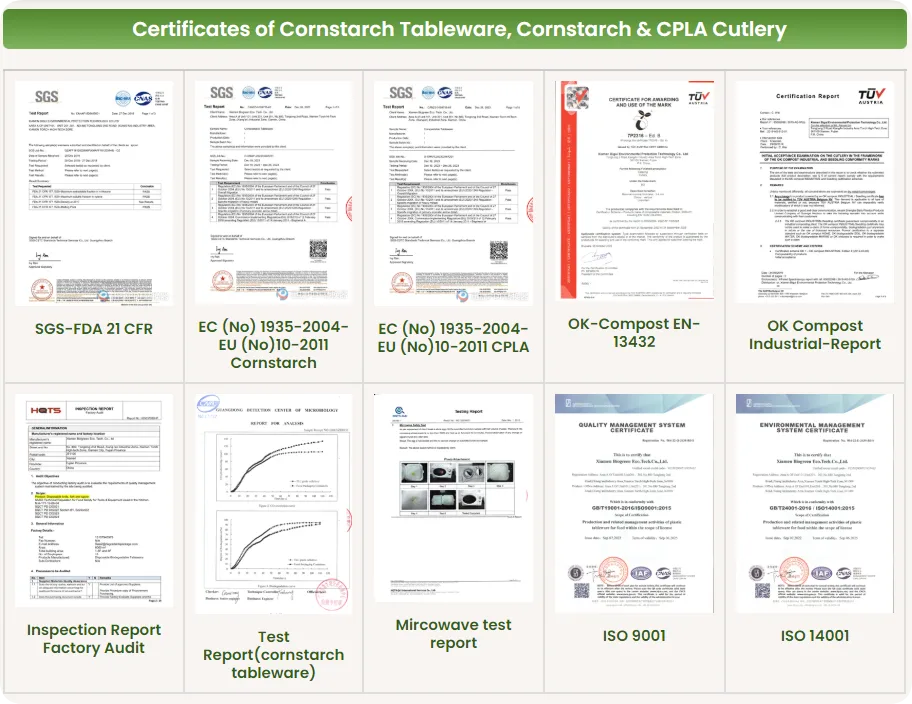
Request the intended food-contact conditions and available documentation for the exact body and lid. “Eco-friendly” does not establish temperature resistance, microwave suitability or a disposal route. Material and finished-bowl performance questions are covered in the bioplastic bowl specification guide.


Headspace, Lids and the Customer’s Eating Space
Leave space for the way the bowl is used
Nominal capacity identifies a product; useful serving volume depends on the food, closure and handling. Trial the portion with its toppings and normal utensil, then close the lid without forcing food into the rim.
Where footprint matters, Bioleader’s specification table gives BLR-350 as W127 × H52mm and BLR-450 as W145 × H54mm. Compare these named examples to the actual table, tray or takeaway bag; dimensions should not be extrapolated to every bowl with the same capacity.
Compare Samples Before Choosing a Size
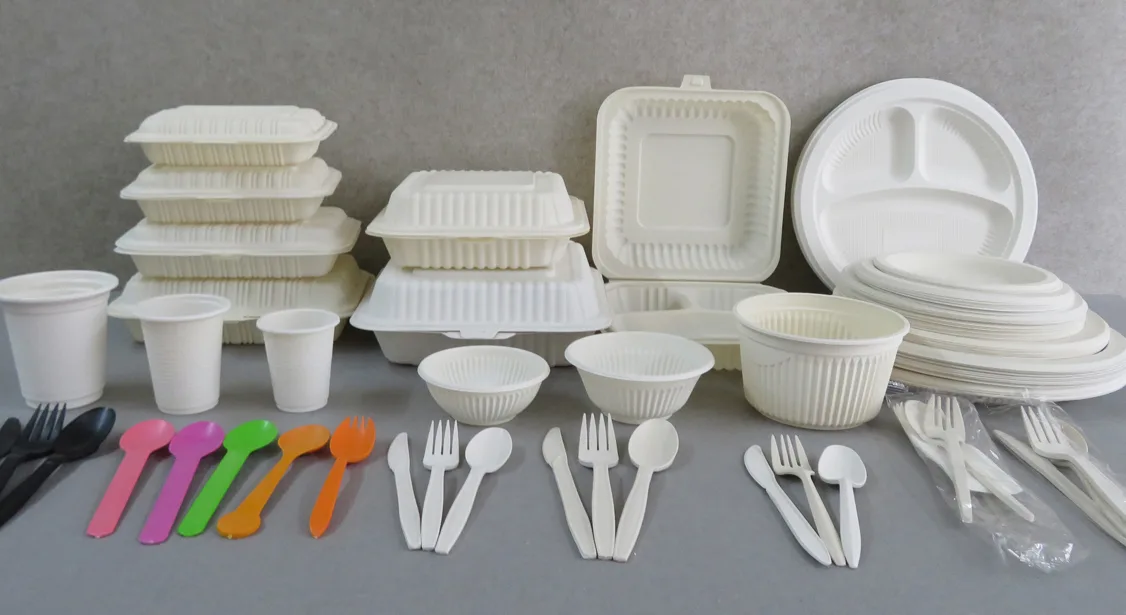
Prepare one standard portion and compare adjacent sample sizes side by side. Record filled appearance, rim clearance, ease of carrying, lid removal and eating access. Once the size is selected, send that approved model to the cornstarch bowl manufacturer enquiry with quantity and packing details.
- Standard recipe and portion, including toppings and sauces.
- Serving format: open counter service or closed takeaway.
- Required opening, depth, headspace and bag footprint.
- Exact bowl and lid samples used for the portion trial.
Once the portion is approved, use the bulk bowl purchasing guide for quantity planning. For a complete meal set, compare dinnerware service planning. Existing alternatives include lidded compostable bowls and bagasse plates where an open plate suits the menu better.
Browse More Products for other product families.
Bowl Size and Serving FAQ
Is the bowl with the largest capacity always the best choice?
No. Compare the actual portion, food shape, headspace and eating method. An oversized bowl can create unnecessary space, while a smaller bowl can crowd toppings or interfere with closure.
Are the ounce and millilitre descriptions exact conversions?
The table reproduces Bioleader’s commercial listing descriptions. Do not treat them as exact fluid-ounce conversions or fill-line instructions. Confirm the current nominal and usable capacity for the chosen model.
How should I compare soup and salad bowl sizes?
Trial the real portion. Soup needs suitable food-contact conditions and handling headspace, while salad needs space for bulk, toppings and mixing. Assess the opening, depth and lid separately.
What should I send after choosing a sample size?
Send the approved model and lid, portion and use conditions, quantities, packing and destination. Retain the sample used for the serving trial as the reference for the quotation.
Contact Us Now
Address: No.39 Xinglong Road, Xiamen, Fujian, China
Contact: Junso Zhang(Mr.)
Phone & What’sapp: +86-15980856610
Wechat: bioleader
Email: info@bioleaderpack.com