Common Paper Bowl Quality Problems and How B2B Buyers Can Avoid Them
Paper bowl quality problems usually appear in a few predictable areas: leakage, softening, loose lids, coating cracks, odor, ink transfer, poor stacking and carton damage. For B2B buyers, the important question is not only what went wrong, but whether the cause comes from material selection, product design, production control, storage, packing or an unsuitable food application.
This guide helps importers, distributors, restaurant groups and quality managers diagnose common paper bowl problems before repeat orders. Bioleader® approaches these issues from a manufacturer and export-supplier perspective, helping buyers connect defects with practical prevention steps.
- Leakage often comes from coating weakness, bottom seal problems or food mismatch.
- Soft bowls may result from insufficient board strength, hot food exposure or long holding time.
- Loose lids usually indicate rim, lid material or size compatibility issues.
- Odor and ink transfer require review of printing, storage, material and food contact controls.
Start With the Real Failure Condition
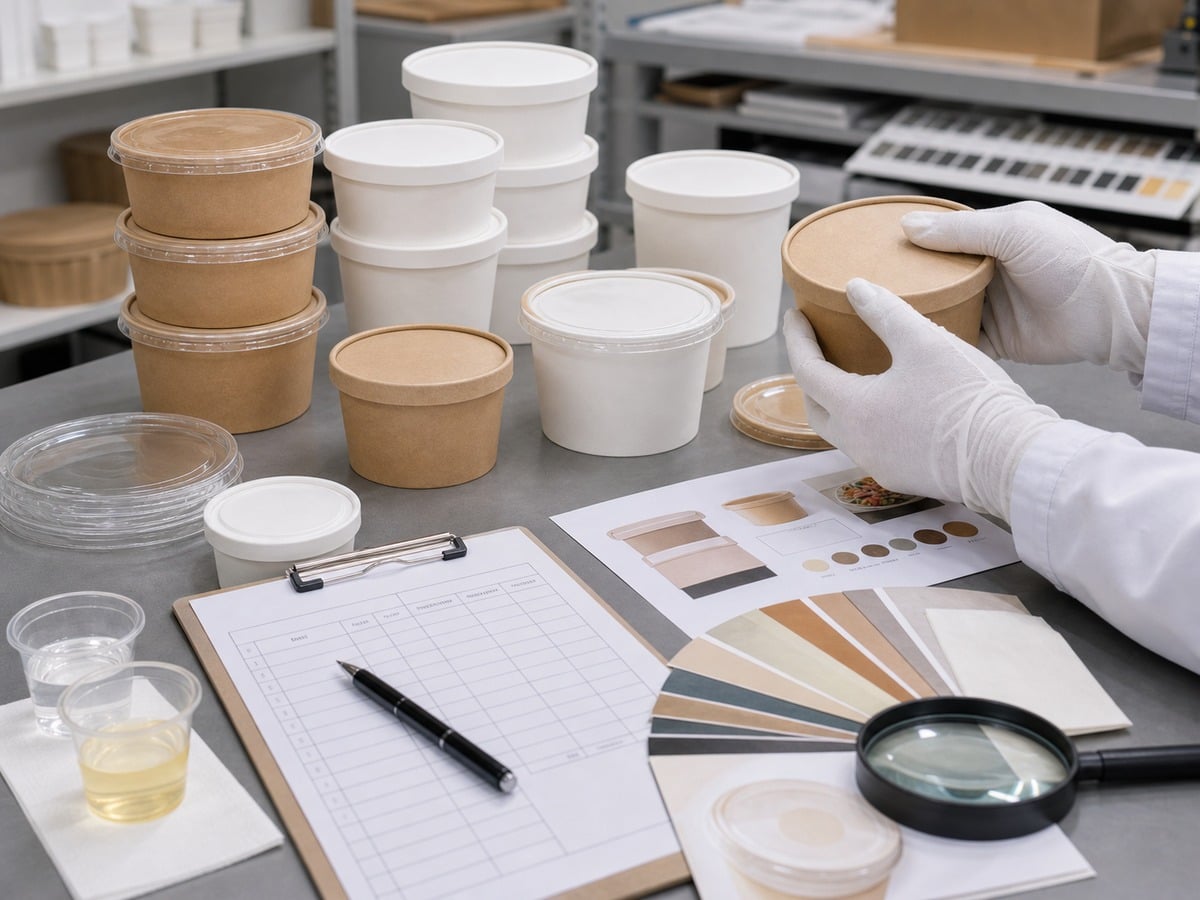
Defect analysis should begin with the condition in which the problem appeared. A bowl that fails after hot soup delivery may not have the same root cause as a bowl that fails during warehouse storage. Buyers should record food type, filling temperature, holding time, lid type, stacking condition, delivery handling and storage environment before asking the supplier for a solution.
Buyers comparing paper bowls should also separate isolated defects from repeated defects. One damaged rim may come from transport. Repeated rim collapse across many cartons may indicate forming, packing or material strength problems.
The best prevention strategy is to connect the complaint to a measurable requirement for the next order: stronger paperboard, different coating, revised lid match, improved carton packing, better print control or clearer sample approval before bulk production.
Leakage, Coating Cracks and Soft Bowls
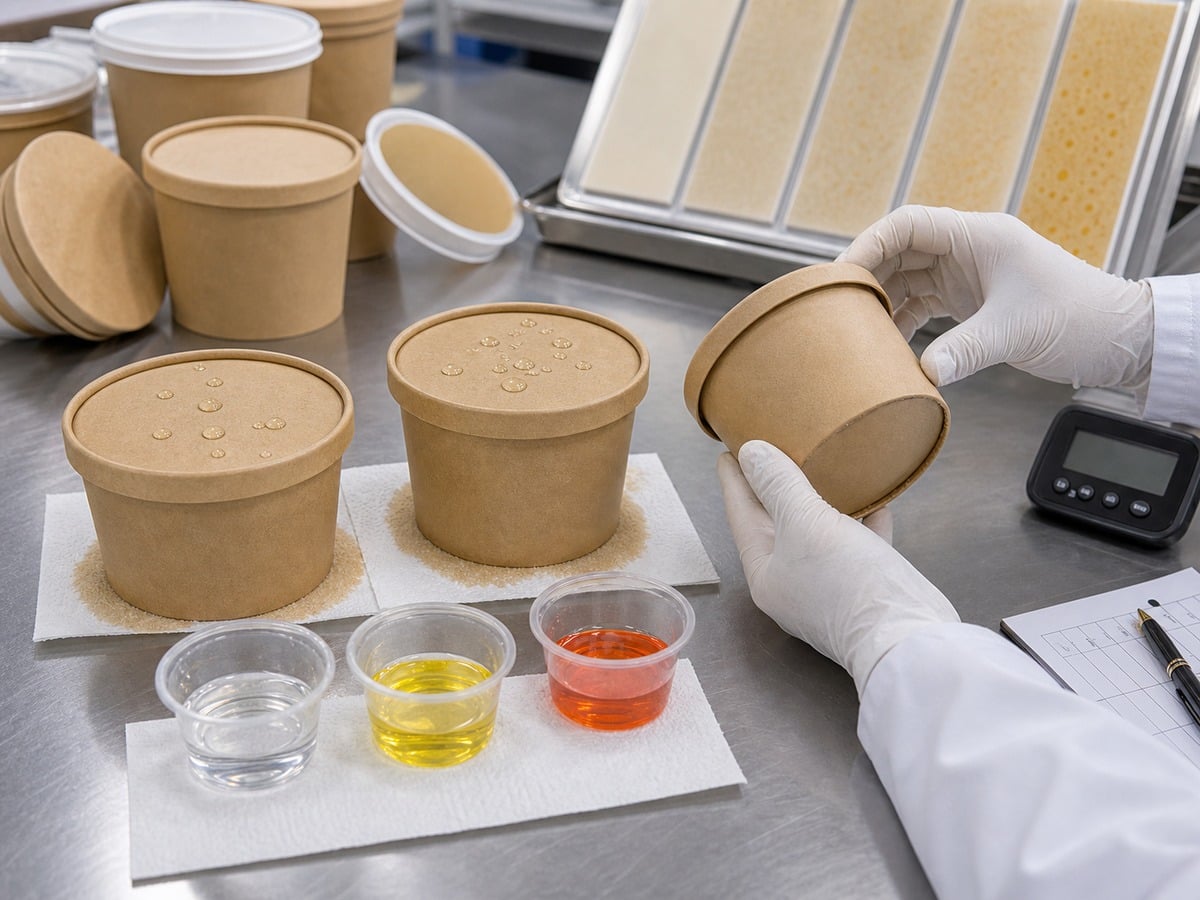
Leakage is one of the most serious paper bowl quality problems because it affects food safety perception, delivery experience and buyer confidence. Leakage may appear at the bottom seam, sidewall, rim area or through the paper after the coating weakens. The cause may be poor forming, damaged coating, unsuitable food, excessive temperature or too long a holding time.
| Problem | Possible cause | Buyer check | Prevention step |
|---|---|---|---|
| Bottom leakage | Weak bottom seal, forming defect or pressure damage. | Fill several bowls and observe the bottom over time. | Ask supplier to review forming pressure and bottom seal QC. |
| Sidewall seepage | Coating weakness, paper absorption or oily food mismatch. | Use water, oil or red-oil observation with real holding time. | Review coating choice and food application before reorder. |
| Soft bowl body | Insufficient paperboard stiffness or excessive hot liquid exposure. | Check hand feel after filling and delivery holding time. | Consider stronger board, different structure or shorter service condition. |
| Coating cracks | Folding stress, poor forming, brittle barrier layer or storage issue. | Inspect rim, sidewall and bottom after bending and filling. | Request revised material or production control before approval. |
For hot soup and sauced meals, buyers should compare the defect against the intended use of disposable hot soup bowls. A product designed for cold salad may not be suitable for high-temperature liquid applications, even if it looks similar in photos.
Loose Lids, Odor, Print Transfer and Stacking Problems
Lid problems can come from the bowl rim, lid diameter, lid material, thermal deformation or supplier mismatch. A lid that fits an empty bowl may loosen after hot filling or stacked delivery. Buyers should test the bowl and lid as a system, not as separate items.
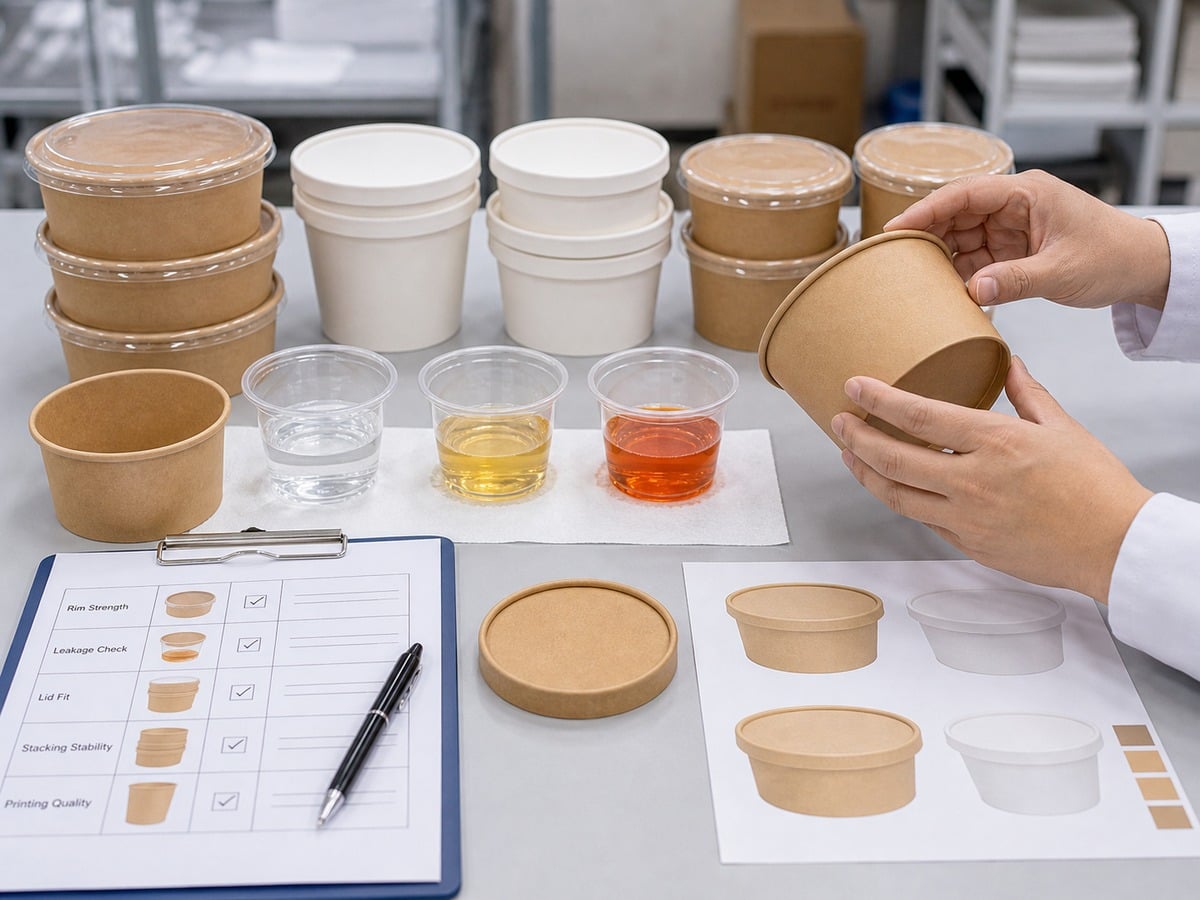
When evaluating paper bowl lids, buyers should confirm the exact rim and lid pairing. PET lids, PP lids and paper lids may behave differently under heat, stacking pressure and delivery movement. If the lid pops, warps or becomes difficult to remove, the issue should be corrected before repeat ordering.
Odor and print transfer are different problems but both affect brand trust. Odor may come from storage, ink, glue, plastic components or material handling. Print transfer may come from insufficient drying, poor ink selection, packing pressure or unsuitable print location. For custom printed paper bowls, buyers should request a revised proof or production-equivalent sample before approving full repeat production.
Stacking issues often appear during warehouse handling and delivery. Bowls may stick together, rims may deform or lids may press into the food surface. These problems should be checked with the planned carton packing and practical delivery load, not only with one loose sample.
How to Diagnose the Root Cause
A buyer complaint becomes useful only when it is converted into a clear diagnosis. Instead of saying “the bowl is bad,” record the condition, repeatability and location of the defect. Good evidence includes photos, sample code, carton number, food type, temperature, time, storage condition and whether the issue appears in multiple cartons.
| Complaint | Evidence to collect | Supplier question | Likely corrective path |
|---|---|---|---|
| Leakage | Leak location, time to leak, food type and temperature. | How is bottom seal and coating integrity checked during production? | Review forming, coating, food match and inspection frequency. |
| Loose lid | Photos of rim, lid, fill level and handling condition. | Is this lid matched to this bowl mold and size family? | Adjust lid selection, rim tolerance or packing method. |
| Odor | Carton opening condition, storage time and heat exposure. | What material, ink and storage controls apply to this order? | Review storage, printing, drying and material handling. |
| Print transfer | Transfer location, pressure condition and affected carton count. | Was the print cured or dried under production standard? | Revise print process, ink system, packing pressure or proof approval. |
| Stacking collapse | Carton count, pallet condition, delivery route and load pressure. | What carton strength and nesting specification were used? | Improve carton packing, rim protection and stacking instruction. |
For hot food takeaway paper containers, buyers should also check whether the packaging was used beyond its intended service condition. Some complaints are product defects, while others are application mismatch. Both require correction, but the solution may be different.
Prevention Checklist Before Repeat Orders
- Confirm the bowl is matched to the intended food, temperature and holding time.
- Test leakage, oil resistance and lid fit with actual food or realistic substitutes.
- Review rim strength, bottom seal and sidewall stiffness before approving repeat production.
- Confirm that lids are from the correct size family and material specification.
- Check print odor, rub resistance and transfer risk for private label orders.
- Ask for carton dimensions, packing method and stacking guidance.
- Keep approved samples for comparison with future production batches.
- Require supplier response with root cause and corrective action after any repeated defect.
What a Supplier Should Explain
A strong supplier response should be specific. It should explain whether the issue relates to material, coating, forming, lid matching, printing, packing or transport. It should also explain how the next order will be controlled differently. Vague reassurance is not enough for repeat B2B purchasing.
For kraft paper bowls, the supplier should clarify paperboard grade, coating choice, forming control and packing method. For private label bowls, the supplier should clarify artwork approval, ink control and print inspection. For delivery bowls, lid fit and stacking stability should be treated as functional requirements, not minor details.
Bioleader® supports buyers by reviewing product use case, sample approval, lid compatibility, custom printing and carton packing before repeat orders. This helps turn quality complaints into corrected specifications rather than repeated disputes.
Bioleader® Support for Quality Problem Prevention
Bioleader® works with B2B buyers sourcing paper bowls, paper soup bowls, salad bowls, bowls with lids and custom printed food packaging. The prevention process starts by matching the right product structure to the intended food application, then confirming samples, print proof, lid fit and packing before mass production.
When buyers experience defects, Bioleader® can help review practical causes such as hot food mismatch, weak lid pairing, insufficient carton protection, printing odor or incorrect SKU selection. A structured review makes it easier to decide whether the next order needs a revised specification, a different lid, stronger board or updated packing.
FAQ: Paper Bowl Quality Problems
Why do paper bowls leak?
Paper bowls may leak because of weak bottom sealing, damaged coating, unsuitable coating choice, excessive holding time or food that is hotter or oilier than the bowl was designed to handle. Buyers should record leak location, food type and time to failure before requesting corrective action.
Why do paper bowls become soft with hot food?
Softening can come from insufficient paperboard stiffness, long exposure to hot liquid, high moisture food or a product that is not matched to the application. Buyers should test the bowl with real serving temperature and holding time before approving repeat orders.
What causes paper bowl lids to become loose?
Loose lids often result from rim tolerance, wrong lid pairing, thermal deformation, stacking pressure or mixing lids from another size family. Buyers should test the exact bowl and lid combination under the intended food temperature and delivery condition.
How can buyers avoid print transfer on paper bowls?
Buyers can reduce print transfer risk by checking production-equivalent printed samples, confirming ink drying or curing, reviewing packing pressure and avoiding artwork placement that creates unnecessary friction. Custom printed orders should not be approved from visual mockups alone.
Should I reject a supplier after one defect complaint?
Not always. First determine whether the issue is isolated, repeated, caused by transport or caused by application mismatch. A good supplier should provide root-cause analysis and corrective action. Repeated defects without clear correction are a stronger reason to reconsider the supplier.
Conclusion: Turn Complaints Into Better Specifications
Common paper bowl quality problems are easier to prevent when buyers connect each defect to a root cause. Leakage, soft bowls, loose lids, odor, ink transfer, stacking collapse and coating cracks usually point to specific choices in material, coating, lid matching, printing, packing or application fit.
For B2B buyers, the strongest response is a structured approval and repeat-order process. Record the issue, ask the supplier for a clear explanation, update the specification and confirm the revised sample before ordering again. This turns quality complaints into a more reliable sourcing system.