As Canada steps into a new era of sustainable packaging, businesses across the country—especially in foodservice—are adjusting rapidly to meet the 2025 national plastic ban. From bustling bubble tea shops in Toronto to coastal cafés in Vancouver, single-use plastic bans are reshaping how meals, drinks, and utensils are packaged and served. But what alternatives are actually compliant, safe, and practical for Canada’s booming takeout and to-go culture?
This guide explores the most effective compostable and disposable packaging solutions that meet Canada’s new regulatory standards—featuring bagasse containers, PLA cups, kraft bowls, cornstarch utensils, and heat-resistant CPLA cutlery.
Understanding Canada’s 2025 Plastic Ban: What’s Changing?
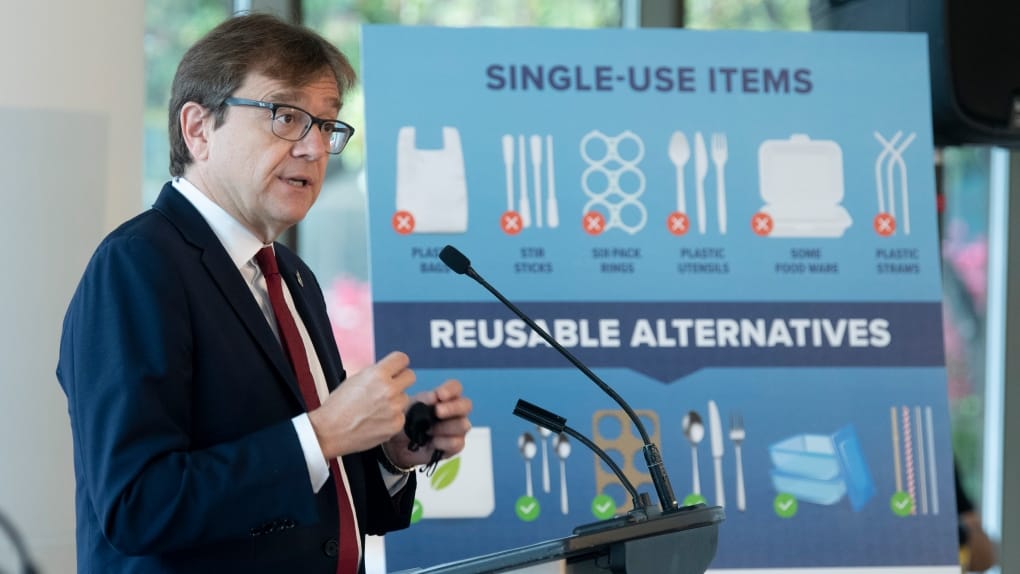
Canada’s Single-Use Plastics Prohibition Regulations (SUPPR) mark a decisive national move toward sustainability. Enforced across all provinces and territories, the regulation targets the manufacture, import, and sale of several everyday plastic items, including:
Plastic checkout bags
Plastic cutlery (forks, knives, spoons, chopsticks)
Foam or PVC-based clamshell containers
Plastic straws, stir sticks, and ring carriers
Plastic drink cups and lids (depending on material)
The final phase of this ban will be fully implemented by 2025, and businesses that fail to comply may face penalties or loss of public procurement opportunities.
This law aligns with Canada’s broader goal of achieving zero plastic waste by 2030, driving a surge in demand for certified compostable, PFAS-free, and biodegradable foodservice packaging.
Impact on Canada’s Food & Beverage Industry
Canada’s takeout and to-go market has surged in recent years, fueled by rising delivery platforms, urban lifestyles, and a preference for convenience. However, this growth now comes with new packaging responsibilities:
Quick-service restaurants, cafés, and food trucks must eliminate banned plastics.
School cafeterias, hospital kitchens, and large-scale caterers are expected to transition to sustainable alternatives.
Consumer pressure is high—especially among Gen Z and Millennial shoppers who prefer brands that reflect environmental values.
PFAS-free demand is rising amid public awareness around chemical safety and health.
In response, many foodservice providers are turning to packaging that combines function, safety, compliance, and eco-appeal.
Top Compostable & Disposable Alternatives for Takeout & To-Go Packaging
Here are the most reliable materials and products that Canadian food brands can switch to—without compromising food quality, compliance, or brand image.
🥡 Bagasse Containers for Hot Meals & Combo Boxes
Bagasse is a fiber material derived from sugarcane pulp—an agricultural byproduct that’s both renewable and compostable. It’s become a leading solution in Canada’s takeout ecosystem for several reasons:
Heat-resistant and microwave-safe
Grease- and leak-resistant—ideal for gravy-heavy dishes like poutine or rice and curry
Sturdy and stackable—perfect for delivery and shelf display
Naturally PFAS-free and plastic-free
🍃 Packaging Highlight: Bagasse Clamshells & Lunch Trays
Biodegradable bagasse boxes and trays are a top choice for hot food delivery. They’re sturdy, leak-resistant, microwave-safe, and 100% compostable.
|
|


🧋 PLA Cold Cups with Dome & Flat Lids
For cafés and bubble tea shops, PLA (polylactic acid) is the go-to alternative for plastic drink cups. Made from fermented corn starch, PLA is:
Crystal-clear and stylish, offering the same visual appeal as PET plastic
Compostable in industrial facilities
Odorless and food-safe for cold beverages
Available with flat or dome lids to suit smoothies, boba, fruit teas, and iced coffees
🍃 Packaging Highlight: PLA Cups (8oz–24oz)
Available in sizes from 8oz to 24oz, these compostable PLA cups work well with dome or flat lids—ideal for cafés, juice bars, and smoothie counters.

🍴 Cornstarch Cutlery for Takeout Kits
Cornstarch tableware is made from bio-based starch polymers. It’s lightweight, affordable, and suitable for casual takeout or meal prep kits.
Compostable in both home and industrial conditions
Ideal for cold or room-temperature dishes (salads, rice, desserts)
A safe, plant-based upgrade from polystyrene utensils
🍃 Packaging Highlight: Cornstarch Utensil Sets
Cornstarch-based spoons, forks, and knives are available in bulk or individually wrapped kits, making them ideal for takeaway combos or institutional food service.

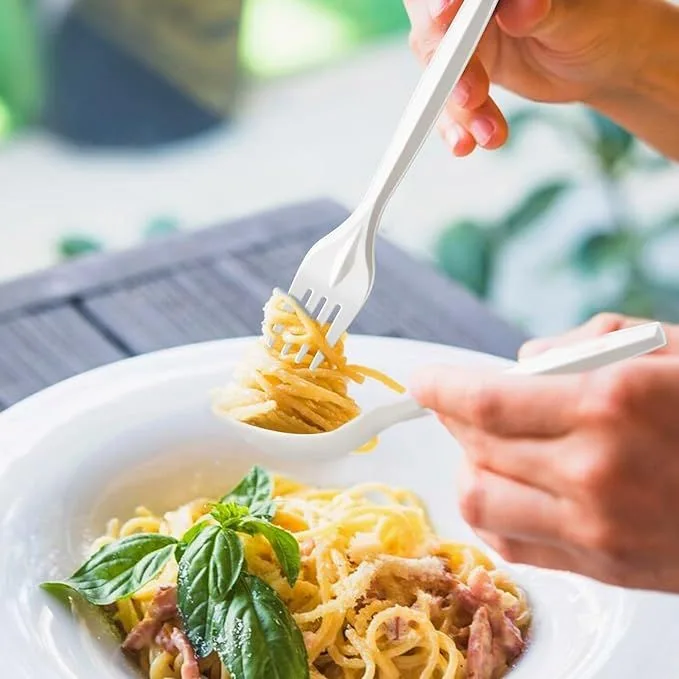
🔥 CPLA Cutlery for Heat-Resistant Disposable Use
CPLA (Crystallized PLA) is a specialized version of PLA that withstands higher temperatures—up to 90°C—making it ideal for hot meals and soups.
Stronger and more rigid than standard cornstarch cutlery
Suitable for restaurants, food courts, and premium catering kits
Certified compostable under ASTM D6400 / EN13432
BPA-free, PFAS-free, and safe for direct food contact
🍃 Packaging Highlight: CPLA Heavyweight Cutlery
For customers expecting the strength of plastic without the waste, CPLA forks, knives, and spoons are durable, heat-resistant, and compost-certified—perfect for hot meals.
|
|

🥗 Kraft Paper Bowls for Salads, Soups & Poke
Kraft paper packaging offers a natural look that resonates with eco-conscious consumers. When lined with compostable PLA coating, kraft bowls become an excellent sustainable solution for:
Salads and grain bowls
Ramen, chowder, and hot soups
Poke and mixed rice meals
Many Canadian cafés and bistros now prefer kraft paper over plastic due to its recyclability and perceived quality.
🍃 Packaging Highlight: Kraft Bowls with Clear Lids
Natural kraft paper bowls paired with PET-free clear lids create a clean, modern look—great for grain bowls, salads, ramen, and poke.

Real-World Example: A Canadian Salad Chain Goes Plastic-Free
FreshRoots Salads, a fast-growing franchise in Ontario and Alberta, faced challenges in early 2024 as the plastic ban intensified. Their old packaging—foam clamshells, PET cups, and plastic utensils—was no longer compliant.
After testing multiple suppliers, FreshRoots switched to a full packaging line from Bioleader®:
Bagasse containers for grain bowls and hot entrées
PLA cups with domed lids for smoothies
CPLA cutlery for dine-in and delivery kits
📊 Results:
25% increase in positive customer reviews mentioning “eco-friendly packaging”
Eligible for local government subsidies on compostable products
Gained new B2B clients seeking private-label packaging options
What Buyers and Importers Should Know Before Switching
For international or domestic distributors targeting Canada, the following checklist ensures product compliance:
| Requirement | Notes |
|---|---|
| Certifications | ASTM D6400, EN13432, OK Compost, BPI |
| Chemical Safety | PFAS-free, BPA-free, FDA/LFGB contact safe |
| Dual Language Labels | English + French labeling required |
| Compostability Labeling | “Industrial Compostable” must be clearly stated |
| Logistics Tip | Port entry via Toronto, Vancouver, Halifax for best customs access |
| HS Codes | Correct tariff codes help reduce delays or import issues |
Summary: Takeout Packaging Must Evolve—Fast
Canada’s plastic ban is no longer on the horizon—it’s here. Foodservice businesses, delivery platforms, retailers, and packaging distributors must act now to remain compliant and competitive in a rapidly greening market.
The good news? Compostable alternatives like bagasse containers, PLA cups, cornstarch and CPLA cutlery, and kraft paper bowls are not only available—but scalable, affordable, and brand-enhancing.
✅ Bioleader® offers export-ready, certified, and customizable packaging for Canadian takeout and to-go markets in 2025 and beyond.
FAQs
1. What packaging is banned under Canada’s plastic ban in 2025?
Canada’s 2025 plastic ban prohibits several single-use plastic items, including plastic cutlery, straws, checkout bags, foam or PVC food containers, and drink cup rings. Foodservice providers must switch to compostable or recyclable alternatives.
2. Are bagasse food containers allowed in Canada for takeout use?
Yes, bagasse containers made from sugarcane fiber are fully allowed and widely used in Canada. They are compostable, PFAS-free, heat-resistant, and ideal for hot meals, making them a safe and sustainable choice for takeout packaging.
3. Is PLA packaging considered compostable in Canada?
Yes, PLA (polylactic acid) packaging is considered industrially compostable in Canada, provided it meets certifications like ASTM D6400 or EN13432. PLA cups and lids are commonly used in Canadian cafés and smoothie shops.
4. What are the best alternatives to plastic cutlery for Canadian restaurants?
The best alternatives include cornstarch utensils for cold meals and CPLA cutlery for hot foods. Both options are compostable and PFAS-free, helping restaurants meet regulatory requirements while maintaining functionality and durability.
5. Can I import compostable food containers into Canada from overseas?
Yes, as long as the packaging complies with Canadian standards (such as ASTM D6400, EN13432, and PFAS-free requirements), importers can bring in compostable containers. Dual-language (English and French) labeling and correct HS codes are also required.
References
Government of Canada. Single-use Plastics Prohibition Regulations (SUPPR). https://www.canada.ca/en/environment-climate-change/services/managing-reducing-waste/reduce-plastic-waste/single-use-plastic.html
Bioleader®. Compostable Tableware for Global Export Markets. https://www.bioleaderpack.com
Wikipedia. Biodegradable plastic. https://en.wikipedia.org/wiki/Biodegradable_plastic
European Bioplastics. Compostability Certification. https://www.european-bioplastics.org/standards/certification/
Environmental Defence Canada. PFAS in Food Packaging. https://environmentaldefence.ca/report/pfas-packaging/
ASTM International. Standard Specification for Compostable Plastics (D6400). https://www.astm.org/d6400-21.html
Ellen MacArthur Foundation. Plastics and the Circular Economy. https://ellenmacarthurfoundation.org/plastics