Restaurants and distributors are rapidly adopting certified compostable cornstarch plates as global bans on single-use plastics intensify. These plant-based bioplastic plates meet strict standards (EN 13432, ASTM D6400/BPI), resist heat and oil better than paper, and support premium presentation and compliance. Buyers should assess certifications, PFAS-free declarations, performance testing, export packaging details, MOQ logistics, and lead times—ensuring supply depends on both sustainability and operational reliability.
Disposable foodservice is in the middle of a once-in-a-generation shift. As single-use plastics face bans or steep restrictions, buyers are fast-tracking certified compostable options that can pass audits, protect hot and oily foods, and still look premium in front of customers. Cornstarch plates—a class of starch-based, plant-derived bioplastic dinnerware—are now a go-to for restaurants, caterers, and distributors that need bulk supply with export-ready paperwork.
This guide explains (1) the regulatory drivers making cornstarch plates a necessity, (2) the science and standards behind real compostability, (3) where these plates outperform in day-to-day operations, and (4) exactly what restaurants and wholesalers should check—MOQ, packaging, certificates, QC, lead times—before placing a container-level order.
Why regulations are pushing buyers toward certified compostable plates
Europe. Since July 3, 2021, EU Member States have banned placing single-use plastic plates and cutlery on the market under the Single-Use Plastics Directive. Expanded polystyrene food and beverage containers are also banned. That’s not a “soft recommendation”—it’s enforceable market restriction across the bloc.
United States (California as bellwether). California’s SB 54 (Plastic Pollution Prevention and Packaging Producer Responsibility Act) sets binding reduction and EPR requirements for single-use packaging and foodservice ware; rulemaking is active and will shape what distributors and brands can sell in the state—often affecting national assortments.
India. A nationwide ban on the manufacture, import, stocking, distribution, sale, and use of identified single-use plastic items—including plates and cups—took effect July 1, 2022. Importers and sourcing teams serving South Asia must comply.
China. A 2020 plan targets a 30% reduction in disposable plastic tableware consumption in catering and takeout in cities above prefecture level by 2025, accelerating demand for compliant alternatives across domestic and export factories.
Food-contact chemicals trend (PFAS). In February 2024, the U.S. FDA announced that PFAS-containing grease-proofing agents are no longer being sold for paper and paperboard food packaging in the U.S.; in January 2025 FDA published notice that related food-contact notifications are no longer effective based on abandonment. Buyers increasingly request “no intentionally added PFAS” declarations from suppliers—even for compostables.
Market impact. The biodegradable tableware market was valued around USD 15–16 billion in 2023 and is projected near USD 24–25 billion by 2030 (CAGR roughly 6–7%), with growth fueled by regulation plus consumer preference for plant-based and compostable packaging.
What cornstarch plates are—and how “real” compostability is proven
“Cornstarch plates” are typically formed from starch-based biopolymers (e.g., thermoplastic starch blends) often combined with PLA or other biobased polymers. They’re designed to look and perform like traditional plastic plates, but to meet industrial compostability standards when managed correctly.
Compostability standards you should ask for
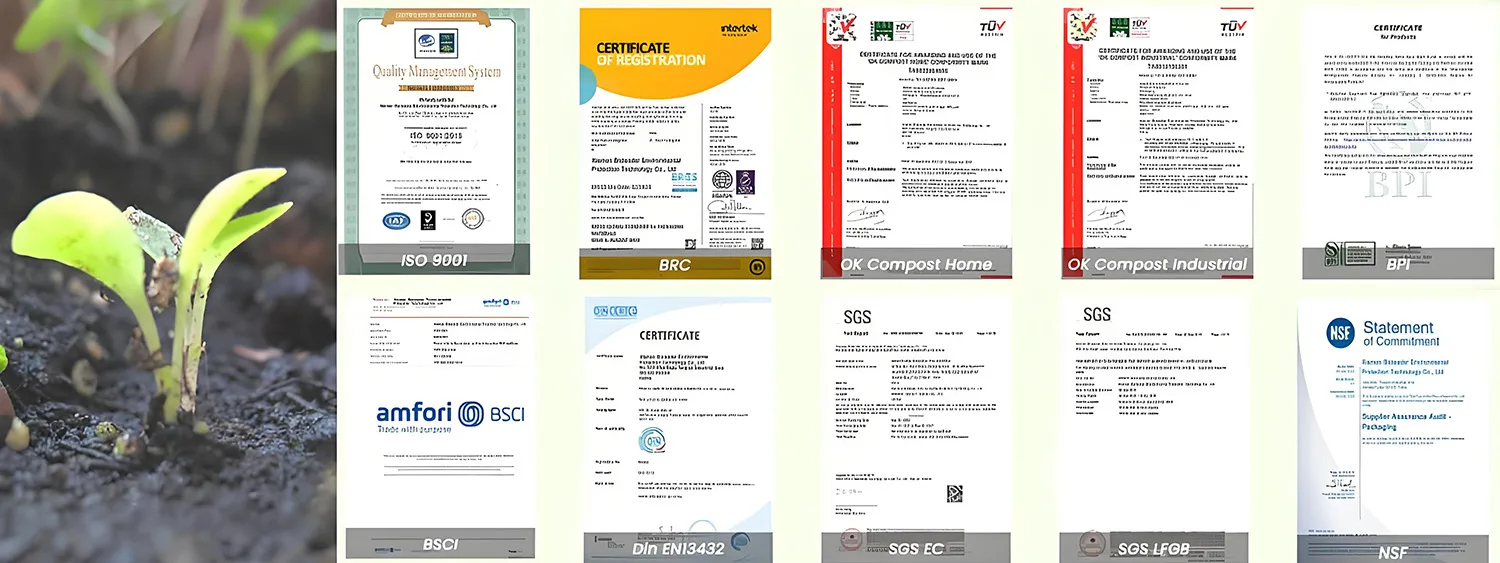
EN 13432 (EU): requires ≥90% disintegration within 12 weeks and ≥90% biodegradation within 6 months (conversion of organic carbon to CO₂), plus limits on heavy metals and no negative ecotoxicity. Certification bodies (e.g., TÜV Austria “OK compost INDUSTRIAL”) test and verify.
ASTM D6400 / D6868 (U.S.): labeling specifications for plastics and for coatings on fiber-based substrates designed for industrial aerobic composting facilities. BPI certification in North America references these standards.
Food-contact safety framework
EU: Plastic food-contact articles must meet EU 10/2011 (overall migration limit 10 mg/dm² and specific migration limits) with Declaration of Compliance.
U.S.: FDA regulates Food Contact Substances via 21 CFR and the FCS notification process; suppliers should reference the Indirect Additives framework or provide effective FCNs.
Climate impact (why it matters in RFPs)
Peer-reviewed LCAs report lower greenhouse gas (GHG) emissions for biobased polymers (e.g., PLA) versus fossil plastics across the life cycle, though results vary by feedstock, energy mix, and end-of-life. Use LCAs when crafting ESG claims.
Practical note: Industrial composting is the intended end-of-life for these plates. Acceptance depends on local composters. Use recognized labels (BPI, OK compost) and follow labeling guidelines so composters and customers can identify eligible items and reduce contamination.
Performance & design: how cornstarch plates solve real foodservice pain points
Heat & oil handling. Starch-blend plates are engineered to handle hot entrées and oily dishes better than unlined paper plates, maintaining rim stiffness and resisting soak-through. Actual heat tolerance depends on formulation and wall thickness—request supplier datasheets and heat-resistance tests tied to your menu (soups, curries, fried items).
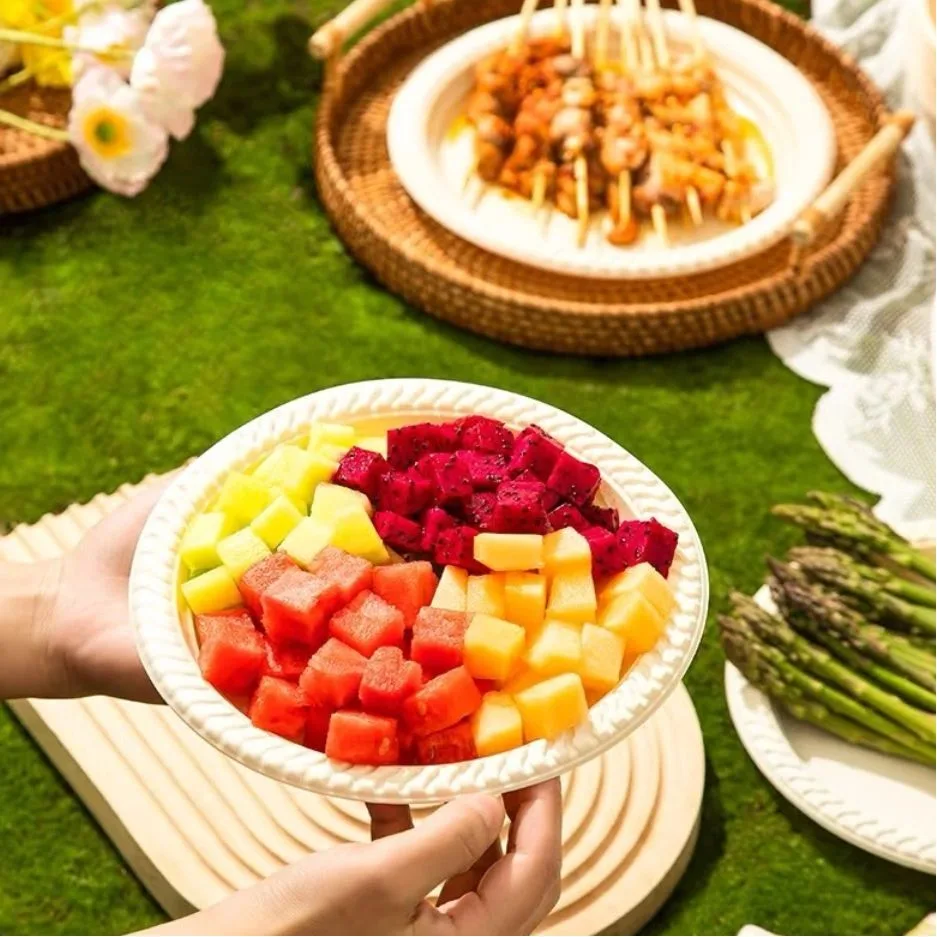
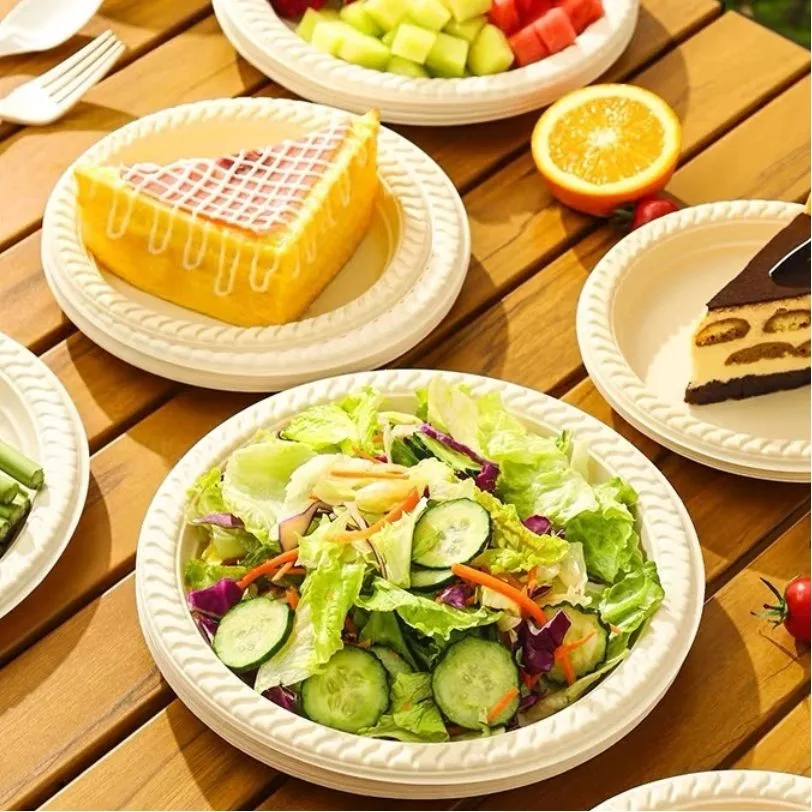
Premium presentation. A smooth, plastic-like surface elevates catering displays and corporate events compared with fibrous textures. For brand-forward operations, embossing and tasteful tinting can align with your identity without compromising compostability labeling best practices.
Compliance-ready bill of materials. With EN 13432/ASTM certificates plus EU 10/2011/FDA food-contact documentation on file, cornstarch plates simplify audits for retail buyers and enterprise procurement teams.
Where cornstarch plates fit best
Quick-service & fast casual. Everyday dine-in and takeout where EPS bans or corporate policy forbid plastic. Pair with cornstarch clamshells and bowls/cups for a full kit (wholesale eco-friendly tableware assortments).
Catering & banquets. Weddings, conferences, and festivals that need an upscale look with compostable catering plates and exportable paperwork.
School & workplace canteens. High-volume users that value safe, compliant, and uniform plate specs (disposable plates for restaurants and institutions).
Street food & night markets. Lightweight, sturdy plates that manage greasy, hot foods; rugged enough for on-the-go eating (cornstarch food containers bulk).
Travel catering (airlines/rail). Weight-efficient, stack-dense, and compliant with international routes when backed by certificates.
Consumer pull. Large multi-country surveys show consumers consistently rate compostable and plant-based packaging highly, and a significant share is willing to pay more—useful when justifying a small unit-cost premium in B2B sales.
Bulk-buy checklist for restaurants & wholesalers
To keep Cornstarch plates wholesale projects on time and in spec, build your RFP around these points:
A. Product & certification
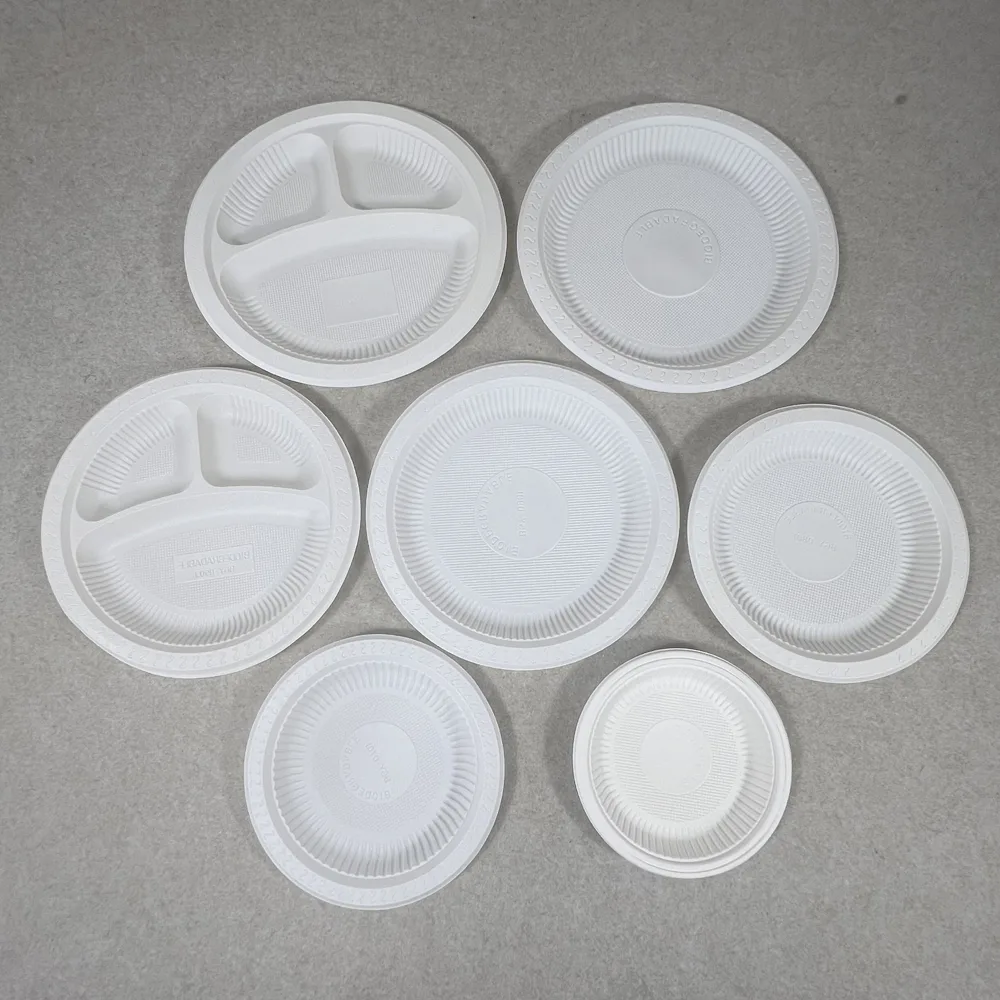
SKUs & sizes: 6″, 7″, 8″ 9″, 10″ , single vs. compartment.
Certificates: EN 13432 / ASTM D6400/D6868, test house and validity; BPI (US/Canada) or OK compost INDUSTRIAL (EU).
Food-contact: EU 10/2011 Declaration of Compliance, overall migration and SML data; FDA status (21 CFR or effective Food Contact Substance notification reference).
Chemicals: No intentionally added PFAS declaration; align with 2024–2025 FDA PFAS developments for U.S. distribution.
B. Performance & QC
Heat & oil tests on menu-relevant items (soup, curry, fried).
Dimensional & load tests (rim stiffness, stack compression).
Visual QA (color, gloss, flow marks) for premium events.
Retain golden samples and inspection AQL in the purchase contract.
C. Packaging for export
Inner packs (e.g., 50 pcs bags), master carton labeling, moisture-barrier wrap.
Palletization and CBM math for container loading (20′/40′ HQ).
Label compostability marks per BPI/USCC or TÜV/OK compost guidance to avoid greenwashing and improve post-use sorting.
D. Commercials & operations
MOQ: typical 10,000 pcs/size; consolidation across SKUs lowers freight/CBM.
Lead time: 20–30 days ex-works after artwork approval; longer in peak season.
Incoterms: EXW/FOB/CIF per lane; lock free days at destination to avoid demurrage.
Price position: usually 10–15% above commodity plastic; premium offset by compliance, brand lift, and avoided penalties.
Compliance, labeling & end-of-life—setting programs up for success
Labeling matters. Composters and haulers rely on clear, standardized labeling to accept items without contamination. Use BPI (North America) or OK compost (EU) marks and follow color/tint/stripe guidance where applicable; several jurisdictions now legislate compostable product labeling, and prohibit vague “biodegradable” claims.
Educate sites & customers. Even certified plates are intended for industrial composting; home compostability requires separate proof (e.g., OK compost HOME). Communicate destination streams clearly on menus, buffets, and signage to keep organics clean.
Food-contact evolving area (PFAS). With U.S. FDA confirming PFAS grease-proofers are out of the U.S. paper packaging market, many enterprise buyers ask for written statements on fluorinated chemicals across all substrates, including bioplastics. Bake this into your specs and supplier declarations.
Science corner: What the standards actually test
When a supplier says “EN 13432,” they’re committing to more than just “it breaks down.”
Disintegration: ≥90% of material fragments to <2 mm in 12 weeks under test composting.
Biodegradation: ≥90% conversion of organic carbon to CO₂ within 180 days.
Chemical limits: heavy metals below thresholds; no negative plant growth (ecotoxicity).
These criteria ensure certified items behave like organic waste in industrial composters—if local infrastructure accepts them.
GHG & LCA signals. LCAs frequently find biobased plastics like PLA reduce cradle-to-grave GHGs vs. fossil plastics, though magnitude varies by power mix, transport, and end-of-life. Cite specific, recent LCAs in enterprise proposals to anchor ESG claims to data.
Category strategy: Where cornstarch plates fit in your broader eco portfolio
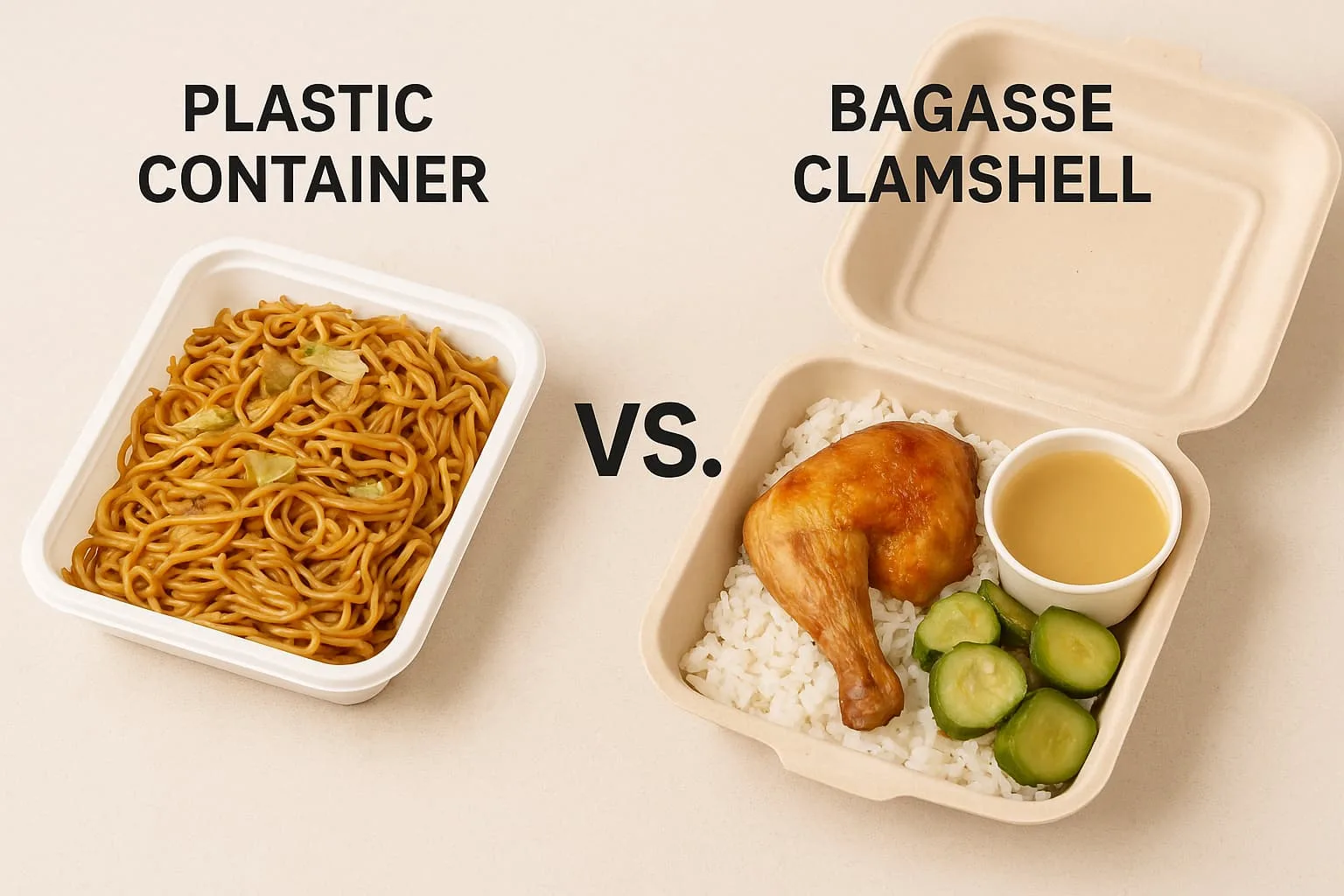
Against bagasse plates: Cornstarch offers a smoother, plastic-like surface for premium events; bagasse excels for high-rigidity, fibrous aesthetics. Many buyers list both to match menu and brand look.
Against kraft-lined fiber: Kraft needs a lining (PLA/PE) for wet and oily foods; cornstarch plates are monomaterial bioplastic designed for industrial composting streams (check local acceptance).
Against PET/PS/EPS: Fossil plastics face hard bans and reputational risk; cornstarch plates plus certification future-proof assortments against audits and RFP requirements.
Procurement templates you can copy
RFP essentials
Product: Cornstarch plates (6/7/8/9/10″), white/natural, embossing optional
Standards: EN 13432 (EU) or ASTM D6400/D6868 (US); provide valid certificate copy and test report IDs
Food-contact: EU 10/2011 DoC, migration reports; or FDA 21 CFR / effective FCS notification reference
Chemicals: Declaration of no intentionally added PFAS; SVHC screening statement
Labeling: BPI or OK compost logo usage rights; follow BPI/USCC labeling guidance
QC: heat/oil test on specified menu items, rim stiffness target, AQL, golden sample retention
Packing: inner packs/master carton, moisture barrier, palletization; carton and pallet dimensions/weights
Logistics: Incoterms, target lead time, free days, verified gross mass method
Sustainability: LCA summary (scope, method, boundary), recycled content policy for cartons
Acceptance testing on arrival
Visual (color, flow, finish), dimensional (diameter/height), stack compression, random hot/oil stress test; check cartons for moisture ingress.
Pricing & TCO: how to defend the premium
Even with higher unit price vs. commodity plastic, the total cost of ownership can favor cornstarch plates when you factor:
Compliance and penalties avoided under EU SUP, state bans, or retailer policies.
Brand lift and conversion—multi-country surveys show customers value compostable and plant-based packaging, which can support price realization in catering and events.
Waste diversion—certified items can support organics programs where accepted, improving ESG reporting and reducing landfill-dependent emissions.
The road ahead: demand will keep compounding
EU market restrictions are already in force; EPR frameworks and packaging rules are tightening through 2030.
California’s SB 54 is shaping national packaging choices through EPR and reduction targets.
India’s national ban and China’s 2025 reduction targets ensure that Asia’s giant food service markets will continue to avoid single-use plastics.
Consumer preference keeps leaning toward compostable and plant-based packaging, even as education about sustainability matures.
Bottom line: securing capacity from a reliable compostable dinnerware manufacturer and locking container-level supply for Cornstarch plates wholesale is not just smart procurement—it’s risk management for 2025–2030.
Quick CTA
Looking for an eco-friendly disposable plates supplier with EN 13432 / ASTM certificates, export packaging, and stable capacity?
Ask for Bioleader’s cornstarch plates in bulk, bundled with clamshells, bowls, and cups for a complete compostable kit. Request samples, carton specs, and CBM sheet today.
References
European Commission — Single-Use Plastics restrictions (scope includes plastic plates and EPS food containers)
CalRecycle — California SB 54 overview and rulemaking materials
Government of India — National single-use plastic prohibition (2022)
State Council and national policy summaries — China plastic reduction targets to 2025
EN 13432 — Industrial compostability requirements (disintegration, biodegradation, heavy metals, ecotoxicity)
ASTM D6400 and ASTM D6868 — Compostability specifications for plastics and coated substrates
U.S. FDA — PFAS in food-contact materials updates (2024–2025)
EU 10/2011 — Plastic materials and articles intended to come into contact with food (overall and specific migration)
Biodegradable tableware market size and forecast reports (global outlook to 2030)
Consumer surveys on sustainable packaging preferences (global, 2023–2025)
Cornstarch Plates in Bulk: Certification, Performance, and Export Readiness
Why the shift: Sweeping regulations—from EU single-use plastics bans to California’s EPR laws and India’s total plastic restrictions—are driving foodservice venues to opt for certified compostable cornstarch plates.
Core requirements:
- Certifications: plates must carry EN 13432 (EU) or ASTM D6400/BPI (North America), possibly both for multi-region export.
- Food safety: compliance with EU 10/2011 (overall migration limits) or FDA’s food contact notifications is essential.
- PFAS clarity: suppliers must declare no intentionally added PFAS, aligning with recent regulation.
Real-world performance: Cornstarch plates outperform uncoated paper with better heat and oil resistance, support upscale presentation, and simplify audits when paired with proper certification & declarations.
Bulk buying checklist:
- Product specs: Sizes (6″–10″), compartment vs. flat.
- Performance tests: Heat & oil resistance aligned to menu needs.
- Export packaging: Inner bags, moisture barriers, palletization, and labeling with compost logos and CBM data.
- Supply terms: Typical MOQ ~10,000 pcs/size, lead time 20–30 days, and freight terms defined.
- Pricing: Unit cost premium (10–15%) is offset by compliance, waste reduction, and brand value.
Strategic impact: Switching to corn-based certified tableware mitigates regulatory risk, enhances customer perception, supports ESG storytelling, and enables cost predictability—even in export-heavy operations.