Introduction: Southeast Asia’s Booming Takeout Culture Meets Sustainability
Southeast Asia has witnessed an extraordinary rise in food delivery services. Platforms like GrabFood and Foodpanda have become daily essentials in urban life, serving millions of takeaway orders across Malaysia, Singapore, Thailand, and beyond. Yet, with this convenience comes a cost—packaging waste. According to a 2023 ASEAN Environmental Forum report, over 1.2 million tons of single-use plastic waste were generated from food deliveries in Southeast Asia alone.
This environmental challenge is now prompting major shifts in how takeaway packaging is designed, sourced, and disposed of. In 2025, eco-friendly packaging is no longer optional—it’s the new business standard. This article explores the best biodegradable packaging options, highlights real-world applications, and provides actionable insights for restaurants, cloud kitchens, and food delivery aggregators.

The Problem with Conventional Takeout Packaging
Plastic containers, polystyrene trays, and laminated paperboard dominate food delivery packaging—but they come with several downsides:
Non-biodegradable: Most end up in landfills or waterways, persisting for hundreds of years.
Health risks: Microplastics and chemical leaching are growing concerns.
Brand damage: Consumers increasingly perceive plastic packaging as outdated and irresponsible.
In 2024, a regional consumer survey by EcoVantage Asia revealed that 67% of respondents preferred restaurants using compostable or plastic-free containers.
What Makes Packaging Truly Eco-Friendly in 2025?
Not all “green” packaging is equal. Here’s what defines truly sustainable packaging today:
Made from renewable resources (e.g., sugarcane bagasse, cornstarch, or PLA)
Certified compostable under EN13432 or ASTM D6400 standards
Functional: Leak-resistant, heat-retaining, and sturdy enough for delivery
Non-toxic: Free from PFAS, BPA, and petroleum-based linings
Let’s explore the top three materials that meet these standards.
Bagasse: The Go-To Material for Hot Meals and Combo Boxes
Bagasse is the fibrous residue left after sugarcane juice extraction. It’s now a leading material in sustainable packaging, especially in Southeast Asia’s tropical climates.
Ideal for: Rice dishes, bento sets, fried meals, hawker fare
Product picks:
Bagasse clamshell boxes with compartments
Leak-resistant bagasse trays with lids
Benefits:
Heat-retaining and sturdy
Grease-resistant, even for oily satay or nasi lemak
Fully compostable in 60–90 days
Case example:
GreenBento™, a cloud kitchen partner of multiple GrabFood merchants, switched to Bioleader® bagasse containers in early 2025. This change reduced their single-use plastic output by 80% and led to a 12% boost in customer satisfaction ratings related to packaging.

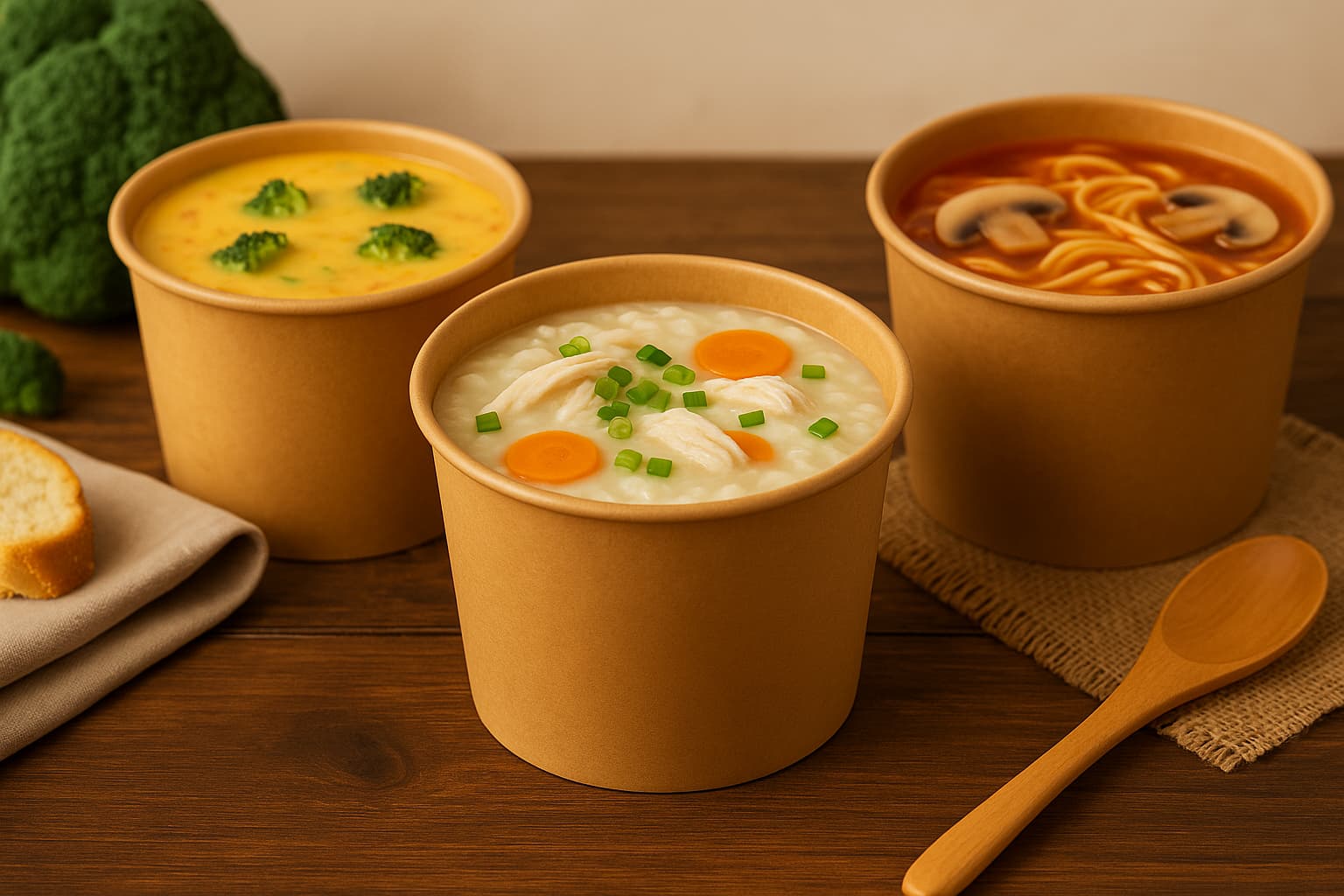
Kraft Paper: Minimalist, Compostable, and Stylish
Kraft paper packaging has gained traction not just for its rustic appeal but also for its environmental benefits.
Ideal for: Pastries, snacks, light salads, fried food
Product picks:
Kraft sandwich wraps with PLA lining
Paper takeaway boxes with folding lids
Benefits:
Compostable and recyclable
Print-friendly surface for branding
Breathable—ideal for fried foods like pisang goreng or tempura

PLA: The Best for Cold Drinks and Bubble Teas
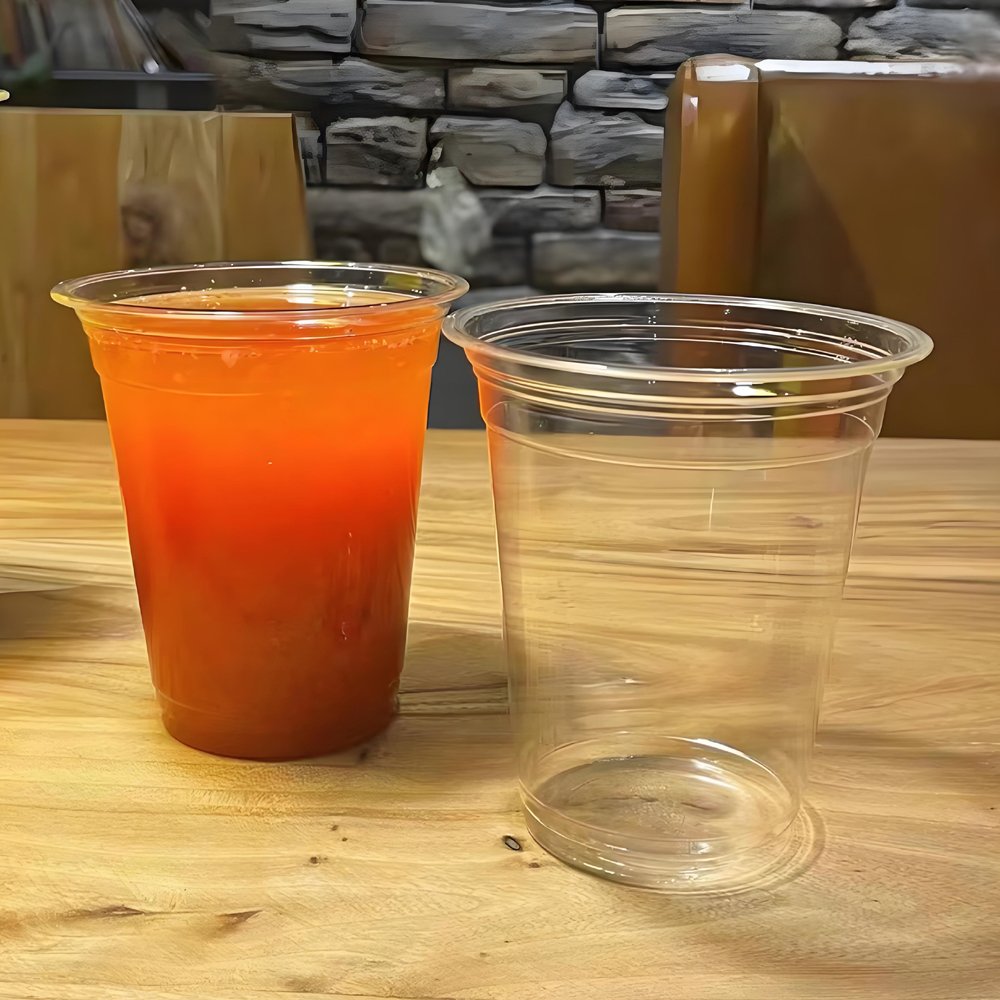
Polylactic Acid (PLA) is derived from fermented plant starch (typically corn). It’s transparent like PET but compostable under the right conditions.
Ideal for: Smoothies, bubble tea, iced coffee
Product picks:
PLA cups with flat or dome lids
PLA straws (individually wrapped or bulk)
Compostable printed PLA cold cup sets
Benefits:
Crystal-clear appearance
BPI-certified and industrially compostable
|
|

How GrabFood & Foodpanda Can Lead the Eco-Packaging Revolution
Both Grab and Foodpanda have already committed to reducing single-use plastic. But in 2025, these platforms can go further:
Default eco-packaging options in the app
Incentives for restaurants using compostables (e.g., higher visibility or eco-badges)
Reusable packaging trials for selected urban zones
The opportunity? Platforms can shape customer habits while boosting their brand as eco-leaders in the region.
Why Customers Care More Than Ever in 2025
Recent studies prove the shift is consumer-driven:
60% of customers are willing to pay up to 10% more for sustainable packaging (Nielsen Southeast Asia, 2024).
A 2025 McKinsey Asia report found that packaging sustainability ranked second only to taste in online food delivery satisfaction.
In essence, packaging = perception.
Bioleader®: Supplying the Future of Takeout Packaging
Bioleader® offers certified compostable products tailored for Southeast Asian markets. Our takeaway packaging line includes:
Bagasse clamshells and trays for combo meals
Kraft paper boxes and bowls for dry and crispy dishes
PLA cups and lids for cold drinks and desserts
With global shipping, OEM services, and regulatory compliance support, we help brands scale sustainability without compromising on performance.
Conclusion: The Eco Future of Takeaway Is Already Here
In 2025, eco-friendly packaging is not a niche—it’s the new normal. From hawker stalls to high-end cloud kitchens, the shift is clear. Whether you’re a GrabFood partner or a Foodpanda-listed restaurant, choosing the right packaging sends a powerful message.
And for consumers? A thoughtfully packaged meal is a sign that the restaurant values quality, responsibility, and the planet.
FAQs
1. What is the most eco-friendly takeaway packaging material in 2025?
Bagasse, PLA, and kraft paper lead in 2025 as the top eco-friendly options due to their compostability and non-toxic composition.
2. Are foodpanda and GrabFood restaurants using biodegradable packaging?
Yes, more vendors on both platforms are switching to biodegradable containers to meet Singapore’s 2025 sustainability regulations.
3. Which packaging is best for hot takeaway meals?
Bagasse clamshell boxes and cornstarch bowls are ideal for hot meals due to their heat resistance and leak-proof properties.
4. Where can I bulk order eco-friendly packaging for food delivery?
Suppliers like Bioleader® offer wholesale compostable containers including PLA cups, kraft trays, and bagasse food boxes.
5. Why are Southeast Asian food delivery platforms promoting eco-packaging?
Rising consumer demand and government plastic bans are pushing GrabFood and Foodpanda to promote certified sustainable packaging options.
References
NEA Singapore – Sustainable Packaging Roadmap (2025)
https://www.nea.gov.sg/our-services/waste-management/3r-programmes-and-resources/sustainable-packagingMcKinsey & Company – Sustainability in Packaging: Inside the Minds of Global Consumers (2023)
Author: David Feber
https://www.mckinsey.com/industries/paper-forest-products-and-packaging/our-insightsBioleader® – What Are the Advantages of Sugarcane Packaging?
https://www.bioleaderpack.com/what-are-the-advantages-of-sugarcane-packaging/Grab Holdings Inc. – GrabForGood Sustainability Strategy 2023–2025
https://www.grab.com/sg/sustainability/Statista – Plastic Waste Generation in Southeast Asia
Author: Nils-Gerrit Wunsch
https://www.statista.com/statistics/1283884/se-asia-plastic-waste-by-country/ScienceDirect (Elsevier) – Biodegradable Food Packaging Materials: A Review
Author: Shankar S., Rhim J.-W.
https://www.sciencedirect.com/science/article/abs/pii/S014294181730484XWWF Singapore – Plastic ACTion (PACT) Guidelines for Businesses
https://plastic-action.asia/