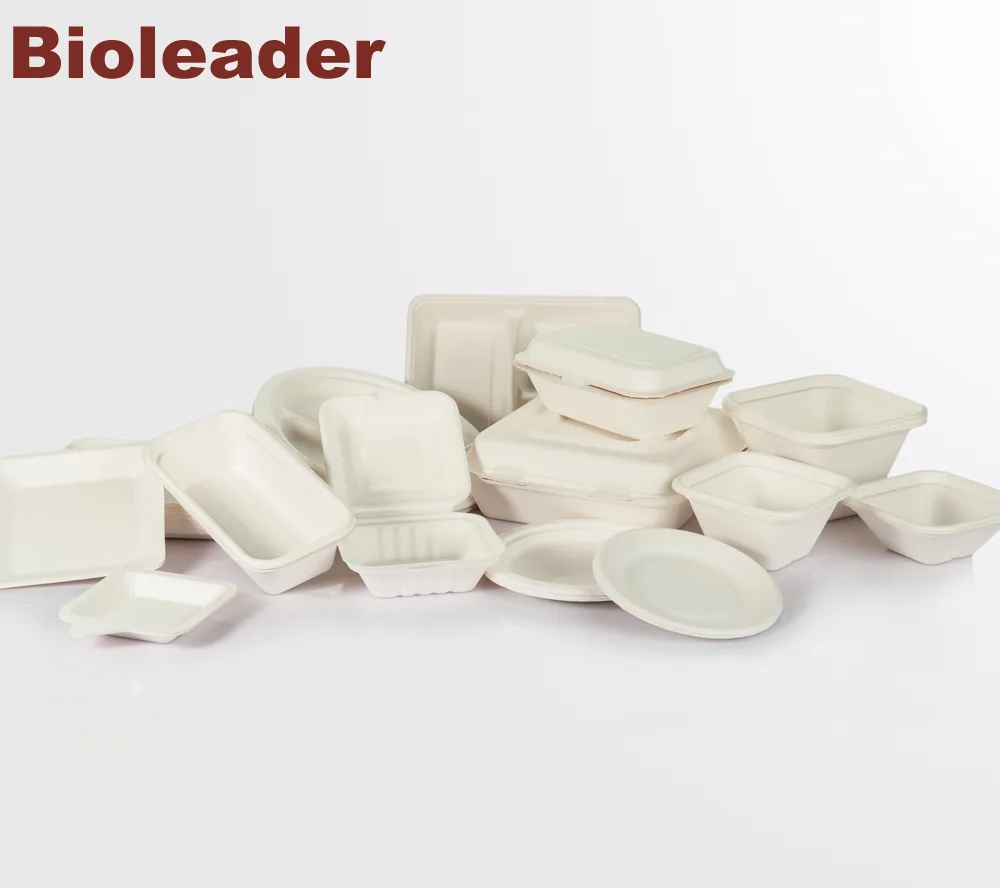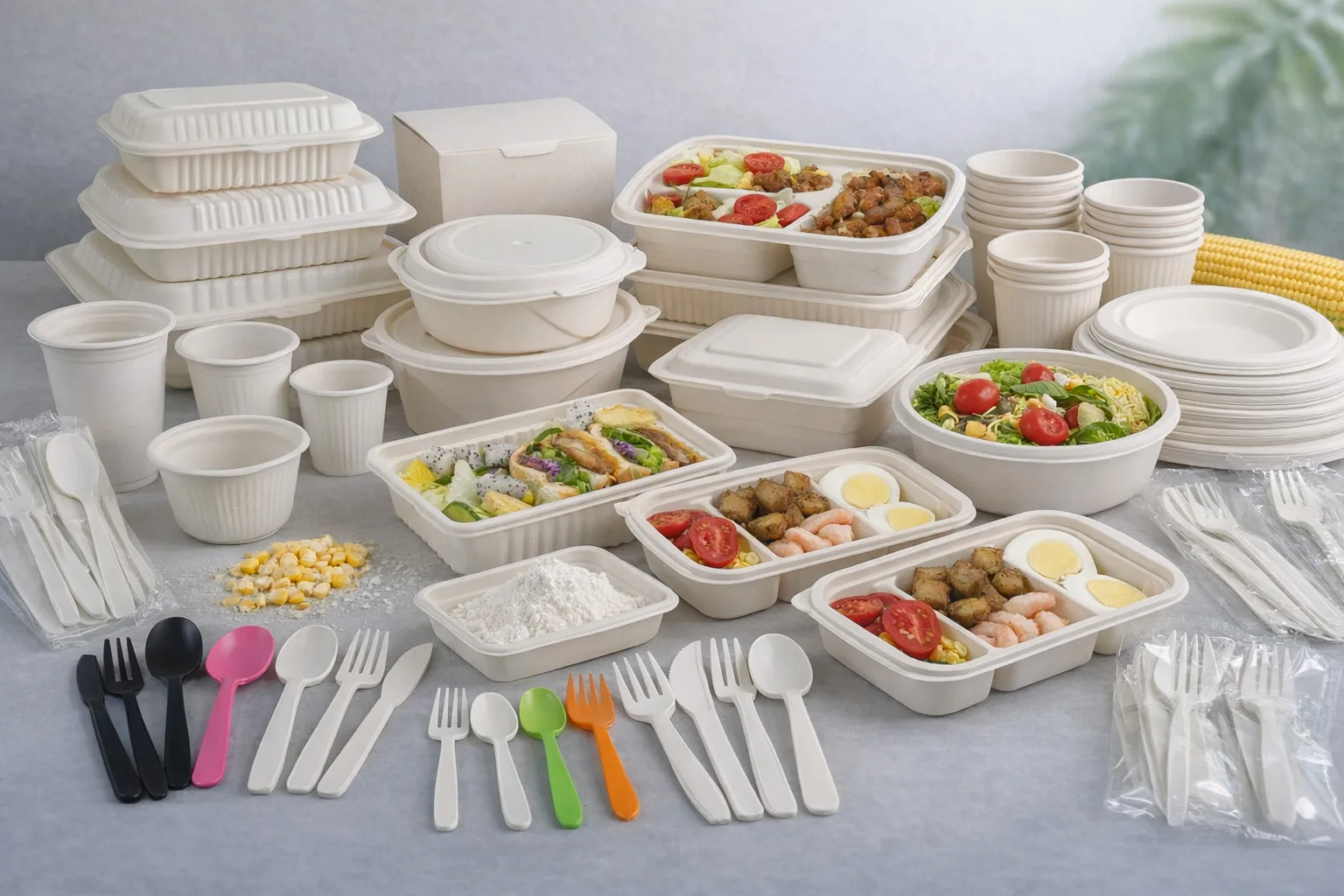


- Choose the packaging system around the actual food and service conditions.
- Verify the complete structure, including coatings, barriers, lids, inks, and additives where relevant.
- Review certificates and test reports against the specific material or SKU rather than assuming they cover an entire product range.
- Test production-representative samples with the intended food, temperature, lid, and holding time.
- Compare MOQ, customization, packing, pricing, and logistics only after the technical specification is aligned.
The term compostable food container covers several very different packaging systems. A molded sugarcane fiber clamshell, a coated kraft paper bowl, and a cornstarch-based food box may all appear in the same sustainable-packaging catalog, but they are manufactured differently and should not be evaluated with the same checklist.
For importers, distributors, restaurant groups, foodservice brands, and private-label buyers, the practical question is therefore not simply which Chinese supplier offers the lowest price. It is whether the proposed material, structure, manufacturing process, documentation, and finished-product performance match the intended use.
Start With the Food Application, Not the “Compostable” Label
Material selection becomes much easier once the application is defined clearly. A container for a chilled salad has a different performance requirement from a bowl holding hot soup, an oily takeaway meal, or a product that may be reheated after delivery.
Before requesting quotations, buyers should establish the main operating conditions.
| Buyer Requirement | Why It Matters | What to Confirm |
|---|---|---|
| Food temperature | Heat changes material, coating, lid, and deformation requirements. | Serving temperature and whether reheating is expected. |
| Oil, sauce, or moisture | Grease and liquid resistance vary by material and barrier system. | Food type, contact time, and required resistance. |
| Holding and delivery time | A package used for 15 minutes is not the same specification as one holding food for 60–90 minutes. | Kitchen-to-customer time and storage conditions. |
| Lid system | The base and lid may use different materials and may have different end-of-life routes. | Paper, fiber, PP, PET, PLA, or other lid structure and fit. |
| Microwave or reheating | Microwave suitability cannot be assumed from appearance or material name alone. | Finished-pack specification and intended-use testing. |
| Freezer or chilled storage | Cold storage can affect brittleness, sealing, and condensation. | Storage temperature and duration. |
| Destination market | Food-contact, compostability, labeling, PFAS, and packaging requirements vary by market. | Country-specific documentation before bulk approval. |
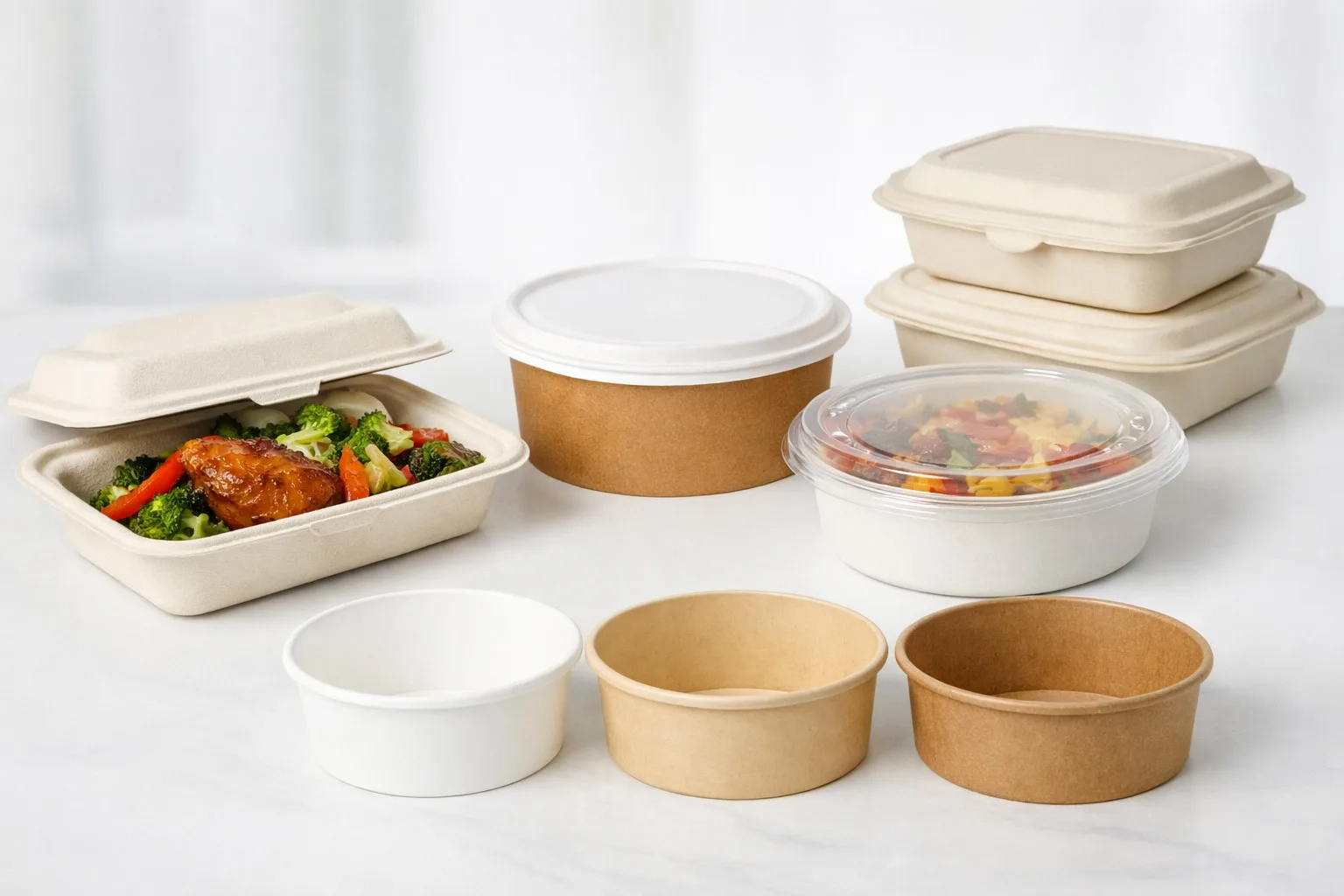
Buyers dealing with hot meals, delivery, or reheating can review the more detailed guide to choosing high-performance takeaway food containers before finalizing a material specification.
Bagasse, Cornstarch, and Paper Are Different Packaging Systems
One of the most common sourcing mistakes is treating plant-based or fiber-based packaging as a single material family. In practice, each system has different forming methods, barrier requirements, performance limits, and documentation questions.
Sugarcane Bagasse for Molded Fiber Food Containers
Bagasse is the fibrous residue remaining after juice is extracted from sugarcane. In food packaging, it is commonly processed into molded-fiber clamshells, plates, bowls, trays, and food containers.
Its molded structure makes it particularly relevant for takeaway meals, hot foods, portion trays, and applications where a rigid fiber container is preferred. However, buyers should still evaluate thickness, molding density, surface finish, grease resistance, moisture resistance, lid compatibility, and the specific barrier system used for the selected product.
The broader sugarcane bagasse tableware range provides a useful reference for comparing common molded-fiber formats before narrowing the specification.
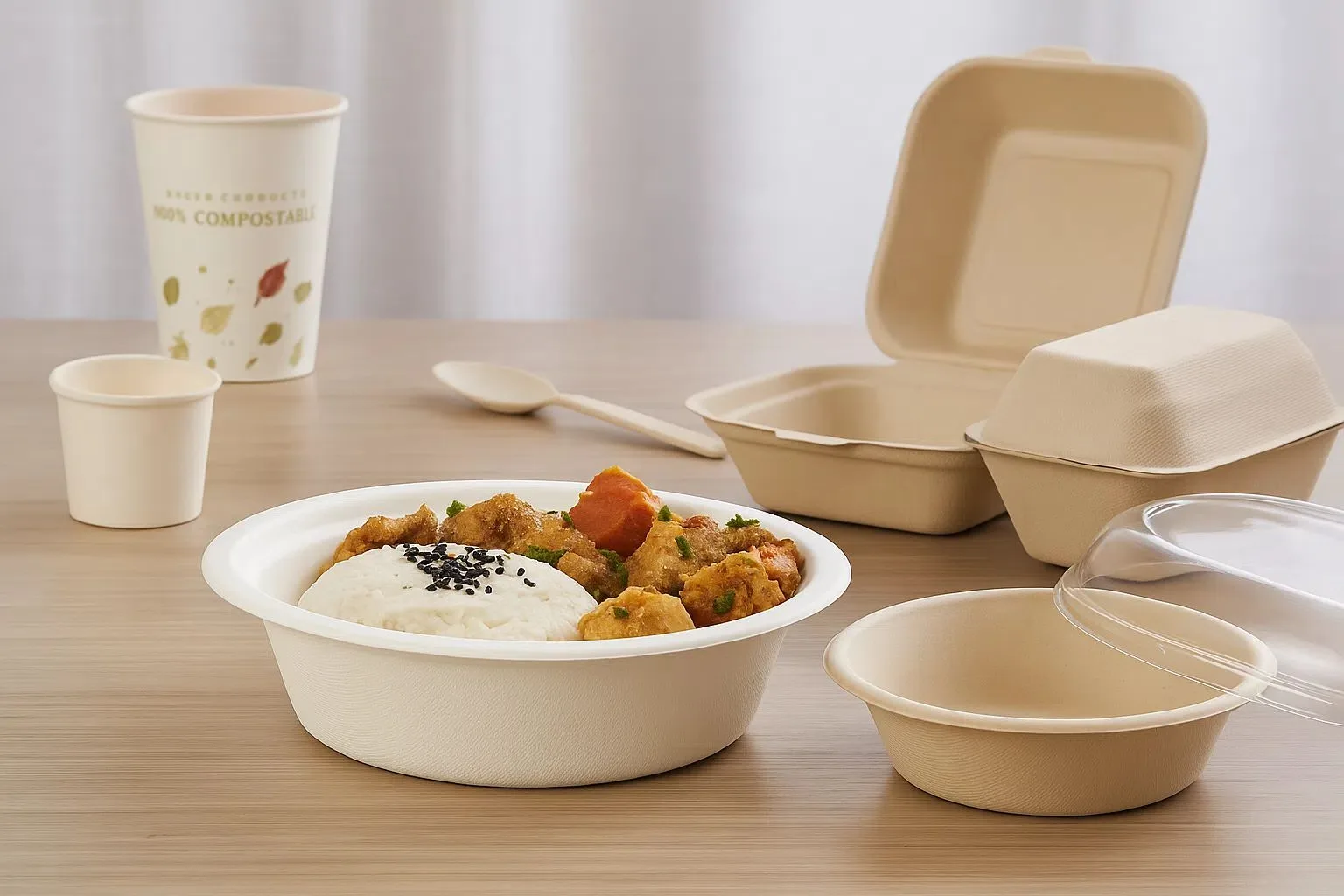
Cornstarch Tableware: Check the Resin System
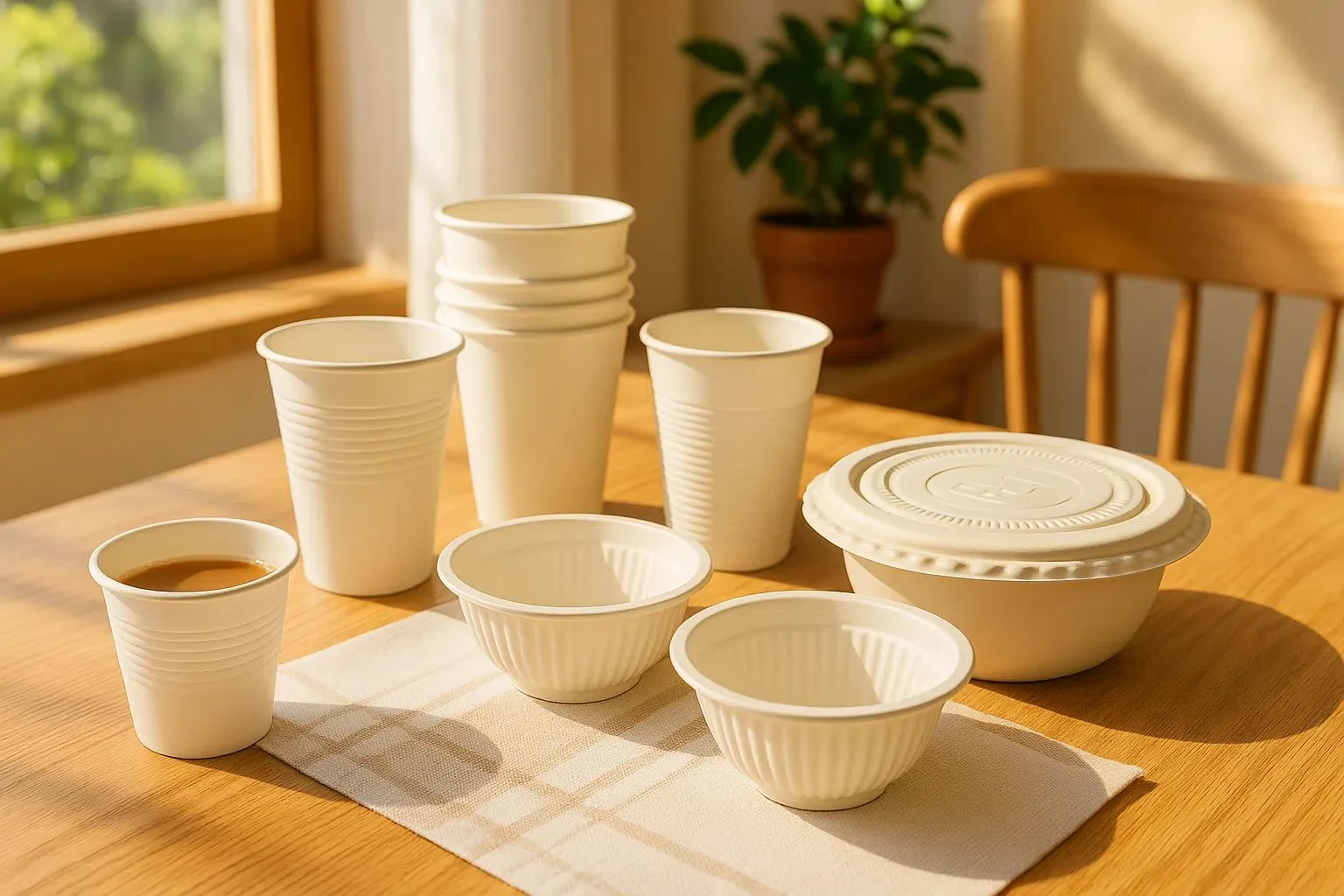
“Cornstarch tableware” is not enough information to determine the complete material composition of a finished product. Commercial starch-based foodservice products may use different resin systems and formulations, so buyers should not automatically assume that a cornstarch-based container is pure plant material, plastic-free, home compostable, or suitable for a specific temperature.
Important questions include the resin composition, intended food-contact conditions, heat performance, compostability evidence, and whether the available documentation applies to the exact bowl, plate, cup, or food container being ordered.
Bioleader® maintains a separate cornstarch tableware product pathway so buyers can compare this material family independently from molded fiber and paper packaging.
Kraft and Paper Food Packaging: The Coating Changes the Answer
Paper packaging requires a different form of evaluation. The visible kraft or white paperboard is only one part of the finished structure. Depending on the product, a cup, bowl, box, or food container may include PE, PLA, PP, an aqueous barrier, aluminum foil, adhesives, inks, or a separate plastic lid.
This means that a paper appearance alone does not prove that the finished package is plastic-free, recyclable, or compostable. Those claims depend on the complete construction and the applicable collection, recycling, or composting system.
For this reason, buyers should review the full paper food packaging structure rather than purchasing based only on board color or a generic “kraft” description.

For a deeper cross-material comparison, buyers can continue with Bioleader®’s sustainable packaging material sourcing guide, which examines material selection from a procurement and performance perspective.
Material Comparison for Foodservice Buyers
The most useful comparison is not which material is universally “best,” but which packaging system better matches a defined application.
| Packaging System | Typical Applications | Key Performance Question | End-of-Life Consideration | Buyer Should Verify |
|---|---|---|---|---|
| Bagasse molded fiber | Clamshells, hot-meal containers, bowls, plates, trays | Grease, moisture, heat, rigidity, and lid fit | May be compostable depending on the finished product and supporting evidence | Barrier system, PFAS documentation where relevant, food contact, compostability evidence |
| Cornstarch-based tableware | Food boxes, bowls, plates, cups, portion containers | Resin formulation and intended-use temperature | Depends on formulation and applicable certification | Material composition, temperature specification, food-contact and compostability documents |
| Coated paper / kraft | Soup, salad, noodles, snacks, cups, takeaway boxes | Board structure, coating, seam, and lid system | Recyclability or compostability depends on the complete package and local infrastructure | Coating type, lid material, migration documentation, disposal claim |
| PP | Selected hot-food and reheating applications | Temperature and microwave suitability of the specific container and lid | Not compostable | Food-contact specification, temperature range, local recycling route |
| PET | Cold foods, salads, desserts, clear display packaging | Cold-use performance and clarity | Not compostable | Food-contact documentation and local recycling route |
Container Format Matters as Much as Material
Material is only one layer of the decision. Buyers also need to choose the right container format for portion size, food presentation, closure, stacking, delivery, and filling operations.
For example, a clamshell integrates the base and hinged lid into one structure, while a bowl normally depends on a separate lid. That difference changes tooling, packing density, closing performance, customer handling, and sometimes the material combination used in the finished package.
Buyers comparing hinged containers can use the guide to clamshell packaging materials and applications to understand how different clamshell structures fit foodservice use cases.
How to Evaluate a Compostable Food Container Supplier in China
Once the food application and preferred packaging system are defined, supplier evaluation becomes more meaningful. At this stage, buyers should focus less on broad sustainability language and more on whether the supplier can explain, manufacture, test, document, and reproduce the required specification.
Can the Supplier Explain the Complete Material Structure?
A qualified supplier should be able to distinguish the base material from coatings, barriers, additives, lids, inks, and other components that affect the final package.
Questions such as “Is it biodegradable?” or “Is it eco-friendly?” are too broad for procurement approval. Better questions include:
- What is the base material?
- Does the product use a coating or barrier layer?
- What material is the lid?
- Does the finished package contain a polymer component?
- Which compostability or food-contact evidence applies to this product?
- Which claims should appear on the finished packaging?
Does the Manufacturing Capability Match the Product?
Different food containers require different production technologies. Molded pulp forming, injection molding, paper converting, coating, printing, lid forming, and tooling are not interchangeable capabilities.
A buyer sourcing a molded-fiber clamshell should therefore assess different manufacturing controls from a buyer sourcing a coated paper bowl or starch-based food box.
Bioleader® Manufacturer Insight: Supplier evaluation should be matched to the exact product format. A factory’s general ability to produce “sustainable packaging” does not by itself demonstrate control over pulp molding, paper converting, resin processing, lid matching, printing, or the relevant quality checks.
Can the Factory Control Product Consistency?
Finished-product consistency is often more important than a visually impressive factory tour. Depending on the product, procurement teams may need to review:
- Dimensions and product weight
- Molding or forming consistency
- Rim shape and lid fit
- Leakage and grease resistance
- Deformation under intended-use conditions
- Surface defects and trimming
- Printing registration and color consistency
- Inner packing and export carton strength
For molded-fiber products specifically, Bioleader® has a more detailed guide on how buyers can evaluate a molded fiber tableware manufacturer in China, including manufacturing capability, documentation, quality control, and export execution.
Certifications and Compliance: Verify the Product, Not the Logo List
Certification is an important procurement tool, but it should not be treated as a blanket statement covering every product made by a supplier.
A certificate or test report may apply to a particular material, product family, construction, production site, or market. Buyers should therefore verify scope before relying on a document in an import, retailer, restaurant-chain, or sustainability approval process.
Compostability Evidence
Industrial compostability and home compostability are different claims. Standards and certification schemes can also cover different product types and conditions. Buyers should confirm whether the available evidence applies to the finished item, its coating, and other relevant components.
Food-Contact Documentation
Food-contact review should be based on the intended market and the finished product structure. Paper, molded fiber, starch-based resin, printing, coatings, and lids can require different forms of documentation or testing.
Rather than asking whether a supplier is simply “FDA certified” or “LFGB certified,” procurement teams should ask which report applies to the selected item and whether its test conditions are relevant to the planned food-contact use.
PFAS and Barrier Documentation
For molded-fiber packaging, PFAS-related requirements deserve separate attention. Buyers may need to distinguish between no intentionally added PFAS statements, targeted PFAS analysis, fluorine-related testing, or other market-specific evidence.
The appropriate documentation depends on the product, barrier technology, destination market, and buyer specification. Claims should therefore remain product-specific rather than being applied automatically across a complete factory portfolio.
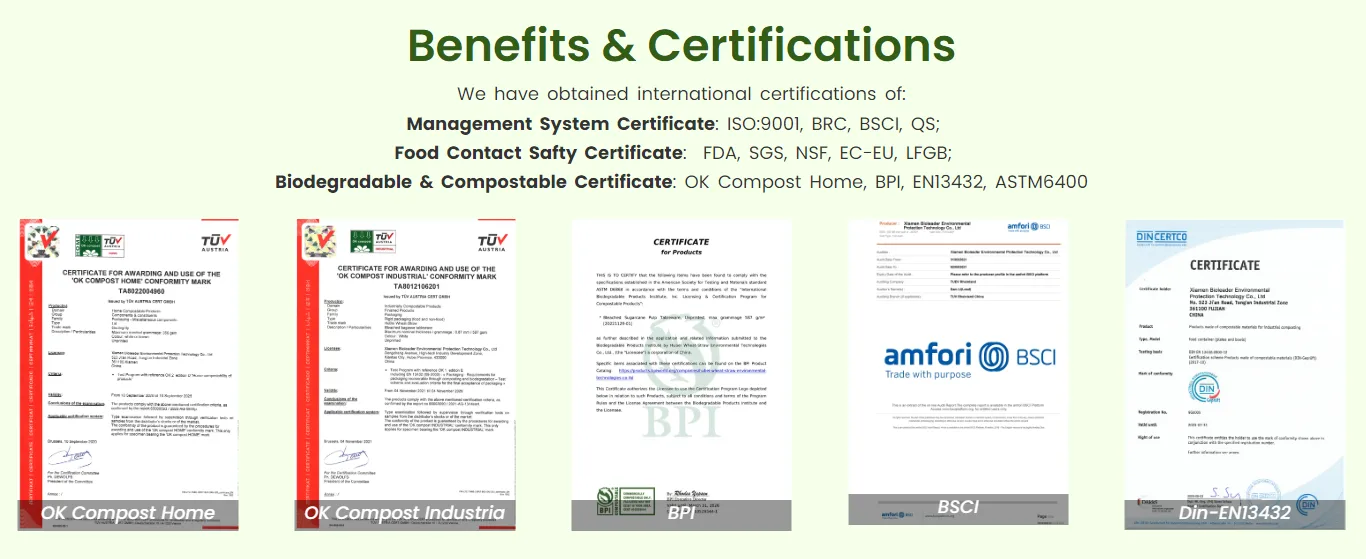
For a broader compliance framework, buyers can review the global compostable packaging compliance roadmap. Bioleader® also maintains an available certifications and test reports page for buyers reviewing specific product options.
Documents to Request Before Bulk Approval
- Finished-product specification
- Material or construction declaration
- Applicable food-contact report
- Relevant compostability evidence where a compostability claim is required
- PFAS-related documentation when applicable
- Artwork and printing specification for customized orders
- Lid specification and compatibility information
- Carton packing and export packing details
- Destination-market documents relevant to the order
Samples Matter More Than Supplier Claims
A catalog photo, product description, or certificate list is not enough to approve a food container for commercial use. The sample should be tested under conditions that resemble the real application as closely as practical.
Sample Evaluation Checklist
- Fill the container with the actual or representative food.
- Use the intended serving temperature.
- Include oily sauces, liquids, or acidic foods when relevant.
- Test the expected holding and delivery time.
- Check the lid after filling, stacking, and transport simulation.
- Inspect leakage, softening, deformation, rim damage, and odor.
- Test reheating only when the selected container and lid are intended for that use.
- Test chilled or frozen storage when those conditions are part of the application.
- Review the sample together with the applicable specification and documents.
A good sourcing process should also distinguish a hand-made or development sample from production-representative goods. The closer the sample is to the intended production structure, the more useful the evaluation will be.
Application Example: A Paper Bowl Is More Than a “Paper Bowl”
A paper bowl provides a simple example of why specification discipline matters. Two bowls may look nearly identical in a photograph but perform differently because of board thickness, coating, seam construction, lid material, rim geometry, and intended food temperature.
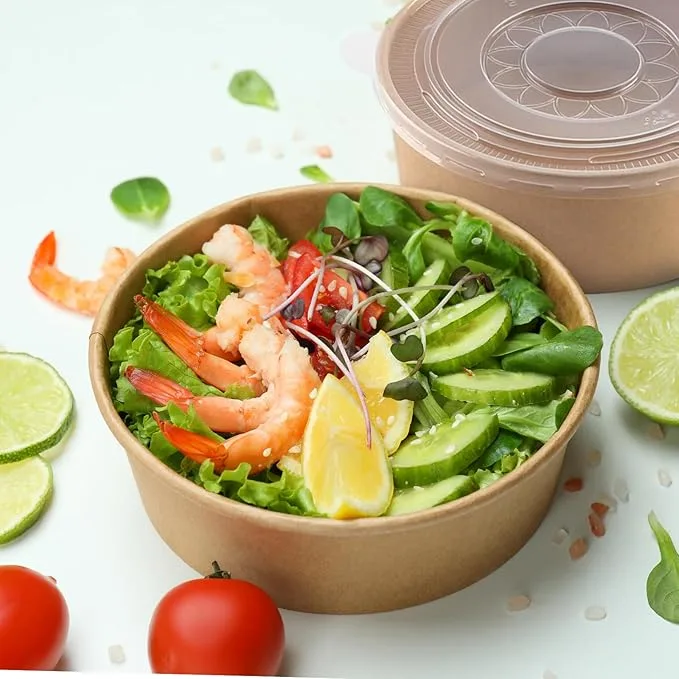
Before approving a bowl, a buyer may need to specify:
- Kraft or white paperboard
- Capacity and dimensions
- Coating or barrier structure
- PET, PP, paper, or other lid option
- Hot-food or cold-food use
- Expected holding and delivery time
- Microwave requirement, if any
- Custom printing requirements
- Inner packing and carton configuration
The same principle applies to bagasse clamshells, molded-fiber trays, starch-based food boxes, and other takeaway containers: buyers should approve the complete packaging system rather than a material label in isolation.
Common Sourcing Mistakes to Avoid
- Buying by the word “compostable” alone. The claim does not tell you the complete structure, composting condition, certification scope, or local acceptance route.
- Assuming all paper packaging is plastic-free. Coatings, lids, adhesives, and other barriers can change the finished construction.
- Assuming cornstarch means pure plant material. The actual resin system and formulation should be verified.
- Accepting a general certificate list without checking scope. Confirm which document applies to the selected material or SKU.
- Comparing prices before aligning specifications. Different coatings, lids, weights, packing methods, and performance requirements can make unit prices incomparable.
- Approving a sample without testing the real food. Hot soup, oily meals, salads, chilled desserts, and delivery foods create different packaging stresses.
- Ignoring the lid. The lid may use a different material and can determine leakage, stacking, reheating suitability, and end-of-life claims.
- Assuming one disposal claim works globally. Collection, recycling, and composting infrastructure varies by country and municipality.
China Sourcing Checklist Before You Request a Quote
Quotations become more accurate when suppliers receive a clear purchasing brief. Before asking for pricing, buyers should prepare the following information.
- Product format: clamshell, bowl, tray, plate, food box, or other format
- Preferred material: bagasse, paper, cornstarch-based, or another specified system
- Capacity or dimensions
- Food type: dry, wet, oily, liquid, acidic, chilled, or hot
- Serving temperature and holding time
- Lid requirement and preferred lid material
- Printing or branding requirement
- Estimated order quantity
- Packing requirement
- Destination country or port
- Required compliance documents
- Reference photo, drawing, or current sample when available
MOQ, customization options, tooling requirements, packing configuration, sample arrangements, and production planning can then be discussed against a clearly defined product rather than a generic inquiry such as “Please quote compostable containers.”
Where Bioleader Fits Into the Sourcing Process
Based on Bioleader®’s experience serving foodservice packaging buyers, material selection should begin with food temperature, holding time, barrier requirements, lid structure, and the disposal conditions in the destination market.
For importers, distributors, restaurant groups, and food brands evaluating a specific container, Bioleader® can provide product specifications and available documentation for review before bulk production. Buyers can contact Bioleader® with the product format, size, lid, quantity, food application, and destination market to narrow the appropriate options.
Frequently Asked Questions
How do I verify whether a compostable food container is actually certified?
Check the certificate or supporting document against the relevant material, product, manufacturer, and certification scope. Do not assume that a certificate shown on a supplier website automatically applies to every SKU.
Is bagasse always home compostable?
No. Bagasse is a plant-fiber material, but the compostability of a finished container depends on its complete construction, additives, barriers, and available evidence. Industrial and home compostability should be treated as separate claims.
Does “cornstarch tableware” mean plastic-free?
No. Cornstarch-based tableware can use different resin systems and formulations. Buyers should verify the actual material composition rather than assuming that the word “cornstarch” means pure starch or plastic-free construction.
Are kraft paper food containers automatically recyclable or compostable?
No. A kraft paper bowl or box may include PE, PLA, PP, aqueous coatings, adhesives, inks, foil, or a separate plastic lid. Recyclability and compostability depend on the complete structure and local waste-management system.
What documents should I request from a Chinese food packaging supplier?
Typical requests may include a finished-product specification, material declaration, applicable food-contact reports, relevant compostability evidence, PFAS documentation where required, lid specifications, packing details, and destination-market documents. The exact list depends on the product and market.
What should I test before approving compostable food container samples?
Test the container with the intended food, temperature, oil or liquid exposure, holding time, lid, stacking, and delivery conditions. Reheating, freezer, or chilled-storage testing should be included when those conditions are part of the intended use.
Should I compare suppliers mainly by unit price?
No. Prices are meaningful only after product weight, dimensions, material structure, coating, lid, printing, packing, documentation, and performance requirements have been aligned.
Final Buyer Takeaway
A reliable compostable food container sourcing decision starts with the application, not the marketing label. Define the food conditions first, compare the correct packaging systems, verify the complete product structure, review SKU-relevant documentation, and test samples under realistic conditions before comparing final commercial terms.
That process reduces the risk of buying a container that looks sustainable in a catalog but does not perform, document, or dispose as expected in the target market.