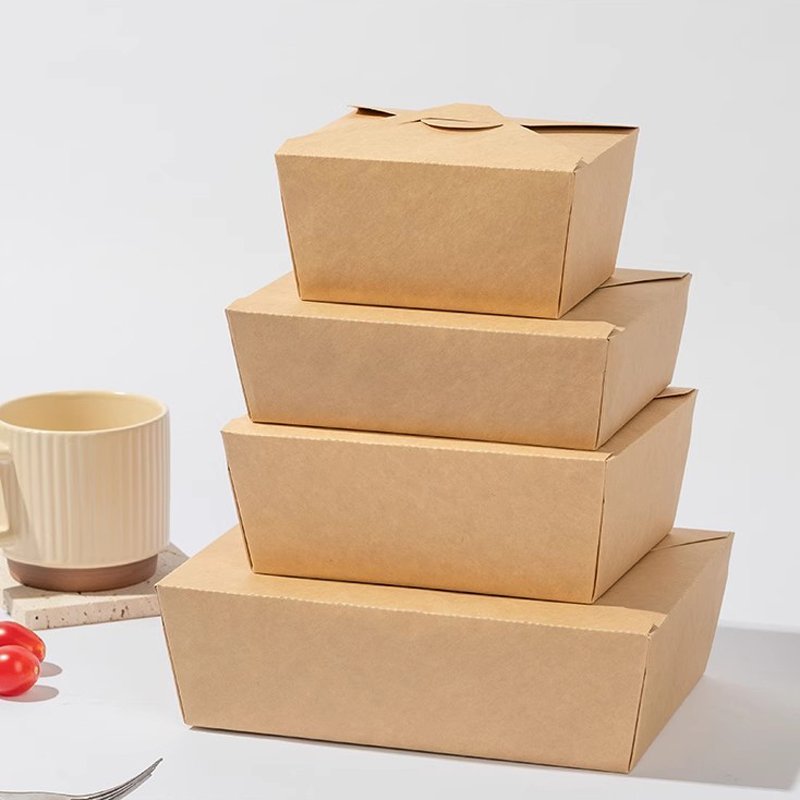
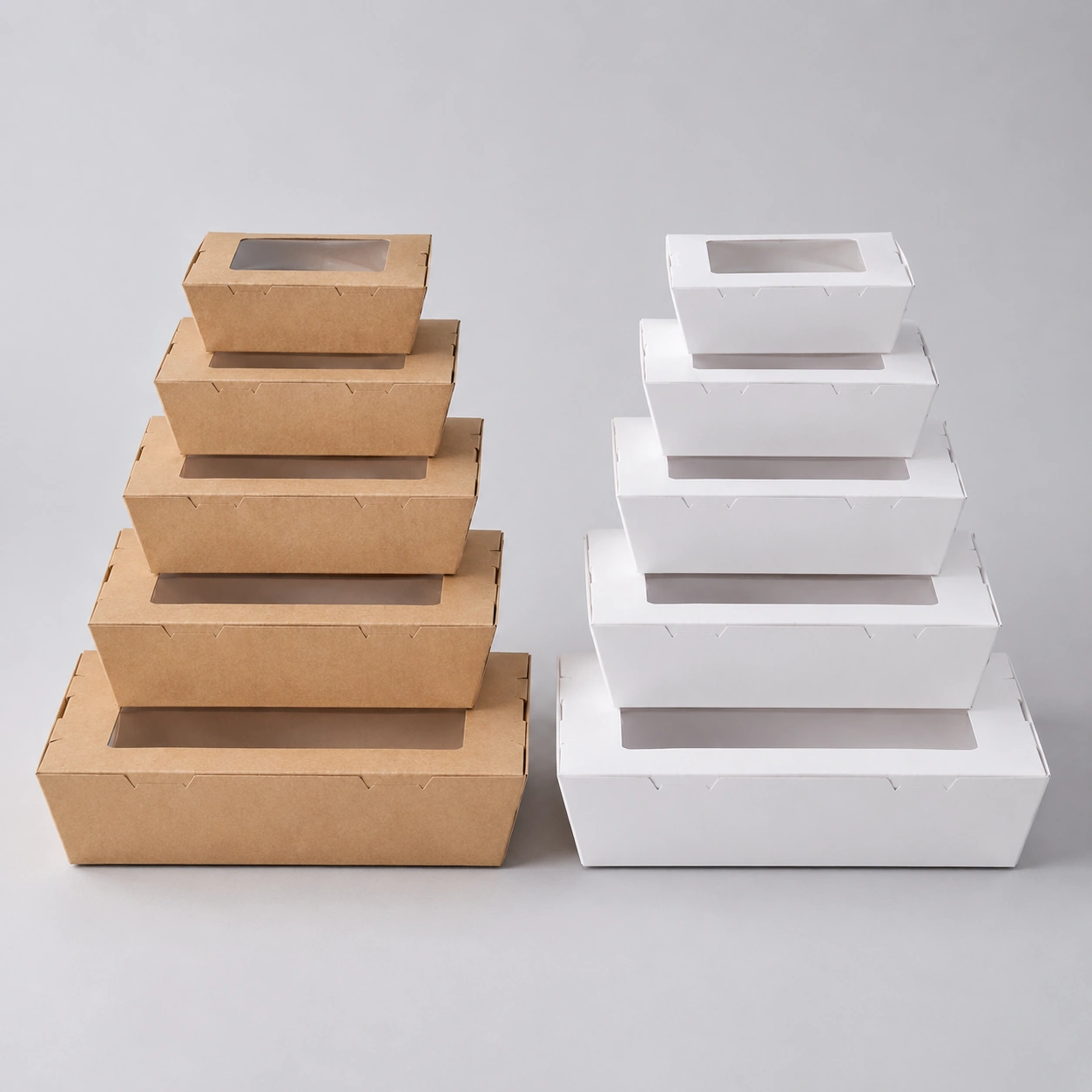
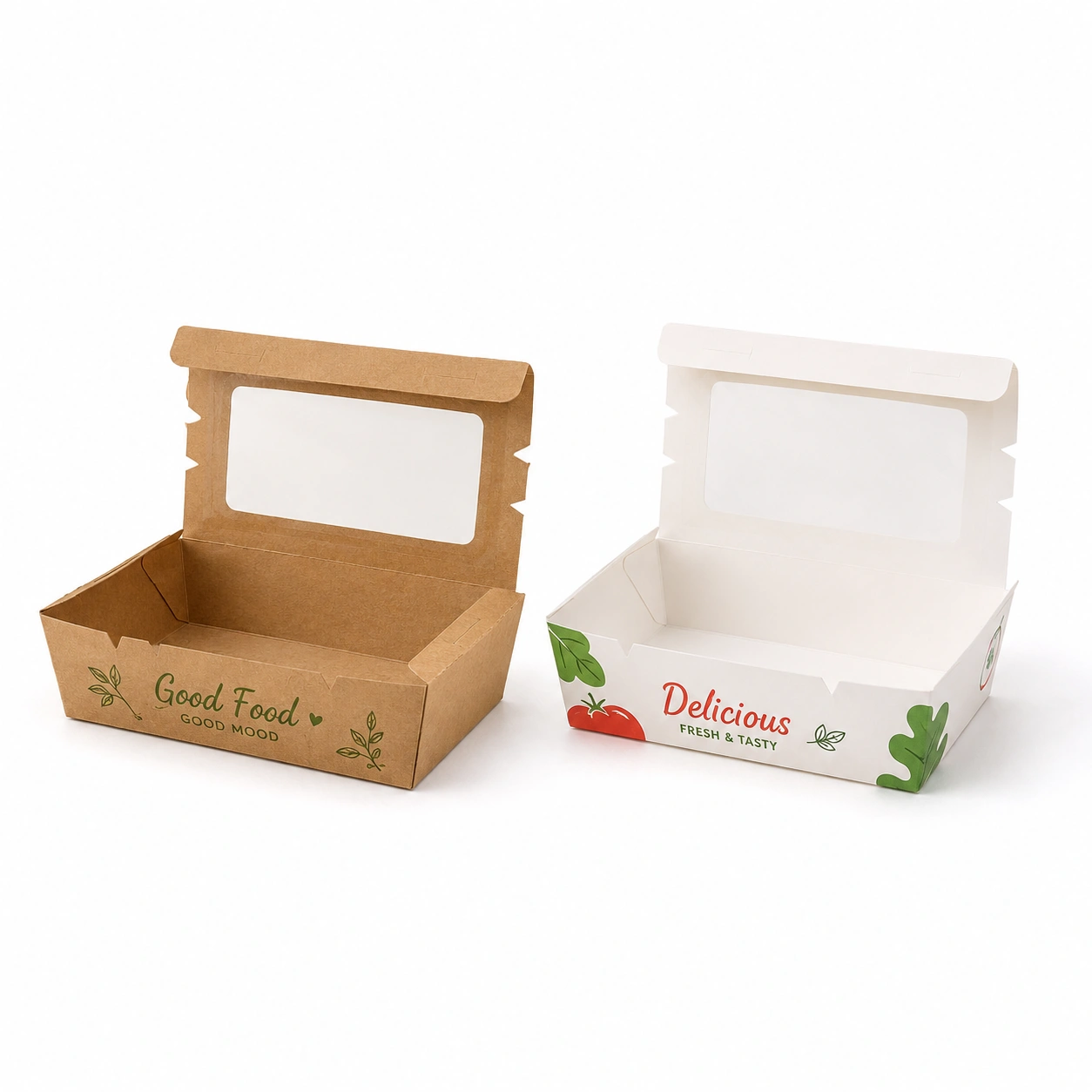
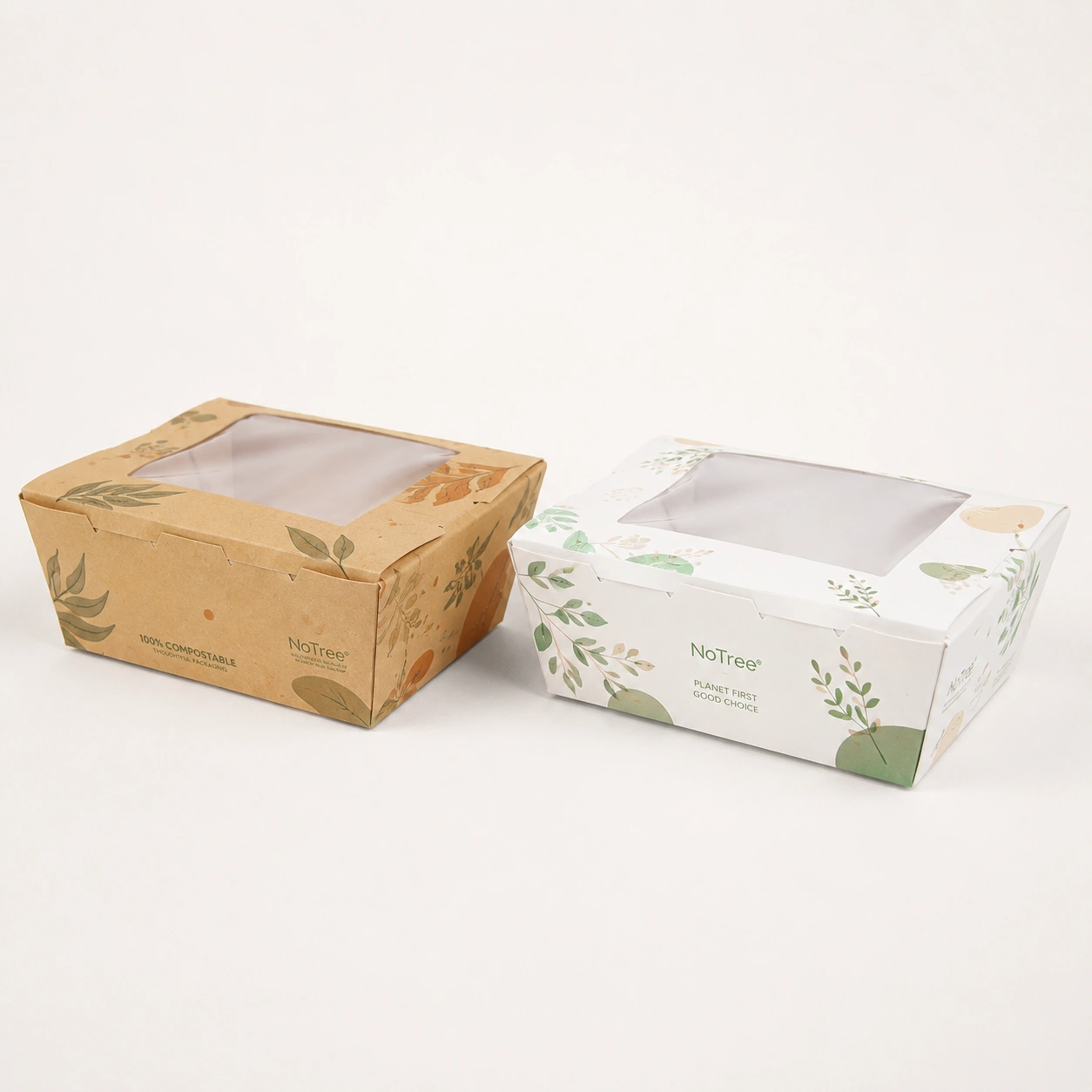
Custom Paper Food Boxes with Window are paper-based display and takeaway containers manufactured by Bioleader® for sandwiches, pastries, salads, snacks, deli foods, desserts, and ready-to-eat meals. Available in natural kraft paper or customizable white card, they combine clear product visibility, practical food protection, custom sizes and structures, and branded printing for cafés, bakeries, retailers, food chains, distributors, and private-label foodservice buyers. Buyers specifying this format can compare it with the custom kraft paper containers. The paper food boxes 500–2000ml provides a focused reference for this product configuration.
Buyers can compare this product within the broader paper food box range. For relevant size, material, and sourcing comparisons, review the paper food packaging solutions. For another same-family option, compare the Custom Paper Sandwich Boxes with Window.
Bioleader® window food boxes are manufactured from food-grade kraft paper and can also be customized in white card when buyers require a cleaner background for brighter graphics or retail-style presentation. A die-cut transparent window allows the packed food to remain visible without repeatedly opening the box, making the format practical for bakery counters, cafés, delis, grab-and-go displays, catering, and takeaway service. Production normally includes paper selection, printing, die-cutting, creasing, window opening preparation, window film application, folding, gluing, inspection, and export packing. Paper weight, box structure, window shape, window position, and dimensions can be adjusted according to the food type and final packaging requirements.
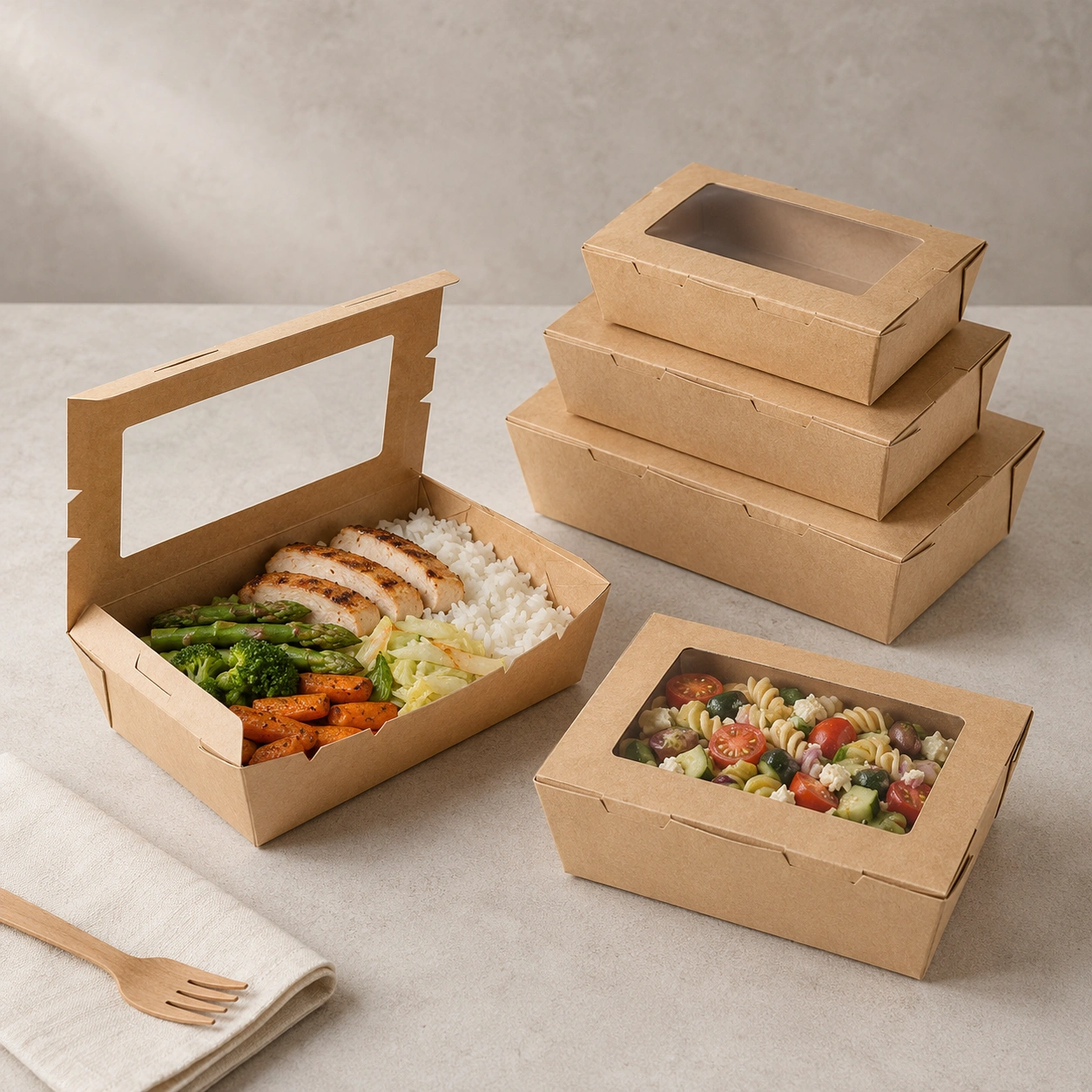
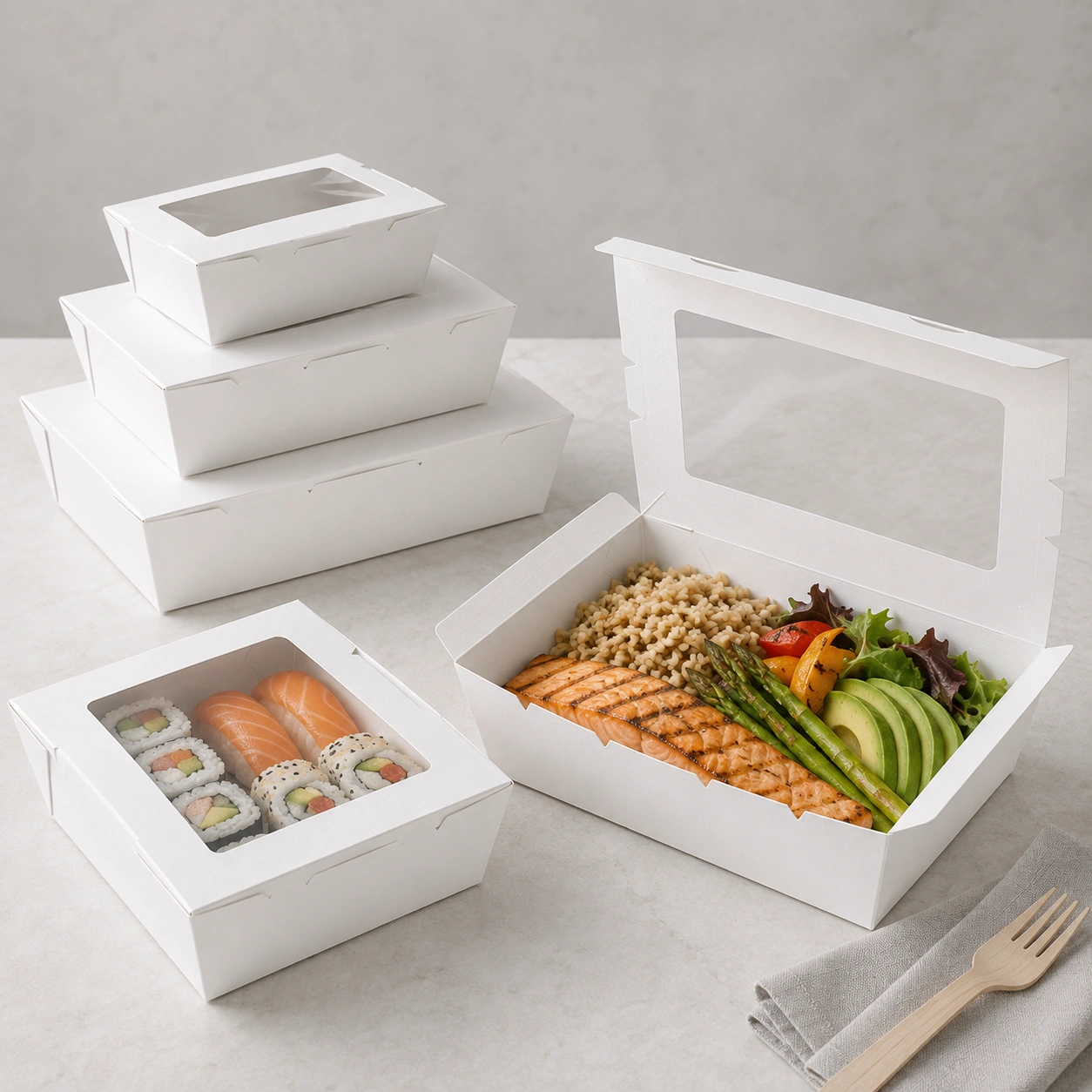
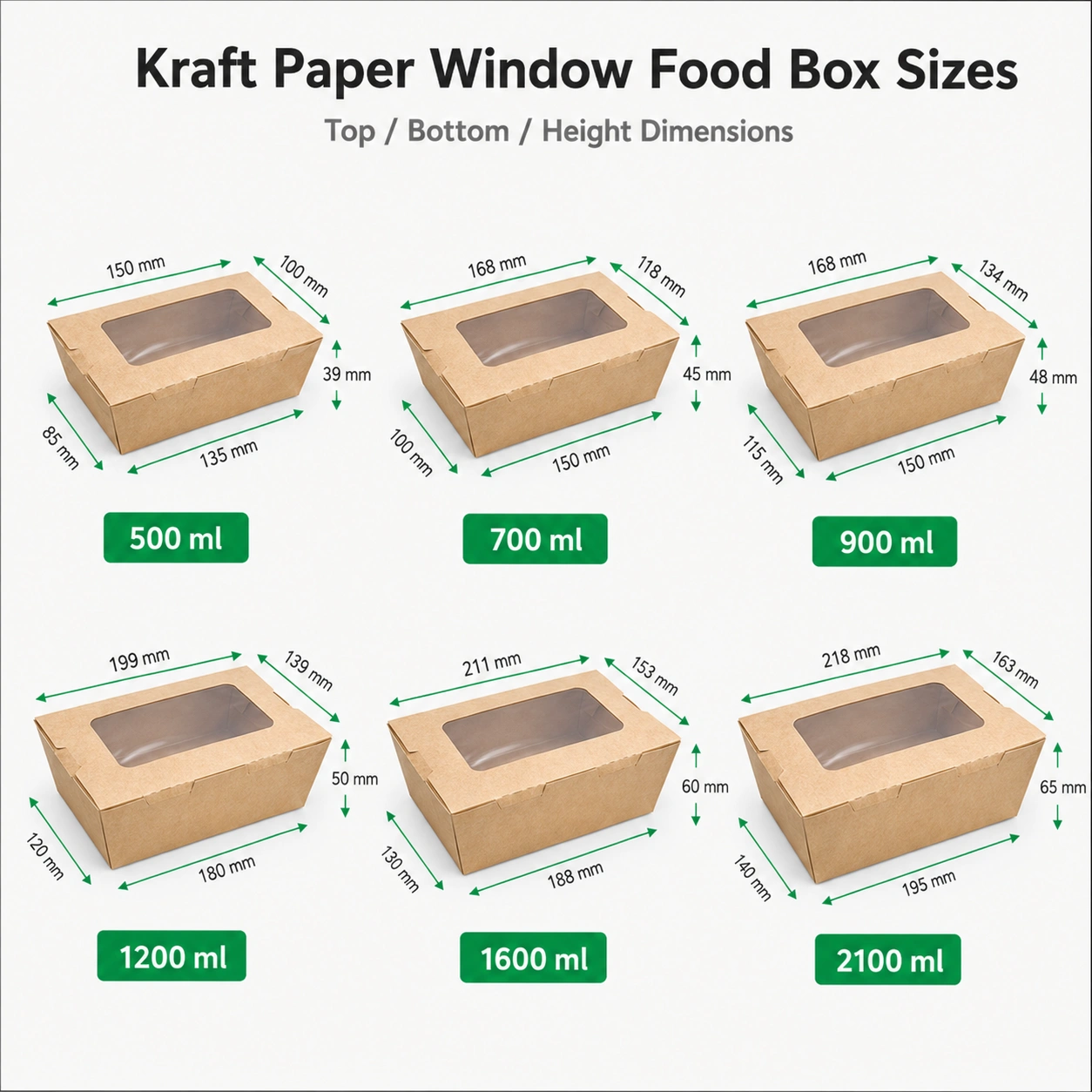
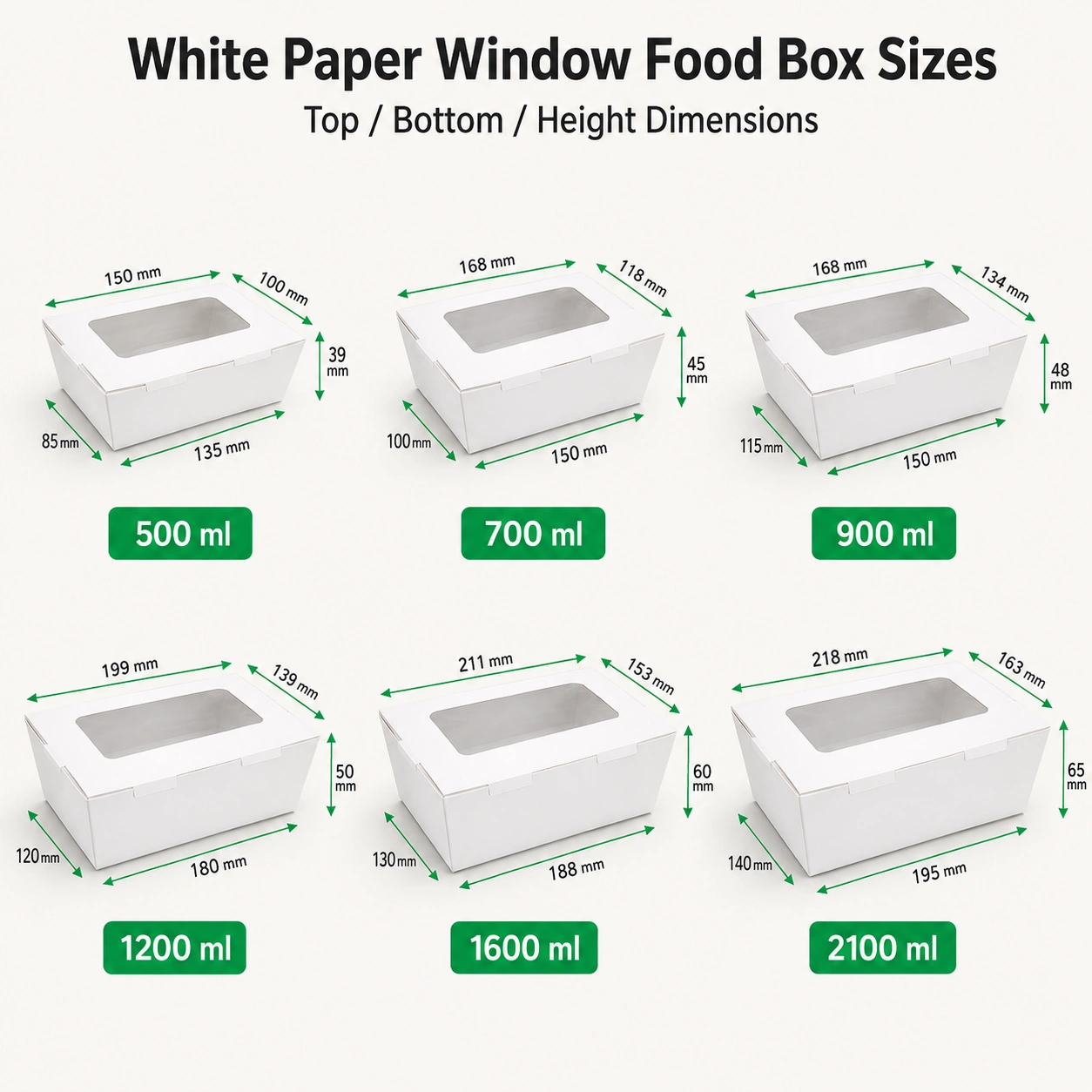
Custom window food packaging can be developed around the food shape, portion size, box dimensions, opening style, window shape, window position, paper color, printing area, and brand artwork. Existing structures are practical for common takeaway and retail applications, while custom dimensions can be developed for sandwiches, pastries, cakes, salads, sushi, snacks, desserts, and specialty ready-to-eat foods. Kraft paper provides a natural packaging appearance, while white card offers a brighter base for detailed graphics. Printing can include logos, slogans, QR codes, product information, promotional graphics, and private-label artwork.
| Application | Use Scenario |
|---|---|
| Bakery & Pastry Shops | Clear windows make pastries, cakes, cookies, desserts, and bakery snacks visible while keeping them packaged for takeaway. |
| Cafés & Delis | Suitable for sandwiches, wraps, salads, deli foods, snacks, and prepared meals displayed at service counters. |
| Grab-and-Go Retail | Product visibility helps customers identify ready-to-eat foods quickly in convenience stores and chilled retail displays. |
| Takeaway & Food Delivery | Paper box structures provide practical handling for packed meals, snacks, bakery items, and short-distance takeaway orders. |
| Catering & Events | Window boxes provide convenient individual presentation for sandwiches, desserts, snacks, lunch portions, and event foodservice. |
| Private Label & Distribution | Custom structures, sizes, and printed artwork support food brands, restaurant groups, distributors, and private-label packaging programs. |
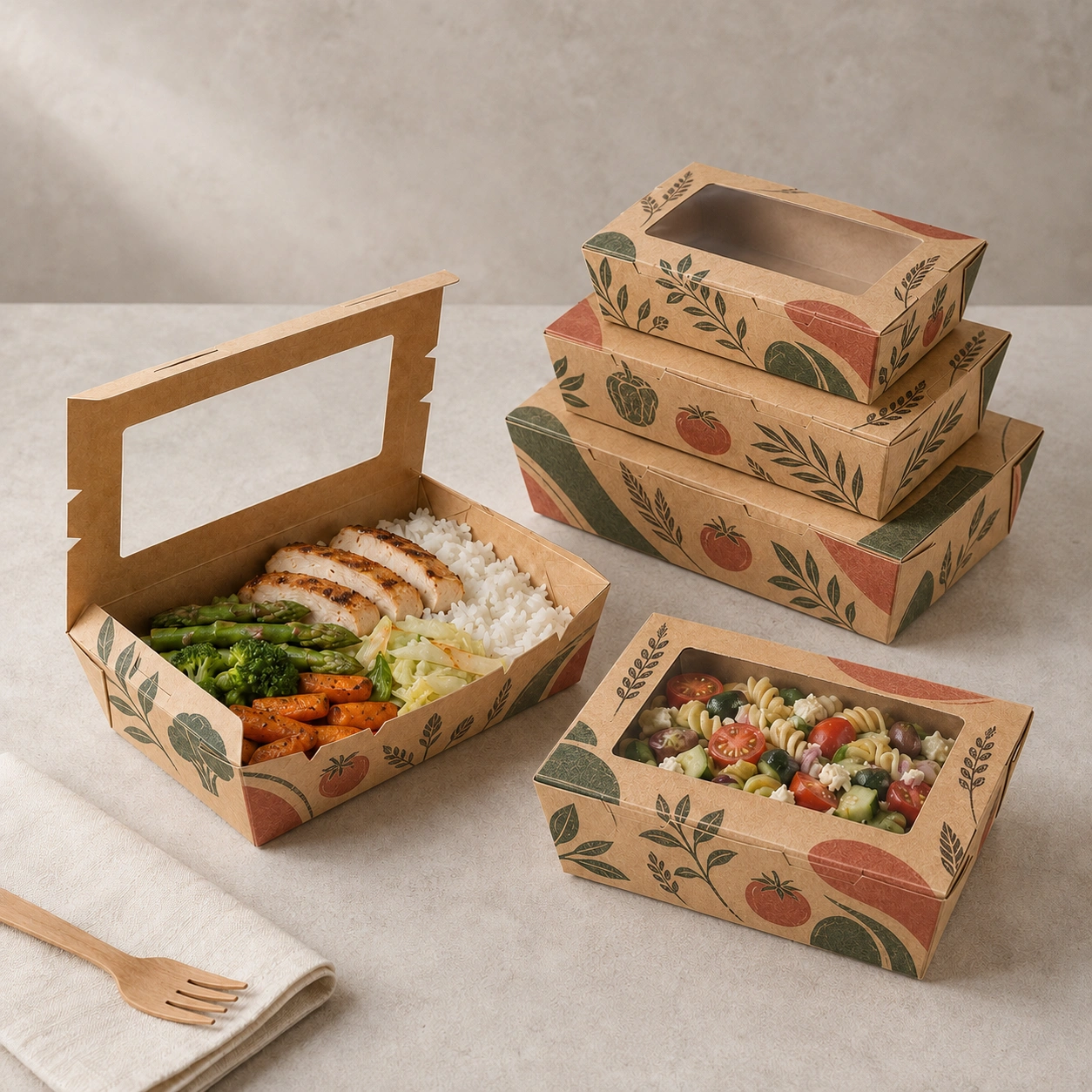
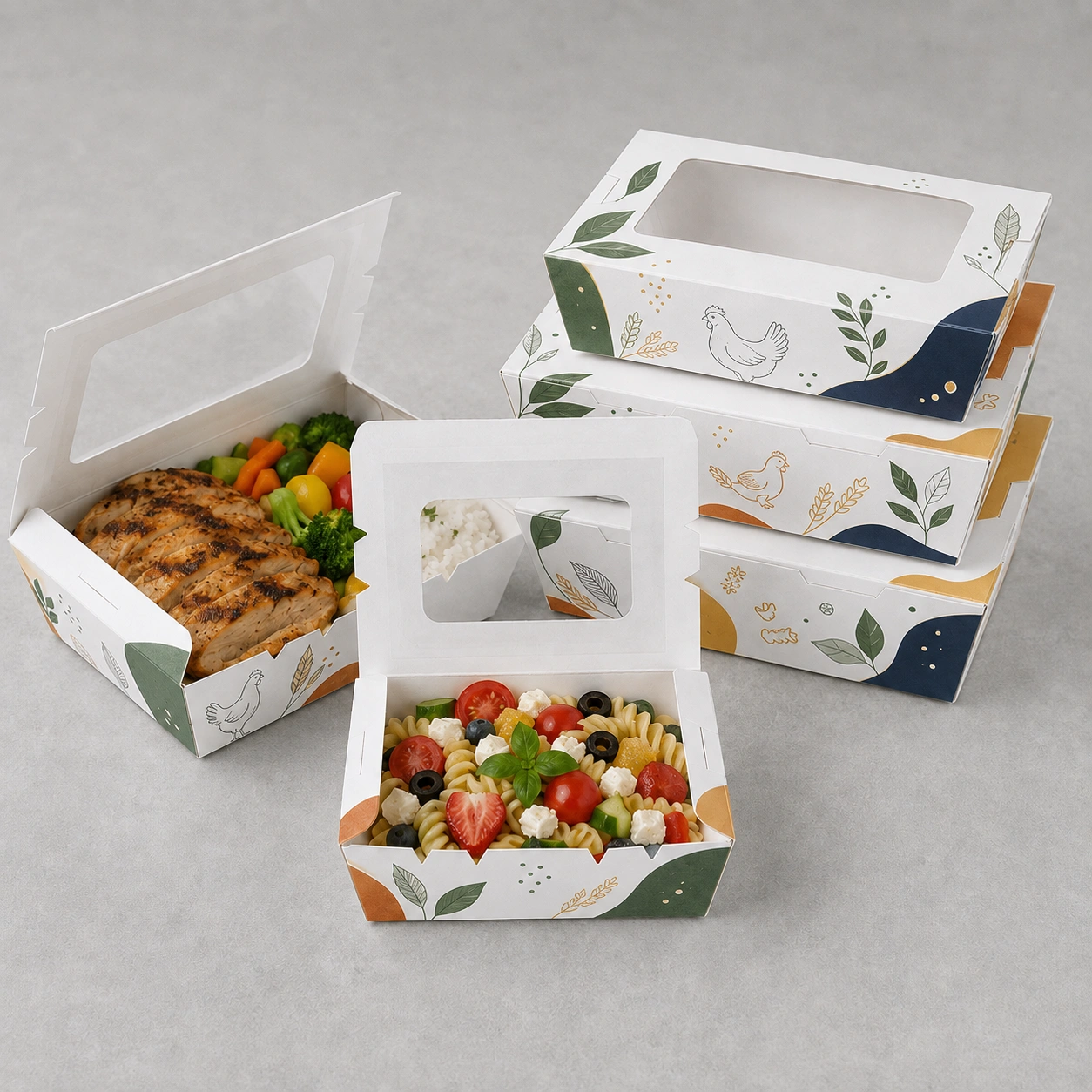
| Printing Factor | Recommendation |
|---|---|
| Kraft Paper | Best suited to dark logos, simple high-contrast graphics, natural branding themes, and restrained color coverage. |
| White Card | Provides a cleaner base for brighter colors, detailed graphics, retail-style designs, and stronger visual contrast. |
| Window Position | Important logos, product names, and mandatory information should be positioned away from the die-cut window area. |
| Logo & Brand Printing | Custom logos, slogans, QR codes, product information, contact details, and promotional artwork can be integrated into the box design. |
| Artwork Preparation | Vector artwork, approved dielines, and clear Pantone or CMYK references help improve prepress accuracy and production consistency. |
| Repeat Production | Using the same approved paper specification, dieline, window layout, artwork, and color references helps maintain consistency across repeat orders. |
Selecting a window food box should begin with the packed food rather than the appearance of the box alone. Buyers should consider food dimensions, weight, moisture and grease level, storage temperature, display method, required window area, closing structure, printing, carton packing, and expected order volume. Bioleader® supports wholesale, OEM, and private-label projects through material selection, structural development, artwork coordination, production inspection, packing control, and export supply planning. Existing structures can simplify development, while fully customized projects should be confirmed through dimensions, drawings, artwork, and final material specifications before mass production.
| Buying Consideration | Bioleader® Supply Approach |
|---|---|
| Material Selection | Kraft paper and customizable white card provide different options for natural presentation, printing quality, and retail positioning. |
| Window Design | Window shape and position can be evaluated according to product visibility, structural strength, usable print area, and packed food dimensions. |
| Custom Sizes | Dimensions and structures can be developed around sandwiches, pastries, salads, snacks, desserts, sushi, and other ready-to-eat foods. |
| Custom Printing | Logo placement, artwork, colors, QR codes, promotional graphics, and private-label designs can be coordinated before production. |
| Manufacturing Control | Paper preparation, printing, die-cutting, window fitting, folding, gluing, inspection, and export packing can be managed through one production workflow. |
| Certification & Documentation | Food-contact, paper sourcing, environmental, or destination-market documentation should be confirmed against the actual paper, coating, window film, adhesive, and ordered specification. |
| Supply Chain Consistency | Confirmed materials, approved dielines, stable window specifications, and production-ready artwork help improve consistency across repeat wholesale orders. |
| Lead Time | Existing structures and approved artwork normally require less preparation than completely new sizes, structures, or window designs. |
Kraft Paper Box Wholesale |
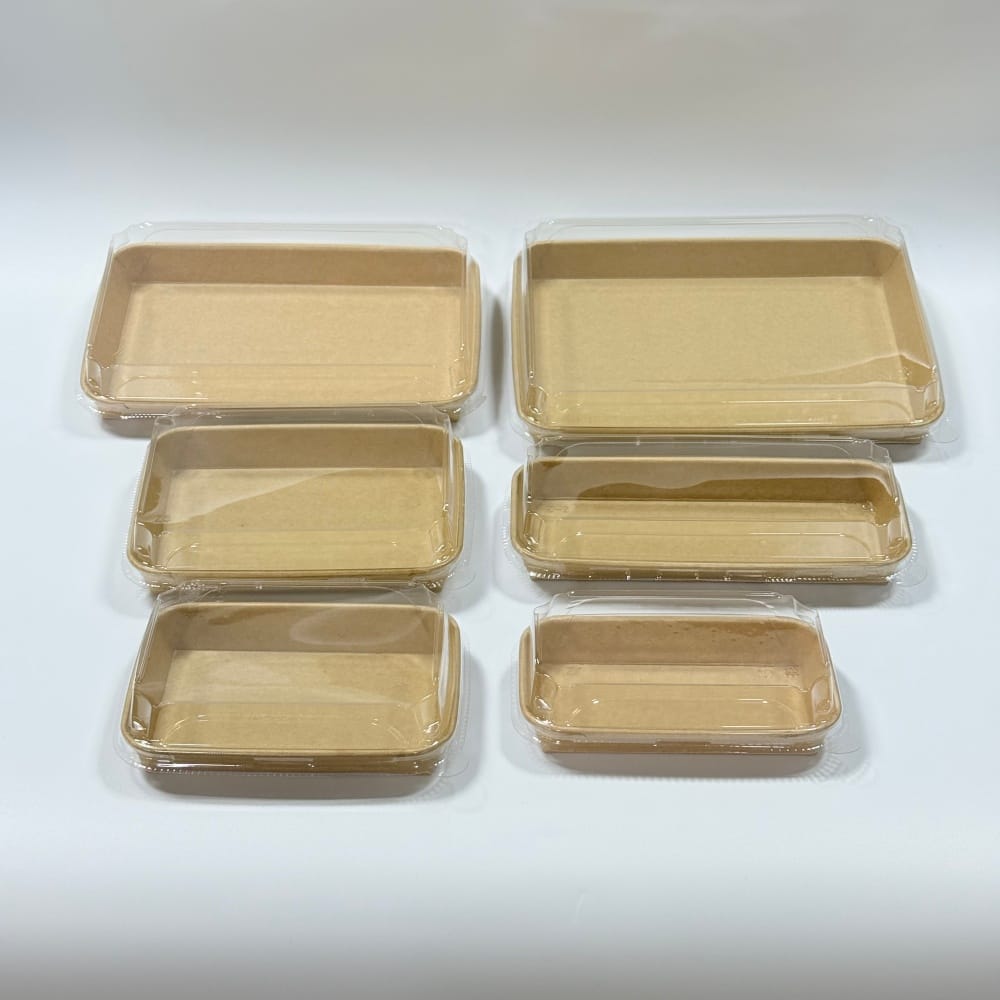
Kraft Paper Sushi Tray with Clear Plastic Lid |
Paper Food Box |
Product definition
Paper food boxes with windows are paper-based containers designed to package and display ready-to-eat foods while keeping part of the product visible through a transparent window. They combine food containment, retail presentation, printable branding space, and visual product recognition in one package.
Why the window adds value
Visibility is particularly useful for bakery goods, sandwiches, salads, desserts, snacks, deli products, and grab-and-go foods because customers can evaluate the appearance and portion without opening the package. For retailers and foodservice operators, this can simplify display and make different products easier to identify.
Material options
Kraft paper provides a natural paper appearance and works well with simple high-contrast branding. White card provides a cleaner surface for brighter colors and detailed retail graphics. The final specification should also consider food weight, grease or moisture exposure, storage conditions, required rigidity, window material, and any internal barrier treatment.
Window and structure options
Buyers can customize box length, width, height, closing structure, window size, window shape, window position, paper color, and print layout. A larger window increases product visibility but reduces available paperboard and printing area, so window design should balance presentation with structural performance and branding requirements.
How buyers should specify the product
A professional quotation should define the food type, packed dimensions, food weight, box dimensions, paper preference, window requirement, printing design, quantity, packing method, and destination market. Applications involving grease, moisture, refrigeration, warming, or longer holding periods should also state the expected temperature and service conditions before the material structure is finalized.
Recyclability and environmental claims
A window food box is usually a multi-material package unless the paperboard, window, coating, and adhesive are designed for a compatible recovery route. Recycling or composting performance therefore cannot be determined from the kraft appearance alone. Buyers should evaluate the complete material specification and local collection infrastructure before making recyclable, biodegradable, plastic-free, or compostable claims.
Food-contact and market compliance
Compliance requirements should be linked to the actual finished specification. Paperboard, printing inks, coatings, adhesives, and window film can all affect documentation requirements. Importers should identify destination-market requirements before bulk production so the supplier can match the requested material and supporting documentation to the final order.
Market direction
Window food packaging increasingly sits between conventional takeaway packaging and retail display packaging. Buyers are not only comparing unit price. They are also evaluating food visibility, printing quality, material reduction, shelf presentation, assembly speed, storage efficiency, disposal routes, supply stability, and the ability to maintain the same specification across multiple products.
Alternative packaging options
Window paper boxes are most useful when product visibility is important. Closed kraft boxes offer more uninterrupted printing area and may simplify material construction, while paper trays with transparent lids can provide wider top visibility for sushi, salads, deli meals, and retail foods. The best format depends on product shape, moisture level, display requirements, transport conditions, branding, and end-of-life priorities.
Buyer takeaway
The right window food box should fit the food accurately, provide enough visibility without weakening the structure, maintain usable branding space, match the required food-contact conditions, and remain practical to manufacture, pack, transport, and reorder at wholesale scale.
Paper food boxes with windows are used for packaging and displaying sandwiches, bakery products, pastries, salads, sushi, snacks, desserts, deli foods, and other ready-to-eat meals. The paper structure holds and protects the food, while the transparent window allows customers to see the product before purchase. They are commonly used by cafés, bakeries, restaurants, delis, convenience stores, catering companies, takeaway businesses, and grab-and-go retailers.
Yes. Window food boxes can be customized in length, width, height, box structure, paper color, window shape, window position, logo placement, printing colors, QR codes, promotional graphics, and private-label artwork. Buyers should provide the food dimensions, required box size, artwork, expected quantity, and window requirements so the manufacturer can determine whether an existing structure is suitable or a new dieline is required.
Suitability depends on the complete box specification. Paperboard weight, barrier coating, window material, adhesive, food moisture, grease level, holding time, and service temperature can all affect performance. Boxes for salads, pastries, sandwiches, and chilled foods may require different specifications from boxes used for warm or oily takeaway meals. Buyers should provide the actual food application and expected temperature before confirming the material structure.
Recyclability or compostability depends on all materials used in the finished box, including the paperboard, transparent window, coatings, printing inks, adhesives, and food contamination. A kraft paper appearance alone does not mean the complete package is recyclable or compostable. Buyers should confirm the final material specification and check the recovery or composting infrastructure available in the destination market before making environmental disposal claims.
For an accurate quotation, buyers should provide the food type, required box dimensions or product dimensions, kraft or white card preference, window size and position, printing artwork, expected order quantity, packing requirements, intended food temperature, and destination country or port. Any required food-contact, material sourcing, recycling, or compostability documentation should also be specified before the final material and production plan are confirmed.