

Quick Summary:
PLA, PLA+ and CPLA are related materials, but they are not interchangeable. PLA is a defined thermoplastic polyester commonly made from fermented plant-derived sugars. PLA+ is not a standardized polymer name; it is a commercial term used for modified PLA formulations whose additives and performance vary by manufacturer. CPLA generally refers to crystallized PLA-based material designed for greater heat resistance and dimensional stability. For food packaging, 3D printing or compostability claims, buyers should evaluate the actual formulation and finished-product documentation rather than rely on the material name alone.
Introduction
The world of 3D printing and sustainable food packaging frequently uses terms such as PLA, PLA+ and CPLA. Because all three names contain “PLA,” they are often treated as minor variations of the same material. In practice, the differences are more important than the names suggest.
PLA is an established polymer family. PLA+ is a broad commercial label for modified PLA and does not describe one universal formulation. CPLA generally refers to PLA-based material with increased crystallinity and is commonly associated with applications that require greater heat resistance, including selected foodservice utensils.
This article explains the differences between PLA, PLA+ and CPLA from a material-science and application perspective. It also separates 3D-printing terminology from food-packaging requirements, because a material suitable for printing is not automatically suitable for direct food contact, industrial composting or high-temperature foodservice use.

What is PLA?
PLA, or polylactic acid, is a thermoplastic polyester commonly produced from lactic acid derived through fermentation of carbohydrate feedstocks such as corn dextrose, sugarcane or other plant-derived sugars. PLA is therefore commonly bio-based, but it is still a plastic.
For a more complete explanation of PLA chemistry, manufacturing, degradation and end-of-life behavior, see Bioleader®’s scientific and practical introduction to polylactic acid.

Characteristics of PLA
- Good printability: PLA is widely used in desktop FDM 3D printing because many grades are relatively easy to process and show limited warping compared with some engineering plastics.
- Clarity and surface appearance: suitable grades can provide good transparency, gloss and stiffness, which is valuable in clear packaging applications.
- Industrial compostability potential: finished PLA products may qualify for industrial-compostability certification when their complete construction meets the applicable standard.
- Limited heat resistance: standard amorphous PLA loses dimensional stability at temperatures well below its melting point, which limits many hot-food and hot-drink applications.
Benefits of PLA
- Commercially established and widely available compared with many newer bioplastics.
- Commonly produced from renewable carbohydrate feedstocks.
- Good stiffness, clarity and printability for suitable applications.
- Can be processed into films, thermoformed packaging, injection-molded parts and 3D-printing filament.
Limitations of PLA
- Standard grades can be relatively brittle under impact or repeated flexing.
- Standard clear PLA has limited practical heat resistance.
- Industrial compostability should not be confused with home compostability or rapid degradation in soil, water or landfill.
- Dedicated PLA recycling and industrial-composting infrastructure are not available in every market.
What is PLA+?
PLA+ is one of the most misunderstood terms in this comparison. Unlike PLA, PLA+ is not a single standardized polymer grade with one universally defined composition. It is a commercial term commonly used by filament and material manufacturers for modified PLA formulations intended to improve one or more properties of standard PLA.
Depending on the manufacturer, a PLA+ formulation may contain impact modifiers, plasticizers, elastomeric components, nucleating agents, fillers, other polymers or proprietary additives. As a result, two products both sold as “PLA+” can have significantly different strength, flexibility, printing temperature, heat resistance and end-of-life behavior.

Key Improvements Commonly Associated with PLA+
- Improved toughness: many PLA+ filaments are formulated to reduce the brittleness associated with standard PLA.
- Better impact resistance: some formulations are designed for functional prototypes or parts exposed to greater mechanical stress.
- Modified printing behavior: layer adhesion, flow characteristics and printing temperature may differ from standard PLA.
- Possible heat-performance improvement: certain formulations may perform better at elevated temperatures, but this cannot be assumed from the PLA+ name alone.
Applications of PLA+
- Functional 3D-printed prototypes.
- Models requiring more toughness than standard PLA.
- General-purpose printed components where the specific PLA+ formulation provides the required mechanical properties.
What is CPLA?
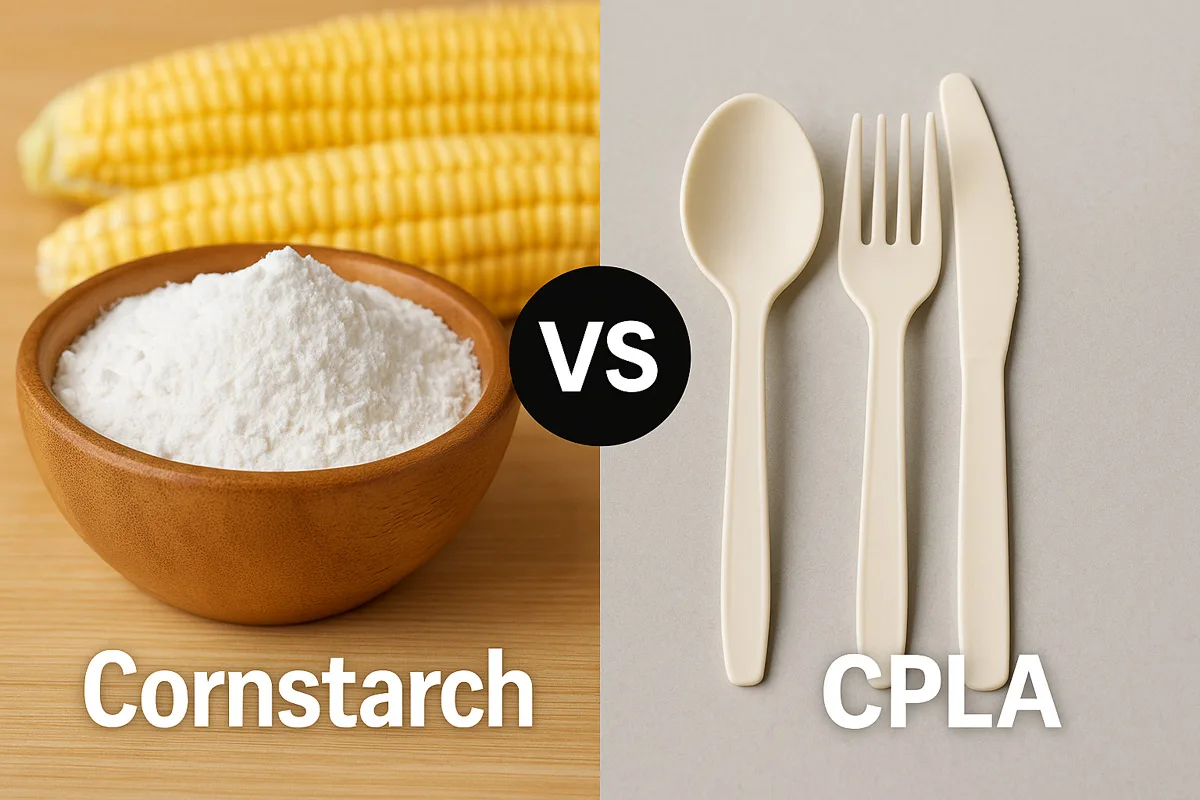
CPLA generally refers to crystallized PLA-based material. By increasing crystallinity and controlling the formulation and processing conditions, manufacturers can improve the dimensional stability and heat resistance of PLA-based articles. This makes CPLA particularly useful for applications where ordinary amorphous PLA would soften too easily.
CPLA is commonly associated with disposable cutlery and other foodservice articles that require greater heat resistance than standard clear PLA.

Characteristics of CPLA
- Higher heat resistance: CPLA is generally designed to retain dimensional stability at higher temperatures than standard amorphous PLA. Actual service temperature depends on the formulation, crystallinity, product design and testing.
- Higher crystallinity: increased crystallinity is a major reason CPLA behaves differently from transparent amorphous PLA.
- Usually less transparent: crystallization commonly produces a more opaque appearance, so CPLA is not normally chosen when high optical clarity is required.
- Potential industrial compostability: finished CPLA products may be certified for industrial composting when the complete formulation and product satisfy the applicable requirements.
Applications of CPLA
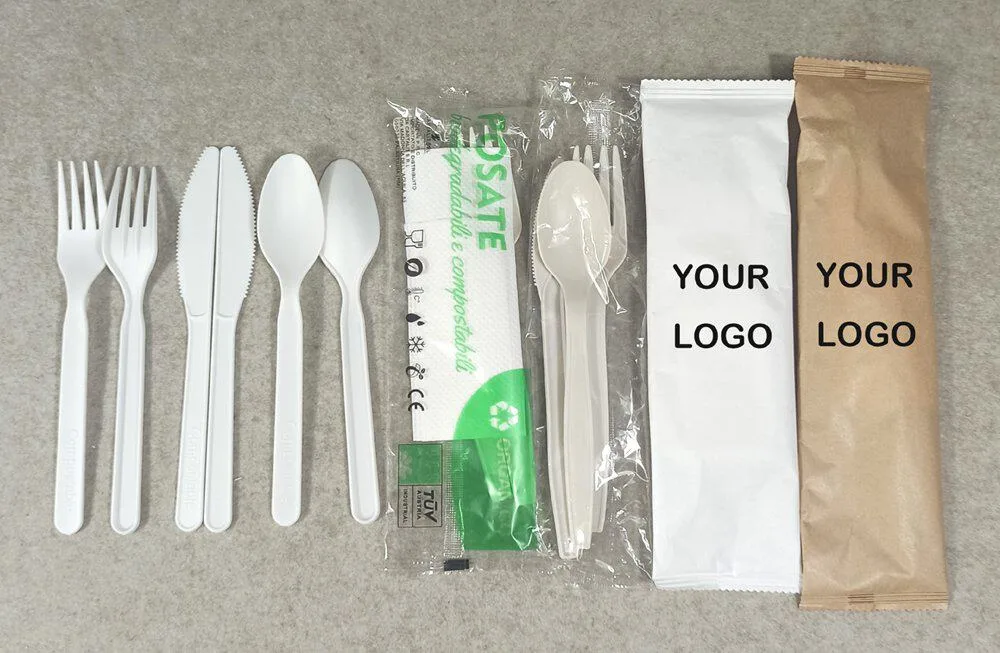
- Foodservice CPLA cutlery, including forks, spoons and knives.
- Selected higher-heat foodservice components where a CPLA formulation has been designed and tested for the intended use.
- Applications that require more dimensional stability than standard amorphous PLA can provide.
Comparison: PLA, PLA+, and CPLA
| Property | PLA | PLA+ | CPLA |
|---|---|---|---|
| What it is | Defined thermoplastic polyester family | Commercial term for modified PLA formulations | Crystallized or higher-crystallinity PLA-based material |
| Standardized composition | Polymer chemistry is defined; grades vary | No universal composition | PLA-based, but formulations and additives vary |
| Typical purpose | General PLA applications | Improve toughness, printability or other performance | Improve heat resistance and dimensional stability |
| Appearance | Can be highly transparent | Varies by formulation | Usually more opaque |
| Rigidity | Generally high | Formulation-dependent | Generally high |
| Impact resistance | Often limited in standard grades | Often improved | Product-dependent |
| Heat resistance | Limited in standard amorphous grades | Varies widely; check supplier data | Generally higher than standard PLA |
| 3D printing | Very common | Very common | Less common for general desktop printing |
| Clear cold-food packaging | Common application | Not determined by the PLA+ name | Usually not selected when high clarity is required |
| Hot-food cutlery | Normally unsuitable in standard form | Cannot be determined from the name alone | Common commercial application |
| Industrial compostability | Possible for certified finished products | Must be verified for the specific formulation | Possible for certified finished products |
| Food-contact suitability | Product-specific | Must be verified independently | Product-specific |
Is PLA+ the Same as CPLA?
No. PLA+ and CPLA describe different concepts.
- PLA+ is a commercial term for modified PLA. There is no single PLA+ formulation, manufacturing process or standardized set of properties.
- CPLA refers to PLA-based material in which increased crystallinity is used as an important route to improving heat resistance and dimensional stability.
A PLA+ formulation could theoretically use crystallization-related additives or processing technologies, but that does not make every PLA+ material CPLA. The supplier’s actual resin formulation, technical data and finished-product performance should determine how the material is classified and used.
Which Material Should You Choose?
The right material depends on the application rather than on which name sounds more advanced.
- Choose standard PLA when clarity, stiffness, relatively simple 3D printing or cold-packaging performance is important and the temperature requirements are suitable.
- Consider PLA+ for 3D-printing applications that require more toughness, impact resistance or modified printing behavior, but compare the actual manufacturer’s technical data because PLA+ formulations are not standardized.
- Consider CPLA for selected applications requiring greater heat resistance, especially foodservice cutlery, provided the finished product has appropriate food-contact and performance documentation.
Environmental Impact
PLA is commonly made using renewable carbohydrate feedstocks, which can reduce reliance on fossil-derived polymer feedstocks. CPLA is PLA-based and therefore can retain this renewable-carbon advantage depending on the formulation. PLA+, however, is formulation-dependent, so the amount and type of modifiers or additional polymers must be considered before making broad environmental claims.
Bio-based origin should also not be confused with compostability. A plant-derived polymer is not automatically home-compostable, and a product described as biodegradable should not be assumed to disappear quickly in the natural environment.
Certified PLA and CPLA products may qualify for industrial composting, but certification normally applies to the tested finished material or product. Additives, pigments, labels, inks or other components can affect whether a particular formulation meets the relevant requirements.
PLA+ needs particular caution. Because PLA+ is not a standardized composition, a compostability claim made for ordinary PLA cannot automatically be transferred to a PLA+ filament or molded article. Buyers should check the applicable certification and formulation-specific evidence.
Recycling is technically possible for appropriately sorted PLA streams, but dedicated PLA recycling remains limited in many markets. Incorrectly placing PLA into another plastics stream may create sorting or processing problems. The environmental performance of any of these materials therefore depends partly on collection and treatment infrastructure, not only on resin chemistry.
For a broader comparison of bio-based and conventional plastics, see Bioleader®’s guide to bioplastics versus traditional plastics.
Practical Tips for Using PLA, PLA+, and CPLA in 3D Printing
PLA and PLA+ are common 3D-printing materials, but printing settings should follow the filament manufacturer’s technical guidance rather than a universal temperature range.
| 3D Printing Factor | PLA | PLA+ |
|---|---|---|
| Ease of printing | Generally easy | Usually easy, but formulation-dependent |
| Toughness | Often lower | Often improved |
| Warping | Usually limited | Usually manageable, depending on formulation |
| Print temperature | Follow the filament supplier’s range | Follow the specific PLA+ supplier’s range |
| Typical use | General models, prototypes and decorative printing | Tougher prototypes and functional parts |
- Check manufacturer settings: PLA+ formulations can differ substantially, so nozzle and bed-temperature recommendations should come from the filament supplier.
- Control moisture: resin or filament moisture can affect processing quality and mechanical performance.
- Do not assume food safety: a printable PLA or PLA+ filament is not automatically suitable for food-contact applications merely because the base polymer is PLA.
- Consider the finished object: printing conditions, additives, pigments, surface porosity and cleaning requirements can all affect practical use.
Can PLA, PLA+, and CPLA Be Used in Disposable Tableware or Food Packaging?
These materials have very different roles in foodservice packaging. The most important distinction is that food-contact suitability must be verified for the specific finished product, not inferred from the material name alone.
| Foodservice Factor | PLA | PLA+ | CPLA |
|---|---|---|---|
| Typical foodservice role | Clear cold cups, lids and transparent cold-food packaging | No universal foodservice role | Heat-resistant cutlery and selected foodservice articles |
| Cold beverage use | Common | Depends on formulation and documentation | Possible, but usually unnecessary |
| Hot beverage use | Standard clear cups normally unsuitable | Cannot be assumed | Depends on actual product design; CPLA is more commonly used for utensils |
| Transparency | Can be high | Varies | Usually lower due to crystallinity |
| Food-contact status | Must be verified for the finished article | Must be verified for the exact formulation | Must be verified for the finished article |
| Compostability claim | Possible with applicable finished-product certification | Cannot be assumed from the PLA+ name | Possible with applicable finished-product certification |
PLA for Cold Food and Beverage Packaging
Clear PLA is particularly useful where transparency and cold-use performance are important, including iced coffee, smoothies, juice, fruit tea, desserts and selected chilled foods. Buyers evaluating this application can review Bioleader®’s compostable PLA clear cups for commercially available cold-drink formats.
PLA+ for Food Packaging
PLA+ should not be treated as a standard food-packaging resin category. Because the modifier package differs by supplier, a PLA+ product should only be considered for direct food contact when the exact formulation and finished article have appropriate documentation for the intended food, temperature and market.
CPLA for Foodservice Cutlery
CPLA is commonly used where disposable utensils need greater heat resistance than standard amorphous PLA can normally provide. Typical applications include forks, spoons and knives. Product-specific temperature limits should still be confirmed rather than inferred from a generic CPLA label.
Buyer verification checklist:
- Confirm the exact resin or material formulation.
- Check the intended food and temperature conditions.
- Review finished-product food-contact documentation.
- Check whether compostability certification covers the finished article.
- Confirm whether the destination market accepts the intended disposal pathway.
- For Bioleader® products, buyers can review the available certificates and compliance documents relevant to the selected item.
Challenges and Limitations
- Material names do not guarantee performance: this is particularly important for PLA+, whose composition varies between suppliers.
- Heat performance is product-specific: crystallinity, resin grade, additives, thickness and processing conditions all influence actual service temperature.
- Food contact and compostability are separate requirements: neither claim automatically proves the other.
- PLA and CPLA need appropriate end-of-life infrastructure: industrial-compostability certification has limited practical value if the local system does not collect or accept certified compostable packaging.
- Modified formulations require additional review: additives used to improve toughness or heat resistance can change mechanical, recycling or composting behavior.
Future of PLA, PLA+, and CPLA
Development of PLA-based materials is continuing in several directions. Researchers and material suppliers are working on improved crystallization control, tougher PLA blends, higher-heat formulations, more efficient processing and broader recycling technologies.
PLA+ is likely to remain a broad commercial category rather than a single standardized material, especially in 3D printing. For this reason, technical data and formulation-specific evidence will remain more important than the “PLA+” label itself.
CPLA and other high-crystallinity PLA systems may continue to expand in applications where standard PLA lacks sufficient thermal stability. However, commercial suitability will still depend on the finished product’s actual performance, food-contact documentation and applicable end-of-life certification.
Conclusion
PLA, PLA+ and CPLA all originate from PLA chemistry, but they represent different material concepts.
- PLA is a defined thermoplastic polyester used extensively in 3D printing and in suitable cold-food packaging applications.
- PLA+ is a non-standardized commercial term for modified PLA, so its strength, heat resistance, compostability and food-contact suitability cannot be determined from the name alone.
- CPLA is a crystallized PLA-based material generally designed for greater heat resistance and dimensional stability, making it useful for applications such as foodservice cutlery.
The practical choice should therefore be based on the required temperature, mechanical performance, transparency, food-contact conditions, end-of-life pathway and the technical evidence for the specific product. For foodservice buyers, Bioleader® recommends evaluating the complete finished article rather than choosing a material solely from a generic PLA, PLA+ or CPLA label.
Technical References & Sources
The following standards, policy sources and peer-reviewed literature provide technical context for the PLA material properties, crystallization behavior and compostability terminology discussed in this article:
- European Commission — EU Policy Framework on Bio-based, Biodegradable and Compostable Plastics. This framework distinguishes bio-based, biodegradable and compostable plastics and emphasizes that end-of-life claims depend on defined conditions and waste-management systems.
- ASTM International — ASTM D6400, Standard Specification for Labeling of Plastics Designed to be Aerobically Composted in Municipal or Industrial Facilities.
- European Standard EN 13432 — Packaging — Requirements for packaging recoverable through composting and biodegradation, including test and evaluation criteria for compostable packaging.
- Gao, P. & Masato, D. (2024) — The Effects of Nucleating Agents and Processing on the Crystallization and Mechanical Properties of Polylactic Acid: A Review. Micromachines, 15(6), 776. The review examines how formulation, processing and crystallinity influence PLA mechanical and thermal behavior.
FAQ
1. What are the main differences between PLA, PLA+ and CPLA?
PLA is a defined thermoplastic polyester. PLA+ is a commercial term for modified PLA formulations whose composition varies by manufacturer. CPLA generally refers to crystallized PLA-based material designed for greater heat resistance and dimensional stability.
2. Is PLA+ a standardized material?
No. PLA+ does not have one universal formulation or standardized set of properties. Different manufacturers may use different modifiers, polymers or additives, so technical performance should be checked from the specific product data.
3. Is PLA+ the same as CPLA?
No. PLA+ normally describes modified PLA sold under a commercial performance label, while CPLA refers to PLA-based material whose increased crystallinity is an important part of its higher-heat performance. The terms should not be used interchangeably.
4. Is CPLA more heat resistant than standard PLA?
Generally, yes. Increased crystallinity can give CPLA greater dimensional stability at elevated temperatures than standard amorphous PLA. The actual service temperature still depends on the formulation, product design and testing.
5. Is PLA+ compostable?
It cannot be determined from the PLA+ name alone. Because PLA+ formulations may contain different modifiers or additional polymers, industrial compostability should be verified from certification or testing for the specific formulation and finished product.
6. Can PLA+ be used for food packaging?
Potentially, but food-contact suitability must be established for the exact PLA+ formulation and finished article. A PLA+ 3D-printing filament or modified resin should not automatically be considered food-contact compliant simply because its base polymer contains PLA.
7. Is CPLA suitable for hot food and cutlery?
CPLA is commonly used for disposable cutlery and other applications that need greater heat resistance than standard amorphous PLA. However, actual temperature limits and food-contact suitability should be confirmed from the selected product specification and applicable documentation.
8. Which is better for 3D printing, PLA or PLA+?
Standard PLA is generally easy to print and suitable for models, prototypes and decorative parts. Many PLA+ formulations are designed to provide greater toughness or impact resistance, making them useful for more functional parts. Because PLA+ is not standardized, the manufacturer’s printing and performance data should guide the choice.