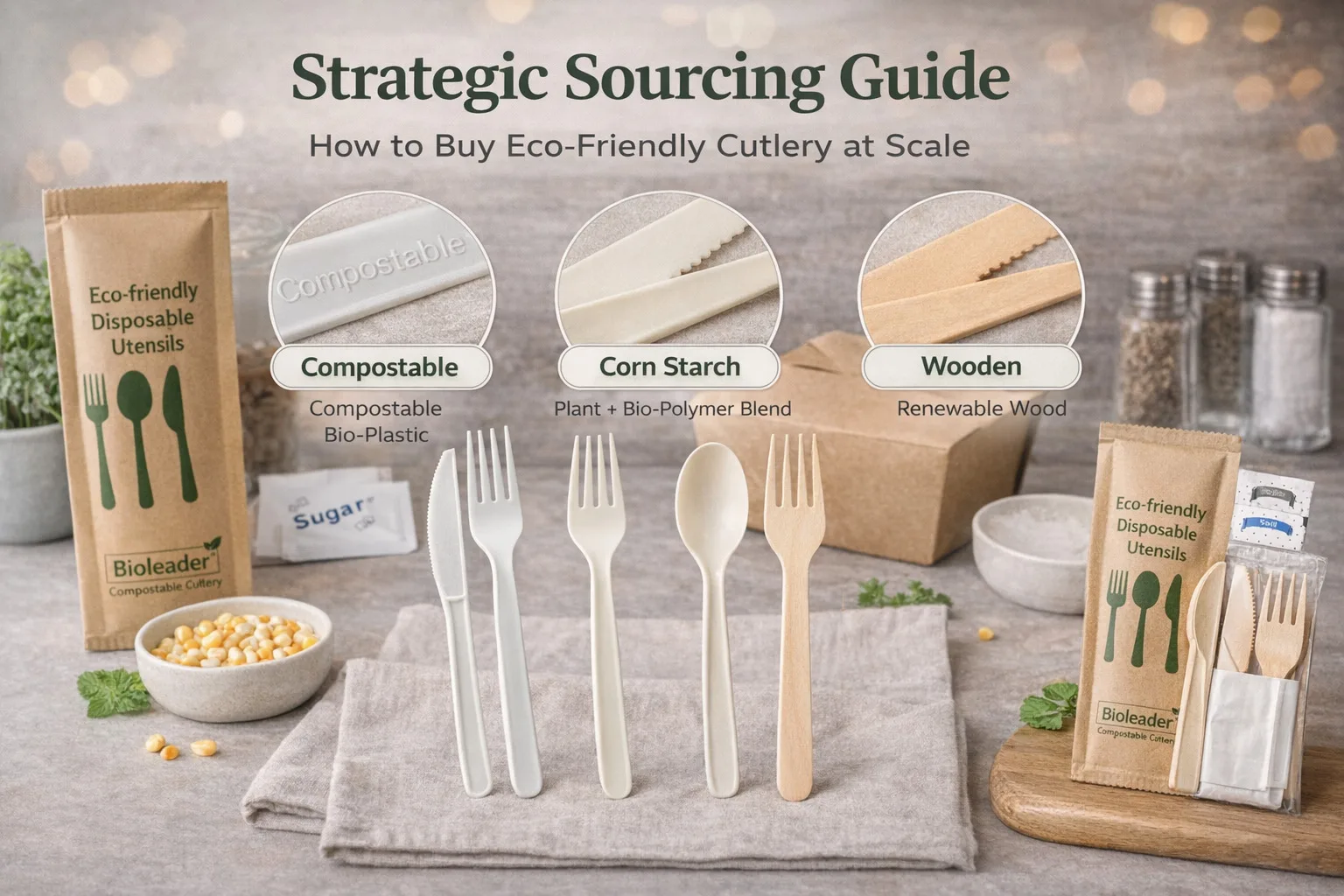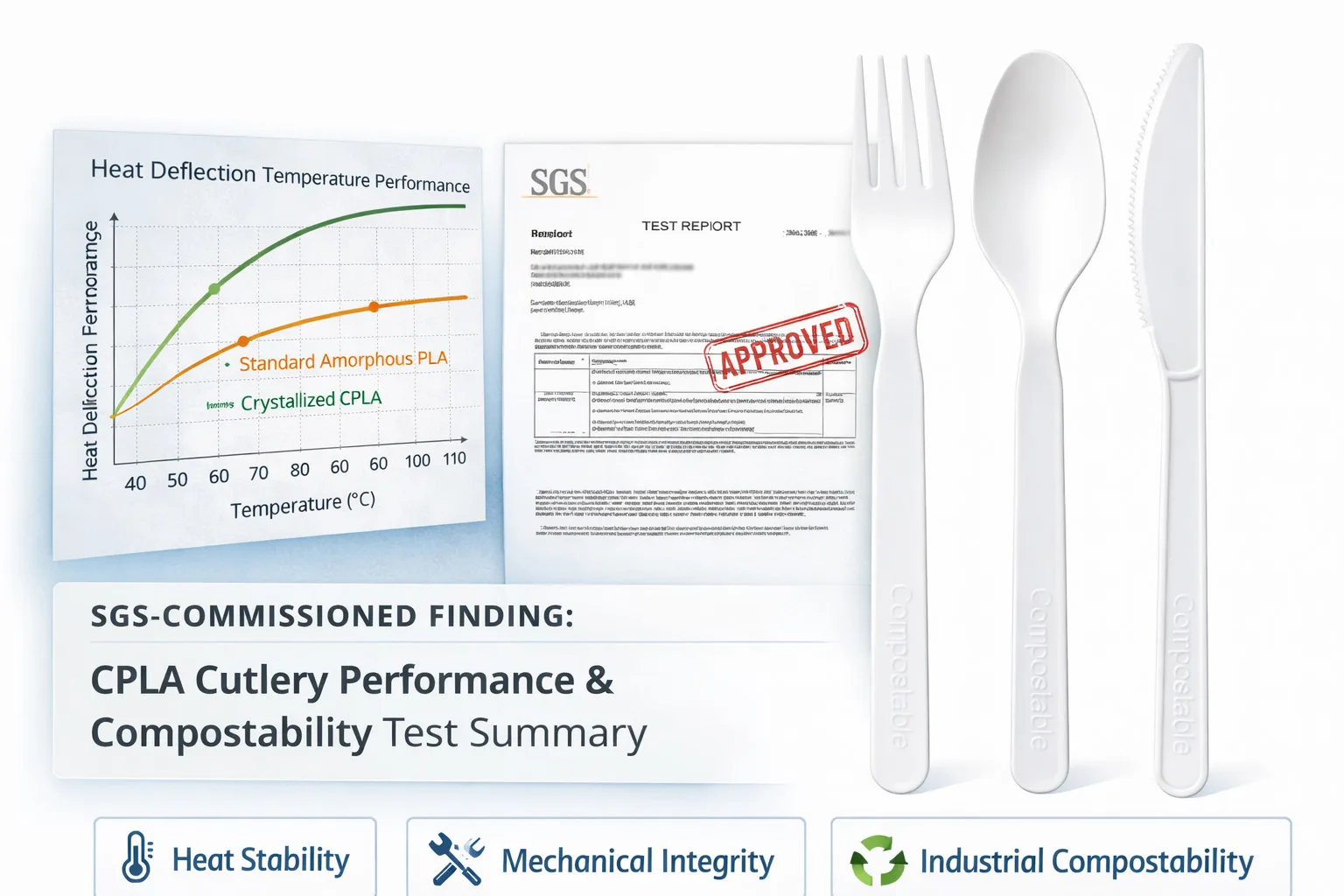










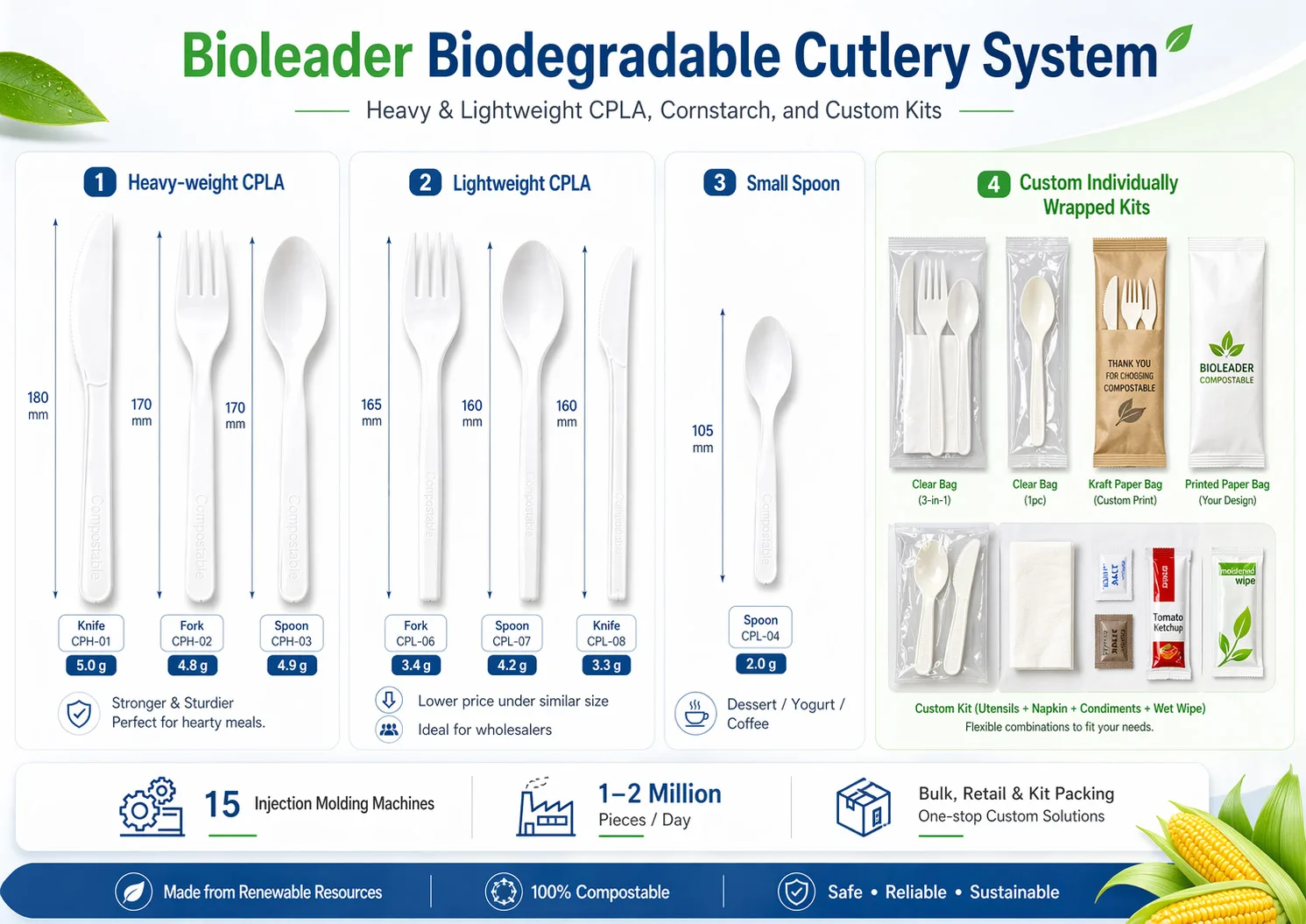
1. A More Demanding Market Is Reshaping Disposable Cutlery
The global market for disposable forks, spoons, and knives is changing fast. Buyers are no longer asking only whether a product is biodegradable or compostable. They are asking more practical and more commercial questions: Which material is suitable for hot meals? Which option is better for everyday takeaway? Can the supplier support both bulk supply and individually wrapped packs? Can the same factory handle retail sets, custom kits, and large distributor orders at the same time?
This shift matters. In today’s market, the real advantage is not one “eco-friendly” SKU. The real advantage is a supplier that can provide a structured product system with clear material positioning, workable price tiers, packaging flexibility, and reliable production support.
That is the direction Bioleader is advancing. Rather than treating biodegradable cutlery as one generic category, the company is building a product architecture that reflects how international buyers actually source: by market segment, budget target, use scenario, packaging format, and delivery requirement.
2. Bioleader Is Turning CPLA into a Clear Two-Tier Product Strategy
CPLA remains one of the core material routes in Bioleader’s cutlery portfolio. In many foodservice channels, CPLA cutlery is preferred because it supports a stronger product image, a more stable dining experience, and better alignment with projects that want a more premium compostable solution.
2.1 Heavy-Weight CPLA for Premium Positioning and Stronger Dining Performance
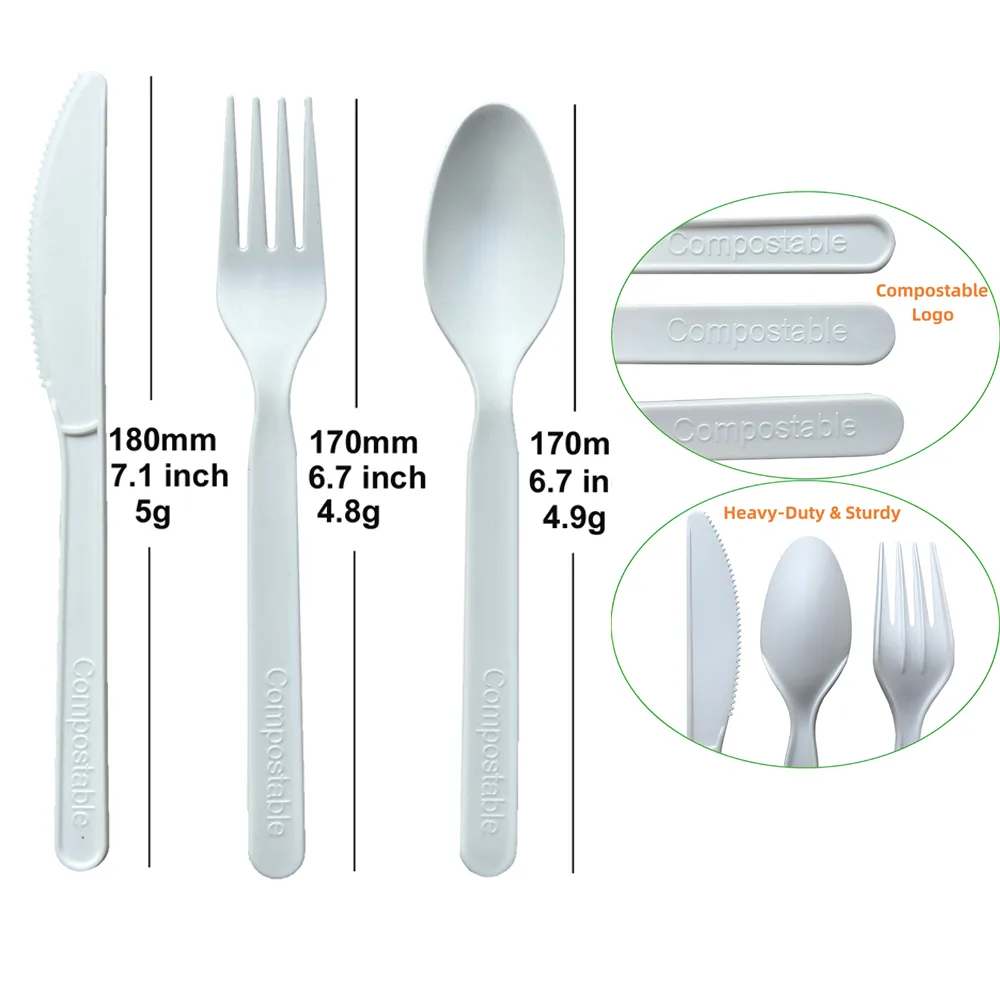
Bioleader’s heavy-weight CPLA cutlery is designed for buyers who want a firmer hand-feel, better rigidity, and a more premium user experience. This route is especially relevant for branded takeaway, chain restaurants, catering projects, airline meal packs, hospitality use, and other foodservice applications where presentation and dining quality matter.
From a commercial perspective, heavy-weight CPLA is not simply a heavier version of the same item. It is the premium line within the system. It helps importers and brand owners support higher-value positioning, especially in markets where customers expect stronger cutlery performance and a more refined finish.
2.2 Lightweight CPLA for Lower Pricing Under the Same Size System
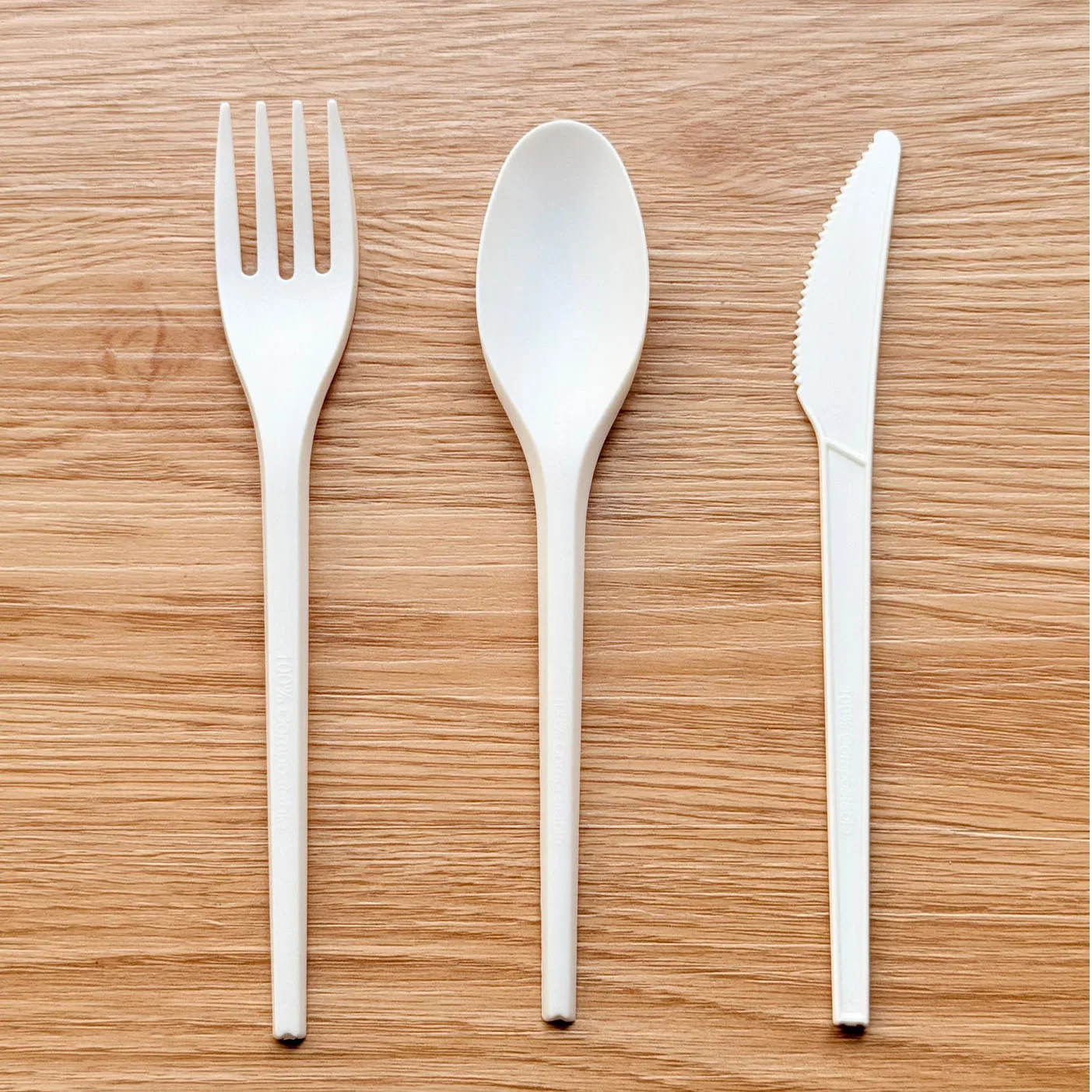
Bioleader’s lightweight CPLA series reflects a more direct understanding of global distribution logic. Not every buyer needs the highest-weight, highest-cost option, but many still want to stay within the CPLA category. Lightweight CPLA solves that gap.
The key commercial point is clear: under similar or even the same size specifications, lightweight CPLA is priced lower than heavy-weight CPLA. That gives overseas wholesalers, importers, and distributors a more competitive landed cost while keeping the same basic product format for their market.
This matters because many wholesale programs do not win by selling the highest specification first. They win by entering the market faster, offering acceptable performance, and using sharper pricing to build volume. For that reason, lightweight CPLA is particularly suitable for overseas wholesalers that want to capture market share through lower pricing without moving away from the CPLA category.
In other words, heavy-weight CPLA serves premium buyers, while lightweight CPLA gives distributors a more aggressive price tool under the same size framework. This is not a random extension of the line. It is a deliberate two-tier strategy.
3. Cornstarch Cutlery Extends the Portfolio into Value-Driven Programs
In addition to CPLA, Bioleader is also strengthening its cornstarch cutlery range. This route is not positioned as a simple substitute. It serves a different commercial purpose.
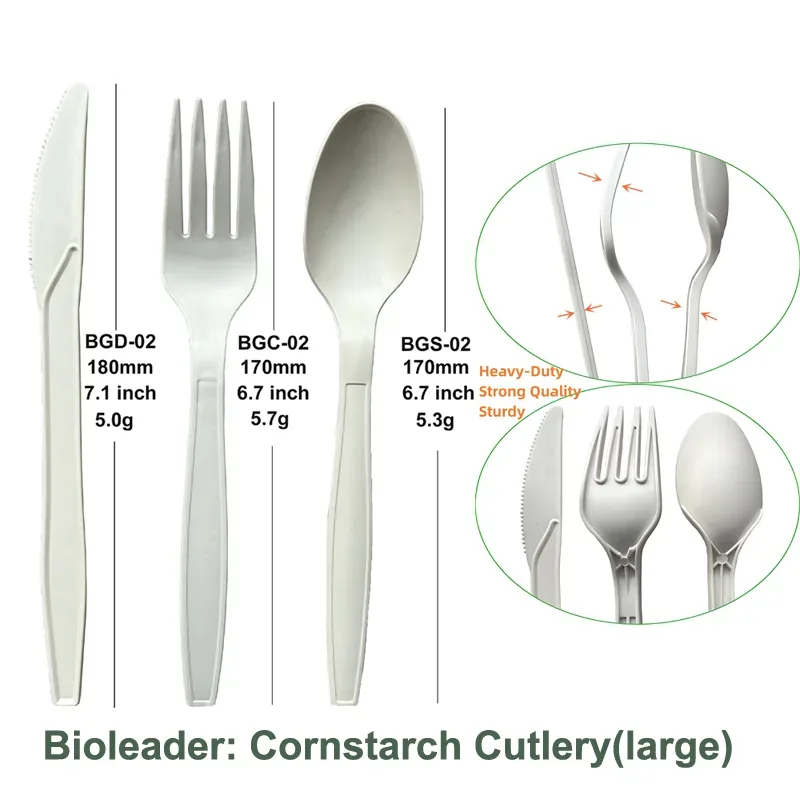
3.1 A Practical Route for Cost-Sensitive Markets
In many large-volume projects, buyers focus first on budget control, daily turnover, and distribution efficiency. That is common in institutional catering, everyday takeaway, casual dining, canteen systems, and price-sensitive regional markets. For these applications, cornstarch cutlery offers a practical and scalable route.
The strength of cornstarch is not that it replaces every CPLA application. Its strength is that it allows buyers to build a more workable cost structure for high-volume projects while still moving toward a more eco-oriented cutlery category.
3.2 A Size System That Supports Real Foodservice Use
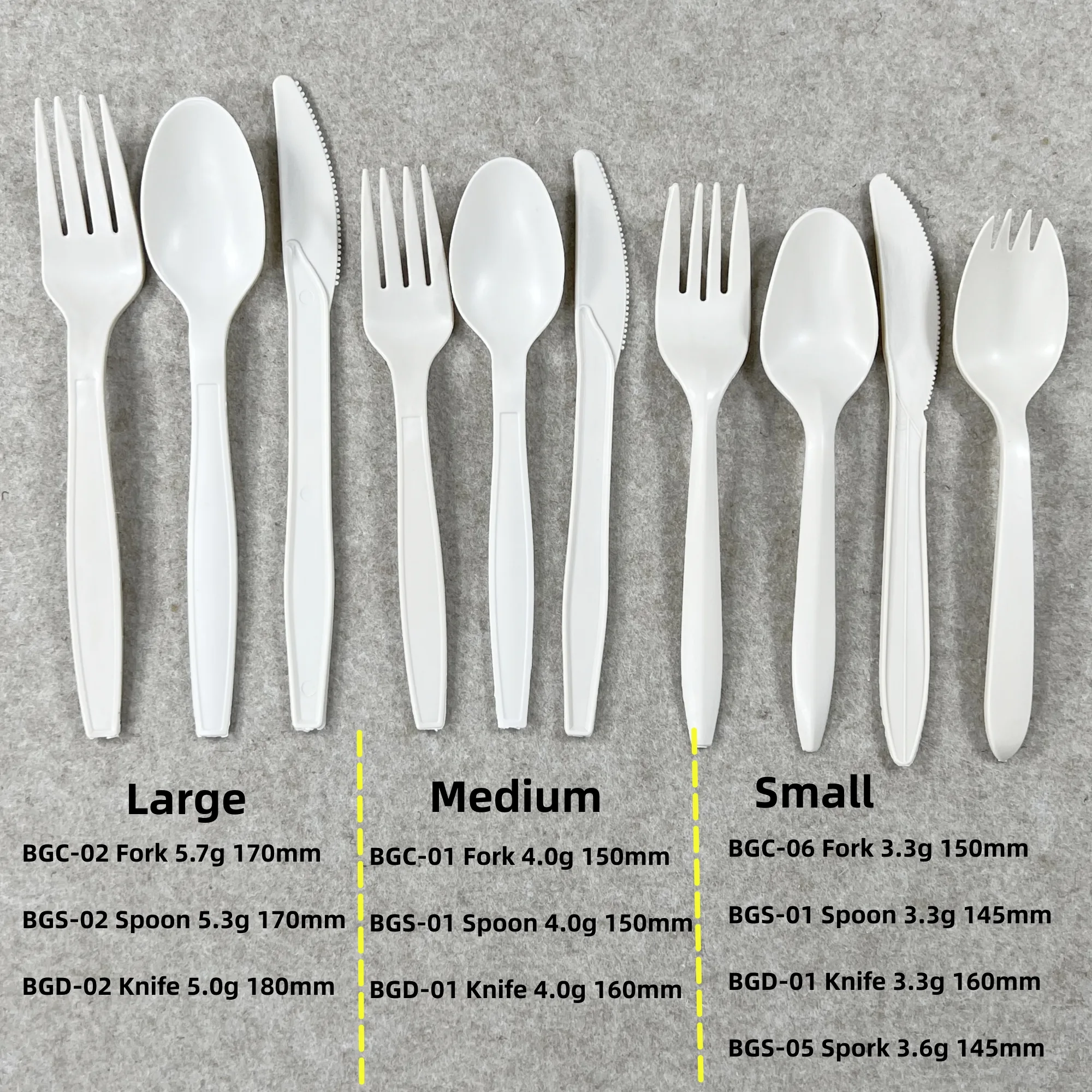
Bioleader’s cornstarch range is designed around actual foodservice scenarios rather than a single one-size-fits-all approach. Smaller sizes are suitable for desserts, tasting portions, and snack applications. Medium sizes work well for lunch boxes, rice bowls, salads, and regular takeaway meals. Larger sizes fit fuller meal applications and more complete dining sets.
This makes cornstarch cutlery more than a price option. It becomes a structured product route for buyers who need better cost control, faster turnover, and broader packaging flexibility.
4. Mini Spoons Are a Real Category, Not a Marginal SKU
One of the most overlooked opportunities in disposable cutlery is the mini spoon(small) segment. Many suppliers treat it as a secondary item. Bioleader treats it as a real sub-category with distinct end uses.

4.1 Mini Spoons Fit Fast-Growing Dessert and Beverage Channels
Mini spoons are widely used in ice cream, yogurt, pudding, jelly, dessert cups, tasting packs, coffee service, tea service, hotel welcome kits, and convenience-store ready-to-eat formats. These are not minor applications. They are stable consumption scenarios with frequent replenishment demand.
By maintaining mini spoon options within the broader cutlery system, Bioleader gives distributors and brand owners a better chance to cover dessert, beverage, and sampling channels without sourcing from multiple suppliers.
5. Packaging Has Become Part of the Product
In many modern foodservice programs, packaging is no longer an afterthought. It affects hygiene perception, retail presentation, logistics convenience, and brand visibility. That is why packaging now needs to be planned as part of the product strategy itself.
5.1 Beyond Bulk Supply: Wrapped Items, Kits, and Retail Packs
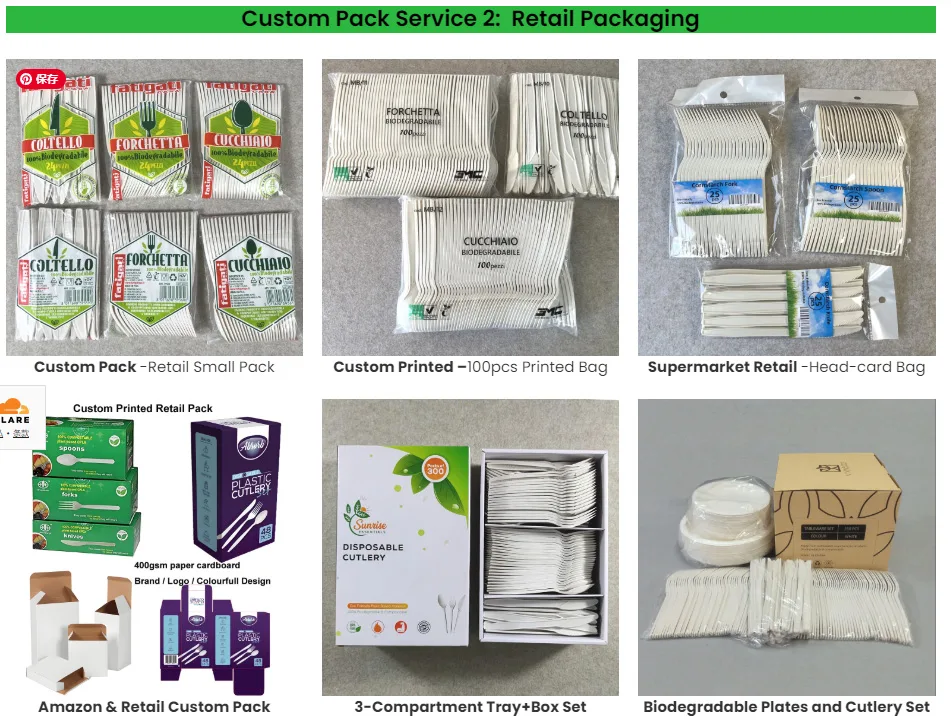
Bioleader supports more than conventional bulk cartons. The company can also provide individually wrapped items, 2-piece sets, 3-piece sets, 4-piece sets, 5-piece sets, paper bag solutions, printed wrappers, and retail-ready packs designed for supermarket or convenience-store programs.
5.2 Custom Meal Kits for Channel-Specific Projects
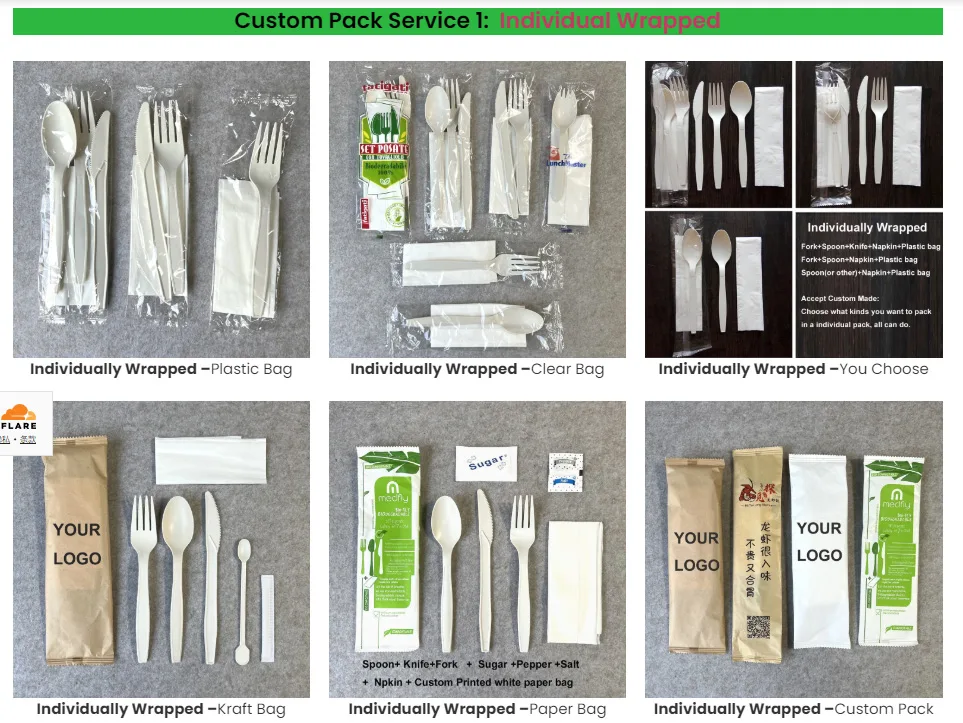
Depending on the project, kit contents can include forks, knives, spoons, napkins, toothpicks, sugar packets, salt sachets, pepper sachets, and other accessories. This makes the cutlery system more useful for takeaway chains, airline service, hospitality programs, catering channels, and branded retail packs.
For buyers, the practical value is simple: sourcing becomes easier when the product and the packaging solution can be planned together. For Bioleader, this packaging capability helps move the company from a component supplier to a more complete solution supplier.
6. Stronger Product Structure Requires Stronger Factory Capability
A wide product system only matters when the factory can actually support it. Bioleader’s cutlery expansion is backed by manufacturing and packing capacity that can handle multiple specifications and order formats in parallel.
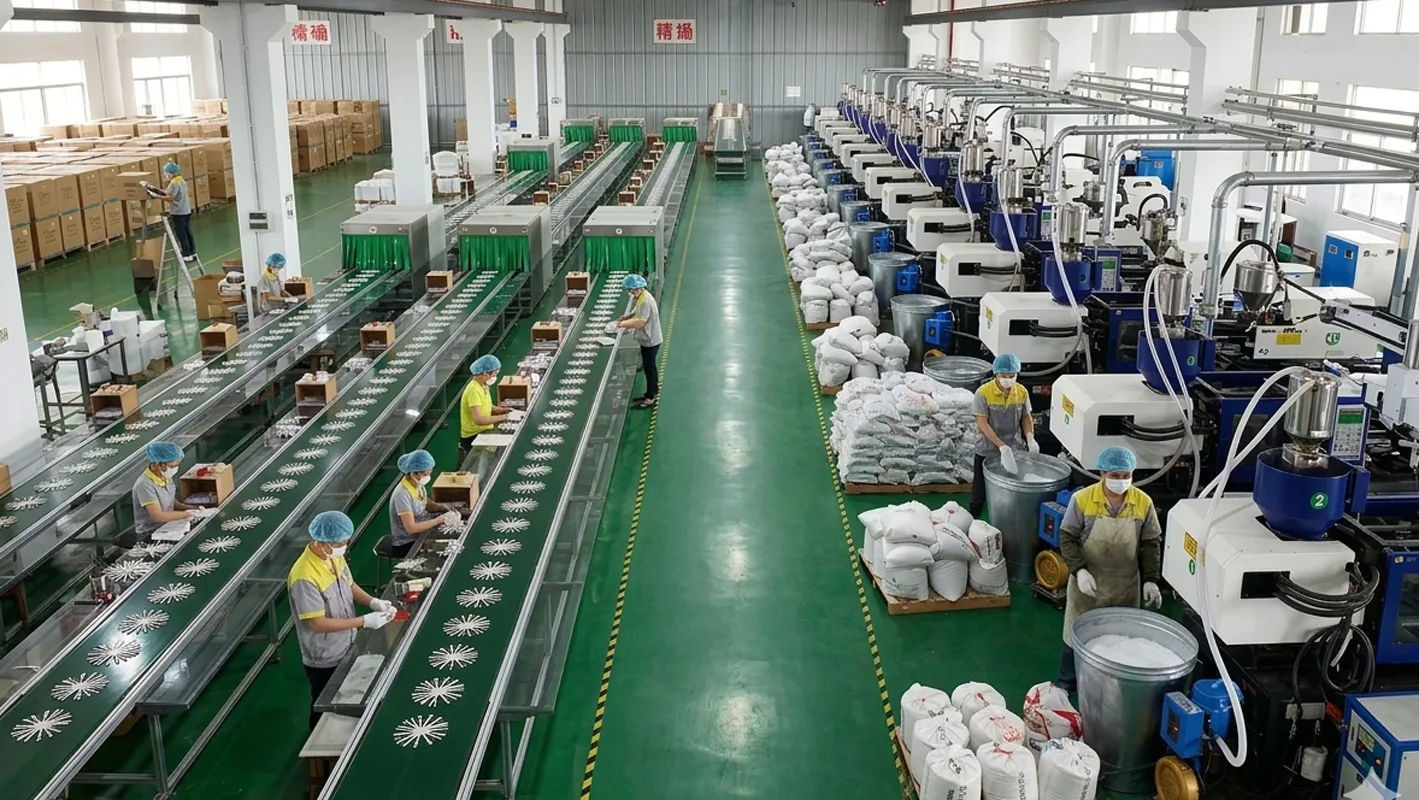
6.1 Production Capacity Built for Volume and Complexity
Bioleader operates 15 injection molding machines, together with automatic packing lines and dedicated lines for individually wrapped products and custom kit assembly. This combination allows the factory to manage standard bulk orders, wrapped items, and mixed kit projects more efficiently.
Depending on product structure and order arrangement, maximum daily output can reach approximately 1 million to 2 million pieces. For international buyers, this matters far more than sample presentation alone. Once a project scales, delivery stability, flexible scheduling, and packaging coordination become the real decision factors.
6.2 Why This Matters to Importers and Distributors
Buyers do not only need a product. They need a supplier that can continue supplying after the trial order. That is where manufacturing depth becomes part of commercial credibility. Bioleader’s production structure is designed to support repeat orders, multi-SKU projects, and larger market rollouts with greater consistency.
7. Different Markets Need Different Materials and Pricing Strategies
Global demand is not uniform. Some markets care more about premium dining image and stronger product feel. Others care more about cost control, wider distribution, and faster turnover. Some projects require individually wrapped formats. Others focus on retail presentation or channel-specific kit assembly.
7.1 One Material Route Is No Longer Enough
That is why a single material, a single weight level, and a single packaging format no longer provide enough coverage. Buyers increasingly need multiple options from one supplier: a premium line, a more competitive line, a value-driven line, and flexible packaging formats that match the final route to market.
7.2 Bioleader’s Advantage Is System Depth
From this perspective, Bioleader is not just offering a cutlery catalog. It is building a multi-layer biodegradable cutlery system that covers premium CPLA, lower-priced lightweight CPLA, cornstarch options, mini spoon applications, wrapped products, custom kits, and retail-ready solutions. That depth is what gives buyers more room to plan by market, by price level, and by channel.
8. Operational Advice for Buyers: How to Use the Product System More Effectively
A stronger cutlery portfolio creates more choice, but it also calls for clearer decision-making. Buyers that want better sourcing results should simplify the evaluation process around a few operational questions.
8.1 Match the Material to the Market, Not to a Generic Trend
Start with the actual sales channel. Premium branded takeaway and hospitality projects may justify heavy-weight CPLA. Wholesale-driven expansion projects may benefit more from lightweight CPLA. High-volume practical programs may be better served by cornstarch.
8.2 Decide Early Whether Packaging Is Part of the Selling Model
If the final route to market depends on hygiene, shelf presence, or meal-kit convenience, plan the packaging structure early. Bulk-only thinking can limit retail and foodservice opportunities later.
8.3 Evaluate the Supplier on Scale, Not Only on Samples
Samples show the product. Capacity shows the supplier. Buyers should confirm whether the factory can support repeat orders, custom kits, wrapped formats, and larger replenishment cycles once the business grows.
9. FAQ
9.1 What is the main difference between heavy-weight CPLA and lightweight CPLA?
The main difference is commercial positioning. Heavy-weight CPLA offers a stronger feel, higher rigidity, and a more premium dining experience. Lightweight CPLA keeps the same general product category and similar size framework, but at a lower price level, making it more suitable for distributors and wholesalers that need stronger price competitiveness.
9.2 Why is lightweight CPLA important for overseas wholesalers?
Because it gives them a lower-priced option under similar size specifications. That helps wholesalers enter the market more aggressively, widen distribution faster, and compete for customers without fully moving away from the CPLA category.
9.3 When should a buyer choose cornstarch cutlery?
Cornstarch cutlery is a good fit when the project is more cost-sensitive, high-volume, and operationally focused. It works well for canteens, everyday takeaway, institutional meal systems, and other channels where budget control and turnover speed matter.
9.4 Can Bioleader supply individually wrapped cutlery and custom meal kits?
Yes. Bioleader can support individually wrapped items, multi-piece cutlery sets, and custom kits with optional accessories such as napkins, toothpicks, sugar packets, salt sachets, and pepper sachets, depending on project requirements.
9.5 What kind of production capacity supports this cutlery system?
Bioleader operates 15 injection molding machines together with automatic packing lines and dedicated custom-kit production lines. Depending on product mix and scheduling, maximum daily output can reach approximately 1 million to 2 million pieces.
9.6 How should buyers choose between the different cutlery routes?
A practical way is to evaluate four factors first: target market, price level, usage scenario, and packaging requirement. Premium service programs may suit heavy-weight CPLA. Wholesale expansion projects may fit lightweight CPLA better. High-volume practical applications may be more suitable for cornstarch. Dessert and beverage channels often require mini spoons and wrapped formats.
10. Conclusion
The disposable cutlery business is no longer defined by one material and one specification. It is increasingly defined by product structure, price strategy, packaging flexibility, and manufacturing reliability.
Bioleader’s strengthening of its biodegradable cutlery system sends a clear message to the market: the company is not only supplying eco cutlery items. It is building a more complete platform for distributors, wholesalers, foodservice buyers, and retail programs that need clear product tiers, scalable supply, and stronger commercial fit.
For buyers that want a supplier with broader product depth and more realistic route-to-market support, Bioleader is positioning itself as more than a manufacturer of disposable forks, spoons, and knives. It is positioning itself as a system supplier for the next stage of biodegradable cutlery demand.