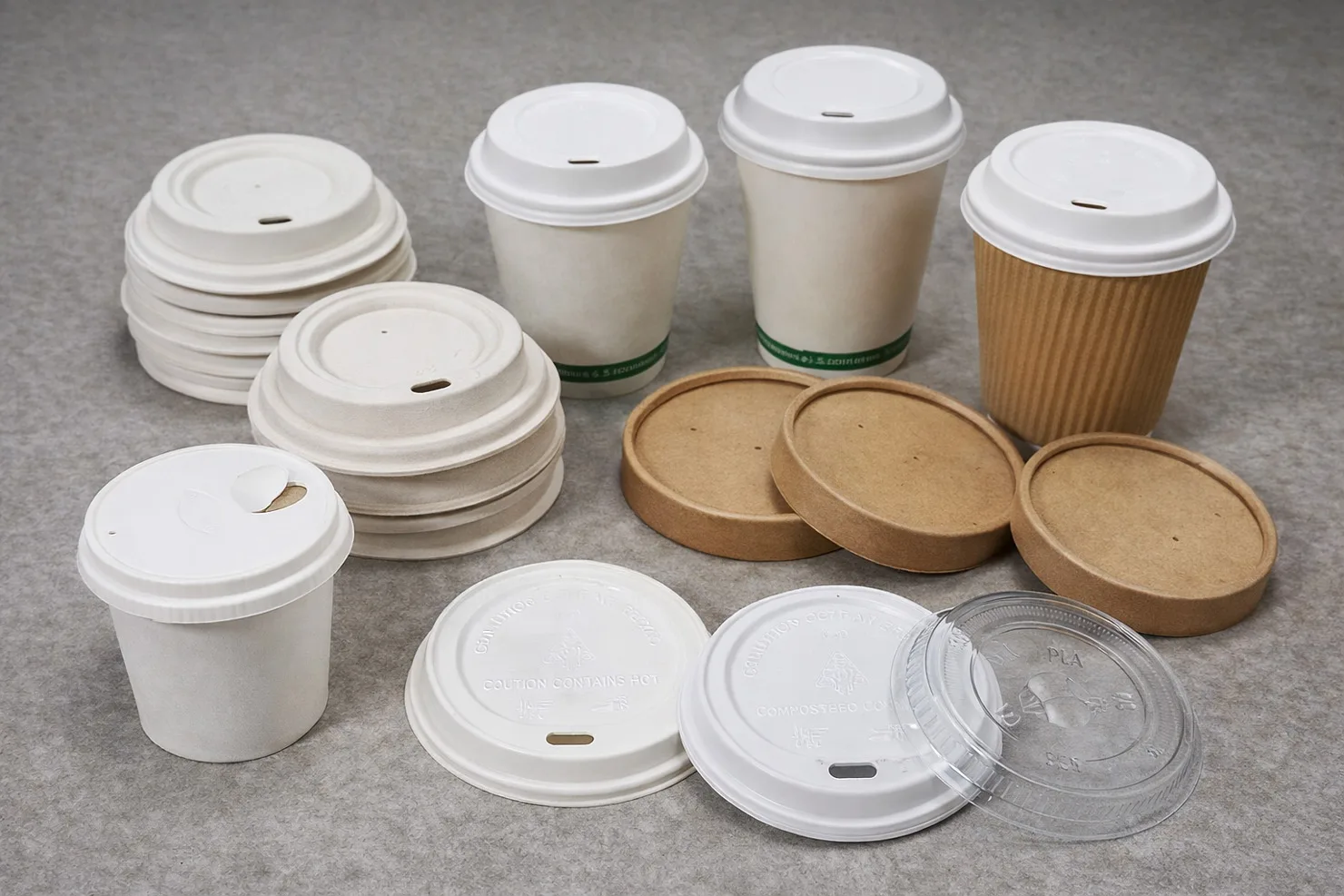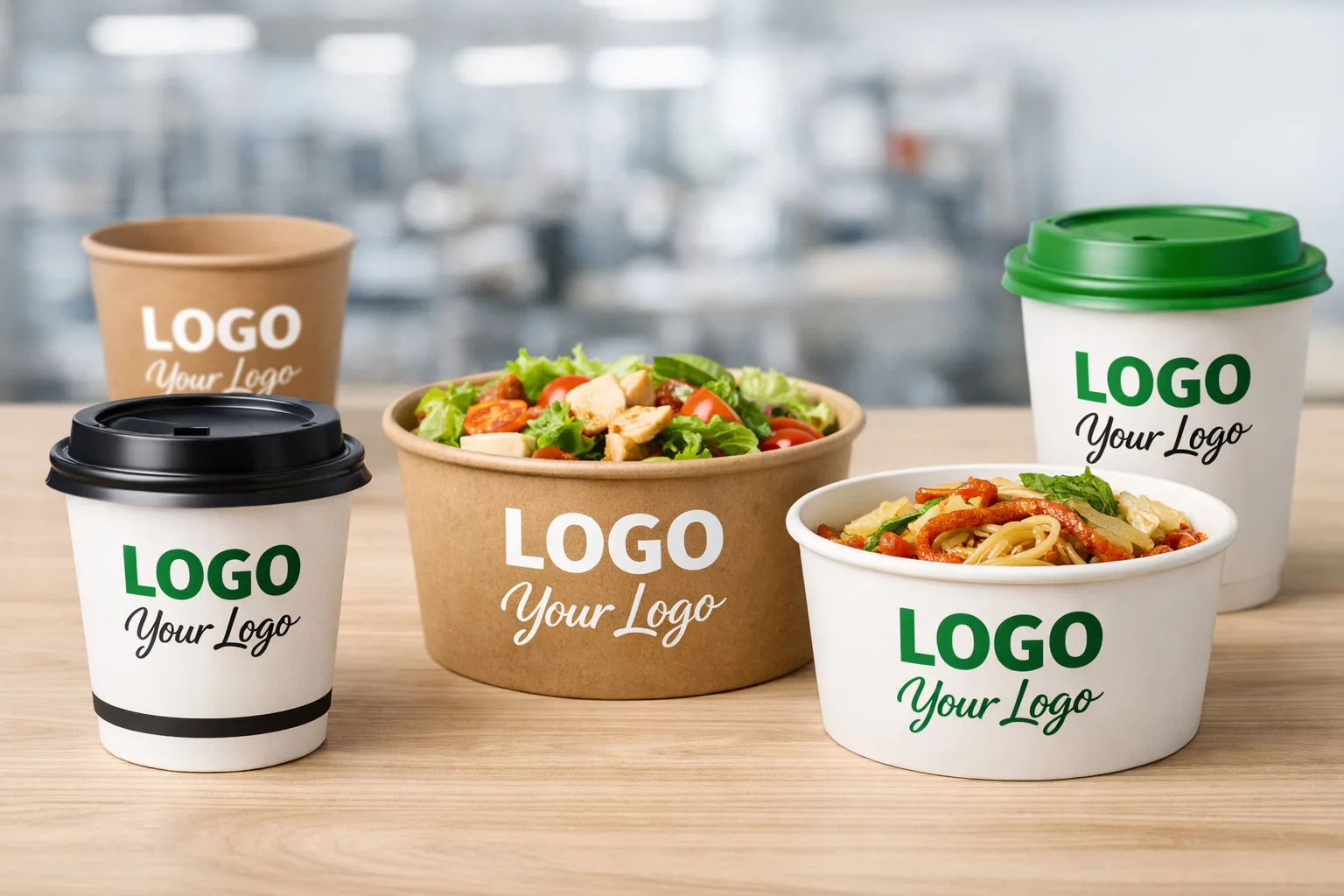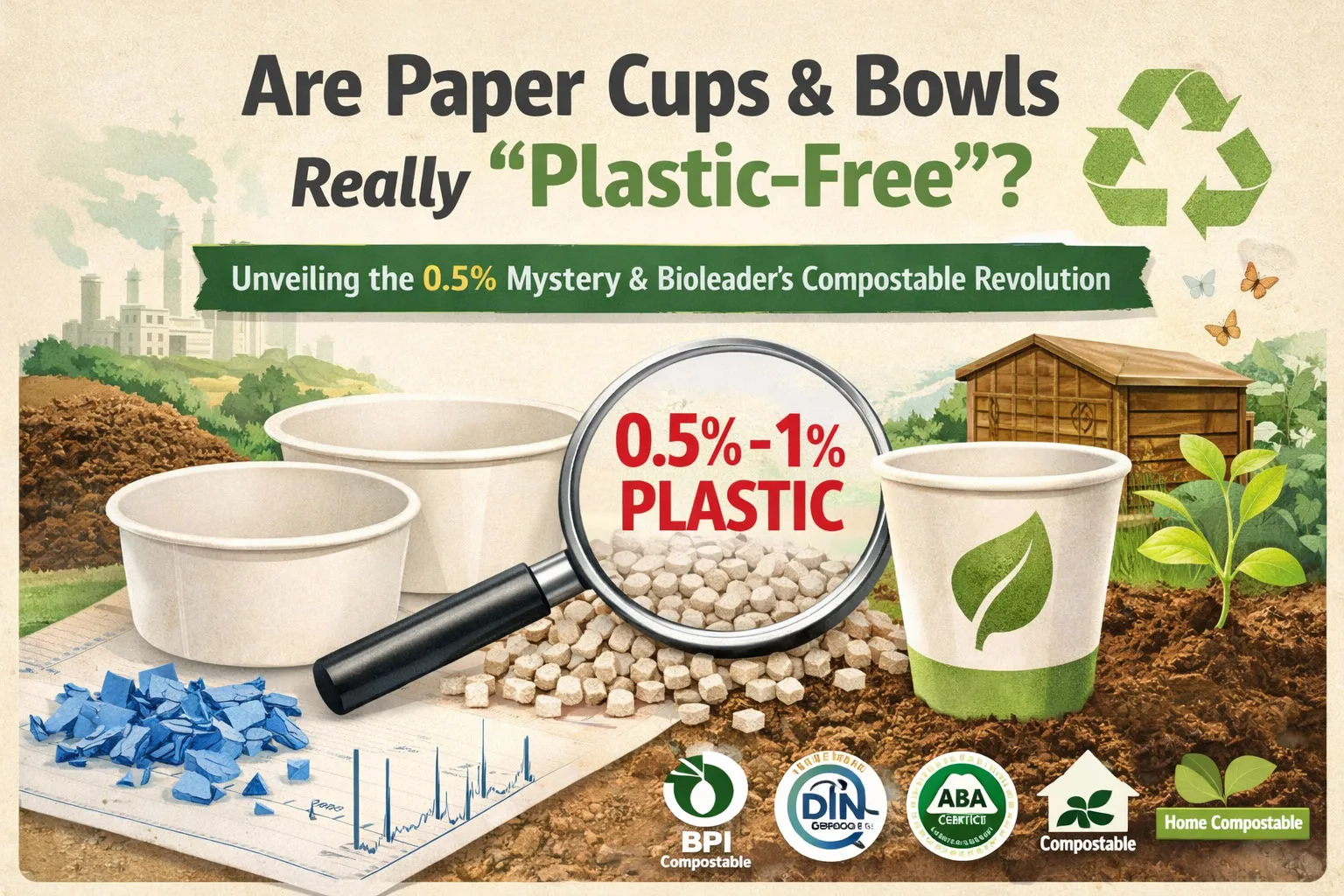










Modern paper cups fall into three primary coating systems—PE-coated (traditional), PLA-coated (compostable), and water-based coated (plastic-free).
These materials differ in recyclability, compostability, regulatory acceptance, and consumer safety.
Understanding their structural variations (single-wall, double-wall, ripple-wall, insulated designs) helps businesses choose the right solution for compliance, sustainability goals, and brand experience across global markets.
Paper cups are one of the most widely consumed food-contact packaging products in the world, with more than 500 billion units used annually across cafés, fast-food chains, hotels, airlines, and takeaway platforms. What was once a simple disposable item has now evolved into a highly regulated, sustainability-driven category shaped by environmental laws, consumer expectations, and rapidly advancing material technologies.
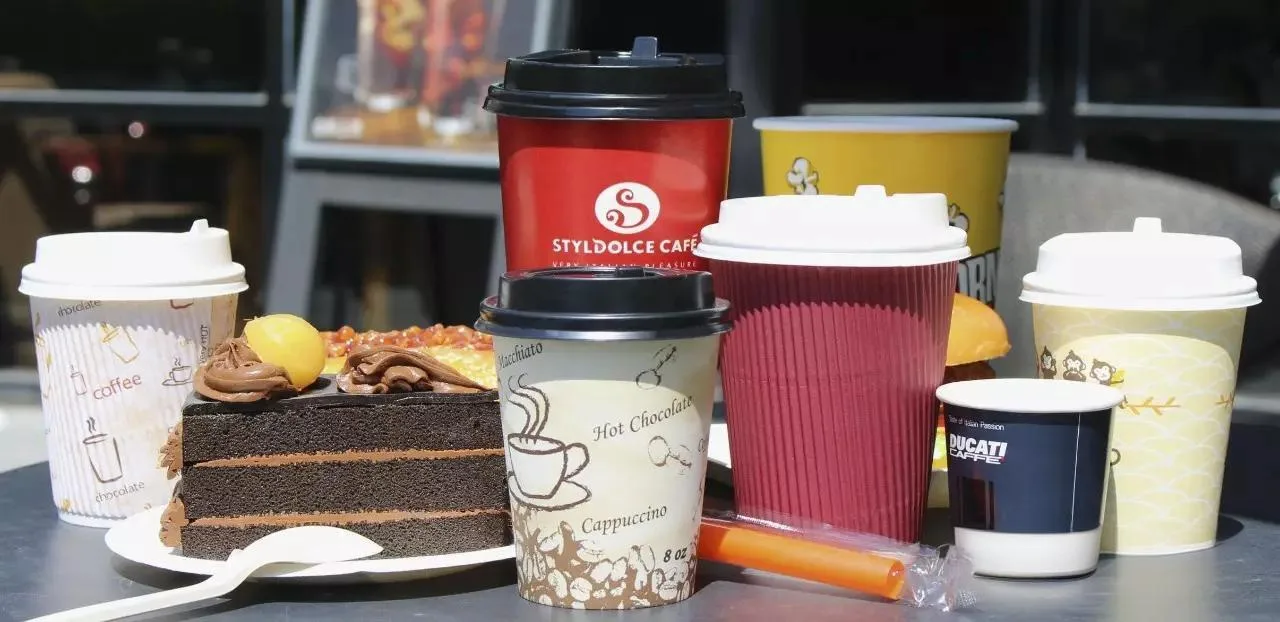 Explore Bioleader® Paper Cups Explore Bioleader® Paper CupsCompare paper cup sizes, coating options, and structures for hot and cold beverage service. View the Paper Cup Category → |
In 2025, the three dominant coating systems—PE, PLA, and water-based coatings—represent not just different technical approaches but different compliance paths, cost structures, recycling outcomes, and brand positioning strategies. Understanding these distinctions is now essential for any foodservice operator, beverage brand, or packaging distributor serving international markets.
This article provides one of the most comprehensive overviews available online, integrating global regulatory shifts, structural variations, expert opinions, and real-world applications to help businesses select the right paper cup solution for the next decade.
1. Why Paper Cup Materials Matter More Than Ever
1.1 Environmental pressure meets mass consumption
Paper cups are used in staggering quantities. Research from the Ellen MacArthur Foundation shows that over 97% of PE-lined cups end up in landfills because traditional recycling facilities cannot separate the plastic layer from the paper fiber effectively. As countries introduce landfill taxes, EPR fees, and plastic penalties, conventional paper cups are becoming economically and environmentally challenging for businesses.
1.2 Regulatory changes accelerate material innovation
Multiple regions are phasing out or financially penalizing cups that contain plastics, even if the plastic is part of the coating layer:
EU SUPD (Single-Use Plastics Directive) applies specific requirements to beverage cups containing plastic, including consumption-reduction and marking obligations, rather than treating all PE-lined cups as outright banned products.
Canada’s Single-Use Plastics Prohibition Regulations target difficult-to-recycle food packaging.
Japan’s Plastic Resource Circulation Act incentivizes water-based coatings due to recyclability advantages.
Singapore 2025 packaging framework pushes compostable and plastic-free systems for takeaway operators.
These policies mean choosing the wrong cup material may restrict your ability to sell, export, or even distribute products in certain regions.
1.3 ESG reporting turns packaging into brand identity
Global brands now publish packaging sustainability targets—Starbucks, McDonald’s, Pret A Manger, and Costa Coffee have all committed to compostable or recyclable paper cups. Packaging has shifted from a “cost item” to a strategic sustainability asset, influencing customer sentiment and investor decision-making.
2. Deep Dive into the Three Major Coating Systems
2.1 PE-Coated Paper Cups: The Industry Workhorse, Now Under Pressure
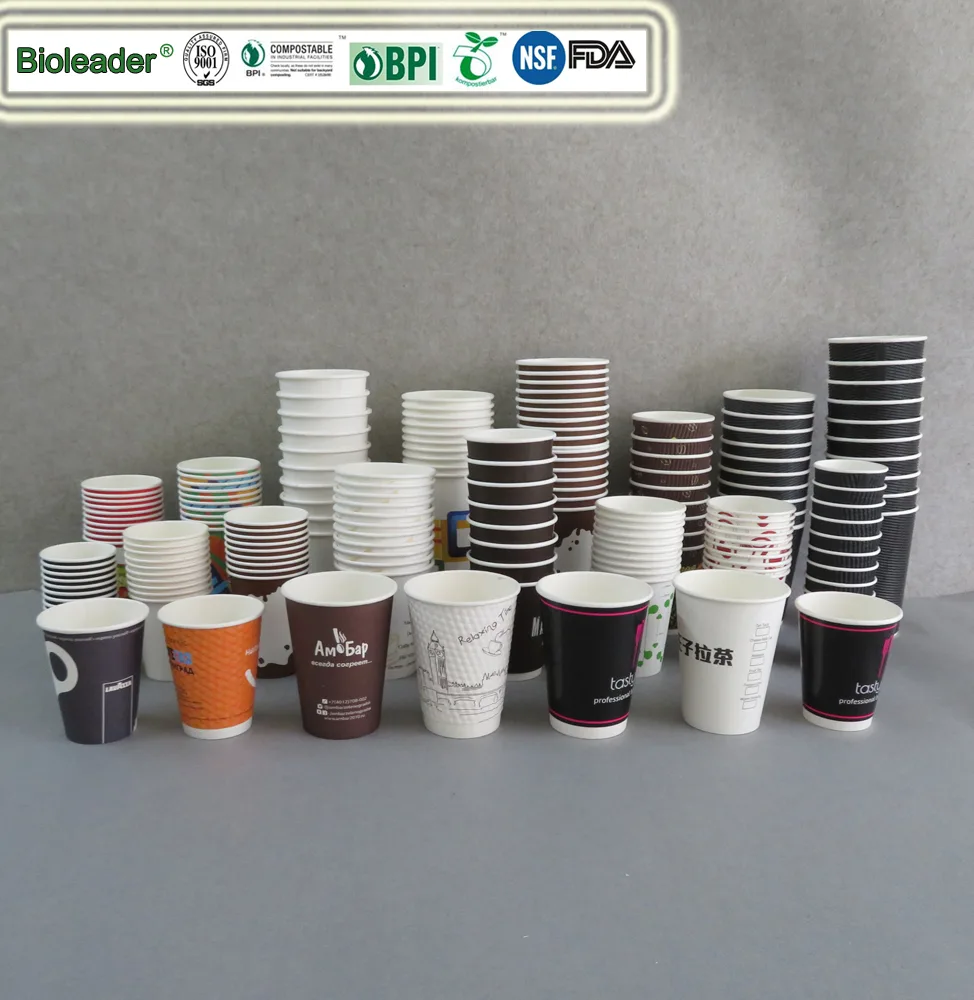 Paper Cups Manufacturer — Full Size Range Paper Cups Manufacturer — Full Size RangeExplore Bioleader® paper cups from 2oz to 22oz for beverage service, wholesale programs, and custom requirements. View the full paper cup range → |
PE-coated cups remain dominant in many markets due to:
Low production cost
Mature manufacturing infrastructure
Strong performance in both hot and cold beverages
However, the drawbacks are increasingly difficult to ignore:
Environmental drawbacks
PE acts as a barrier layer that prevents paper fibers from separating during pulping, making recycling extremely challenging. Only 1–3% of PE cups are recycled globally—mostly in specialized pilot facilities.
Regulatory risks
PE coating is considered a conventional plastic, triggering restrictions and fees in many jurisdictions. For export-oriented businesses, PE cups risk non-compliance.
When PE cups still make sense
Cost-sensitive domestic markets
Hot beverage vendors without sustainability requirements
Clients operating in regions without plastic mandates
PE cups are not disappearing, but they are losing ground as countries set circular packaging targets.
2.2 PLA-Coated Paper Cups: The Global Standard for Compostability
PLA coating is made from corn starch or natural plant sugars. PLA-coated paper cups can be certified for industrial compostability when the finished cup construction meets the applicable standard and certification requirements. Relevant standards may include EN 13432 and, depending on the finished construction and certification scope, ASTM D6400 or ASTM D6868.
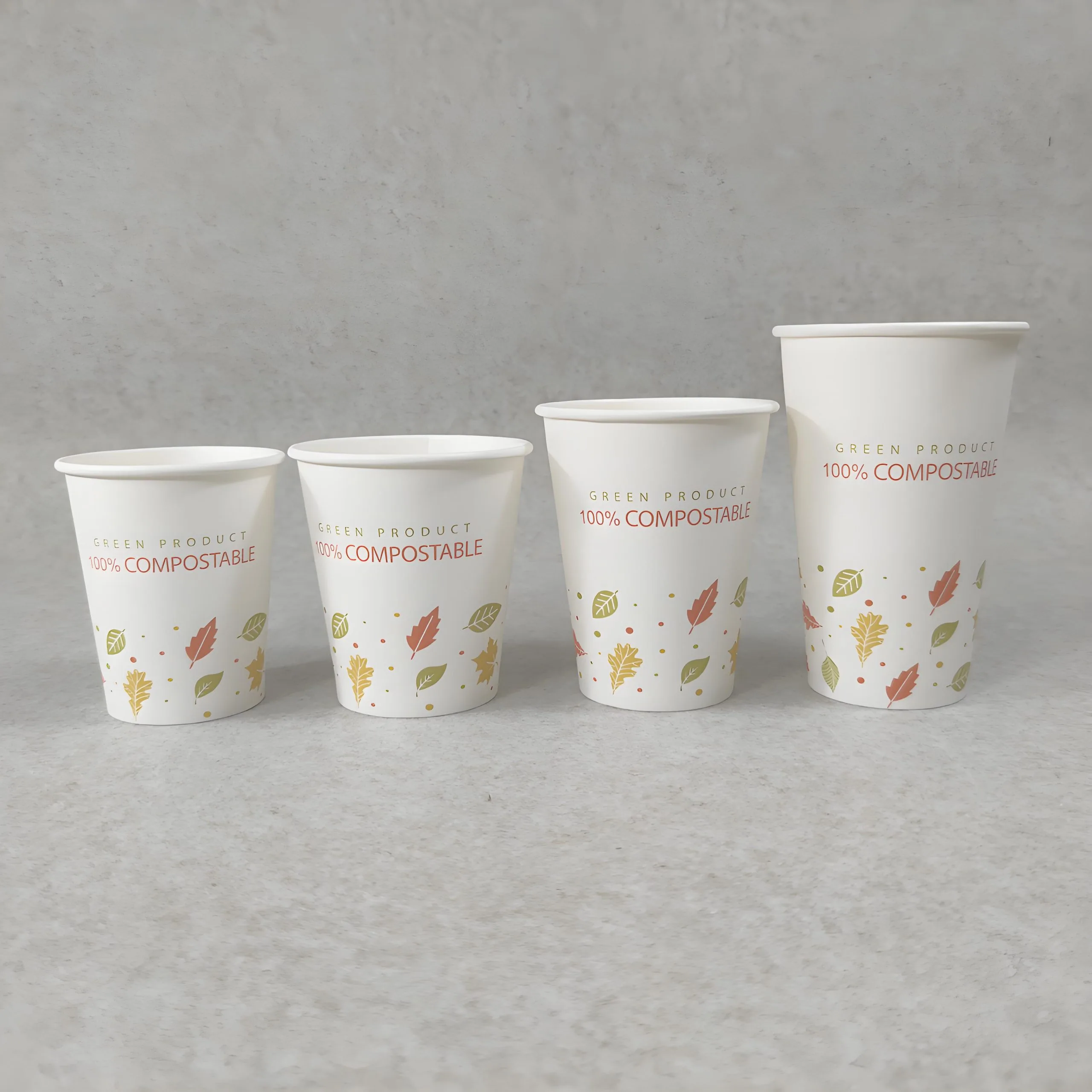 PLA-Coated Compostable Paper Cups |
Why PLA is gaining momentum
Produces 60% fewer greenhouse gas emissions compared to petroleum plastics
Can biodegrade in industrial composting facilities
Recognized internationally as a compostable material
Suitable for coffee, tea, juices, smoothies, and most beverage applications
Real-world adoption
Widely used in Europe’s eco cafés
Mandated by various procurement programs in Canada and the U.S.
Approved for use by many global airline catering providers
Limitations to consider
PLA is not designed for backyard composting and requires high-temperature industrial composting. In regions without such facilities, disposal pathways may be limited.
Nevertheless, PLA remains the most commercially practical sustainable upgrade for brands transitioning away from PE.
2.3 Water-Based Coating Paper Cups: The Future of Plastic-Free Packaging
Water-based coatings are the most significant breakthrough in paper cup technology in 20 years.
 Water-Based Coated Paper Cups Water-Based Coated Paper CupsExplore Bioleader® water-based coated paper cups for buyers evaluating plastic-free coating structures and paper-based beverage packaging. View water-based coated paper cups → |
What makes water-based cups special?
0% plastic—fully plastic-free
Compatible with traditional paper recycling mills
PFAS-free formulation aligns with upcoming chemical safety regulations
Suitable for hot and cold beverages
Rapid adoption among premium coffee chains
Regulatory advantages
Many European countries classify water-based cups as recyclable paper, enabling:
Lower EPR fees
Higher recycling rates
Stronger sustainability certifications
Market movement
Japan is leading the movement: by 2025, over 40% of major cafés adopted water-based cups as part of national recycling efforts.
Cost perspective
Water-based cups cost the most to manufacture, but the long-term sustainability and compliance benefits outweigh the price for many brands.
3. Structural Engineering: How Paper Cup Design Influences Functionality
Different structures significantly change customer perception and beverage performance.
3.1 Single-Wall Paper Cups
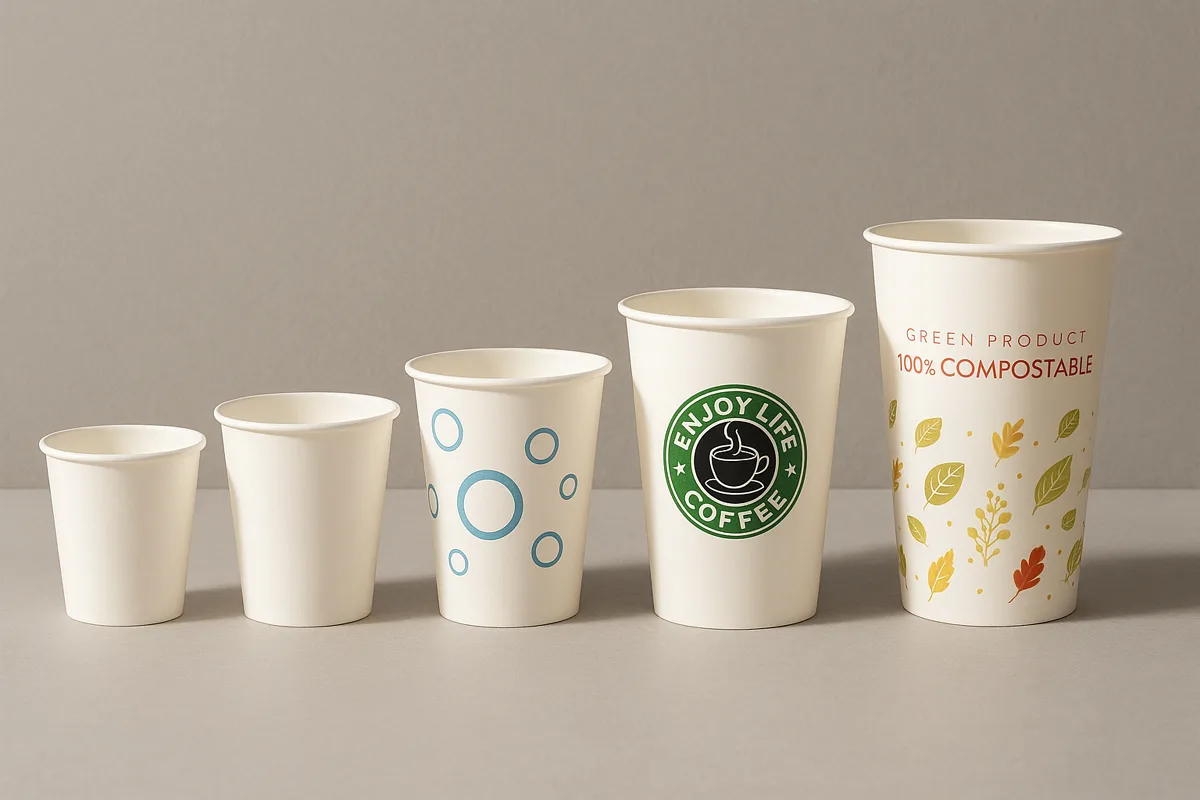 Single-Wall Paper Cups for Wholesale & Custom Printing |
Ideal for cold drinks or cost-sensitive operations.
Best print surface for brand visuals.
Most efficient in production and logistics.
3.2 Double-Wall Paper Cups
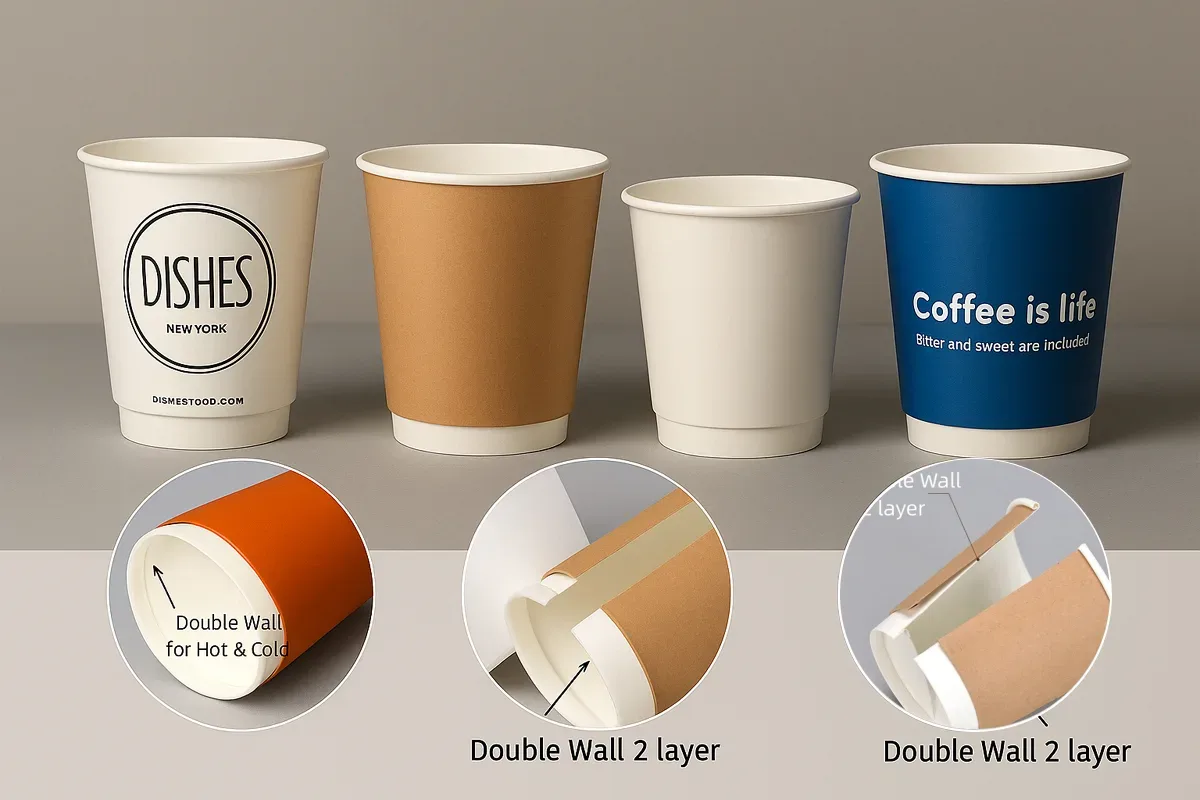 Double-Wall Paper Cups for Hot Drinks |
Two-layer construction creates a heat shield.
Often chosen by café chains selling premium hot beverages.
Improves brand positioning with a more substantial feel.
3.3 Air-Pocket Insulated Paper Cups
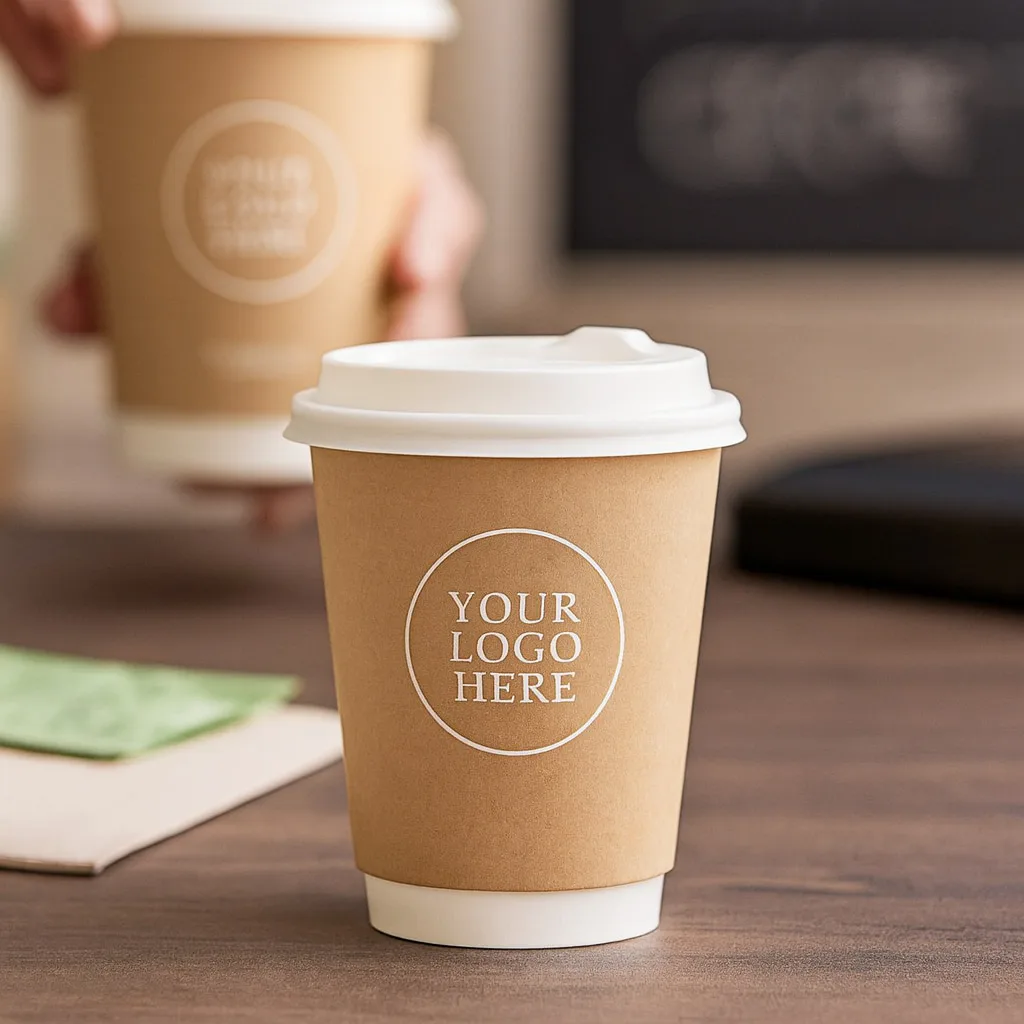
The hollow gap between layers makes them the highest-performing hot beverage cup.
Popular in Western specialty cafés where customer experience is paramount.
3.4 Ripple-Wall Paper Cups
 Ripple-Wall Hot Paper Cups |
The corrugated exterior provides:
Strong insulation
Anti-slip grip
A distinctive, artisanal appearance
Excellent for takeaway coffee.
3.5 Embossed Paper Cups
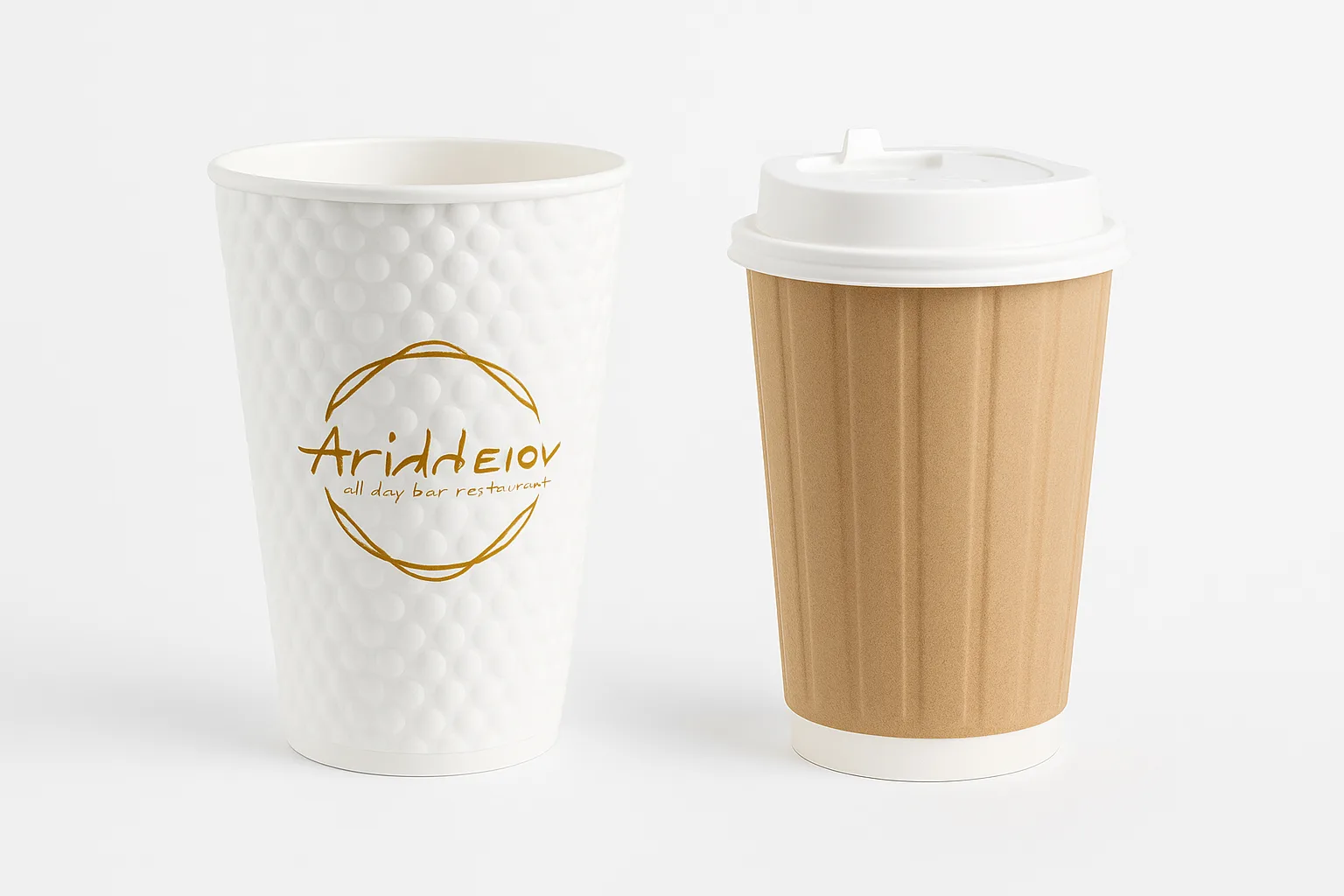
Features a textured grip and premium tactile experience.
Allows brands to differentiate through touch as well as visuals.
4. Global Regulatory Trends Shaping Material Selection
Europe
Aggressive transition toward plastic-free materials
Water-based coating preferred due to recyclability
PLA accepted only when composting access is documented
North America
Canada heavily restricts PE
U.S. states introduce compostability certifications (BPI, CMA)
Asia-Pacific
Japan: recycling-focused; water-based coatings accelerating
Singapore: pro-compostability policy favors PLA and water-based systems
South Korea: tightening PFAS and plastic compliance rules
Middle East
UAE, Qatar, and Saudi Arabia are adopting sustainability procurement standards favoring compostable or recyclable cups for foodservice operations.
Businesses operating internationally should treat material choice as a compliance decision, not merely a packaging decision.
 Explore Bioleader® Paper Food Packaging Solutions Explore Bioleader® Paper Food Packaging SolutionsCompare paper cups, bowls, food boxes, coating systems, printing options, and foodservice applications within Bioleader®’s paper packaging range. View Paper Food Packaging Solutions → |
5. Expert Insights from Packaging Engineers & Sustainability Specialists
Dr. Lina Kovacs, EU Materials Science Researcher
“Water-based coatings resolve the biggest technical barrier in paper cup recycling. Within 5–7 years, they will likely become the regulatory baseline in Europe.”
David Chan, Asian Foodservice Sustainability Consultant
“PLA remains the optimal transitional material: scalable, internationally recognized, and suitable for brands upgrading from PE without drastically affecting cost structure.”
Bioleader® Technical Team
“Brands should not evaluate cup materials only based on cost. Consider regulatory readiness, product safety, heat performance, and consumer perception. The right choice improves both compliance and customer satisfaction.”
6. Application Scenarios: Which Cup Fits Which Business Model
Coffee Chains
→ Double-wall / ripple-wall + PLA or water-based
Improves heat insulation and elevates brand experience.
Bubble Tea & Juice Shops
→ Single-wall + PE or PLA
Cost-efficient, good for high-volume cold beverages.
Hotels, Catering, Airlines
→ Embossed or hollow insulated
Premium feel improves brand consistency.
Export Distributors
→ Prefer PLA or water-based to meet global compliance.
7. Bioleader® Paper Cup Solutions: Real-World Alignment with Global Trends
Bioleader® offers:
PE, PLA, and water-based coatings
Full range of single-wall, double-wall, ripple-wall, hollow insulated, and embossed cups
Compliance with EN13432, ASTM D6400, BPI, LFGB, FDA
Custom printing and OEM manufacturing
Experience supplying to EU, U.S., GCC, ASEAN markets
For brands planning global expansion or sustainability transformation, a manufacturer like Bioleader® provides essential technical guidance and stable, regulation-ready production capacity.
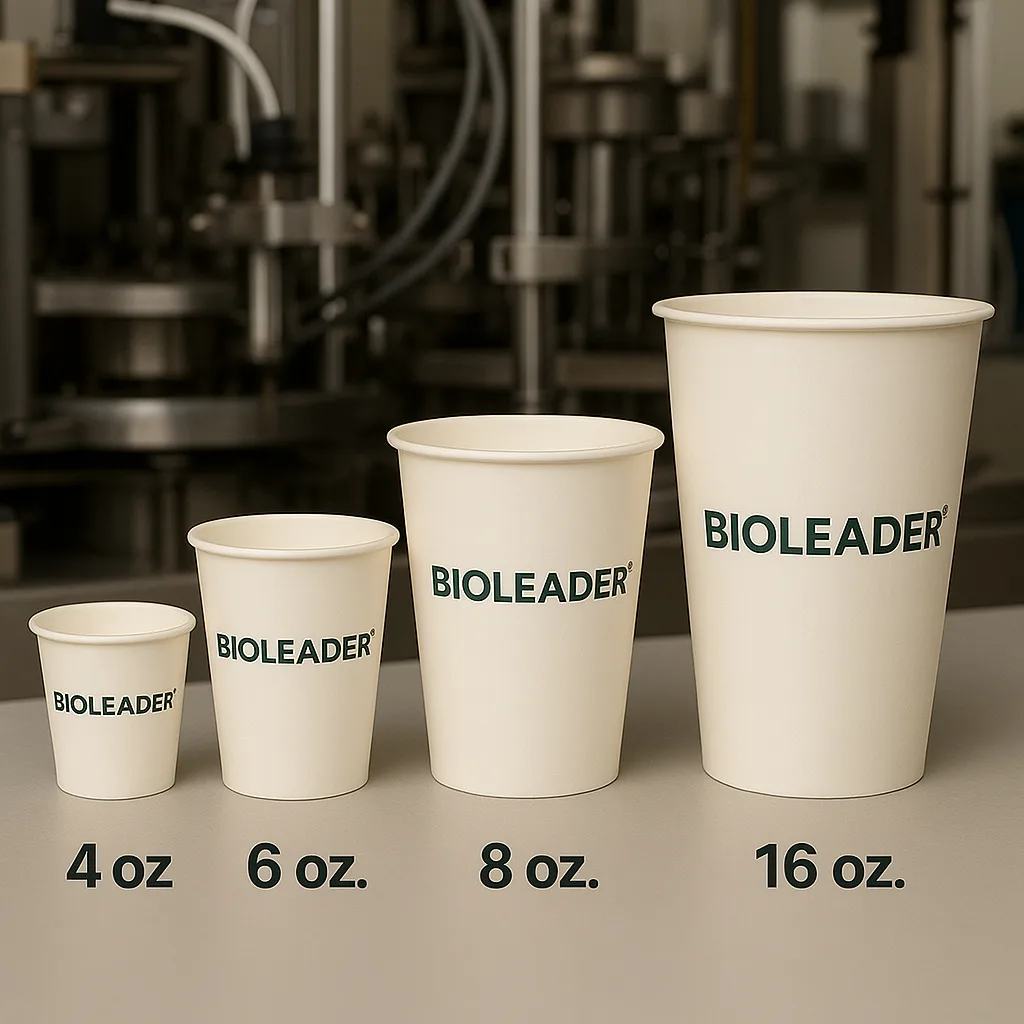 Bioleader® Paper Cup Manufacturer — 2oz to 22oz |
8. How to Choose the Right Cup: A Strategic Framework
Check local and export regulations
Define beverage type and temperature
Align cup material with ESG goals
Optimize branding and printing needs
Evaluate long-term compliance risk
Select a partner capable of PLA & water-based manufacturing
Paper cups are no longer commodities—they shape brand identity, compliance readiness, and sustainability performance.
How to Choose the Right Paper Cup: Insights, Options & Market Trends
How do coating materials influence sustainability and compliance?
Coatings define whether a paper cup is recyclable, compostable, or classified as a plastic product under global regulations.
PE coatings are durable but challenging to recycle; PLA coatings enable certified compostability; water-based systems deliver plastic-free, PFAS-free performance aligned with emerging laws in the EU, Japan, and Canada.
Why are brands transitioning toward PLA and water-based coated cups?
Governments increasingly penalize PE-lined cups through EPR fees, landfill taxes, or outright bans.
At the same time, consumers prefer packaging that is safe, non-toxic, and visibly sustainable.
This pushes foodservice brands, cafés, and international distributors to adopt compostable or recyclable solutions that strengthen ESG reporting and export readiness.
What structural options shape customer experience?
Single-wall cups optimize cost and printing clarity; double-wall and ripple-wall designs improve insulation for hot beverages;
hollow insulated and embossed cups enhance premium brand perception.
Cup structure determines not only hand-feel and safety but also how customers perceive beverage quality.
What are the key considerations for buyers?
Businesses should evaluate regulatory requirements, beverage temperature, brand sustainability goals, and total cost of ownership—including compliance risks.
For exporters, PLA and water-based coatings offer lower regulatory friction across 2024–2030 global plastic-reduction policies.
Industry Trend Insight:
The global shift is unmistakable: PE-lined cups are declining; PLA-coated cups are now the mainstream sustainable choice; and water-based coated cups are becoming the preferred solution for markets that demand full recyclability and plastic-free certification.
Material choice now influences brand trust, legal compliance, and long-term competitiveness in the foodservice industry.
FAQ: Popular Questions About Paper Cups
1. Are paper cups recyclable?
Water-based coated cups are the easiest to recycle. PE-lined cups require specialized processing, while PLA cups must enter industrial composting facilities.
2. What is the most eco-friendly type of paper cup?
Water-based coated cups are considered the most sustainable because they are plastic-free, PFAS-free, and compatible with mainstream paper recycling systems.
3. Can PLA paper cups hold hot drinks?
Yes. PLA-coated cups typically tolerate temperatures up to 85°C (185°F), making them suitable for most hot beverages like coffee or tea.
4. Are PE-coated paper cups being phased out?
Several countries—including the EU, Canada, and Singapore—are restricting PE-lined cups due to poor recyclability, accelerating the shift to PLA and water-based coatings.
5. Which paper cup structure is best for hot coffee?
Double-wall, ripple-wall, or insulated hollow cups offer superior heat protection and comfort, making them ideal for specialty coffee and takeaway services.