


Natural Brown Unbleached Kraft Takeout Boxes – Grease-Resistant & Leak-Proof
Bioleader® supplies brown kraft paper food boxes for restaurants, distributors and food brands choosing a fold-top or tab-lock construction. Start with the meal’s footprint and height, then compare how the flaps close, how staff engage the lock and how the customer opens the box. Brown kraft is an appearance choice; the supplied board and barrier specification establish the material construction. Select the article and test the complete packed meal before approving a wholesale order.

Choose the Kraft Box Construction
A fold-top describes overlapping top panels; a lock-top adds a tab, slot or other engagement point to hold the panels in position. These terms can overlap in a commercial product name, so request a drawing or physical sample showing the actual closure. Check the usable opening, base, corner folds and any vents as one design. For a capacity-led comparison across different constructions, use the food box size and capacity guide.
Current Kraft Box Product References

Kraft Paper Box Wholesale

Paper Food Box

Kraft Paper Takeaway Box

Kraft Paper Take out Boxes

Kraft Paper to Go Boxes
Eco Kraft Food Box 500-2000ml

Paper Disposable Hot Dog Food Tray

Custom Kraft Paper Food Trays
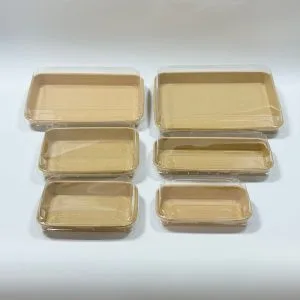
Kraft Paper Sushi Tray with Clear Plastic Lid
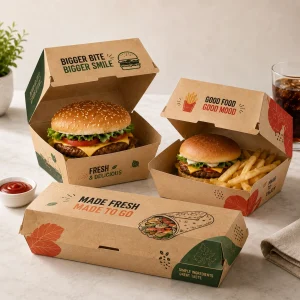
Custom Paper Burger Boxes
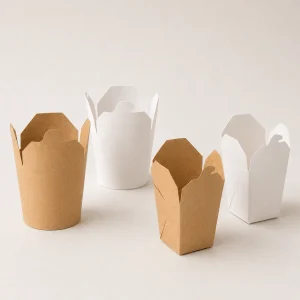
Custom Paper Noodle Boxes & Tubs
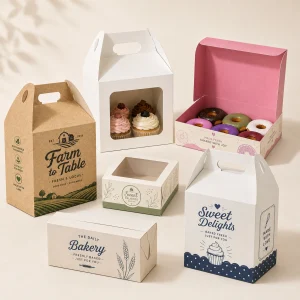
Custom Paper Food Packaging Boxes
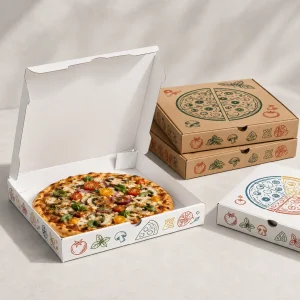
Custom Printed Pizza Boxes
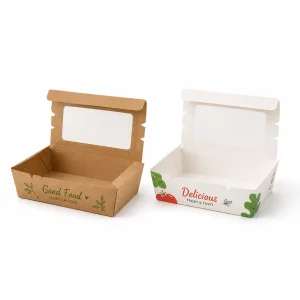
Custom Paper Food Boxes with Window
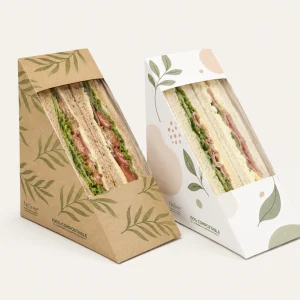
Custom Paper Sandwich Boxes with Window
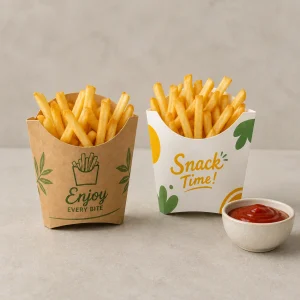
Custom Paper French Fry & Chip Cups
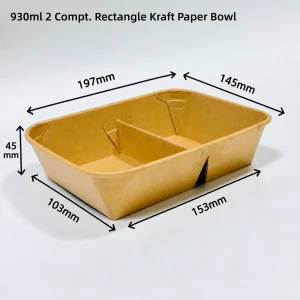
930ml 2-Compartment Paper Box
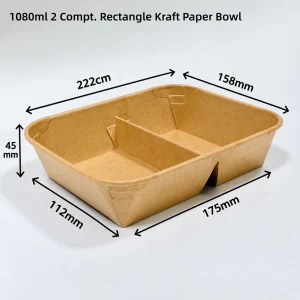
1080ml 2-Compartment Paper Box

Disposable Kraft Paper Boxes for Food
Disposable Paper Box for Food Packaging
Fold-Top and Lock-Top: What Changes at the Packing Station?
| Selection point | Fold-over panels | Tab-lock or slot engagement | Buyer check |
|---|---|---|---|
| Closing action | Panels fold over the loaded meal | A tab or panel engages a defined slot | Can staff close it consistently with the planned portion? |
| Food clearance | Toppings must leave room for the folds | Food must also clear the tab and locking area | Check rim and top-panel interference after filling |
| Customer opening | Confirm the intended flap sequence | Check the force and access needed to release the lock | Open the packed sample as the diner would |
| Containment | Fold geometry and barrier remain important | A positive lock does not create a liquid-tight seal | Assess corners, seams, oil and sauce under the intended handling |
Choose the closure for your service routine rather than treating a lock as evidence of a sealed liquid container. If loose sauce is part of the menu, evaluate it separately in the complete meal trial.

Fit the Meal to the Opening, Base and Depth
Top dimensions determine loading access; base dimensions affect how the portion sits in the box. Depth determines whether the food clears the closing panels. Bioleader’s published fold-top table gives No. 5, 1080ml, and No. 8, 1400ml, the same 169 × 137mm top and 153 × 120mm base, with listed heights of 50mm and 65mm respectively. The deeper reference provides a different meal space without proving that the two packed boxes stack identically.
Use a normal recipe with its garnish, oily components and sauce. Fill, close, hold, carry and open it over the planned service period. Record panel bowing, staining, corner seepage and opening access as sample observations, then agree the acceptable result. The takeaway packing workflow covers the wider kitchen-to-handover task.
Approve the Folding Sample Before Printing
Give Bioleader the model or required drawing, top and base dimensions, food height, closure preference and intended menu. Request an unprinted formed sample to review the folds and locking action before signing off decorated production. If a new depth, vent or locking detail is required, establish the available development route and quotation for that design; an artwork change and a structural tooling change are different requests.

Artwork Across Panels, Creases and Locks
Mark the logo position on the approved dieline, with fold lines, lock slots and the customer-facing panels identified. Check that a flap does not hide key artwork when the box is closed. Review the print result on the actual brown board: a screen colour or white-paper proof does not establish the same appearance on kraft. Keep inks, print areas and any intended food-contact surfaces within the agreed production specification.

Specify the Board, Barrier and Food Conditions
Bioleader’s fold-top specifications include kraft paper with a single PE barrier. The broader category also describes PE and PLA options; select the construction actually quoted for your article. Confirm the food, filling temperature, oil and moisture level, holding time and handling conditions together with that barrier. Paper appearance alone does not establish plastic-free composition, reheating suitability or a disposal route.
Request the material description and relevant food-contact documentation for the finished box. Match document coverage to the board, coating, printing and intended use. The existing certificate images are reference material rather than a guarantee for every kraft article. Recyclability depends on the complete structure, contamination and the receiving system.
Turn the Approved Box into a Repeat-Order Specification
For bulk supply, retain the approved model, closure drawing, board/barrier, print reference and packed-meal sample record. The published No. 5 and No. 8 fold-top rows each list 50 × 4 = 200 pieces per carton; use the confirmed quotation for the ordered model when converting demand into cartons. Ask Bioleader to align quantities, packing marks and inspection points with that same reference.
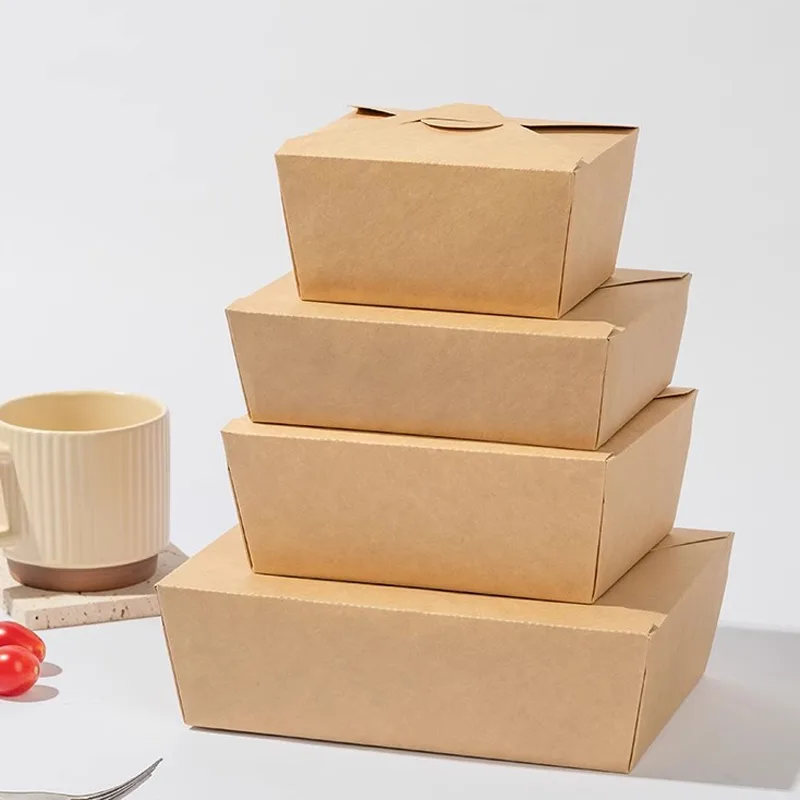


Kraft Box Approval Checklist
- Model, top opening, base dimensions and depth.
- Fold sequence, locking detail and food clearance.
- Board, barrier, printed panels and intended food-use conditions.
- Approved loaded sample, appearance checks and closing checks.
- Quantity by model, pieces per carton, destination and repeat-order reference.
Brown Kraft Box Buying Questions
Fold-top describes the folding panels. Lock-top identifies a tab, slot or other engagement detail that holds the closure. Commercial names can overlap, so compare the actual drawing and sample rather than relying on the label alone.
Confirm the selected board and barrier, then trial the normal recipe through filling, closing, holding, carrying and opening. Record staining, seepage, panel shape and opening access. Evaluate loose sauces separately where necessary.
No. Obtain the supplied board and coating description for the article. Brown appearance alone does not establish pulp treatment or the absence of a polymer barrier.
Confirm instructions for the exact board, coating, print and closure construction before reheating. A kraft appearance, shared capacity or another model’s instructions cannot establish suitability for the selected box.
Keep the model or dieline, closure details, board/barrier, print reference, approved sample and agreed packing and inspection points. Confirm quantities and current order terms against that specification.
Contact Us Now
Share the box drawing or reference, menu, closure requirement, quantity and artwork stage for a focused quotation.