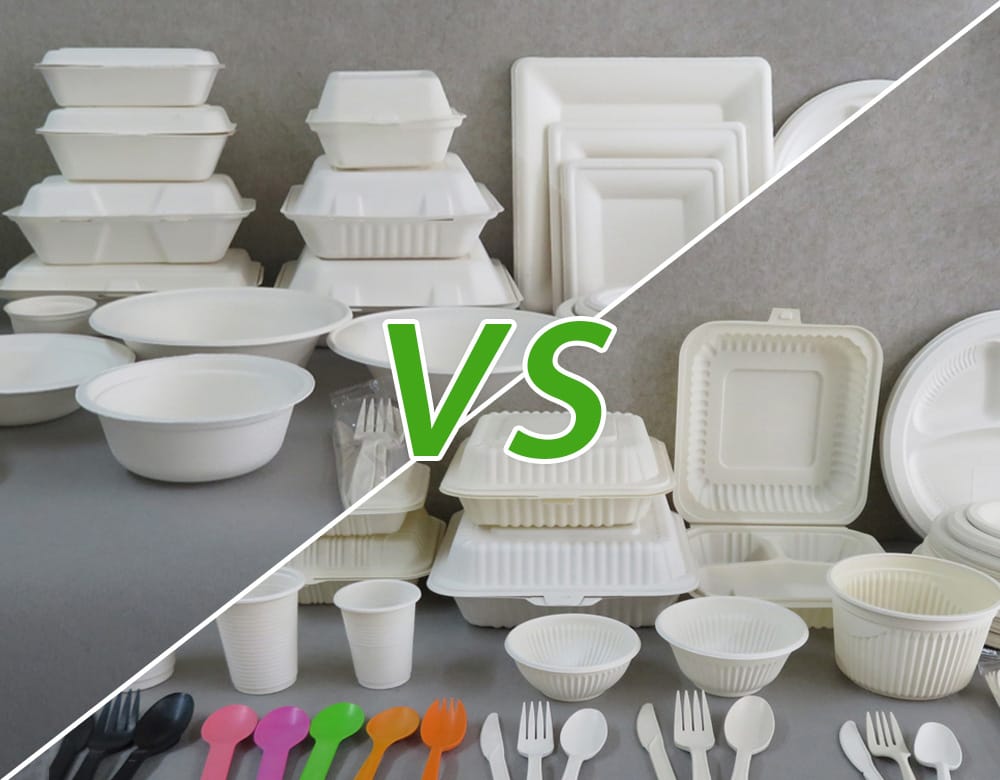


Quick Summary: Buyers often search for “FDA approved biodegradable food containers,” but FDA food-contact compliance is not a blanket approval or certificate issued to every finished container. Regulatory status depends on the substances used in the finished article, the applicable authorization pathway, specifications and limitations, and the intended conditions of use. Importers should verify the relevant CFR provisions, effective Food Contact Notifications (FCNs), Threshold of Regulation exemptions, or other applicable regulatory basis together with product-specific supporting documentation.
Why FDA Food-Contact Compliance Matters for Biodegradable Packaging
When American buyers search for FDA approved biodegradable food containers, they are usually trying to answer a practical question: can the packaging be legally and safely used for its intended food-contact application in the United States?
The U.S. Food and Drug Administration (FDA) regulates substances that come into contact with food through packaging, storage, processing, and handling. A finished container—whether it is a bagasse bowl, a PLA cup, a cornstarch spoon, or a kraft paper soup container—may contain several food-contact substances, including the base material, coatings, additives, adhesives, printing inks, and colorants.
The important regulatory question is therefore not simply whether the container is described as biodegradable. Buyers need to determine whether the relevant food-contact substances are lawfully authorized for the intended use and whether the finished packaging is used within the applicable specifications and limitations.
Imported FDA-regulated products may be reviewed for admissibility when they enter the United States. Products that appear to violate applicable FDA requirements can be detained or refused admission. For importers, accurate material specifications and traceable food-contact documentation are therefore more useful than a generic “FDA approved” marketing claim.
What “FDA Approved” Really Means for Biodegradable Containers
The phrase “FDA approved container” is commonly used in packaging sales, but it can oversimplify how U.S. food-contact regulation actually works. FDA does not operate a single certification system that issues a universal “FDA certificate” for every finished bowl, cup, plate, or takeaway box.
For food-contact substances, the regulatory basis may come from an applicable provision in Title 21 of the Code of Federal Regulations, an effective Food Contact Notification (FCN), a Threshold of Regulation (TOR) exemption, a prior sanction, GRAS status where applicable, or another lawful basis recognized under the Federal Food, Drug, and Cosmetic Act.
For example, 21 CFR 176.170 addresses specified components of paper and paperboard in contact with aqueous and fatty foods, while 21 CFR 176.180 addresses specified paper and paperboard components used with dry food. These provisions do not automatically establish the compliance of every molded-fiber or paper package; the actual formulation and conditions of use still matter.
Important buyer distinction: A laboratory migration or extractives test can provide valuable evidence, but a test report by itself does not replace the need to determine the regulatory status of the substances in the food-contact article. Buyers should review both the applicable regulatory basis and the test conditions relevant to the intended SKU.
This becomes particularly important with FCNs. An effective Food Contact Notification may apply only to the identified manufacturer or supplier, the specified substance, and the stated conditions of use. A buyer should therefore avoid assuming that an FCN issued for one resin or chemical supplier automatically covers an equivalent-looking material from another source.
For importers comparing different sustainable packaging systems, Bioleader® recommends reviewing food-contact requirements separately from compostability, PFAS, recyclability, and other environmental claims. The broader global compostable packaging compliance guide can help buyers distinguish regulations, standards, certifications, and supporting documentation across different markets.
Which Biodegradable Materials Can Meet FDA Food-Contact Requirements?
Bagasse Bowls and Clamshell Containers
Bagasse is a molded plant fiber produced from the fibrous residue left after sugarcane processing. Bioleader®’s sugarcane bagasse tableware solutions include bowls, plates, trays, and takeaway containers designed for a range of foodservice applications.
For U.S. food-contact compliance, buyers should evaluate the finished bagasse formulation, not only the sugarcane fiber itself. Wet-strength agents, oil- and water-resistance additives, processing aids, colorants, coatings, and other substances can affect the regulatory status of the finished article. Relevant paper and paperboard provisions may apply to particular components, subject to their specifications and limitations.
PFAS status is a separate issue from general FDA food-contact compliance. FDA announced that PFAS-containing grease-proofing agents for paper and paperboard food packaging were phased out of the U.S. market, and the associated 35 FCNs became ineffective in 2025. Buyers sourcing molded-fiber packaging should still verify the supplier’s actual barrier chemistry and available PFAS documentation for the selected product.
For buyers evaluating bagasse clamshell containers, food type, holding time, oil resistance, microwave use, and barrier requirements should be confirmed at SKU level.
|
|
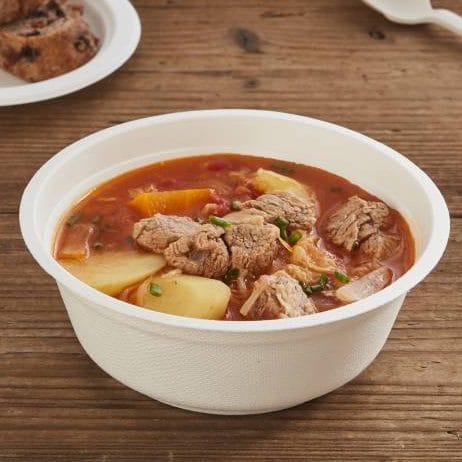

Compostable PLA Cold Drink Cups
PLA, or polylactic acid, is a bio-based polymer commonly produced from plant-derived feedstocks. Bioleader®’s PLA clear cup solutions are designed primarily for cold beverages such as juice, smoothies, iced coffee, bubble tea, and cold desserts.
PLA should not be described as generically compliant with 21 CFR 177.1520. That section addresses specified olefin polymers and is not a universal PLA authorization. For PLA packaging, buyers should identify the regulatory basis applicable to the actual resin, additives, colorants, and other components, including any applicable CFR listing, effective FCN, TOR exemption, or other recognized authorization.
Third-party testing should also match the intended use. A clear cold cup intended for acidic juice, for example, should not be approved for procurement simply because a supplier presents an unrelated high-temperature test report.
Buyers looking for specific cup sizes and formats can also review Bioleader®’s compostable PLA cup category. Applicable food-contact documentation should be reviewed for the selected SKU and intended use before confirming an order.

Cornstarch Cutlery
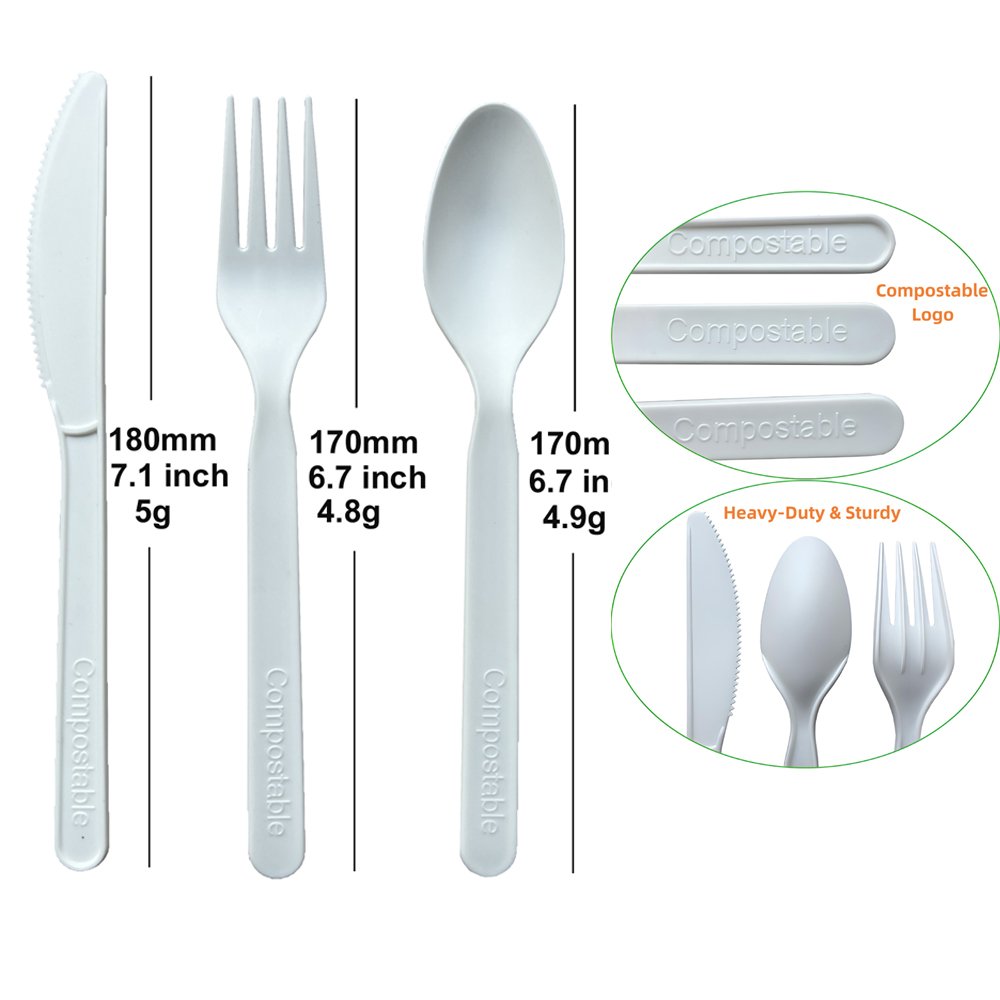
Cornstarch tableware and CPLA utensils should be evaluated according to their actual resin formulation rather than the product name alone. “Cornstarch” does not automatically mean that a finished article is pure plant material, plastic-free, home compostable, or covered by a particular FDA regulation.
Cornstarch-based cutlery may combine starch with one or more polymer systems and additives. CPLA is typically processed to provide higher heat resistance than standard PLA, which makes it useful for forks, spoons, and knives used with warmer foods. The actual service temperature should still be verified against product-specific specifications.
For U.S. food-contact review, buyers should identify the components of the formulation and verify that each relevant food-contact substance has an appropriate regulatory basis for the intended use. Migration or compositional testing may support the assessment, but compostability requirements such as ASTM D6400 address a different question and should not be presented as proof of FDA food-contact compliance.
Specific commercial options are available through Bioleader®’s cornstarch cutlery range.
Kraft Paper Bowls with Lids
Bioleader®’s paper food packaging solutions include paper cups, soup bowls, salad bowls, food boxes, and other takeaway formats. The paper body, however, is only one part of a finished food-contact structure.
Kraft paper bowls with lids may use PE, PLA, PP, aqueous coatings, adhesives, printing inks, or other barrier systems depending on the application.
U.S. food-contact review should therefore consider the paperboard, coating or lining, adhesives, inks, and any other substances that may reasonably migrate to food under the intended conditions of use. A bowl should not be described as compostable merely because the substrate is paper or because it uses a bio-based lining; compostability requires separate product-specific evidence.
Customized printing introduces another layer of review. Buyers using branded bowls, cups, and boxes can refer to Bioleader®’s guide on food packaging inks and compliance when evaluating inks, migration risk, and printed food-contact structures.

Material Comparison: U.S. Food-Contact Compliance and Performance
| Material | U.S. Food-Contact Verification | Typical Products | Application Scenarios | End-of-Life Note | Practical Advantages | Potential Limitations |
|---|---|---|---|---|---|---|
| Bagasse (Sugarcane Pulp) | Verify the finished formulation and applicable authorizations for fiber additives, barrier agents, processing aids, coatings, inks, and other components. | Bagasse bowls, clamshell containers, plates | Hot meals, takeaway, catering | Compostability is separate from FDA status; verify product-specific evidence and facility acceptance. | Rigid molded fiber suitable for many hot and oily food applications when properly specified. | Oil and water resistance depend on formulation, structure, and holding conditions. |
| PLA (Polylactic Acid) | Verify the actual resin and additives against the applicable CFR, FCN, TOR exemption, or other recognized regulatory basis. Do not rely on 21 CFR 177.1520 as a generic PLA claim. | PLA cups, dessert cups, cold drink cups | Cold drinks, juices, iced coffee, desserts | Industrial compostability depends on the finished product, supporting evidence, and available composting infrastructure. | Clear appearance and useful performance for cold beverage service. | Generally not intended for high-temperature filling or microwave use unless specifically supported. |
| Cornstarch / CPLA | Verification depends on the complete resin formulation and additives; “cornstarch” or “CPLA” alone does not establish regulatory status. | Cornstarch cutlery, CPLA spoons, forks, knives | Catering, takeaway, foodservice utensils | Compostability is formulation- and certification-dependent. | CPLA can provide greater heat resistance than standard PLA for cutlery applications. | Performance and end-of-life claims vary significantly by formulation. |
| Kraft Paper with Barrier Layer | Review the paperboard plus coating, lining, adhesives, inks, and other food-contact components under their applicable authorizations. | Kraft paper bowls with lids, soup containers | Salads, soups, takeaway meals | Compostability and recyclability depend heavily on the barrier structure and local collection system. | Printable surface with multiple barrier and lid options. | The paper appearance does not by itself establish compostability, recyclability, or plastic-free status. |
How Importers Can Verify FDA-Compliant Packaging
For U.S. buyers, the objective is not to collect as many certificates as possible. The objective is to establish a traceable connection between the selected SKU, its material composition, intended use, and applicable U.S. food-contact authorization.
- Identify the regulatory basis: Determine whether the relevant components are covered by an applicable 21 CFR provision, effective FCN, TOR exemption, prior sanction, GRAS basis where applicable, or another recognized authorization.
- Check FCN traceability: If an FCN is being relied upon, verify that it applies to the relevant substance, manufacturer or supplier, intended use, and conditions. An FCN cannot automatically be transferred to an unrelated source of the same chemical.
- Review product-specific test evidence: Testing should reflect the relevant food type, temperature, contact time, and intended use. Do not require every possible simulant when the product is only designed for a narrower application.
- Separate PFAS verification from general FDA compliance: PFAS status, state restrictions, and federal food-contact authorization are related sourcing issues but are not interchangeable claims. For U.S. buyers, Bioleader®’s U.S. PFAS packaging procurement guide provides a separate state-level compliance perspective.
- Review the complete structure: For fiber and paper packaging, check coatings, barrier agents, adhesives, printing inks, colorants, and other relevant components rather than reviewing only the base fiber.
Buyers can also review Bioleader®’s available certificates and test-report references before requesting documentation for a specific SKU. Available documentation may vary by product and market.
Buyer’s Checklist: What to Confirm Before Importing FDA-Compliant Biodegradable Food Containers
When sourcing biodegradable food containers for the U.S. market, importers should review the following items before approving bulk production.
1. Verify the Regulatory Basis and Supporting Reports
- Request documents applicable to the selected SKU, material structure, and intended food-contact conditions.
- Where relevant, confirm the applicable CFR provision, effective FCN, TOR exemption, or other lawful basis for the food-contact substance.
- When third-party testing is supplied, check the laboratory, test scope, sample description, and test conditions rather than accepting the laboratory name alone.
2. Confirm PFAS and Other Material Claims Separately
- For products such as biodegradable bagasse bowls, paper packaging, PLA cups, and other food-contact items, request the available PFAS statement or test documentation where relevant to the product and destination market.
- Do not treat “PFAS-free,” heavy-metal testing, food-contact compliance, and compostability as one combined certification. They address different requirements.
3. Check Compostability Claims Separately from FDA Compliance
- If a product is marketed as compostable, review the applicable evidence for the finished article. EN 13432 and ASTM D6400 address compostability-related requirements; they do not replace U.S. food-contact authorization.
- Confirm whether the claim relates to industrial composting, home composting, or another defined end-of-life condition.
4. Define the Actual Food and Use Conditions
- Specify whether the packaging will contact hot soup, oily meals, acidic food, cold beverages, dry food, or other food types.
- Define filling temperature, holding time, reheating, freezing, lid configuration, and transport conditions where relevant.
- Confirm microwave, freezer, leakage, and heat-performance claims on the exact product rather than extrapolating from the raw material.
5. MOQ and Customization
- Confirm minimum order quantities for the selected product and whether printing changes the required production quantity.
- Review custom logo printing, ink system, print location, and any food-contact implications before artwork approval.
6. Packaging and Labeling Claims
- Do not treat the words “FDA Compliant” printed on a carton as proof of regulatory status or as a universal FDA labeling requirement.
- Ensure claims such as compostable, PFAS-free, recyclable, biodegradable, and food-contact compliant are supported by documentation applicable to the product.
7. Logistics and Documentation
- Ask when product specifications and compliance documents will be available relative to sample approval and bulk shipment.
- Keep the material description, SKU, commercial invoice description, and supporting product documentation consistent enough for buyer review and import records.
8. Supplier Traceability
- Confirm that the supplier can identify the relevant material structure and connect the supplied documentation to the selected product.
- Where an FCN or specific raw-material authorization is relied upon, verify supplier or manufacturer traceability rather than relying on an unrelated document found online.
Practical Buyer Scenario: Reviewing a U.S. Food-Contact Documentation Package
Consider a buyer sourcing several packaging formats in one program: bagasse bowls for hot meals, PLA cups for cold beverages, cornstarch tableware, and kraft paper bowls for soups and salads.
A reliable review should not begin with the question, “Does the factory have an FDA certificate?” Instead, each product should be checked separately. The bagasse item may require review of molded-fiber additives and barrier chemistry; the PLA cup requires verification of the actual resin and additives for cold beverage contact; a cornstarch-based utensil must be assessed according to its full resin formulation; and a paper bowl requires review of the paperboard together with its lining, adhesive, and printing system.
Bioleader® recommends organizing the available documentation by SKU so buyers can compare the product specification, intended conditions of use, relevant food-contact evidence, PFAS documentation where applicable, and separate compostability evidence before confirming production. This approach is more reliable than applying one general compliance statement across an entire product catalogue.
Bioleader® Company Profile – Supporting U.S. Food-Contact Documentation
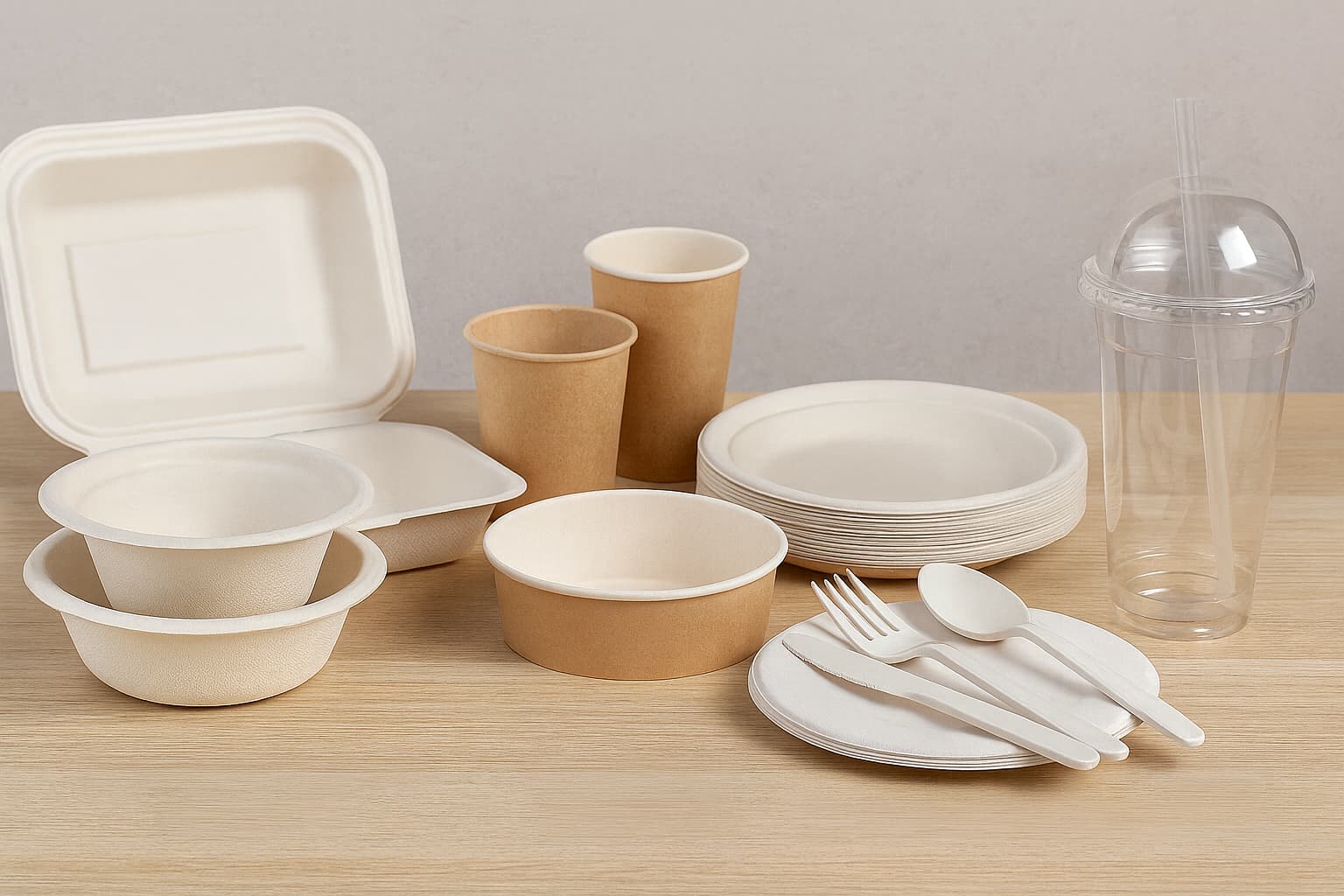
Bioleader® is a manufacturer and supplier of biodegradable and compostable food packaging. Its product portfolio allows buyers to compare several material systems within one sourcing program:
- Bagasse bowls, plates, trays, and clamshell containers for hot and cold foodservice applications.
- PLA clear cups for smoothies, juices, iced coffee, bubble tea, and other cold beverages.
- Cornstarch and CPLA tableware for catering, restaurants, and takeaway applications.
- Paper food packaging including cups, soup bowls, salad bowls, and takeaway food boxes.
For importers evaluating U.S. food-contact requirements, Bioleader® can organize available product specifications, food-contact test reports, material information, and related compliance documents for selected items. Documentation varies by material and SKU, so buyers should review the evidence applicable to the product being purchased rather than assume that one report covers the complete product range.

U.S. Compliance Outlook for Biodegradable Food Containers
The regulatory direction for food-contact packaging is moving toward more precise substance-level documentation rather than broad environmental marketing claims. For importers of biodegradable food containers, several issues deserve particular attention.
- Food-contact authorization: Buyers need to know the regulatory basis for the relevant substances and whether specifications and conditions of use match the finished application.
- PFAS in paper and fiber packaging: FDA completed the market phase-out of PFAS-containing grease-proofing substances for paper food packaging and subsequently determined the associated 35 FCNs were no longer effective.
- Environmental claims: Compostable, biodegradable, recyclable, bio-based, and PFAS-free claims should be reviewed independently from FDA food-contact compliance.
- Material-specific use: Bagasse packaging, PLA cold cups, cornstarch-based products, CPLA utensils, and kraft paper bowls have different material structures and should not be covered by one generic compliance statement.
U.S. Food-Contact and PFAS Timeline
- 1997: The Food Contact Notification process was established as an important premarket authorization pathway for food-contact substances.
- 2020: FDA worked with manufacturers on voluntary phase-out commitments for certain PFAS-containing grease-proofing substances used on food-contact paper and paperboard.
- February 2024: FDA announced that PFAS-containing grease-proofing substances were no longer being sold into the U.S. market for use on food packaging paper and paperboard.
- January 2025: FDA determined that 35 FCNs covering PFAS-containing grease-proofers for paper and paperboard packaging were no longer effective because those uses had been abandoned.
- June 30, 2025: FDA established a compliance date for certain existing paper food-packaging stocks associated with those abandoned uses.
These developments reinforce a broader procurement principle: buyers should verify the actual formulation, authorization pathway, intended use, and supporting documentation rather than treating “FDA compliant” as a generic property of a material family.
FAQ
1. Do I need “FDA approval” to import biodegradable food containers?
There is no single blanket FDA approval certificate for every finished biodegradable container. The substances used in the food-contact article must have an appropriate regulatory basis for the intended use, and the product must be used within the applicable specifications and limitations. Importers should review the relevant documentation for the selected SKU.
2. Is bagasse FDA approved?
Bagasse as a material should not be described as universally “FDA approved.” A bagasse food-contact article can meet applicable U.S. requirements when the relevant fiber components, additives, barrier agents, coatings, inks, and other substances have an appropriate regulatory basis for their intended use.
3. Can PLA cups be FDA compliant?
Yes, PLA cold cups can be suitable for U.S. food-contact applications when the actual resin, additives, and finished product are supported by the applicable regulatory authorization and documentation. Buyers should not use 21 CFR 177.1520 as a generic PLA compliance reference because that section applies to specified olefin polymers.
4. Does a third-party migration test prove FDA compliance?
Not by itself. Migration or extractives testing can provide important supporting evidence, but buyers should also determine the regulatory status of the substances used in the food-contact article and verify the applicable specifications, limitations, and conditions of use.
5. What is the difference between FDA and EU food-contact compliance?
The United States and European Union use different regulatory frameworks. A report prepared for U.S. FDA food-contact requirements does not automatically demonstrate compliance with EU requirements, and an EU test report does not automatically establish U.S. compliance. Buyers should request documentation relevant to the destination market and product structure.
6. Is PFAS-free the same as FDA compliant?
No. PFAS status and FDA food-contact compliance address different questions. A product may require PFAS-related verification because of federal or state requirements, while its food-contact substances must separately have an appropriate regulatory basis for their intended use.
7. Does ASTM D6400 or EN 13432 prove FDA food-contact compliance?
No. ASTM D6400 and EN 13432 address compostability-related requirements. They do not replace U.S. food-contact authorization or product-specific food-contact documentation.
8. Can I print custom logos on FDA-compliant food containers?
Custom printing is possible on many bagasse, PLA, cornstarch, and paper packaging formats, but the ink system, print location, substrate, and intended food-contact use should be reviewed. Bioleader® offers custom printing options depending on the selected product and production requirements.
Conclusion – Verify the Product, Not the Marketing Phrase
FDA-compliant biodegradable food containers should be evaluated at the substance, structure, SKU, and intended-use level. “FDA approved” is not a substitute for identifying the applicable regulatory basis, checking specifications and limitations, reviewing relevant test evidence, and confirming material traceability.
For importers, the safest procurement process is to separate four questions: U.S. food-contact authorization, product performance, PFAS or other chemical claims, and compostability or recyclability claims. They may all matter to the same purchase, but they are not the same compliance issue.
Bioleader® can support buyers comparing bagasse bowls, PLA cold cups, cornstarch and CPLA tableware, and paper-based food packaging by providing product specifications and available documentation for selected items before bulk production.
References
U.S. Food and Drug Administration — Understanding How the FDA Regulates Substances that Come into Contact with Food
U.S. Food and Drug Administration — Determining the Regulatory Status of Components of a Food Contact Material
U.S. Food and Drug Administration — Inventory of Food Contact Substances Listed in 21 CFR
U.S. Food and Drug Administration — Inventory of Effective Food Contact Substance Notifications
U.S. Food and Drug Administration — Market Phase-Out of Grease-Proofing Substances Containing PFAS
U.S. Food and Drug Administration — FDA Determines Authorization for 35 Food Contact Notifications Related to PFAS Are No Longer Effective
U.S. Food and Drug Administration — Import Basics
U.S. Food and Drug Administration — FDA Import Process
ASTM International — ASTM D6400-26: Standard Specification for Labeling of Plastics Designed to be Aerobically Composted in Municipal or Industrial Facilities
CEN-CENELEC — EN 13432: Packaging Recoverable Through Composting and Biodegradation