The article explores how office culture is accelerating adoption of compostable tableware—like bagasse trays and cornstarch cutlery—to reduce plastic waste at lunchtime while aligning with sustainability commitments and emerging environmental policies.
In today’s hybrid work world, lunch isn’t just a meal—it’s a moment of impact. Whether it’s a desk-side delivery, a shared team meal, or a pre-packed catering tray, the packaging it comes in matters more than ever.
As companies race toward net-zero targets and employees demand meaningful climate action, a quiet transformation is underway. Foam trays and plastic forks are being replaced by bagasse boxes, kraft bowls, and compostable cutlery. And driving this shift? Office workers who want their lunch to align with their values.
Global Office Lunch Trends – From Silicon Valley to Singapore
🌍 A 2023 report by WRAP UK found that workplace meals account for over 22% of single-use packaging waste in corporate buildings. In high-density urban zones, such as Tokyo, Singapore, and New York, lunchtime waste volumes peak between 12pm and 2pm, generating an estimated 80 tons of disposable food packaging daily in central business districts.
The rise of compostable tableware isn’t limited to one continent. It’s happening globally—each region shaped by local policies, work culture, and sustainability awareness.
United States & Canada
In tech hubs like San Francisco and Toronto, corporate ESG mandates now extend to cafeteria procurement. Companies are partnering with zero-waste caterers, offering staff compost bins, and choosing EN-certified packaging. Compostable containers are now part of the modern “green perks” package.
Europe (Nordics, Germany, France)
Regulations like the EU’s Single-Use Plastics Directive and country-level EPR laws have forced a rapid shift in foodservice practices. In-office meals are served in EN13432-certified trays and kraft bowls. Northern Europe, in particular, leads with compost tracking systems and closed-loop lunch programs.
Asia (Japan, Singapore, South Korea)
Urban Asian offices are embracing premium meal delivery with eco-packaging as part of corporate wellness programs. In Singapore, Green Mark-certified offices prioritize compostable trays for catered meetings. In Seoul, tech startups are replacing traditional dosirak packaging with bagasse-based clamshells that handle complex, compartmentalized meals.
Why Businesses Are Switching to Compostable Lunch Packaging
📊 According to the Ellen MacArthur Foundation, packaging accounts for 36% of total plastic use globally—and only 9% is successfully recycled. In contrast, compostable packaging like bagasse and kraft paper, when correctly disposed of, can reduce landfill-bound packaging volume by up to 70%.
Behind this shift are three powerful drivers:
Sustainability Reporting: Packaging waste is a visible, trackable metric for ESG reports. Switching to compostable containers delivers immediate wins.
Health & Safety: BPA- and PFAS-free packaging is increasingly requested by HR teams to ensure safe reheating and allergen-free materials.
Brand Perception: Companies seen supporting environmental values enjoy higher retention rates and employee satisfaction.
According to a 2024 Deloitte survey, 73% of office employees in North America say they prefer meals in eco-friendly packaging, even if it costs more.
What Makes a Great Compostable Lunch Box for the Office?
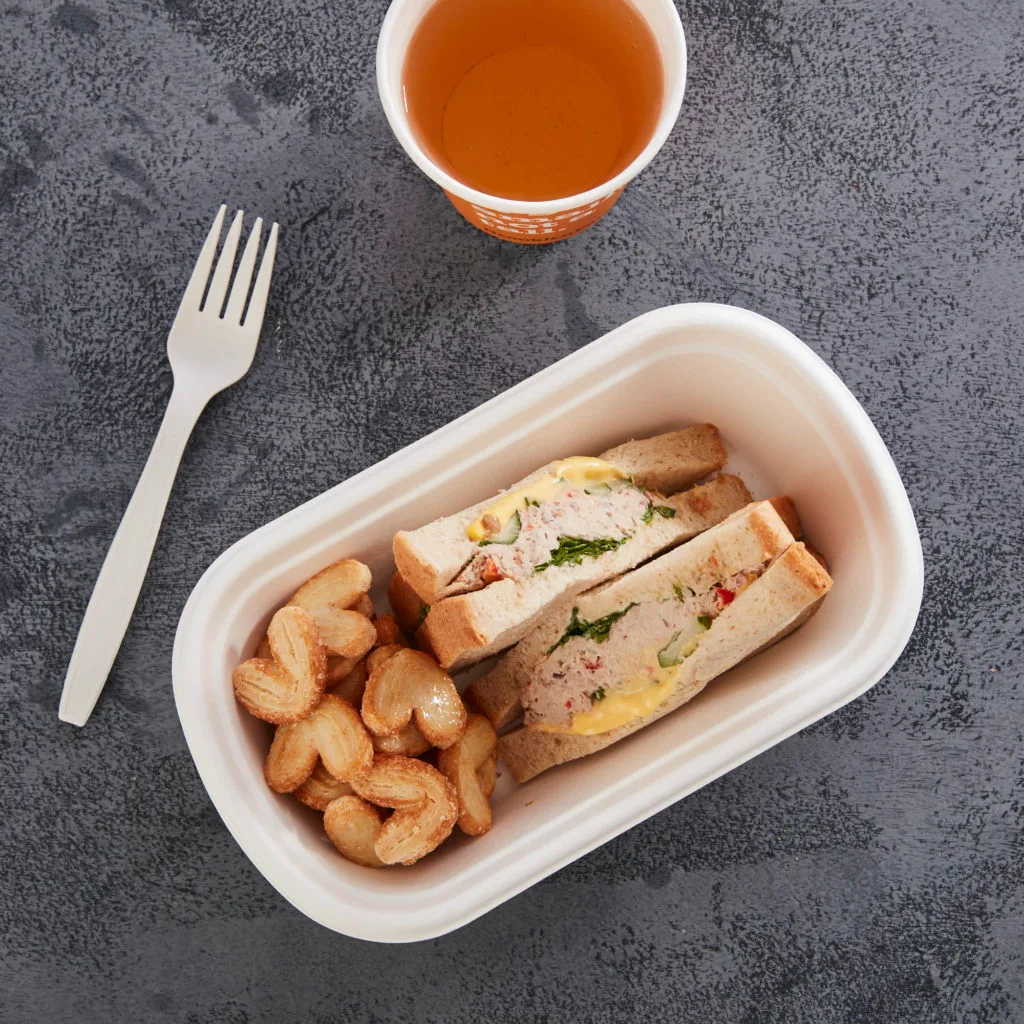
Workplace dining requires more than just a “green” label. Practicality, presentation, and durability are essential. The best compostable containers balance these needs.
| Feature | Importance in the Office Context |
|---|---|
| Leak-Resistant Design | Prevents spills in delivery bags, fridges, or desktops |
| Compartments Options | Separates mains, sides, or sauces—especially for set meals |
| Microwave-Safe | Supports reheating at work without warping or leaching toxins |
| Stackable Format | Essential for group orders or shared office fridges |
| Branded/Plain Options | Allows customization or discreet presentation |
| Certified Compostable | Meets EN13432, ASTM D6400 or local composting regulations |
Bioleader® Packaging That Performs in Office Environments
Bioleader® is a compostable packaging manufacturer that specializes in supplying B2B foodservice clients with sustainable, certified tableware solutions. With operations spanning Asia-Pacific and exports to Europe, North America, and the Middle East, the company focuses on delivering compliant, functional, and scalable alternatives to single-use plastic packaging.
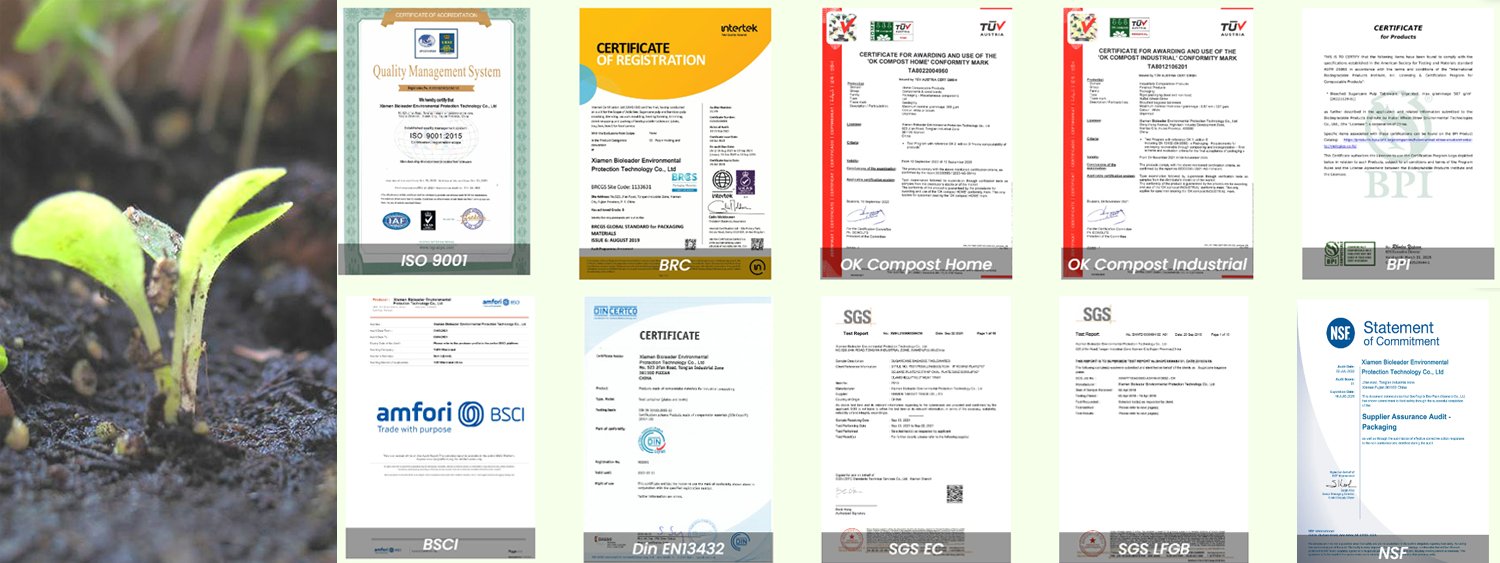
Its product range is designed to meet the demands of modern office environments, including co-working spaces, corporate campuses, and institutional catering. All items are developed to comply with international compostability standards such as EN13432 and ASTM D6400, and are manufactured in facilities adhering to food safety and quality management certifications.
Typical office-use product lines include:
Bagasse Clamshell Boxes (Single, 2-compartment, 3-compartment)
Suitable for bento-style meals, rice sets, or main-and-side lunch formats. Offers structural rigidity, grease resistance, and stackability for large-scale delivery.Bagasse Trays with Lids
Frequently used in in-house canteens and external catering setups, these trays support portioned service while minimizing spill risk and maintaining hygiene during transport.Kraft Paper Bowls with Lids
Used for hot meals, soups, and salads, these bowls provide a natural presentation while being microwave-safe and commercially compostable.
All products are free from PFAS, safe for use in both microwave and refrigeration conditions, and are intended to support clients with regulatory compliance under global and local extended producer responsibility (EPR) frameworks.
In recent years, Bioleader® has positioned itself as a consistent supplier for companies implementing ESG-aligned procurement strategies. The brand offers options for private labeling, MOQ flexibility for pilot programs, and logistics support for international rollouts.

Case Study 1: Amsterdam Fintech Cuts Packaging Waste by 72%
A mid-sized fintech firm in Amsterdam aimed to meet its sustainability KPIs by tackling cafeteria waste. After discovering foam and plastic containers made up nearly 40% of its daily trash, the team switched to Bioleader® 2-compartment bagasse trays with lids.
Within six months:
Waste volume dropped by 72%
Employee lunch satisfaction improved noticeably
Eco-packaging became a point of employer branding on social media
“People started posting their meals and packaging on LinkedIn—it became a culture point,” says Julia Ten Boom, Office Manager.

Case Study 2: Seoul Startup Hub Builds Compostable Culture
At a shared incubator facility in Seoul housing over 20 startups, meals were once served in plastic clamshells. Facing mounting pressure from city officials, the management team switched to Bioleader® 3-compartment bagasse boxes and kraft soup bowls for lunch service.
Results:
Monthly waste management costs fell 18%
Compost collection bins added to every floor
Printed lids helped startups reinforce their eco-brand identity
“It fits Korean dosirak perfectly—rice, meat, and sides all in one sturdy, leak-free box,” notes Hyun-Ju Lee, Sustainability Lead.

Expert Insight: The New Procurement Criteria for Sustainable Packaging
“Today’s procurement managers don’t just ask if it’s compostable. They ask: Is it certified? Can it handle hot food? What’s your MOQ?”
— Dr. Elisa Romero, Sustainable Materials Consultant, Spain
She emphasizes that success lies in aligning packaging specs with real office usage:
Can it survive microwave reheating?
Does it look clean on a conference table?
Can you ship 5,000+ units reliably, globally?
That’s where certified manufacturers like Bioleader® come in.

How Procurement and HR Teams Can Drive Sustainable Change
Incorporating sustainability into office dining isn’t just about what employees eat—it’s about how it’s packaged. Procurement and HR departments play a central role in driving this change. Here’s how:
✅ Review Catering Contracts
Ensure food vendors supply certified compostable packaging (e.g., EN13432, ASTM D6400) and eliminate PFAS or single-use plastics. Updated contracts should include environmental compliance clauses to hold suppliers accountable.
✅ Educate Staff with Green Lunch Policies
HR teams can create simple guidelines to help employees understand compostable vs. biodegradable, and promote correct waste sorting. Visual aids, onboarding materials, and internal campaigns can reinforce habits.
✅ Centralize Procurement
Consolidating packaging orders allows companies to negotiate better rates and maintain compliance consistency. Buying from verified compostable suppliers ensures supply stability and waste reduction at scale.
✅ Track & Report Progress
Use compostable packaging as a measurable ESG metric. KPIs may include composting rates, single-use plastic reduction, or employee participation—feeding into sustainability reports and certifications.
Looking Ahead – The Circular Office Lunch by 2030
The next decade will see even more innovation in workplace meals:
Reusable + compostable hybrid systems
Smart labels tracking container origin and disposal
Employee perks including zero-waste meal programs
Office pantries offering ready-to-eat meals in Bioleader® compostable packaging
📊 Compostable Packaging Market Insights
| Indicator | Forecast Value | Year / Period | Source / Notes |
|---|---|---|---|
| Global Compostable Foodservice Packaging Market | USD 34.5 Billion | By 2030 | Future Market Insights (2025 Report) |
| Growth Rate (CAGR) | 6.7% | 2025–2030 | Driven by ESG procurement mandates |
| Smart Packaging Adoption in B2B Catering | +23% Increase | By 2030 | Rise in traceable & compost-tracking containers |
| Institutional Packaging Spend (compostables) | 40% of total spend | By 2028 | Linked to global EPR and net-zero commitments |
| Packaging Share in Global Plastic Use | 36% | As of 2024 | Ellen MacArthur Foundation |
| Effective Global Plastic Recycling Rate | 9% | As of 2024 | Ellen MacArthur Foundation |
| Employee Preference for Eco-Packaged Lunch | 73% | 2024 Survey | Deloitte ESG Workplace Report |
| Methane Reduction (Bagasse vs. Plastic in landfill) | ~32% Lower Emissions | Ongoing | U.S. Composting Council 2023 Data |
| Bagasse Heat Resistance | Up to 120°C / 248°F | Material Spec | Tested under EN13432 conditions |
| Liquid Resistance Duration (Bagasse) | >3 hours with liquids | Lab tested | Outperforms paperboard by 65% |
Conclusion: Sustainability Doesn’t Start in the Boardroom—It Starts at Lunch
From fintech firms to startup incubators, from Amsterdam to Seoul, one thing is clear: the office lunch is no longer just about food—it’s about footprint, values, and daily choices. The containers that meals arrive in are becoming just as important as the meals themselves.
For companies pursuing ESG goals, sustainable packaging offers a visible, low-barrier, high-impact entry point. It turns everyday routines—like lunch breaks—into opportunities to model corporate responsibility, influence employee behavior, and meet compliance standards without major operational disruption.
When organizations choose compostable containers, especially certified and functional options like those from Bioleader®, they’re doing more than reducing plastic—they’re redefining internal culture, promoting healthier materials, and sending a clear message to both staff and stakeholders.
This shift is not just environmental—it’s generational. Office workers today, especially Millennials and Gen Z, are increasingly aligning their loyalty and engagement with employers who demonstrate credible climate action in day-to-day operations.
💡 Ready to upgrade your office food packaging?
Bioleader® offers a full suite of compostable tableware tailored for the modern workplace—including customizable designs, flexible minimum orders, and fast international fulfillment.
FAQ
1. What’s the most sustainable lunch packaging for office meals?
Sugarcane bagasse and kraft paper containers that are EN13432 or ASTM D6400 certified are top-rated.
2. Are compostable lunch boxes microwave-safe?
Yes. Bioleader® bagasse and kraft containers are microwave- and refrigerator-safe.
3. Can compostable containers be recycled if there’s no compost bin?
If composting isn’t available, they should be disposed of in organic or general waste. Check local guidelines.
4. Do you offer custom-printed compostable packaging for companies?
Yes. Bioleader® provides logo printing and private label services for bulk orders.
5. How do I source compostable containers in bulk for my office?
Reach out to Bioleader® for MOQs, product catalogs, and logistics support.
✅References
UNEP (2024) – Turning Off the Tap: How the World Can End Plastic Pollution and Create a Circular Economy
https://www.unep.org/resources/turning-off-tapSmith, T. (2023) – Why Compostable Packaging Is Gaining Ground in the Office Lunch Sector
https://www.greenbiz.com/article/why-compostable-packaging-gaining-ground-office-lunch-sectorISO (2020) – ISO 18606:2013 – Packaging and the Environment — Organic Recycling
https://www.iso.org/standard/60305.htmlBioleader® (2025) – How Street Food Vendors Are Adapting to Compostable Packaging Worldwide
https://www.bioleaderpack.com/how-street-food-vendors-are-adapting-to-compostable-packaging-worldwide/Lee, H. (2024) – The Rise of Green Office Culture: Composting, Reusables, and More
https://www.forbes.com/sites/heatherlee/2024/10/15/green-office-culture/EPA (2023) – Facts and Figures about Materials, Waste and Recycling
https://www.epa.gov/facts-and-figures-about-materials-waste-and-recyclingBioleader® (2025) – Plastic-Free Chicken Rice? How Singapore’s National Dish Is Going Compostable in 2025
https://www.bioleaderpack.com/plastic-free-chicken-rice-how-singapores-national-dish-is-going-compostable-in-2025/
Zero Waste Starts at Lunch: Compostable Tableware Transformation Fueled by Office Demand
In 2025, eco-aware office workers are driving a shift toward compostable materials—such as bagasse plates and cornstarch utensils—in workplace cafeterias and lunch delivery. These sustainable alternatives match the practical needs of hot, saucy meals while minimizing plastic pollution and supporting corporate ESG goals.
How it works: Compostable plates withstand heat and moisture, ensuring spill-free meals. Cornstarch-based cutlery offers a durable substitute for single-use plastic without compromising dining experience. Both materials decompose in industrial composting systems, aligning with evolving environmental mandates.
Why it matters: Companies fostering eco-friendly lunchtime routines benefit from boosted internal morale, positive brand image, and regulatory readiness. As global markets tighten plastic restrictions, office-driven demand creates a new high-volume channel for scalable, compliant compostable packaging solutions.