Why Safety Matters for Takeaway Soup (2025 Context)
Hot soup is one of the toughest packaging challenges. High temperature, oil content, salt, and acids all increase the risk of chemical migration from coatings or plastics into food. Meanwhile, global rules are rapidly tightening around what food-contact packaging can contain and how it must be labeled, collected, and disposed of. “Safest” today means more than not leaking—it means minimizing chemical exposure, performing reliably in real delivery conditions, and aligning with end-of-life policies your customers and regulators expect.
For operators, the wrong bowl can mean warped rims, popped lids, soggy bottoms, and customer complaints. For brands, it can mean noncompliance with PFAS restrictions or misleading claims about compostability or recyclability. The good news: modern biodegradable takeaway soup bowls—especially molded fibers like bagasse with non-fluorinated, water-based barriers—now deliver safety without sacrificing performance.
Safety Criteria: How We Evaluate “Safest”
Chemical safety
PFAS-free: No intentionally added per- and polyfluoroalkyl substances.
BPA-free, phthalate-free: Especially important for lids and liners.
Food-contact compliant: Meets recognized migration limits under hot-fill or reheating scenarios.
Heat & use performance
Handles hot fill and 30–45 minutes of transit without softening, delaminating, or leaking.
Microwave guidance for short reheats (e.g., 1–2 minutes with vented lid slightly ajar).
Barrier & coating
Aqueous (water-based), non-fluorinated barriers to resist oil and moisture.
Understand liner differences: aqueous vs. bio-based (e.g., PLA) vs. PE for specific use cases.
End-of-life integrity
True compostability under recognized standards (industrial facilities where available).
Clear claims that avoid confusing “recyclable” or “home compostable” where not realistic.
Operational safety
Tight lid fit + venting to limit splashes, prevent vacuum seals, and reduce rim deformation.
Stacking strength for couriers and shelf load; consistent dimensions for automated packing.
These criteria blend chemistry, engineering, and real-world operations to answer a simple question: will this bowl serve hot soup safely and predictably during the last mile and at home?
Executive Answer (2025)
Top pick: PFAS-free bagasse (molded fiber) soup bowls with aqueous, non-fluorinated barrier, paired with vented paper lids or CPLA lids for hot service. This system earns the best balance of chemical safety, heat tolerance, structural integrity, and credible end-of-life claims for compostable soup bowls.
Close alternatives:
Kraft paper bowls with aqueous barrier (PFAS-free). Opt for vented paper or CPLA lids.
Wheat-straw or other molded fibers with non-fluorinated barriers, comparable to bagasse.
PP lids (food-grade polypropylene) remain a practical fallback where heat is extreme, long hold times are required, or compostable lids can’t maintain seal integrity.
Use caution:
PLA lids can soften around hot condensate; limit to warm soups or pair with paper lids.
PE-lined bowls aren’t ideal for compostability claims.
Avoid foam and PVC for food-contact and environmental reasons.
Material Deep-Dive: What Makes a Soup Bowl “Safest”?
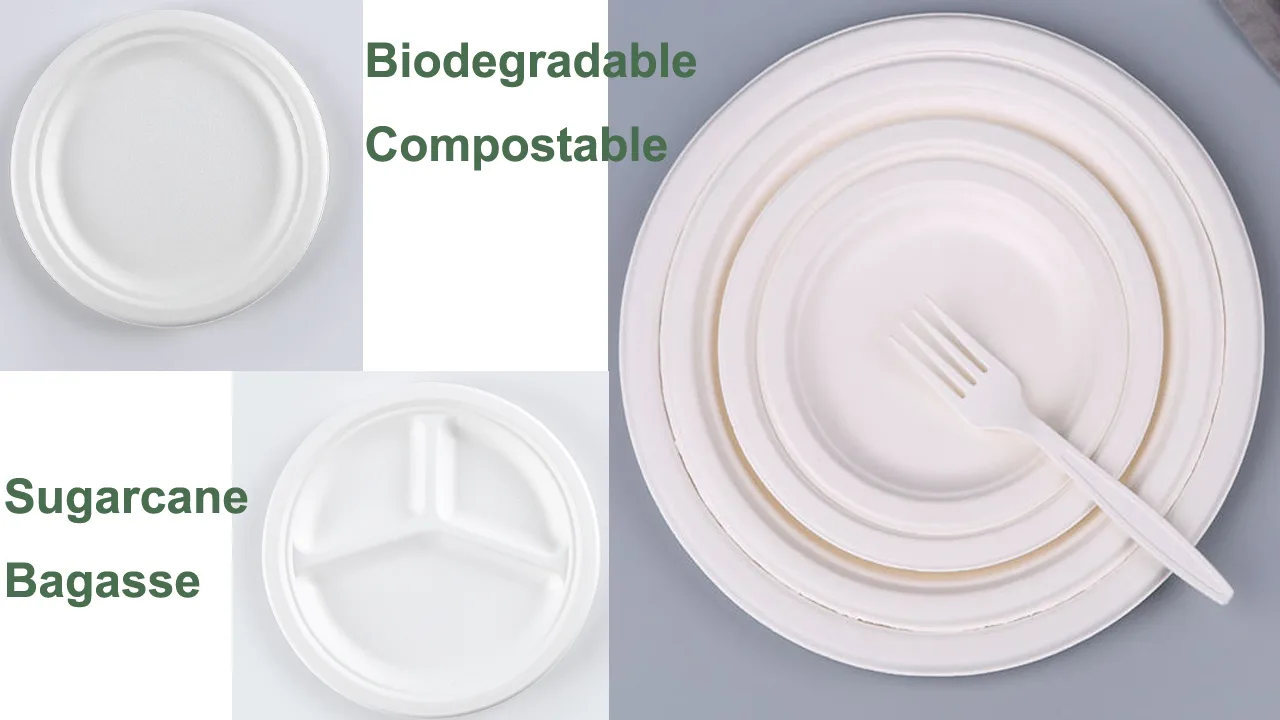
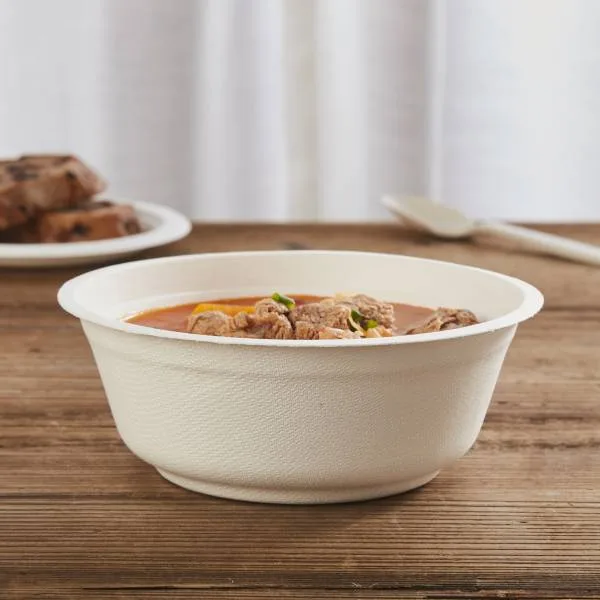
Bagasse (Sugarcane) Bowls
Why they lead: Dense molded fiber resists heat and offers sturdy sidewalls and rims. With modern non-fluorinated aqueous coatings, bagasse bowls manage hot, oily broths with low migration risk. They’re typically microwave-safe for brief reheats when used with vented lids and clear user guidance—hence the popularity of bagasse soup bowls microwave safe searches.
Best-fit use cases: Ramen, pho, bone broth, chowders, curry soups, and oily bases.
Watchouts: Confirm “PFAS-free” status and coating type; ask for current test reports.
Kraft Paper Soup Bowls
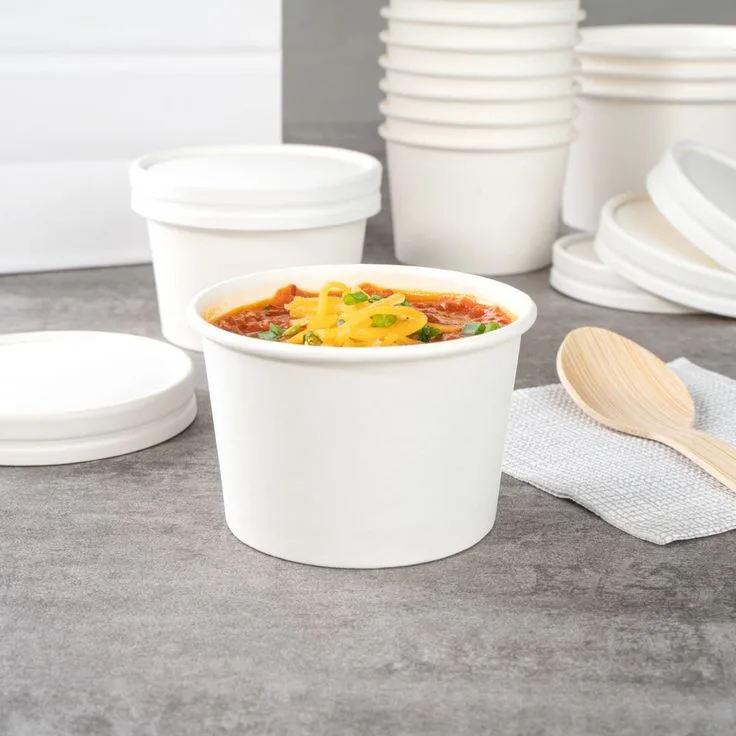
Strengths: Familiar look, wide size range, stable supply, solid printability. With PFAS-free aqueous barriers, kraft bowls handle most hot soups and keep fibers contained.
Liner options, decoded:
Aqueous (PFAS-free): Great all-rounder for hot fill + delivery.
PLA liner: Biobased; better for cold or warm foods. Limit for very hot soups.
PE liner: Durable and affordable, but not compatible with compostability claims.
Wheat-Straw & Other Molded Fibers
Similar to bagasse in structure and performance. Quality varies more across suppliers; request migration, heavy-metal, and temperature test data before bulk orders.
Cornstarch & PLA Systems
Bowls: Starch-based or PLA-laminated bowls may do well for warm, less oily items.
Lids: CPLA (crystallized PLA) lids typically handle ~85–90°C in short windows; good for most hot takeout. Plain PLA lids are better for cold; avoid for very hot soups.
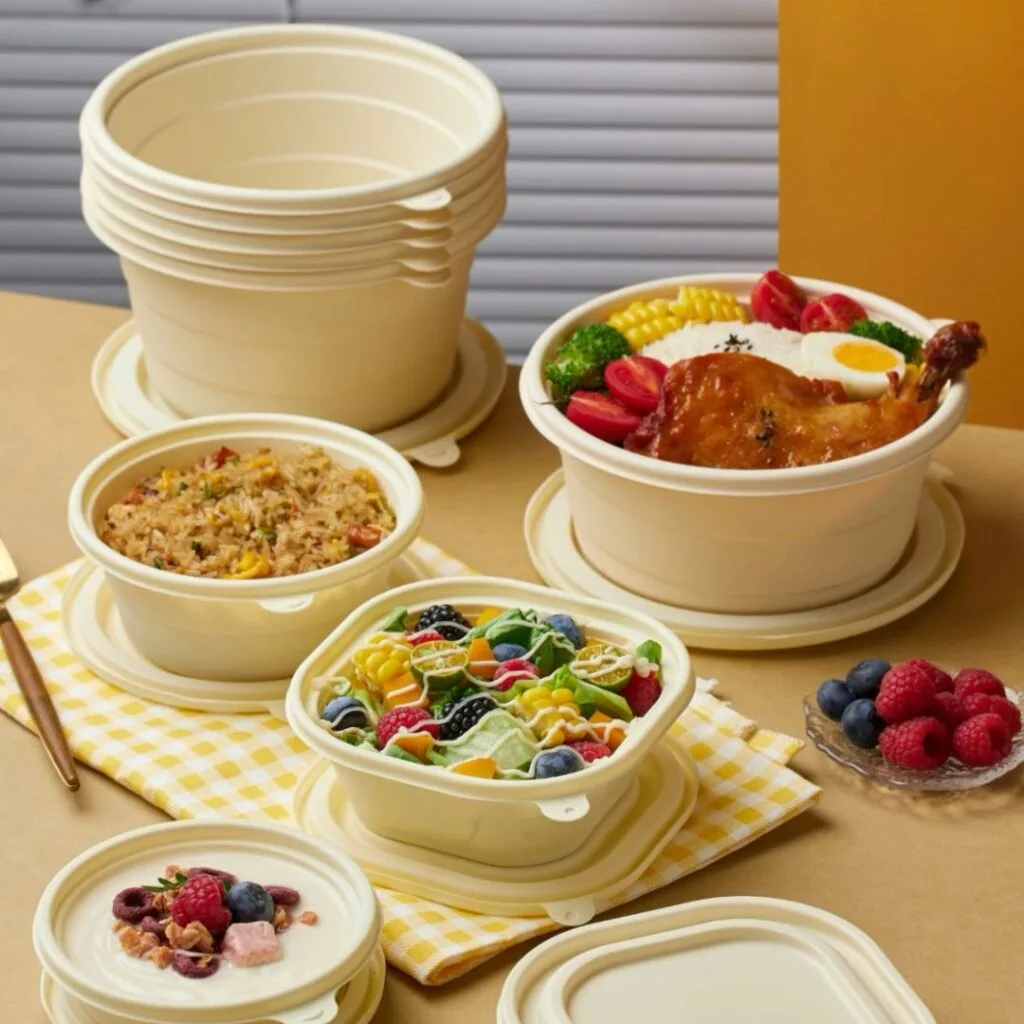
PP & PET (Non-Biobased “Safety Net”)
PP lids are widely used for their heat tolerance and durability; they’re a realistic fallback when compostable systems struggle. PET excels for cold; avoid for very hot soup.
Bottom line: For take away soup cups with lids, prioritize fiber bowls with PFAS-free aqueous barriers; match with paper or CPLA lids for hot service, using PP lids only when heat and hold times demand it.
Lids Matter: The Headspace Between “Safe” and “Spill”
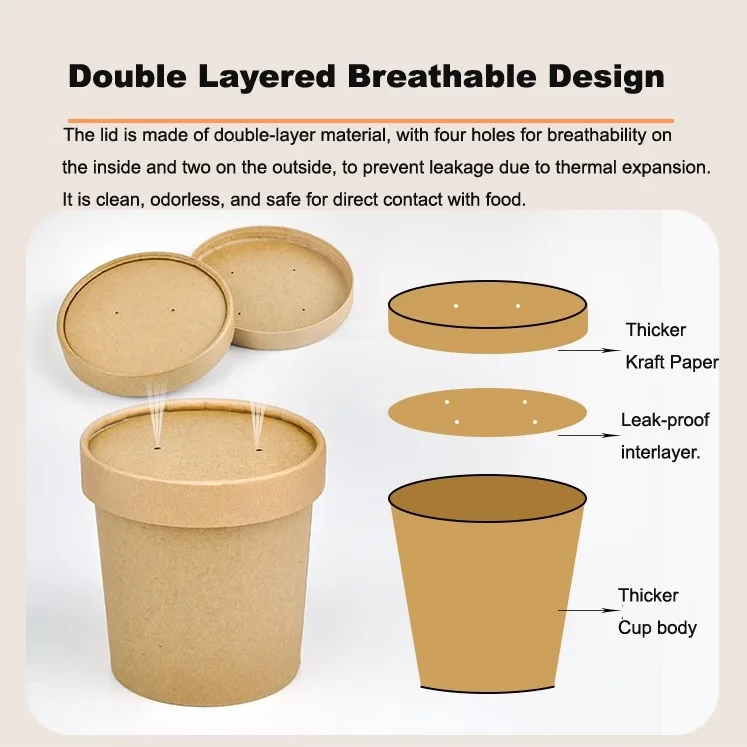
Paper lids (vented): Excellent steam management; reduce lid “pop” and rim stress.
CPLA lids: Clearer fit cues; good heat resistance for short-haul delivery.
PP lids: Highest heat resilience and gasket options; best for extreme conditions.
Venting: Tiny vents prevent vacuum and condensation pooling; safer microwave reheats.
Fit & stacking: Consistent diameters and flange design prevent tilt and drip.
Pro tip: Run a 30–45 minute hot-fill delivery simulation with your menu before roll-out. Evaluate lid retention torque, seam drips, and rim integrity after gentle shakes.
|
|
Size & Fit Guide
Common sizes and pairings
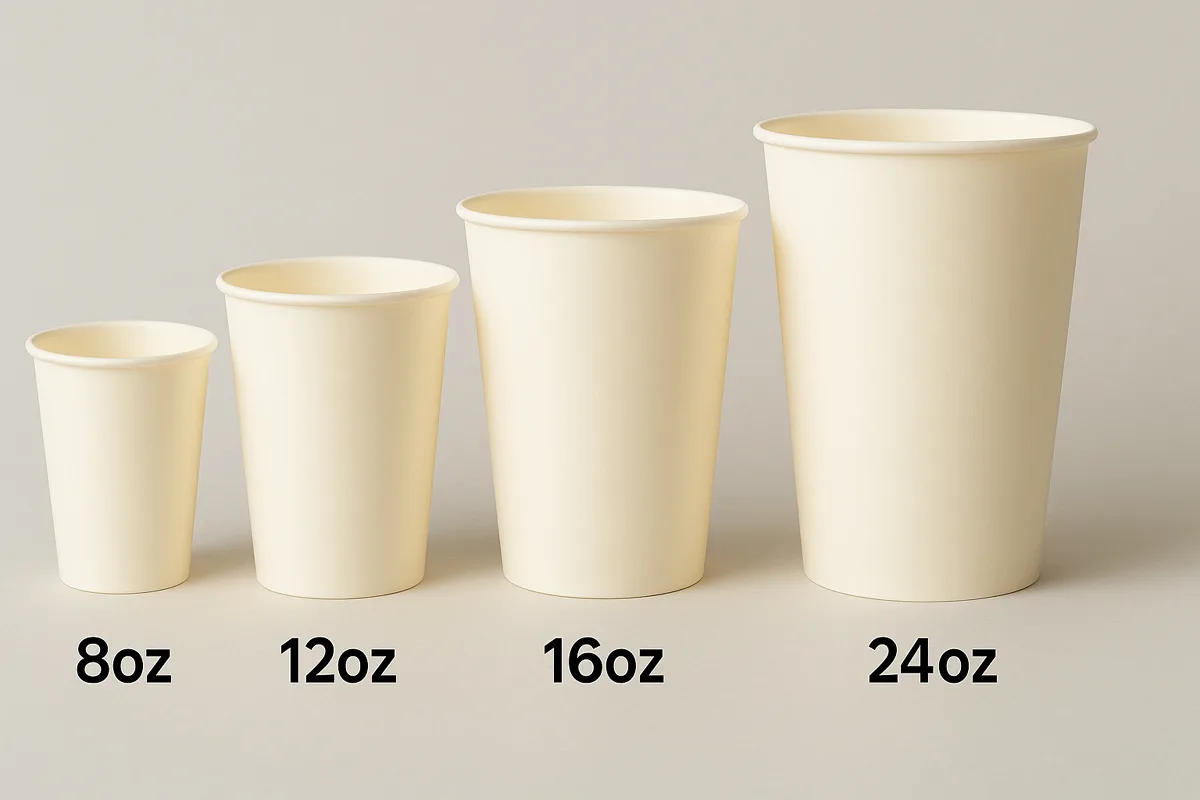
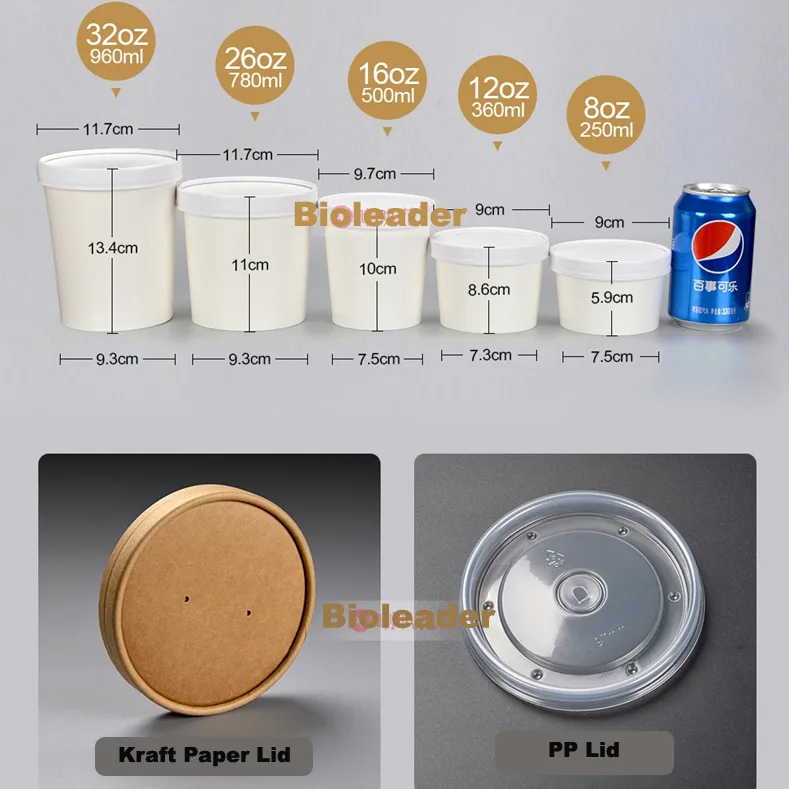
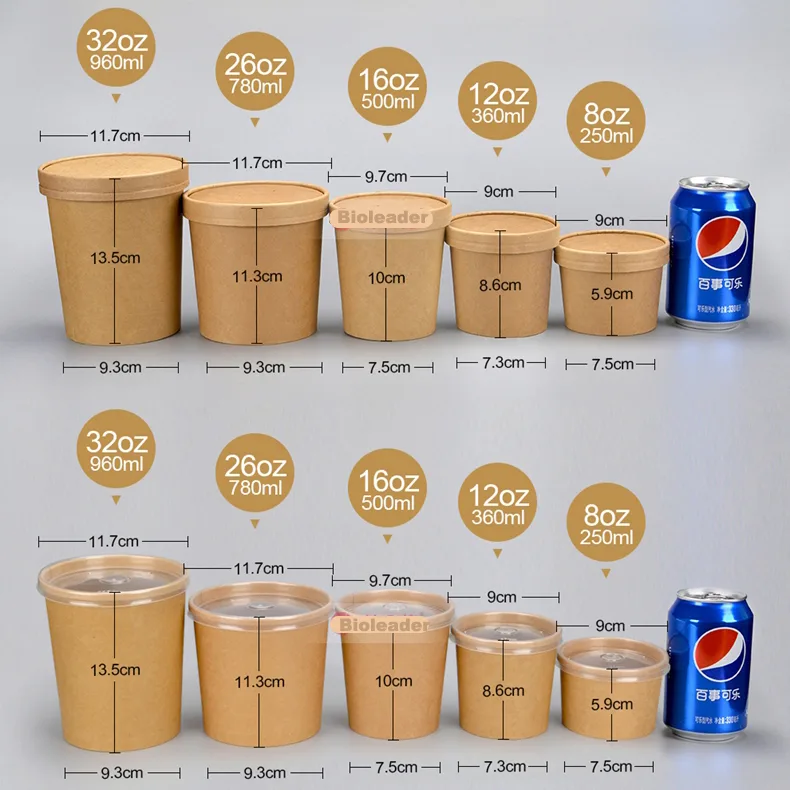
8–12 oz (240–360 ml): Sides, kids’ portions, miso, consommé.
16 oz (480 ml): Standard individual soups; most delivery menus.
26–32 oz (750–950 ml): Large meals, noodle soups, family share.
Cuisine fit
Clear broths (pho, chicken soup): paper or bagasse with vented lid to keep clarity.
Creamy/oily (clam chowder, laksa): bagasse/molded fiber with aqueous barrier.
Noodle soups (ramen, udon): prioritize rigid rims, wide mouth, and anti-slosh lids.
Heat & Performance: Real-World Stress Tests
Hot-fill test (90–95°C)
Fill to typical service level (leave headspace).
Cap with chosen lid; invert gently at 45° for 5 seconds.
Hold 30 minutes at room temp; check seams and rim for seepage.
Delivery shake test
Simulate courier movement: three 10-second gentle shakes + one 30-second ride.
Inspect for lid lift, rim denting, and condensation pooling.
Microwave reheat guidance
“Lid ajar” 1–2 minutes at medium power; stir midway.
Warn customers: do not reheat with tightly sealed lid.
Oil & acidity
Test with your oiliest, saltiest, most acidic soup to ensure barrier integrity.
Global Regulations 2024–2026: What’s Shaping “Safest”
PFAS in food-contact packaging: Multiple U.S. states restrict intentionally added PFAS in paper/board food packaging. Expect broader enforcement and labeling expectations.
EU packaging rules (PPWR): Focus on reduction, recyclability/compostability integrity, and clearer claims; EPR fees and markings are tightening.
Nordic/France early moves: Countries such as Denmark led restrictions on PFAS in paper/board food packaging; France is pursuing phased PFAS limitations.
North America plastic bans: Federal and provincial/state moves continue evolving; businesses should track local compliance updates, especially for claim wording.
Operational implication: “PFAS-free” and “non-fluorinated barrier” are no longer optional marketing claims—they’re becoming the default expectation for disposable hot soup bowls.
Certifications & Lab Testing: Verifying the Claims
Compostability
Recognized marks (e.g., industrial-compostable) with valid certificate numbers.
Clear scope: does the certificate cover the entire item (bowl + lid + ink)?
Food-contact compliance
Recent overall/specific migration test reports under hot-fill conditions.
Heavy-metal content and NIAS (non-intentionally added substances) assessments.
Supplier dossier checklist
Coating chemistry declaration (PFAS-free; no intentionally added fluorine).
Temperature/use limits for bowl and lid separately.
Change-control policy: how the supplier notifies you of material changes.
Buyer’s Guide: From Sampling to Scale
Decision tree
Soup type (clear vs oily/creamy) → choose molded fiber with aqueous barrier for oily.
Heat profile (hot-fill to delivery duration) → pick lid (paper/CPLA vs PP).
Market rules → confirm PFAS-free, compostable certificates, and claim wording.
Ask suppliers for (12 items)
PFAS-free declaration + coating type
Food-contact compliance reports
Compostability certificate scope
Heat tolerance (bowl/lid)
Microwave guidance
Leak/stack test data
Dimensional drawings (fit/stack)
Resin IDs (for lids)
Colorant/ink safety
Change-control policy
MOQ and lead time
Quality tolerance & AQL plan
Case Studies
Case 1 — Noodle chain, city delivery (25–35 min):
Switched traditional plastic bowls to bagasse + aqueous barrier with vented paper lids. Complaints dropped notably; spill incidents on couriers decreased after adding small vent holes.
Case 2 — Seafood chowder brand, coastal climate:
Adopted bagasse bowls + aqueous barrier with vented paper lids for storefront pickup and short-haul delivery. Added “lid ajar” microwave sticker. Return customers praised sturdiness; staff reported faster, more confident capping during rush.
Case 3 — Cloud kitchen aggregator:
Menu with spicy/oily broths standardized to heavy duty paper soup bowls and PP lids only for extra-hot, long-hold orders. Reduced packaging SKUs from 7 to 4 while improving consistency and compliance posture.
FAQ
1) What is the single safest material for hot takeaway soup?
A PFAS-free molded-fiber bowl (bagasse or similar) with a non-fluorinated aqueous barrier, matched with a vented paper or CPLA lid for short delivery windows.
2) Are compostable soup bowls truly microwave safe?
Most fiber bowls support brief reheats (about 1–2 minutes, lid ajar). Always follow supplier guidance and avoid prolonged, full-power microwaving.
3) Which lid is best to prevent leaks?
For hot soups, vented paper or CPLA lids offer a strong seal and steam control. Use PP lids when heat or hold times are extreme.
4) How do I know if my bowl is PFAS-free?
Ask for a PFAS-free declaration and the barrier/coating spec (non-fluorinated aqueous). Request recent migration tests to verify.
5) Are paper soup cups recyclable?
Paper cups and bowls contaminated with hot, oily soup are rarely recycled in practice. For clarity, use compostable bowls where collection exists and label disposal instructions.
Final Takeaway
If you want a soup container that is safe, reliable, and ready for tomorrow’s rules, choose PFAS-free molded-fiber bowls with aqueous barriers and pair them with vented paper or CPLA lids—reserving PP lids only for extreme heat and hold times.
References
European Commission — Packaging and Packaging Waste Regulation (PPWR) overview — European Commission.
U.S. Food and Drug Administration — Guidance for Industry: Preparation of Food Contact Notifications — FDA.
Washington State Department of Ecology — PFAS in food packaging rulemaking summary — Department of Ecology.
California Department of Toxic Substances Control — Safer Consumer Products: Food Packaging with PFAS — DTSC.
Danish Veterinary and Food Administration — National measure on PFAS in paper and board for food contact — DVFA.
ECHA — PFAS restriction roadmap and background on FCM — European Chemicals Agency.
Biodegradable Products Institute — BPI Certification Program Guide — BPI.
TÜV AUSTRIA — OK compost INDUSTRIAL certification criteria — TÜV AUSTRIA.
How: Choose a Safe Bowl-and-Lid System
- Map your soups (clear vs. oily/creamy; acidity) and delivery time.
- Select PFAS-free molded fiber + aqueous barrier as the baseline.
- Pick vented paper or CPLA lids for hot; PP lids when heat/hold is extreme.
- Run a 30–45 min hot-fill + delivery simulation; validate seal, stack, condensation.
- Publish microwave guidance (1–2 min, lid ajar) on the label or receipt.
Why: 2025 Rules Reshape “Safe”
- PFAS restrictions push non-fluorinated barriers to the forefront.
- Packaging policies elevate claim integrity (compostable vs. recyclable).
- EPR fees reward right-sized, clearly labeled, low-toxicity materials.
What: Three-Axis Safety Score
Options: Good/Better/Best
- Good: Kraft bowl + aqueous barrier + vented paper lid
- Better: Bagasse bowl + aqueous barrier + CPLA lid
- Best: Bagasse/wheat-straw molded fiber + optimized vented paper lid + validated SOPs
Considerations: Before You Order at Scale
- Confirm PFAS-free status in writing; get current lab reports.
- Check lid fit across batches; require dimensional drawings.
- Align claims with local composting/recycling access.
- Label microwave guidance and disposal instructions for customers.
- Plan for seasonality: soup viscosity and delivery times vary with weather.