English
  Français
  Español
  Português
  Deutsch
  العربية
  Italiano
  Nederlands
  Русский
  日本語
日本語 Introduction
The classic nod to convenience—Styrofoam takeout containers—has met its match. As environmental concerns mount and regulations tighten, restaurants and consumers alike are asking: What is an alternative to Styrofoam takeout containers? Enter cornstarch takeout boxes, an eco-friendly cornstarch takeaway box solution that offers the performance you expect from plastic containers with lids, without the long-term pollution. Below, we explore seven compelling reasons to make the switch.
Common Types of Takeout Boxes on the Market
Today, food service providers can choose from various to–go containers, each with distinct materials and features.
Plastic-Based Options
Plastic food container (PET, PP): Lightweight, transparent, microwave-safe, but non-biodegradable.
Disposable food storage containers (PS foam): Insulating, inexpensive, but persistent in landfills.
Paper and Fiber-Based Options
Paper boxes (coated paperboard): Recyclable if uncoated; often lined with plastic for leak resistance.
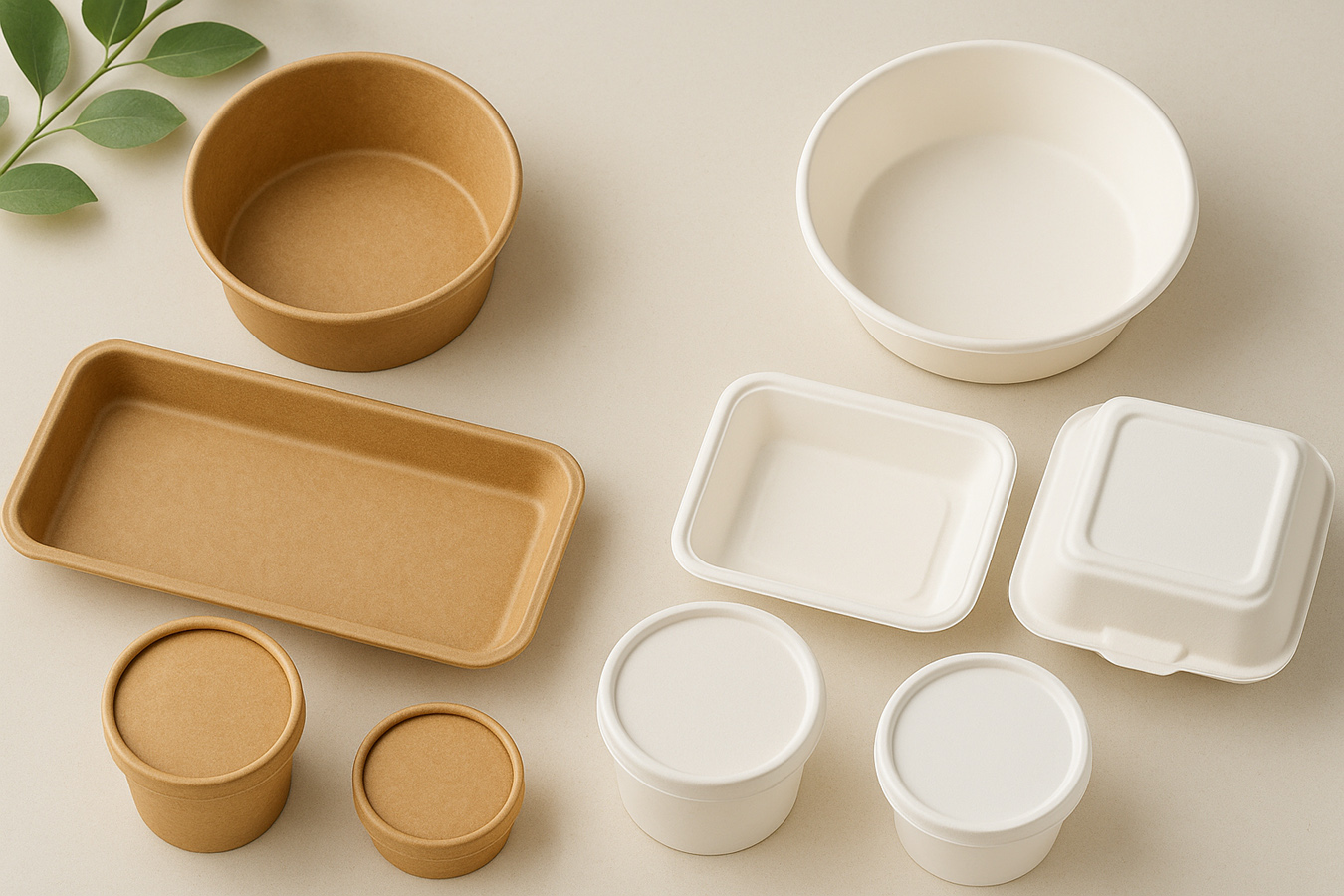
Bagasse trays and bowls: Made from sugarcane waste, compostable under industrial conditions.
Bioplastic and Plant-Based Options
PLA clamshells: Made from corn-derived polylactic acid; industrially compostable but prone to cracking under heat.
Cornstarch biodegradable takeout containers: Naturally derived, heat-resistant, and compostable.

Material Comparison—Pros, Cons, and Environmental Impact
Below is a data-driven comparison of take out food containers by material, highlighting degradation time, carbon footprint, and compostability.
| Material | Degradation Time | CO₂ Footprint (kg/unit) | Compostable? | Heat Resistance | Leak Resistance |
|---|---|---|---|---|---|
| Cornstarch takeout boxes | 60–90 days | 0.15 | ✅ Industrial | Up to 120 °C | ✅ Excellent |
| Plastic containers with lids (PP) | 400+ years | 1.2 | ❌ | Up to 100 °C | ✅ Good |
| Paper take out boxes (PE-lined) | 1–2 years (liner persists) | 0.6 | ❌ | Up to 80 °C | ❌ Moderate |
| Styrofoam (PS foam) | 500+ years | 1.5 | ❌ | Up to 60 °C | ✅ Good |
Key Takeaways:
Compostable cornstarch food packaging breaks down hundreds of times faster than plastic.
Heat-resistant cornstarch food boxes withstand typical hot-food temperatures.
Only compostable cornstarch clamshell takeout boxes and bagasse options meet industrial compost standards.


What Is an Alternative to Styrofoam Takeout Containers?
The ideal alternative must balance cost, performance, and environmental impact. Cornstarch takeout boxes with lid check these boxes:
Performance Parity
Microwave-safe cornstarch clamshells heat evenly without warping.
Leakproof cornstarch packaging solutions handle oily and saucy dishes for over 6 hours.
Environmental Benefits
Made from field-grown corn, these plant-based cornstarch food containers require no petroleum.
Industrial composting yields soil-enriching humus in 60–90 days.
Consumer Appeal
Visible “plastic-free” branding resonates with eco-conscious diners.
Shoppers searching for to go packaging and carryout food containers readily choose green alternatives.
Supply Chain Scalability
Wholesale cornstarch takeaway boxes are available from multiple suppliers at competitive price points.
Customizable cornstarch takeout trays allow for private-label branding.

Practical Applications and User Feedback
Case Study 1: Fast-Casual Chain in California
Challenge: Transition from PS foam to an eco alternative without raising costs.
Solution: Adopted eco-friendly cornstarch takeaway boxes for all outlets.
Outcome:
20% reduction in packaging complaints
Qualification for state “Green Restaurant” incentive
Positive social-media buzz under hashtags like #plasticfree
Case Study 2: University Dining Services in Oregon
Challenge: Manage high-volume carryout food containers with composting available onsite.
Solution: Implemented sustainable cornstarch to-go packaging, including disposable cornstarch lunch boxes.
Outcome:
Diverted 15 tons of waste from landfill in 6 months
Student surveys rated packaging convenience at 4.6/5
Bioleader’s Eco-friendly cornstarch takeout boxes have powered similar transitions for QSR brands in Asia, demonstrating global applicability.
FAQ
Conclusion
From functional performance to planetary protection, cornstarch takeout boxes stand out as the best alternative to Styrofoam takeout containers. By combining heat resistance, leakproof design, and true compostability, they meet the demands of modern foodservice—without compromise. As more businesses and institutions embrace plastic-free cornstarch food containers, the era of disposable pollution will give way to circular, regenerative dining solutions.
References
Wikipedia contributors. “Polystyrene.” Wikipedia, https://en.wikipedia.org/wiki/Polystyrene
Wikipedia contributors. “Biodegradable plastic.” Wikipedia, https://en.wikipedia.org/wiki/Biodegradable_plastic
U.S. Environmental Protection Agency. “Basics of Composting.” https://www.epa.gov/recycle/composting-home
Sustainable Packaging Coalition. “Understanding Bioplastics.” https://sustainablepackaging.org/bioplastics
Ellen MacArthur Foundation. “Rethinking the Future of Plastics.” https://ellenmacarthurfoundation.org/future-of-plastics