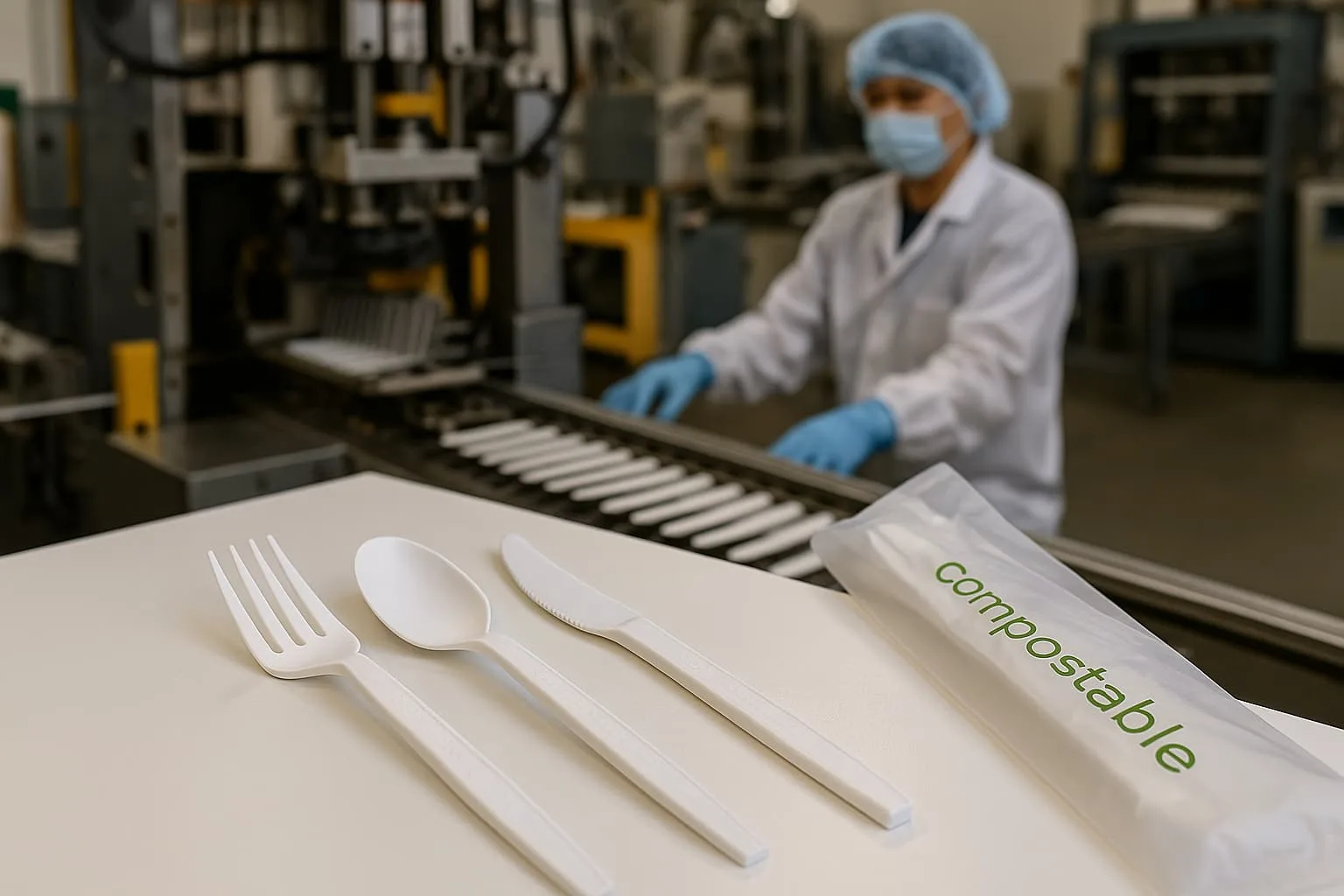
Why Biodegradable & Compostable Cutlery Matters in 2025
Plastic pollution is at a tipping point. With over 8 billion tons of plastic produced since the 1950s and less than 10% recycled, the foodservice industry is under growing pressure to eliminate plastic utensils. More than 120 countries now restrict single-use plastics, creating a huge demand for eco friendly disposable cutlery that’s safe, stylish, and sustainable.
From juice bars and cafés to airlines and wedding caterers, businesses are switching to plant based compostable utensils, biodegradable cutlery sets with forks and spoons, and compostable plastic-free cutlery that meet both environmental and food safety standards. Among the options, high-performance solutions made from cornstarch, CPLA, and bagasse are becoming industry favorites—especially those offered by reliable global manufacturers with certified quality and strong supply chains. For example, companies like Bioleader® have made it easier for wholesalers and retailers to adopt compostable alternatives without sacrificing convenience, durability, or brand identity.
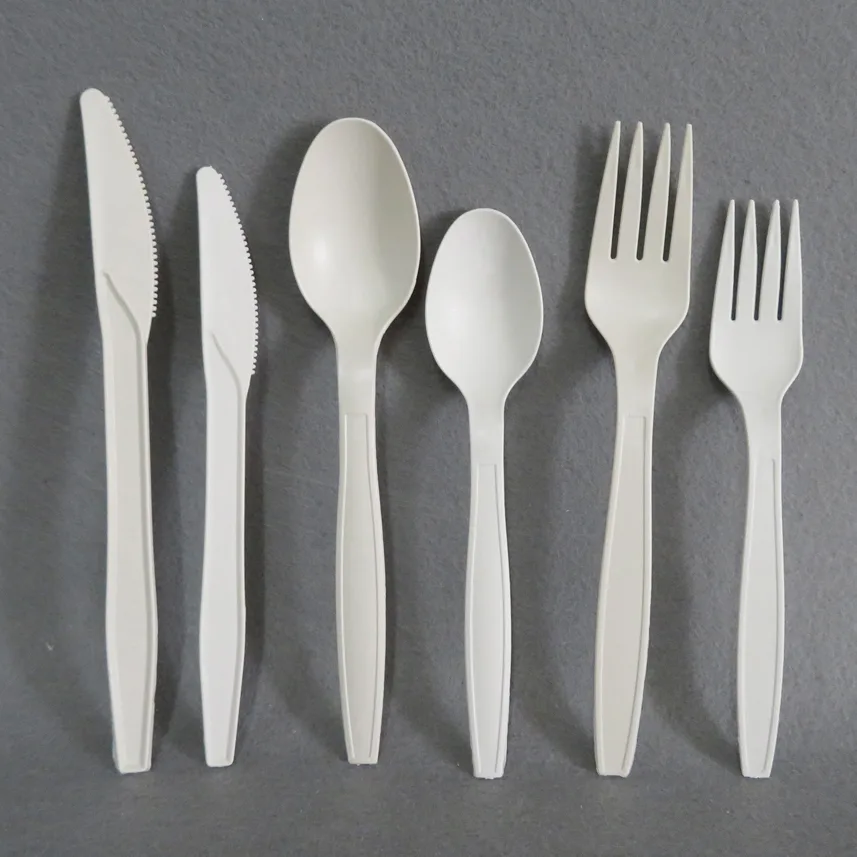
Cutlery Manufacturers Comparison Table
| Company Name | Year Founded | Headquarters | Key Products |
|---|---|---|---|
| Vegware | 2006 | United Kingdom | CPLA compostable cutlery, utensils for catering |
| Bioleader® | 2013 | China (Xiamen) | Cornstarch and CPLA biodegradable cutlery sets |
| World Centric | 2004 | United States | Compostable utensils made from PLA and wheat |
| Biopak | 2002 | Australia | PLA & PSM cutlery for foodservice |
| Ecoware | 2010 | New Zealand | CPLA cutlery, starch-based utensils |
| GreenGood | 2006 | United States | High-heat compostable PLA cutlery |
| Repurpose | 2009 | United States | Cornstarch-based utensils for home composting |
| Packnwood | 2002 | France | Bamboo, wood, and CPLA cutlery |
| Green Home | 2007 | South Africa | CPLA utensils, compostable packaging |
| Zhongxin | 2011 | China | Bulk cornstarch cutlery, PLA-based utensils |
| Ecolink | 2016 | China | Event-ready compostable cutlery kits |
| Greentop | 2018 | China | Recyclable and compostable cutlery |
1. Vegware (United Kingdom)
Founded: 2006 | HQ: Edinburgh, UK
Vegware is a pioneer in compostable foodservice packaging. It produces CPLA compostable cutlery and packaging certified to EN13432 and ASTM D6400, suitable for industrial composting.
Strengths:
Global certifications & logistics network
Ideal for public institutions and high-end cafés
Clean brand identity aligned with sustainability goals
Weaknesses:
High price point
Requires access to commercial composting
2. Bioleader® (China)
Founded: 2013 | HQ: Xiamen, China
Website: www.bioleaderpack.com
Phone: +86-15980856610 | Email: [email protected]
Address: No.39 Xinglong Road, Xiamen, Fujian, China
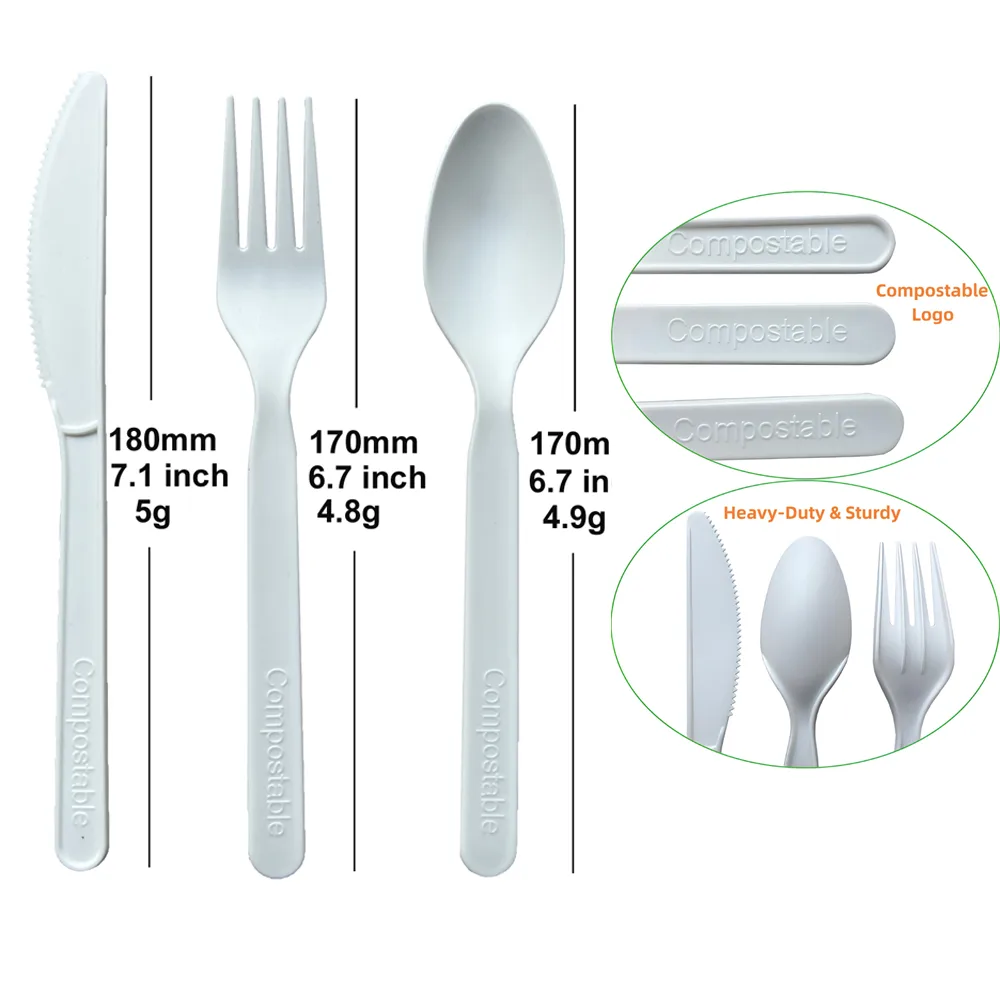
Bioleader® is a leading Chinese manufacturer specializing in compostable CPLA and cornstarch cutlery, including biodegradable knives, forks, spoons, and individually wrapped cutlery sets. They serve over 30 global markets and offer OEM/ODM solutions for both foodservice and retail.
Strengths:
Certified: EN13432, ASTM D6400, FDA, LFGB
Heat-resistant up to 90°C
Fast lead times & factory-direct pricing
Excellent for wholesale buyers and private labels
Weaknesses:
Custom orders may have higher MOQs
Logistics for remote regions may take longer

3. World Centric (USA)
Founded: 2004 | HQ: California, USA
World Centric is a mission-driven brand that produces PLA and wheat-straw cutlery, with 25% of profits donated to social causes. Their utensils are certified compostable and widely used across North America.
Strengths:
B Corp Certified
Transparent carbon offset reporting
Good availability across U.S. retail networks
Weaknesses:
Less accessible globally
Thicker utensils may not suit every customer preference
4. Biopak (Australia)
Founded: 2002 | HQ: Sydney, Australia
Biopak creates PSM and PLA compostable utensils used by large-scale catering operations and eco-conscious businesses. Its commitment to carbon neutrality and local composting programs sets it apart.
Strengths:
Industrial composting ecosystem partnerships
Stylish, modern packaging
Carbon-neutral supply chain
Weaknesses:
Home composting not supported
More expensive than generic PLA suppliers
5. Ecoware (New Zealand)
Founded: 2010 | HQ: Auckland, NZ
Ecoware offers CPLA utensils and starch-based alternatives, with a strong focus on lifecycle thinking and community composting. They are the first certified carbon-neutral food packaging provider in NZ.
Strengths:
Educates buyers on full product life cycle
Compostable in home and industrial settings
Zero-waste product ecosystem
Weaknesses:
Limited capacity for international bulk buyers
Higher price for regional shipping
6. GreenGood (USA)
Founded: 2006 | HQ: Illinois, USA
GreenGood focuses on heat-resistant CPLA utensils for events and institutions. Their utensils maintain rigidity under heat, making them ideal for hot food service.
Strengths:
Durable PLA formulations
BPI certified
Great for schools, catering, and hospitals
Weaknesses:
Mid-scale production volumes
Higher per-unit cost than Asian suppliers
7. Repurpose (USA)
Founded: 2009 | HQ: California, USA
Repurpose sells cornstarch-based utensils ideal for home composting. Their consumer-targeted brand appears in major U.S. retail outlets and promotes toxin-free, plastic-free living.
Strengths:
Home compostable
Retail-ready packaging
BPA-free, food-safe, and family-focused
Weaknesses:
Not designed for wholesale B2B
No OEM or white-label support
8. Packnwood (France)
Founded: 2002 | HQ: Paris, France
Packnwood creates premium bamboo, wood, and CPLA utensils for foodservice. Its products are known for elegant aesthetics and FSC-certified sourcing.
Strengths:
Strong design and material diversity
Global distribution
Ideal for events, hotels, and hospitality
Weaknesses:
Expensive compared to standard PLA
High MOQs for customization
9. Green Home (South Africa)
Founded: 2007 | HQ: Cape Town, SA
Green Home leads South Africa’s zero-waste packaging sector, offering CPLA cutlery and educational outreach to promote responsible composting.
Strengths:
Regionally optimized production
Deep involvement in sustainability education
DIN and BPI certification
Weaknesses:
Not widely exported
Smaller global logistics capacity
10. Zhongxin (China)
Founded: 2011 | HQ: Guangdong, China
Zhongxin is a bulk supplier of cornstarch cutlery, catering to low-cost markets and distributors. Their basic but reliable products are exported across Southeast Asia and North America.
Strengths:
Competitive pricing
Mass production for distributors
Simple, reliable quality
Weaknesses:
Limited design variety
Weaker branding and presentation
11. Ecolink (China)
Founded: 2016 | HQ: Zhejiang, China
Ecolink specializes in custom compostable utensil kits for events, weddings, and to-go meals. Their small MOQ and fast response make them a favorite among emerging foodservice brands.
Strengths:
Short lead times
Custom event kits available
White-label friendly
Weaknesses:
Still building up international reputation
Not focused on high-end design
12. Greentop (China)
Founded: 2018 | HQ: Jiangsu, China
Greentop manufactures recyclable and compostable eating utensils for B2B buyers. Their products serve regional brands and Asian importers looking for cost-effective solutions.
Strengths:
Bulk-ready inventory
OEM supply for Asia-Pacific
Basic and functional
Weaknesses:
Less brand visibility
Minimal certification transparency
FAQ
What is the most sustainable disposable cutlery material?
CPLA, cornstarch, and bagasse are top choices due to their compostability and renewability.Is all compostable cutlery home compostable?
No. Most CPLA requires industrial composting, while cornstarch and bagasse are more home-compostable.How do I verify biodegradable cutlery?
Look for certifications like EN13432, ASTM D6400, BPI, or FDA/LFGB food safety marks.Where can I buy biodegradable cutlery wholesale?
Bioleader®, Zhongxin, and GreenGood offer OEM/ODM services for wholesale buyers.What’s the best compostable cutlery for hot food?
CPLA utensils, especially those from Bioleader® and GreenGood, are heat-resistant up to 90°C.
Conclusion
As the food industry races toward sustainability, the demand for biodegradable and compostable cutlery will only grow. Whether you’re a wholesaler, caterer, or global brand, selecting a supplier that balances quality, compliance, and cost is essential.
Among all, Bioleader® stands out with its scalable manufacturing, strong certifications, global service, and customizable product range. Let this guide help you navigate the best eco cutlery partners for 2025 and lead your business toward a zero-waste future.