Compostable cutlery has moved from “nice-to-have” to “must-deploy” for modern foodservice. Between expanding plastic restrictions, stricter brand safety standards, and enterprise-level ESG targets, leaders are standardizing plant-based utensils across far more touchpoints than traditional takeaway. This playbook outlines 10 proven, high-impact scenarios—with operational guardrails, procurement tips, and product pairing tactics—to help you roll out at scale with fewer surprises and stronger unit economics. If you’re planning a phased rollout, start with a core compostable cutlery assortment, then tailor by use case, temperature range, and packaging format.
1) Corporate Catering & Boardrooms
Pain points: Executive catering is a brand moment. Plastic forks next to premium trays undermine sustainability narratives, and lags in setup/cleanup slow meetings.
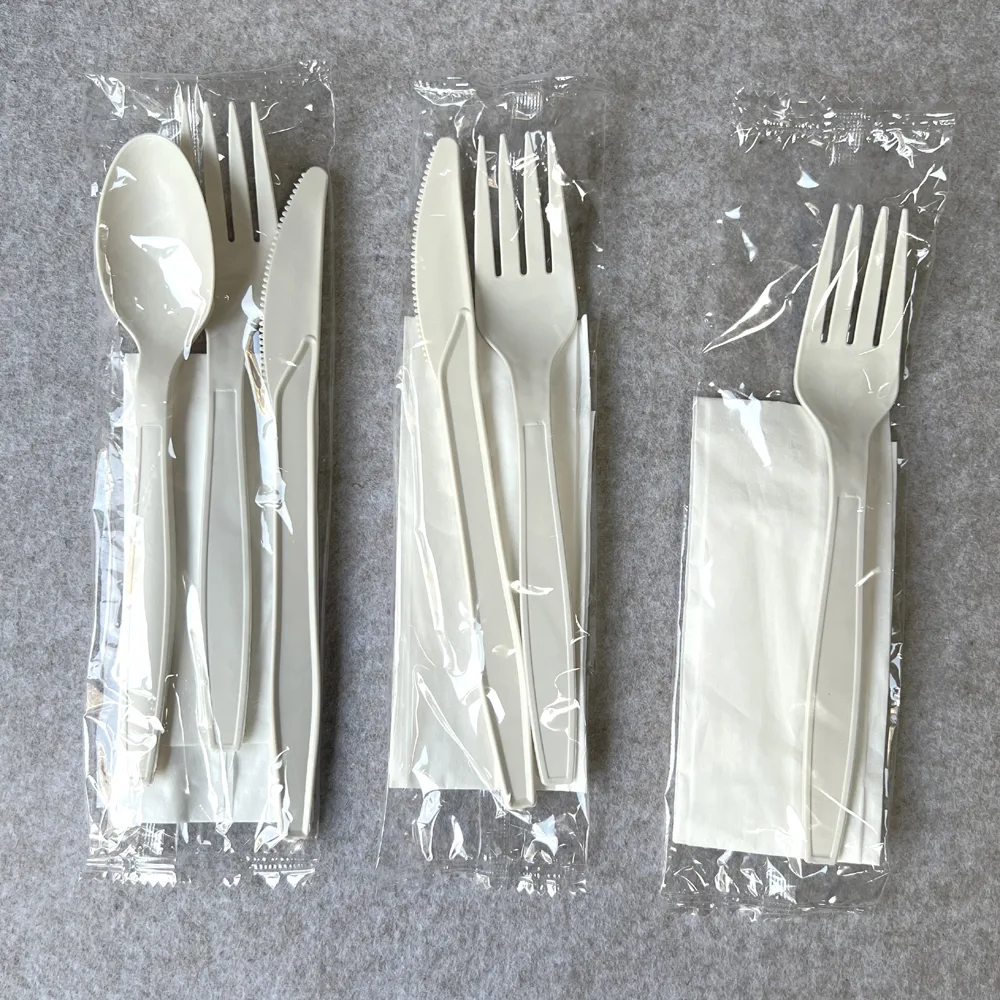
Solution: Upspec to heat-resistant CPLA cutlery for hot entrées and multi-course boxed lunches. For hygiene and speed, use pre-wrapped knife-fork-spoon + napkin sets. Add a small recycling/organics card on the table to guide disposal.
Execution checklist
Standardize place settings: 1 wrapped set per seat + 10% buffer for walk-ins.
Combine with ripple-wall paper cups and kraft napkins to keep look cohesive.
Position organics bins near exits; print “compostables only” on tent cards.
After action review: track leftover rate to trim next order by SKU.
Why it works: Better optics, faster distribution, less handling risk—while keeping per-head cost predictable for recurring meetings and trainings.
2) Offices & Micro-Kitchens
Pain points: Tea points and micro-kitchens drain time with constant restocking; open bins get messy, and ad-hoc buying creates SKU sprawl.
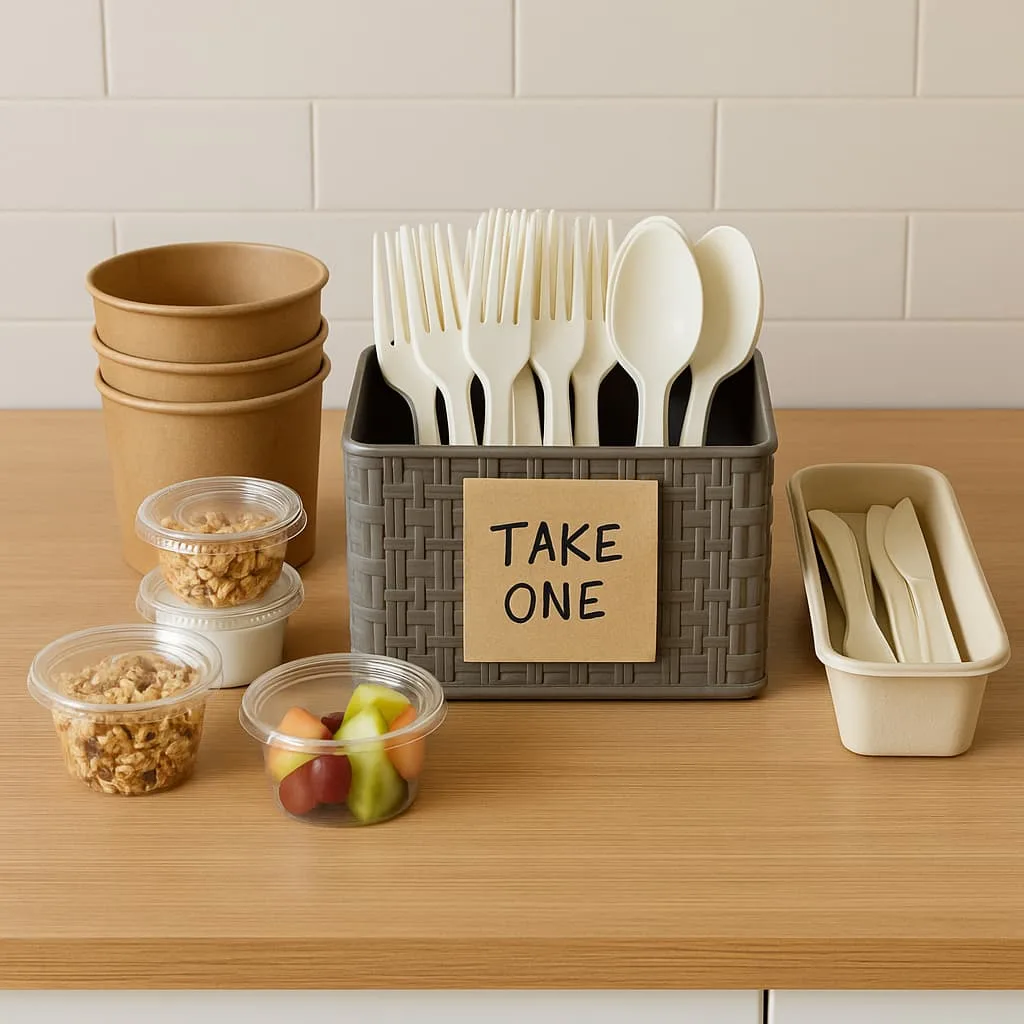
Solution: Lock in a lean, refillable station: medium-weight spoons/forks for salads and snacks, plus a small stock of knives. Use stackable containers with “take one” labeling. Pair with kraft paper bowls and portion cups to support cereal, yogurt, fruit, and grab-and-go.
Execution checklist
Refill cadence: per shift versus per day based on headcount density.
Clear signage: “Compostables only—no plastics” to avoid contamination.
Provide a QR code to a short internal FAQ on where waste goes.
Track peak depletion hours; adjust SKUs and quantities to cut waste.
Why it works: Fewer SKUs, faster refills, cleaner counters, and visible sustainability—without adding friction to employee breaks.
3) Schools & Universities
Pain points: High throughput, diverse diets, and strict hygiene rules; younger users may over-grab or discard incorrectly.
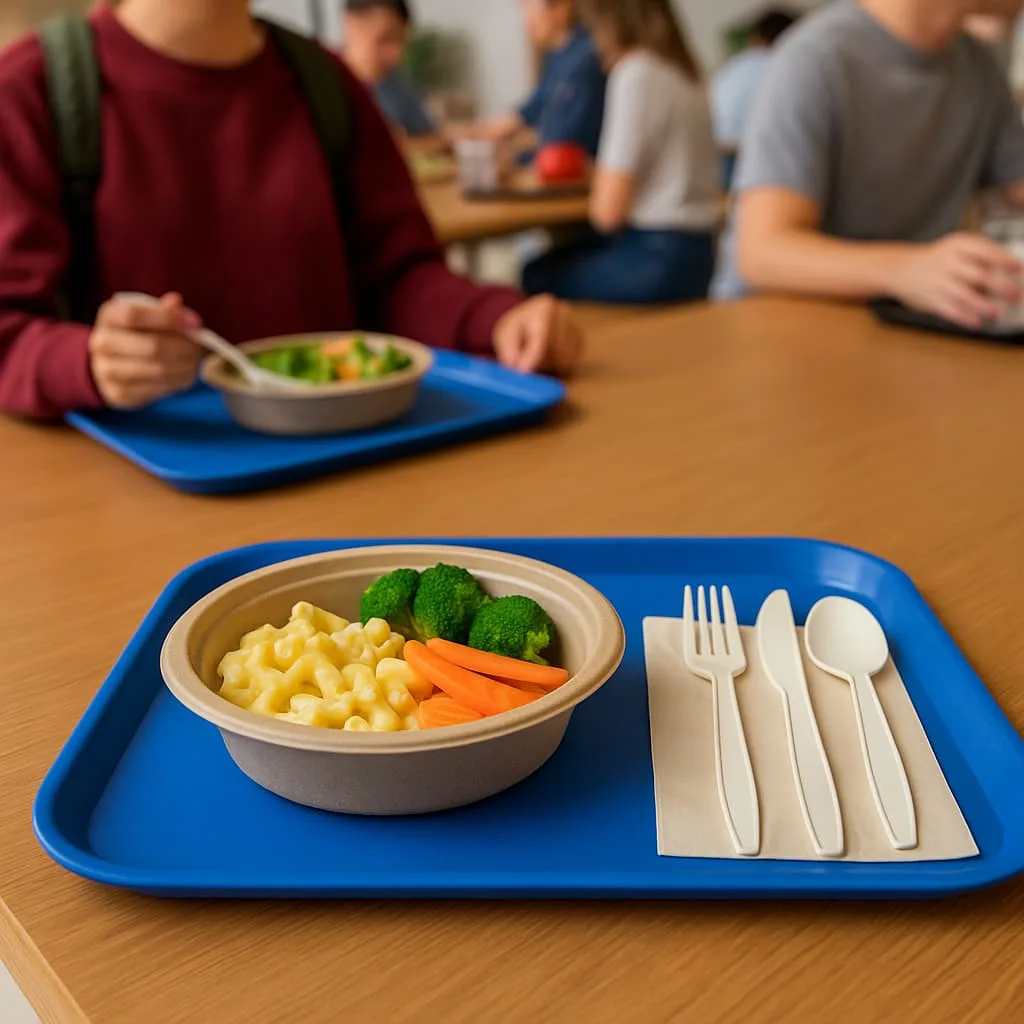
Solution: For K-12, go with sturdy, cooler-temp-friendly cornstarch cutlery and mini tasting spoons for cafeteria salads, fruit cups, and breakfast programs. For hot trays in universities, layer in CPLA knives/forks and label temperature icons on dispensers.
Execution checklist
Color-coded dispensers: green = compostable, blue = recycling, black = landfill.
Put bins after the cashier line so traffic naturally passes disposal stations.
Use posters with simple icons—forks and bowls pictured above the correct bin.
Train student volunteers to guide sorting during rushes.
Why it works: Keeps service moving while building good disposal habits—critical to maintaining clean streams and positive audits.
4) Hospitals & Healthcare
Pain points: Patient safety, odor sensitivity, and strict hygiene elevate requirements beyond standard foodservice.
Solution: Deploy wrapped cutlery sets with a sealed napkin for tray service; choose neutral-smell materials and validated food-contact safety. For soft diets and soups, add medium-deep spoons and stirrers. If patients eat in-room, leave a spare wrapped set to avoid staff callbacks. Browse wrapped set options under compostable cutlery.
Execution checklist
One wrapped set per tray + one spare for in-room needs.
Store sealed cartons away from cleaners or disinfectants to prevent odor transfer.
Add a simple disposal card on trays: “Place cutlery back on tray after use.”
For staff cafeterias, mirror patient SKUs to simplify inventory.
Why it works: Predictable hygiene and fewer interruptions for clinical staff, while keeping compliance with hospital procurement policies.

5) Airlines & Rail Catering
Pain points: Millimeter-level tray engineering, weight targets, and security protocols require highly standardized components.
Solution: Use space-efficient, tamper-evident cutlery sleeves sized to airline trays; align knife length and spoon depth to menu. Match with compostable clear PLA cups (cold) for beverages and labeled condiment pods to tighten packing density and reduce spills.
Execution checklist
Validate utensil geometry against galley equipment and tray rails.
Heat-range map: CPLA for hot entrées; cornstarch for cold snack boxes.
Print “open here” notches on sleeves to speed service in turbulence.
Bundle by daypart (breakfast/lunch/dinner) to simplify inventory.
Why it works: Consistent presentation, less mess, faster turnarounds—while hitting sustainability KPIs that many carriers now publicize.
6) Large Events, Festivals & Stadiums
Pain points: Peak traffic creates bottlenecks; contamination in waste streams can trigger venue penalties.
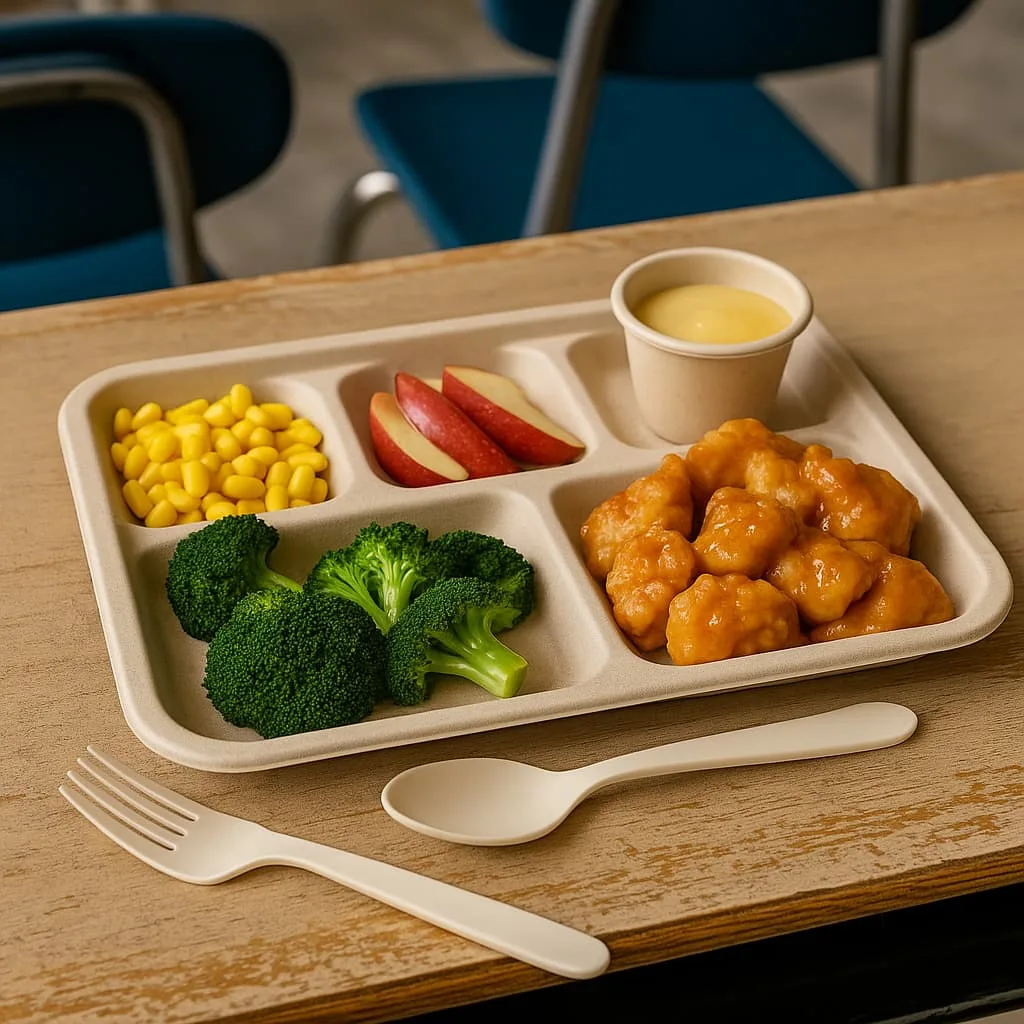
Solution: Standardize venue-wide utensil specs and signage. For loaded fries, bowls, and wings, combine forks with sturdy trays or bagasse clamshell boxes to reduce drips. Use big, color-coded waste stations every 25–30 meters with volunteers or screens looping “how to sort.”
Execution checklist
Map bins to food stalls—each stall should see a bin from the counter.
Provide extra forks at sauce stations to prevent double-dipping.
Post-event: audit contamination rate; adjust SKU mix (e.g., fewer knives).
Keep a “rapid re-stock cart” for halftime or set breaks.
Why it works: Higher throughput and cleaner grounds, with measurable diversion rate improvements for venue ESG reporting.

7) Weddings, Outdoor Catering & Pop-Up Dining
Pain points: Aesthetic expectations are high; wind, grass, and uneven tables create instability.
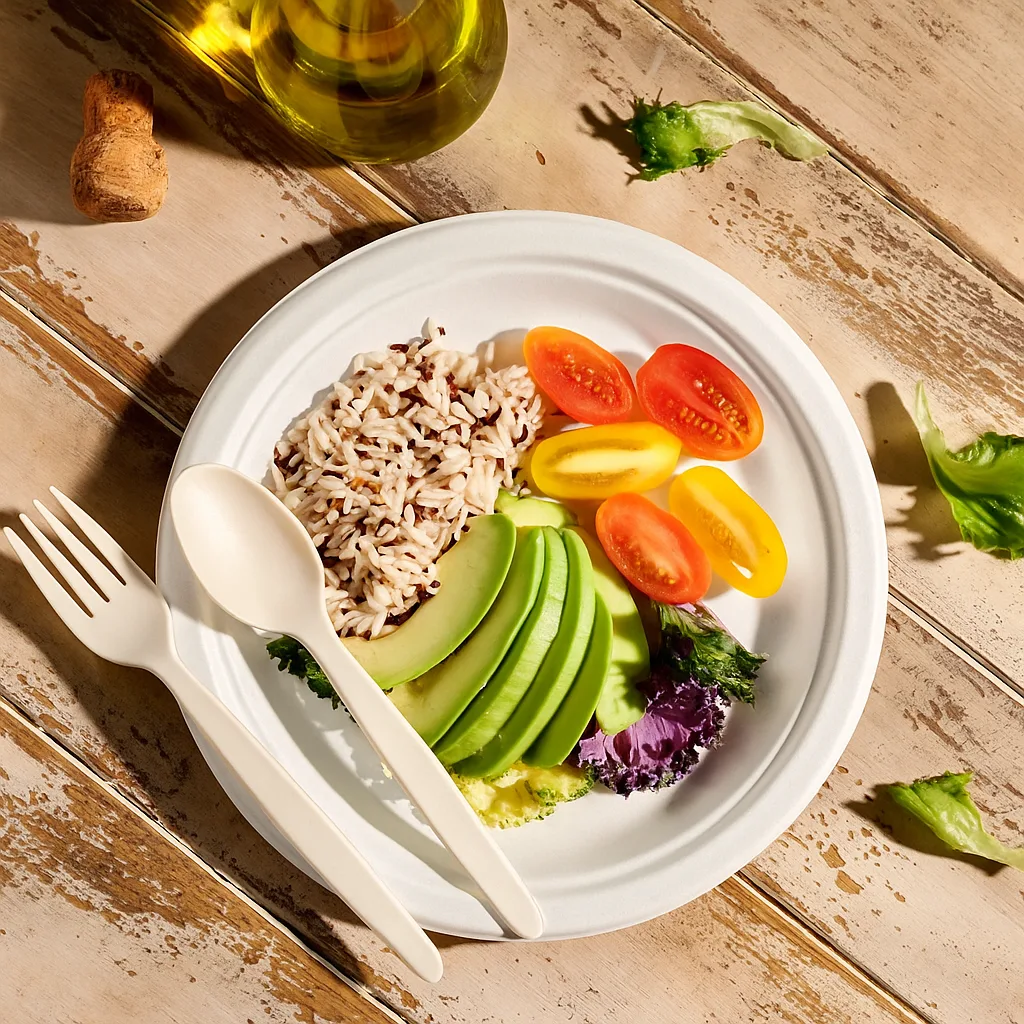
Solution: Use pearl-or matte-finish CPLA that photographs well, and match tones with plates and napkins. Pair with bagasse sauce cups for dressings and dips to avoid pooling on plates. For grazing tables, provide spoon-fork combos for shared dishes. Explore cup and small-ware options within bagasse bowls & accessories.
Execution checklist
Pre-roll cutlery with branded bands or menus; keep extras behind bar.
Stabilize stations with anti-slip mats under tablecloths.
Add weather plan: lidded servers or clamshells if wind picks up.
Photographer brief: request product close-ups for brand content.
Why it works: Elevated look without plastic optics; clean plating and easy cleanup make for happier couples and caterers.
8) Hotels & In-Room Dining
Pain points: Night orders and family stays demand quiet, clean setups; small spills lead to poor reviews.
Solution: Use silent, soft-touch packs and leak-tight bowls for soups and noodles. Include a spare napkin and an after-use instruction card (“place items back in bag”). For late-night menus, favor spoon-forward sets and minimize knives. Support hot items with paper soup containers to protect linens.
Execution checklist
One sealed set per meal + 1 spare per cart.
“Quiet peel” labels on sleeves to reduce noise in corridors.
Provide a mini waste bag in the kit to keep rooms tidy.
Capture feedback via QR (“Was setup complete? Yes/No”).
Why it works: Streamlined guest experience and fewer housekeeping escalations—translating into better ratings and repeat stays.
9) Retail Sampling, Tasting Bars & Demo Kitchens
Pain points: Sampling windows are brief, lines are long, and hygiene must be obvious and consistent.
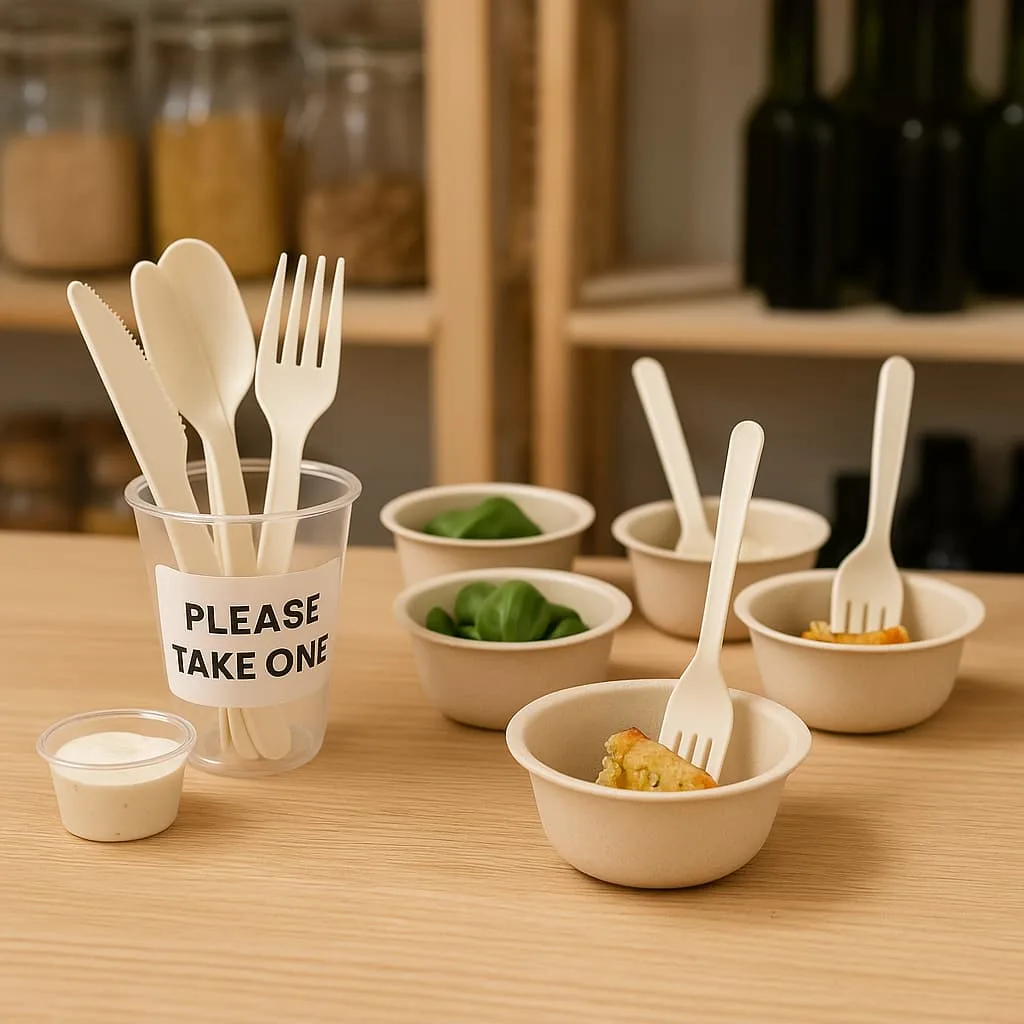
Solution : Use your standard-size compostable cutlery —CPLA spoons/forks/knives for warm or slightly oily samples; cornstarch spoons/forks/knives for cold, dry, or room-temp bites. Keep one utensil type visible per sample to avoid confusion and over-grabbing.
Execution checklist
Dispenser layout: One clear lane per utensil (e.g., “Spoons only for yogurt/sauces,” “Forks only for cheese/fruit”).
Hygiene cue: Pre-wrap a limited front batch for rush hours; keep the remainder sealed in sleeves behind the counter.
One-per-taste sign: A small tent card near the tray (“Please take one utensil per tasting”).
Back-of-counter kit: Standard knives for quick portioning; swap to CPLA for warm/oily items.
Waste control: Place a small, labeled cup at elbow height for used utensils to keep counters tidy.
Countback: End of shift, log issued vs. returned/used to right-size tomorrow’s pull and reduce loss.
Why it works: A cutlery-first, standard-size setup is fast to run, visibly clean, and cost-controlled—while letting you deploy CPLA where heat matters and cornstarch where it doesn’t.
10) Meal Kits, Subscription Boxes & Corporate Gifting
Pain points: Many kits assume users have utensils handy; reality says otherwise in offices, dorms, and travel.
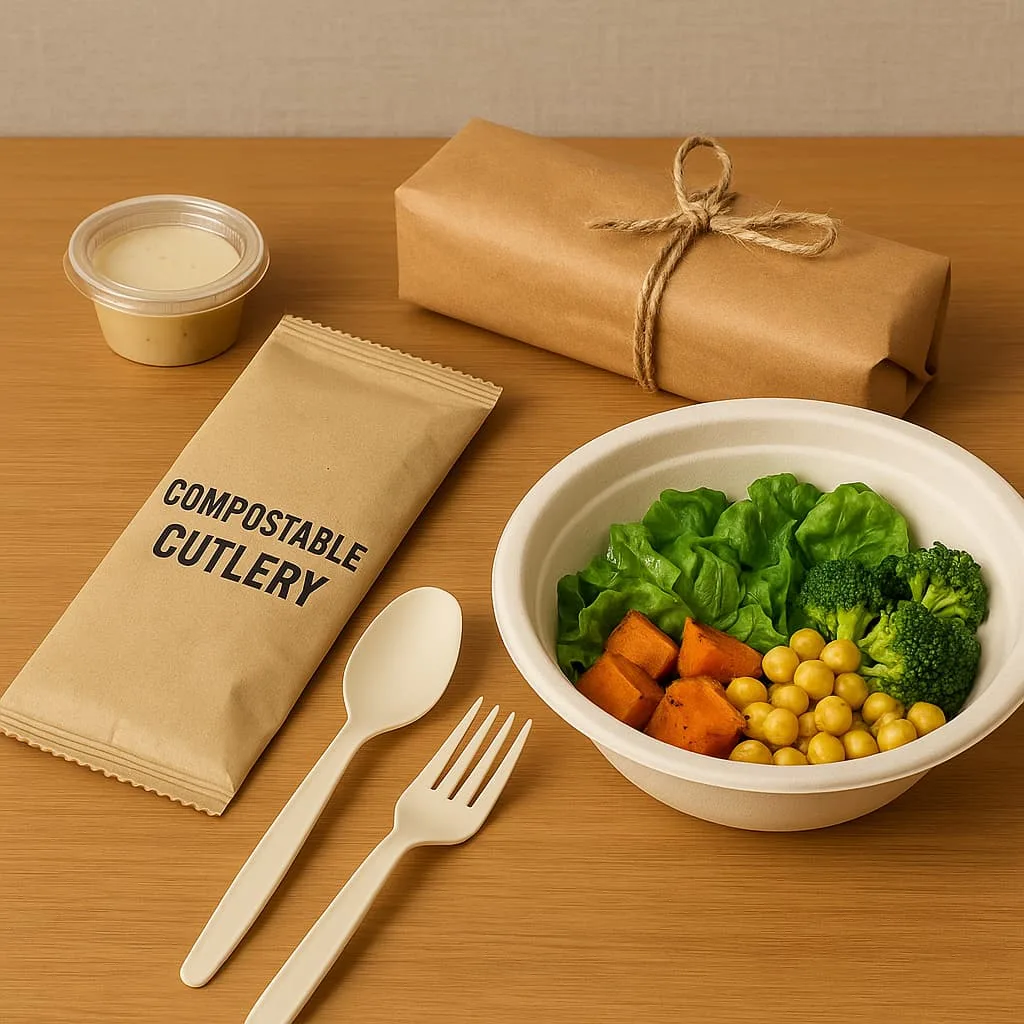
Solution: Add optional cutlery add-ons per recipe or box. Include QR codes linking to prep tips and disposal guidance. For corporate gifting and holiday bundles, use premium CPLA sets with branded sleeves. Showcase lidded bowls and small cups for sauces, toppings.
Execution checklist
Offer three add-on tiers: “Essentials,” “Family,” and “Outdoor.”
Print storage/composting instructions inside the sleeve.
Co-pack with spices and napkins to reduce separate picks.
Track attach rate and AOV uplift by SKU.
Why it works: Higher conversion, fewer customer service queries, and better unboxing moments—without plastic blowback.
🧩 Case Study: How a Global Snack Brand Switched to Compostable Cutlery for Sampling Events
When a well-known international snack brand expanded its “Healthy Tastes” campaign across Asia and Europe, it faced a familiar challenge: maintaining hygiene and speed during large-scale product sampling while cutting down on single-use plastic waste.
Problem:
The brand’s marketing activations involved more than 800 tasting events in malls, food fairs, and gym expos. Traditional plastic utensils were not only environmentally unsustainable but also clashed with the company’s “Better for You, Better for the Planet” messaging.
Solution:
Working with Bioleader®, the brand replaced all conventional plastic spoons and forks with CPLA compostable cutlery and cornstarch-based utensils. The new setup included:
Individually wrapped spoon-and-napkin kits for hygienic sampling;
Small cornstarch forks for dry snack bites;
Bagasse portion cups for yogurt and fruit toppings.
Results:
Reduced plastic usage by over 68% in three months;
Improved brand perception scores on sustainability by +22% (based on post-event surveys);
Event logistics became easier—since Bioleader’s compostable cutlery shared consistent sizing and packaging SKUs, reordering and stock tracking were simplified.
Takeaway:
For brands running frequent demos or tasting bars, switching to compostable cutlery is not just an environmental move—it’s an operational upgrade that builds consumer trust and aligns with global ESG expectations.
Buyer’s Checklist: Spec Before You Scale
Material & Heat Range: CPLA for hot entrées and oils; cornstarch for cold and room-temp items.
Strength & Geometry: Test fork tine rigidity, spoon depth, and knife serration on your actual menu.
Packaging Format: Bulk, sleeve-wrapped, or full set with napkin—to match hygiene and speed needs.
Certifications: Food-contact and compostability credentials that align with target markets and RFPs.
Hygiene Claims: Neutral odor, sealed packaging, and clean-room handling where required (healthcare/airline).
MOQ & Lead Time: Lock SKUs quarterly; plan safety stock for peak season.
Branding: Sleeve printing or banding for events and gifting; color-coding for back-of-house.
Disposal System: Clear bin signage, staff scripts, and contamination audits—especially at events.
Bundling: Cross-sell with bowls, trays, clamshells, and bags to stabilize per-cover cost.
Pilot & Scale: Start with two venues or departments; measure waste, speed, feedback, and adjust.
Implementation Playbook (Quick Wins)
Set the core kit: biodegradable fork, spoon, knife (CPLA) + mini spoon (sampling) + wrapped set for hygiene-critical flows.
Bundle for outcomes: pair utensils with bowls and clamshells to reduce spills and complaints.
Standardize signage: the same icons across bins, sleeves, and counters to train behavior.
Instrument your rollout: leftover counts, contamination rates, attach rate for add-ons, and NPS.
Communicate success: post KPIs in staff areas and executive dashboards to secure next-phase budget.
FAQ
Q1: What temperature can compostable cutlery handle?
CPLA typically handles hot foods better than most plant-based options; choose CPLA for soups, noodles, and oily entrées, and use cornstarch for cold or room-temp items.
Q2: Are compostable utensils safe for hospitals and schools?
Yes—choose sealed, wrapped sets for hygiene-critical settings and confirm food-contact certifications. Neutral-odor materials are preferred in healthcare.
Q3: Can compostable cutlery be used with oily or acidic foods?
Yes, with the right material and weight. For hot and oily dishes, specify CPLA; for cold dressings and fruit, cornstarch works well.
Q4: CPLA vs. cornstarch—how do I choose?
Use CPLA where heat and strength matter; cornstarch where cost, cold service, and sampling dominate. Many enterprises deploy both.
Q5: Do wrapped cutlery sets reduce contamination?
They help—especially in healthcare, airlines, and events—by limiting open-air handling and speeding distribution.
Q6: What if industrial composting is not available locally?
You still gain plastic-reduction and brand compliance benefits. Keep signage clear, and explore partnerships with waste providers as programs expand.
Conclusion: From “Nice” to “Non-Negotiable”
Compostable cutlery is no longer a single-channel, takeaway-only decision. The enterprises winning on sustainability and customer experience are standardizing plant-based utensils across offices, education, healthcare, aviation, events, hotels, retail sampling, and meal kits—then optimizing by SKU, packaging format, and disposal design. If you’re ready to operationalize at scale, start with a lean core kit and expand by scenario.
Next steps (pick one today):
Get a Sample Kit with your target SKUs and wrapped sets.
Request a Bundled Quote for utensils + bowls + clamshells + bags.
Pilot in Two Locations and measure contamination rate, speed of service, and feedback.
Before you finalize, complete the bundle with takeout paper bags and right-sized containers to keep logistics tight and brand visuals consistent.
References
European Bioplastics Association — Annual Market Data Report, 2024.
U.S. Environmental Protection Agency (EPA) — Sustainable Materials Management Report, 2023.
Ellen MacArthur Foundation — Global Commitment Progress Report, 2024.
ASTM International — Standard D6400: Compostability of Plastics.
TÜV Austria — OK Compost Industrial Certification Guidelines, 2023.
European Commission — Packaging and Packaging Waste Regulation (PPWR) Brief, 2024.
United Nations Environment Programme (UNEP) — Plastic Pollution Global Assessment, 2023.
FDA — Food Contact Substances and Biopolymer Safety Review, 2024.
Biodegradable Products Institute (BPI) — Certification Manual for Compostable Foodservice Ware.
World Economic Forum — Circular Economy and Packaging Transition Insight, 2025.
Compostable Cutlery in Retail Sampling — Semantic Closed-Loop Insight Block
Why Compostable Cutlery Has Become Essential
Global food sampling and retail tasting activities are moving toward plant-based utensils as plastic bans expand worldwide. Compostable cutlery—particularly CPLA and cornstarch types—helps brands demonstrate sustainability at the exact point of customer engagement. It’s not just a hygiene measure; it’s a visible sustainability signal that reinforces ESG alignment, corporate image, and regulatory compliance.
What Defines CPLA and Cornstarch Cutlery
- CPLA cutlery withstands higher heat and oil contact, ideal for warm sauces, baked goods, or cooked samples.
- Cornstarch cutlery offers balanced rigidity and cost efficiency for cold or dry foods like fruit, cheese, or snacks.
- Both materials are biodegradable, PFAS-free, and food-contact certified (LFGB/FDA), making them safe for direct consumer use.
How to Implement a Cutlery-First Sampling Flow
- Set up single-type dispensers to avoid over-grabbing; use signage like “One utensil per tasting.”
- Pre-open only a small front batch to keep operations fast while maintaining hygiene integrity.
- Include a small “used utensils” bin at counter height to improve visual order and waste management.
- Track issued vs. used quantities daily—this minimizes cost and helps forecast demand accurately.
Options & Scaling Strategies
For consistent execution across multiple stores or events, buyers can select from:
- Bulk packs for high-volume service lines.
- Partially wrapped sets for visible cleanliness in open venues.
- Fully wrapped cutlery kits for healthcare, airports, or regulated tastings.
Bundling compostable cutlery with matching bowls, cups, or trays not only simplifies supply chains but also ensures visual uniformity and faster staff training.
Considerations for Buyers & Distributors
- Validate material performance on real menu samples (heat, oil, moisture exposure).
- Keep stock rotation short—store away from humidity to preserve strength.
- Use consistent labeling and iconography on bins and counters to reduce contamination risk.
- Leverage certifications (EN13432, ASTM D6400, BPI, TÜV) as compliance proof for import and retailer audits.
Market Outlook & Strategic Insight
As food-service brands pursue plastic-free compliance by 2026, compostable cutlery will shift from optional to standard across sampling, catering, and retail events. Businesses adopting now position themselves as credible sustainability leaders and secure early supply advantages amid tightening policy frameworks.
Conclusion — From Sampling Tool to Brand Signal
Choosing compostable CPLA and cornstarch cutlery isn’t just an operational update—it’s a brand statement. In high-visibility tasting counters, utensils become the tactile proof of a company’s environmental responsibility. A well-executed cutlery program creates cleaner counters, faster lines, and a measurable lift in brand trust—making it both an ESG and commercial win.