FAQ of Bioleader's Eco-friendly Disposable Tableware
How long do biodegradable plastic forks and spoons take to decompose?
The decomposition time varies, but most biodegradable plastic cutlery will break down within 3 to 6 months in commercial composting facilities.
Are compostable sporks safe for hot and cold foods?
Yes, compostable sporks are designed to handle both hot and cold foods , sustainable plastics. They maintain their strength and stability even when used with soups, salads, or hot dishes.
How long does it take for a cornstarch spork to decompose?
A cornstarch-based compostable spork will generally decompose within 90–180 days in commercial composting conditions, depending on local temperature and humidity.
Environmental Footprint
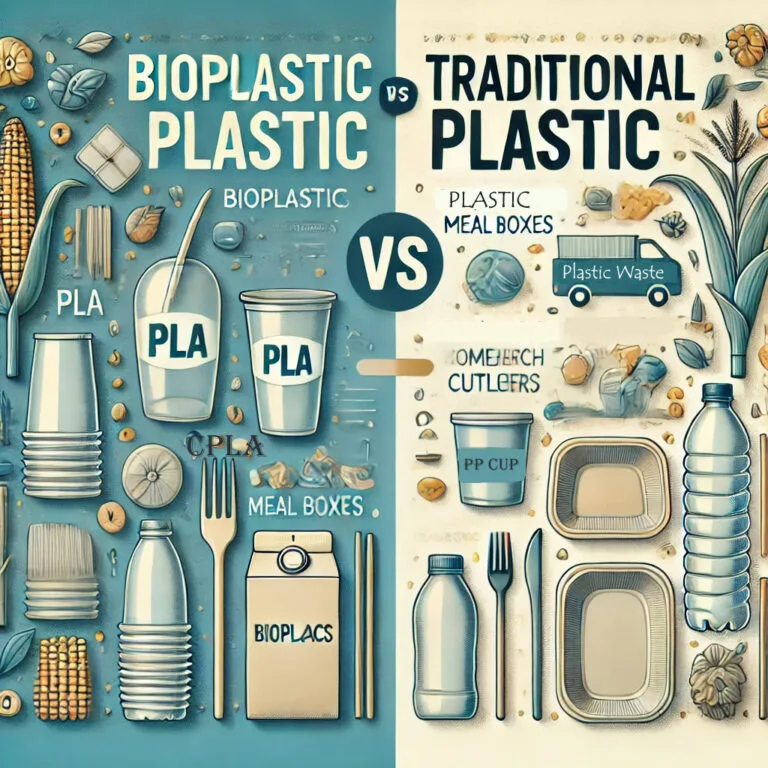
Carbon Emissions: While the production of traditional plastics emits significant CO₂, bioplastics can sequester carbon during the feedstock growth phase. Nonetheless, the overall carbon balance depends heavily on farming practices, transportation, and the energy source used for production. Pollution and Waste: Traditional plastics persist in the environment for centuries. Bioplastics, especially those that are biodegradable or compostable, may degrade faster, though the conditions required for degradation (e.g., industrial composting facilities) are not always readily available — sustainable plastics.
Raw Material Sources
Traditional Plastics: Petrochemical feedstocks derived from crude oil or natural gas , sustainable plastics. Bioplastics: Renewable biological sources such as corn, sugar beet, sugarcane, or even cellulose from wood pulp. The shift from fossil fuels to renewable resources can theoretically reduce the carbon intensity of plastic production. However, some critics argue that using agricultural land for bioplastic feedstocks could compete with food production, potentially driving up food prices or leading to deforestation.