FAQ of Bioleader's Eco-friendly Disposable Tableware
How long does it take for eco-friendly cutlery to decompose?
Under industrial composting conditions, most eco-friendly cutlery decomposes within 90 to 180 days, depending on the material and local composting standards — hinged clamshell containers.
How long does it take for a PLA spoon to decompose?
Under industrial composting conditions, PLA spoons typically decompose within 90 to 180 days, depending on the environment and local composting facilities.
Are compostable cutlery items accepted in commercial composting facilities?
Most compostable plastic spoons and forks are accepted at commercial composting sites, provided they meet relevant standards such as ASTM D6400 or EN 13432. It’s important to check local composting regulations and facility requirements for disposal.
1.3 Cornstarch Clamshell Containers (Blister)
Cornstarch-based polymers are another promising avenue for eco-friendly clamshell containers, particularly in the realm of disposable takeout solutions. These materials are derived from corn (and sometimes blended with other biopolymers) to create a biodegradable or compostable plastic-like substance. Common Uses: Cornstarch clamshell takeout containers are popular for hot and cold foods, serving as single-use lunch boxes, clamshell to go containers, and disposable clamshell food containers. Key Characteristics: Biodegradability: Many cornstarch-based products can break down in industrial composting facilities, though decomposition times may vary.
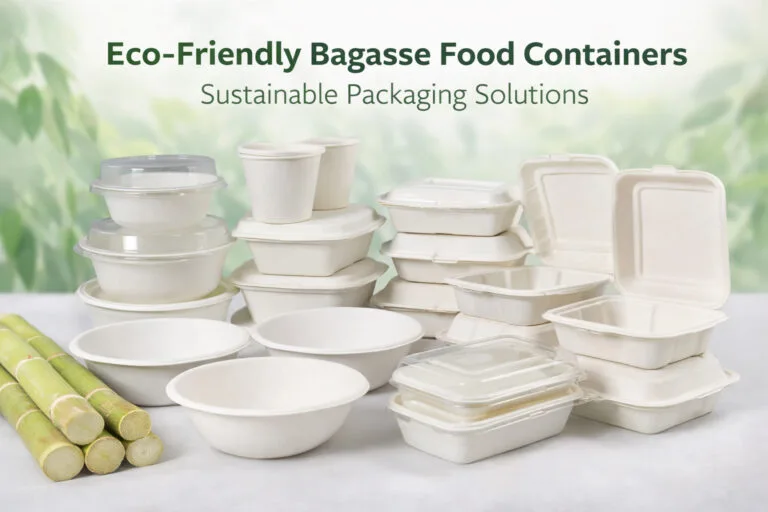
How to Integrate Bagasse Containers:
Tips: For best results, use bagasse containers for foods that are not extremely liquid or greasy. This helps maintain structural integrity. Techniques: Store these containers in a dry, cool environment to preserve their strength — hinged clamshell containers. Best Practices: Label the containers as compostable clamshell, and, if possible, partner with local composting facilities to encourage proper disposal , hinged clamshell containers.