FAQ of Bioleader's Eco-friendly Disposable Tableware
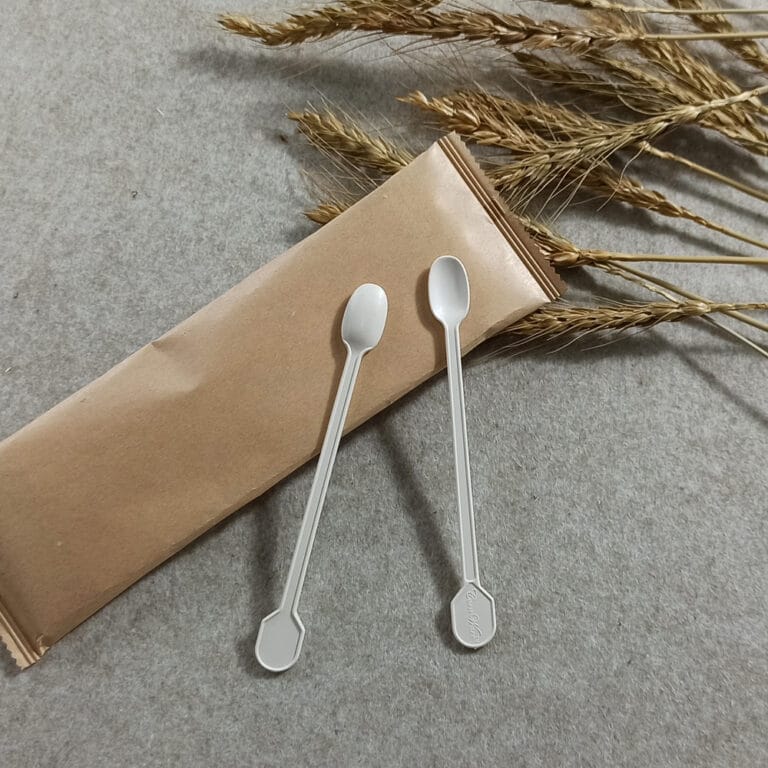
Are there eco-friendly options for individually wrapped cutlery?
Yes, in addition to traditional plastic, there are biodegradable and compostable individually wrapped cutlery options available to support sustainability goals.
How long does it take for a cornstarch spork to decompose?
A cornstarch-based compostable spork will generally decompose within 90–180 days in commercial composting conditions, depending on local temperature and humidity.
Are compostable cutlery items accepted in commercial composting facilities?
Most compostable plastic spoons and forks are accepted at commercial composting sites, provided they meet relevant standards such as ASTM D6400 or EN 13432 , eco-friendly spoon. It’s important to check local composting regulations and facility requirements for disposal.
PLA vs. CPLA—A Crucial Difference
One of the most common missteps occurs when buyers assume all compostable spoons perform the same under heat — eco-friendly spoon. Standard PLA spoons, made from corn-based polylactic acid, begin softening around 55°C (131°F). That means they are adequate for cold foods like desserts, salads, or yogurt, but unsuitable for hot beverages or soups , eco-friendly spoon. CPLA, on the other hand, is PLA that has undergone crystallization during manufacturing.
Why do some compostable spoons break or soften easily?
This usually happens when buyers choose PLA instead of CPLA for hot use, or when spoons are manufactured too thin. Proper thickness and the right material prevent failures.