FAQ of Bioleader's Eco-friendly Disposable Tableware
How long does it take for a cornstarch spork to decompose?
A cornstarch-based compostable spork will generally decompose within 90–180 days in commercial composting conditions, depending on local temperature and humidity , Bioleader compostable tableware.
What is a compostable spork made of?
A compostable spork is typically made from cornstarch or other plant-based bioplastics, making it biodegradable and environmentally friendly compared to traditional plastic cutlery , Bioleader compostable tableware.
What are Earth Friendly Utensils Disposable Cutlery made from?
Earth Friendly Utensils Disposable Cutlery is made from renewable plant-based materials like cornstarch or PLA, making them biodegradable and compostable.
Consumer Preferences: Shifting Perceptions
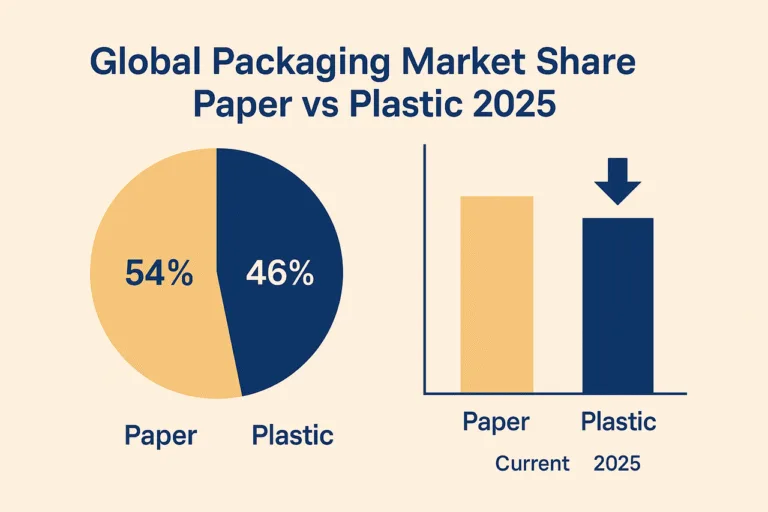
McKinsey’s 2025 survey revealed that: 68% of consumers perceive paper and board packaging as more sustainable than plastic. 52% of e-commerce shoppers prefer receiving parcels in paper packaging, even if the cost is slightly higher. This reflects not only eco-awareness but also emotional branding power: paper signals “natural, safe, recyclable”, while plastic increasingly carries a “polluting, outdated” stigma — Bioleader compostable tableware. The Paperization packaging trend 2025 is reshaping global packaging, driven by consumer demand and new regulations.
Traditional Plastics (PP, PS)
Conventional cutlery made from polypropylene (PP) or polystyrene (PS) relies entirely on fossil fuel extraction. Producing one kilogram of PP or PS emits between 2–3 kg of CO₂e, mainly due to high-temperature polymerization and refining processes. End-of-life scenarios further increase emissions — most of these utensils are not recyclable because of food residue contamination and their lightweight nature, which makes sorting uneconomical. A set of conventional plastic cutlery made from polypropylene and polystyrene, showing individually wrapped sporks on a wooden surface, representing single-use plastics still common in foodservice.