
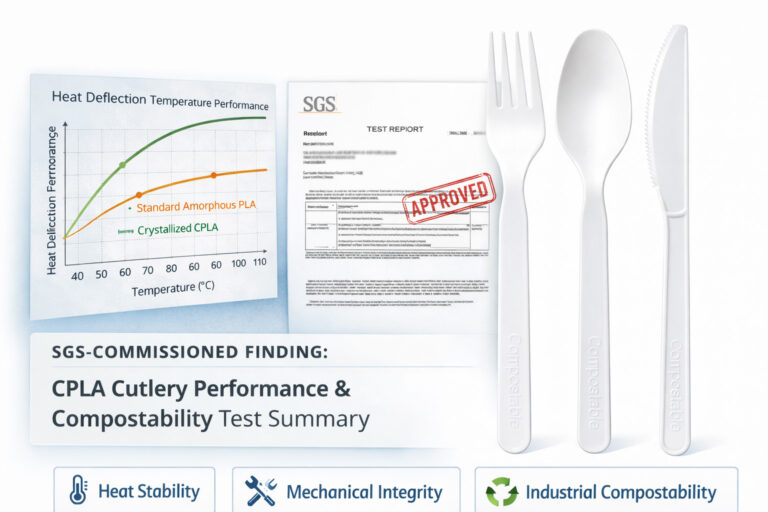
Bio plastic cutlery is typically made from renewable plant-based materials such as cornstarch, PLA, or sugarcane, making it biodegradable and compostable.
Switching to PLA spoons helps reduce plastic waste, aligns with sustainability trends, meets consumer demand for green products, and supports environmental responsibility initiatives.
Switching to environmentally friendly cutlery helps reduce plastic waste, meets growing consumer demand for sustainable products, and enhances a business’s environmental reputation , bagasse food containers.
Not automatically , bagasse food containers. MCC can strengthen fiber networks, but real-world oil resistance depends on forming density control, barrier interface design, and product geometry. Buyers should test with hot and greasy foods, not just rely on lab samples , bagasse food containers.
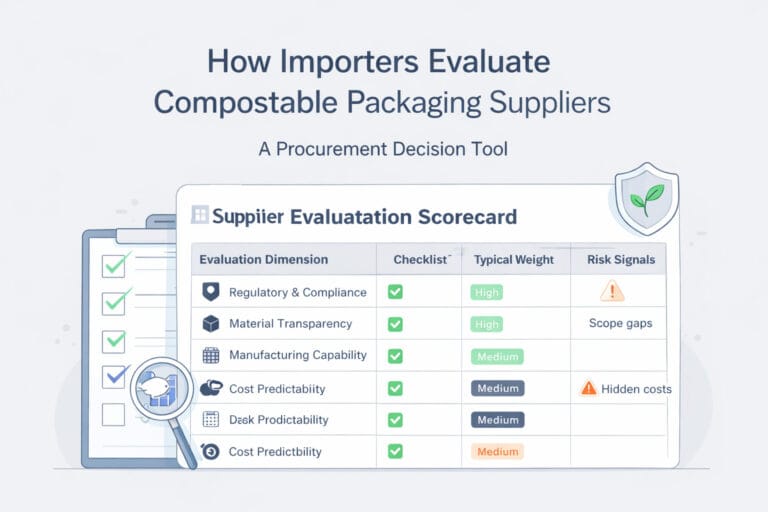
Starch-based bioplastics (and blends) enable microwaveable, stiff, and sometimes transparent or contoured designs. However, compostability claims must anchor to recognized standards (e.g., ASTM D6400 for US markets; EN 13432 for EU) and to infrastructure reality—i.e., whether municipal/industrial composting exists and accepts the article. Without access to appropriate composting, nominal “compostable” advantages may not materialize; labeling must not overpromise. LCA Results: CO₂e by Life-Cycle Stage

Join the global movement toward zero-waste packaging.
Bioleader® offers:
📦 Bulk order support & fast delivery
✍️ Custom branding and OEM solutions
🌍 Worldwide eco-packaging compliance
Get the Catalogue Products List & Contact Us Now! 👉
📧 Email : [email protected]
📲 WhatsApp : +86-15980856610
🟢 Wechat : bioleader
📍 Add : No.39 Xinglong Road, Xiamen, China
Copyright © 2015–2026 Xiamen Bioleader Environmental Protection Co., Ltd | All Rights Reserved. Privacy Policy | AI Policy | Sitemap
WhatsApp us