Bio Plastic Cutlery for Foodservice

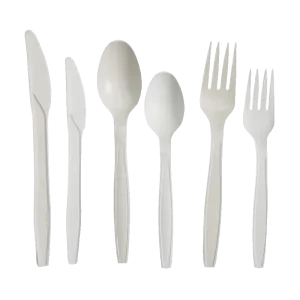
Bio plastic cutlery represents a new generation of disposable utensils designed to reduce reliance on fossil-based plastics while maintaining the functional performance required in modern foodservice.

Rather than referring to a single material, bio plastic is an umbrella category covering plant-based or bio-derived polymers engineered for disposable cutlery applications. These materials are widely adopted across takeaway, catering, and institutional dining as regulations and sustainability targets continue to tighten globally.

For a complete cutlery overview, visit our cutlery hub; for wrapped programs or multi-item kits, use the dedicated pages below.

Cornstarch Tableware

Quick Summary

This page explains bio plastic cutlery for foodservice use, covering forks, spoons, and knives made from plant-based materials such as cornstarch and CPLA. Bio plastic cutlery focuses on plastic reduction, functional performance, and material transparency, supporting takeaway, catering, and high-volume foodservice programs with different cost, heat-resistance, and end-of-life requirements.

What Is Bio Plastic Cutlery?

Bio plastic cutlery refers to disposable utensils manufactured from bio-based polymers, meaning the raw material is partially or fully derived from renewable biological sources rather than petroleum.

In foodservice applications, bio plastic materials are engineered to deliver:

  • Predictable strength and rigidity

  • Controlled heat tolerance

  • Food-safe contact behavior

  • Reduced fossil-plastic dependency

Bio plastic does not automatically mean compostable. Instead, it describes the origin of the material, not its end-of-life pathway.

Bio Plastic vs. Conventional Plastic Cutlery

Compared with traditional PP or PS plastic cutlery, bio plastic alternatives offer several structural and environmental advantages:

  • Reduced reliance on fossil resources

  • Lower carbon footprint potential (depending on formulation)

  • Compatibility with plastic reduction initiatives

  • Improved positioning under sustainability-driven procurement policies

From a functional standpoint, modern bio plastic cutlery is designed to mirror the user experience of conventional plastic, minimizing the learning curve for operators and consumers.

Bioleader® Bio-plastic Utensils: Professional Video Showcase

Cornstarch Cutlery Biodegradable Plastic Cutlery

Key Characteristics of Bio Plastic Materials

Bio plastic cutlery materials are selected and engineered based on a combination of performance requirements and regulatory context.

Core material characteristics typically include:

  • Plant-derived carbon content

  • Injection-molding compatibility for precision shaping

  • Stable structure during typical meal service duration

  • Neutral taste and smooth mouthfeel

The balance between performance, cost, and end-of-life behavior varies depending on the specific bio plastic formulation used.

For sourcing compostable forks and spoon, explore our dedicated pages:
Compostable Disposable Forks
Compostable Disposable Spoons

Main Types of Bio Plastic Cutlery Materials

Cornstarch-Based Bio Plastic

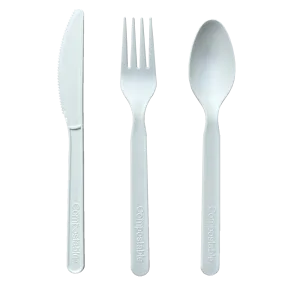
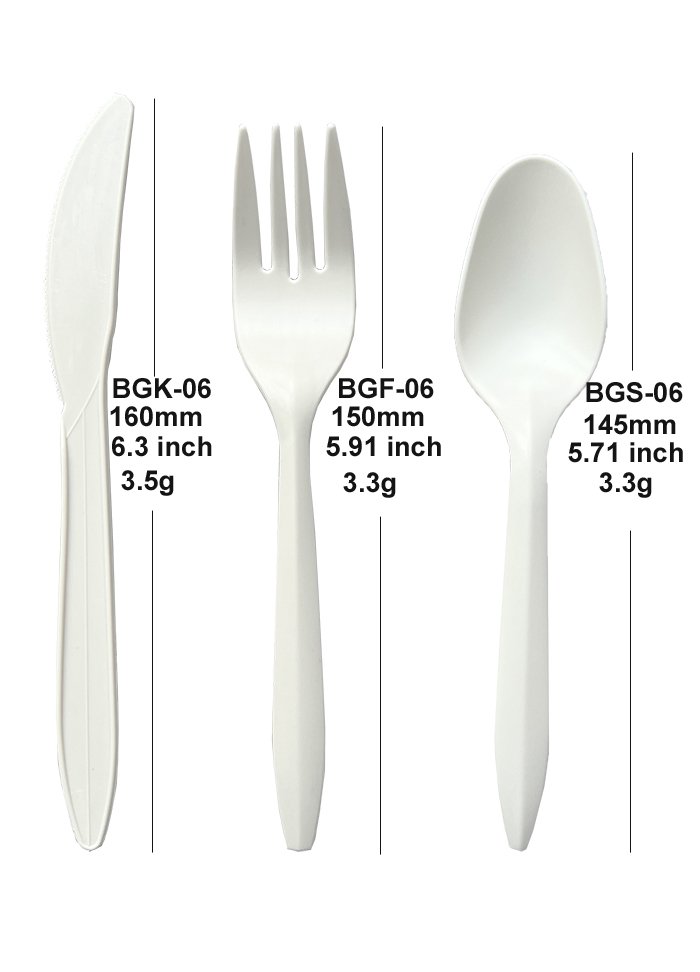
Cornstarch-based bioplastic uses plant starch as a core component, combined with polymer modifiers to enhance rigidity and durability.

This material type is widely adopted for:

  • High-volume takeaway and delivery programs

  • Cost-sensitive foodservice operations

  • Plastic reduction initiatives

Cornstarch bioplastic focuses on practical daily performance and cost efficiency, making it a popular choice for mass distribution.  See our Cornstarch Cutlery Page here.

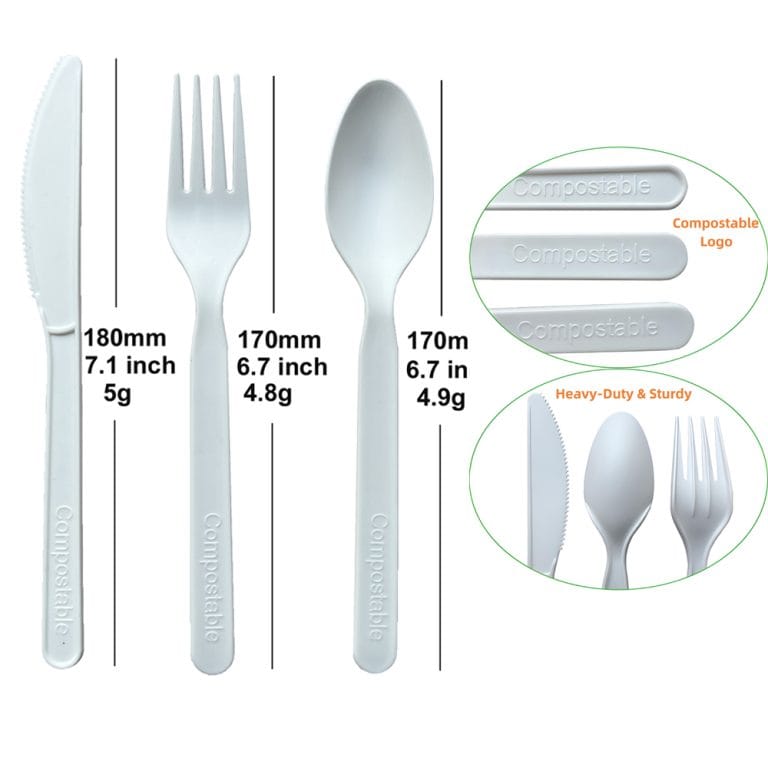
Cornstarch Cutlery fork spoon knife
CPLA Cutlery fork spoon knife 7 Inch

CPLA Bio Plastic

CPLA (Crystallized Polylactic Acid) is a fully plant-based bioplastic derived from fermented sugars and engineered for higher heat resistance.

CPLA cutlery is typically selected for:

  • Programs requiring industrial compostability alignment

  • Hot-food-intensive service environments

  • Certification-driven procurement tenders

Within the bio plastic category, CPLA is positioned as a performance- and compliance-oriented material.

Know more about our CPLA Cutlery here.

Compostability, Biodegradability & End-of-Life Considerations

Bio plastic cutlery spans a spectrum of end-of-life outcomes.

  • Some bio plastics are designed primarily for plastic reduction, not composting

  • Others, such as CPLA, are formulated to meet industrial composting standards

  • Actual disposal outcomes depend on local waste infrastructure and regulations

For procurement teams, understanding the distinction between bio-based origin and certified compostability is critical when selecting the appropriate material.

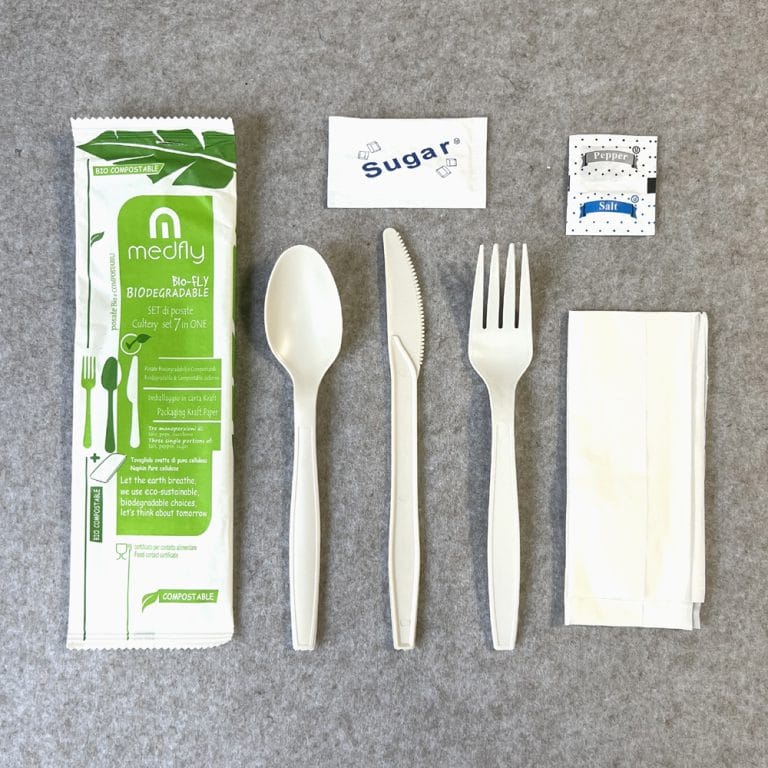
Compostable Biodegradable Cutlery Set

Performance Expectations & Foodservice Applications

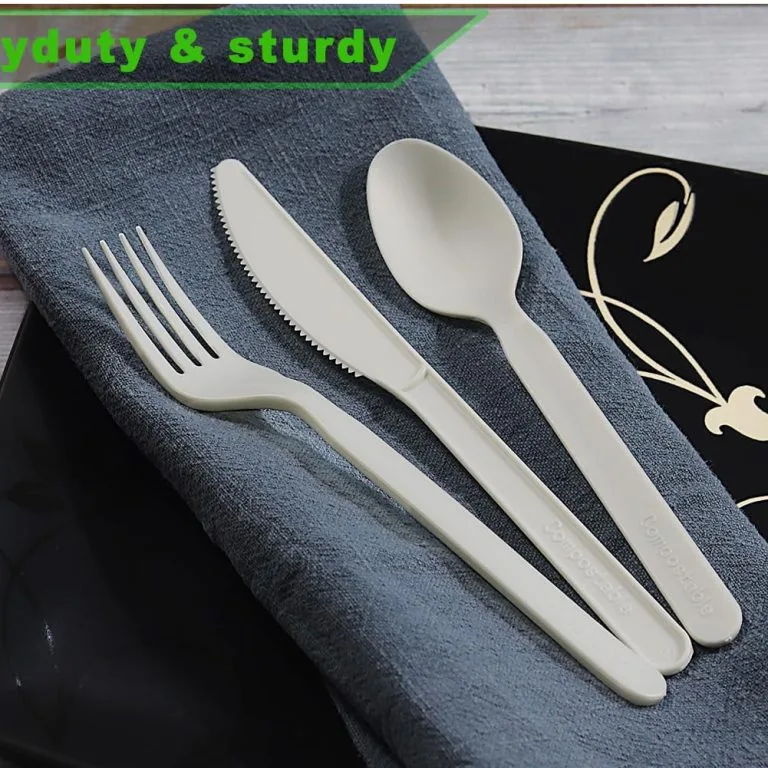
Bio plastic cutlery is designed for real-world foodservice performance—delivering reliable rigidity during normal meal duration, a smooth mouthfeel comparable to traditional plastic, and practical use across hot and cold menu items. It is widely used in takeout and delivery, cafeterias, catering/events, and institutional dining, and should be selected based on menu type, serving temperature, and service duration rather than generic “eco” claims.

Bioleader® Certifications & Regulatory Compliance

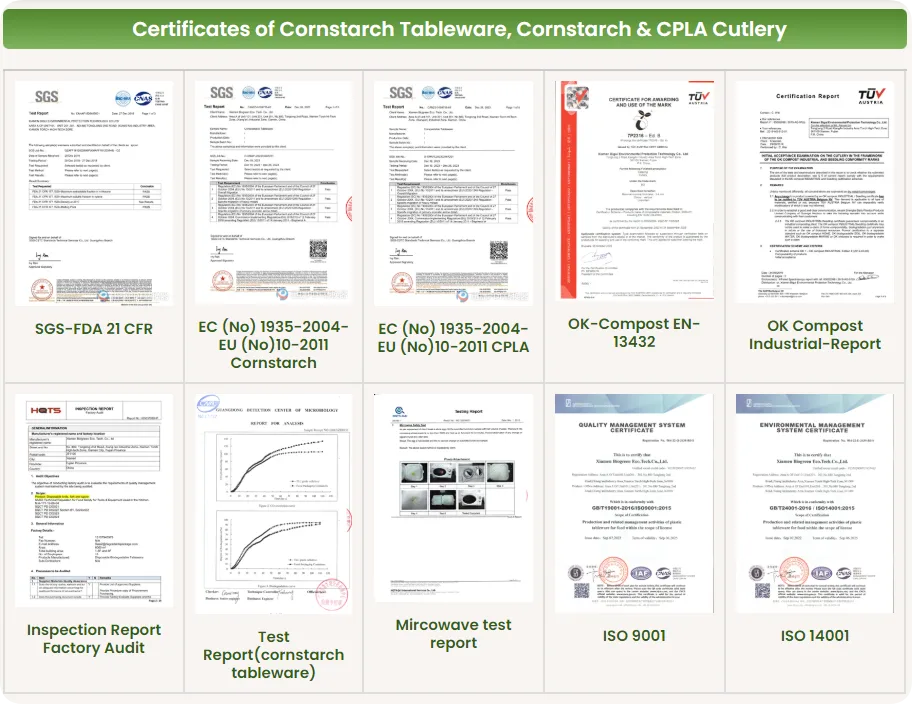
Bioleader® Bioplastic cutlery is manufactured in compliance with internationally recognized standards to support global foodservice, retail, and export programs, including:

  • Food-contact compliance: SGS – FDA 21 CFR; EC (No) 1935/2004 + EU (No) 10/2011 

  • Industrial compostability: TÜV Austria OK compost Industrial (EN 13432)

  • Factory & management system: Inspection Report / Factory Audit; ISO 9001; ISO 14001

  • Technical test reports (as applicable): material/product test reports (e.g., cornstarch tableware) and performance tests (e.g., microwave test report)

  • Export documentation pack: specification sheets (size/packing/carton data), QC records, and labeling/carton marking support (SKU/barcode, multilingual text)

Bioleader certificates of compostable cutlery containe cornstarch and CPLA
Sugarcane Bagasse Tableware

Choosing the Right Bio Plastic Cutlery

Selecting the right bio plastic cutlery starts with operational fit—evaluate required heat tolerance, cost sensitivity at your target volume, local sustainability policies, and access to composting or waste management systems. Bio plastic cutlery is not a one-size-fits-all solution; different material options support different procurement priorities. Bioleader® supplies a complete range of bio plastic cutlery, including cornstarch-based and CPLA-based forks, spoons, and knives, helping global buyers transition away from conventional plastics while maintaining consistent performance, supply stability, and operational efficiency.

FAQ of Bioleader's Bioplastic Cutlery

1. What is bio plastic cutlery?

Bio plastic cutlery refers to disposable forks, spoons, and knives made from plant-based or bio-derived materials instead of fossil-based plastics. It focuses on reducing conventional plastic use while maintaining practical foodservice performance.

2. Is bio plastic cutlery the same as compostable cutlery?

Not always. “Bio plastic” describes the material origin, not the disposal outcome. Some bio plastic cutlery (such as CPLA) is designed for industrial composting, while others (such as cornstarch-based materials) are primarily positioned for plastic reduction and everyday foodservice use.

3. What types of bio plastic materials are commonly used for cutlery?

In foodservice applications, the most common bio plastic cutlery materials include cornstarch-based bio plastic (PSM) and CPLA (Crystallized Polylactic Acid). Each material offers different balances of heat resistance, cost, and end-of-life positioning.

4. How should buyers choose the right bio plastic cutlery material?

Material selection should be based on menu temperature, service duration, volume scale, local sustainability policies, and available waste management infrastructure, rather than relying on generic “eco” claims.

5. Is bio plastic cutlery suitable for hot food service?

Yes. Bio plastic cutlery is engineered for normal hot and cold foodservice use, including takeaway meals, catering, and institutional dining. Performance characteristics depend on the specific material formulation selected.

6. Can bio plastic cutlery be supplied in bulk or private label formats?

Yes. Bio plastic cutlery is commonly supplied in bulk cartons, individually wrapped formats, and private label programs, supporting large-scale foodservice, distribution, and hygiene-sensitive environments.

Need a Quote? Request Bulk Pricing for Bio-plastic Cutlery

Looking for an alternative to conventional plastic cutlery? Learn how bio plastic cutlery by Bioleader® supports plastic reduction while delivering reliable performance for takeaway, catering, and institutional dining.

Contact Us for Price

Click or drag files to this area to upload.You can upload up to 5 files.
The more details you share, the faster and more accurate our quotation will be.