Quick Summary Card
Introduction – Why Retail Packaging Is Changing
For decades, plastic has been the default choice for supermarkets. It is lightweight, cheap, and seemingly convenient. However, the global retail packaging market is entering a historic transformation. In 2023 alone, the global plastic packaging industry was valued at over USD 400 billion, with supermarkets accounting for nearly 40% of consumption. Yet, plastic’s dominance is now under siege.
Three forces are driving this change:
Regulations – Governments across the EU, North America, and Asia-Pacific are imposing strict bans on single-use plastics. In many cases, failure to comply results in fines, forced product withdrawal, or shipment rejections.
Consumers – Surveys show more than 70% of shoppers prefer products in sustainable packaging, and over 60% are willing to pay a premium for eco-friendly containers. In the highly competitive supermarket industry, ignoring consumer preferences risks brand erosion.
Retailers’ Strategy – Large supermarket groups are under pressure to meet ESG (Environmental, Social, Governance) commitments. Investors, supply chain partners, and regulators now expect packaging choices to reflect corporate sustainability pledges.
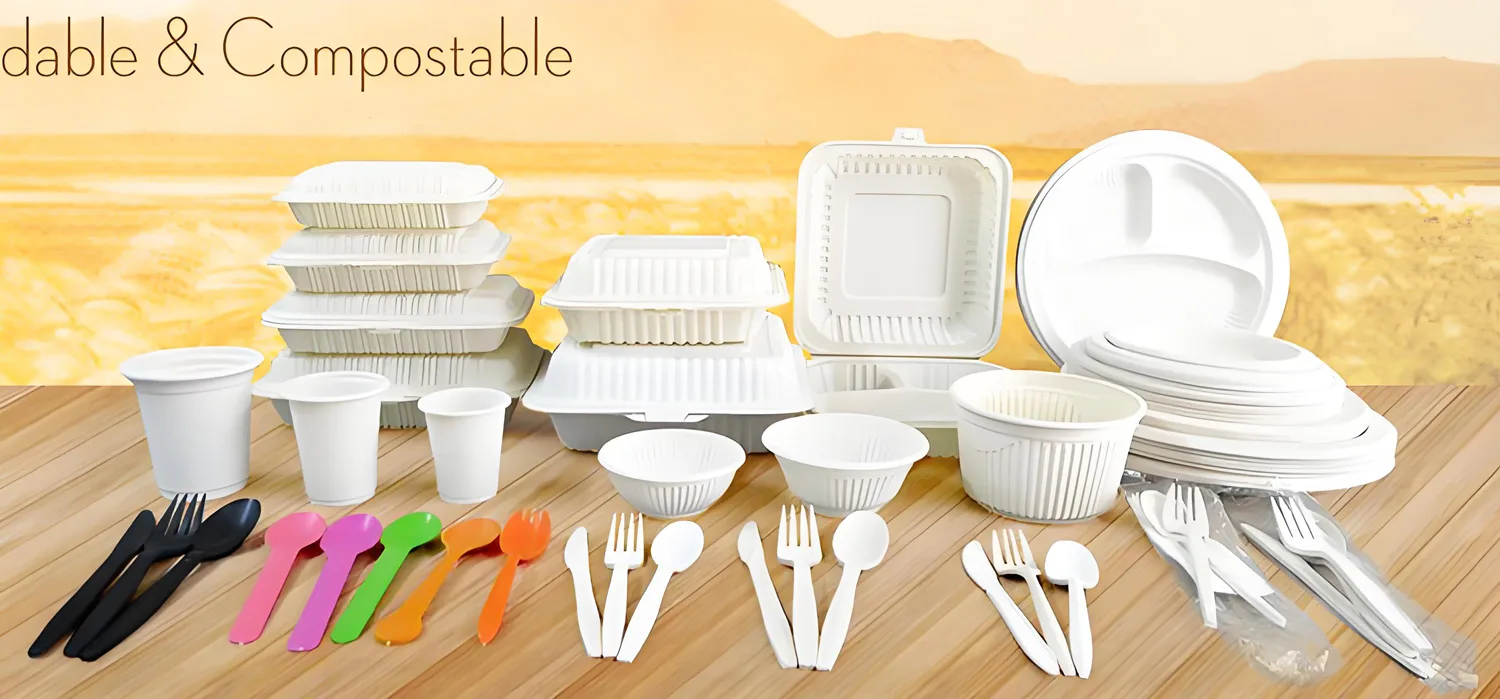
This convergence of compliance pressure, consumer demand, and strategic brand value is accelerating the shift away from plastics. Compostable retail packaging—such as bagasse food trays with lids wholesale, kraft paper salad bowls manufacturer solutions, bulk PLA cold cups, and compostable clamshell containers supplier products—is no longer optional. It is fast becoming a non-negotiable requirement for supermarkets seeking growth and survival in a regulated, sustainability-driven marketplace.
The Hidden Cost of Plastic in Supermarkets
Unit Price vs. True Cost
At first glance, plastic seems unbeatable. A standard supermarket plastic container costs $0.05, compared to $0.07–0.08 for bagasse trays or $0.08–0.09 for kraft bowls. Procurement managers, under pressure to reduce immediate expenses, may see plastics as a safer choice.
But this unit price view is misleading. When factoring in taxes, waste management, and compliance risks, plastics are often more expensive long-term. For example, Spain charges €0.45 per kilogram of plastic packaging as a sustainability tax. Italy imposes a similar levy at €0.50 per kilogram. For large supermarket chains importing millions of plastic units annually, these taxes add millions of euros to operating costs.
Environmental Taxes and Disposal Fees
Beyond taxes, disposal costs also undermine plastic’s “cheapness.” Non-recyclable plastics increase landfill expenses. Municipalities often transfer these costs to retailers. In contrast, compostable packaging like bagasse or kraft paper decomposes within 90–180 days, reducing waste management overhead.
A report by the OECD estimated that global waste management costs for plastic packaging exceed USD 80 billion annually. Supermarkets are directly exposed to this burden, particularly in regions with strict Extended Producer Responsibility (EPR) frameworks.
Compliance Risks for Retail Chains
Regulatory risks are rising. The EU’s Single-Use Plastics Directive (SUPD) prohibits plastic cutlery, trays, and food boxes. In the U.S., California’s SB54 requires supermarkets to cut plastic packaging by 25% before 2032. Canada banned several single-use plastics in 2023, including retail food packaging.
Non-compliance can result in hefty fines or product recalls. For instance, one European retailer faced €250,000 in fines for using uncertified packaging that did not meet EN13432 standards. By contrast, supermarkets sourcing from certified biodegradable packaging supplier in China such as Bioleader® eliminate compliance uncertainty.
📊 Table 1: Real Cost Comparison in Retail (per 10,000 units)
| Material | Unit Price (USD) | Extra Fees (Tax/Disposal) | Total Cost (USD) | Compliance Risk | Customer Impact |
|---|---|---|---|---|---|
| Plastic Container | 0.05 | +0.01 | 600 | High | Neutral |
| Bagasse Trays (Bioleader®) | 0.07 | 0 | 700 | None | +8% loyalty |
| Kraft Salad Bowls | 0.08 | 0 | 800 | None | +10% loyalty |
| PLA Cold Cups | 0.09 | 0 | 900 | None | +12% eco appeal |
Compliance and Risk Control – Meeting Global Standards
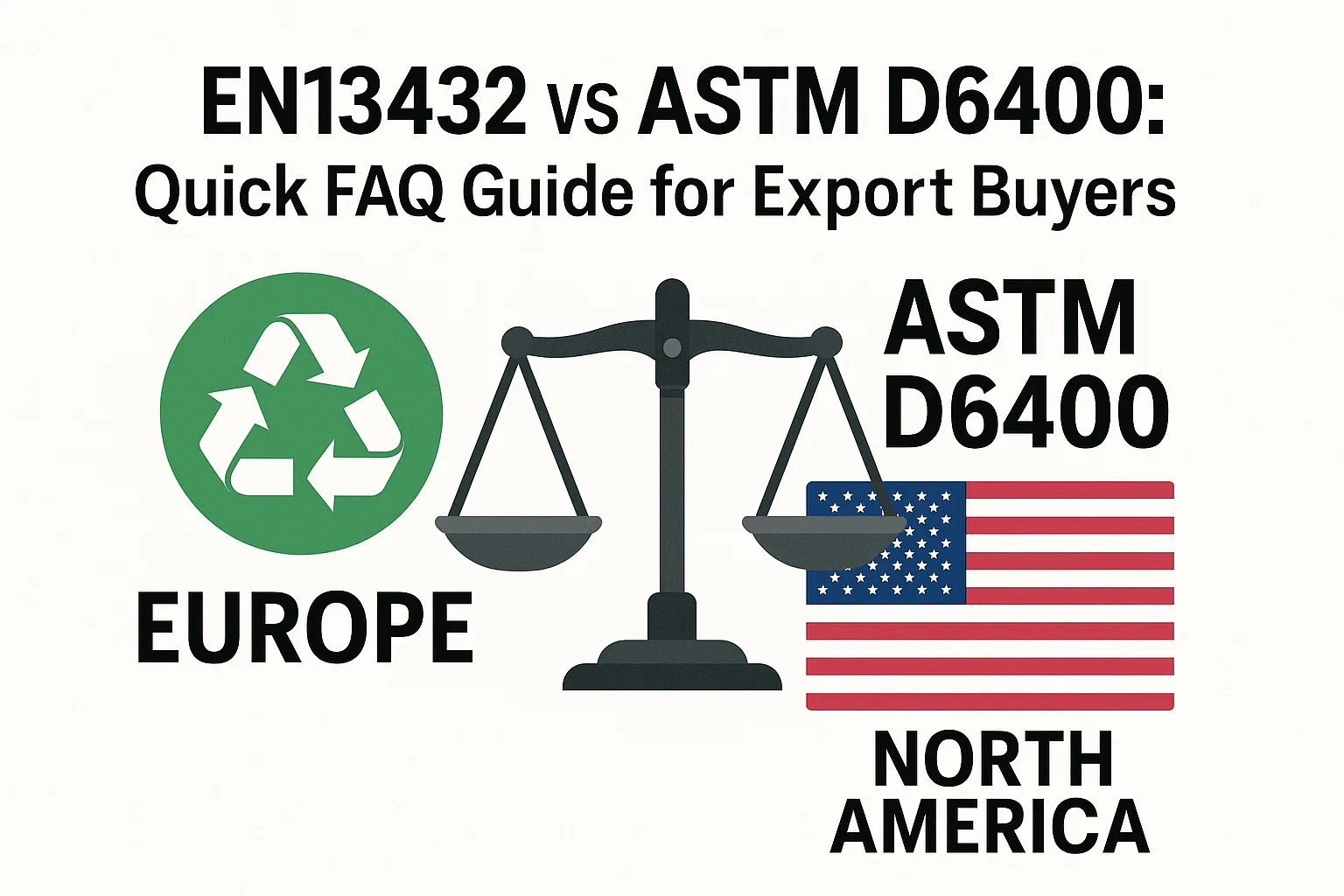
EU EN13432 and SUP Directive
EN13432 requires packaging to disintegrate within 12 weeks and biodegrade within six months under industrial composting conditions. Retailers must prove certification to access EU supermarket shelves. The SUP Directive enforces this strictly, meaning uncertified plastics are essentially banned.
North America ASTM D6400 & BPI Certifications
In the U.S. and Canada, ASTM D6400 certification ensures compostability. BPI (Biodegradable Products Institute) certification is widely recognized by retailers and municipalities. Retailers adopting uncertified products risk losing contracts with major distributors.
Asia-Pacific Plastic Bans for Retail Packaging
Markets like India, Thailand, and Malaysia are phasing out plastic packaging. For example, India’s nationwide plastic ban affects retail-ready packaging such as food trays and clamshells. Supermarkets relying on imports must adapt quickly or face stockouts.
Compostable alternatives, such as retail ready compostable containers wholesale, offer peace of mind. They ensure market access across regions without the threat of regulatory penalties.
Supply Chain Efficiency and Operational Value
Bulk Procurement and Container Optimization
Container shipping efficiency is critical for supermarkets sourcing globally. A 40HQ container of plastic products often carries 180,000 units, but because bagasse and kraft are designed for stackability, up to 210,000 trays or 200,000 salad bowls can fit. This improves freight cost per unit, making compostables more competitive than they appear on paper.
SKU Rationalization for Retail
Supermarkets often juggle hundreds of SKUs in packaging alone. Compostable options allow SKU consolidation. For example, a single compostable clamshell containers supplier line can serve multiple food categories, from bakery to deli. SKU rationalization reduces warehouse complexity, cuts labor costs, and streamlines procurement.
Storage, Stacking, and Logistics Benefits
Plastic foam trays often collapse under stacking pressure, leading to waste and inefficiency. Bagasse trays and kraft bowls are rigid, improving shelf handling and warehouse storage. This stability reduces breakage losses and simplifies in-store stocking.
📊 Table 2: 40HQ Container Loading Efficiency
| Packaging Type | Units per 40HQ | Logistics Efficiency | Shelf Handling |
|---|---|---|---|
| Plastic | 180,000 | Low | Collapses easily |
| Bagasse Trays | 210,000 | High | Stable stacking |
| Kraft Salad Bowls | 200,000 | High | Easy display |
| PLA Cold Cups | 190,000 | Medium | Transparent appeal |
Brand and Consumer Experience Value
How Kraft and Bagasse Improve Shelf Appeal
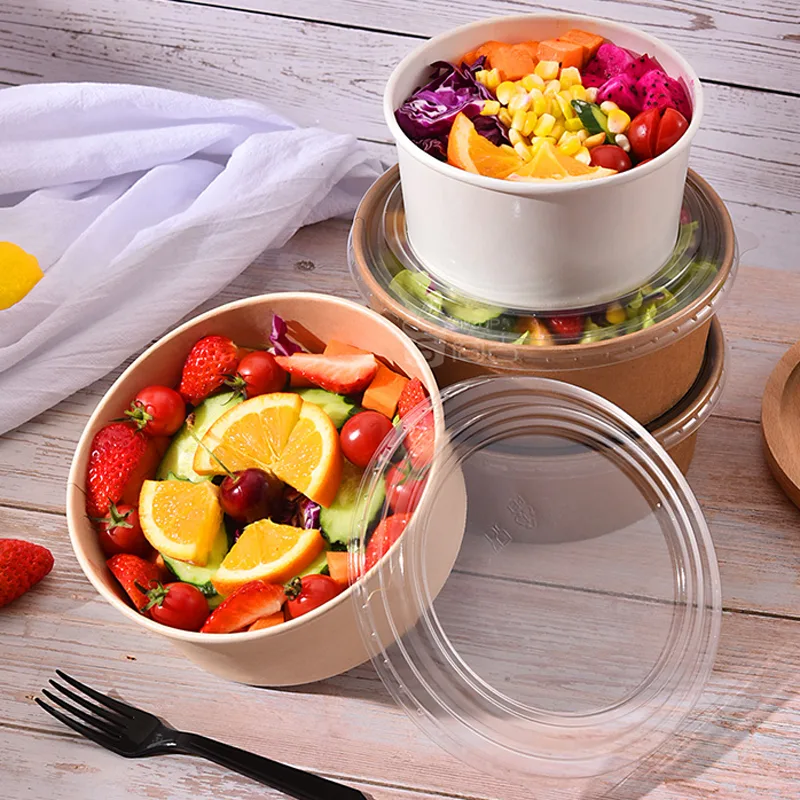
Retailers increasingly recognize packaging as part of the product. Kraft paper bowls with clear lids communicate freshness and naturalness, while bagasse trays emphasize authenticity and eco-friendliness. These visual cues influence consumer decisions on the shelf, especially in categories like salads, bakery, and ready meals.
Consumer Willingness to Pay More
A Nielsen study found that 73% of millennials are willing to pay more for sustainable packaging. For supermarkets, this means switching to compostable packaging is not just compliance—it is an opportunity to capture premium pricing and increase basket value.
Social Media and Word-of-Mouth Benefits
Eco-friendly packaging has become a marketing tool. Customers frequently highlight packaging choices on Instagram, TikTok, and YouTube. Posts tagged with #sustainablepackaging and #ecofriendlysupermarket have millions of views. By using eco friendly supermarket packaging wholesale, retailers gain organic exposure and strengthen brand loyalty.
Case Studies – Retailers Switching to Compostable Packaging
Supermarkets around the world are already making the switch from plastic to compostable alternatives. The following real-world case studies demonstrate how Bioleader® solutions have helped retailers overcome compliance risks, boost consumer trust, and achieve measurable sales growth.
Case 1 – European Supermarket with Bioleader® Bagasse Trays
Customer Pain Point:
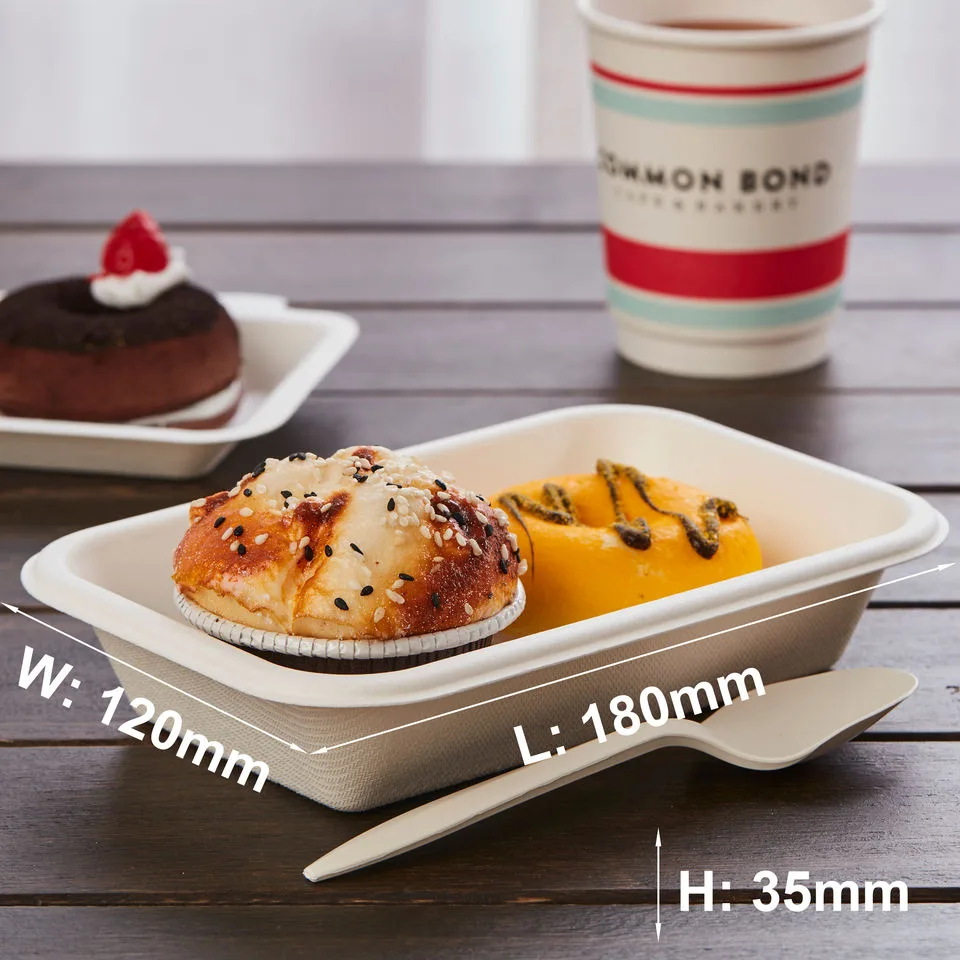
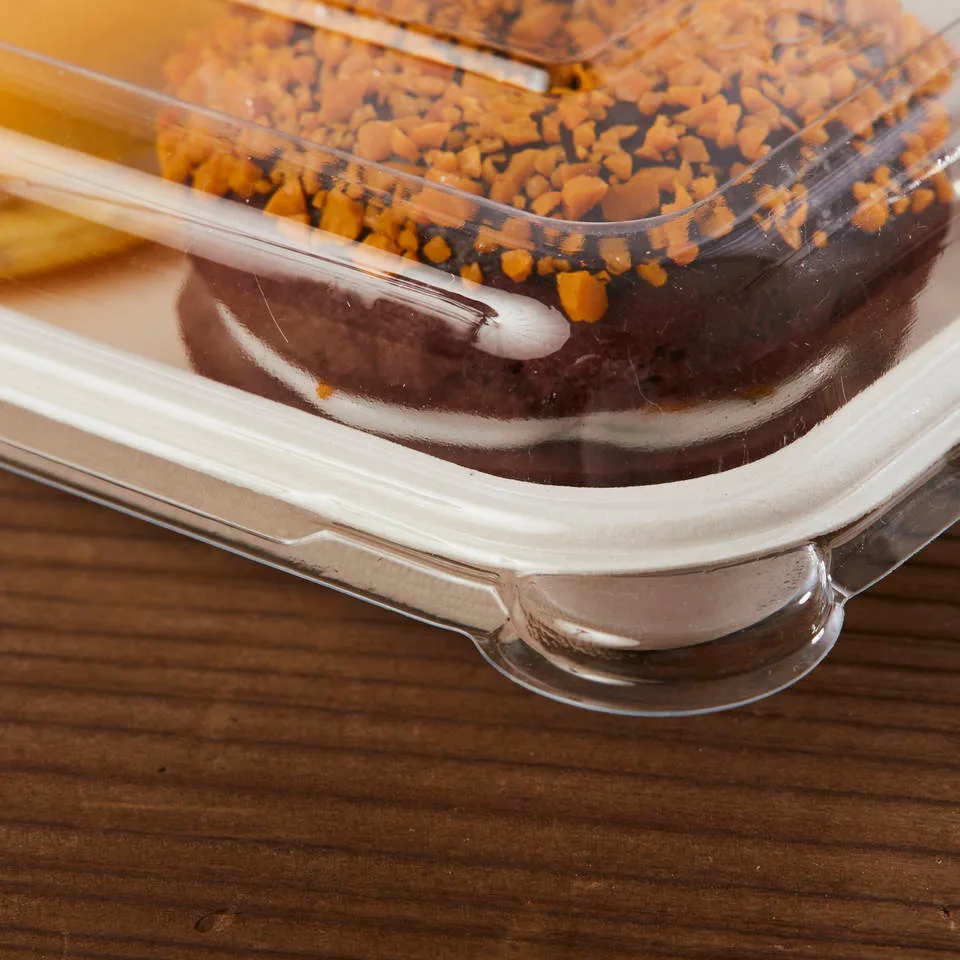
A mid-sized supermarket chain in Germany faced strict enforcement of the EU Single-Use Plastics Directive. Its existing plastic trays for deli and bakery items were flagged as non-compliant. The chain risked fines of €100,000 and product withdrawal if it failed to transition quickly.
Bioleader® Solution:
The retailer adopted bagasse food trays with lids wholesale, fully certified under EN13432. These trays, made from sugarcane pulp, provided the same durability and leak resistance as plastic but with compostability guarantees.
|
|
Result:
Compliance achieved without disruption
Avoided six-figure penalties
Sales in the deli section rose by 10% due to positive consumer feedback
Brand image strengthened, with eco-labeling featured in local advertising
Case 2 – Asian Retail Chain with Bioleader® Kraft Salad Bowls
Customer Pain Point:
A leading Asian supermarket chain faced consumer backlash on social media. Shoppers criticized the use of plastic salad containers, calling them “outdated” and “unsustainable.” Negative sentiment was beginning to impact sales of ready-to-eat meals.
Bioleader® Solution:
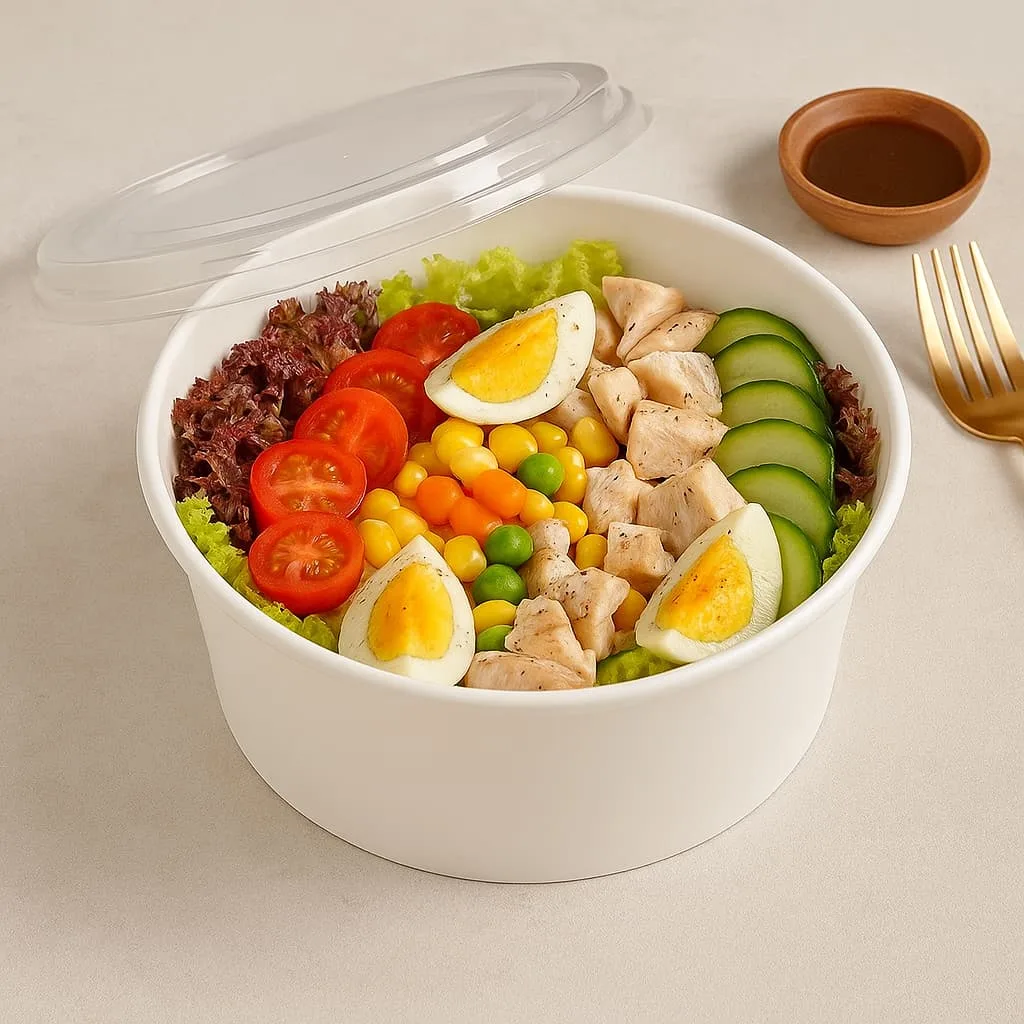
The chain introduced kraft paper salad bowls manufacturer products with PLA lids. These bowls were designed to enhance shelf presentation while being fully compostable.
Result:
Sales of ready-to-eat salads increased 12% within three months
Positive reviews on platforms like WeChat and Instagram doubled
Reduced packaging complaints by 70%
Supermarket positioned itself as a sustainability leader in its region
Case 3 – North American Retailer Adopting Bioleader® PLA Cold Cups
Customer Pain Point:
A U.S. retailer with in-store cafés faced state-level plastic restrictions. Plastic cold cups for juices and smoothies were no longer permitted. The company needed certified compostable alternatives to continue beverage service without fines.
Bioleader® Solution:
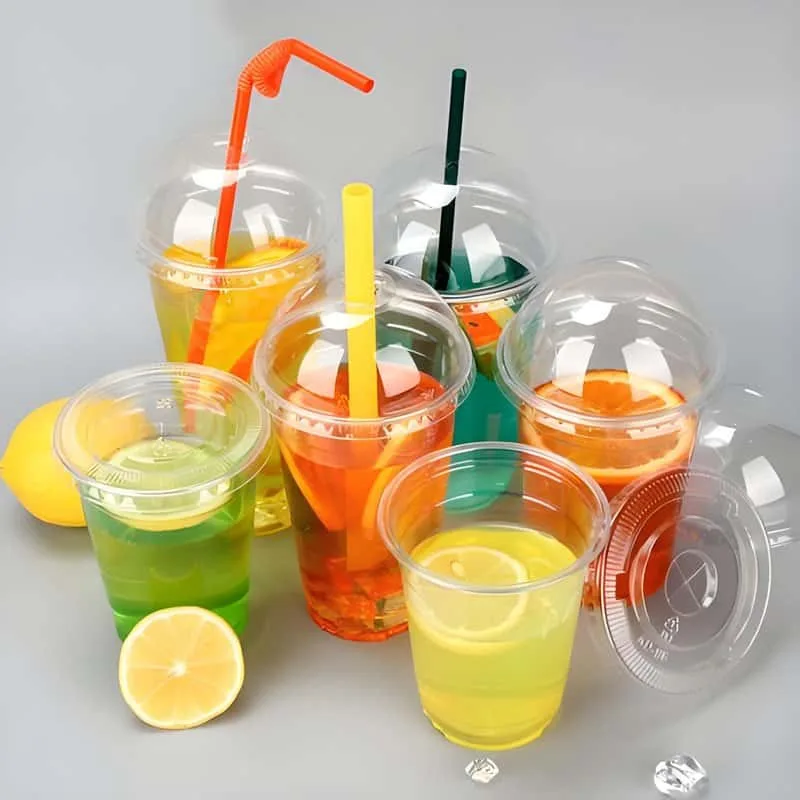
The retailer switched to bulk PLA cold cups supplied by Bioleader®. These transparent cups met ASTM D6400 and BPI certification requirements.
Result:
Compliance secured across multiple states
Smooth transition with no service interruptions
Café beverage sales increased by 8% due to eco-branding
ROI achieved in under 9 months thanks to reduced regulatory costs
📊 Table 3: Case Study ROI and Brand Impact
| Metric | Plastic (Before) | Compostables (After Bioleader®) |
|---|---|---|
| Compliance Risk | High | None |
| Penalty Exposure | €100k / multiple fines | Zero |
| Customer Loyalty | Neutral | +10–12% |
| Sales Growth | Flat | +8–12% |
| Social Media Mentions | Negative | Positive (2x) |
| ROI Timeline | Negative | 6–12 months |
ROI and Beyond – Full Value of Compostable Packaging
ROI Calculation Models for Retailers
ROI is not only about unit cost. For supermarkets, it encompasses incremental revenue, avoided fines, reduced logistics expenses, and improved customer loyalty.
Formula:
ROI = (Incremental Revenue – Extra Cost) ÷ Extra Cost × 100%
For example, a supermarket replacing 10,000 plastic trays with bagasse alternatives spends an extra $200. However, if sales rise by $500 and compliance savings equal $300, the net benefit is $600.
ROI = (600 – 200) ÷ 200 × 100% = 200% positive return.
ROI Timeline for Retail Chains
📊 Table 4: ROI Timeline for Compostable Packaging
| Timeline | Key Drivers | ROI Outcome |
|---|---|---|
| 3 Months | Avoided fines, compliance secured | Break-even |
| 6 Months | Sales uplift, improved consumer trust | Positive ROI |
| 12 Months | Long-term loyalty, higher shelf appeal | ROI 150–200% |
Long-Term ESG Value for Investors
Retailers adopting compostable packaging align with ESG metrics demanded by global investors. Asset managers increasingly evaluate sustainability performance, and packaging is a visible, reportable indicator. Compostables improve ESG scores, attracting investment capital and lowering financing costs.
Market Access and Channel Expansion
Certified compostable packaging is now a prerequisite for many premium channels. European organic supermarkets, North American health retailers, and Asian eco-marketplaces refuse uncertified plastics. Compostables such as retail ready compostable carry out containers wholesale open doors to new revenue streams that plastics cannot access.
Bioleader® Company Introduction and Product Solutions
Who We Are – Certified Compostable Packaging Supplier
Bioleader® is a leading biodegradable packaging supplier in China, serving international retailers with certified, export-ready packaging solutions. The company specializes in bagasse, kraft, PLA, and CPLA products designed specifically for supermarket applications.
Core Products for Retail
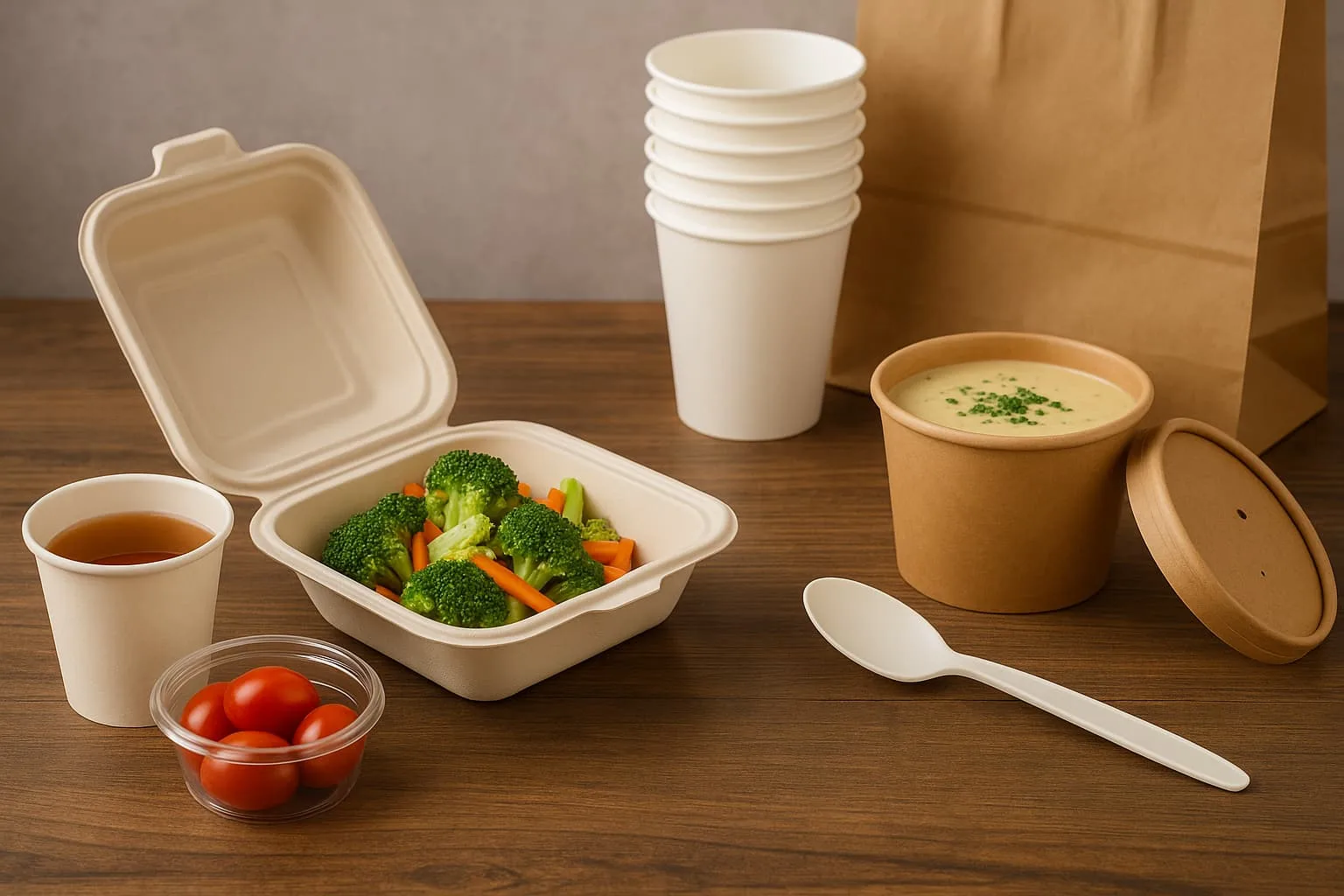
Bagasse food trays with lids wholesale – leak-proof, durable, EN13432 certified
Kraft paper salad bowls manufacturer lines – ideal for ready-to-eat salads, soups, and cold meals
Compostable clamshell containers supplier ranges – versatile for bakery and hot food counters
Bulk PLA cold cups – transparent, ASTM D6400 and BPI certified, perfect for juices and smoothies
CPLA cutlery bulk order – heat-resistant, compostable utensils for deli counters and takeout sections
Why Retailers Choose Bioleader®
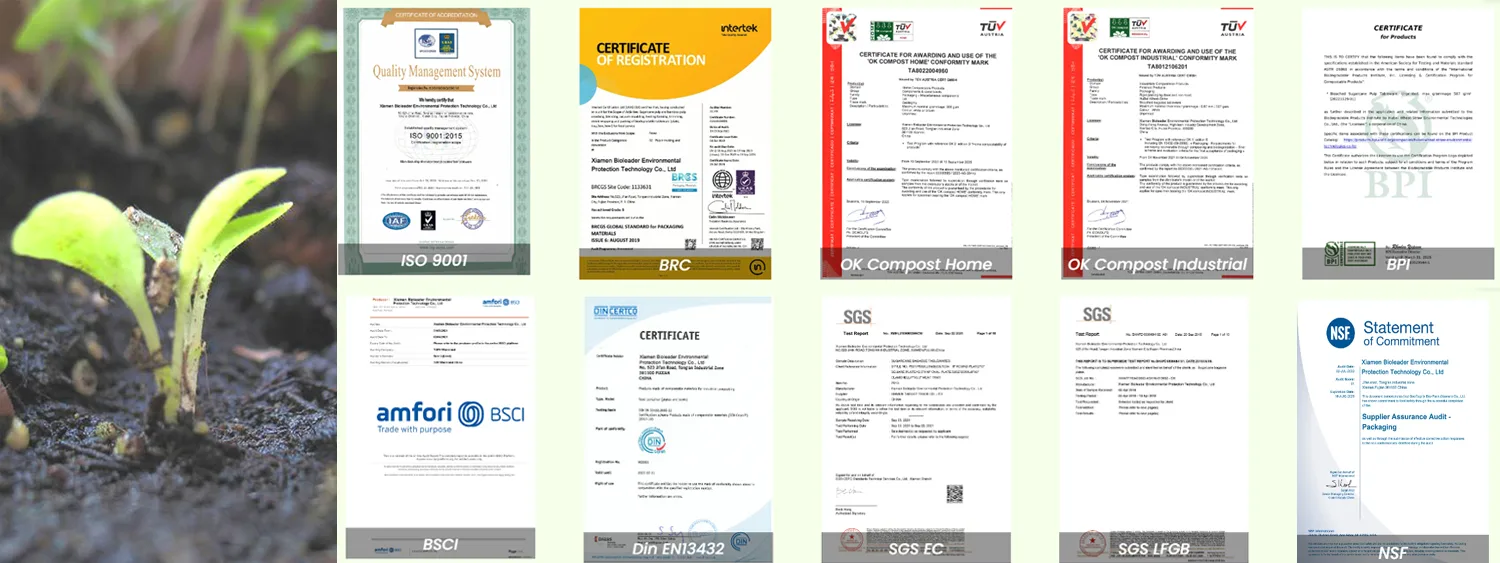
Certifications: EN13432, ASTM D6400, BPI, TÜV Austria
Capacity: Factories with annual production exceeding hundreds of millions of units
Flexibility: OEM/ODM customization for private-label supermarket brands
Global Reach: Export experience across EU, North America, Middle East, Asia-Pacific
Sustainability Story: Packaging designed to meet both compliance and marketing needs
Bioleader® positions itself not just as a supplier but as a one-stop retail packaging solutions partner.
Future Outlook – Compostable Packaging as the Retail Standard
Market Forecasts 2025–2030
The global compostable packaging market is projected to grow at a 12% CAGR, reaching over USD 30 billion by 2030. Supermarkets will remain the largest segment due to their daily high-volume needs.
Shrinking Price Gap
Currently, compostables cost 20–40% more than plastics. By 2030, economies of scale, policy subsidies, and advances in pulp molding are expected to reduce this gap to less than 10%. In some markets, compostables may even undercut plastics due to rising plastic taxes.
Strategic Advantage for Early Movers
Retailers adopting compostables today secure a competitive edge. Early movers gain:
Stronger customer loyalty
ESG-driven investor confidence
Access to premium retail channels
Long-term compliance certainty
In contrast, late adopters risk fines, reputational damage, and lost market opportunities.
Conclusion – Why Supermarkets Must Switch Now
Compostable retail-ready packaging is no longer optional. For supermarkets, it represents compliance insurance, logistics efficiency, consumer loyalty, ESG value, and market expansion.
With Bioleader® as a trusted partner—offering bagasse trays, kraft bowls, PLA cups, and CPLA cutlery—retailers gain certified, export-ready solutions that maximize ROI and deliver long-term competitive advantage.
FAQ
Q1: What is the most cost-effective compostable packaging for supermarkets?
Bagasse trays and kraft salad bowls are cost-efficient choices, balancing unit cost with compliance, shelf appeal, and consumer loyalty.
Q2: How do bagasse trays compare to plastic in cost and performance?
Bagasse trays cost slightly more per unit but eliminate compliance risks, reduce waste costs, and improve sales through eco-branding.
Q3: Are kraft paper salad bowls with PLA lids recyclable or compostable?
They are industrially compostable and certified under EN13432 and ASTM D6400. The PLA lids provide strength while remaining compostable.
Q4: What certifications do supermarkets need for eco packaging suppliers?
Key certifications include EN13432, ASTM D6400, BPI, and TÜV Austria. These ensure compliance and smooth customs clearance.
Q5: How can retailers lower costs when adopting compostable packaging?
Strategies include bulk procurement, SKU rationalization, container load optimization, and partnering with certified suppliers like Bioleader®.
References
European Commission — Single-Use Plastics Directive: Policy Overview, European Commission, 2021.
CEN (European Committee for Standardization) — EN 13432: Requirements for Packaging Recoverable through Composting and Biodegradation, CEN, latest edition.
ASTM International — ASTM D6400: Standard Specification for Labeling of Plastics Designed to be Aerobically Composted in Municipal or Industrial Facilities, ASTM, latest edition.
BPI (Biodegradable Products Institute) — Compostability Certification Program Overview, BPI, 2024.
TÜV Austria — OK compost INDUSTRIAL & HOME: Certification Scheme Guide, TÜV Austria, 2024.
Government of Canada — Single-Use Plastics Prohibition Regulations: Guidance Document, Environment and Climate Change Canada, 2023.
State of California — SB54: Plastic Pollution Prevention and Packaging Producer Responsibility Act, State of California, 2022.
OECD — Global Plastics Outlook: Economic Drivers, Environmental Impacts and Policy Options, OECD Publishing, 2022.
UNEP — Single-Use Plastics: A Roadmap for Sustainability, United Nations Environment Programme, Updated 2023.
NielsenIQ — Sustainability & Willingness to Pay: Consumer Insights Report, NielsenIQ, 2023.
Retail Ready Compostable Packaging: Strategic Insights for Supermarkets in 2025
How to Decide: Retail packaging choices depend on food type, shelf display, and disposal infrastructure. Compostables such as bagasse trays and kraft salad bowls work best for ready meals, salads, and bakery items, while PLA cold cups and CPLA cutlery perform well in beverage and deli counters.
Why It Matters: Plastic bans and EPR regulations across the EU, North America, and Asia-Pacific mean supermarkets face rising compliance costs if they stay with plastics. Verified EN13432, ASTM D6400, and BPI certified compostable packaging eliminates legal risks and builds consumer trust in eco branding.
Key Options: Compostable supermarket packaging includes bagasse food trays with lids wholesale, kraft paper salad bowls manufacturer solutions, compostable clamshell containers supplier lines, bulk PLA cold cups, and CPLA cutlery bulk order. Each addresses a specific retail category with compostability and strong shelf appeal.
Buyer Considerations: Retail procurement teams should check MOQ flexibility, container loading efficiency, and supplier export experience. Ask for certifications, evaluate private-label customization, and ensure suppliers like Bioleader® can provide scalable volumes with stable lead times.
Future Outlook: By 2030, compostables are expected to reach near price parity with plastics, driven by economies of scale and policy incentives. Early-adopting supermarkets will not only meet regulations but also win brand loyalty, investor confidence, and long-term market access through sustainable packaging adoption.