Single-use beverage packaging has become one of the most debated topics in the foodservice and hospitality industries. Every year, billions of cold drink cups are consumed worldwide in coffee shops, juice bars, quick-service restaurants, festivals, and airlines. For decades, PET plastic cups have been the go-to choice because of their durability, clarity, and low cost. But with growing concern about climate change, plastic pollution, and stricter global regulations, businesses are looking for alternatives.
This is where PLA cups—made from renewable plants and fully compostable under industrial conditions—are stepping into the spotlight. As 2025 unfolds, the question is no longer “What are PLA cups?” but rather: “Are PLA cups better than PET plastic cups for long-term business strategy, compliance, and brand reputation?”
This article provides a comprehensive, side-by-side comparison of PLA cups vs PET plastic cups, addressing practical buyer concerns such as food safety, compostability, market trends, and cost. Whether you are sourcing PLA cups wholesale, considering PLA cold cups with lids for your juice shop, or evaluating suppliers for OEM PLA logo cups, this guide will help you make the right decision.
Compostable PLA Cold Cups and Their Uses
What Is a Compostable PLA Cold Cup?
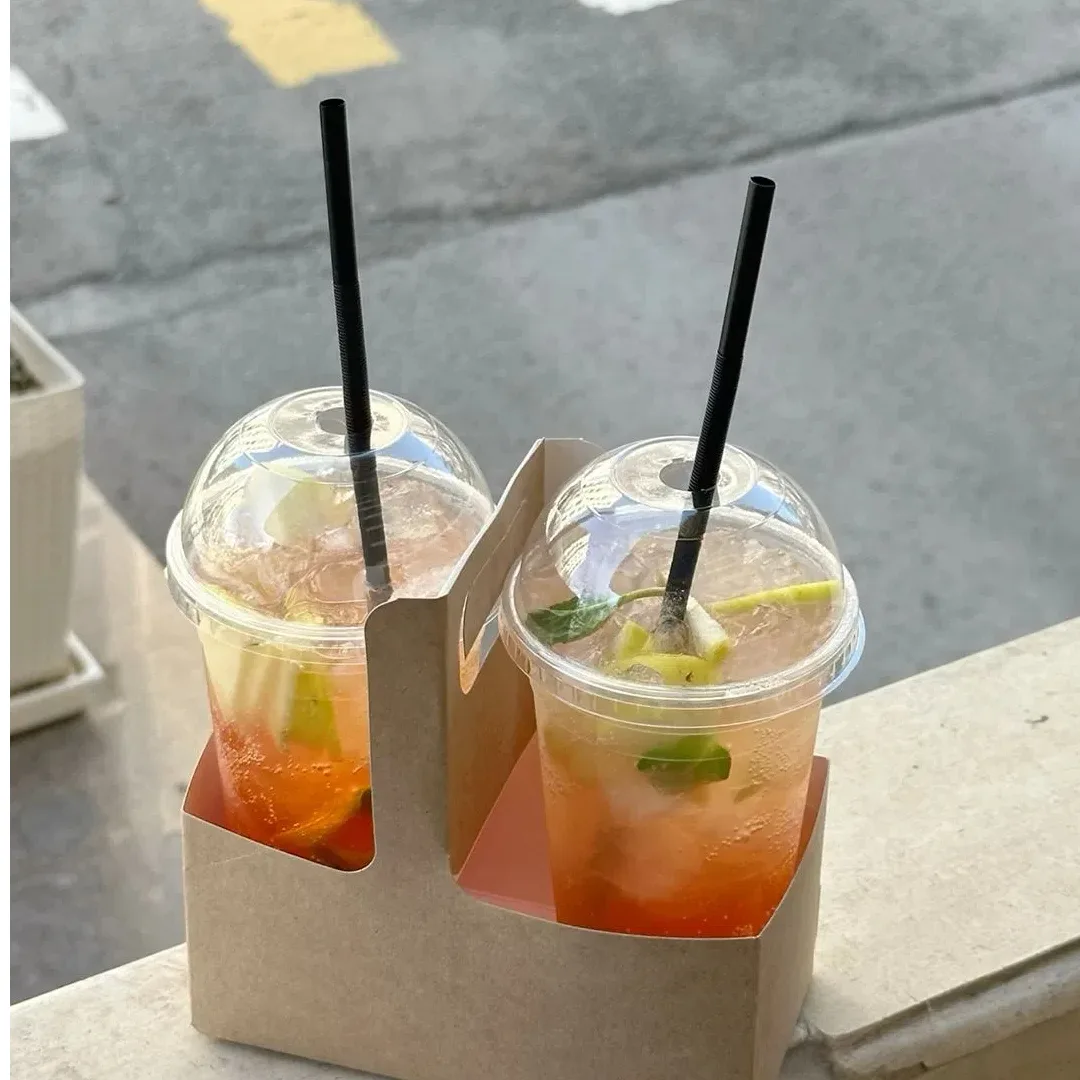
A compostable PLA cold cup is a transparent drinking cup made from polylactic acid (PLA), a biopolymer derived from renewable resources such as corn starch, sugarcane, or cassava. Unlike conventional plastics that come from petroleum, PLA is a plant-based material that can break down into water, carbon dioxide, and biomass under industrial composting conditions within 90–180 days.
These cups look and feel almost identical to PET plastic cups. They have a high-clarity finish, making them ideal for showcasing smoothies, iced lattes, bubble tea, cocktails, and fruit juices. The key difference is environmental performance: PLA compostable clear cups for cold are certified to international standards like EN13432 and ASTM D6400, making them a future-proof choice for businesses that want to comply with upcoming plastic bans.
What Are Cold Cups and What Are They Used For?
“Cold cups” refers to beverage cups specifically designed for chilled drinks. They are not heat-resistant and are unsuitable for hot coffee or tea, but they excel in serving:
Iced coffee and iced tea in cafés
Fresh juices and smoothies in juice bars
Bubble tea and milkshakes in beverage chains
Beer, cocktails, and soft drinks at festivals and events
Cold water or soda on airlines and in catering services
Traditionally, PET cold cups have dominated this space because of their low cost and excellent clarity. But as more regions ban or limit petroleum-based plastics, PLA cold cups are rapidly becoming the standard for businesses that need both performance and eco-compliance.
What is the difference between PLA and PET plastic cups?
What Are PLA Cups and PET Plastic Cups?
PLA cups are compostable beverage containers made from plant starch. They are BPA-free, PFAS-free, and compliant with global food-contact safety regulations. They are designed primarily for cold drinks and are widely available in sizes ranging from 8oz PLA smoothie cups to 32oz PLA iced drink cups. Many suppliers also offer PLA cups with dome lids or flat lids, making them versatile for different beverage categories.
PET cups, on the other hand, are made from polyethylene terephthalate, a petroleum-based plastic. PET has been widely used for decades in bottles, packaging, and cold cups due to its strength, clarity, and cost-effectiveness. PET is technically recyclable, but in practice, less than 30% of PET waste is actually recycled because of contamination, lack of collection infrastructure, and low economic incentives.
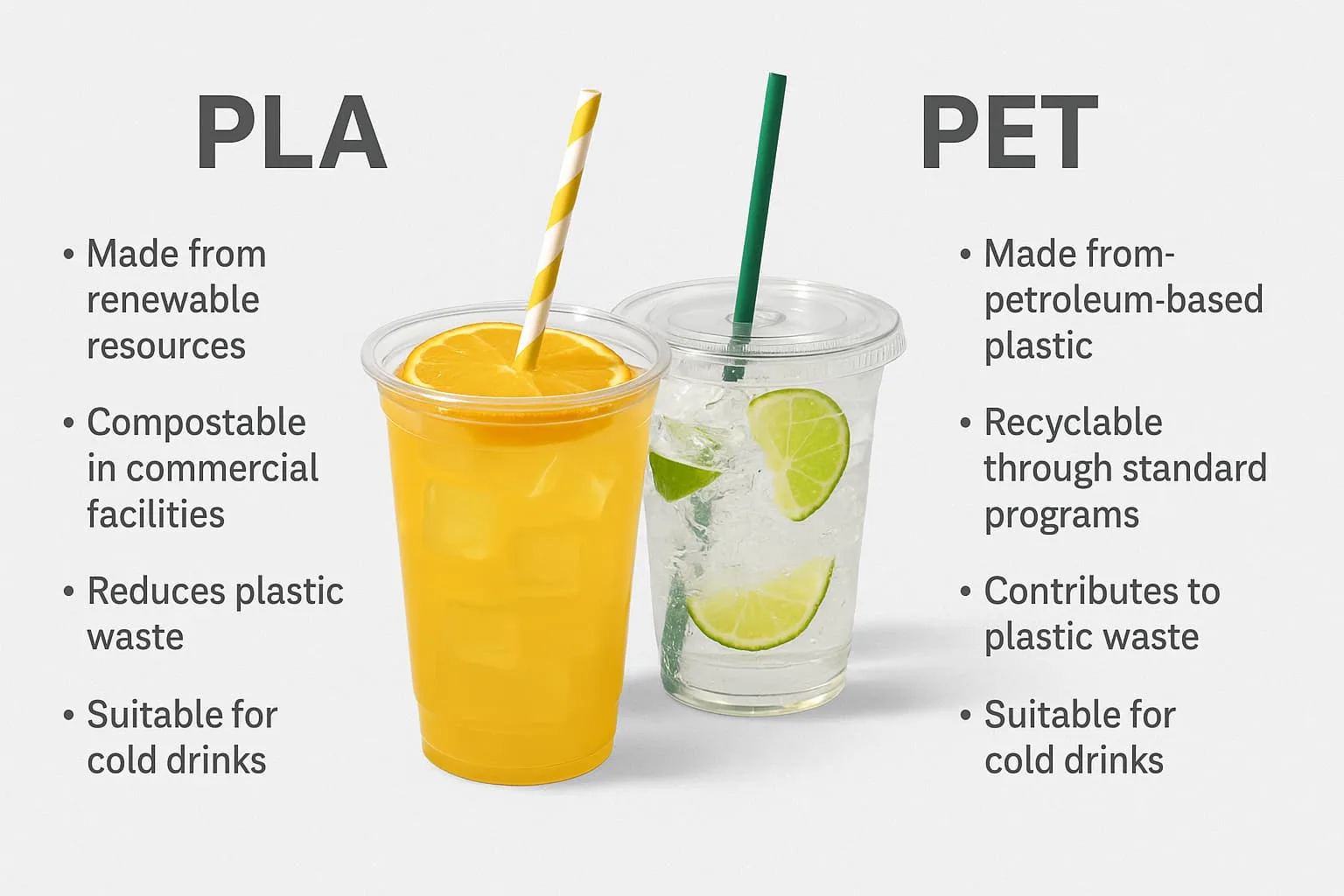
PLA vs PET Cups: Detailed Comparison for Buyers
| Feature / Attribute | PLA Cups (Plant-Based) | PET Cups (Petroleum-Based) | Advantage |
|---|---|---|---|
| Raw Material | Renewable plants (corn, sugarcane) | Fossil fuels | PLA |
| End-of-Life Option | Compostable (EN13432, ASTM D6400) | Recyclable (low rates) | PLA |
| Food Safety | BPA-free, PFAS-free, FDA and EFSA approved | Safe but potential PFAS & microplastic concerns | PLA |
| Heat Resistance | Up to 55–60°C (cold drinks only) | Up to 90°C | PET |
| Transparency | High clarity, slightly softer feel | Very high clarity, rigid | Tie |
| Carbon Footprint (LCA) | Up to 65% lower GHG emissions vs PET | Higher energy demand | PLA |
| Regulation Fit in 2025 | Accepted in plastic ban frameworks | Increasing restrictions | PLA |
| Brand Value | Premium eco-friendly positioning | Cost-efficient but less ESG value | Depends |
This comparison shows that while PET cups remain cheaper and more heat-resistant, compostable polylactic acid PLA cups outperform in almost every other category that matters in 2025—sustainability, compliance, and consumer perception.
Life Cycle Assessment (LCA) Insights: PLA vs PET Cups
The difference between PLA and PET goes beyond their origin. A Life Cycle Assessment (LCA) reveals critical insights into carbon emissions and overall environmental performance:
PLA production emits significantly fewer greenhouse gases compared to PET. On average, PLA cups have up to 65% lower carbon emissions across their life cycle.
PET production relies heavily on fossil fuels, contributing to high energy use and long-term carbon impact.
PLA cups can be composted industrially, returning to the soil as organic matter, while PET cups often end up in landfills or incineration.
For businesses looking to improve their ESG (Environmental, Social, and Governance) score, switching from PET to PLA cups can be a measurable step in sustainability reporting.
Safety and Food Contact of PLA Cups
Is PLA Safe for Drinking?
Yes. PLA cups are food-safe and approved by international authorities such as the U.S. FDA and the European Food Safety Authority (EFSA). They are free from toxic chemicals like BPA, phthalates, and PFAS, making them safe for everyday use in cafés, restaurants, and catering services.
Is PLA Food Safe for Long-Term Use?
Bio degradable PLA plastic cups are safe for long-term storage and drinking applications, as long as they are used for cold beverages. They are not designed for hot drinks above 55–60°C, as exposure to high heat may cause warping or softening.
By contrast, while PET cups are safe for cold drinks, studies have raised concerns about microplastics and chemical migration over time, especially when PET is reused or exposed to UV light. For businesses aiming to assure customers of the highest food safety standards, PLA provides a cleaner, plant-based alternative.
End-of-Life: How to Dispose of PLA Cups vs PET Cups
How to Dispose of Old PLA Cups?
Industrial composting: PLA cups break down in 90–180 days under controlled composting conditions.
Home composting: Not effective, as PLA requires high heat and specific microbial activity.
Contamination risk: PLA should not be mixed into PET recycling streams, as it can disrupt recycling systems.
PET Cups Disposal Challenges
PET is recyclable in theory, but real-world recycling rates are low (<30%).
Contamination with food and beverage residues often makes PET cups non-recyclable.
Many PET cups end up in landfills or incinerators, generating long-term waste and emissions.
For businesses committed to zero-waste strategies, PLA offers a clearer pathway toward closed-loop sustainability.
Consumer Perception and Market Trends in 2025
Consumer behavior is shifting rapidly:
Surveys show that 70% of Gen Z and Millennials prefer to buy from brands that use compostable or biodegradable packaging.
Customers view “compostable” labels as more trustworthy than “recyclable,” since recycling systems are often inconsistent.
Research indicates that consumers are willing to pay 5–10% more for products served in sustainable packaging such as PLA cold cups with lids.
For businesses, this means that adopting PLA cups is not only about compliance—it is also about winning customer loyalty and premium brand positioning.
Regulatory Compliance for PLA and PET Cups in 2025
As plastic bans spread globally, compliance becomes a critical issue:
European Union SUPD (Single-Use Plastics Directive): PET cups are under tighter scrutiny, while PLA cups with compostable certification remain acceptable.
United States: Cities such as San Francisco, Seattle, and New York are mandating compostable foodservice packaging in many contexts.
Canada: Nationwide bans on problematic plastics are pushing businesses toward certified compostable options.
This trend makes PLA cups a safer long-term investment for brands that operate internationally.
Business Considerations for Buyers Choosing Between PLA and PET Cups
When choosing between PET and PLA cups, buyers should consider:
Cost differences: PET remains cheaper upfront, but PLA cups add long-term brand and compliance value.
Supply chain stability: Leading suppliers offer PLA cups wholesale in bulk with stable capacity and fast delivery.
Customization options: Many factories provide customized PLA logo cups OEM/ODM, allowing cafés and juice bars to enhance branding.
Industry applications:
Coffee chains: use PLA-lined paper cups for hot drinks, biodegradable PLA cold drink cups for iced coffee.
Juice and smoothie bars: adopt PLA smoothie cups with dome lids.
Airlines and catering: choose lightweight compostable PLA cups for cold beverages.
Events and festivals: PLA cups ensure compliance with green event standards.
Case Studies: Businesses Switching from PET to PLA Cups
Coffee Chains
A major U.S. coffee chain phased out PET cold cups and introduced compostable PLA clear cups. The move improved its ESG reporting and customer perception.
Juice & Bubble Tea Brands
Asian beverage chains adopted PLA smoothie cups wholesale with custom lids, gaining competitive advantage in eco-conscious markets.
European Festivals
Several large music festivals in Germany and France switched to 100% PLA cold cups, reducing single-use plastic waste by thousands of tons annually.
These cases demonstrate how switching to PLA can enhance both brand image and operational sustainability.
Conclusion
In the debate of PLA cups vs PET plastic cups, the choice depends on business priorities:
PET cups may still suit businesses focused purely on short-term cost savings.
PLA cups, however, are the smarter choice for companies that value long-term compliance, sustainability, and customer trust.
As 2025 brings stricter regulations and more eco-conscious consumers, PLA cold cups, compostable clear cups, and customized PLA logo cups are not just a trend—they are becoming the new standard.
For buyers, the time to switch is now. Partnering with a reliable PLA cups supplier ensures your business is future-proof, compliant, and ready to thrive in the sustainable packaging era.
FAQ
Are PLA cups safe for cold drinks?
Yes. PLA cups are fully certified as food-safe by authorities such as the FDA and EFSA. They are BPA-free, PFAS-free, and contain no harmful chemicals. Businesses worldwide use them for iced coffee, smoothies, bubble tea, and juices because they combine safety with a crystal-clear appearance. This makes them an excellent alternative to petroleum-based plastic cups.
Can PLA cups hold hot beverages?
No. PLA cups are designed for cold drinks only and will soften at around 55–60°C when exposed to hot liquids. For hot coffee, tea, or cocoa, the recommended option is PLA-lined paper cups, which use compostable PLA as an inner coating. This gives businesses a safe solution for both hot and cold beverages while staying sustainable.
What is the difference between PLA and PET cups?
PLA cups are made from renewable plants and are compostable in industrial facilities, while PET cups are petroleum-based and recyclable but with low recovery rates. PLA reduces greenhouse gas emissions by up to 65% compared to PET over its life cycle. PET is cheaper and more heat-resistant, but PLA is more future-proof for brands that want compliance with 2025 plastic bans and better sustainability credentials.
How long does it take for PLA cups to decompose?
Under industrial composting conditions with high heat and controlled microbes, PLA cups break down completely in 90–180 days. In landfills or natural environments, the process is slower due to a lack of proper conditions. For businesses, the best option is to work with waste management partners that handle certified compostable packaging to ensure a true circular lifecycle.
Can PLA cups be customized with logos for branding?
Yes. Many suppliers offer OEM and ODM customization for PLA cups, allowing logos, brand colors, and sustainability messages to be printed directly. Juice bars, cafés, and event organizers often order customized PLA logo cups to build brand identity while showing eco-conscious values. This transforms a disposable cup into a powerful marketing and sustainability tool.
References
European Bioplastics – Market Data Report 2024, European Bioplastics Association
U.S. Food and Drug Administration – Food Contact Materials Guidelines, FDA
European Food Safety Authority – Bioplastics and Food Safety Review, EFSA
ASTM International – Compostability Standard ASTM D6400
TÜV Austria – OK Compost Certification Framework
Ellen MacArthur Foundation – The New Plastics Economy Report
United Nations Environment Programme – Single-Use Plastics Policy Roadmap
Biodegradable Products Institute – BPI Certification Standards
Journal of Polymers and the Environment – PLA Degradation Study
Packaging Europe Magazine – Trends in Sustainable Packaging 2025
Why Choose PLA Cups Over PET Plastic Cups in 2025?
How do PLA cups help businesses adapt? By switching from PET to PLA, companies align with global plastic bans, reduce carbon emissions, and showcase eco-friendly branding that resonates with modern consumers.
Why is PLA considered safer and more future-proof? PLA cups are made from renewable plants, certified compostable, and free from BPA or PFAS, while PET cups face increasing regulatory restrictions and consumer distrust due to recycling inefficiencies.
What are the main options available? Buyers can source PLA cold cups with lids for juices and smoothies, PLA smoothie cups bulk for chains, and customized PLA logo cups OEM/ODM to strengthen brand identity while staying compliant.
Key considerations before purchasing: PET may remain cheaper upfront, but PLA delivers stronger ESG performance, regulatory compliance, and customer loyalty. Evaluating suppliers with certifications like EN13432 or ASTM D6400 is essential.
Market trend outlook: In 2025 and beyond, compostable PLA cups are expected to dominate sustainable packaging strategies. Early adopters gain a competitive edge, reduced compliance risk, and enhanced reputation as eco-leaders.