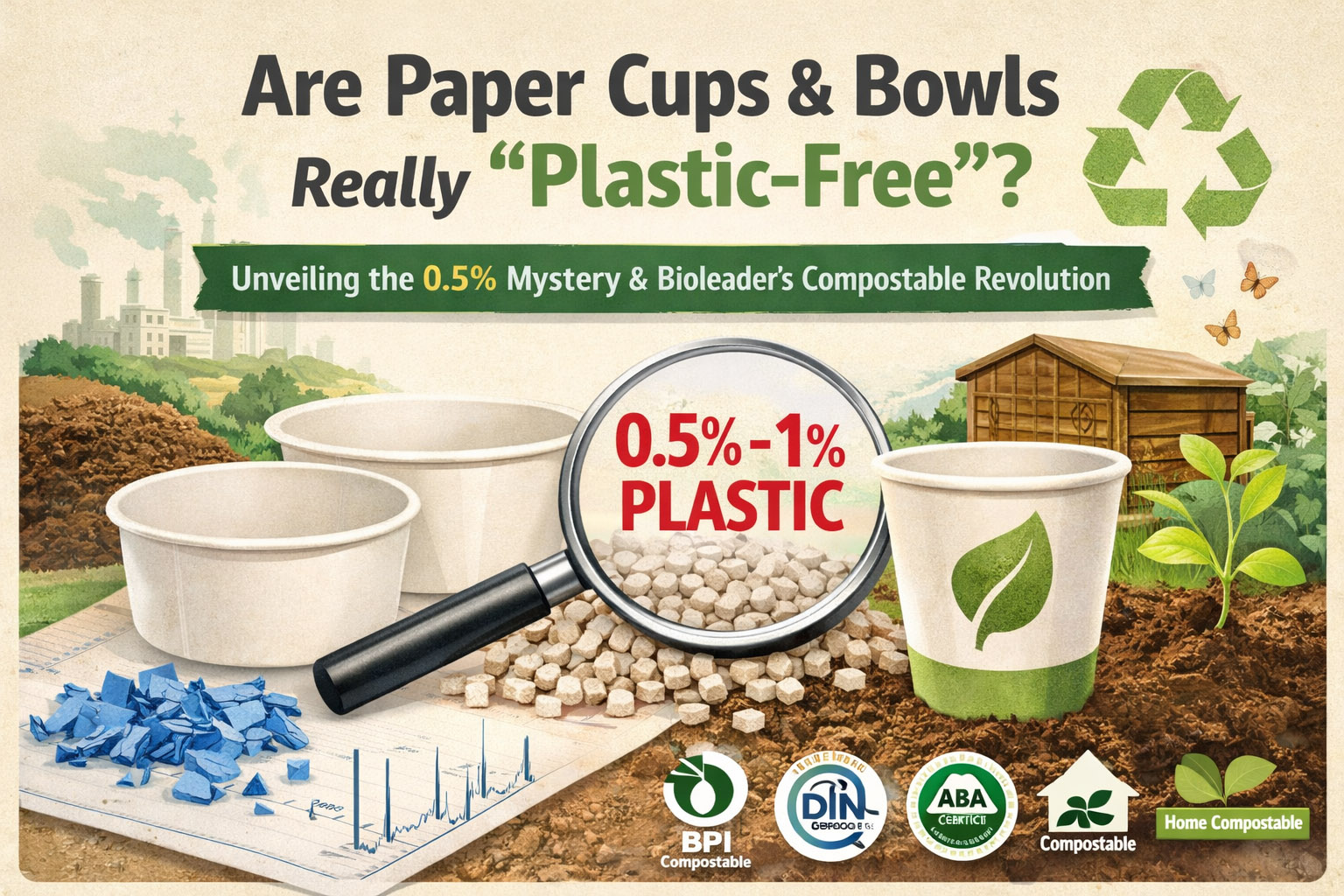
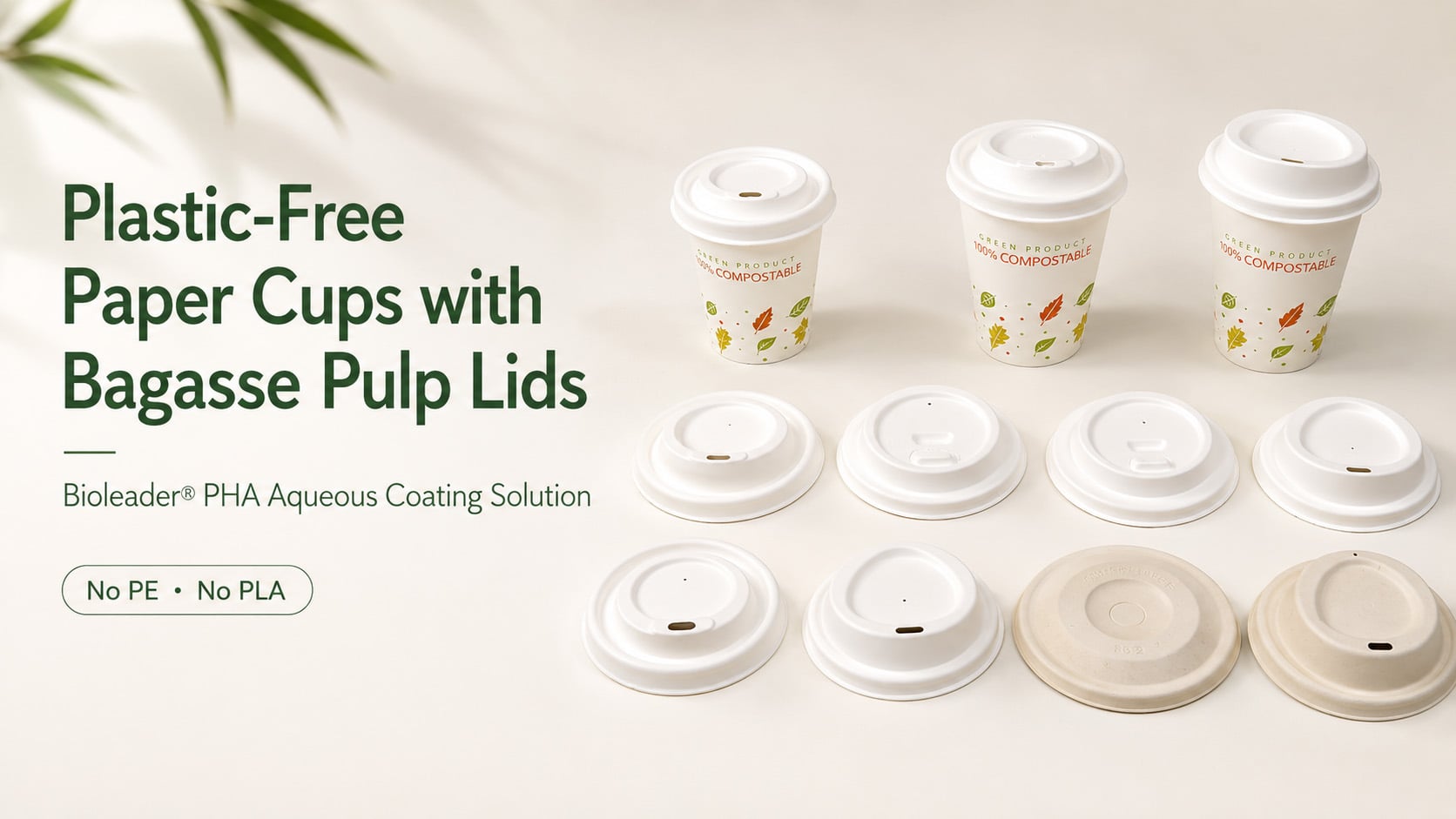
- Best for: importers, distributors, sustainability managers, packaging engineers and foodservice procurement teams comparing coated paper bowls before bulk ordering.
- Main decision: choose the coating system that fits the real food application, not only the preferred sustainability claim.
- Buyer action: request samples, run hot-water and oil tests, verify documentation scope, and confirm the supplier can keep coating quality consistent in production.

Paper bowl coating materials are one of the most important decisions in paper food packaging because the coating is the barrier between wet, oily or hot food and the paperboard structure. A bowl can have the right size, color and shape, but if the coating is mismatched to the food, buyers may face leakage, softening, lid-fit problems, odor complaints or failed sustainability expectations.
For B2B buyers, the most common coating choices include PE, PP, PLA, aqueous and newer bio-based or specialty coatings such as PHA. Each material has a different balance of heat resistance, oil resistance, moisture protection, compostability route, price level, supply availability and regulatory perception. Bioleader® recommends evaluating coatings as part of a complete paper bowl system: paperboard, coating, rim, lid, food type, filling temperature, holding time and packing method.
What coating does in a paper bowl
The coating layer helps paper bowls resist water, oil, sauce and food moisture. Without a suitable barrier, liquid can move into the paperboard fibers, causing swelling, softening, leakage or deformation. This is why buyers sourcing paper soup bowls, paper salad bowls or kraft paper bowls should treat coating choice as a functional sourcing decision.
Coating also affects how the bowl behaves with heat, refrigeration, microwave use, oil-rich foods, salad dressings and delivery time. A coating that works for cold salad may not be the best choice for hot soup. A coating promoted for sustainability may still need careful review for the destination market and the buyer’s composting or disposal pathway.
PE, PP, PLA, aqueous and PHA compared
PE coating is widely used because it offers practical water resistance, stable processing and familiar supply. It is often selected for conventional paper bowls and food containers where cost control and reliable barrier performance matter. However, PE may not fit buyers seeking plastic-reduction positioning or compostability claims, so it should be reviewed against local packaging rules and brand requirements.
PP coating can provide stronger heat tolerance in some applications and may be considered for warmer food uses. Buyers should still test the finished bowl, because heat performance depends not only on the coating name but also on paperboard grade, coating weight, sealing quality and bowl design. For hot food buyers, pages such as safest material for takeaway soup bowls and heat and leak tested paper soup bowls can provide additional context.
PLA coating is commonly discussed as a plant-based option and may support compostable packaging goals when the product, certification scope and disposal route are suitable. Buyers should avoid assuming that every PLA-coated bowl is accepted everywhere. Compostability depends on the exact product, certification, local infrastructure and market rules.
Aqueous coating is water-based and often used by buyers looking for a plastic-reduction or plastic-free packaging direction. It may support strong brand positioning, but performance must be checked carefully for the intended food. Bioleader® offers water-based coating paper bowls with lids for buyers who want to review this direction with actual samples rather than only theory.
PHA and other emerging coatings may attract attention because of bio-based or biodegradation narratives, but availability, price, processing stability and documentation scope need careful review. For most buyers, PHA should be evaluated through supplier-specific samples and documents instead of general assumptions.
Paper bowl coating materials comparison table
| Coating material | Typical buyer reason | Best-fit applications | Buyer caution |
|---|---|---|---|
| PE coating | Stable barrier performance and cost control | General takeaway bowls, dry-to-moist foods, many standard paper food containers | May not fit plastic-reduction or compostability requirements in some markets |
| PP coating | Potentially better heat tolerance for warmer foods | Hot meals, soup-adjacent use cases and stronger heat exposure scenarios | Finished-bowl testing is still required because structure and coating weight matter |
| PLA coating | Plant-based positioning and compostability potential | Brands with compostable packaging programs and suitable disposal routes | Certification scope and local composting acceptance must be verified |
| Aqueous coating | Water-based plastic-reduction positioning | Paper bowls where buyers want a more fiber-based packaging story | Oil, heat and long-hold tests should be run with real food conditions |
| PHA or specialty bio-coating | Emerging material story and differentiated sustainability positioning | Innovation programs and buyers with time for sample validation | Availability, cost and documentation may vary by supplier and product line |
Heat, oil and moisture performance
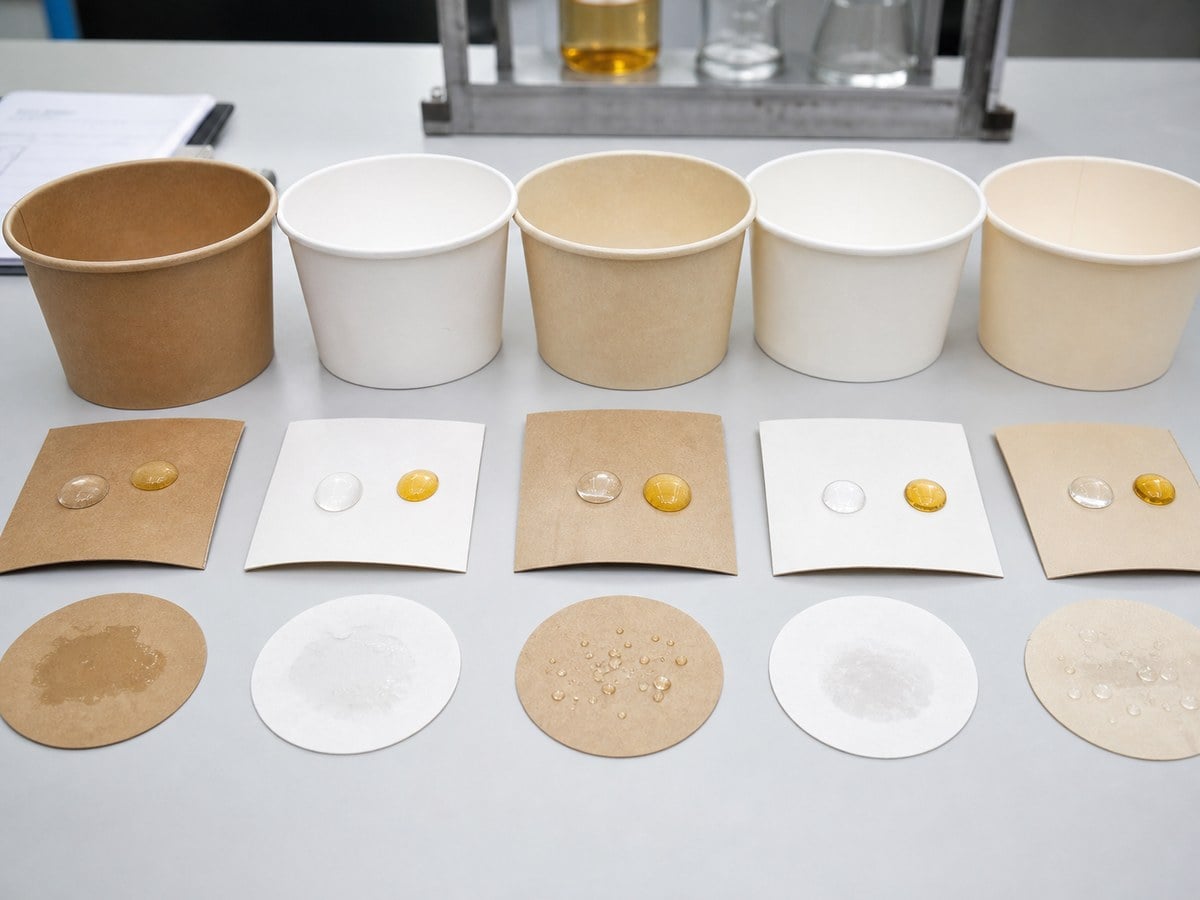
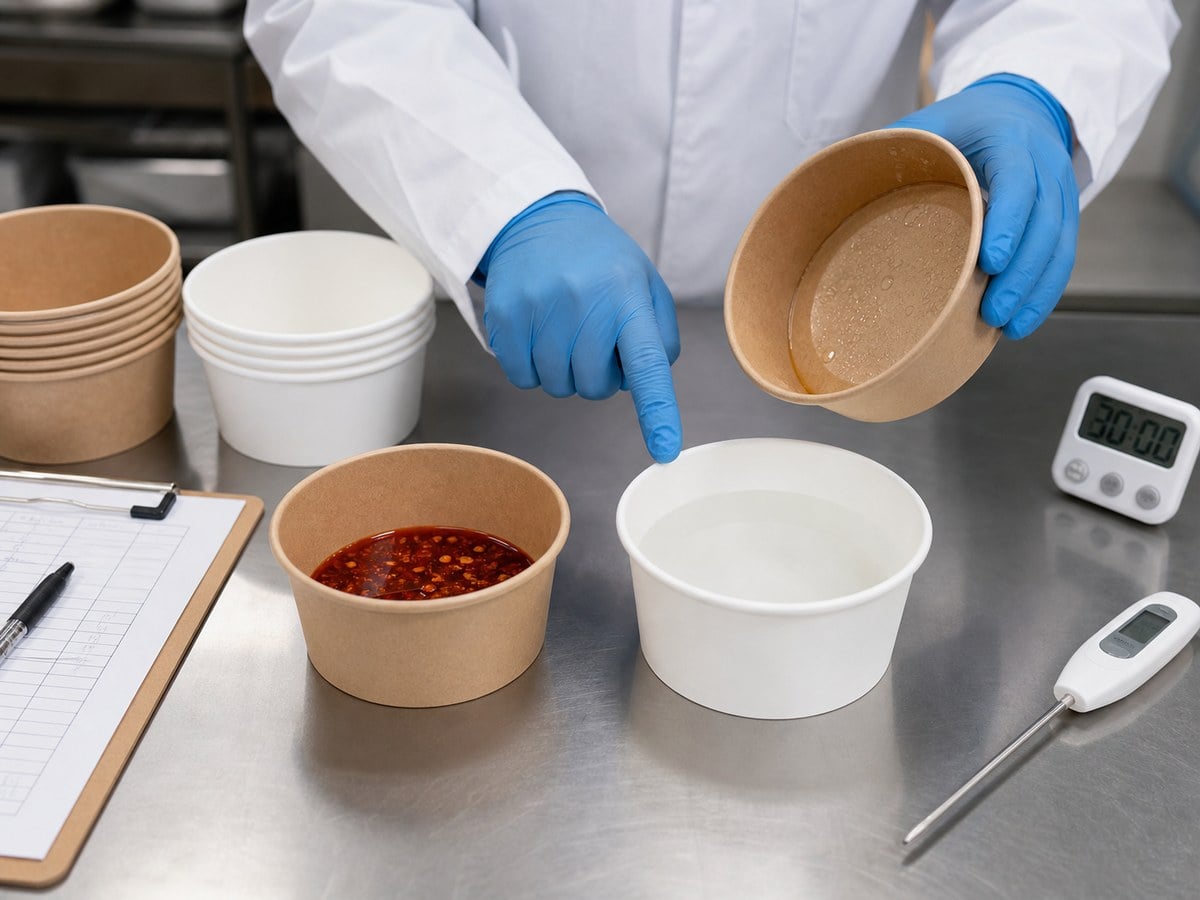
Performance should be checked through simple but practical tests. Hot-water holding tests show whether the paperboard softens or the base loses shape. Oil and red-oil observation tests show whether the coating resists fatty food and colored sauce. Refrigeration or condensation checks help salad and cold-meal buyers understand moisture behavior during storage and delivery.
Buyers comparing soup takeaway packaging should pay special attention to heat, oil and lid interaction. Buyers comparing salad packaging should pay more attention to condensation, dressing, PET lid clarity and bowl presentation. A coating choice that performs well in one scenario can be unsuitable in another.
Manufacturer insight: coating name is not enough
From a manufacturer perspective, coating performance depends on the finished product, not only the material name. Paperboard grade, coating uniformity, forming temperature, rim quality, bottom sealing and carton storage can all affect the result. Bioleader® therefore treats coating selection as part of product engineering and sample approval, not as a single checkbox.
When buyers send food type, filling temperature, target holding time, lid needs and destination market requirements, Bioleader® can help narrow suitable coating options and prepare samples for practical review. This helps avoid the common mistake of choosing a coating based only on a preferred environmental phrase.
Compostability and compliance questions
Compostability and compliance should be handled with precise language. A coating may be bio-based, water-based, compostable under certain conditions or simply designed to reduce plastic content, but these phrases are not interchangeable. Buyers should ask which product is covered, which standard or test report applies, whether printing and lids are included, and whether the destination market recognizes the claim.
For example, a buyer reviewing water-based coating vs PLA vs PE lined paper bowls should separate three questions: regulatory fit, brand positioning and finished-product performance. A material can sound attractive but still fail the buyer’s real food test, budget or disposal pathway.
How buyers should match coating to food use
The safest selection method is to map coating choice to food use. Soup, noodles, curry, chili oil, rice bowls, salad, fruit, deli food and frozen or chilled meals all stress the bowl differently. Buyers should list the food’s temperature, oil level, water content, acidity, holding time, delivery distance and whether the bowl will be lidded or stacked.
After this mapping, compare product families such as customized paper bowls with lids, wholesale kraft paper bowls and food containers or bulk wholesale paper bowls. The goal is to find a coating and structure that match the actual order, not a generic specification.
Sample evaluation checklist for coating approval
| Test | How to run it | Pass signal | Warning signal |
|---|---|---|---|
| Hot-water hold | Fill the bowl with hot water close to service temperature and observe for the target holding time | No base swelling, no sidewall softening and no leakage | Soft base, wet outer wall, deformation or odor |
| Oil or red-oil test | Add oily sauce or red oil and check coating behavior over time | No staining through the wall and no coating separation | Oil marks, leakage points or visible coating weakness |
| Cold moisture test | Use chilled salad or wet ingredients and simulate storage or delivery | Bowl keeps shape and presentation remains clean | Condensation damage, softened rim or poor appearance |
| Lid interaction | Snap on the intended lid after filling and temperature exposure | Stable fit and easy removal without rim damage | Loose lid, deformed rim or hard removal |
| Printing and odor review | Check printed samples after storage and filling tests | No obvious odor, ink transfer or visual inconsistency | Smell, scuffing, color shift or brand presentation problems |
How Bioleader® supports coating selection
Bioleader® supports B2B buyers by reviewing food use, coating direction, lid requirement, custom printing needs, sample tests and export order planning. For buyers comparing paper bowl coating materials, this support helps turn a broad material discussion into a practical specification that can be sampled, tested and quoted.
Buyers can also compare related knowledge such as what paper bowls are made of and waterproof and oil resistance testing of paper bowls to understand how production process and coating performance connect.
Conclusion
Paper bowl coating materials should be selected through food application, sample testing, compliance review and supplier capability. PE, PP, PLA, aqueous and PHA all have potential roles, but no coating should be approved only because it sounds familiar or environmentally attractive. The finished bowl must work for the buyer’s food, delivery channel, market expectation and bulk order plan.
If your team is comparing coated paper bowls for soup, salad, delivery or custom branding, Bioleader® can help review material options, prepare samples and support a clearer path from coating selection to bulk purchasing.
FAQ
What are the most common paper bowl coating materials?
The most common paper bowl coating materials include PE, PP, PLA and aqueous coatings. Some buyers also review PHA or other specialty bio-based coatings. Each option should be compared by heat resistance, oil resistance, moisture barrier, compostability route, price level and finished-product performance.
Is aqueous coating better than PE coating for paper bowls?
Aqueous coating may support plastic-reduction goals, while PE coating is widely used for stable barrier performance and cost control. Neither is automatically better for every buyer. The right choice depends on food type, holding time, market rules, brand positioning and sample test results.
Can PLA coated paper bowls hold hot soup?
Some PLA coated bowls may support warm or hot food under specific conditions, but buyers should not assume suitability without testing. Hot soup can stress the coating, paperboard and rim. Buyers should request samples and test heat, leakage, lid fit and holding time before bulk ordering.
Which coating is best for oily food?
The best coating for oily food depends on the oil level, temperature and holding time. Buyers should run oil or red-oil tests using the real food or sauce. A coating that works for light salad dressing may not be enough for hot chili oil, curry or greasy takeaway meals.
Do coating materials affect compostability claims?
Yes. Compostability claims depend on the coating material, finished product, certification scope and local composting infrastructure. Buyers should verify documents carefully and confirm whether the bowl, coating, ink and lid are covered by the relevant claim or certification.
How should buyers approve paper bowl coating before bulk orders?
Buyers should define the food application, request samples, run hot-water and oil tests, check lid fit, review odor and printing, and verify documentation. A coating should be approved only after the finished bowl performs under realistic service and delivery conditions.