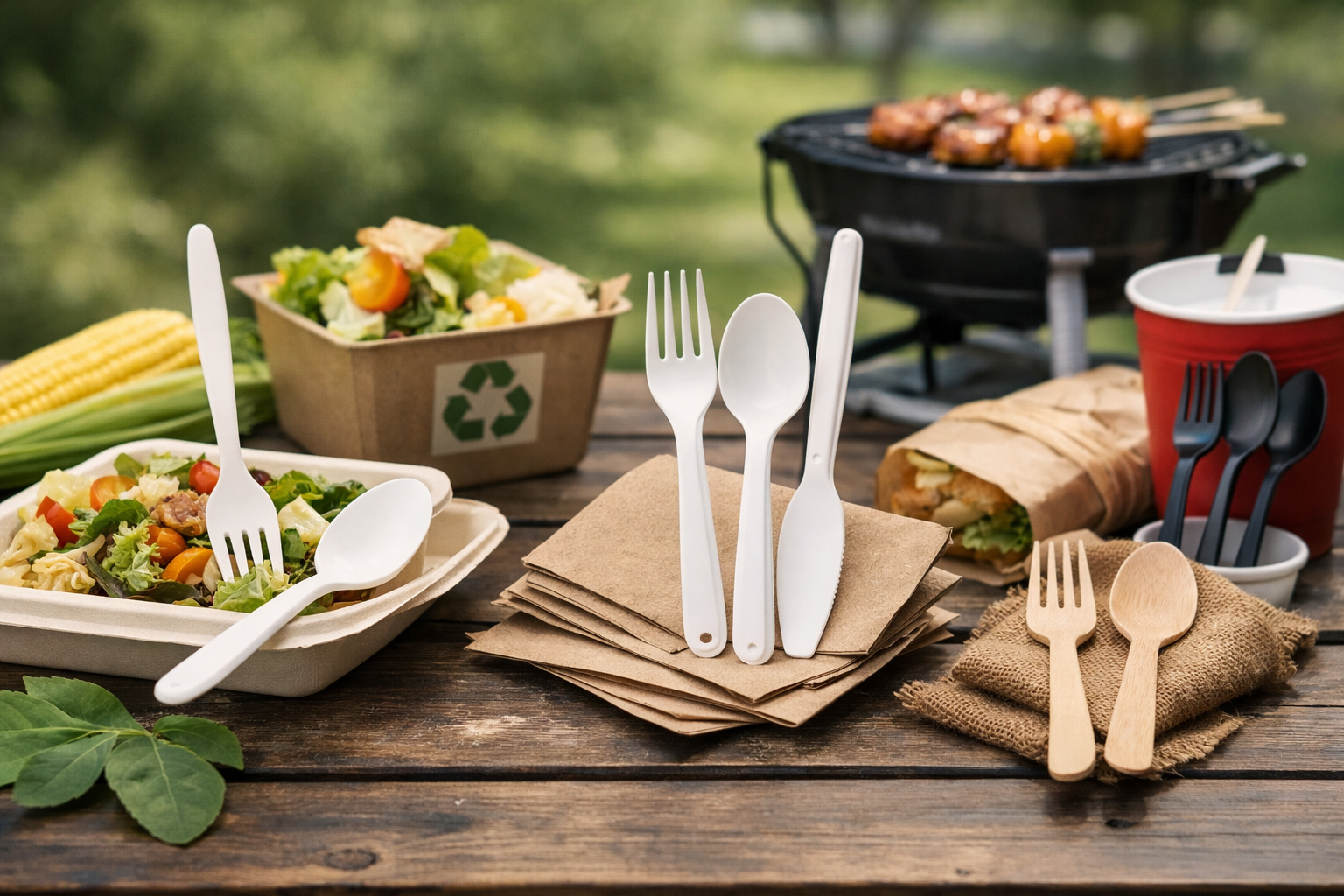
Mexico does not yet enforce a single nationwide plastic ban, but a rapidly expanding network of state-level regulations and national industry agreements is reshaping the packaging landscape. Single-use plastics are increasingly restricted, while compostable, recyclable, and circular-design packaging is actively encouraged. For companies operating in or exporting to Mexico, early compliance through material transition and system-ready packaging design is becoming a competitive necessity rather than a regulatory afterthought.
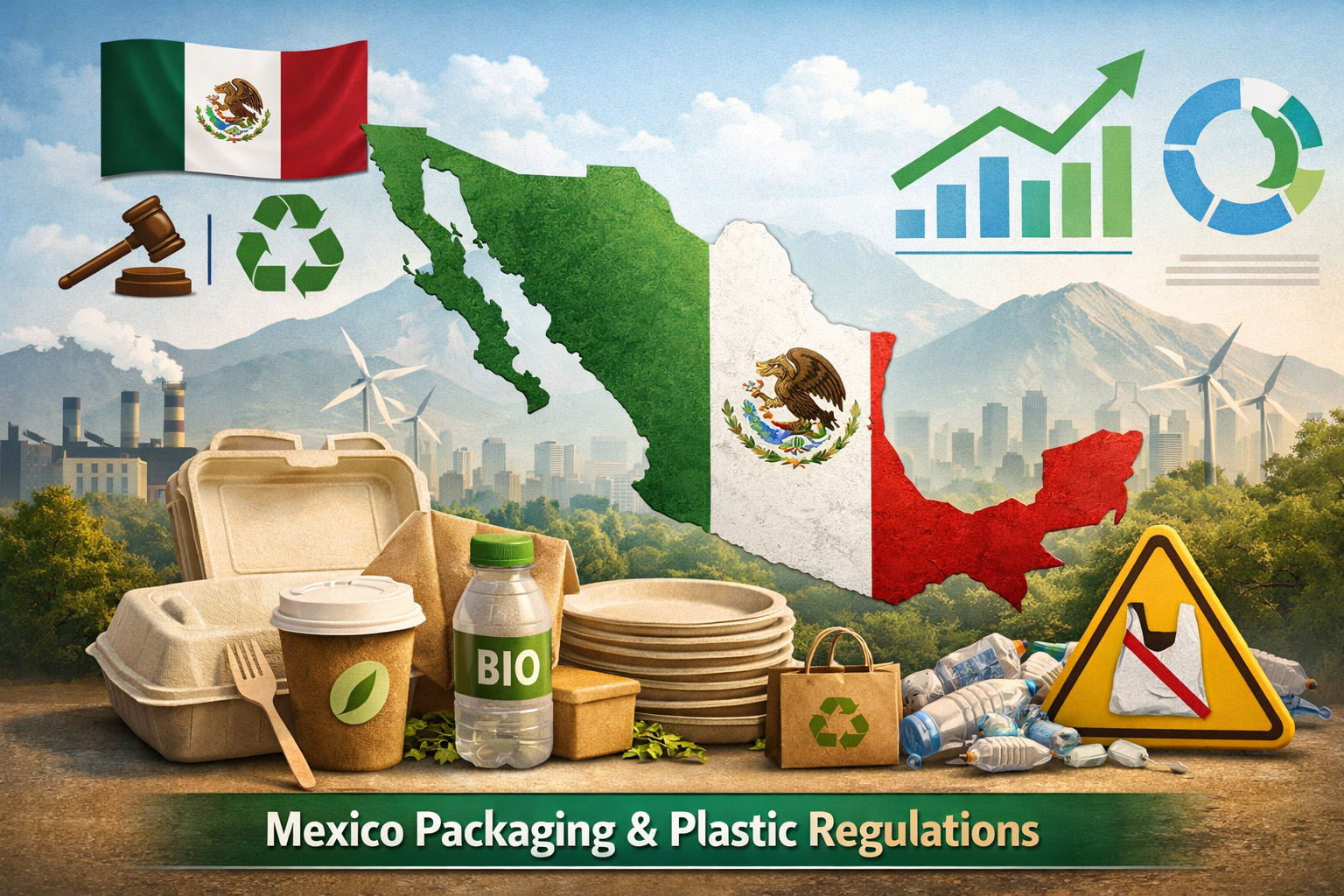
Introduction: Why Mexico’s Packaging Policy Matters Now
Mexico sits at a critical crossroads in the global plastics and packaging transition. As one of Latin America’s largest economies—and a manufacturing and logistics bridge between North America and the Global South—Mexico’s regulatory approach has implications far beyond its borders.
Unlike the European Union or certain U.S. states, Mexico has not adopted a single, comprehensive federal ban on single-use plastics. However, this absence should not be mistaken for regulatory inertia. Instead, Mexico has developed a hybrid governance model: voluntary national commitments combined with increasingly assertive state and municipal legislation.
For businesses, this creates both complexity and opportunity. Understanding how Mexico’s system works—and where it is heading—is essential for risk management, supply-chain planning, and long-term market access.
Mexico’s Plastic and Packaging Policy Landscape: A Strategic Overview
1. Federal-Level Direction: Commitment Without a Blanket Ban
At the national level, Mexico has chosen a coordination-first approach rather than immediate prohibition.
In 2019, the government, together with major industry stakeholders, launched the National Agreement for the New Plastics Economy. While not legally binding, this agreement establishes clear strategic targets for 2030:
All plastic packaging to be reusable, recyclable, or compostable
PET collection rates to reach 80%
Other plastics to achieve 45% recovery
An average of 30% recycled content across plastic packaging
From a policy-design perspective, this agreement functions as a soft-law framework. It signals direction, aligns industry expectations, and prepares the ground for future regulation—without triggering immediate economic disruption.
2. State and City Regulations: Where Enforcement Actually Happens
The true regulatory momentum in Mexico lies at the state and municipal level.
Over the past few years, multiple states and major cities—including Mexico City and the State of Mexico—have enacted laws that:
Ban or restrict single-use plastic bags, cutlery, straws, and foam containers
Require packaging to be reusable, recyclable, or demonstrably biodegradable
Impose fines, operational suspensions, or license revocations for non-compliance
Some jurisdictions go further, demanding technical validation of biodegradability or compostability claims. This makes vague “eco-friendly” labeling increasingly risky.
3. Enforcement Reality: Uneven but Intensifying
Enforcement capacity varies by region. Some municipalities prioritize education and gradual transition; others apply immediate penalties. However, the overall trend is clear: compliance expectations are rising, not fading.
For companies, the key risk is not a single dramatic federal ban, but regulatory fragmentation—operating legally in one state while violating rules in another.
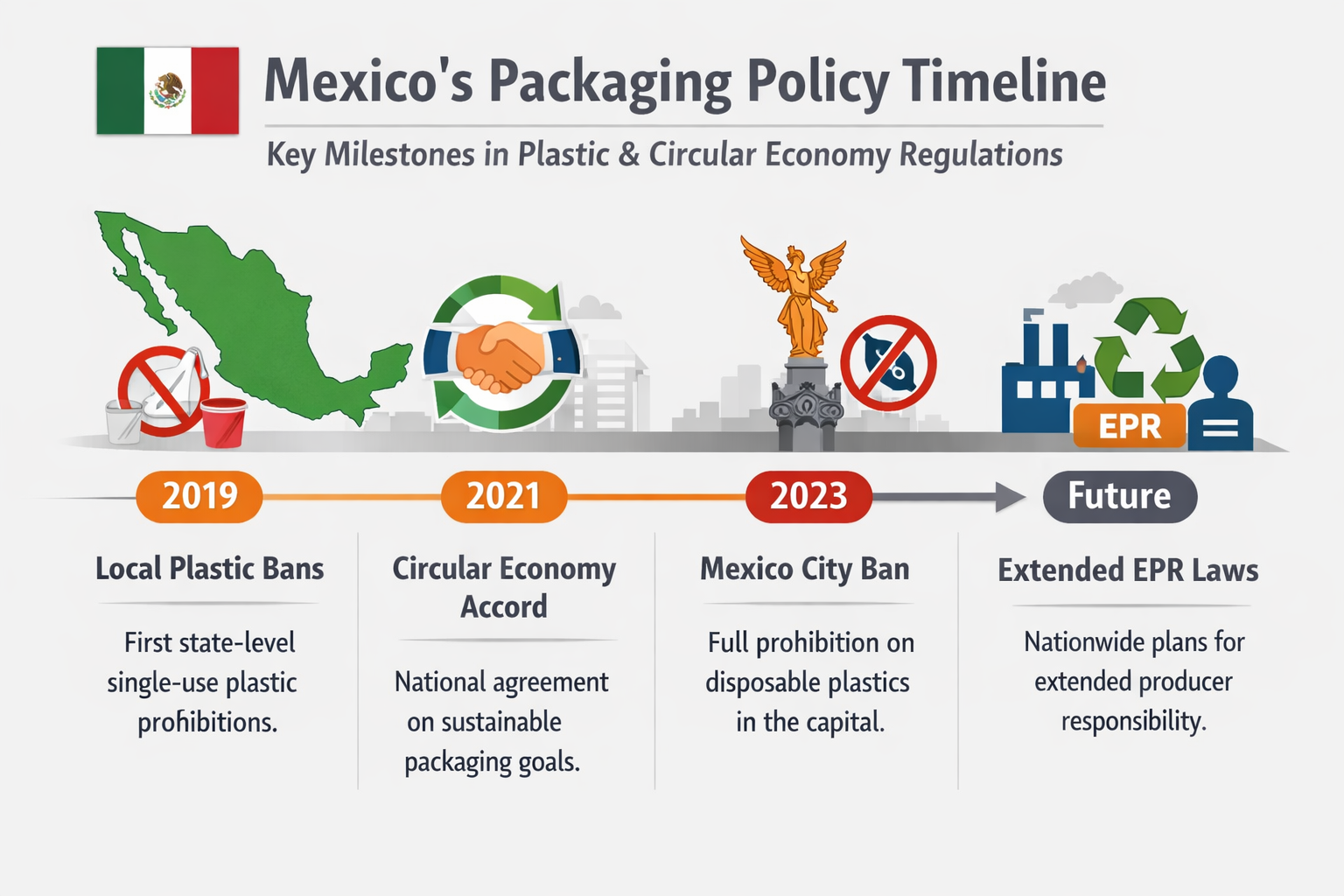
Mexico’s packaging regulations reveal a broader shift from isolated plastic bans to a system-based circular economy approach. Businesses that treat compliance as a design and supply-chain question—rather than a material swap—are better positioned to adapt across regions and regulatory cycles.
Regulatory Evolution: From Plastic Reduction to Circular Design
Mexico’s policy trajectory mirrors a broader global shift:
Phase 1: Reduce visible plastic waste (bags, straws, foam)
Phase 2: Encourage material substitution (biodegradable, paper-based alternatives)
Phase 3 (emerging): Focus on system readiness—reuse, recovery, composting, and lifecycle accountability
This evolution reframes the compliance question. It is no longer just about what material is used, but whether the entire packaging system makes sense after use.
State-level enforcement, combined with national industry commitments, is sending a clear signal: packaging solutions must demonstrate real-world recovery logic. Claims without system validation are increasingly vulnerable to regulatory and reputational risk.
How Businesses and Citizens Should Respond to Mexico’s Regulations
Corporate Response: From Compliance to Strategy
For businesses operating in Mexico or exporting packaging-sensitive products, several strategic principles apply:
1. Design for Multi-Jurisdiction Compliance
Given regulatory fragmentation, companies should favor materials and formats accepted across multiple states—rather than optimizing for the lowest local standard.
2. Move Beyond Material Substitution
Replacing plastic with another single-use material is not enough. Packaging must align with realistic recovery or composting pathways.
3. Build a Compliance Documentation System
Material disclosures, food-contact safety assurances, and compostability or recyclability documentation are becoming essential—not optional.
4. Anticipate Future Federal Alignment
Mexico’s current soft-law framework strongly suggests tighter national coordination in the future. Early adopters will face lower transition costs.
Public and Consumer Behavior
Policy is also reshaping consumer expectations:
Reduced tolerance for unnecessary single-use packaging
Growing acceptance of compostable and fiber-based alternatives
Increasing scrutiny of misleading environmental claims
Consumer behavior, in turn, reinforces regulatory pressure on brands.
Future Opportunities and Challenges in Mexico’s Packaging Transition
Opportunities
Regional Supply-Chain Leadership
Mexico can become a model for circular packaging across Latin America.Growth in Compostable and Fiber-Based Packaging
Particularly in food service, takeaway, and delivery sectors.ESG Integration
Regulatory compliance increasingly supports brand credibility and market access.
Challenges
Fragmented standards increase operational complexity
Risk of “greenwashed” materials undermining trust
Gaps between international certifications and local regulatory interpretation
Strategic Outlook (2025–2030)
Mexico is likely to move toward a federally guided, locally enforced circular-economy framework, with clearer expectations for producers and importers alike.
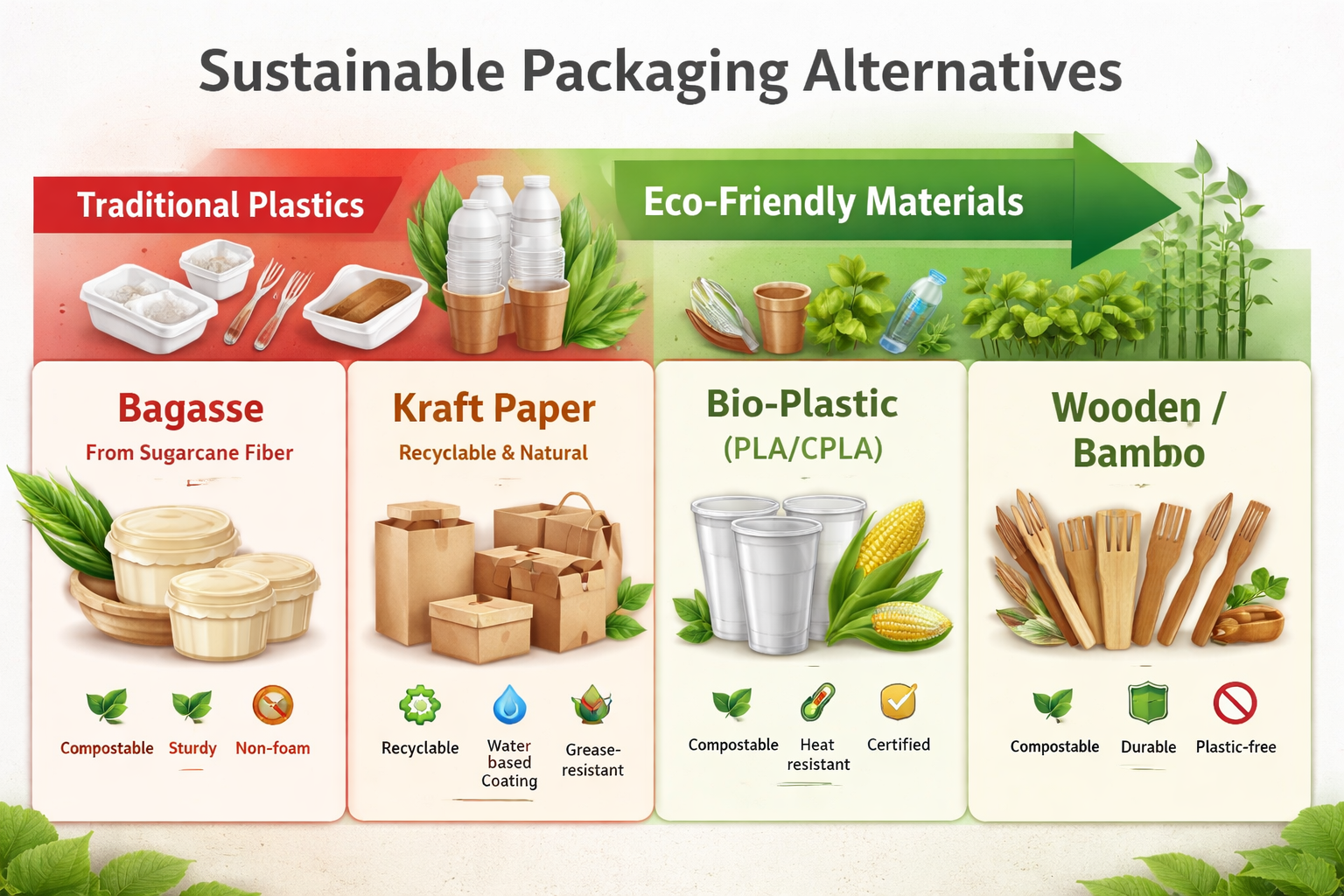
The most resilient packaging strategies in Mexico are diversified portfolios built around plant-based materials, fiber solutions, and transparent compliance documentation—rather than reliance on a single “alternative” material.
Expert Perspectives: Global Insight on Mexico’s Path
Professor Roland Geyer
(University of California, Santa Barbara — global authority on plastics lifecycle analysis)
“The effectiveness of plastic regulation depends less on bans and more on whether alternatives are system-ready—designed for real recovery or composting.”
Interpretation:
Mexico’s current phase is testing system readiness, not just banning materials.
Ellen MacArthur Foundation
(Global leader in circular economy research)
“Countries transitioning fastest are those aligning industry commitments with local enforcement, rather than waiting for perfect national laws.”
Interpretation:
Mexico’s hybrid model aligns closely with successful international transitions.
How Bioleader Helps Businesses Navigate Mexico’s Regulations
Bioleader® positions itself not merely as a product supplier, but as a compliance-oriented packaging solution partner.
Regulation-Aligned Product Strategies
Bagasse (Sugarcane Fiber) Containers
Plant-based, non-foam
Suitable for regions banning EPS and traditional plastics
Designed to replace plastic utensils in regulated food-service contexts
Kraft Paper Packaging with Water-Based Coatings
Balances food safety, recyclability, and regulatory acceptance

Core Value Proposition
Bioleader focuses on helping customers transition ahead of regulation, reducing future compliance risk while supporting sustainability commitments.
Mexico’s packaging regulations are evolving from fragmented plastic bans toward a circular-economy-driven framework. The central question for businesses is no longer “Is plastic banned?” but “Which packaging systems will remain compliant, credible, and recoverable across multiple jurisdictions in the next five years?”
How:
By adopting compostable, fiber-based, and system-validated packaging early, companies can significantly reduce regulatory uncertainty across Mexico’s fragmented policy landscape.Why:
Waiting for a single nationwide law risks missed market opportunities and forces rushed, costly transitions once regulations tighten.What:
The future of compliant packaging in Mexico favors plant-based materials, transparent lifecycle logic, and credible compliance communication.Options (In Depth):
Single-material strategies carry inherent risk; diversified, regulation-aligned portfolios offer greater resilience across jurisdictions.Considerations (In Depth):
Ultimately, compliance is not only about materials, but about trust—between regulators, brands, supply chains, and consumers.
Frequently Asked Questions (FAQ)
Does Mexico have a nationwide ban on single-use plastics?
No. Mexico does not currently enforce a single nationwide ban on single-use plastics. Instead, plastic regulation is primarily driven by state and city governments, supported by national industry agreements that promote circular packaging and material transition. As a result, compliance requirements may vary significantly across regions.
Which packaging materials are most future-proof in Mexico?
Packaging materials that are plant-based, compostable, or fiber-derived tend to be the most future-proof across Mexico’s fragmented regulatory landscape. Materials such as bagasse (sugarcane fiber), fiber-based paper packaging, and certified bioplastics are generally more resilient as regulations tighten at the state level.
Can international suppliers export compostable packaging to Mexico?
Yes. International suppliers can export compostable packaging to Mexico. However, they must ensure compliance with food-contact safety requirements, provide clear material documentation, and be prepared for local regulatory interpretation, which may differ between states or municipalities.
How does Bioleader support businesses entering the Mexican market?
Bioleader supports businesses entering the Mexican market by providing regulation-aligned compostable and fiber-based food packaging solutions designed for global compliance. Its product portfolio and material strategies help companies adapt proactively to Mexico’s evolving plastic and packaging regulations while reducing long-term compliance risk.
References
Mexico-Specific & Local Authorities
SEMARNAT (Secretaría de Medio Ambiente y Recursos Naturales)
National Strategy on Circular Economy and Plastic Waste Management
Government of MexicoMexico City Government (Gobierno de la Ciudad de México)
Regulations on Single-Use Plastics and Sustainable Packaging
Environmental Secretariat of Mexico CityNicholas Institute for Energy, Environment & Sustainability, Duke University
Plastic Pollution Policy Country Profile: Mexico
Duke University (Mexico Policy Focus)Mexico Business News
State-Level Enforcement and Fines for Single-Use Plastics in Mexico
Industry and policy reporting on Mexico’s regulatory landscape
International & Global Authority References
Ellen MacArthur Foundation
Global Commitment Progress Report: Plastics and the Circular Economy
Ellen MacArthur Foundation, United KingdomRoland Geyer, Jenna Jambeck, Kara Lavender Law
Production, Use, and Fate of All Plastics Ever Made
Science Journal, University of California, Santa BarbaraOECD (Organisation for Economic Co-operation and Development)
Global Plastics Outlook: Economic Drivers, Environmental Impacts and Policy Options
OECD Publishing, ParisUN Environment Programme (UNEP)
Single-Use Plastics: A Roadmap for Sustainability
United Nations Environment ProgrammeWorld Economic Forum
The New Plastics Economy: Rethinking the Future of Plastics
World Economic Forum & Ellen MacArthur Foundation
Copyright Notice:
© 2026 Bioleader®. If you wish to reproduce or reference this content, you must provide the original link and credit the source. Any unauthorized copying will be considered an infringement.