
Biodegradable Meat and Cheese Trays for Fresh, Safe & Sustainable Packaging
Fresh meat, cheese, and deli products require packaging that balances hygiene, strength, and environmental responsibility. Bioleader® biodegradable meat trays deliver a modern alternative to foam and plastic trays used in butcher counters, supermarkets, and protein-processing facilities. Engineered for cold-chain environments, these trays maintain structural integrity under refrigeration and resist moisture absorption. Whether used for steaks, poultry cuts, cold meats, or sliced cheeses, Bioleader® trays ensure safe presentation while supporting retailers’ transition to sustainable, compliant packaging systems.
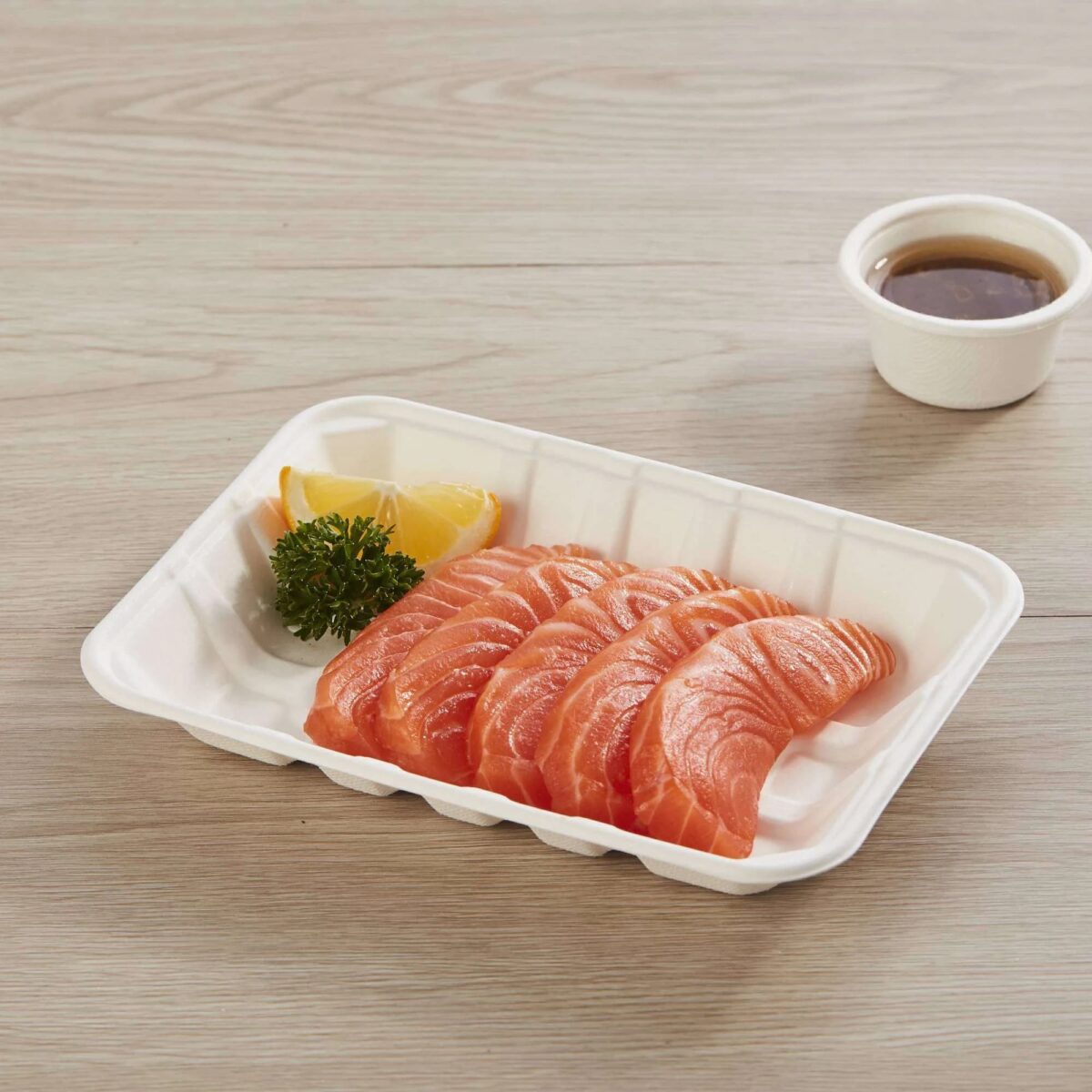
About Biodegradable Meat and Cheese Trays
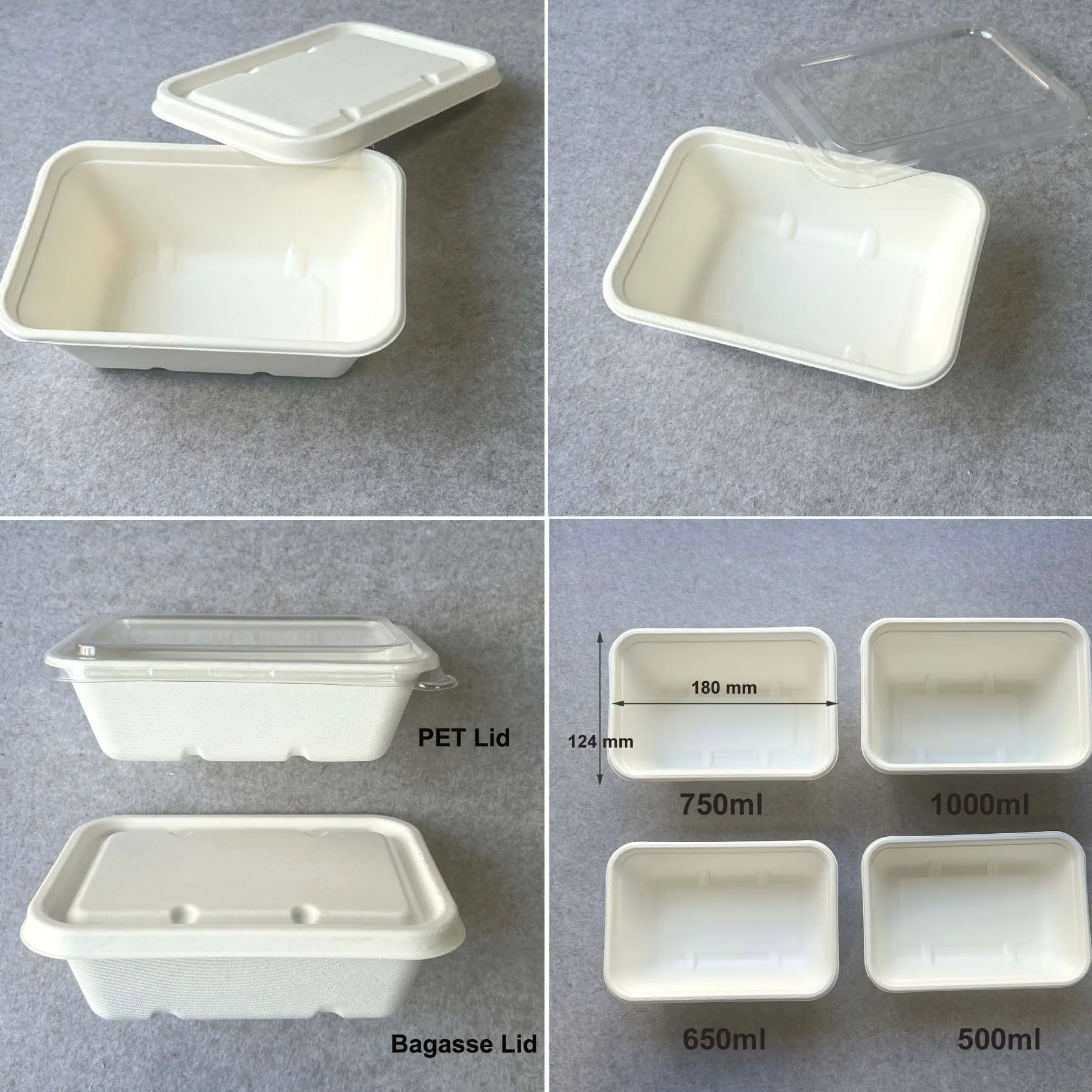
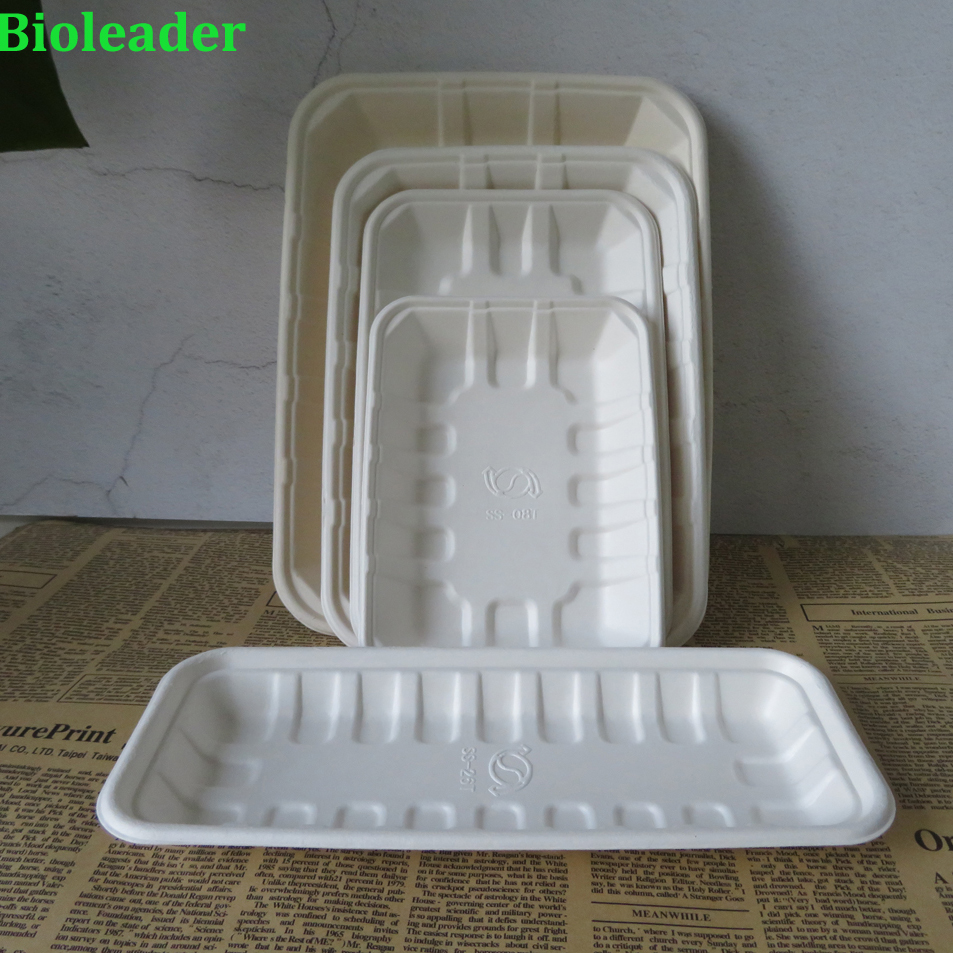
Bioleader® produces high-performance meat trays and biodegradable meat trays designed for retailers, butchers, delis, and food manufacturers. Made from renewable bagasse fibers, our trays offer strong molding precision, reliable rigidity, and excellent compatibility with refrigerated environments and automatic overwrapping systems. The material structure provides breathability while maintaining moisture balance, helping extend the visual freshness of meats and cheeses. With rising consumer preference for sustainable formats and global regulations phasing out foam packaging, Bioleader® meat trays support cost-effective upgrades to paper meat trays, meat packaging trays, and environmentally responsible alternatives across the cold-chain supply network.
Bioleader® Fresh Meat & Cheese Display Tray Optimized Best Seller

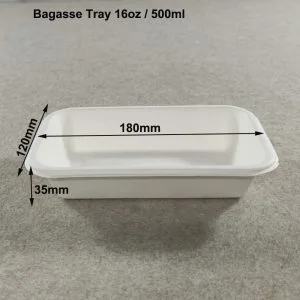
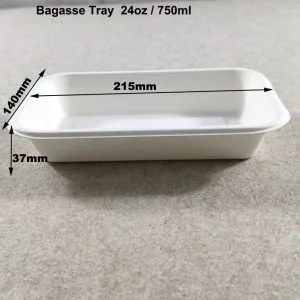



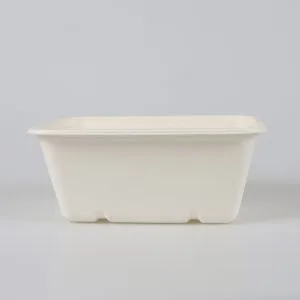
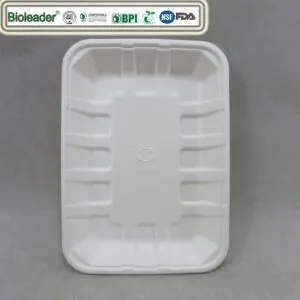
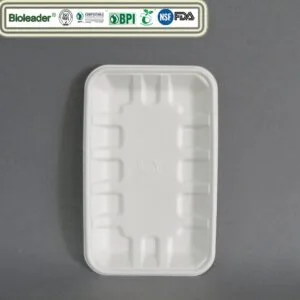
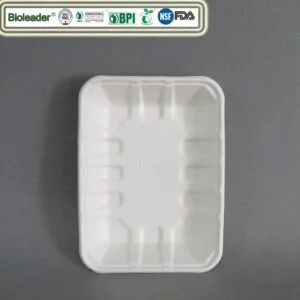
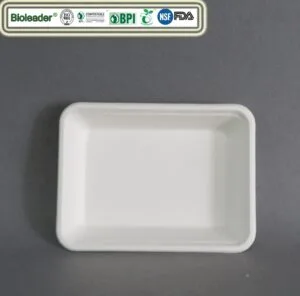
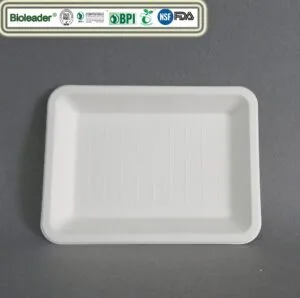
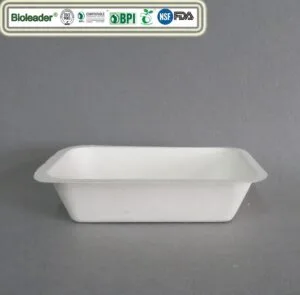
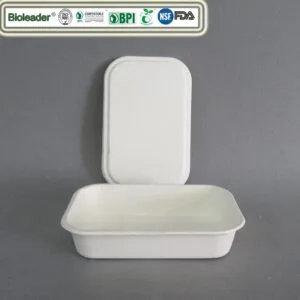
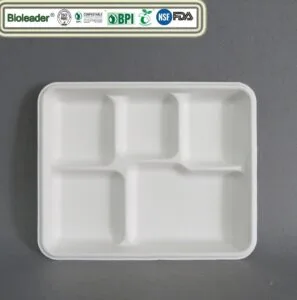
Why Choose Bioleader® Biodegradable Meat Trays?
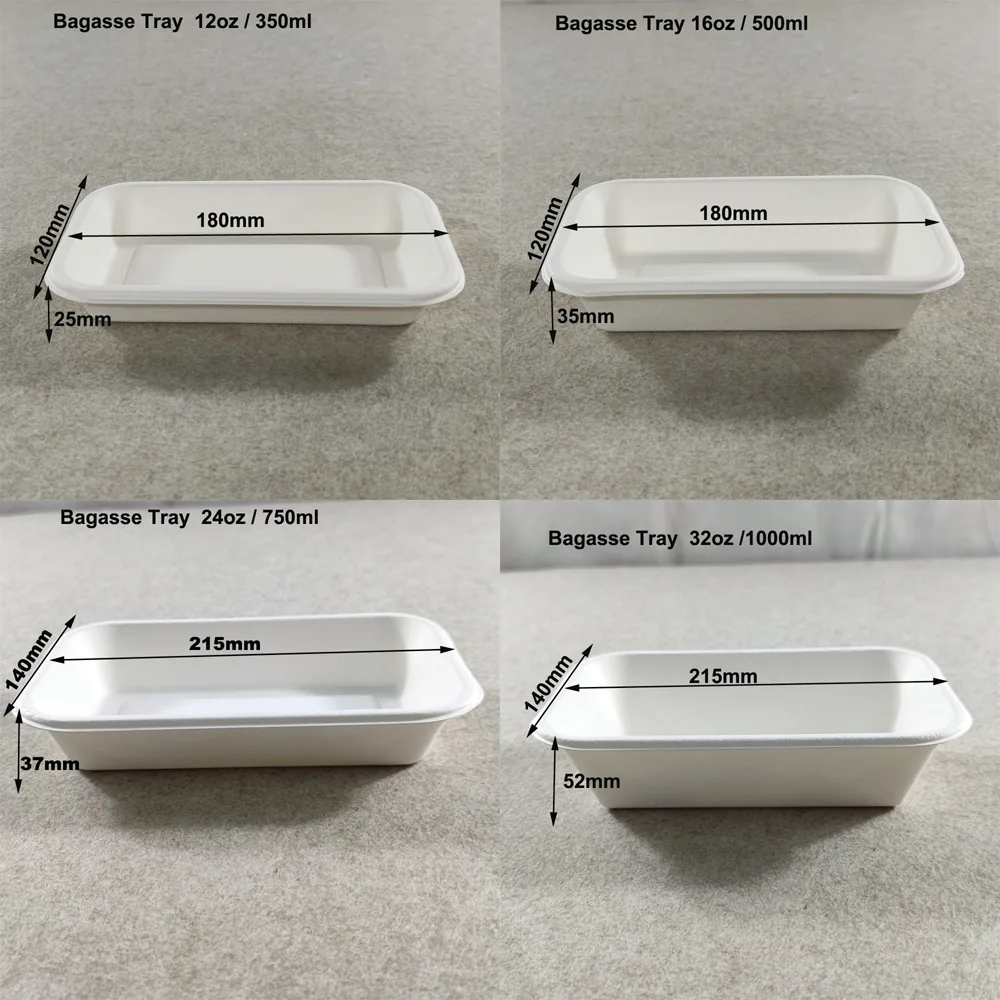
Bioleader® bagasse trays are engineered for daily retail operations, ensuring dependable performance during packing, wrapping, stacking, and cold storage. Their reinforced edges resist deformation under weight, while the natural texture delivers premium shelf appearance for proteins and cheeses. With consistent sizing, compatibility with standard film or lidding solutions, and full compostability, these trays give retailers an efficient upgrade from PET and EPS without disrupting current workflows.
Key Features of Bioleader® Paper Meat Trays
Cold-Chain Strength
Formed to remain stable during chilled storage and display, preventing softening or distortion from temperature fluctuations.
Moisture-Smart Material Structure
Bagasse absorbs minimal surface moisture, maintaining clean presentation for meats, cheeses, and deli assortments.
Overwrap-Friendly Geometry
Designed for stretch film wrapping, vacuum sealing, and modified atmosphere packaging (MAP) workflows used in modern meat departments.
Clean & Food-Safe Contact Surface
Composed of renewable plant fibers with no PFAS added, safeguarding direct contact with raw proteins and ready-to-eat deli slices.
Optimized for High-Volume Retail
Uniform weight and dimensions support automated packing lines, mass distribution, and fast in-store replenishment.
Top Applications for Meat Packaging Trays
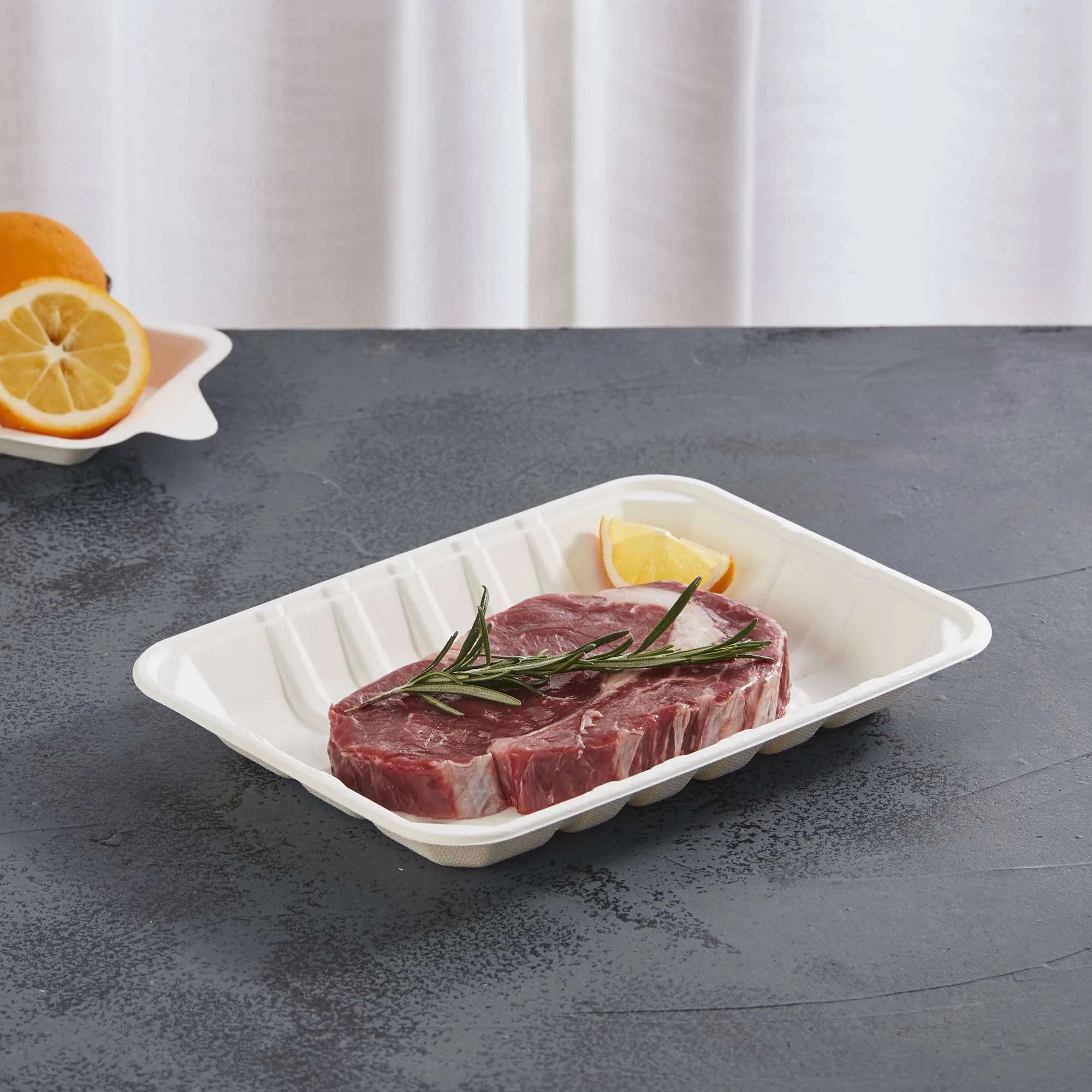
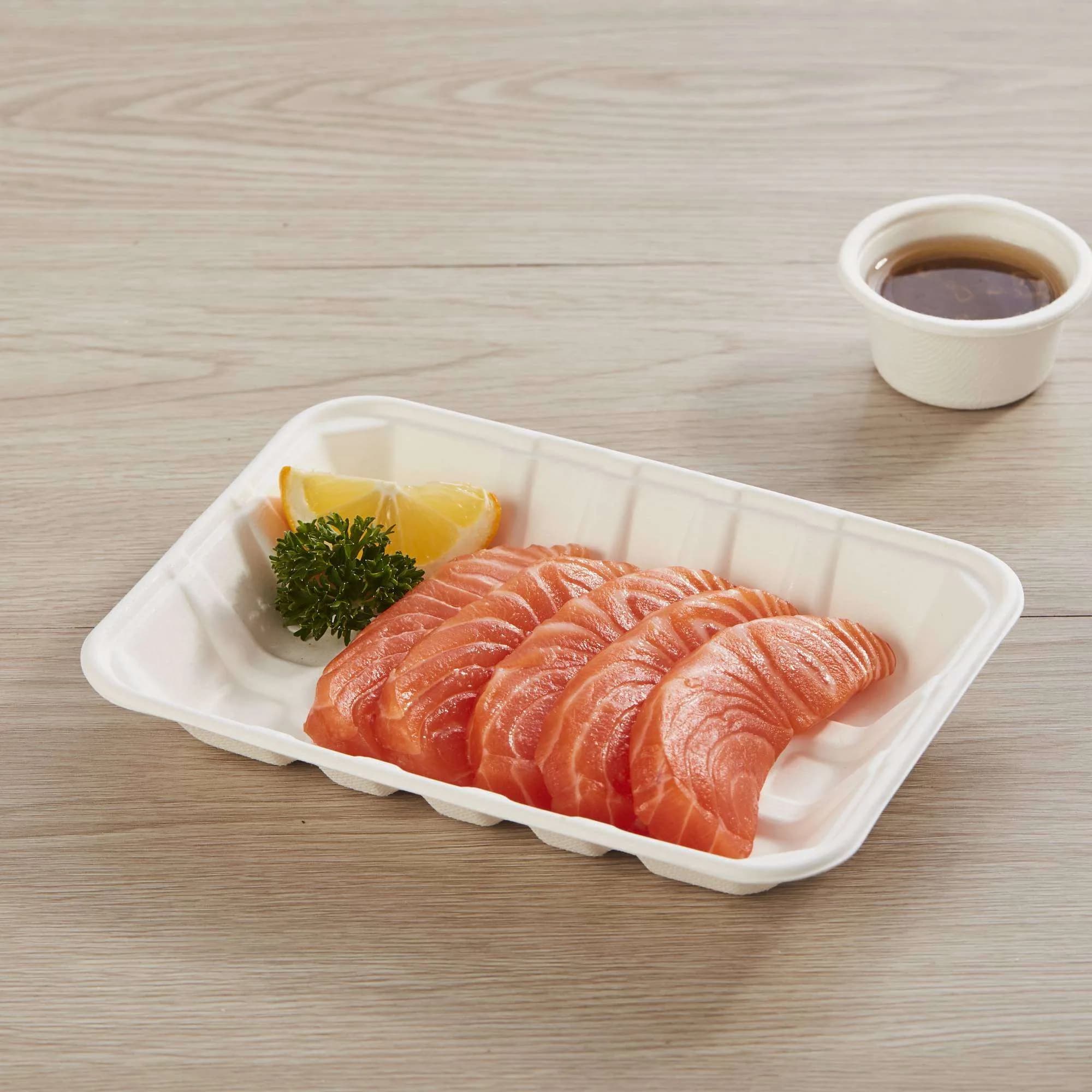
Bioleader® compostable food trays provide the durability and hygiene required for fresh protein packaging while supporting retailers’ transition away from foam. They streamline merchandising across chilled cabinets, deli counters, and meal-prep sections.
Fresh Meat Packaging for Retail
Ideal for steaks, pork cuts, chicken fillets, minced meat, and mixed protein packs in refrigerated aisles.
Cheese & Cold Meat Displays
Suitable for sliced cheeses, deli meats, salami, ham, and ready-to-serve cold-cut assortments.
Ready-Meal & Protein Kits
Used in marinated meat kits, portion-controlled proteins, and grocery meal-prep programs requiring strong food-safe trays.
Bagasse Tray Vs. Plastic Tray(PP,PET) Vs. Foam (EPS) Tray— Material Comparison Table
| Feature / Material | Bagasse Tray | Plastic Tray (PP / PET) | Foam (EPS) Tray |
|---|---|---|---|
| Raw Material Source | Sugarcane fiber by-product | Petroleum-based plastic | Petroleum-based polystyrene |
| Recycle &Compostable | Compostable (industrial & home) | Not compostable; Recyclable (PP), Not recyclable (PET) | Not recyclable or compostable |
| Heat Resistance | ~10°C to 120°C | PP: -20°C to 120°C, PET: -20°C to 70°C | ~ -20°C to 90°C |
| Water Resistance | Moderate | Excellent | Good |
| Oil Resistance | Good | PP: Excellent, PET: Good | Moderate |
| Microwave-safe | Yes (short-time heating) | Yes (short-time heating) | No |
| Strength & Rigidity | Good, fibrous structure | PP: High durability, PET: High clarity | Very fragile |
| Toxicity & Chemical Safety | Natural fiber, no chemical release when heated | PP: Food-safe but may release trace compounds at high heat, PET: Safe for cold use only | Releases styrene fumes when heated, banned/restricted in many countries |
| Environmental Impact | Very low carbon footprint | High carbon footprint | Very high carbon footprint |
| Typical Applications | Takeout trays, food trays, meal trays, sushi trays | Plates, trays, clamshells, meal boxes, food packaging | Cheap takeaway food packaging, disposable trays |
| Eco Score | ⭐⭐⭐⭐⭐ | ⭐⭐ | ⭐ |
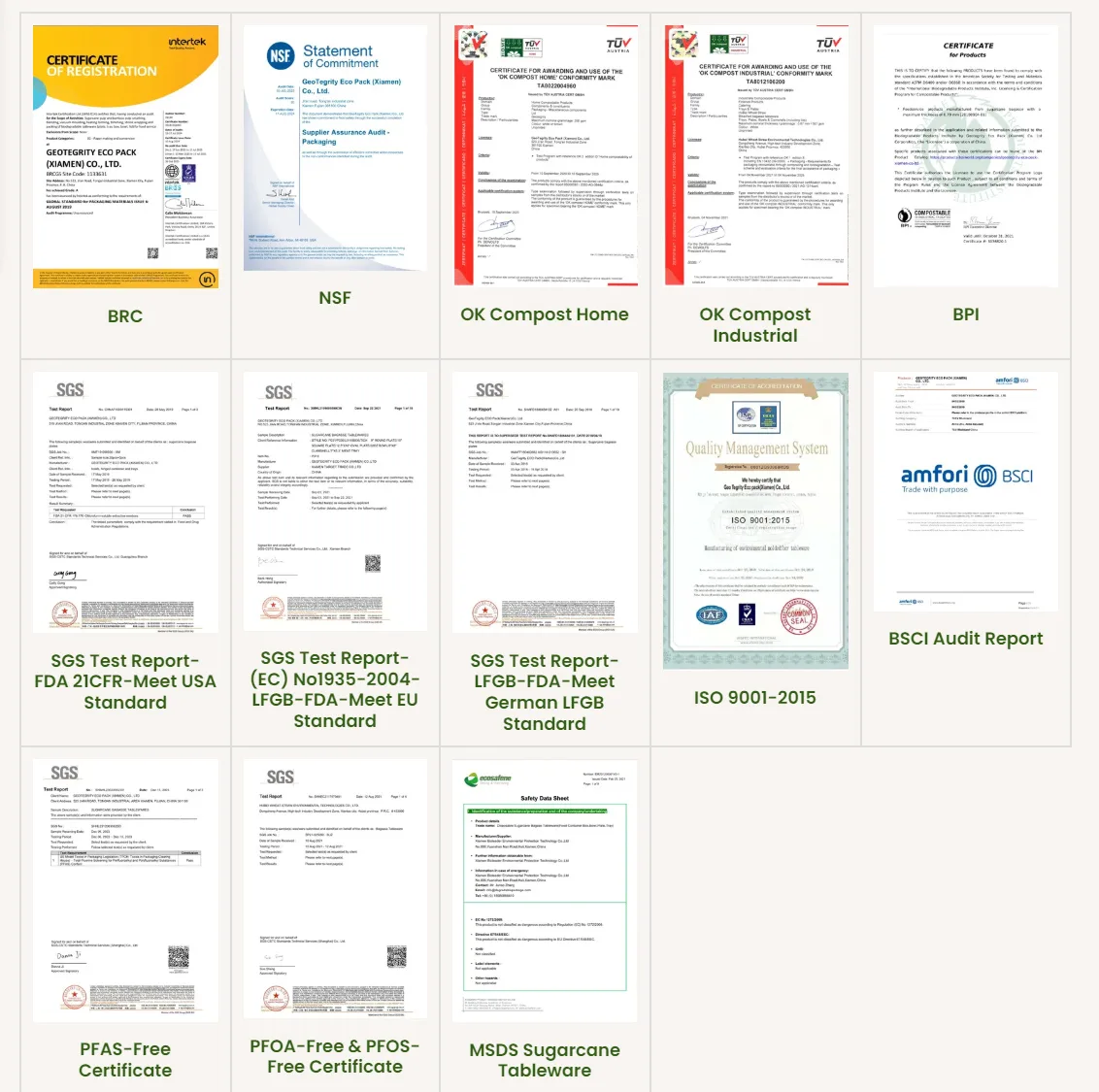
♻️ Certified for Safety, Compostability, Performance & Sustainability
Bioleader® meat trays meet global compostability and food-contact standards, ensuring they are safe for direct protein contact and reliable for refrigerated distribution.
Certified by leading international authorities:
✅OK-Compost (TÜV Austria), EN13432 & ASTM D6400: Certified for home, industrial composting, and meets international standards.
✅BRC & NSF: Food-grade safety certifications.
✅FDA & SGS: Approved for food-safe use.
✅ISO & BSCI Certified Facilities: Produced in facilities focused on water conservation, carbon reduction, and social responsibility.
Biodegradable & Renewable: Made from sugarcane residue, reducing landfill waste and eliminating plastic contamination in foodservice.
These certifications support supermarkets and processors seeking compliant, sustainable alternatives to foam and conventional plastic meat packaging trays.
Why Bioleader® is Your Trusted Meat Packaging Trays Supplier
Bioleader® is recognized as one of China’s top manufacturers of meat packaging trays, supplying major retailers, butcher networks, and food processors worldwide. Our ISO-certified production lines, advanced pulp-molding systems, and strict QC controls ensure consistent tray strength and dimensional precision for cold-chain applications. With scalable export capacity, competitive pricing, and tailored OEM solutions, Bioleader® delivers reliable biodegradable packaging that aligns with the future of protein merchandising and sustainable food packaging.

The Shift Toward Biodegradable Meat Packaging in 2025
Global regulators are accelerating the phaseout of EPS meat trays and high-impact plastics, pushing retailers and processors toward biodegradable meat trays that perform reliably in cold-chain conditions. Bagasse trays now meet both sustainability and operational requirements across protein categories.
Regulatory Pressure on Traditional Meat Packaging
- EU PPWR is driving a transition away from foam and non-recyclable plastic meat packaging trays.
- North American EPR laws increase costs for plastic-heavy meat packs.
- Asia-Pacific markets are strengthening rules for raw-protein packaging safety and sustainability.
Why Bagasse Works for Meat & Cheese Applications
Bagasse provides stable rigidity under refrigeration, strong edge support, and minimal moisture absorption, making it effective for cold meat trays, sliced cheese packs, and deli assortments.
Retail & Processor Benefits
By switching to biodegradable meat trays, retailers reduce waste-management burdens, improve store sustainability ratings, and meet growing consumer expectations for eco-conscious protein packaging.
Contact Bioleader® for Eco Green & Sustainable Packaging
At Bioleader®, we support businesses in making sustainable choices with eco-friendly packaging solutions that reduce your environmental impact.
Bioleader® offers:
Bulk Orders & Fast Delivery: Efficient order handling and quick shipping worldwide.
Custom Branding & OEM: Tailored packaging solutions with your brand.
Eco-Packaging Compliance: Global certifications ensuring adherence to environmental standards.
Looking for quality eco-friendly packaging? Contact us for catalogs, quotes, or design assistance.
FAQs of Bioleader's Sugarcane Bagasse Eco Pulp Trays
Yes. Bioleader® biodegradable meat trays are specifically engineered for direct contact with raw beef, pork, poultry, and seafood, ensuring compliance with global food-contact standards. The bagasse structure provides a clean and stable surface that does not react with proteins or moisture during storage. This makes the trays safe for use throughout the entire raw-protein handling process—from processing plants to supermarket cold displays.
Absolutely. Bagasse performs exceptionally well under low-temperature conditions, maintaining rigidity even when exposed to refrigeration or prolonged cold storage. The trays resist softening and deformation, ensuring that meats, seafood, and cheeses remain well-supported and neatly presented. This durability makes them suitable for every stage of the cold-chain, from packing lines to consumer-facing displays.
Yes. Bioleader® meat trays are designed with precise rim geometry that works seamlessly with stretch wrap, overwrap equipment, and manual or automated film-sealing systems. Their consistent molding ensures tight film adhesion, improving shelf appearance and leak resistance. This compatibility allows retailers and processors to adopt biodegradable trays without altering existing packaging machinery or workflows.
Yes. The trays meet stringent food-contact safety regulations, making them suitable for sliced cheese, salami, ham, deli meats, and ready-to-eat cold cuts. Their smooth interior surface reduces the risk of tearing or damaging delicate foods during loading or presentation. Retailers can confidently use them for items requiring superior hygiene and clean visual display.
Biodegradable meat trays help retailers significantly reduce reliance on EPS foam and petroleum-based plastic packaging. They align with upcoming environmental regulations and corporate sustainability programs focused on reducing landfill waste and improving packaging circularity. By switching to compostable materials, supermarkets enhance their environmental scorecards and appeal to increasingly eco-conscious shoppers.