









Quick Summary: Cornstarch Tableware Biodegradability
Cornstarch tableware is usually made from PLA, CPLA, or starch-based biopolymer blends derived from renewable plant resources. It can be compostable when certified and processed under proper industrial composting conditions.
Best applications: takeaway meals, catering, food delivery, eco events, disposable cutlery, clamshell boxes, bowls, trays, cups, and foodservice packaging programs.
Buyer note: Always check compostability certification, heat resistance, food-contact reports, product thickness, storage conditions, and local composting infrastructure before bulk purchasing.
This guide explains what cornstarch tableware is made from, how it biodegrades, where it performs well, what limitations buyers should understand, and how foodservice businesses can make a more responsible packaging decision.

What Is Cornstarch Tableware?
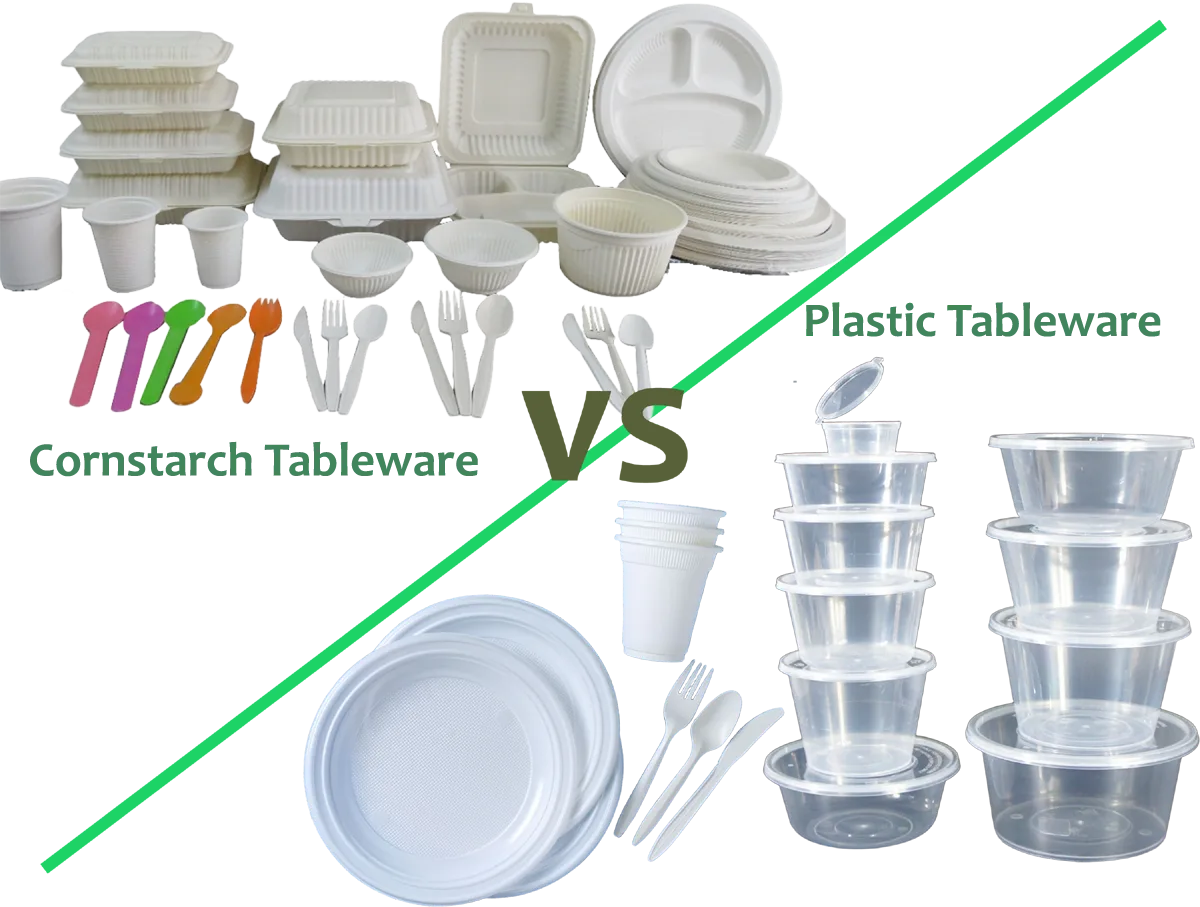
Cornstarch tableware refers to disposable foodservice products made from plant-based polymers or starch-based blends. In the packaging industry, the term is often used for products made with PLA, CPLA, or modified starch materials that are designed to reduce reliance on conventional petroleum-based plastics.
PLA, or polylactic acid, is a bioplastic made from fermented plant sugars. These sugars may come from corn starch, sugarcane, cassava, or other renewable plant sources. After fermentation, lactic acid is polymerized into PLA resin. For higher heat resistance, PLA can also be crystallized into CPLA, which is commonly used for compostable cutlery and hot food applications.
Depending on the final product, manufacturers may add biodegradable components may be added to the tableware, such as mineral fillers, plant fibers, plasticizers, or performance modifiers. These additions help improve strength, flexibility, heat resistance, and molding stability.
Important Components in Cornstarch-Based Tableware
- PLA: A plant-based bioplastic commonly derived from corn starch, sugarcane, or other carbohydrate-rich crops.
- CPLA: A crystallized form of PLA with improved heat resistance, often used in compostable forks, knives, spoons, and lids.
- Starch-based blends: Biopolymer formulations that may combine starch with other compostable materials to improve processing and performance.
- Functional additives: Approved modifiers or reinforcements used to improve durability, rigidity, or temperature tolerance.
Because of this composition, cornstarch tableware can offer a more sustainable alternative to conventional disposable plastic when it is correctly designed, certified, used, and disposed of.
Biodegradable vs Compostable: Why the Difference Matters
The words “biodegradable” and “compostable” are often used together, but they are not identical. This distinction is important for importers, distributors, restaurant chains, and foodservice buyers because incorrect claims can create compliance risks and customer confusion.
Biodegradable
Biodegradable means a material can be broken down by microorganisms into smaller natural components over time. However, this term alone does not always define the time frame, environment, temperature, or final residue. For B2B purchasing, “biodegradable” should be supported by testing rather than used as a broad marketing claim.
Compostable
Compostable means the product is designed to break down under composting conditions and meet defined standards for disintegration, biodegradation, ecotoxicity, and heavy metal limits. For cornstarch-based tableware, compostability is usually proven through standards such as ASTM D6400, EN 13432, BPI, TÜV, or OK Compost certification.
The Practical Buyer Rule
If you are buying tableware for restaurants, supermarkets, catering, or export distribution, do not rely only on the word “eco-friendly.” Ask whether the product is certified compostable, what standard it meets, and whether the certification applies to the exact product you are purchasing.
Application of Composting and Biodegradability
Cornstarch tableware can be compostable and biodegradable under controlled conditions. In practical terms, this usually means the right combination of heat, moisture, oxygen, and microbial activity. Industrial composting facilities are typically more suitable than uncontrolled home composting because they can maintain higher and more stable temperatures.
In industrial composting, certified compostable products are designed to disintegrate and biodegrade within a defined time frame. In home composting, however, lower temperatures and less consistent microbial activity may slow down degradation significantly. For this reason, buyers should check whether a product is certified for industrial composting, home composting, or both.
Key Factors That Influence Biodegradation
- Temperature: PLA-based materials generally degrade much faster under industrial composting temperatures than in ambient soil or backyard compost.
- Moisture: Adequate moisture helps microbial activity and material breakdown.
- Oxygen: Aerobic composting environments support faster and cleaner degradation.
- Product thickness: Thin films and small items may break down faster than thick forks, trays, or clamshell containers.
- Material formula: PLA, CPLA, starch blends, fillers, and additives can all affect composting behavior.
Cornstarch tableware should therefore be evaluated as a material system rather than a single universal product. A cornstarch fork, bowl, cup, or clamshell may require different performance and disposal conditions.
Cornstarch tableware with recognized certification gives buyers a clearer basis for procurement, import documentation, customer communication, and sustainability claims.
Environmental Impact of Cornstarch Tableware
Cornstarch-based tableware can provide several environmental advantages compared with conventional petroleum-based plastics, especially when it is used in markets with composting infrastructure or clear plastic-reduction policies.
1. Renewable Feedstock
Unlike conventional plastic made from fossil resources, PLA and many starch-based materials are derived from renewable agricultural feedstocks. This can help reduce dependence on petroleum-based packaging materials.
2. Lower Plastic Pollution Pressure
When properly collected and composted, certified compostable tableware can help reduce long-term plastic waste accumulation. This is especially relevant for foodservice packaging that is often contaminated with food residue and difficult to recycle through conventional systems.
3. Potential Carbon Footprint Benefits
Carbon Footprint: Plant-based materials can offer carbon-related advantages compared with fossil-based plastics, but the final result depends on feedstock sourcing, production energy, transport, product weight, and disposal pathway. For responsible claims, businesses should avoid overgeneralized statements and rely on product-specific data where possible.
4. Better Alignment With Foodservice Sustainability Goals
Cornstarch tableware is especially valuable for restaurants, caterers, hotels, events, and food delivery brands that want to reduce conventional plastic use while maintaining disposable convenience. It also supports brand communication for customers who prefer plant-based and compostable packaging options.
That said, cornstarch tableware is not a magic solution. Its environmental performance depends on proper sorting, composting access, consumer education, and responsible sourcing. Without appropriate disposal systems, even compostable products may not deliver their full environmental benefit.
Cornstarch-Based Tableware Uses
Cornstarch dinnerware is suitable for many everyday foodservice applications, especially where businesses need a practical replacement for disposable plastic items. It can be used in restaurants, catering, takeout, delivery, events, offices, schools, food trucks, hotels, and retail food packaging.
Common Product Types
- Plates: Suitable for parties, catering, institutional dining, picnics, and restaurants. For buyers comparing alternatives, biodegradable plates can be part of a broader eco-packaging strategy.
- Bowls: Useful for salads, rice bowls, soups, pasta, noodles, and prepared meals depending on heat and liquid requirements.
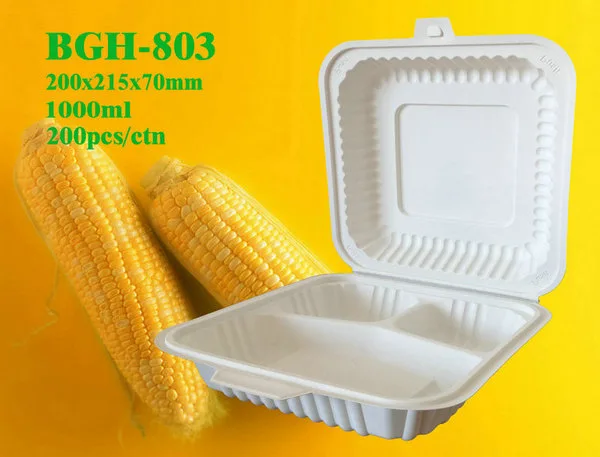
- Clamshell boxes: Suitable for takeaway meals, burgers, snacks, and food delivery.
- Trays: Useful for meal prep, supermarket packaging, ready meals, and catering.
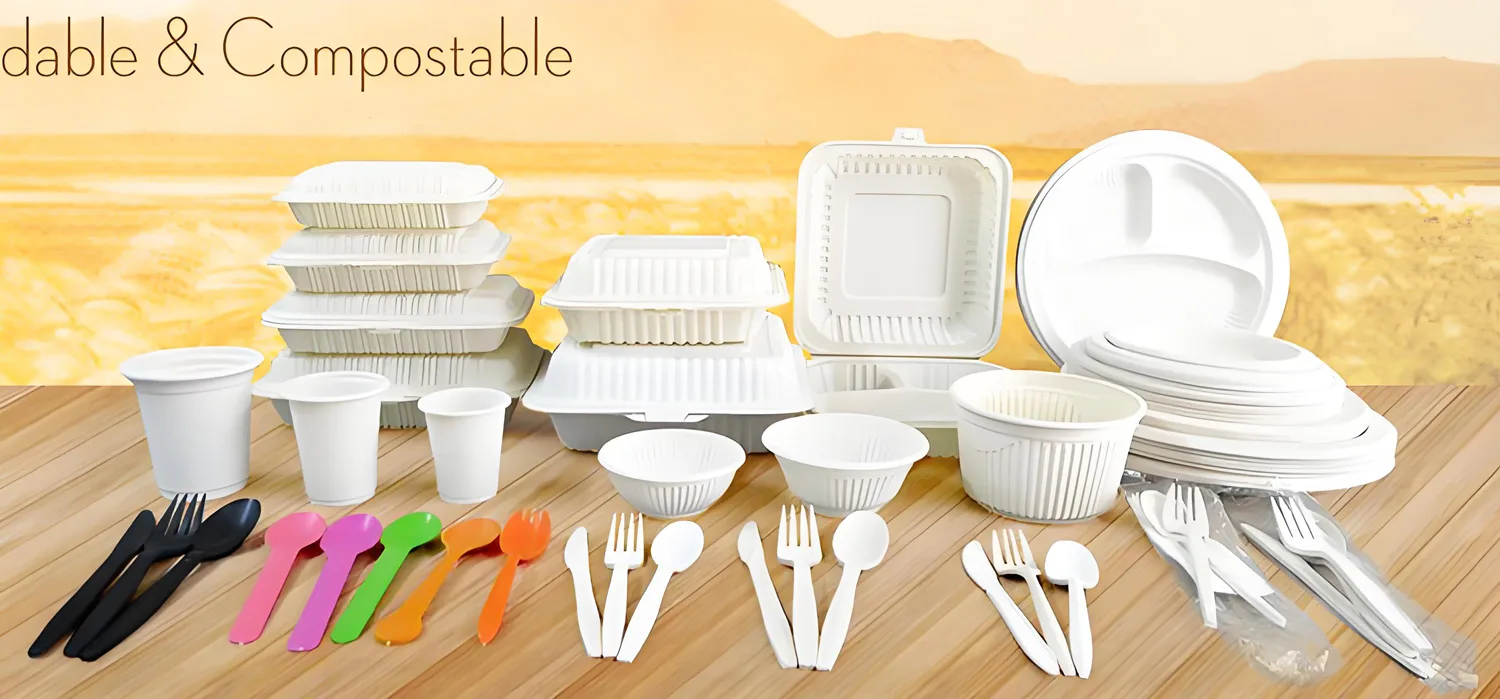
- Cutlery: Biodegradable forks, knives, spoons, and stirrers can replace single-use plastic cutlery in many foodservice settings.
- Cups and straws: Suitable for selected cold beverage applications when material temperature limits are respected.
Because cornstarch tableware is flexible in form and application, businesses can reduce conventional plastic use without giving up the basic convenience of disposable foodservice packaging.
Performance: Heat Resistance, Durability, and Food Contact Safety
For procurement teams, the most important question is not only whether cornstarch tableware is biodegradable, but whether it performs well with the actual food being served. A product may be compostable but still unsuitable for very hot, oily, heavy, or long-hold foods if the material formula and structure are not selected correctly.
Heat Resistance
PLA-based items are generally better for cold or moderate-temperature applications, while CPLA is commonly used where higher heat resistance is needed, such as compostable cutlery. Buyers should confirm the tested temperature range before using cornstarch tableware with hot meals.
Moisture and Oil Resistance
Food with high oil, sauce, or moisture content may require thicker structures, better molding design, or different material blends. Testing with real food is more reliable than judging from product photos alone.
Storage Conditions
PLA and starch-based products should be stored away from excessive heat, direct sunlight, and high humidity. Poor storage conditions may affect shape, strength, or performance before use.
Food Contact Safety
Foodservice buyers should request food-contact testing documents for target markets, such as FDA, EU food contact, LFGB, or relevant third-party reports. This is especially important for importers, supermarkets, and branded foodservice chains.
Challenges and Buyer Considerations
Cornstarch tableware offers clear advantages, but professional buyers should also understand its limitations. This makes procurement decisions more realistic and reduces the risk of unsuitable product selection.
1. Composting Infrastructure Is Not Universal
Certified compostable products perform best when collected and processed through appropriate composting systems. In markets without industrial composting access, buyers may need to communicate disposal instructions carefully.
2. Cost May Be Higher Than Conventional Plastic
Cornstarch-based and PLA-based products may cost more than traditional plastic items, especially when certification, material quality, and custom packaging are required. However, for many brands, the added value comes from sustainability positioning, regulatory readiness, and customer perception.
3. Heat and Strength Must Match the Use Case
Not every cornstarch product is suitable for every food application. Heavy meals, hot soup, oily food, and long delivery times require more careful material and product selection.
4. Certification Should Be Verified
Terms such as biodegradable, compostable, eco-friendly, plant-based, and green are not enough by themselves. Buyers should request test reports, certificates, product specifications, and clear disposal guidance.
Through better material design, certification, customer education, and waste-management infrastructure, cornstarch tableware can become a stronger and more responsible substitute for traditional disposable plastics.
Future Innovations and Trends
The market for cornstarch tableware and other compostable packaging products is moving from simple “plastic replacement” toward performance-based material systems. Buyers now expect products that are not only plant-based, but also durable, safe, certified, cost-efficient, and suitable for real foodservice conditions.
Improved Heat Resistance
Material innovation is improving the heat resistance and strength of PLA, CPLA, and starch-based blends. This is important for hot food delivery, cutlery, lids, and takeaway meal packaging.
Better Compostability Communication
Future packaging will need clearer labels, better disposal instructions, and more transparent certification. This will help consumers and waste-management systems separate compostable packaging correctly.
More Integrated Food Packaging Systems
Restaurants and distributors increasingly prefer complete packaging systems rather than single products. This includes matching lids, bowls, cutlery, trays, cartons, and documentation from one reliable supplier.
Stronger Regulation and Buyer Due Diligence
As global plastic-reduction policies become stricter, buyers will pay more attention to certification, traceability, product testing, and supplier reliability. This favors professional manufacturers that can provide clear technical documents and export-ready support.
Bioleader® Cornstarch Tableware Solutions for Global Buyers
Bioleader® supplies cornstarch tableware and compostable food packaging products for restaurants, catering companies, takeaway brands, supermarkets, distributors, and private-label packaging programs. The product range can include cornstarch clamshell containers, plates, bowls, cups, trays, cutlery, and related foodservice items.
For B2B buyers, the key value is not only the product itself, but also the supplier’s ability to match material, food application, certification, MOQ, packaging method, and export documentation. This is especially important for overseas importers who must meet local food contact, compostability, and plastic-reduction requirements.
What Bioleader® Can Support
- Product selection: Recommendations based on food type, heat level, weight, oil content, and target use scenario.
- Material matching: Cornstarch-based, PLA, CPLA, and other compostable tableware options depending on application.
- Certification support: Food contact and compostability-related documents depending on product line and target market.
- Bulk export supply: Suitable for distributors, restaurant chains, foodservice wholesalers, and private-label projects.
- Custom packaging: Support for carton packing, logo communication, and OEM/ODM requirements.
A workable option, cornstarch dinnerware may reduce conventional plastic use and support environmental sustainability in the consumer and foodservice sectors. Its value comes from renewable plant-based sourcing, compostability potential, practical foodservice applications, and compatibility with modern sustainable packaging goals.
For buyers, the best strategy is to test samples with real food conditions, confirm certification documents, and choose the right product structure for each application. In this way, cornstarch tableware can become not only an eco-friendly replacement, but also a practical packaging solution for long-term foodservice operations.
Buyer Checklist Before Ordering Cornstarch Tableware
Before placing a bulk order, buyers should request clear technical and commercial information from the supplier. This helps avoid wrong product selection and improves import compliance.
| Question | Why It Matters |
|---|---|
| Is the product certified compostable? | Certification supports legal and marketing claims in regulated markets. |
| Is it PLA, CPLA, starch blend, or another material? | Different materials have different heat resistance, strength, and composting behavior. |
| What temperature can it withstand? | Hot food, cutlery, cups, and lids require different performance levels. |
| Can it be used for oily or wet food? | Food type affects durability, leakage risk, and customer experience. |
| Can the supplier provide test reports? | Food contact and compostability documentation are important for importers and distributors. |
| Are samples available for testing? | Real food testing confirms product performance better than catalog specifications alone. |
FAQ: Is Cornstarch Tableware Biodegradable?
Is cornstarch tableware biodegradable?
Yes, cornstarch tableware can be biodegradable when made from compostable plant-based materials such as PLA, CPLA, or starch-based blends. However, biodegradation depends on proper composting conditions and certification status.
Is cornstarch tableware the same as PLA tableware?
Not always. Many cornstarch tableware products are made from PLA derived from corn starch or other plant sugars, but some use starch-based blends or other compostable biopolymers. Buyers should confirm the exact material formula.
Can cornstarch tableware compost at home?
Some products may be designed for home composting, but many PLA-based products require industrial composting conditions. Always check whether the product is certified for home composting or industrial composting.
Is cornstarch tableware safe for hot food?
It depends on the material. CPLA usually has better heat resistance than standard PLA. Buyers should confirm the tested temperature range before using cornstarch tableware for hot meals.
Is cornstarch tableware better than plastic?
For many disposable foodservice applications, cornstarch tableware can reduce reliance on fossil-based plastics and support compostable packaging programs. However, it must be matched with the right food application and disposal system.
What certifications should buyers ask for?
Common certifications and standards may include ASTM D6400, EN 13432, BPI, TÜV, OK Compost, FDA food contact, EU food contact, LFGB, or relevant third-party test reports depending on the market.
What products can Bioleader® supply?
Bioleader® can supply cornstarch clamshell containers, bowls, cups, plates, trays, cutlery, and other compostable foodservice tableware for global B2B buyers.
Conclusion: Cornstarch Tableware Is Biodegradable, But Conditions Matter
Cornstarch tableware is a practical and increasingly important alternative to conventional single-use plastic. It is made from renewable plant-based materials and can be biodegradable or compostable when properly formulated, certified, collected, and processed.
The most important takeaway for buyers is that biodegradability is not automatic in every environment. Material type, product design, certification, composting infrastructure, heat resistance, storage, and real food usage all affect performance.
For restaurants, distributors, supermarkets, caterers, and food delivery brands, cornstarch tableware can support plastic-reduction goals while maintaining the convenience of disposable packaging. With proper supplier selection and product testing, it can become a reliable part of a modern sustainable food packaging strategy.
References
- ASTM International. ASTM D6400 Standard Specification for Labeling of Plastics Designed to be Aerobically Composted in Municipal or Industrial Facilities.
- European Bioplastics. EN 13432 and industrial compostability requirements for compostable packaging.
- European Bioplastics. FAQ on compostable products, industrial composting, disintegration, and biodegradation requirements.
- Hussain, M. et al. A review on PLA-based biodegradable materials and degradation mechanisms.
- Bioleader®. Cornstarch tableware product documentation, food contact testing, and export packaging information.