Importing goods from China can significantly enhance your business efficiency and profitability. This detailed guide provides comprehensive information on the steps and essential considerations for successfully importing goods from China in 2025.
Step 1: Contacting Your Supplier
The first crucial step is establishing your product needs:
- Defined Orders: If you already know exactly what products and quantities you need, provide us with your detailed product list directly.
- New or Uncertain Importers: If it’s your first time importing or you are unsure of exactly what you need, contact us with your requirements and objectives. Our experienced team will suggest suitable products that match your needs closely.
This step requires efficient and clear communication from both parties, covering product specifications, order quantity, customization requirements, and any special packaging needs.
You can contact us through the following channels (for biodegradable disposable food packaging):
- Email:
- Phone: +86-15980856610
- Our official website: www.bioleaderpack.com
Step 2: Pricing Calculation
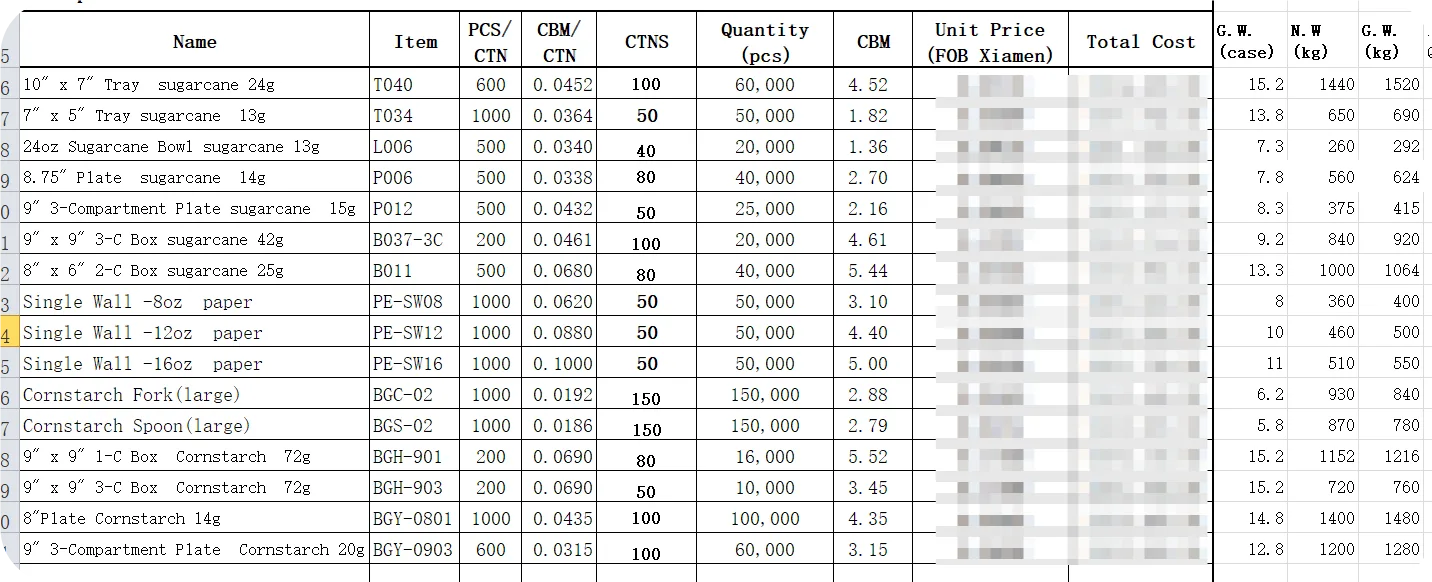
Once you have selected your products, we will calculate the following key details:
- Volume (in cubic meters)
- Weight
- Unit price per item
- Total price
This will enable us to provide an accurate FOB Xiamen quotation.
Step 3: Sea Freight Costs
After confirming product quantities and pricing:
- Your Freight Forwarder: Skip this step if you have your cooperative forwarder.
- New Importers: We can recommend our trusted freight forwarder if needed. We will determine whether your shipment requires Less Container Load (LCL) or Full Container Load (FCL), and provide an estimated sea freight quote(shipping cost), including clearance and delivery options.
Our quotation can be provided as:
- FOB (does not contain shipping cost)
- C&F (FOB + Sea Freight)
- CIF (FOB + Sea Freight + Insurance)
- DDU (Delivered Duty Unpaid, excluding customs duties and taxes)
- DDP (Delivered Duty Paid, inclusive of customs clearance and door delivery)
Step 4: Tariff & Import Customs Duty
Understanding import duties is crucial for evaluating your total landed cost. Fortunately, most daily-use consumer products exported from China are subject to zero or low import tariffs in the majority of global markets, thanks to numerous free trade agreements and preferential policies.
🌐 Zero Tariff Destinations
China has established Free Trade Agreements (FTAs) with many countries, resulting in duty-free access for a wide range of goods:
ASEAN countries (e.g., Singapore, Vietnam, Malaysia)
Australia & New Zealand
South Korea
LDCs (Least Developed Countries in Africa and Asia such as Bangladesh, Nepal, and Cambodia)
📉 Low Tariff Markets
Many developed countries apply low import tariffs (typically 5%–10%), especially on general household goods:
European Union
Japan
Canada
United States (Most common items now follow standard MFN rates)
Note on the United States:
While most consumer goods now follow standard tariff rates, importers should be aware of temporary punitive tariffs or Section 301 duties that may apply to certain products.
✅ Tip: Always check the U.S. HTS or consult your customs broker to confirm if your item falls under Section 301 or other special duty measures.
🚫 High Tariff Regions
While rare, a few countries still impose higher import duties on Chinese goods, depending on product classification and trade policy:
India: Known for applying elevated tariffs on a variety of imported items, including paper and plastic-based products, to protect local industries.
Select sectors in other countries: Certain product categories (e.g., electronics, machinery) may still be affected by special duties or non-tariff barriers.
Bioleader’s Key Product HS Codes
| Product Description | HS Code |
|---|---|
| Sugarcane Bagasse Tableware | 48236910 or 48237000 |
| Cornstarch Tableware | 39241000 |
| Biodegradable & Compostable Cutlery | 39241000 |
| Paper Cup, Paper Bowl | 48236990 |
| PET Lid, Plastic Lid | 39235000 |
| PLA Cup, Plastic Cup | 39241000 |
Import Duty Lookup by Country
| Country | Customs Tariff URL |
|---|---|
| United States | hts.usitc.gov |
| Canada | cbsa-asfc.gc.ca |
| United Kingdom | gov.uk/trade-tariff |
| European Union | ec.europa.eu/taric |
| Australia | abf.gov.au |
| New Zealand | customs.govt.nz |
| Japan | customs.go.jp |
| South Korea | unipass.customs.go.kr |
| India | cbic.gov.in |
| Singapore | customs.gov.sg |
| Philippines | tariffcommission.gov.ph |
| Mexico | sat.gob.mx |
| Brazil | receitafederal.gov.br |
| South Africa | sars.gov.za |
| UAE | customs.ae |
| Saudi Arabia | customs.gov.sa |
| Malaysia | mysst.customs.gov.my |
| Vietnam | customs.gov.vn |
| Thailand | customs.go.th |
| Indonesia | beacukai.go.id |
Tariff Inquiry Websites for Various Countries (Selected Nations)
Step 5: Cost Evaluation: Know Your Total Landed Cost
Before making your final decision, it’s important to calculate your total landed cost — the real cost of getting the goods into your hands and ready for sale. This includes:
FOB price (product cost at the port of departure)
Sea freight cost
Customs duties and taxes
Port handling and delivery charges
Warehouse storage and operational costs
Once you’ve added these components together, you’ll have a clear understanding of your true unit cost. This will help you answer critical questions:
Are these products competitively priced in your market?
Will they offer you a profit margin after all costs?
Do they align with your brand’s quality and sustainability goals?
Understanding your full cost structure empowers you to make informed purchasing decisions and evaluate whether the import aligns with your market strategy and budget expectations.
Step 6: Contract Signing
Once the product selection, quantities, and shipping method have been confirmed, we proceed to the formal agreement stage.
In standard international trade practice, the contract can be initiated in two ways:
Buyer issues a Purchase Order (PO): This is an official order request outlining the products, quantities, and agreed pricing.
Seller issues a Proforma Invoice (PI): This is a commercial offer summarizing the product details, unit prices, total cost, payment terms, and estimated delivery timeline.
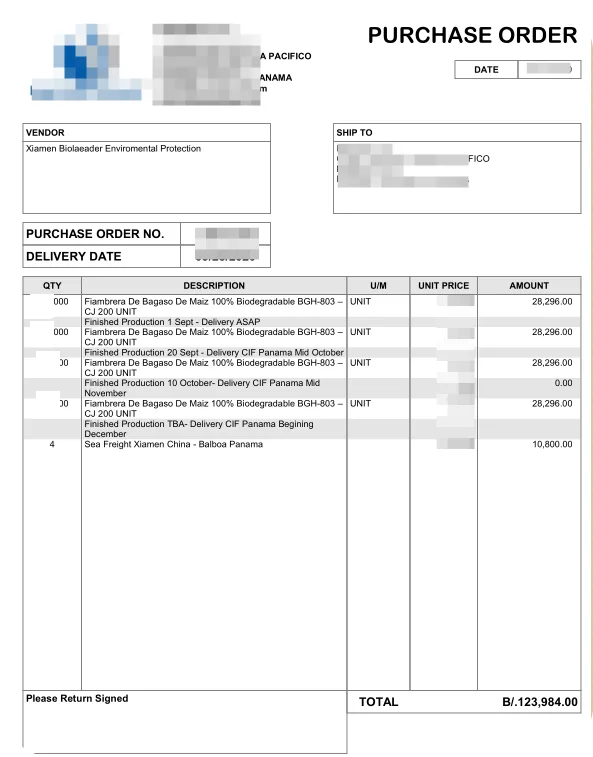 Buyer Issue PO Buyer Issue PO | 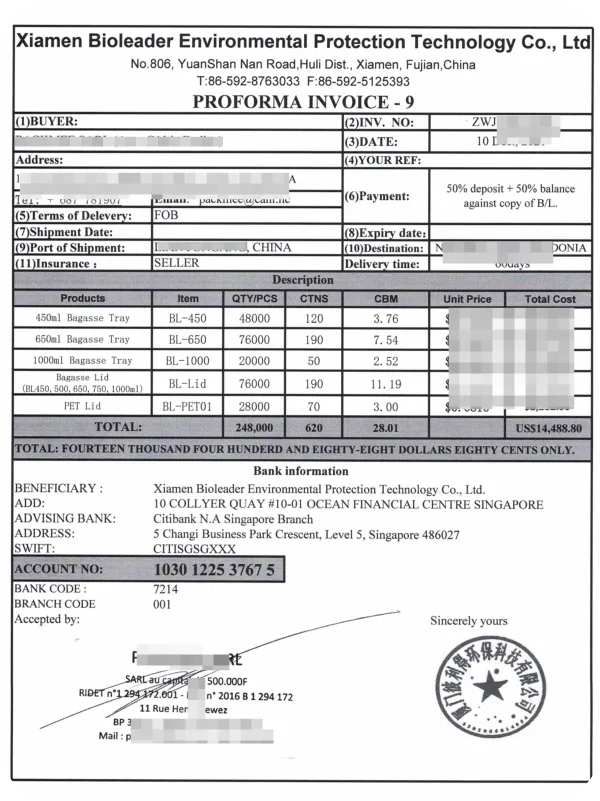 Seller Issue PI Seller Issue PI |
At Bioleader, we typically issue a Proforma Invoice (PI) based on the mutual agreement, which both parties use as the basis for production and shipping arrangements. Our standard payment terms are 30% deposit upon order confirmation and 70% balance payable before shipment. Alternative terms may be discussed depending on the customer’s needs and long-term cooperation status.
Step 7: Production Process
After the contract is signed and the deposit is received, we begin organizing production. This phase includes a final confirmation of all details such as:
Product specifications
Customization requirements
Packaging design (e.g. outer carton printing, labeling, size, stacking method)
Once all details are confirmed, we schedule your order for production.
⏱️ Typical production lead time: 25–35 days, depending on the product complexity and our current factory capacity.
Please note: Most manufacturers in China, including Bioleader, do not carry inventory — all production is made-to-order.
Step 8: Quality Control & Inspection
We implement a strict multi-stage quality assurance process during:
Raw material selection
Production line processing
Packaging and final assembly
✅ Export product pass rate exceeds 99.5%
Bioleader’s modern & fully automated production line
💡If you require a third-party inspection, we can fully cooperate. Professional inspection agencies like SGS or BV are welcome. However, please note these services typically cost USD 400–1,000 per inspection, depending on product complexity and location.
Since the majority of our products are machine-made with standardized processes, the quality pass rate is exceptionally high. As a result, only a small number of first-time buyers choose to request third-party inspection — which, while offering added assurance, does increase the overall procurement cost.
Step 9: Shipping Arrangements
You have two options for logistics:
Option 1: Use Your Freight Forwarder
If you already have a reliable forwarder, simply provide us with their contact details. We will coordinate directly with them and arrange container loading at our factory or designated warehouse.
Option 2: Let Us Handle It for You
For beginners or customers without a trusted forwarder, we can handle the shipping via our long-term logistics partner — one of China’s largest international freight companies, with offices and partners in over 30 countries.
We will now finalize the actual shipping costs, including:
Sea freight (based on the latest market rates)
Destination port charges
Customs clearance service
Local delivery to your warehouse
📦 Our updated quotation can include:
C&F (Cost & Freight)
CIF (Cost, Insurance & Freight)
DDU (Delivered Duty Unpaid)
DDP (Delivered Duty Paid – including door-to-door delivery and import clearance)
Step 10: Final Payment & Shipping Fee Settlement
To avoid delays, please ensure the following is completed before container loading:
Pay the remaining balance (70% or as agreed)
Pay shipping fees (if using our forwarder)
💡 Note: For C&F, CIF, DDP or DDU terms, shipping fees must be prepaid before departure, as shipping agents will charge us upon vessel departure.
Step 11: Container Loading
Once shipping is confirmed, we arrange container loading:
Inland trucking to the port
Loading at the factory or warehouse
Sealing and documentation
📷 We will provide:
Loading photos
Container number
Seal number
This ensures full transparency and traceability of your shipment.
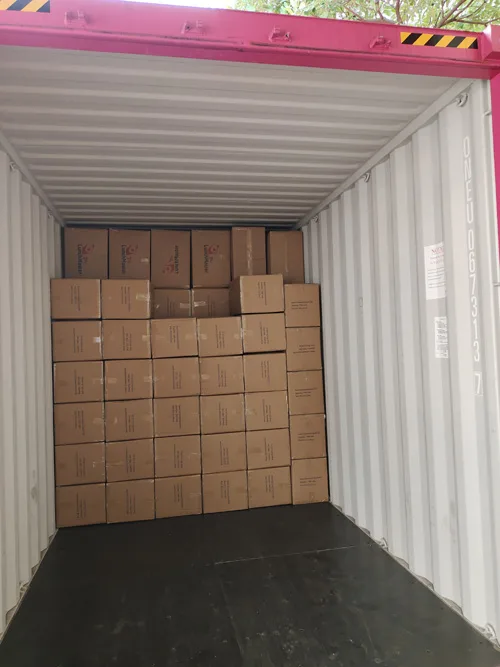 Neatly stacked Neatly stacked | 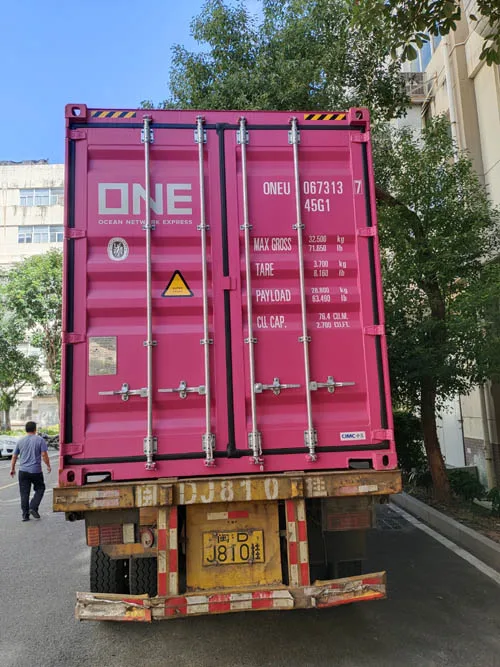 Well documented shipment Well documented shipment | 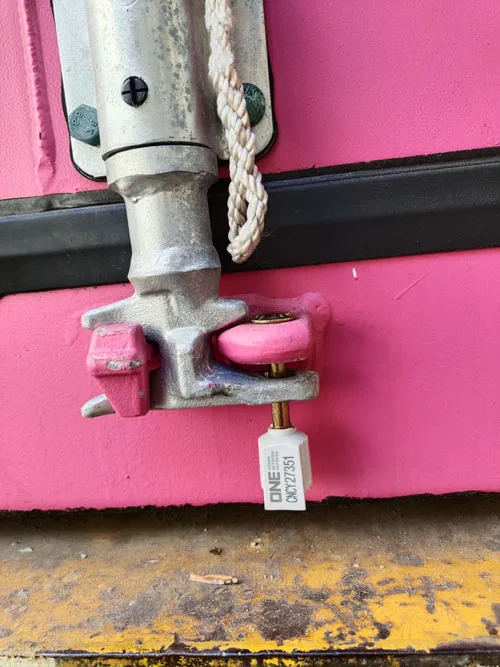 Seal and lock the container Seal and lock the container |
Step 12: Estimated Shipping Times by Region
Here’s a reference chart for sea shipping durations from China to major regions:
| Destination | Estimated Transit Time |
|---|---|
| US West Coast (e.g., Los Angeles, Seattle) | 15–25 days |
| US East Coast (e.g., New York, Savannah) | 25–35 days |
| Northern Europe (UK, Germany, Netherlands, France) | 30–40 days |
| Mediterranean & Middle East (UAE, Saudi Arabia, Turkey) | 25–35 days |
| Oceania (Australia, New Zealand) | 15–25 days |
| East Africa (Kenya, Tanzania) | 25–35 days |
| West Africa (Nigeria, Ghana) | 35–45 days |
| North Asia (Japan, South Korea) | 5–10 days |
| Southeast Asia (Singapore, Malaysia, Philippines) | 5–10 days |
| South Asia (India, Sri Lanka) | 15–20 days |
| Central America (Mexico, Panama) | 30–40 days |
| South America (Brazil, Chile, Argentina) | 35–50 days |
Step 13: Customs Clearance
After departure, we’ll email you the essential customs documents:
Bill of Lading
Commercial Invoice
Packing List
Certificate of Origin (if needed)
Product certificates (if required)
Any supporting documents based on your country’s customs regulations
Depending on your shipping method:
If using your forwarder: You or your agent handles customs clearance, taxes, port fees, and delivery.
If using our forwarder: Our local partner will complete customs clearance, tax declarations, and final delivery. You only pay the agreed fees (duties, delivery, handling).
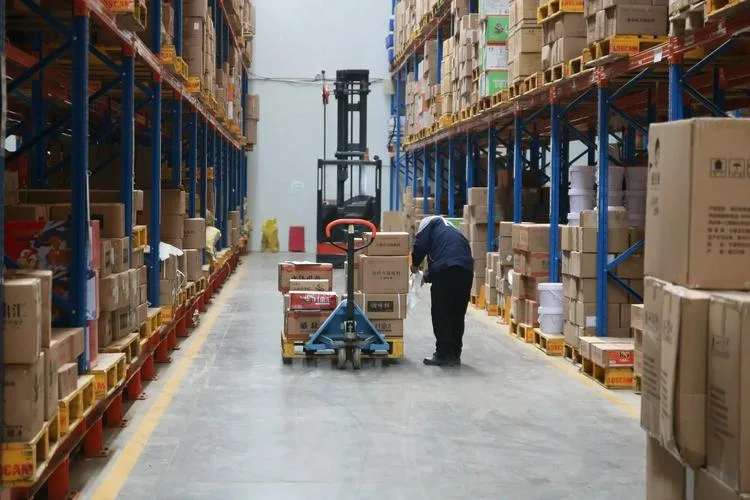
Step 14: Receiving & Warehouse Storage
Once the goods arrive:
Organize them in your warehouse by category
Conduct your own quality checks if needed
Begin preparing for distribution or retail launch
Proper storage and handling at this stage ensure inventory is traceable, accessible, and ready for efficient sales.
📦 Choose Bioleader® with Confidence
With 10+ years of professional export experience, Bioleader® is your trusted partner for one-stop biodegradable food packaging solutions. From product selection to door-to-door delivery, we support you every step of the way.
Let us simplify your import journey in 2025 — contact Bioleader today.